QR Code Day: The Little Square That Changed the World

If you have bought vegetables from a roadside vendor, paid your electricity bill, entered a museum, ordered food at a restaurant, or even boarded a flight in the last few years, chances are you have pointed your phone at a strange-looking square filled with tiny black-and-white patterns.

That little square is a QR code. It has quietly become one of the most useful inventions of the digital age.

QR Code Day is celebrated every year on August 8 (the birthday of the inventor, Masahiro Hara) recognising a technology that has transformed the way we exchange information, make payments, and connect the physical and digital worlds.

What exactly is a QR code?

QR stands for Quick Response. Unlike a traditional barcode, which stores information in one direction using a series of vertical black lines, a QR code stores information both horizontally and vertically. This two-dimensional design allows it to hold hundreds of times more information than a standard barcode.

A barcode usually contains a product number that must be looked up in a database. A QR code, on the other hand, can directly contain a website address, contact information, payment details, Wi-Fi credentials, a ticket, a digital menu, or even a short piece of text.

Most importantly, it can be read almost instantly by the camera on an ordinary smartphone.

Why wasn’t a barcode enough?

Barcodes revolutionised retail after their introduction in the 1970s. They made supermarket checkouts faster and inventory management more accurate. But they had limitations.

A typical barcode stores only around 20–25 characters of information. It also has to be scanned from a particular angle.

QR codes solved these problems.

Because information is stored in two dimensions, a standard QR code can hold over 7,000 numeric digits or around 4,000 alphanumeric characters, depending on the type of data. It can also be scanned from almost any direction.

Even more impressive is its built-in error correction. QR codes use mathematical techniques that allow them to be read correctly even if part of the code is dirty, scratched, folded, or damaged. Depending on the level of error correction used, up to about 30% of the code can be missing while still remaining readable.

That is why QR codes continue to work on worn posters, crumpled tickets, and faded packaging.

Who invented the QR code?

The QR code was invented in 1994 by Masahiro Hara, an engineer at the Japanese company Denso Wave, then a subsidiary of Toyota.

The automotive industry was becoming increasingly complex. Assembly lines required thousands of different components, and the existing barcode system was proving too slow and unable to hold enough information.

Hara and his team were asked to develop something faster and more powerful.

Legend has it that the distinctive square pattern was inspired by the black-and-white arrangement of pieces on a Go board, the traditional Japanese strategy game. The team also designed the three large squares in the corners so that scanners could instantly recognise the code’s orientation.

Their goal was simple: enable rapid scanning from any angle while storing much more information.

They succeeded beyond anyone’s imagination.

The remarkable decision that changed everything

Many groundbreaking technologies remain locked behind patents or expensive licences.

QR codes took a different path.

Although Denso Wave patented the technology, the company made a remarkable decision. It announced that it would not exercise its patent rights for general use. Anyone could create, print, or scan QR codes without paying royalties or seeking permission.

This openness encouraged software developers, manufacturers, businesses, and governments around the world to adopt the technology.

Imagine if every QR code required a licence fee. It is unlikely that QR codes would have become as universal as they are today.

Sometimes the greatest contribution an inventor makes is not merely creating a technology—but allowing everyone else to build upon it.

The pandemic accelerated everything

QR codes had been around for more than two decades before they truly entered everyday life.

The COVID-19 pandemic dramatically accelerated their adoption.

Restaurants replaced printed menus with QR codes. Hospitals used them for registrations. Airlines issued contactless boarding passes. Museums, schools, offices, and public events adopted QR-based entry systems.

People who had never before scanned a QR code suddenly found themselves using them several times a day.

India’s QR revolution

Few countries have embraced QR codes as enthusiastically as India.

Thanks to the success of the Unified Payments Interface (UPI), QR codes have become the face of India’s digital payments revolution.

Today, whether you are buying a coconut on a beach, paying a neighbourhood tailor, contributing at a temple, purchasing vegetables from a pushcart, or settling the bill at a five-star hotel, the same familiar QR code often greets you.

The beauty lies in its simplicity.

A small shopkeeper no longer needs an expensive card-swiping machine. A printed QR code costing almost nothing can receive payments instantly into a bank account.

For customers, there is no need to carry cash or even remember account numbers. A quick scan, confirmation of the amount, and payment is complete in seconds.

This has helped bring millions of small businesses, street vendors, self-employed workers, and rural entrepreneurs into the formal digital economy.

Today QR codes now do much more than transfer money.

They connect us to museum audio guides, restaurant menus, vaccination certificates, railway tickets, product manuals, educational resources, event registrations, digital business cards, and government services.

Manufacturers use them for product authentication and traceability. Farmers use them to provide information about produce. Schools use them to link printed textbooks with videos and interactive lessons.

The humble square has become a bridge between the physical and digital worlds.

Looking at a square with fresh eyes

Most great inventions are dramatic—a steam engine, an aeroplane, or a computer.

The QR code is different.      

It has no moving parts. It makes no sound. It occupies barely a few square centimetres.

Yet it has quietly transformed commerce, communication, education, healthcare, travel, and finance.

Next time you scan one without a second thought, remember that behind those tiny black-and-white squares lies an elegant piece of mathematics, an ingenious engineering solution, and an unusually generous decision to share an invention freely with the world.

Sometimes, the technologies that change our lives the most are the ones we hardly notice.

–Meena

Why July 22 Should Be International Pi Day

One of the most memorable scenes in Life of Pi has nothing to do with a Bengal tiger or a lifeboat.

Piscine Molitor Patel has had enough of being teased about his unusual name. On the first day at his new school, he goes to the blackboard, writes the Greek letter π, and begins reciting its value to an astonishing number of decimal places. The classroom falls silent. His classmates never call him Piscine again. From that day on, he is simply “Pi.”

It is a wonderful moment. Knowledge triumphs over ridicule.

Every year on March 14, mathematicians and science enthusiasts celebrate Pi Day because, in the American style of writing dates, 3/14 resembles the first three digits of π—3.14. There are quizzes, lectures, pie-eating contests and social media posts celebrating perhaps the world’s most famous number.

But there is a small problem.

Outside the United States, most countries write dates as day/month, not month/day. In India, the United Kingdom, Australia, New Zealand, Singapore, Malaysia, and across most of Europe, Africa and Latin America, March 14 is simply 14/3. The neat mathematical coincidence disappears.

If there is one date that deserves to be celebrated as Pi Day, it is July 22. Written as 22/7, it represents the most famous fractional approximation of π—one that generations of students have learned long before they encountered calculators or computers.

The story of π begins with a deceptively simple observation. Measure the circumference of any circle and divide it by its diameter. Whether the circle is a coin, a bicycle wheel, a temple dome or the orbit of a planet, the answer is always the same mysterious number.

Simple in concept. Impossible to write down completely.

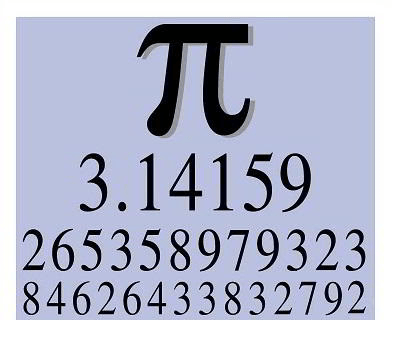
Its decimal expansion—3.1415926535…—goes on forever without repeating. It is an irrational number, one that can never be expressed exactly as a fraction.

Yet for thousands of years, practical mathematics has relied on approximations.

The fraction 22/7 is associated with the Greek mathematician Archimedes, who, more than 2,200 years ago, proved that π lay within a narrow range that included this elegant fraction. It is not exact, but it is remarkably accurate and wonderfully easy to remember. Builders, engineers, surveyors and schoolchildren have relied on it ever since.

India has one of the world’s oldest mathematical traditions, and its contribution to understanding π is fundamental. Around the fifth century CE, the great mathematician and astronomer Aryabhata gave a remarkably accurate value for π in his Aryabhatiya. His approximation—3.1416—was correct to four decimal places, an extraordinary achievement for its time. Even more impressive was his suggestion that this value was only an approximation, revealing an understanding that π could not be captured exactly.

Nearly a thousand years later came another remarkable breakthrough. Mādhava of Sangamagrama, founder of the Kerala School of Mathematics, developed infinite series for calculating π with astonishing precision. These methods anticipated ideas that later became central to calculus in Europe. By the fourteenth century, Indian mathematicians were calculating π to many decimal places using techniques that were centuries ahead of their time.

Today, historians increasingly recognise that. Egyptians, Babylonians, Greeks, Chinese, Arabs and Indians all advanced humanity’s understanding of numbers. Pi belongs not to one nation, but to civilisation itself. That makes July 22 an especially meaningful day.

Unlike March 14, which owes its popularity to one country’s date format, 22/7 is a mathematical symbol recognised across generations and across classrooms. For millions of students, it was their first introduction to π. Before calculators became commonplace, “Take π as 22/7” was almost a universal instruction.

Pi itself is everywhere. It appears in wheels and bridges, domes and tunnels, clocks and satellites. Engineers use it to design aircraft. Doctors encounter it in medical imaging. Astronomers use it to understand the cosmos. Physicists find it in equations that have little to do with circles. Even the digital technologies that shape our lives rest on mathematical foundations where π quietly makes an appearance.

Perhaps that is why Pi Patel chose the symbol as his new identity. It represented something larger than a number.

Celebrating July 22 would not simply honour a mathematical constant. It would celebrate curiosity, scientific temper and humanity’s enduring quest to understand the universe.

So by all means enjoy the festivities on March 14.

But when July 22 comes around, take a moment to remember Aryabhata, Archimedes, Mādhava—and perhaps even Pi Patel, the schoolboy who silenced his bullies not with fists, but with an endless stream of digits.

Perhaps it is time we celebrated July 22 as the International Pi Day—a day that honours not only one extraordinary number, but the shared human pursuit of knowledge that transcends borders, languages and centuries.

–Meena

The First Electrical Voting Machine

With election-fever and results-fever just abating, one the of the topics of discussion has of course been the controversial EVM—Electronic Voting Machine.

Where did it all start? Surprisingly with Edison—yes he of the light bulb fame.

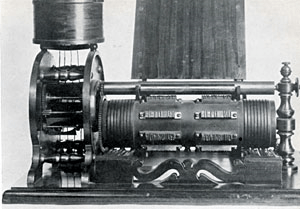
In 1869, Thomas Edison patented what is widely regarded as the first electrical voting machine—an invention designed to automate and speed up vote counting. This was his very first patent–U.S. Patent 90,646 granted on June 1, 1869. It was s designed to allow legislators to vote “yes” or “no” using a switch that sent signals to a central board,

Edison’s vote recorder was technically sound. By all accounts, it worked exactly as intended. But when he demonstrated it to legislators in Washington, D.C., they turned it down. Not because it was flawed—but because it was too efficient.

At the time, voting in legislatures was a slow, deliberate process. Delays were not bugs; they were features. They allowed for persuasion, negotiation, and, frankly, political maneuvering. A machine that eliminated delay also eliminated strategy. Edison would later reflect that this rejection taught him a lasting lesson: invent only what people are ready to use. The vote recorder’s rejection wasn’t about engineering; it was about human systems resisting change.

Edison’s Curious Patent Portfolio

Edison went on to file over a thousand patents, many of them transformative, some delightfully obscure. Alongside world-changing inventions like the incandescent light bulb and the phonograph, there were also lesser-known creations: an electric pen for duplicating documents, a system for preserving fruit, even ideas for concrete furniture.

Some succeeded because they met an immediate need. Others failed because the ecosystem—technological, social, or economic—wasn’t ready. But probably sowed the seeds for many a current-day device.

The Slow March Toward Voting Machines

Despite Edison’s early setback, the idea of mechanizing voting didn’t disappear. By the late 19th and early 20th centuries, mechanical voting machines began appearing in the United States. These lever-based systems aimed to reduce fraud and standardize ballot counting.

Over time, technology evolved. Punch-card systems—infamously remembered from the 2000 United States presidential election, introduced new efficiencies, along with new vulnerabilities. Hanging ‘chads’ became part of vocabulary, illustrating how even small technical flaws could undermine trust.

By the late 20th and early 21st centuries, electronic voting machines (EVMs) emerged as the next step. These ranged from Direct Recording Electronic (DRE) systems to optical scan ballots and, more recently, hybrid systems with paper audit trails.

Trust, Technology, and Tension

Electronic voting systems around the world have sparked debate. Critics raise concerns about hacking, lack of transparency, and the difficulty of verifying results independently. Supporters counter that well-designed systems are more accurate and less prone to human error than paper ballots.

Countries have taken different paths. While Brazil has widely adopted electronic voting, others like Germany have rolled back its use, citing constitutional concerns about transparency. The Netherlands and Ireland have also stepped away from electronic systems after public and political pushback.

Even within the United States, practices vary widely by state, reflecting a broader unease about balancing efficiency with trust.

India and the EVM

Few countries have embraced electronic voting as extensively as India. Introduced on a large scale by the Election Commission of India, EVMs were designed to tackle logistical challenges: vast electorates, difficult terrains, and the need for rapid, reliable counting.

Indian EVMs are standalone devices, not connected to the internet, which proponents argue makes them more secure. The addition of VVPAT (Voter Verifiable Paper Audit Trail) systems is supposed to strengthen transparency by allowing voters to confirm their choices.

And yet, controversies and fears persist.

The Real Lesson: Technology Isn’t Neutral

Edison’s failed vote recorder reminds us of something we often forget: technology does not exist in a vacuum. It interacts with human behaviour, institutional norms, and political incentives.

Voting, perhaps more than any other civic act, depends not just on accuracy but on perceived legitimacy. A system can be technically flawless and still fail if people don’t trust it. The technical aspects may work fine, but is it still corruptible when the system itself is corrupt?

In that sense, the story comes full circle.

Edison built a machine to make voting faster. Lawmakers rejected it because speed threatened the very nature of their process. More than a century later, we are still grappling with the same tension—between efficiency and trust, innovation and acceptance.

The question is no longer whether we can build better voting machines. It is whether societies are ready to believe in them.

And if Edison were around today, he might recognise the problem instantly.

–Meena

Pic: https://edison.rutgers.edu/life-of-edison/inventions

The Long Ride: Of Bicycles and Their Accessories

A few weeks ago, we looked into the renewed focus on cycling in India. From looking forward, this week we look back to the history of cycles and associated accessories.

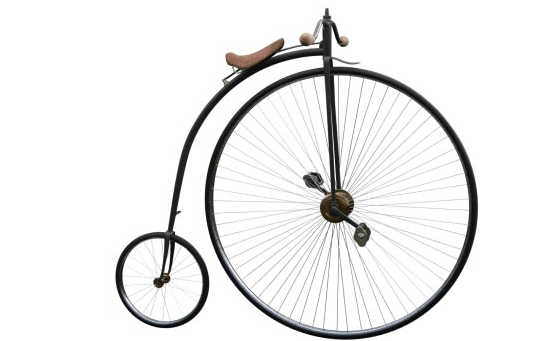
When the first velocipedes (how dinosaurish does that sound??) rattled down European streets in the mid-19th century, they were little more than mechanical curiosities. Wooden frames, iron tyres, no brakes worth the name. Riding one was only for the reckless! The penny-farthing that followed —towering front wheel and precarious balance — made cycling a performance. Only the young and fearless could mount it, and the fall was as much a part of the experience as the ride.

Everything changed with the “safety bicycle” of the 1880s: two wheels of equal size, a chain drive, pneumatic tyres. Suddenly, cycling became practical. You could ride to work, to the market, to visit a friend. No fuel, no maintenance.

And practically no special gear in those days.

But soon came the humble trouser clip did make riding more convenient for men. To modern eyes, it looks medieval: a spring-loaded strip of metal hugging the ankle, holding fabric away from a greasy chain. But for decades, it was an essential. Men could cycle to office or factory without rolling up their trousers like labourers or risking oil-stained cuffs. Infact, I remember my father had one!

In Britain and Europe, cyclists also used trouser straps made of leather, elastic bands with buckles, even improvised safety pins. In India, where bicycles quickly became tools of work — for clerks, teachers, postmen — it was a metal slip-on around the ankle.

Women faced a more complicated problem. In the West, corsets, long skirts, layers of petticoats, and in India, the sari — none were designed for pedalling. Accessories stepped in stepped in because dressing styles took their time to change. Skirt guards– mesh or wire panels fitted over the rear wheel–prevented fabric from tangling in spokes. In India, the chain guard became standard, not optional — a solid metal shield protecting sarees, dupattas, school uniforms.

Other innovations took root in India, to cater to the specific needs. Rear carriers grew wider and sturdier– for schoolbags, milk cans, whole families. Bells had loud, rings that announced presence on crowded roads.

Lighting tells another story of evolution. Early bicycles relied on oil lamps and carbide lamps — lovely if moody. Then came the dynamos.  Today’s LEDs and rechargeable lamps are brighter and lighter, and fulfil the same needs — that the cyclist be seen, that night need not be a barrier. But in India, there has been a regression. From lights being quite common specially in the South, they are seldom to be seen today.

And then there is the helmet — the most contested accessory of all.

For most of cycling history, helmets did not exist in any recognisable modern form. Riders trusted balance, experience, and luck. It was only with the rise of fast motor traffic and increasingly hostile roads in the late 20th century that helmets entered everyday cycling conversations.

Countries with strong everyday cycling cultures like the Netherlands, Denmark, Germany, and the United Kingdom tend to prioritise safer infrastructure and do not have compulsory helmet laws for cyclists.

But in most countries, there is neither a mandatory helmet rule, nor an effort towards safter infra. Very few places in the world make helmets mandatory for all bicycle riders. Nations that mandate helmets for all riders often do so in environments where cycling is seen as high-risk.

Countries with universal bicycle helmet laws — applying to adults as well as children — include Australia and New Zealand, where nationwide mandates have been in place for decades. A smaller group of countries, including Argentina, Costa Rica, Namibia, Cyprus, Singapore, and parts of the United Arab Emirates, also require cyclists to wear helmets by law, though enforcement and penalties vary.

Some countries like Japan, have introduced a legal duty to wear helmets for cyclists, but without the kind of fines or policing associated with traffic offences.

Far more common are age-based helmet laws, where children or teenagers must wear helmets but adults are exempt. Yet other countries do not require helmets in cities, but helmets are compulsory for cyclists outside urban areas.

In India, there is no nationwide law that makes helmets mandatory for people riding ordinary, non-motorised bicycles. Sadly, these laws do not even exist for motorized two-wheelers, or are not uniformly enforced even where they exist. Neither is there effort towards roads, lanes and infra to make cycling safter.

Given that India stands first in the world in absolute number of traffic deaths, and that two-wheelers including bicycles account for over 50% of these deaths, is it not time to make it mandatory of cyclists and two-wheeler drives to use helmets? And for city-planners to make roads safer for cyclists?

Safety please!

–Meena

Around a Continent in 18 Months: The First Circumnavigation of Australia

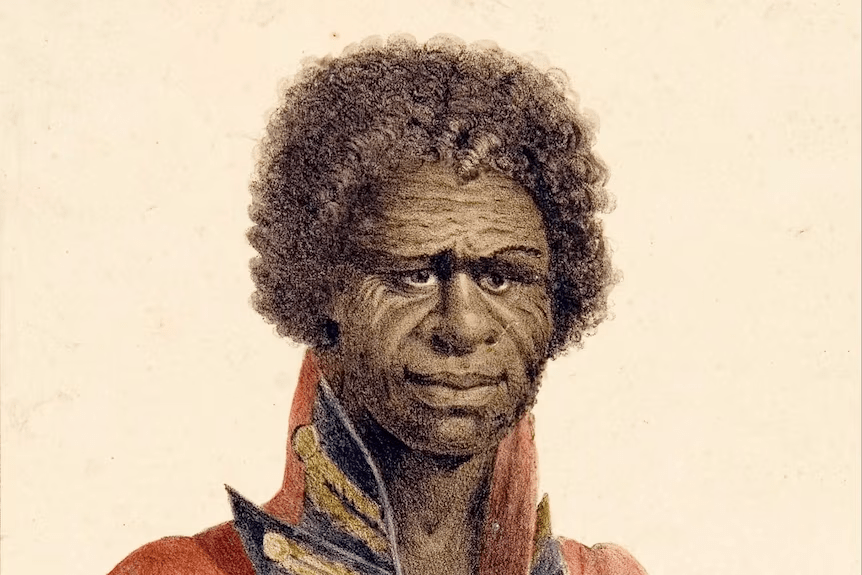
When we think of great explorers, we picture men in naval uniforms, compasses in hand, charting “new worlds.” But tucked away in the annals of Australia’s history is a story that breaks that mould. It’s the story of Bungaree—the first Aboriginal man, and indeed the first Australian, to sail right around a continent.

His name is little known today, but his contribution to one of history’s most extraordinary voyages, in an exploration led by Captain Matthew Flinders, an English navigator was extraordinary.

From Broken Bay to the World

Bungaree was a man of the sea. Born around 1775 among the Kuringgai people near Broken Bay, north of Sydney, he grew up at a time when everything around him was changing. European ships had begun to appear on the horizon; new settlements were springing up on ancient lands. While many Aboriginal communities resisted the newcomers, Bungaree was curious. Quick-witted and charismatic, he learned to move between two worlds—his own and that of the British colonists.

By the time Flinders was preparing to embark on his grand voyage of exploration, Bungaree had already earned a reputation as a skilled sailor and interpreter. Flinders, who understood the need for a knowledgeable local person on his mission, invited Bungaree to join the expedition aboard HMS Investigator in 1801.

The Journey Around a Continent

The Investigator’s mission was to chart the entire coastline of the vast southern landmass known then as New Holland. Flinders hoped to prove it was a single continent—what we now call Australia. For this, he needed not just navigational skill, but also understanding—someone who could help bridge worlds. Bungaree became that person.

Throughout the voyage –from December 1801 to June 1803–Bungaree played a vital role as peacemaker and emissary. When the Investigator anchored near Indigenous communities, it was often Bungaree who stepped ashore first—speaking to local groups in shared gestures, explaining the strangers’ peaceful intent, and easing tensions that could have turned deadly. His presence gave the expedition a human connection that maps and compasses could not.

Flinders, for his part, admired Bungaree’s warmth and humour. In his journals, he wrote that Bungaree “was always of service wherever we went,” and that his “good disposition and open, manly conduct” won respect from both shipmates and the people they met. It was a rare acknowledgment of partnership in an age otherwise defined by hierarchy and conquest.

The Man Beyond the Maps

The voyage was gruelling. The Investigator battled storms, leaks, and disease. Food was scarce; scurvy stalked the crew. Yet through months at sea and thousands of kilometres of unknown coast, Bungaree remained cheerful and steadfast—a figure of resilience and adaptability. When they finally completed the first circumnavigation of the continent in 1803, Bungaree had travelled more of Australia’s coastline than any person before him.

And yet, history gave him only a passing mention. While Flinders returned to England (and was later imprisoned by the French), Bungaree returned to Sydney. There he became something of a local character—always dignified, dressed in military uniforms, wearing his medals proudly. He was lovingly referred to as “King Bungaree,”.

An Amazing Feat

So this was the veryfirst successful circumnavigation of an entire continent in recorded history–the first time anyone had completely circumnavigated a single, continuous continental landmass on Earth.

Other earlier famous circumnavigations (like Magellan’s) went around the globe or around islands (for example, Tasmania, which Flinders himself had circumnavigated earlier with George Bass in 1798). But going around a continent — that is, a vast mainland connected by continuous coastline — was unique. (Incidentally, while one can circumnavigate Africa, the Americas through the Panama Canal, and Antarctica when the ice permits, it is not possible to circle Asia and Europe).

Remembering Bungaree

Bungaree died in 1830 and was buried at Rose Bay. His resting place, like so much of his story, is unmarked. But in recent years, there has been a growing recognition of his contribution—not just as a companion to Flinders, but as a symbol of the spirit of adventure, resilience, and bringing two worlds together.

–Meena

PIC from ABC News

Letting Off Steam: Pressure Cookers

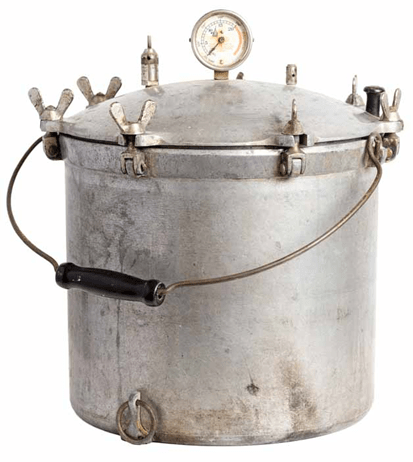
I recently, and reluctantly, bought a new pressure cooker, in place of my old one which has been my trusty companion over several decades and continents. The old one was an original English Prestige cooker, although over the years of replacement of its various parts (especially handles and gasket ring) with local add-ons made it a war veteran, scarred but not retired. Coincidentally, this week brought the news of the demise of TT Jagannathan who made TTK and Prestige a well-known and trusted Indian brand. In fact the Prestige pressure cooker is such a ubiquitous presence in every home, that we take complete ownership of its being uniquely Indian. 

Digester: Precursor to Pressure Cooker

In fact the origin of a utensil that could cook food at high temperature can be traced back to the 17th century in England. Its earliest form was called a Digester. It was devised by Denis Papin, a French physicist, mathematician and inventor, who had moved to England. The Digester was a large cylindrical airtight container, heated over coals to produce internal steam pressure to increase the boiling temperature to above 100 degrees centigrade. A small tube in the lid closed with a flap was held in place by a weighted rod allowing the steam to escape when the pressure became too high. This was an early version of the first safety valve, one that helped prevent the contraption from exploding. In 1679, Papin presented his invention to the Royal Society which included top scientists of the day. They were so impressed that they commissioned Papin to write a book. The book published in 1681 titled A New Digester or Engine for Softening Bones detailed his successful experiments in cooking a variety of meats and was described as a construction guide, an experiment log, and a cookbook. In 1682, Papin used his Digester to cook a full meal for the Royal Society dinner which received rave reviews. However the Digester as a cooking equipment did not really take off in England till much later. Papin moved on to Germany and continued his experiments leading to other inventions based on a similar application of the pressure of steam.

The early Digester was expensive to build and could be rather dangerous as there was the threat of explosion from too much steam pressure. It wasn’t until the addition of safety valves that effectively stopped the pressure from getting too high, and safety locks preventing the lid from flying off if opened too soon, would such a utensil become more common. Papin died in obscurity, not knowing that his Digester would one day transform into the domestic pressure cooker.

But the technology triggered other experimenters to work on similar devices. In 1919, José Alix Martínez was granted the first patent in Spain for his olla exprés (express cooking pot), which used the pressure cooker technology invented by Papin. However, the term “pressure cooker” featured in the Oxford English Dictionary in 1910. In simple terms, a pressure cooker is a sealed chamber that traps the steam generated when its contents are heated. As the steam builds up, pressure increases and drives the boiling point of water beyond 100°C. Pressure cooking reduces cooking time up to 70per cent, preserves more nutrients and vitamins, uses less energy and water, and can be used to cook a wide range of foods

Around the same time, a new invention appeared in India which used steam, though not steam pressure, to cook food. This was the creation of a Calcutta gentleman Indhumadhab Mallik.  In this, raw ingredients including meat and fish as well as vegetables dal and rice were placed in containers which were stacked in an inner container. The outer container had water, and the entire contraption was sealed and placed over a charcoal fire. The food cooked in the steam that was generated. The steam cooker was called ICMIC cooker (combining the words hygienic and economic.) The cooker became popular in Bengal and was also sold in other states under different names.

By the 1930s, the pressure cooker was making its presence felt across the world, even as high up as Mount Everest. Higher altitudes with lower atmospheric pressure meant longer cooking time and a pressure cooker helped ease the problem, making it a great help in mountaineering expeditions.

World War II led to a dip in the production of pressure cookers due to the need for aluminium for the war effort in the US and Europe. Pressure cooker companies were enlisted to create canned goods (the cans were made of aluminium) for the troops. However, there was continuing demand for pressure cookers, and some companies started making cheaper cookers with substandard materials, which caused the cookers to explode. This raised safety concerns leading to the fall in popularity of pressure cookers in Europe.

Pressure cookers arrived in India in the late-1950s. They were introduced by two companies—Hawkins and TTK Private Ltd. (which became known as TTK Prestige). But the safety issue remained a concern as there were frequent explosions. Simultaneously companies were working on innovations to prevent such mishaps.

A significant contribution in this field came from TT Jagannathan (TTJ) who joined the family business when he was in his early 20s, and took charge of TTK Prestige at a time when the company was struggling. The reports of faulty pressure cookers had severely damaged the company’s reputation. Jagannathan, an engineer from IIT Madras and a PhD in Operations Research from Cornell began experimenting with ways to increase safety in pressure cookers.  

As he recounted in his book Disrupt and Conquer: How TTK Prestige Became A Billion-Dollar Company, Mr Jagannathan saw a godown full of unsold pressure cookers on a visit to Lucknow. The dealer explained that there were increasing cases of TTK pressure cookers bursting, and that the TTK name had lost credibility. TTJ was disturbed and launched a probe into the reason for this. A pressure cooker comes with a weight valve that is meant to rise up and release the steam that is built up by the pressure inside the cooker. The valve then settles back in place. The safety plug is a back-up safety mechanism and regulates the pressure built up in the cooker if the weight valve fails. He discovered that users were unknowingly purchasing fake safety plugs to replace the original ones. These plugs were cheaper but also made of substandard material which allowed too much steam build-up, leading to exploding cookers. He realized that there needed to be a device which, even when poor materials were used, could prevent this from happening. He immediately contacted his company’s head engineer and asked him to make certain preparations. TTJ returned to Bangalore and spent a month in the lab and used his engineering knowledge to create just such a device. This was the Gasket Release System or GRS. GRS is a secondary safety feature that releases excess steam if the primary pressure valve fails, preventing a dangerous pressure build up. It works by providing a weak point in the lid where a section of the rubber gasket will be pushed out through a slot if the main pressure vent becomes blocked or fails, allowing steam to escape down and away from the user.

This safety feature set new standards across the industry, and was also adopted by other manufacturers of pressure cookers in India. Its inventor TTJ never patented it. As he said “I did it for the industry. If any pressure cooker burst, it would mean a loss for the category. The category wouldn’t grow if people had fears around safety. I didn’t want only Prestige to be safe, but all pressure cookers in the country to be safe.”

The invention, along with Prestige’s close and continuous outreach and contact with its customers has ensured that the brand is associated with quality, durability and reliability. Today the Prestige brand has introduced a wide range of kitchen appliances catering to a new generation and befitting the ‘smart kitchens’. However the name’s first association is so much with Pressure cookers that Prestige is synonymous with Pressure cooker.

–Mamata

The Stroop Effect and Other Sneaky Brain Games

Having been associated for long with Vikram A. Sarabhai Community Science Centre (VASCSC), the pioneering science centre in the country, I always source STEM education materials and kits from them.

A few weeks ago, we received one such package I had ordered. The wonderful thing about VASCSC material is that they don’t let an inch of space go to waste. So the large envelope in which the kit came was also printed with any number of science games and puzzles.

The one that my 6 year old grand daughter and I really had fun with was the Stroop Effect.

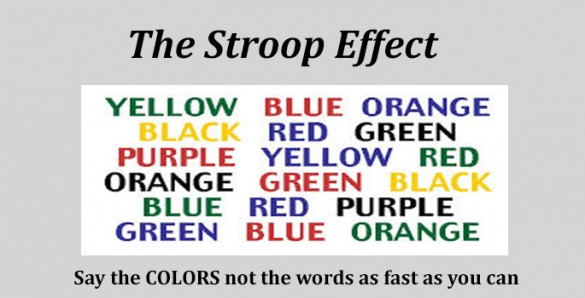
It was all giggles as she held out the sheet with a bunch of words and asked me to look at them.  The word “RED” was written in bright blue ink. She asked me to say the colour, not the word..

“Red!” I said instinctively.

“No!” she giggled. “It’s blue ! You have to say the colour of the ink!”

Oh.

And just like that, we stumbled headfirst into the Stroop Effect—a clever little quirk of our brains first identified by psychologist John Ridley Stroop in 1935. Stroop, an American psychologist conducted a series of studies as part of his PhD research. He was fascinated by how automatic processes—like reading—can interfere with other tasks, such as identifying colours. In his now-famous experiment, he showed that when colour words (like “red” or “green”) were printed in mismatched ink colours, people took longer to name the ink colour. This delay, or interference, revealed something profound about how our brains handle conflicting information.

So what is the Stroop Effect?

The classic version of the Stroop test asks you to name the colour of the ink in which a different colour name is written. Like the word “Green” printed in red ink. Sounds simple, right? But our brains are wired to read words so automatically that it slows us down, or even trips us up, when the word and the ink colour don’t match.

This interference between what we read and what we see is a fascinating peek into how our minds juggle competing bits of information.

Why does it matter?

What seems like a party trick actually has deeper implications. Psychologists use the Stroop test to study attention, processing speed, and cognitive control. In clinical settings, it helps assess brain injuries, dementia, and even ADHD. The longer it takes for a person to respond correctly, the more it can reveal about how their brain is functioning.

But even beyond labs and clinics, understanding the Stroop Effect has very real applications.

Take driving, for instance. Ever noticed how highway signs use simple fonts and colours? Imagine if a stop sign said “Go” in red letters—confusing, right? Designers rely on principles like those revealed by the Stroop Effect to make sure our brains process the right cue first.

It’s not just colours and words

Once you start noticing, these mental speed bumps are everywhere. Consider this: we all know that when we try rubbing our stomach with one hand and patting our head with the other, we run into hilarious situations. It is tricky, because your brain is trying to coordinate two conflicting patterns of movement. That’s a bit like motor interference, another cousin in the Stroop family.

Or think of the McGurk Effect, where what you see affects what you hear. If a video shows someone saying “ga,” but the sound is “ba,” your brain may hear “da.” Vision wins over sound, just like reading wins over colour in the Stroop test.

And then there is change blindness—when something in a visual scene changes, and we don’t notice because our attention is elsewhere. Magicians depend a lot on this trick, as also UX designers, who try to guide user attention in websites and apps using visual cues.

A lesson in humility

For me, discovering the Stroop Effect was a gentle reminder that our brains, for all their wonder, are not infallible. They’re predictably imperfect, prone to biases and blind spots. Well, that makes life more exciting!

–Meena

Image: Venderbilt University site

Broken Frames, Broken Lives

Today, each one of us harbours doubts and fears about the rapid rise of Generative Artificial Intelligence (Gen AI), smart robots, driverless cars etc., especially whether these will take away jobs from people and give them to machines.

This has happened with every new technology since the industrial revolution. Maybe the time of maximum anxiety around technology and jobs was in the late 1700s to early 1800s, a time when quite a few people in the UK depended on the cotton, wool and silk industries for their livelihoods. This was based on the labour of framework knitters, who like some of our weavers even today, worked in their own homes. Though the hours were long and they got small wages, they were at an equilibrium. 

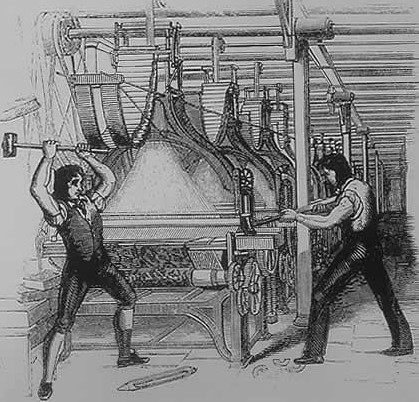
In the early 1800s, there were around 30,000 knitting-frames in England. But change had already started to set in. Change of fashion (men moving from stockings to trousers) and increasing exploitation of weavers by the middlemen were two major factors. But perhaps the most important was the mechanization and wide-frame machines that were coming in to make production faster. Production moved from homes to factories with this mechanization.

As more and more people lost their livelihoods, anger and frustration boiled over, and mill-owners and the new machines were targeted. The scale of the sabotage that occurred in England between 1811 and 1816 was beyond anything seen before.  In the peak three months of the riots, 175 of these new frames were broken per month! The people involved in these riots and destruction called themselves ‘Luddites’. The origin of the name is not quite clear, but some said it was after Ned Ludd, a legendary weaver who in 1770 was supposed to have smashed such machines.

Governments then, as today, were heavy-handed. Their response to the riots was to pass the Frame-Breaking Bill in the House of Commons in February 1812. The Bill was drastic– it proposed transportation or the death penalty for those found guilty of breaking stocking or lace frames. Not everyone was happy with the draft Bill– in the House of Lords, the poet and social campaigner Lord Byron argued against it saying that it was placing the value of life at “something less than the price of a stocking-frame”.  But such passionate appeals did not help, and the Bill was passed.

The Government would have expected all such riots to stop after the Bill. But exactly the opposite happened. The riots actually became more violent and rioters started using arms. The logic was that if they were going to be punished by death or deporatation for breaking frames, then they might as well do something that really deserved such drastic measures. A popular rhyme at the time was “you might as well be hung for death as breaking a machine”. A few mill owners were in fact killed. Government response also got harsher and several Luddites were hanged.

The climax of the Luddite Rebellion took place at midnight on Friday 28 June 1816. Sixteen men raided the factory of Heathcoat and Lacy at Loughborough, with around 1000 sympathisers cheering them on.  They destroyed nearly all of the fifty-five lace-frames.  Subsequently eight men were sentenced to death and two were transported.

The protests died down after that. Mechanization marched on, and the thousands who were involved in their traditional occupation lost out.

Technology will come. But how do we make the changes so we can reduce the negative impacts? How do we make the world a more inclusive place? Surely we cannot let history repeat itself!

–Meena

Photo-credit: historicalbritain.org/

A Brush With History

A survey in America in 2003 asked people which of the following inventions would be the hardest to live without: the automobile, the personal computer, the cell phone, the microwave, and the toothbrush. The more recent inventions trailed the list; the century-old automobile came in second, and the five-century-old toothbrush came in first!

This week Meena took a walk through the history of walking sticks. Continuing a look at things that aid, and starting at the head rather than the legs, here’s looking back at the object that we start and end our day with—the toothbrush!

But cleaning teeth did not wait till the discovery of the toothbrush. From the earliest times, people used to chew on a piece of twig until it softened and became frayed. This process helped to not only reach crevices where particles hid, but also released juices in the mouth which performed the task that toothpastes do now (not to mention the regular work out for the jaws!) Twigs from aromatic shrubs or trees were also built-in mouth freshening!  Even today neem and babool twigs continue to be used by many. While one end of the twig was frayed by chewing, the other end could be niftily carved into a toothpick to pick at the more stubborn bits wedged between the teeth.  

Such tooth cleaning tools date back to 3500-3000 BC, to early Babylonians and Egyptians. Toothsticks these have been discovered as part of burial artifacts in Egyptian tombs, to enable the departed persons tooth cleaning routine even in the afterlife.

Different cultures had other cleaning techniques. Some used a rag dipped in sulfur oil or a saline solution to wipe teeth. Another practice was to just rub baking soda (sodium bicarbonate is still an ingredient in toothpastes) directly onto the teeth.

The transition from a ‘make your own bristles by chewing’ implement to the toothbrush in its early form as we know it is believed to be the invention of the Chinese in the 15th century. Using a piece of bone or bamboo, they attached, at right angles to this, stiff coarse bristles from the back of a hog’s neck, and voila! You could reach the difficult to reach crevices in the mouth, and also actually brush your teeth rather than chew with them.  

News of this nifty device reached Europe via commercial travellers during the middle ages. But it was difficult to replicate because the Siberian hog’s hair which was ideally stiff and coarse was not available; and the horsehair used as a substitute was not stiff enough.

The story goes that an Englishman named William Addis who was jailed for inciting a riot spent his time in prison experimenting with alternatives to cleaning teeth by the prevalent method of rubbing them with a rag covered in soot and salt. Addis carved a handle out of a small bone, drilled holes into it, and inserted tufts of boar bristles which were held in place by glue. He had found his replacement for the soot and rag!

After his release Addis began importing coarse boar bristles from the cold climates of Siberia and northern China. His design and the combination proved so successful that, in 1780 he founded a company called Addis to mass produce these brushes, and became a very wealthy man. The company continues to be in the brush business till today.

The expanding market gave rise to innovations in design and material. The single or double row of bristles gave way to a three-row brush with serrated bristles, and Meyer Rhein patented this design in 1844. The Chinese civil war in the latter 1800s, and later the Japanese invasion of China made it increasingly difficult to procure the boar bristles. The invention of a nylon, new synthetic material in the mid-1930s provided a timely alternative to natural bristles. This invention began a new phase in the history of the toothbrush with Dr West’s Miracle Tuft Toothbrush in 1938, the first such toothbrush with nylon bristles. And the rest, as they say is history.

While the material of the handle and the bristles continues to be plastic and nylon, today toothbrushes come in a mouth-boggling range of shapes and sizes. Handles that are straight, angled, and contoured with a variety of grips; and bristles ranging from hard to extra-soft offer something to fit every tooth. While the fundamentals of their design have not changed since the time of the Egyptians and Babylonians, today toothbrushes, like all products are marketed with labels such as ‘ergonomically designed’ to ‘dentist endorsed’.  

Even more heavily dentist-endorsed are the mouth-watering choices in toothpastes. We have come a long way from sooty rags as mouth-cleaning agents. It is believed that mouth cleaning and freshening agents were in use even before the invention of toothbrushes. Ancient Egyptians, Greeks, Romans, as well as people in China and India used a variety of ingredients to keep teeth and gums clean, as well as for whitening teeth and freshening breath. These included powdered charcoal and bark, as well as a powder of ox hooves, ashes and burnt eggshells which added abrasiveness. The Chinese added mouth-freshening components such as ginseng, herbs, mints and salt.

Before the 1850s these mouth cleaners were in powder form. Early versions of these in paste form contained soap, and in the 1850s chalk was included in the composition. During the 1850s, a new toothpaste in a jar called a Crème Dentifrice was developed; in 1873 Colgate started the mass production of toothpaste in jars. The late 1880s saw another breakthrough in toothpaste manufacturing with the invention of toothpaste tubes; making it easier to carry, and to use.  Colgate introduced its toothpaste in a tube similar to modern-day toothpaste tubes in the 1890s. Today toothpaste is always associated with the tube.

The formula of toothpaste underwent changes over time. Soap, which was initially used in toothpaste, was later replaced by other ingredients like sodium lauryl sulphate (which continues to be an ingredient in most toothpastes). This transition led to gentler toothpaste options and a wider variety of flavours.

In the second half of the twentieth century modern toothpastes were developed to help prevent or treat specific diseases and conditions such as tooth sensitivity. Fluoride toothpastes to help prevent decay were introduced in 1914. Toothpastes with very low abrasiveness were also developed, and helped prevent the problems caused by overzealous brushing. Each of these is heavily advertised and endorsed by professional ‘oral health specialists’. The new trend in toothpastes is the return to natural organic ingredients to replace the chemical components. Perhaps a return to its origins, albeit in ‘brand’-new avatars!

–Mamata

Walking Stick: Symbol of Status, Symbol of Renunciation

The walking stick may be one of the most ancient tools ever invented (or should we say ‘discovered’??!!). I can imagine my ancient-ancestress in Africa, 300,000 years ago, stopping to cut a branch and smoothen it, to help her trek and clamber over hills and rocks.

Walking sticks obviously began as mobility aids, in that they help with balance and mobility issues; reduce the risk of falling; help those recovering from injuries and those who experience pain in their hips or knees. But of course, they were also used for self-defence. Having a two-in-one is always great–my ancient grandmother would have used hers to shoo away wolves or hyenas.

What began as a very functional item would soon have become a thing of beauty and pride– my ancestress-grandmother may have spent the evenings chipping at her stick and carving wonderful designs on it.

Down the ages, these sticks became a symbol of power, authority and status. Ancient images show kings, religious leaders and authority figures holding them.

But walking sticks really came into their own in the 17th and 18th centuries, when they became an essential part of the wardrobe of fashionable men in Europe. The cult is thought to have started with Louis XIV. This royal king was conscious of his height—he was 5’4”, and so used heels (red and high). And to help him balance, he used a walking stick. Heels and walking sticks became the rage in the French court, and then spread to the rest of Europe and to England. They became prized possessions  and an oft-exchanged gift between kings and courts.

And of course, befitting the importance given to these objects, they began to be made of precious material and extravagantly decorated. The knobs or handles were carved individually, made of gold, silver, ivory, tortoise shell, or painted porcelain, and studded with precious stones or inlaid with mother of pearl. Shapes ranged from lions to dogs to rams to fantastical creatures. Louis XIV had a stick whose eagle knob was set with twenty-four diamonds!

And no one who could afford it was content to have just one.   Voltaire, the French philosopher-writer owned eighty sticks, though he considered himself a man who did not follow fashion.  Count Brühl of Dresden, owned three hundred canes to match his three hundred suits, and had a snuff-box to match each cane! Queen Victoria had a room full of canes, gifted to her from across the world, though she used only one–one of great historic value which had been presented to King Charles II. The head was made of “An idol which graced the temple of an ill-fated Indian prince… an exquisitely wrought affair in ivory… The eyes and forehead are jewelled and on the tongue is the rarest of rubies.”

But if walking sticks were a symbol of worldly power, they were also the symbol of spirituality. They were among the few possessions of monks–Hindu, Jain and Buddhist.  A staff is part of our image of Swami Vivekananda. And of course Gandhiji! It was with the help of his lathi that Gandhi strode across the country, and walked 241 miles in 24 days to protest the British monopoly on salt in India.

There is a very interesting story about Gandhiji and his lathi. In the 1920s and 30s, Ghorghat village in Bihar made and supplied lathis all across north India, and these were essentially used by the British forces on protesting unarmed Indians. When Gandhiji visited Ghorghat in 1934, the villagers wanted to gift him a lathi. He agreed but put a condition—that they would not sell them to the British anymore. It is a symbol of those times and of Gandhiji’s influence that the villagers readily agreed to give up a means of their livelihood. Gandhi accepted their gift. Ever since, the village celebrates ‘lathi mahotsav’ to commemorate the gifting of a lathi to the Mahatma.

Walking sticks started losing their image as a fashion-accessory around the middle of the last century, but great are the advancements of walking sticks as mobility aids. So now it is about function and not art!

Well, we, especially men, may have lost a fashion accessory. But with better and more functional walking sticks on the market, senior-life is surely better!

–Meena