Two Faces of War

As the world watches in despair at another meaningless war, amidst the dark and dismal narratives, it is the stories of hope and resilience that resonate the loudest. And unknown or forgotten connections are remembered anew.

For many of us, Ukraine was just another name on the map, and we imagined that it was far away geographically and personally. Until we read about the many many Indians who have been living, studying and working there. It got even closer with the media in Gujarat full of stories not only of the Gujarati students who were stranded there, but equally of the way other Gujaratis in neighbouring countries were offering overwhelming help and support to fellow countrymen in need. In Poland especially food and shelter is being given with open hearts and homes—helping to create a little India in a distant land.  

This link with Poland goes back many years, back to another war—World War II, and a reverse flow of displaced people. One of the heart-warming stories is about how the Maharaja of Jamnagar created a Little Poland in Gujarat.

In 1939 Poland was invaded by both Germany and Russia. There were mass arrests, massacres, grabbing of land and businesses, and large-scale deportations. Over two million Polish civilians were sent to camps in Siberia, and thousands died, even before they got there. Hundreds of Polish children were left orphaned or abandoned. In 1941 there was an international amnesty that allowed the destitute refugees to leave the Soviet Union. They undertook arduous and long journeys to distant lands that were offering them refuge.

India was at the time, still under British rule and the British government was not keen on accepting refugees. In the face of severe opposition by the British, Digvijaysinhji Ranjitsinhji Jadeja or “Jam Saheb” as he was called, the Maharaja of Nawanagar, a princely state in Gujarat was the first to offer the orphaned children from Poland refuge. The 46 year old king had developed a special interest in Polish culture ever since his meeting with Ignacy Padrewski, a Polish pianist that he had met in Switzerland. He was moved by the plight of the Polish orphans. Despite the official British refusal to accept these refugees, as the head of a princely state the Maharaja had some level of autonomy. He was determined to use it and take in the homeless children. 

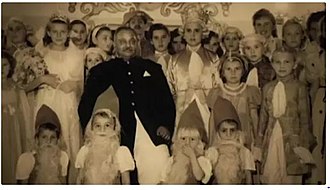
In early 1942 the first group of 170 children who reached Bombay, and travelled on to Balachadi a small seashore town close to the maharaja’s capital Jamnagar. The maharaja welcomed them with the words “You are no longer orphans. From now on you are Nawanagarians and I am Bapu, father of all Nawanagarians, so I’m your father as well”.

Bapu Jam Saheb and his Polish children at a Xmas show

Jam Saheb was true to his word. The children were initially put up in tented accommodation while the Balachadi camp was being built. The maharaja went to great lengths to ensure that Balachadi became a home away from home for these children who, at a young age, had experienced dislocation, loss of family and home, and the horrors of war. He built dormitories in which each child had a separate bed, and generously provided food, clothes and medical care. He converted the guest house of his Balachadi palace into a school, and even set up a special library with Polish books so that the children would not forget their mother tongue. He was concerned that they should not forget their own culture; he encouraged the children to put up shows including their songs and dances, and continued the country’s strong traditions of Scouts and the church. He encouraged children to play sports, and they were free to use his gardens, squash courts, and pool. He was concerned about their choice of food and would host special meals for the children. One of the children recalled, many years later, how the children did not like the way spinach was cooked and went on a ’spinach strike’. When the Jam Saheb heard about this he immediately ordered the cooks not to include spinach in the meals. 

Between 1942 and 1946 over 600 Polish children found a home in Little Poland thanks to the maharaja. When the war ended and the orphans had to return to Europe, both the children and the maharaja were heart-broken. The unusual bond that was formed remained strong, and played a crucial role in giving stability and hope to children who had lost everything.

The Maharaja died in 1966. His Polish “children” had spread across the world in countries where they started new lives after the end of the war. 76 years later, as a testimony to the enduring bonds, and to mark 100 years of Poland’s independence, in 2018, six of these “children” (now in their nineties) returned to Balachadi. They walked down memory lane, remembering the Bapu who not only gave them a home, but also their childhood.

Jam Saheb is remembered not only by his children, but is also considered a hero by the country that honours his generosity. He was posthumously awarded the Commander’s Cross of the Order of Merit. A city square in the heart of Warsaw is named Skwer Dobrego Maharadzy (The Square of the Good Maharaja). When he was alive the Maharaja had been asked how the Polish people could thank him for his generosity and he had replied that they could name a school after him. One of the city’s foremost private schools is named the Maharaja Jam Saheb Digvijaysinhji High School. A fitting tribute indeed.

Today, as another war rages, Poland is welcoming thousands of displaced women and children. Perhaps some of them will find refuge in the Square of the Good Maharaja, and history would have come full circle.

–Mamata. 

Women of Substance

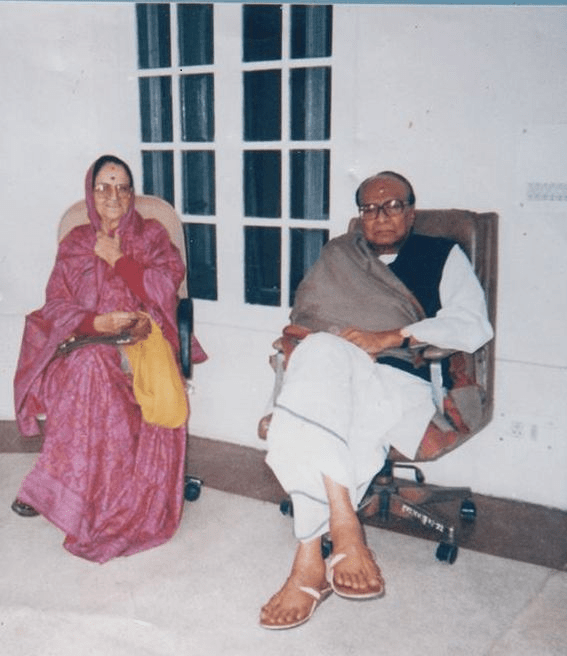
Some people know the name Savita Ambedkar. Fewer know the name Gyan Patnaik. These were women who were achievers in their own right, but decided to stay in the background, while their husbands took the larger stage. A small peek into their lives…

Savita Ambedkar: Dr. Savita (born Sharada) Ambedkar was the wife of Dr. BR Ambedkar. Born in 1909, she belonged to a very forward-looking family which gave great importance to education. This enabled her to pursue her MBBS in a day and age when it was not very common for women to even complete school. After graduating from Grant Medical College Bombay, she was appointed as Medical Officer in a major hospital in Gujarat. However, due to ill-health, she gave up her job there and returned to Bombay in a while, and started assisting a senior doctor in his practice. It was at this time that she met Dr. Ambedkar at the house of a common acquaintance He was immersed in his work as Labour Minister in the Viceroy’s Council. The acquaintanceship began with a few conversations about women’s rights, Buddhism, etc., and continued for many years. . Dr. Ambedkar had lost his first wife and had resolved not to marry. During the writing of the Constitution which obviously must have been a very stressful time,  Dr. Ambedkar’s health suffered and he came to Bombay for treatment. Dr. Savita was closely involved in his treatment, and they had many conversations about social change, literature, religion, etc. Their friendship grew, and they decided to get married in 1948. After that, she not only lent her intellectual support in his many tasks, she also acted as his personal doctor-nurse, and was involved in social work. Dr. Ambedkar has credited her with increasing his life-span by 8-10 years.

Tragically, after his death, she was accused of having poisoned him. Govt. of India set up committee to look into the circumstances of his death. The committee found no indication of foul play. While during Dr. Ambedkar’s life, she was a very respected figure in the Dalit-Buddhist movement, after that, there were allegations that she was not really committed to it, given her Brahmin birth. However, after some years, there was a reconciliation and she actively participated in it once again. She was responsible for the preservation of many documents and papers related to her husband and received the posthumous Bharat Ratna on his behalf.

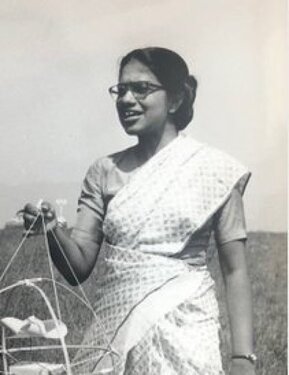
Gyan Patnaik: Fiesty Gyan was the wife of the flamboyant Biju Patnaik.  She was one of the first women-aviators in India, and probably the first woman to get a commercial pilot’s license in the 1930s. It was their joint love of flying that brought the Punjabi Gyan and the Odiya Biju together.  He piloted his baraat across the country for the wedding, and was known as Punjab’s son-in-law.

Gyan participated fully in the nationalist movement with Biju. She co-piloted the plane with him in his daring rescue of Indonesian leaders from Dutch-occupied Java. She went back there on several missions with Biju to bring humanitarian aid to the beleaguered people. She was also very active in supporting the freedom struggle in Nepal in the 1950s. She flew several sorties to Burma along with her husband to rescue British families as the Japanese invaded the country during World War II.

Gyan Patnaik with her Husband

She was passionately interested in science and the use of science for improving people’s lives, and provided leadership to these initiatives through the Kalinga Foundation. She was a wise counselor not only to Biju Patnaik, but also to many leaders in Orissa. However, during the later years, Biju preferred that she live away from Orissa so as not to get caught up in the rough and tumble of state politics.

A woman-doctor and a lady-pilot in the 1930s were on path breaking journeys and would have made waves. Being married to prominent men brought them to the public eye and they garnered accolades in a different way—one where they were seen more as supporters of men on the national stage, rather than achievers in their own right.

On International Women’s Day, we claim back the stage for them and many others like them, and wish all readers.

–Meena

PS: We started our blog on International Women’s Day, 2018. Four years and 480 posts–an opportunity for immense learning and sharing. A big thank you to all our readers!

War and Peace

Once again the world is at war. Just as the images of the ravages in Afghanistan were beginning to fade, our senses are once again overwhelmed with the heart wrenching narratives of the unfolding tragedy of war in Ukraine. As the powers that be are flexing their muscles and showcasing their might, and statesman are spouting rhetoric, people like you and me have had their entire life turned upside down overnight. Behind the smoke and the rubble are thousands of human faces, each with their personal stories of loss and trauma, looking into an abyss of uncertainty.  

In all the din and despair, we all need some words of sanity and hope, but there are so few voices now that can bring some reason and solace. Sadly in the last few months the world lost two such voices who saw the senselessness of war and dedicated their life to peace. One was Archbishop Desmond Tutu who passed away in December 2021 and to whom we paid tribute in our piece Looking Ahead With Hope posted on 30 December 2021. The other was Thich Nhat Hanh who passed away in January this year at the age of 95.                        

Thich Nhat Hanh was a Vietnamese Buddhist monk who was a prolific author, poet, teacher and peace activist. He was born as Nguyen Dinh Lang in Hue in Central Vietnam on October 11, 1926. He joined a Zen monastery as a novice monk at the age of 16. Upon his ordination in 1949, he assumed the Dharma name Thich Nhat Hanh. Thich is an honorary family name used by Vietnamese monks and nuns. Later he was universally best known as Thay which means teacher.

Even as a young bhikshu (monk) in the early 1950s, Thich Nhat Hanh was actively engaged in the movement to renew Vietnamese Buddhism. He was one of the first bhikshus to study a secular subject at university in Saigon, and one of the first six monks to ride a bicycle.

When war came to Vietnam in the mid-1950s, monks and nuns were confronted with the question of whether to adhere to the contemplative life and stay meditating in the monasteries, or to help those around them suffering under the bombings and turmoil of war. Thich Nhat Hanh was one of those who chose to do both. Even as he was getting deeper into the spiritual realm of Buddhist beliefs, he was also actively engaged in the efforts at mitigating the devastating effects of the war on his people and country. In the early 1960s, Thich Nhat Hanh founded the School of Youth and Social Service, a grassroots relief organization of 10,000 volunteers including young monks. They went into the war affected areas to care for the wounded, to resettle the refugees by setting up new places for these people to live, to build schools and health centres. The youth did not see themselves as just social workers, but as practitioners of the Buddhist principles of non-violence and compassionate action.

In 1961 Thich Nhat Hanh travelled to the United States to teach Comparative Religion at Princeton University, and the following year went on to teach and research Buddhism at Columbia University. He returned to Vietnam in 1963 to join the growing Buddhist opposition to the U.S.-Vietnam War, which attracted global attention because of self-immolation by several monks as a gesture of protest. He travelled once more to the U.S. and Europe to make the case for peace and to call for an end to hostilities in Vietnam. Towards the height of the Vietnam War in the mid-1960s he met civil rights leader Martin Luther King, whom he persuaded to speak out against the conflict.

In 1964 Thich Nhat Hanh published a poem called Condemnation in a Buddhist weekly. It reads in part:

Whoever is listening, be my witness:
I cannot accept this war.
I never could I never will.
I must say this a thousand times before I am killed.
I am like the bird who dies for the sake of its mate,
dripping blood from its broken beak and crying out:
“Beware! Turn around and face your real enemies
— ambition, violence hatred and greed.”

The poem earned him the label “antiwar poet,” and he was denounced as a pro-Communist propagandist. As his voice began to be heard in America and Europe, and because he refused to support either North or South Vietnam in the conflict, both the communist and non-communist governments banned him from entering the countries, forcing Thich Nhat Hanh to live in exile for over 39 years. As he explained “I did not intend to come and to stay for a long time in the West. In fact, I was invited to deliver a series of talks and took the opportunity to speak about the war, the version that was not heard by people outside of Vietnam because the Buddhists in Vietnam, we represent the majority who do not side themselves with any warring parties. And what we wanted really is not a victory, but the end of the war. So what I told people over here at that time did not please any warring parties in Vietnam. That is why I was not allowed to go home.”

During this period of exile, Thich Nhat Hanh, who spoke seven languages, became a global advocate for peace and spoke and wrote widely against the cycle of war and violence. He also continued to teach, lecture and write on the art of mindfulness and ‘living peace,’ and in the early 1970s was a lecturer and researcher in Buddhism at the University of Sorbonne, Paris. In 1975 he established the Sweet Potato community near Paris, and in 1982, moved to a much larger site in the south west of France, known as Plum Village which grew into the West’s largest and most active Buddhist monastery, with over 200 resident monastics and up to 8,000 visitors every year, who come from around the world to learn “the art of mindful living.”

Thich Nhat Hanh was able return to Vietnam only in 2005, when the Communist government allowed him to teach, practice and travel throughout the country. His anti-war activism continued. In 2014, a month after his 88th birthday he suffered a severe stroke which left him largely paralyzed and unable to speak but he continued to spread his message through his serene presence. Thich Nhat Hanh passed away peacefully at his root temple, Tu Hieu, in Hue, Vietnam, on January 22, 2022 at the age of 95.

If his physical presence was here today, the gentle monk would have been anguished by yet another meaningless war and reminded the world that there is an alternative path of trust, compassion and fellowship.  Let us remember his words:

“We know very well that airplanes, guns and bombs cannot remove wrong perceptions. Only loving speech and compassionate listening can help people correct wrong perceptions. But our leaders are not trained in that discipline, and they rely only on the armed forces to remove terrorism.”

And most of all: “Hope is important, because it can make the present moment less difficult to bear. If we believe that tomorrow will be better, we can bear a hardship today.”

With hope for a better tomorrow.

–Mamata

Rahul Bajaj: Carrying on the Legacy of Jamnalal Bajaj

Rahul Bajaj was a doyen of Indian industry, and a rare brave man who spoke his mind under all circumstances. His passing away is the end of an era in which he played a major role–from operating in the licence-permit raj, to competing in the liberalized regime, to establishing India’s position as an industrial force to be reckoned with.

What made him ‘him’ was surely shaped by his family influences—especially his grandfather, Jamnalal Bajaj. And that is whom we talk about today.

Jamnalal Bajaj was considered Gandhiji’s fifth son, and adopted all his values—from Ahimsa, to his dedication to the poor, to his commitment to locally made goods, to his patriotic spirit. Shri Bajaj was an active member of the Congress Party, and gave up the Rai Bahadur title conferred on him by the British Government and joined the non-cooperation movement. He fought for the admission of Harijans into temples, and in the face of strong objections, opened up his own family temple in Wardha—the first temple in the country to do this.

Wardha, Maharastra was where Jamnalal’s family was settled, and that is how it came to play such an important part in the Freedom Struggle. When Gandhiji left the Sabarmati Ashram at Ahmedabad for the Dandi March, he vowed not to go back till freedom was achieved.

Jamnalal had earlier spent time at Sabarmati Ashram with his family, and had been deeply moved by the experience. He invited Gandhiji to come to Wardha and set up an Ashram there after the Dandi March. And thus did the Sewargram Ashram come up there, and Wardha become the centre of the Freedom Movement.

A few years ago I was privileged, during a visit to Wardha, to visit Bajajwadi, where critical meetings with regard to the freedom struggle were held, marked by the presence of not only Gandhiji but also Jawaharlal Nehru, Dr. Rajendra Prasad, Maulana Azad, Sarojini Naidu, Sardar Patel, Netaji Subhas Chandra Bose, Dr. Pattibhi Sitaramayya among many others. All of them stayed there when they came for meetings and discussions. The historical resolution calling for the Quit India movement was signed at Bajajwadi.

Bajajwadi
Room in Bajajwadi where Quit India movement was discussed

Wardha was also the site where the Gandhiji’s idea of Nai Talim or New Education was developed, discussed at a National Education Conference in 1937, and put into practice at a model school.

The basic tenets of Nai Talim were:

  • That education should include a “reverent study of all religions.”
  • Education meant lifelong learning
  • And a re-definition of the role of the teacher, which is summed up by him as : “A teacher who establishes rapport with the taught, becomes one with them, learns more from them than he teaches them. He who learns nothing from his disciples is, in my opinion, worthless. ..In this way, a true teacher regards himself as a student of his students.”

Another important initiative rooted close to Wardha was Maharogi Seva Samiti, the first indigenous leprosy care centre in India. Manohar Diwan, one of Gandhi’s followers became the first non-missionary Indian to work on leprosy, and set up the centre under the guidance of Vinoba Bhave and Gandhiji in 1937.

Jamnalal Bajaj was deeply involved in the freedom movement and every one of these political and social reform movements. Apart of course to his involvement in business and the founding of the Bajaj Group.

And thus was Rahul Bajaj’s role cut out for him!

–Meena

Ref: https://www.jamnalalbajajfoundation.org/

The Silent Valley Saga: A Landmark in India’s Environmental Movement

Last week, we paid our tribute to Prof. MK Prasad—one of the key people behind saving Silent Valley. This week, I thought I would re-visit some details about Silent Valley and the campaign.

The Silent Valley deep in the Western Ghats of Kerala is a very special forest. In fact, it is one of the oldest stretches of rainforest in the world, ‘the last authentic sizeable evergreen forests left’, in the words of MK Krishnan, the eminent naturalist.

Lion tailed Macaque
Lion-tailed Macaque. Illustration: CEE

It is home to about a 1000 species of flowering plants, 107 species of orchids, 100 ferns, 200 liverworts, 75 lichens and about 200 algae, many of them endemic to the area. It counts 34 species of mammals, 292 species of birds, 31 species of reptiles, 22 species of amphibians, 13 of fishes, 500 of butterflies and moths, besides a multitude of other orders of animal life (keralatravels.com). And these are only the species documented! The valley’s flagship species is the lion-tailed macaque, a species endemic to the Western Ghats.

Many are the myths and legends associated with this forest. It is said that the Pandavas, during their peregrinations after they lost their kingdom to the Kauravas, happened to come to this forest. So enchanted were they that they decided to make it their temporary home. The river that runs through the forest is called Kuntipuzha, in memory of their mother, and the forest itself was called Sairandhari, this being another name for Draupadi.

In 1847, the Englishman Robert Wright came upon the thick forest. He or his colleagues named it Silent Valley. There are several theories about why this name was given. It could of course be an Anglicization of Sairandhari, the traditional name. Or it could be because there are no cicadas in this forest. The constant hum in most forests is due to cicadas, and the absence of this noise can be quite stark. Cicadas do not thrive in wet climate, and that is why they are not common here. Yet another theory is that the British gave it this name due to the presence of the rare lion-tailed macaque whose Latin name is Macaca silenus. But in spite of its name, the Silent Valley resounds to the cadences of the river, bird-calls, monkey-whoops, and insect chirrups.

Silent Valley burst into the national consciousness in the 1970s, when the Kerala Government proposed to construct a dam on River Kuntiphuzha, to generate electricity for the State’s growing needs. When scientists and environmentalists came to know about this, they were very concerned, as it would mean that the Silent Valley would be flooded, and that would be the end of that very special habitat and the unique flora and fauna there.

Kerala Sastra Sahitya Parshat (KSSP), a people’s science movement, took up the cause. On the one hand they did techno-economic and socio-political studies to show the impact of the project, and its pros and cons. On the other hand, they mobilized public opinion, and garnered the support of eminent scientists and people. They also came up with alternatives to building the dam e.g., building a series of small dams, rather than one large one.

It was a long and hard battle. It became a bitter war between the State which wanted the project, and the people who did not. The Centre through the course of the controversy saw many changes, and some of the PMs were for and others against the project. Each set up Committees of scientists. Media was also ranged on the two sides, beginning with local media predominantly in favour of the project, and then slowly veering against it. For a long time, national media paid little attention to the issue, but later weighed in favour of the environment. International environmental organizations also came into the fray. The matter went to court to—with the High Court at some stage giving the go-ahead.

It was when Mrs. Indira Gandhi came back as PM that it began to look as if the conservation movement would win. In 1981, she declared Silent Valley a protected area. But it was found that the hydroelectric dam was not covered in the area under protection. Protests began anew, till finally the project was scrapped in 1983. In 1984, Mrs. Gandhi declared it a National Park—the highest level of protection that can be given. And Silent Valley was saved!

Kerala government has recently decided to declare the buffer zone of Silent Valley National Park as a wildlife sanctuary—the Bhavani Wildlife Sanctuary spread across 148 square km.  So hopefully, Silent Valley continues to remain safe!

Hats off to the scientists, environmentalists, poets, artists, students, NGOs , media, politicians and the common people who fought the long and hard battle to preserve our common heritage.

There are other such success stories, but sadly not very many. And even more sadly, hardly any in recent times.

–Meena

Activist Poet: Homero Aridjis

This week several of my friends shared their fond remembrances of Prof MK Prasad. For us at CEE, MKP was the mentor with the twinkle in his eye and a gentle rebuke or prodding, even as he solicitously asked about our families, and encouraged us in our work as environmental educators.

Professor MK Prasad was a rare combination of utmost humility and simplicity with the mind of a brilliant academic, a fighter’s spirit, a scientist’s rigour, a leader’s passion, a prolific writer, and a relentless campaigner for the environment. As one newspaper article mentioned ‘activism and writing are not always identical. The activist has to be amidst people organising and motivating them while garnering available scientific facts. A writer has to confine himself to his study for long hours to research, read, think and write.’ Prof MK Prasad, like some of his other fellow members of the Kerala Sasthra Sahithya Parishad (KSSP) beautifully combined activism and writing. This was also a unique characteristic of the Save the Silent Valley Movement that Meena described—the coming together of poets, writers, activists and citizens for an environmental issue.  

There is perhaps one other similar story that echoes this movement. The story of Homero Aridjis, a Mexican poet, novelist, activist, and diplomat, and founder of the Group of 100 a group of intellectuals and artists who united to tackle and environmental issues in Mexico, and raise awareness of environmental issues internationally.

Homero Aridjis was born in 1940, and grew up in the Mexican state of Michoacán near the area where Monarch butterflies gather for the winter. He recalled how as a child he saw Monarch butterflies flying across his village every winter. There was also his annual school excursion to the sanctuaries in the nearby mountains to see the butterflies. On these excursions he also saw that the mountains were being deforested with the connivance of politicians, loggers and local farmers who were cutting down the oyamel fir trees where the Monarchs roosted. Since then the young Homero became concerned that this would mean the loss also of the Monarch butterflies as the forests were their habitat. The Monarch butterfly, a fragile insect that flew thousands of miles from Canada to Mexico every winter sparked the poet in him, and he wrote many poems about butterflies. The butterfly also became, to him, a symbol of the environment. As he explained: I love poetry and the environment for me is the poetry of life. I can’t be living now in a world without poetry or be a member of humanity without feeling the poetry of human beings.

As he grew older, and embarked upon a career in the Diplomatic Service, being posted as his country’s envoy to several European countries, Homero’s passion for the environment was also growing. One day in 1985 he read a letter sent by a philosopher friend to a local newspaper. He felt that a single small voice of dissent would not make a difference, but he thought that if the writers and artists of Mexico joined together to make a strong statement, they would perhaps stand a chance of being heard. A few weeks later, on 1 March 1985, a fierce critique of the environmental havoc amidst which we live was signed by 100 leading personalities in the arts, literature, culture and science in Mexico.

The statement was published in the national and international media. Thus was born The Grupo de los Cien — the Group of 100 which took up the cause to reverse ecological damage and environmental degradation in Mexico, raising awareness about the threats to many species and habitats and campaigning to ensure the continuance of Mexico’s rich biological diversity.

Due to public pressure the President of Mexico in 1986, declared the habitat of the Monarch butterfly and five other sanctuaries as ‘protected’. But illegal logging and other destructive activities continued in the forests. Homero took up his pen as a weapon and wrote many articles in the newspapers and many petitions to draw attention to this. His diplomatic posting as an ambassador to UNESCO helped him to take the battle to an international stage. Before he left UNESCO, the committee of the natural heritage approved the monarch butterfly sanctuaries as protected Natural Heritage of Humanity.

The Group of 100 continued to take up critical issues that that threatened the delicate balance between environment and development. They campaigned to seek protection for the beaches where sea turtles laid their eggs, and that resulted in ending the commercial killing of sea turtles in Mexico. In 1995 they launched a fierce   fight against a planned industrial salt plant that would have had catastrophic impacts on the lagoons where gray whales came to give birth as well as the surrounding environment and local communities. It took five years of battles before the plant was cancelled. Homero bore the brunt of the hostility from vested interests and even received death threats. The Group of 100 remains active to this day, fighting the same battles, with the same undiminished spirit.

As Homero Aridjis put it: You have to have a commitment and a conviction to defend the environment even if you know that the forces of destruction are very big. You have governments, you have corporations, you have individuals, you have criminals, you have many people against nature. That is very difficult but you as a human being and a person with an environmental conscience you have to do everything you can, always in peaceful ways and in legal ways, to defend the environment. You have to defend the things you love.

MK Prasad and Homero Aridjis two warriors who fought with pen as well as sword.

–Mamata

The Storyteller Who Saved Silent Valley: A Tribute to Prof MK Prasad

For those of us who started working on environment-related issues in the ‘80s, ‘Silent Valley’ was one of the success stories which was held up to us as an example of how arguments based on good science, people’s power, and unrelenting campaigning could save the world. Or some part of it.

For those who have forgotten what this was about, hydroelectric dams were proposed on the River Kunthipuzha, which would have involved the submergence of the forests of Silent Valley, a biodiversity rich habitat, home to many, many unique species of flora and fauna, including the rare and unique lion-tailed macaque which is endemic to the Western Ghats.

Kerala Sasthra Sahithya Parishad (KSSP), a people’s science movement, led the campaign against the project under the leadership of Prof. MK Prasad. They published well researched techno-economic and socio-political assessment reports of the proposed project. The campaign by KSSP evoked a huge response from citizens at large, as well as eminent scientists and environmentalists like Romulus Whitaker of the Madras Snake Park, Dr. Salim Ali (who was probably the first to flag the issue), Dr. MS Swaminathan etc. The renowned poet Sugathakumari was at the forefront of the movement, and her poem “Marathinu Stuthi” (“Ode to a Tree”), was a rallying call for the people.

In an early and unique victory for the environmental movement in India, the then-PM, Mrs. Indira Gandhi finally weighed in, and the project was halted. Subsequently, the area was declared a National Park.

Prof MK Prasad
Prof MK Prasad

The story is one of the amazing dedication and hard work of a large number of people. But Prof. MK Prasad’s was a symbol of the movement. Prof MKP as he was fondly referred to, was a botanist who spent his life in academics. He taught botany, was Principal of Maharaja’s College, Eranakulam, and Pro-Vice Chancellor, Calicut University.

But he was not confined to classrooms, and believed passionately in taking science to the people. He was an environmental and science activist all his life, and a founding member of KSSP. His distinction as a scientist supported his environmental activism, which no one could dismiss as woolly-headed.

He was a member of the Governing Council of Centre for Environment Education for many decades and we at CEE were fortunate to have him as a teacher, guide, and mentor. Never for him the exalted distance of a Board Member. He was always interested in the minutest details of our projects and lives, and was happy to spend any length of time chatting with us. Prof Prasad passed away last week due to COVID. Here are a few poignant memories which bring him to life.

Prof Prasad, my mentor and a dear friend. It seems a little presumptuous to call this stalwart my friend, but as unassuming as he was, he truly was that. I’d scold him when he sat next to me during the Governing Board meetings, when lesser mortals like us were let in, because he would chatter away irreverently while serious matters were being discussed. He guided me through the challenge of trying to break into the ivory towers of higher education, and when things didn’t work, he’d say our efforts were “before their time”. That, always accompanied by his naughty smile, had become his code word. He also treated me as his unofficial research assistant, which I enjoyed.  He would call to ask me to find out about things that often I knew nothing about, and it was always great learning. Will miss you, Sir!

Kiran Chhokar.

When I think of Prof Prasad, I can see him walking down the corridors of ASCI where we held our Steering Committee meetings in Hyderabad. As always, he is dressed in a half-sleeved shirt, has no smile on his face – but his kind, sharp eyes are twinkling! I am immensely grateful for all his advice and guidance to the school environmental education project. But more importantly, I feel blessed to have spent some time with such a stalwart. His greatness and his humble demeanour co-existed so well! 

Something I found remarkable in him and so distinct from my generation is that he always gave a considered, detailed response to every request for advice. He never rushed to give an immediate response. Sometimes, he would respond the next day – probably after mulling over the issue. 

On one of his first visits to ASCI, I told him that there was a National Park (the KBR National Park) close by and he could probably take a stroll there in the evening. When I met him the next morning, he gave me a gentle, but proper scolding about my recommendation. I learnt my lesson – one does not present KBR as a ‘National Park’ to the person who saved the Silent Valley National Park! 

Kalyani Kandula

While I was working at the Centre for Environment Education (CEE), Ahmedabad,  I had the good fortune of knowing Professor Prasad. I have known him for many years now.  At Governing Council meetings held at CEE often I would sit next to him and would be very inspired by his valuable suggestions, critical comments and review of many projects CEE was handling. He would not mince his words. A gentle soul, very down to earth and a great inspiration to many. Professor Prasad in fact attended my sister’s wedding in Kerala. My father Dr.S.M.Nair and Professor Prasad shared a great professional and personal bond. 

Meena Nair

Some weeks after CEE’s office in Pune was started, Prof MKP dropped by. He was in Pune for some other work. Though it was a single person office and I a relatively junior staff member, Prof MKP was interested to see how I was settling in and getting on. When I told him that Amma (my mother in law) would have been happy to meet him, considering his association with KSSP, he just said that he would be happy to come over for coffee. So we did that, and Amma (and I) was very touched by the gesture. Later Prof Prasad and I went to meet Prof Pisharoty and I just felt blessed to listen to their conversation.

Sanskriti Menon

For me, he was the quintessential story teller. We would invite him to come and speak in various training programmes we organized—those for Forest Officers, for Environmental Educators from around South and Southeast Asia, for NGOs, for school and college teachers. Of course his sessions had to be around the Silent Valley Campaign. I must have sat through his sessions a dozen times if not more. But the passion, involvement and detail with which he told the story of the campaign inspired not only every new batch of trainees who had never heard it before, but equally, us the organizers who had heard it and read about it and discussed it ad-infinite. Such was the power of his passionate storytelling! And not just the Silent Valley–he had done so many interesting things, met so many interesting people, been so many interesting places–he could keep an audience engaged for hours!

Thank you Sir, for inspiring us. We are comforted by the knowledge that you are looking down at us with a twinkle in your eye!

–Meena

Another old piece on Dr. Pisharoty at : https://wordpress.com/post/millennialmatriarchs.com/43

High Flyers: Women in Aviation

Last week was Sankranti and all eyes were turned to the skies as the colourful kites soared and dipped, drifted and sailed with the breeze. Also in the sky were the avian kites, riding the thermals. From time immemorial, humans have gazed up and dreamed of soaring the skies too. The same week there was a news item about a young Belgian-British teenager who flew her single-seater Shark ultralight plane around the world in 150 days. 19 year old Zara Rutherford thus became the youngest woman to circumnavigate the world solo. One of the objectives of her mission, she says was to infuse young women and girls worldwide with the spirit of aviation. 

In the day and age when women are soaring high in all spheres, it is interesting that she feels that more women need to take to the skies. And even more interesting that India has a fair share of women, who have made their dreams of flying come true, not only today, but almost hundred years ago.

Google Doodle honouring Sarla Thukral on her 107th birthday on 8 August 2021

Sarla Thukral was the first Indian woman to fly an aircraft. Born in 1914 in Delhi, she later moved to Lahore, in what was then British India. At the age of 16 she married an airmail pilot PD Sharma who came from a family of fliers. The young bride was also smitten by the aviation bug, and encouraged by her husband, she started flying lessons. Having completed 1000 hours of flying time she earned her flying license, and did her first solo flight in a Gypsy Moth, a small, double winged plane at the age of 21, dressed in a sari. She was preparing to become a commercial pilot but the Second World War broke out, and civil aviation training was suspended. Tragically, around the same time she also lost her husband in an air crash. Sarla was grounded, but not her creativity. She took up with equal passion her love for the arts. She started studying fine arts and painting at Lahore’s Mayo School of Arts. She returned to Delhi after Partition, where she continued to paint. She married RP Thakral in 1948. She also started designing jewellery and clothes and set up a successful business which she ran till she passed away in 2008.

Sarla—high flier, in the sky and on the ground! And an inspiration for many young girls in India who have over the years taken to the skies.

One of the concerns expressed by young Zara is that there is still a big gender gap in the field of aviation in many western countries. Globally, according to the International Society of Women Airline Pilots, around 5 percent of pilots are women. In India, the share of women pilots is significantly higher – at over 15 percent, more than twice as high as in most Western countries, including the United States and Australia. According to one report India has a total of 17,726 registered pilots out of which the number of women pilots is 2,764.

We have, in the last few years, always experienced a surge of pride when we hear a woman’s voice introducing herself as the pilot on a commercial flight. Even more uplifting is the increasing number of women who are flying shoulder-to-shoulder with men in the armed forces.

Women pilots have been flying transport aircraft and helicopters in the three Forces for a long time. As far back as 1994, when many people had reservations about allowing women pilots in the Indian Air Force, Gunjan Saxena, along with Srividya Rajan, defied convention, and took up the challenge; they were two of the 25 young women to form the first batch of women IAF trainee pilots. The Kargil War of 1999 was a real test of the true grit of these women. They fearlessly flew helicopters in the combat zone, and into hostile territory to drop supplies, evacuate injured soldiers and spy on enemy positions. Gunjan and Srividya’s contribution in this critical war effort was highly commended, and an inspiration for many young women who dreamed of a career in uniform.

In October 2015, the Indian Air Force opened the fighter pilot stream to women. The first three female pilots to be inducted in the fighter squadron in June 2016 were Avani Chaturvedi, Bhawana Kanth and Mohana Singh.  These young women, were fuelled by the sense of adventure as well as the spark of contributing to the defence of our country.

Today the Indian Air Force has 111 women pilots who fly transport planes and choppers, and 10 women fighter pilots.

As Bhawana Kanth said “It is not the right time for it now, it has always been the right time for women to become fighter pilots.”

Last year Flight Lieutenant Bhawana Kanth on 26 January 2021, became the first woman fighter pilot to be take part in the Indian Air Force’s (IAF’s) tableau at the Republic Day parade at Delhi’s Rajpath.

This year, as we mark the many strides forward that our Republic has made, and salute with pride the accomplishments of its citizens, let us put our hands together for all the young women who dare to dream, and who make their dreams come true. Soar high, sisters and daughters, and may even the skies not be your limit.

–Mamata

First Lady Teacher: Savitribai Phule

I have often written in this space about ‘women warriors’. Women who have dreamed, and have made their dreams a reality, even in the face of adversity and opposition. These remarkable women are to be found in every age, and in every part of the world. And they continue to inspire, as well as to remind that what we take for granted today, was fought for, and achieved, by someone before us. One of these is the right of girls to education. This is a good week to remember a woman who paved the path for this—Savitribai Phule.

On 3 January 1831, a girl child was born in Naigaon village in Maharashtra. She was named Savitri. Her parents Lakshmi and Khandoji Neveshe Patil were Malis (traditionally vegetable growers and sellers), an economically and socially backward community. A girl child in such a community meant that she was not sent to school. The story goes that one day her father caught her leafing through the pages of an English language book and he was incensed; believing that only upper class males had this privilege. But this planted the seeds of the resolve in the young girl that she would, one day, learn to read and write.     

Savitri was married off at the age of nine. Her husband, Jyotirao Phule, also from the same community, was only 13 years old himself, and he was studying in class three. But fate may have decided that this couple would one day change the way of things.

Savitribai entered her husband’s house as an illiterate child. Jyotirao, a man ahead of his times, believed that girls had an equal right to education. He himself began teaching his young wife at home, in the face of great disapproval from the family and the community. His friends Keshav Bhavalkar and Sakharam Paranjpe also contributed to her education. Perhaps it is these early mentors who inspired in Savitri the resolve to become a teacher herself. Jyotirao supported Savitri’s journey from becoming literate to getting higher education outside the home. She enrolled for teacher training programmes, first in Ahmednagar in an institution run by Cynthia Farrar who was one of the first unmarried American women sent overseas as a missionary, and who lived and worked in India from 1827 until her death in 1862. Savitri also trained at the Normal School in Pune. She was now ready to embark on her life’s mission of educating and empowering girls.

After completing her training she started teaching girls in Maharwada Pune. Not long after that, in 1848, Jyotirao and Savitri, along with Sagunabai, a revolutionary social reformist, opened a school for lower-caste girls in Bhidewada in Pune. The curriculum included traditional western mathematics, social studies and science, as well as vocational training. Savitribai was the teacher. It is believed that she was the first Indian woman teacher. The school had only nine students to begin with, and it was a struggle to keep them in school. Savitribai offered stipends as incentive, and held parent teacher meetings to encourage and support the parents.

In a time when it was not at all common to send girls to school, this was in itself a bold step. Opening a school for lower-caste girls invited huge backlash, especially from orthodox high castes. The Phules were undeterred and determined. Over the next few years, they opened a series of schools in the Pune area for girls and for lower-caste boys and girls. This raised more hostility, which even manifested itself in throwing of stones and dung at Savitri as she walked to school. It is said that she used to carry with her two sarees, so as to change out of her soiled clothes after she reached school. Jyotirao and Savitri, who until 1849, had lived with Jyotirao’s father, had to move away due to the strong opposition from the local community. But the couple courageously continued with their mission; going on to set up 18 such schools in the region.

It is believed that when they had to leave their home, the young couple was given refuge in the home of Usman Sheikh. His sister Fatima held the same views on education as Savitri and had also studied at the same teacher training institute. She started teaching with Savitribai, and is believed to be the first Muslim woman teacher of the nineteenth century. She continued to teach at the Phule’s schools all her life. The two women shared a long friendship based on mutual respect and synergy.

Education was not the only cause that drove Savitribai. Supporting Jyotirao’s strong crusade against the practice of Sati, child marriage, untouchability and other social evils, she also worked tirelessly for freeing women of many of the social fetters that bound them. She spoke up against the practice of widows having to shave their head. The Phules opened a care centre for widows, rape victims and their children, and girls who escaped female infanticide and sati. The Balhatya Pratibandhak Griha provided a refuge for them to live, and raise their children, in safety and dignity. Later the Phules adopted a boy from here as their son.

Savitribai expressed her views not only by her actions but also through her words. She wrote poems extolling education as a means to a life of dignity. One of her poems in Marathi with the title Go, Get Education urges “Sit idle no more, go, get education, end the misery of the oppressed and forsaken. You’ve got a golden chance to learn, so learn and break the chains of caste.” Her first anthology of poems Kavya Phule was published in 1854.

In 1897 the bubonic plague broke out around Pune. Savitribai and her adopted son Yashwant set up a clinic to take care of affected patients. While tending to the patients, Savitribai herself caught the infection, and succumbed to it on March 1 1897.

Savitribai’s life was a tale of true grit and perseverance, and she was a pioneering crusader for equality and justice, especially for women. Today she is described as “India’s first feminist icon”. An article in the Oikos Worldviews Journal sums up her contribution thus ‘Indian women owe her. For in today’s world, whether an Indian school girl reading English, an Indian woman who reads, an Indian woman who is educated, or an educated international desi woman, her education as an Indian female grows from the garden planted by Savitribai Phule’.

–Mamata

Biju Patnaik, the Daredevil Maverick

A chance occurrence can reveal the depths of one’s ignorance in a particular field. For me, the latest such was a linkedin post that I read about Shri Biju Patnaik. I realized that that I hardly knew anything about him. The extent of my knowledge could be more or less captured in the following bullets:  that he was a freedom fighter; that he had been CM of Orissa/Odisha for a few terms; that he opposed the Emergency; that he had done a lot for the development of his State; that the Bhubaneswar Airport is named after him, and there is a large, imposing statute of him outside the airport; and that his son has been the CM of the State for so long that I quite forget any other CM.

Appalled at my ignorance, I set out to find a good biography. There was hardly anything available. I finally ordered one called ‘Legendary Biju: The Man and Mission’. edited by Maj. KP Mohanty, which seemed the most promising of the slim pickings.

Biju Patnaik
Biju Patnaik

I won’t go into the merits of the book, except to say that I am grateful that Maj. Mohanty and other friends and admirers of the great man put this book together, so that someone like me can get glimpses of him.

Born in 1916 in a well-off family, Biju never followed the conventional route. Daredevilry and adventure were his defining characteristics. The highlight of his school days was when he cut school to go and see an aeroplane which had landed near his town. Just looking at the plane, a very unusual sight in those days, filled him with excitement and he determined to become a pilot. The fact that the guards posted around the plane chased him away and would not let him get near it, only strengthened his resolve.

When he grew older, he with three friends undertook to ride from Bhubaneshwar to Peshawar on cycles. He joined Ravenshaw College, only to drop out so that he could get trained as a pilot. And he became a flying ace.

There are several tales of his derring-do as a pilot which sound more the stuff of fiction and film than real life.

After qualifying as a pilot, he joined a private airline, but ‘somehow or the other sneaked into the Royal Airforce’. This was at the height of World War II. Stalingrad was surrounded by the Nazis, and Red Army did not have enough weapons to hold the city. The fall of Stalingrad would have meant that the Nazis would be able to march to Moscow, and things would get really serious for the Allies. It was Biju Patnaik to the rescue! He flew 27 sorties and dropped arms and ammunition into the besieged city, which helped the Red Army defend it, and force the Germans to retreat. This was an important milestone in WW II.

During the Quit India movement, Biju Babu continued to in the service of the British—in fact, he was pilot to Lord Wavel, the Viceroy of India, and most trusted by him. But all the time, he was pinching secret papers and files which he had access to, and passing them on the freedom fighters. He  dropped political leaflets to Indian soldiers fighting under British command in Burma. He flew several leaders of the Freedom Movement, including Aruna Asaf Ali the intrepid freedom fighter, clandestinely. He was finally caught and imprisoned by the British. A secret agent more daring than James Bond!

Post-Independence, there were many occasions when his courage and skill as a pilot were called to the service of the nation. India was supporting the Indonesian Freedom Movement, which was fighting the Dutch colonizers. At one stage, Nehru with whom Biju Patnaik was very close, wanted the Indonesian leaders to attend the first Inter-Asia conference, and present their case at the world stage and garner support for their cause. The colonial masters were not keen that the freedom movement leaders go out of the country, and stopped all air and sea routes. But Biju Babu flew a secret sortie, brought the leaders to address the conference, and then dropped them back.

When the Pakistan Army attacked Srinagar in late 1947, the situation for India was really bad. There were just not enough troops or weapons in J&K for the country to hold and defend it. The only way was to fly them in. But it was not clear whether the Airport was still in Indian hands or had been taken over by the attackers. The Indian Airforce expressed their inability to land under the circumstances. One again, Biju to the rescue! He landed in Srinagar Airport, took over the control tower, ensuring that our Airforce places could land. And that turned the tide of history.

He had a role to play in Nepal too. When there was struggle between the Ranas who were the rulers, and freedom fighters of Nepal, India supported the freedom fighters, but could formally do nothing to interfere in the internal affairs of a neighbor. But Biju Patnaik went ahead and dropped 15,000 guns into Nepal to aid the anti-royalists!

And these were just his exploits as a pilot. But he was so much more. Apart from being an industrialist, he was of course a politician on the national stage, the CM of Orissa, a man credited for many significant development projects there.  (Hopefully, I can briefly cover some of these in a subsequent blog).


‘Maverick’ and ‘Daredevil’ are two terms which recur through the book. And for sure he was both of those. ‘Controversial’ could be added too. In his time, he was accused of corruption, of mis-administration and of encouraging lawlessness by asking people to take law into their hands and beat up corrupt officials (when he himself was CM!).

There is a crying need for scholarly biography, one which is accessible to the intelligent reader. It is the least that India can do to honour and remember this remarkable individual. They don’t make them in this mould any more!

–Meena