
As Republic Day nears, everyone looks forward to witnessing the magnificent parade that is synonymous with this day. One of the highlights of the parade is the sight of the cavalry regiment with handsome horses marching in perfect sync, and the majestic and elegantly dressed camel contingents of the Border Security Force marching gracefully in time to martial music.
This year the parade will include new additions, not just showcasing the country’s military might and advances in science and technology, but also putting the spotlight on the different four-legged soldiers who play a vital role in supporting the country’s defences and security. While some of these will be parading on Kartavya Path for the first time, they have long been faithful and dependable partners of our armed forces. There are different units of animals in the military depending on their applications. Their uses may vary according to requirement and working capability depending on the region and climate of the area. For special tasks and missions, specific animals that are specially trained are required.
This is a good time to recall their role, past and present.
Horses have been an integral part of wars since time immemorial. Along with elephants, they were ridden in the battlefields by armies across the world. Over time these were replaced by mechanized vehicles of war. The Indian army still has one of the largest, and among the last, operational horse cavalry units in the world. Its historic horse regiment is called 61 Cavalry Horse Regiment. Formed just after Independence, by integrating cavalry from the princely states, today this is still used known for its equestrian skills, and is used for ceremonial occasions.
This year, a new addition to the equestrian display will be four Zanskar ponies. Comparatively small and compact, this is a rare and indigenous mountain breed from Ladakh which is playing a key role in movement of goods as well as mounted patrols. Known for their extraordinary endurance, these are perfectly adapted to the harsh landscape and high altitudes of Ladakh, these sure-footed equines can withstand temperatures up to minus 40 degrees Celsius, and carry loads of 40-60 kg over long distances, sometimes covering upto 70 km a day. These ponies were inducted into the army in 2020 where they have served in some of the harshest terrains and high risk areas, including the Siachin glacier.
The Camel Contingent and the Camel Mounted Band of the Border Security Force have been a popular and regular part of the parade. Camelry, or camel cavalry, has been a part of military establishments around the world for a long time. Camels were first mentioned as being used in warfare sometime around 853 B.C.In India, camelry dates back to the time of Maharaja Rao Jodha of Jodhpur in the early 15th century. When India became independent, the cavalry and camelry of the Rajasthan region merged with that of the Indian Army, becoming a part of the Artillery Regiment. Indian military camels were sent to join the Border Security Force (BSF) when it was established in 1965, and its camelry contingent has been a part of the Republic Day parade since 1976. The BSF has three main types of camels: Jaisalmeris, which are sturdily built; Bikaneris, which are high speed runners; and the Nachnas, which are used for ceremonial duties. Today the Border Security Force has around 1200 male camels on its rolls.
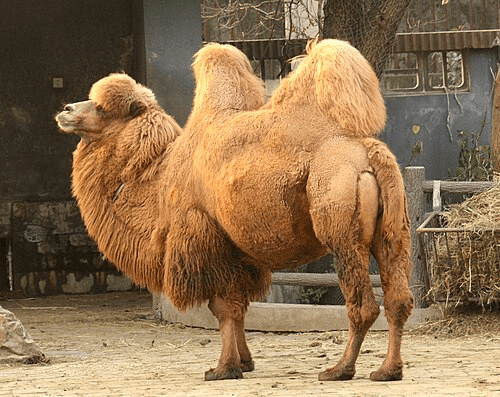
All the camels in the parade so far have been the one-humped Dromedary camels. This year the parade is introducing the Bactrian camel. The Bactrian camel is a high-altitude double-humped camel with formidable strength and stamina. Their broad feet enable these camels to firmly grasp and negotiate rocks, snow and sand with ease, while the bushy eyebrows, long eyelashes, and closable nostrils protect them against dust and icy gusts. They can haul heavy loads across difficult terrains, and can go without water for long periods, making them ideally adapted for Ladakh’s arid and freezing terrain. These are now used for high altitude transportation and reconnaissance missions; carrying huge loads with the help of modular load-carrying frames and custom-engineered harnesses.
This year two Bactrian camels will come a long way from their snowy outposts, to experience the new terrain of Kartavya Path as they join the parade.
The four-legged participants of the parade will also feature the “Silent Warriors” of the Indian Army—dogs. Dogs have long been part of the military in many parts of the world, including India. Dogs provide unflinching support to the troops not only in tracking and guarding, but also in counterterrorism operations, detection of explosives and mines, disaster response and search-and-rescue missions. Until recently the dog squads were made up largely of breeds like Labrador, German Shephard, Golden Retriever etc. But now indigenous breeds are being inducted and trained in these tasks by the Border Security Force. These include native hounds such as Mudhol Hounds and Rampur Hound, Chippiparai, Kombai and Rajapalayam. 10 canine warriors representing these breeds will proudly march alongside their two-legged trainers as part of the parade.
Perhaps the most breathtaking part of the Republic day parade is the grand finale—the Fly Past when the skies resonate with the sound and colours of the Air Force display—the guardians of our skies. This year will include other high fliers—real eagles. Raptors, known for their speed, sharp eyesight, and predatory instincts have played a vital role in military operation since time immemorial. Falcons and hawks were used to intercept and hunt enemy messenger pigeons. These abilities continue to make these invaluable, even in these times of extremely high-tech and sophisticated war weapons. Modern militaries use raptors like eagles and falcons for specialized tasks such as intercepting and disabling small drones, surveillance and reconnaissance in remote areas, and airfield security (driving away nuisance birds).
This year four of these Nature’s own flying machines will be a part of the parade, led by Captain Harshita of the Remount and Veterinary Corps (RVC). The RVC has been breeding, rearing and training animals for India’s armed forces since 1779. The Indian military currently has around 12,600 animals including dogs, horses, mules and camels. This year’s parade will bring these centre stage, and remind us that these furred and feathered friends are an integral part of our nation’s defence and pride.
Happy Republic Day 2026!
–Mamata

 Millennial Matriarchs