
The United Nations has declared 2026 as the International Year of the Woman Farmer (IYWF). This year aims to put the global spotlight on the central roles of women farmers in food security, nutrition, and economic resilience. We begin IYWF by starting with the local, with a salute to a woman farmer who epitomizes these roles through multipronged efforts.
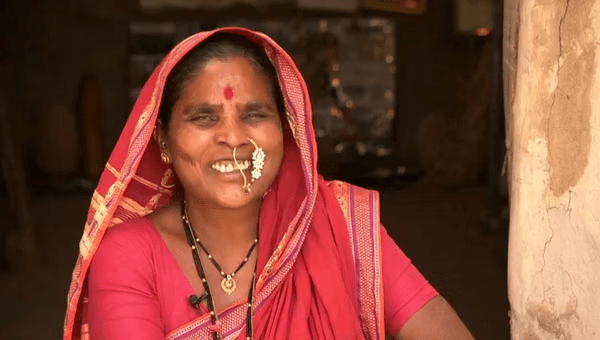
Rahibai grew up in a poor tribal family in the Ahmednagar district of Maharashtra. Her family had a meagre bit of land which they farmed during the monsoon season, but they had no means of irrigation during the dry months. So the family had to make ends meet by working in a sugar factory for the rest of the year. Poverty and the seasonal migration work prevented the young Rahibai from attending school. She was barely ten years old when she started helping her family with agricultural work. While she worked on the three acres that the family could manage to cultivate, the young Rahibai developed a deep connection to the land. Although only part of the rain-fed land was productive, Rahibai began by creating a farm pond on the remaining part of the land, to harvest the rainfall, and started to grow vegetables which brought the family some additional income. Not long after, Rahibai got married to Soma Popere, another farmer. In her married home, Rahibai continued to experiment, and to explore which crops could thrive best in arid conditions with limited water. As she grew older Rahibai also began to understand more about traditional culture and practice in crop cultivation, wild food resources, and comprehend the importance of agrobiodiversity. She discovered that tribal households traditionally had a backyard where grew multipurpose indigenous trees, shrubs and herbs, and seasonal vegetables. The produce from this supplemented the food and nutritional needs of the family through the year.
Rahibai experimented on her own small area of land, and arrived at her own methods through trial, error and practice. Her efforts led to her being able to productively use her entire small plot of land. The improved four-step paddy-cultivation practice which included use of paddy straw ash in the nursery, increased the yield by 30 per cent. She introduced innovative practices such as cultivation of beans on farm bund. She also learnt to rear poultry in her backyard.
Rahibai’s personal experience led to her strong conviction that it was the native crop varieties that could better resist drought and disease; moreover, they also helped retain soil fertility thereby eliminating the need for chemical fertilizers and excessive water. The native crops also had higher nutritive value. Thus she realized that the conservation of indigenous seeds was paramount.
This was a time when large seed companies were patenting hybrid seeds and aggressively promoting these. These seeds could not be saved for the next sowing season. Farmers were becoming overly dependent on these companies for seeds, and becoming increasingly caught in a debt trap to pay for these seeds. Rahibai also observed that villagers were frequently falling sick after eating food prepared from hybrid crops. She believed that this could be avoided by the use of indigenous seeds.
Rahibai commenced her one-woman crusade to collect and save indigenous seeds. She started collecting local seeds with the help of other women farmers from Akole taluk in Ahmednagar district of Maharashtra. As the momentum grew, she formed a self-help group (SHG) named Kalsubai Parisar Biyanee Samvardhan Samiti to conserve native seeds. Rahibai started with a nursery of 4,000 seedlings of blackberry and distributed them among members of the self-help group. She then established a nursery of 5,000 seedlings comprising nine types of hyacinth bean, rice, vegetables, beans landraces and shared them with 210 farmers from seven villages across the Ahmednagar district.
Rahibai’s efforts of almost two decades have borne fruit. She has managed to conserve a variety of native crops including 15 varieties of rice, nine varieties of pigeon pea and 60 varieties of vegetables, besides many oilseeds. All this and more, not in a fancy nursery or greenhouse, but a patch of land near her house in the village of Kombhalne. She also encourages tribal families to establish kitchen gardens which can help support their nutritional security.
She has established a seedbank so that other farmers can also avail of these seeds which they do not have to pay for. Rather they are given seeds with the condition that they return twice the quantity of seeds that they borrow. Even seeds which are sold are sold at a lower price than they cost to develop, thus helping farmers save a substantial amount each year. The seed bank distributes 122 varieties of traditional or locally adapted species of plants and crops.
With successful implementation of all that she learnt, Rahibai has now become a crusader. She travels across Maharashtra and beyond to conserve indigenous seeds. She also creates awareness about the importance of indigenous seed conversation and talks to people about concepts such as organic farming, agro-biodiversity and wild food resources. She trains farmers and students on seed selection, techniques to improve soil fertility and pest management among others. She supplies farmers with seedlings of native crops, encouraging them to switch to native varieties. Indigenous seed melas or fairs are organised in different parts of Ahmednagar district to raise awareness about the diversity of seeds and the need to conserve them.
Rahibai has also realized the power of collective efforts. Her first initiative was the formation of the Kalsubai Parisar Biyanee Savardhan Samiti in Akole in Ahmednagar district. The Samiti works towards the conservation and propagation of traditional varieties of crops. Rahibai also heads another Self Help Group, Chemdeobaba Mahila Bachat Gat, in Kombhalne, through which many social initiatives like health camps, supply of solar lamps are organized, besides the agricultural initiatives.
While Rahibai’s efforts are making a visible impact at the district and state level, her efforts have also attracted attention outside. She was among the three Indians on the ‘100 Women 2018’, a list of inspiring and influential women from around the world released by the British Broadcasting Corporation. Her efforts were recognized nationally when she was conferred with the Padma Shri award in 2020.
Seed Mother or Beej Mata as Rahibai is popularly called, continues her mission, bringing a new sense of pride and self-reliance to small local farmers across Maharashtra, and beyond.
Declaring 2026 as the International Year of the Woman Farmer is not only about celebrating these contributions but also about driving change. Rahibai is a living example of such contributions and about driving change.
–Mamata

 Millennial Matriarchs