“Do or Die. We shall either free India or die in the attempt,” Mahatma Gandhi told fellow leaders of the movement for India’s independence on 8 August 1942. These words launched the Quit India movement. Although Gandhi and many other leaders were arrested within hours of his speech, with the expectation that without their leadership the resistance movement would be rudderless, the effect was the opposite. Thousands of Indians, young and old, heeded this call and plunged into the movement, each contributing in their own way.
The sweeping movement continued to gain strength in many forms, culminating in India becoming an independent nation on 15 August 1947. Even today, after almost eight decades there are as many stories as there were people then, about how every Indian played his or her part in this movement.
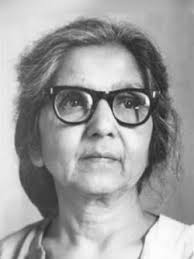
One of the women who picked up the mantle of leadership in the vacuum left by the arrests following Gandhi’s speech on 8 August was Aruna Asaf Ali who went on to play a significant part in Indian politics, even after Independence.
Aruna Ganguly was born on 16 July 1909 in a liberal upper class Bengali family which had migrated to the United Provinces (now Uttar Pradesh). After graduating from a missionary school and college Aruna started working as a teacher at Calcutta’s Gokhale Memorial School. It was here that she met Asaf Ali, a progressive barrister. Despite family opposition on grounds of differences in age and religion, Aruna married him in 1928. Her family practically ostracised her.
Asaf Ali was a prominent member of the Indian National Congress, and Aruna too soon began to meet and mingle with many nationalist leaders of the day. It was natural that she became actively engaged in the ongoing freedom struggle. Two years after her marriage, she was jailed during the Salt Satyagraha. Her popularity and leadership qualities were already emerging. Apprehensive about this, the colonial authorities did not release her when other political prisoners were released in 1931. They did not anticipate that her detention would raise a great public outcry; and that all the women prisoners would refuse to be released unless Aruna was released. It took Gandhiji’s personal intervention to secure her release.
The following year Aruna was again arrested and imprisoned in Tihar jail. Here too she led a hunger strike to protest against the treatment to political prisoners. She was moved to solitary confinement in Ambala jail.
By the time Gandhiji gave his Quit India call, Aruna had already been active in the movement for over a decade. The country-wide crackdown against nationalist leaders in 1942 left a leadership vacuum which could have aborted the momentum. Aruna stepped in; she presided over the rest of the Indian National Congress (INC) session, and on 9 August she rushed forward and unfurled the flag of Independence at Gowalia Tank Maidan in Bombay. News of this flag-hoisting spread like wildfire. Aruna and a group of INC workers went underground. The British government posted a reward for her capture but she successfully evaded arrest for three years. Her property was seized and sold.
Even in hiding, Aruna continued to contribute to the movement through use of underground radio, pamphlets, and the Congress’s monthly magazine Inquilab. During this period she was unwell and became frail. When other Congress leaders came out of prison, Aruna refused to come out of hiding and give herself up. Gandhiji wrote her a personal note expressing concern about her frail health and urging her to surrender and use the prize money offered by the British for the cause of Harijans. Aruna respectfully declined to do so. Gandhi always had great respect for Aruna’s personal bravery, but did not always approve of her tactics. She had a strong independent streak and high ideals.
Aruna finally came out of hiding in 1947 and returned to active political life. She was elected president of the Delhi Pradesh Congress Committee. However she quit the Congress party in 1948 and joined the Socialist Party, and later became a member of the Communist Party of India. She went on to leave this in 1956, but she retained her leftist leanings and spent the rest of her life in fighting for causes of the unprivileged, underrepresented, and exploited sections of society. She supported with revolutionary zeal the upliftment of women through education and better health care. Her politics was always more a matter of the heart than the head. Her frail physique belied her incredible inner strength.
Aruna was elected Delhi’s first woman mayor in 1958, and led the way for major civic reforms. But unable to handle the petty politicking, she resigned. She never again contested elections or took up a government post. She passed away in 1996 at the age of 87 years. Till the end of her life she lived in a one-bedroom apartment. She continued to mobilise support for social reforms, working for the rights of women, the poor and downtrodden. She actively helmed the Patriot newspaper and weekly magazine Link. She was awarded the International Lenin Peace Prize in 1964. She was honoured with the Padma Vibhushan in 1992, and posthumously awarded the Bharat Ratna in 1997.
Aruna Asaf Ali, frail but feisty, was one of Gandhiji’s Women Warriors, part of an inspiring band of women from all walks of life who fought not only for the freedom of their country, but equally for the rights of its women to live as free, fearless, and empowered citizens of India.
–Mamata

 Millennial Matriarchs