
Imagine if you had to put your hand out and try to clean your windshield to get a clearer view. Or maybe even get out of the car to do it! Well, this was what was happening in the early part of the 20th century.
It was a woman’s eye which caught the problem, and after some thought and work, came out with a solution. And it was another woman who worked on it further.
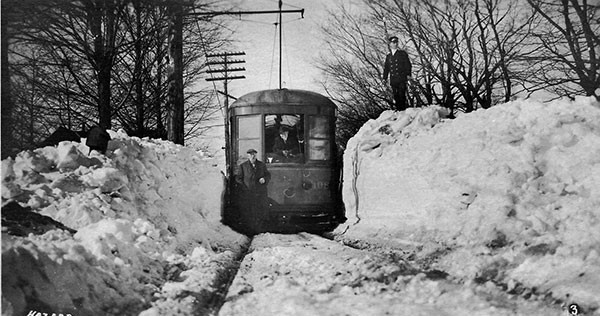
It all started with a trolley-car ride in New York in 1902. Mary Anderson was visiting New York from Alabama on a frosty day in winter, and was in a trolley car when she noticed that the driver was struggling to see what was outside. He would frequently thrust his head out of the window, put his hand out and wipe the windshield, but it was not really effective. He sometimes even had to stop the vehicle, get down and clean.
To Mary, this seemed really a terrible way of doing things. She wanted a solution whereby the driver could clean the windshield form inside. Her brain got working on the problem. When she was back in Alabama, she worked on various possibilities, and finally came out with a design consisting of a lever inside the vehicle that controlled a spring-loaded arm with a rubber blade. The lever had a counterweight so that the wiper would remain in contact with the window, and would move the blade across the windshield, removing rain or snow. The device could be easily removed if desired after the winter was over.
She wrote up a detailed description, and hired a designer to create a prototype. She even got a local company produce a working model! She applied for a patent, and on November 10, 1903 was granted her first patent for an automatic car window cleaning device controlled from inside the car, called the windshield wiper. The patent for the Window Cleaning Device was granted for 17 years.
In the meantime, another woman came along to develop on this idea. This was In 1917, when Charlotte Bridgewood patented the “electric storm windshield cleaner,” the first automatic wiper system that used rollers instead of blades. She was an automobile enthusiast who wanted to improve Mary Anderson’s manual windshield wipers. She went on to develop the automatic windshield wipers that she called “Electric Storm Windshield Cleaner”. She patented these first electrically powered windshield wiper in 1917, improving previous manually-operated wipers.
Sadly, neither woman profited from their ingenuity. Mary could not find anyone who would manufacture it for her. Moreover, when she patented in 1903, there was no very large demand yet, as personal automobiles were yet to take off. Her patent expired in 1920, just as cars were getting popular. Her invention had obviously been before its time.
In Charlotte’s case, the wipers used rollers rather than blades and therefore did not catch on.
In both cases, their being women was probably a huge reason!
This was not an isolated achievement in case of either woman. Mary was a well-regarded real-estate developer. She successfully ran a cattle ranch and vineyard in Fresno, California.
Charlotte was a Canadian vaudeville performer and inventor of the turn signal, traffic light, and brake light. She was president of the Bridgwood Manufacturing Company
In 1922, Cadillac became the first car company to include windshield wipers as standard equipment. Today, almost all motor vehicles, including cars, trucks, buses, train locomotives, and watercraft with a cabin—and even some aircraft—are equipped with one or more such wipers, as a legal requirement.
On the 121st anniversery of Mary’s patent, we thank you Mary Anderson and Charlotte Bridgewood for your path-breaking work. You may not have profited, but you continue to inspire all inventors, and especially women!
–Meena

 Millennial Matriarchs