
The Paris Summer Olympics 2024 have recently concluded. The spectacular performances, the breaking of records, the exultation of the winners and the heartbreak of the losers, all these are just the more visible symbols of the gigantic efforts that culminated here. The 2024 Para Olympics are currently underway, also in France. These demonstrate the incredible grit and perseverance of another set of sportspeople who have conquered their own physical challenges as they aim to conquer new heights. And behind every winner, individual or team, there is an incredible tale.
While the more prominent sports made the headlines during the recent Olympics, there are several sports that were perhaps not as widely covered. Among these were the rowing events. Rowing became a part of the Summer Olympics in 1900, but it was a men-only event. It was only in the 1976 Montreal Olympics that women’s events became a part of the Games. The Paris Olympics had 14 different rowing events (equal number for men and women), all of which involved racing over a 2000- metre river course.
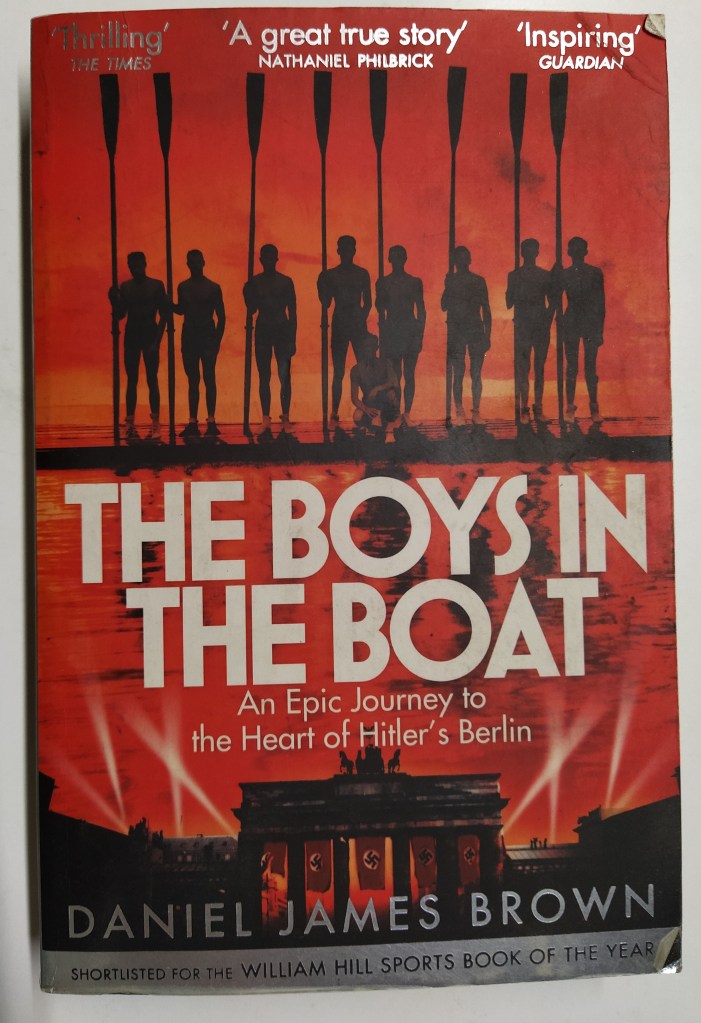
This time, I was curious about these rowing events, and interested to know which team won the Men’s Eight gold (it was Great Britain or Team GB). This was because I had recently read a fascinating account of a team that had won the gold at the 1936 Munich Olympics. A tale of literally fighting all odds.
The Boys in the Boat is the true story of the team the represented the United States for the event. How they got there is a moving, inspiring, and often a ‘hold your breath’ account of how a group of young men from working class backgrounds reached, and won, the Olympics.
These student athletes represented the University of Washington, in Seattle. The story traces how from among the aspiring candidates, eight young men, many of them growing up in the Depression era in poor towns, made it to the team after showing their mettle through some of the most challenging situations including the foulest of weather, almost inhuman demands on the bodies, and the toughest mental trials and tribulations. Following their selection, the story follows how these were shaped into a rowing team (varsity eight) by the coach Ulbrickson, and rowing boat- shell builder and rowing sage George Pocock.
Under the unrelenting regimen set by these men, the motley crew of rookie rowers began their journey to the top. They had to start closer to home, first by defeating the reigning champions on the west coast, the University of California, then competing against the Ivy League teams from the East coast of the United States which had always dominated the sport. These triumphs came after periods of mind-numbing exhaustion, copious sweat and tears. Thus these ‘dark horses’ as they were then, made their way to Princeton for the crucial trials that would qualify them as the official USA team for the Munich Olympics. The destination was in sight, the departure a week away, but not yet a reality.
The next challenge came in the form of the news from the American Olympic Committee that the team had to pay their own expenses for the trip. In the days before “sponsorships” that funded everything from training to outfits, this was a harsh blow for the always cash-strapped University of Washington team. The news spread through the local Seattle newspapers and the community stepped in with donations ranging from 5 cents to several hundred dollars, rapidly collecting enough to give the ‘local heroes’ and their boat The Husky Clipper a rousing send off. An early instance of “crowd-sourcing”!
The team arrived in Germany and even as they acclimatized to the new conditions, climate, and food, they immediately started practising rigorously. They won the qualifying heat, setting world records. But in the final race on the Langer See they had a choppy start.
On that freezing, blustery evening, the men from Washington found themselves in last place. It wasn’t just that they got off to a slow start. Though they’d won their qualifying heat two days earlier–setting world and Olympic records in the process–they had been placed in the last lane, exposed to the brunt of the biting wind much of the course, while Germany and Italy had been awarded the two most protected lanes. The team were trailing badly, until by superhuman will and effort they painfully gained ground, still trailing behind the Germans and Italians, and finally, surging forward to win the race, by just about 10 feet. The boys in the boat had won the Olympic Gold!
The story of how this little known and unlikely team reached to this legendary finish is brought alive in the book by Daniel James Brown. It is told through the memories of Joe Ranz, one of the boys in the boat. The author met Joe Ranz when he was at the end of his life in a hospice. When he started recalling his life, Brown felt that his story needed to be shared widely. Joe agreed, with the caveat that the story should be not just about him but about all the boys and the boat.
The book sensitively captures not just individual histories but also deftly places these within a wider canvas of what was happening simultaneously in Hitler’s Germany. This was the beginning of what was to grow into the devastating persecution of Jews, even as grand stadia were being erected to present a façade to the world.
Above all the book is about the human spirit, its endeavour for excellence, and the innate strength that emerges when least expected. It is about each member having a specific assigned role but which needed to be melded into a seamless team effort. As the wise Pocock put it It isn’t enough for the muscles of a crew to work in unison; their hearts and minds must also work as one. The story is about the ruthless spirit of competition but equally about team work and cooperation. It is about the vital role of trust even when there may not be complete harmony among the team mates. As coach tells Joe: When you really start trusting these other boys, you will feel a power at work within you that is far beyond anything you’ve ever imagined.
The Boys in the Boat has also been made into a movie. But this does not capture the nuances in the book that make each of the boys in the boat come alive as unique individuals who gelled into an unbeatable team.
In this season of the Olympics, as new stories emerge, these are still stories to remember and celebrate.
–Mamata

 Millennial Matriarchs