Of Birds and Birdwatchers: International Bird Day — 1 April

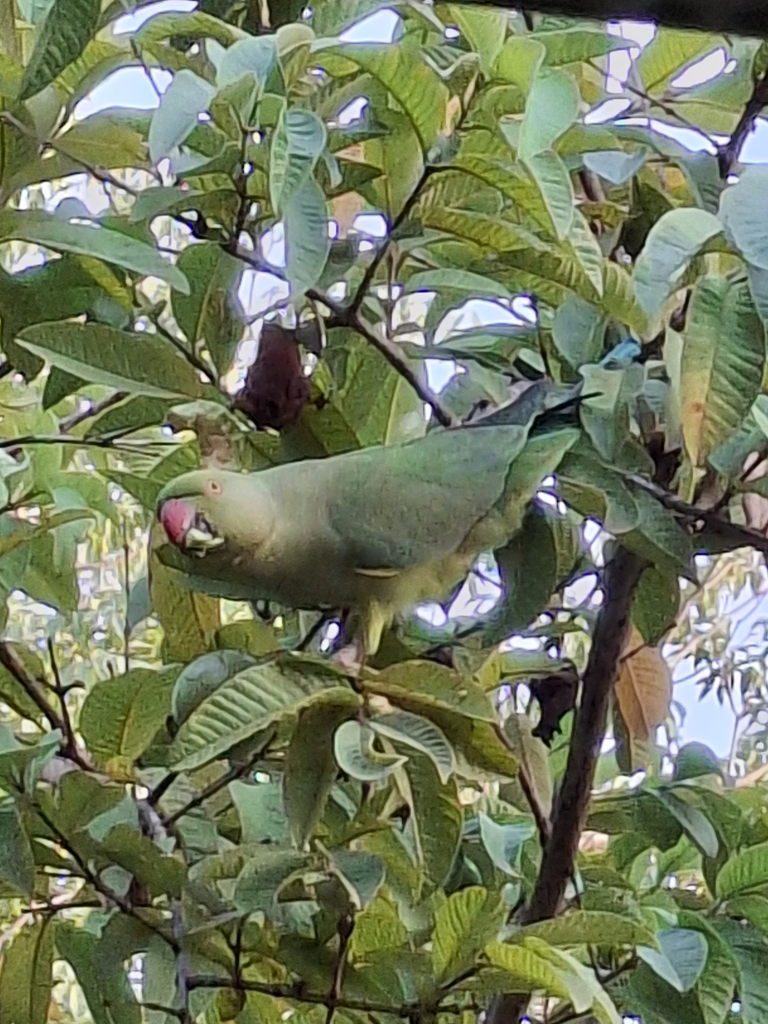
April 1 traces back to the International Convention for the Protection of Birds, one of the earliest international efforts to formally recognise the need to conserve avian life. On International Bird Day, observed each year on April 1, the focus is usually on birds themselves—their fragile habitats, their migrations, their role in holding ecosystems together and the threats they face.

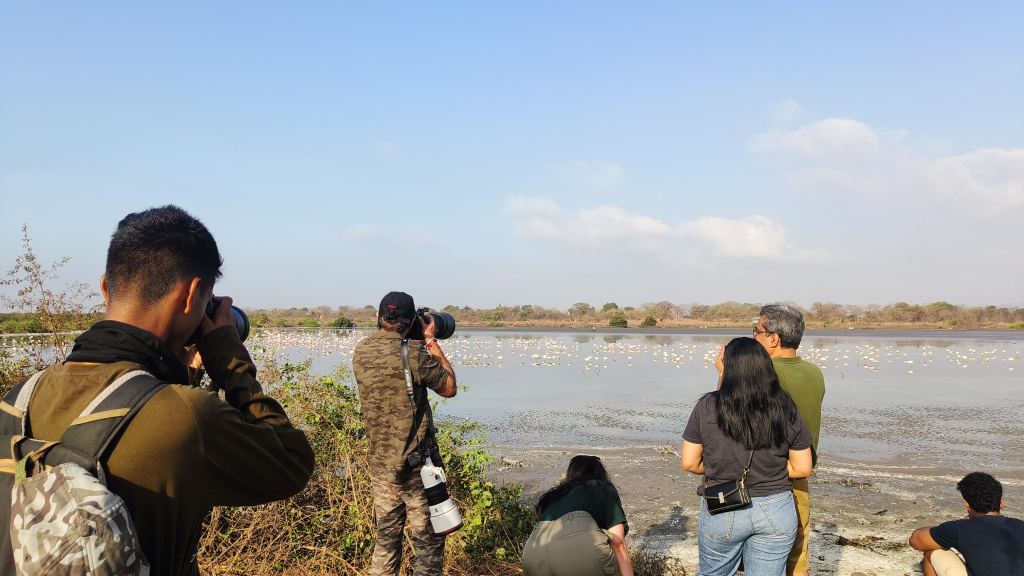
But today we are looking more at the people who watch birds and their idiosyncrasies.

Every obsession develops its own private vocabulary. Birdwatchers—or birders, as they prefer—have taken this instinct a step further. Over time, they have shaped a dictionary so distinctive that to outsiders it can sound faintly eccentric. Words here behave differently: they slip free of their everyday meanings, acquire new ones, and quietly signal who belongs.

Consider twitching. To most people it suggests nervousness or involuntary movement. In birding, it means deliberate, often hurried travel to see a rare bird reported elsewhere. A twitcher is someone who drops everything at short notice and sets off, binoculars in hand to chase that possibility. The term emerged in mid-twentieth-century Britain, when news of sightings spread through phones and handwritten notes, carrying with them a sense of urgency and barely contained excitement.

This habit of birders to repurpose language runs deep. A tick is not a parasite but a small victory—a species added to one’s personal list. A lifer marks a first-ever sighting, the kind that stays with you. A dip, on the other hand, captures a very specific disappointment: travelling all that way and missing the bird.

Some of the most intriguing expressions describe perception. Jizz—sometimes softened to giss—refers to the overall impression of a bird: its shape, posture, movement, the rhythm of its flight. You may not catch every marking, but you recognise it instinctively. “It had the jizz of a harrier.” There is no real substitute for this word, which perhaps explains why birders defend it with quiet determination.

Then come the social terms, edged with humour. A stringer is someone suspected of stretching the truth about sightings—their records “on a string.” A lagger arrives too late. A gripper is not an object but a bird so rare it inspires envy, and to be gripped off is to feel that envy keenly while still offering polite congratulations.

Even equipment is linguistically reshaped. Bins are binoculars. A scope is a spotting-telescope. To lock on is to get your optics trained on the bird before it disappears. These are practical words, forged in moments where seconds matter.

Place, too, carries its own vocabulary. A patch is a birder’s regular haunt, revisited across seasons and years. A stakeout involves waiting patiently at a known location. Suppression refers to an ethical choice—not publicising a rare bird’s location if attention might disturb it. To flush a bird is simply to make it fly off, usually by getting too close, and is generally frowned upon.

What stands out is how emotionally evocative this language is. It does not just describe birds; it maps the experience of pursuing them. Like any specialised language, birding slang creates community. To know the terms is to belong; to learn them is to enter gradually. Yet many of these words travel beyond their niche. Twitching now describes reactive behaviour more broadly. Jizz has been borrowed into design and art. Patch has found a life in other forms of local attachment.

Colour, in birding, acquires a precision that everyday language rarely demands. Birds are not simply brown or grey; they are rufous, buff, ochre, slate, ashy, olive, chestnut. A drab-looking bird, on closer inspection, becomes a composition of tones—warm on the flanks, cooler on the crown, a faint wash along the breast. These are not ornamental choices of words but functional ones, allowing birders to separate one species from another in seconds. To say “yellow” is often useless; to say “sulphur-yellow with a greenish wash” is to narrow the field.

Even familiar colours are subtly reworked. A “black” bird may, to a birder, show glosses of blue or green; a “white” wing might carry a hint of cream or grey that matters enormously in identification. Terms like supercilium (the eyebrow stripe), mantle (the upper back), and primaries (the outer flight feathers) turn the bird’s body into a map where colour is carefully located, not loosely described. Over time, birders learn to see in these finer gradations, and the language follows suit—less about naming colours as we know them, more about learning to see them as birds wear them.

Some colour words have travelled the other way—borrowed not to describe birds, but from them. Teal is the most familiar example, a word that once referred primarily to the small freshwater duck, the Eurasian teal, whose striking greenish-blue patch lent its name to a shade now used everywhere from fashion to design. What began as a bird became a colour, and then quietly detached itself, so that many people use “teal” today without any awareness of its avian origin.

This is not an isolated case. Duck-egg blue, robin’s egg blue, and peacock blue all carry traces of the natural world into everyday speech. The Indian peafowl, for instance, has given us a whole palette of iridescent blues and greens, while the soft tint of a robin’s egg has become shorthand for a particular pastel. In these instances, birding has quietly shaped how colour is named and imagined—proof that even those who never lift a pair of binoculars are, in some small way, speaking a language borrowed from birds.

In an age where English is increasingly standardised, birdwatching offers a reminder that language still evolves wherever people care deeply enough. These words were not coined for effect. They emerge out of necessity—to express experience, to share feeling, to laugh gently at oneself.

So this International Bird Day, stand quietly at the edge of a wetland or in your garden. Watch the birds and hopefully, you will get a tick!

–Meena

Pic: BNHS https://www.bnhs.org/nature-trails-details/

Libraries Take Wing

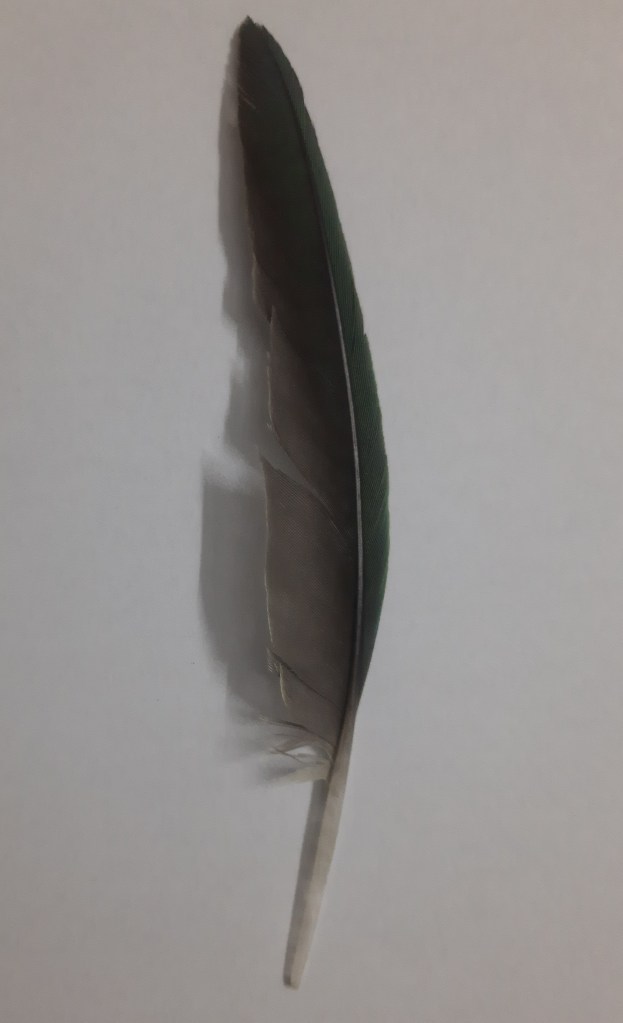
How often we randomly pick up a feather as we walk along. And wonder which bird it could belong to.

A feather library is where we can turn to for help in such a situation. These are digital or physical collections of bird feathers, used for research and education. They are an invaluable resource for understanding bird species, identifying feathers, and gathering data on bird health and natural history. These libraries are important tools for the study and conservation of bird species, offering insights into bird morphology and helping in the identification of feathers found in the wild.

There are not too many across the world. Some of the established ones include:

1. The Feather Atlas created by the U.S. Fish and Wildlife Service is a comprehensive image database of North American birds and covers about 438 species. It can be browsed by bird order, family, or species. It has an open identification tool in which one can fill in details about feather patterns, colors, size, and position, which can help you identify the bird your feather belongs to.

2.Featherbase (Germany) has been created by a working group of German feather-scientists and other collectors worldwide who have come together and contributed their personal collections. It holds close to 8000 specimens from over 1,000 bird species, with a focus on European and African birds. The collection includes high-resolution images and detailed anatomical information, and has supporeted studies in forensics, conservation, and biodiversity monitoring. It is rigorously classified and offers options of various languages so that birders from across the world can use it.

3. Found Feathers (iNaturalist Project) is a citizen science initiative where users contribute observations of feathers they find. The project encourages the collection of feather length and placement data, enhancing the database’s utility for researchers and birders. There are over 2,00,000 observations from across the world.

Special among these is India’s Feather Library. This pioneering initiative is the first of its kind in India and the world, dedicated to documenting, identifying, and studying the flight feathers of Indian birds. It is the passion project of architect Esha Munshi, a dedicated bird watcher who has seen over 1500 bird species across the world, and veterinarian Sherwin Everett who works in a bird hospital in Ahmedabad. They have created the library with the aim of having all feather-related data under one roof, fostering collaboration and advancing the collective understanding of Indian birds. In the short span of time since inception on Nov 15, 2021, 135 species have been documented.

The process is rigorous. They collect feather specimens from dead birds at rescue centres to establish a primary database of bird species. They then make detailed notes on the flight feathers, taking into account the number of Primaries, Secondaries, Tertials (Wing Feathers), and Rectrices (Tail Feathers), along with basic details such as overall length, bill length and width, leg lengths, etc. Then they stretch out one wing and fan the tail in both dorsal and ventral views to document the exact number of feathers, unique characteristics, colour, pattern, and size etc. The physical collection is housed at the National Centre for Biological Sciences (NCBS) in Bangalore.

The database is open to all and provides easy access.

Kudos to the dedication and passion of people like Esha and Sherwin who through their efforts help support avian research, conservation efforts, and educational outreach. And make a better world.

Happy Environment Day!

–Meena

Tribute to India’s Birdman: Dr. Salim Ali

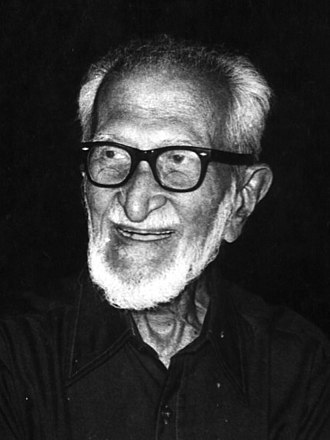
330px-Salim_ali_mnsSalim Ali’s birthday falls on 12 Nov. He was born in 1896 and passed away in 1987. He may be credited with single-handedly bringing ornithology to India. And this interest in ornithology, as it spread, led to interest in wildlife and biodiversity; in environmental issues; in conservation; and in sustainable development.
He inspired generations in India and created a culture of systematic and scientific study of wildlife. If his ‘Book of Indian Birds’ is the easy guide which every bird watcher starts with, the landmark ten volume Handbook of the Birds of India and Pakistan which he wrote with Dillon Ripley is the authoritative guide. Dr. Salim Ali was respected across the world, and decorated with the Padma Bhushan and Padma Vibhushan.

On this his birth anniversary, here are excerpts from an interview of Dr. Salim Ali (when he was 85+ years of age!), with Dr. HSA Yahya of Aligarh Muslim University, and taken from http://wgbis.ces.iisc.ernet.in/ envis/doc97html/biosalim24.html. My only contribution is to have picked out two sections that I found of particular interest.

MONEY MATTERS NOT A JOT

‘Then I told Prater ” look we have so many places in India and we know nothing about birds.”  Hyderabad for instance, was a complete blank on the ornithological map. So I said ” if you write to the British Residents who are really interested in these kinds of things we can probably get some financial support. I do not want any pay. I only want my expenses paid and I will be quite happy to go, study and collect birds.”So the Society got in touch with the Hyderabad Government which had largely British heads of Departments. They were very glad. But it is really quite laughable, the amount we asked for and which we got and in which I was able to complete the survey. I think for the whole of the Hyderabad State survey for six months we got about 6000 Rupees (NOTE: THIS WAS WAY BEFORE INDEPENDENCE!).  Yes, six thousand which included the food of the skinner, our own food, cost of travelling and everything (laughter)! We were able to do it with a lot of trouble, many of our camp shifts had to be done by bullock carts because there were no roads in the places where we were camping. After Hyderabad I did Kerala which was then two states, Cochin and Travancore. Then one after the other Central India, Gwalior, Indore, Bhopal. So all these were done under the same system: asking for small amounts and doing it. I could do it because I had the time, I mean, I was just doing it and nothing else and I did not have any ambition to try again for some bigger job somewhere and so on. Not because bigger jobs were not there and perhaps I would have not got them, but they were not in the line in which I was interested.’

ON THE IMPORTANCE OF A LIKE-MINDED PARTNER IN FOLLOWING A PASSION

‘I tried all kinds of jobs for a long time. Finally, I said that, well, I have all these trainings and I have my chief interest in birds so why should I not do this on my own. My wife had a little money and I had a little investment and so on. Then we worked out and found that we had just enough if we left Bombay, which was very expensive and went to live in some quieter place which would give more facilities for bird study, we will be far happier. My great fortune was that my wife who had had all her education in England and been used to quite a different sort of life to what she would have in the kind of work I wished to do. She insisted that I should take up only the work that I was interested to do. She said ” now we have enough to live quietly, we would go to some small place, I will be quite happy.” She was keen on poetry and Urdu and various kinds of reading and so on. Then she got very interested in birds too, and in outdoor life and in things she had never had any experience in England of.’

From: TRANSCRIPT OF AN INTERVIEW WITH SALIM ALI by Dr H S A Yahya Reader, Centre for wildlife & ornithology, Aligarh Muslim University, Aligarh.

–Meena

PS: ‘The Fall of a Sparrow’ his autobiography,  is a must-read.

0 to 51 in 10: The Panna Tiger Story

The verdant forests of Panna, Madhya Pradesh. We were able to visit two weeks ago. And were lucky enough to see a tigress and her cub. What a majestic sight! The tigress was pretty big and healthy, the cub frisky and curious. The mother was contemptuous of the humans in their vehicles going into contortions to catch a look, to take a pic, to exclaim to each other. She moved when she felt like, sat down and relaxed when she felt like. Not looking in the direction of the vehicles even once, though she knew we were there. She was the queen of her territory and saw no reason to acknowledge us.

It was a wonderful feeling. To see the healthy tigress and her confidence in her security. The active cub, about 5 months old. The number and variety of herbivores. And the thick forests and healthy, lush greenery.

falls

It would be good to have seen this in any of our protected areas. But especially gratifying when we go into the story of Panna. Panna was declared a National Park in 1981, and subsequently a Tiger Reserve in 1994. The tiger population in Panna was down to zero in Feb 2009, thanks to poaching. It was a sad time indeed for India’s conservation efforts.

Things started to change with the posting of Mr. Sreenivasa Murthy, who took over as Chief Conservator of Forests and Field Director, Panna Tiger Reserve. They speak of the tough measures he took in securing the Park, coming down hard on all incursions, trespass, illegal activities and poachers. Even as he protected the area and worked on the morale of the Forest Staff, he built on the already initiated plan for re-introduction of tigers into the Park. Starting with one tigress in 2009, six of the species were introduced from different parts of the country. And it was not an easy task. As the Panna website tells it, one of the re-introduced males strayed out of the protected area into unsafe terrain, and 70 Park staff led by the Field Director followed it on elephants for 50 days, securing it from gunshots, poisoning and electrocution, till at last they were able to tranquilize it and bring it back into the safe area. All the hard work paid off and the re-introduction worked, with the first litter of cubs born in Panna in 2010. The results are obvious today, with the Park now home to 51 tigers. Several cubs have been born this year too.

Nothing is achieved by one man alone. But equally, individuals make all the difference. And in the case of Panna, this individual was Mr. Murthy. He has been posted out of the Park, but even today, drivers and guides speak his name in hushed tones, in tones of awe. And when respect and admiration penetrate to all levels, it is surely the greatest homage to the real difference someone made.


bear

So a huge THANK YOU Mr. Murthy and all our Forest Dept. staff who work in extremely difficult situations to ensure that our biodiversity and natural heritage are safe. The thick forests of Panna, the variety of animals and birds we saw, of whom of course the tigress and cub were at the peak, the flourishing trees and plants—all of these stand testimony to your efforts.

–Meena

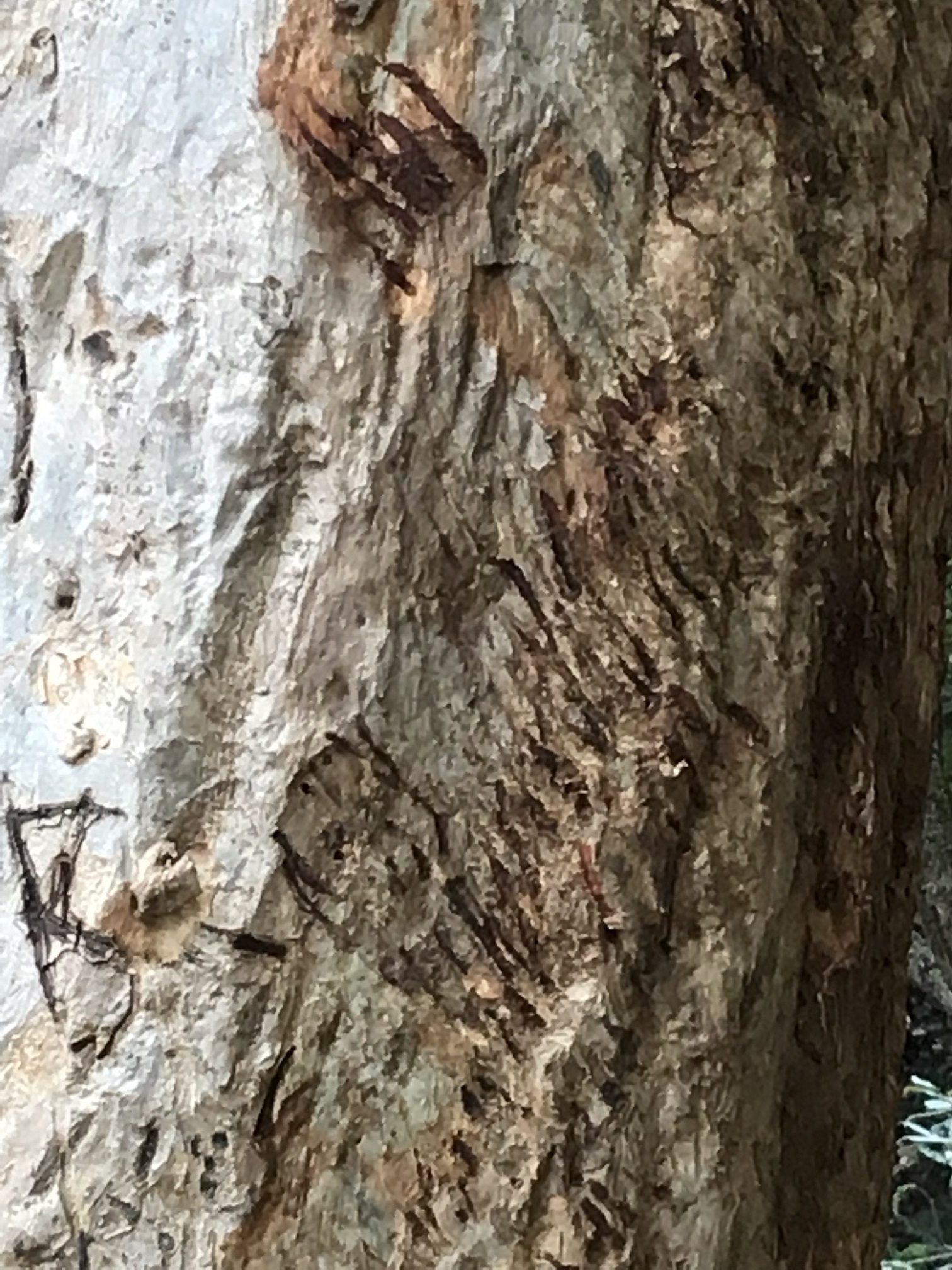
(There are many trees like the pic, with nail marks made by bears climbing them to get at honeycombs.)


PS: We did not get any pics of the tigers—we were too busy looking at them. And anyway, they were far away and our phone-cams were not up to the task.

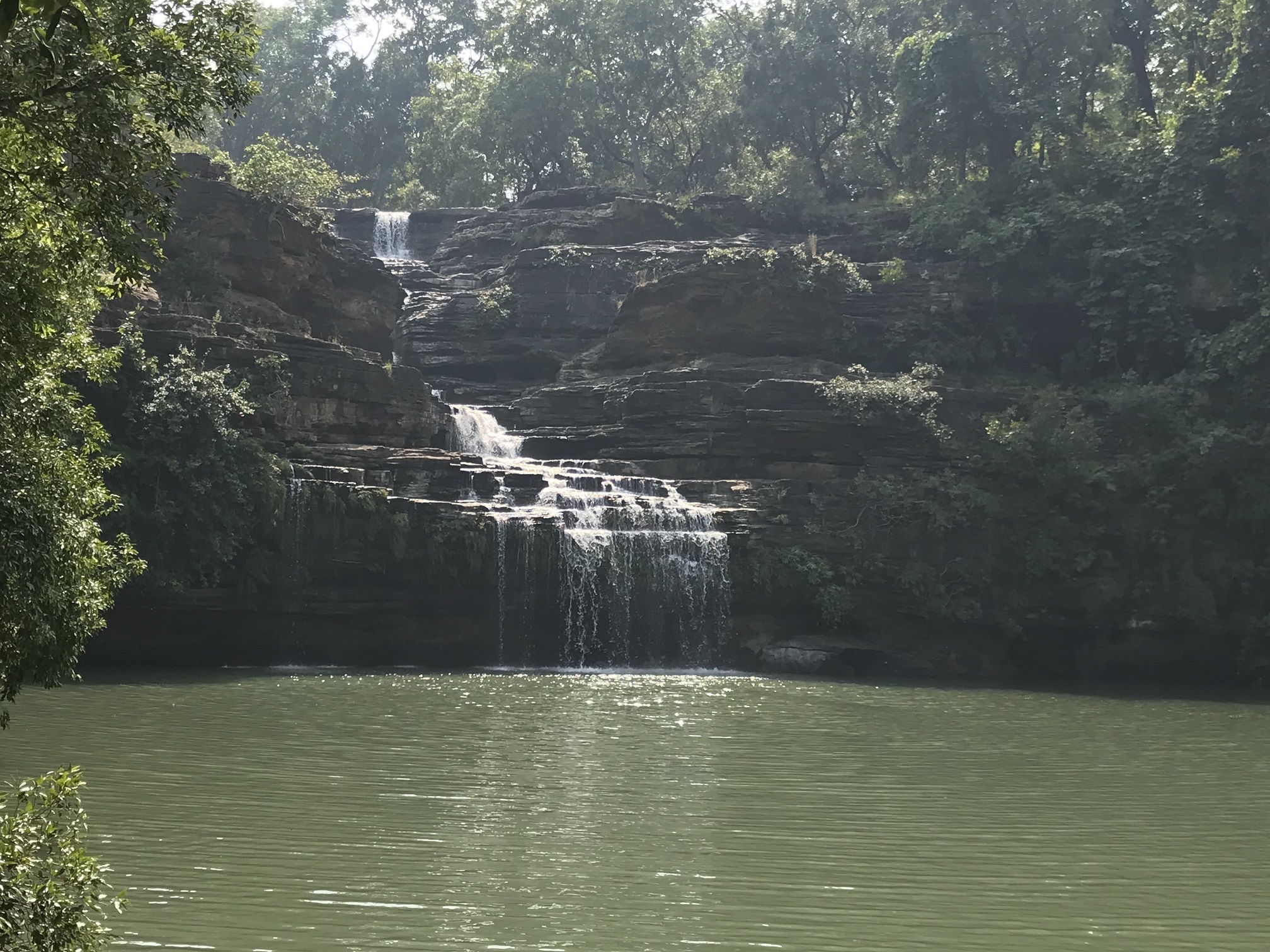
But a few other pics from the Park and Pandava Falls nearby. Photo credits: Prof Samir Barua.

What is Wild?

The first of week of October is marked as wildlife week in India. Wildlife safaris are advertised, with promises of sightings of lions and tigers and elephants.

How about a rethink on “What is Wild”?


Does it roar, does it growl? Is it beast, fish or fowl?

Inhabit rainforests or snowy peaks? Live in deserts, or the ocean deeps?

Does it have stripes, wear armour? Exotic feathers or thick fur?

Is it whiskered, huge and ferocious? Have claws on its paws, good gracious!

Does it grow wild in forests deep? Tangled in branches where monkeys leap?

That’s just where we all go wrong. Thinking wild is a lion or gorilla strong.

What’s wild can be large: a blue whale or an elephant.

But also teeny weeny: an amoeba, a mite or an ant.

Wildlife can be insect, reptile or bird. Living alone in a cave, or all in a herd.

It can be the trees in a jungle dark. It can be weeds in a garden or moss in a park.

It is the living things that we have not tamed; As pets in our house, or on farms retained.

That live on their own, as creatures free; In cracks in our homes, or up on a tree.

Lizards, spiders, weeds, rats and snails… Are wildlife as much as tigers or whales.

You don’t have to climb mountains or dive very deep. Plunge into dark jungles, or ride miles in a jeep.

There’s a wildlife safari you can take any day. Through home or garden or just along the way.

Just keep your eyes open and all your senses alert. Look out for these creatures, even in the dirt.

You’ll find the world around teeming with life. From tiny to enormous, you can call it all wildlife!IMG_20181001_091041103.jpg

–Mamata


Snakes Alive!

This is the month when many parts of India celebrate Nag Panchami or festival of snakes, by worshipping the Snake God for protection. The many rituals and myths associated with this perpetuate many false perceptions about snakes. This takes me back to my own snake story.IMG_20180830_100525311.jpg

When I started my career as an environmental educator, one of my first close encounters of the wild kind was when we were asked to touch a snake! This was in Sundarvan, a small snake park. The snake was a Red Sand Boa—a non-venomous snake. For someone who was, at that time, far from being a passionate wild-lifer, this was indeed an experience that served to dispel the many myths that one had grown up with. One of these were that snakes were “slimy”, and to be avoided at all costs. The skin of the sand boa felt dry and smooth, and we learnt that most snakes are in fact non-venomous.

And there began my long and fascinating journey in the natural world. A journey along which I had the most wonderful encounters with some of India’s best known naturalists and educators.

One of these was the Snakeman of India Romulus Whitaker.

Not so long after my induction by snakes, Romulus himself came to CEE and fascinated us with snake tales and the importance of breaking the myths that associated snakes with all things creepy and vile, and communicating the vital role of snakes in the ecosystem, especially as friends of farmers because they eat the rats that destroy crops.

A little later, Romulus graciously accepted to write a piece for a book that Meena and I were editing. In this he recounted how he first came to India from New York city when he was 8 years old, and returned a few years later  to make India his home, and herpetology his career. He recalled how “the snake charmers at Juhu Beach in Bombay were my first tutors but it wasn’t long before I outgrew their mixture of magic and nonsense.”

Romulus’s passion for setting the record straight about reptiles has manifested itself in a long and close association with the Irulas, an indigenous tribe of snake catchers of Tamil Nadu who became his friends and mentors; setting up of India’s first Snake Park in 1970 and the Madras Crocodile Bank in 1975 and, in 2005 the Agumbe Rainforest Research Station in Karnataka. These Parks continue to attract and educate millions of visitors every year, and they have also become the base of conservation research projects in many parts of India including the Andaman islands.

His never-ending impulse to show and tell people about reptiles led Romulus to start making documentary films, many of which have won international awards. One of his first films Snakebite tells about how to avoid and treat snakebite. While studying incidents of snakebites in India, Whitaker discovered that numerous lives were lost due to inadequate production and distribution of anti-venom serum. That is when he mobilised the Irula community to form a snake catchers’ cooperative, who under licenses from the Wildlife Department, extract and freeze-dry venom from snakes and sell it to anti-venom producing laboratories before releasing the snakes back into the wild.

In 2018 Romulus was awarded the Padma Shri for nature conservation. In one of the interviews following the award Romulus said “I believe that touching a snake opens people’s minds and changes it forever.” I can totally vouch for that!

Thank you Rom for helping to open a new world, and for being a continuing inspiration!

–Mamata