
With election-fever and results-fever just abating, one the of the topics of discussion has of course been the controversial EVM—Electronic Voting Machine.
Where did it all start? Surprisingly with Edison—yes he of the light bulb fame.
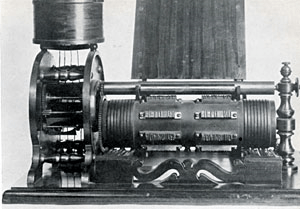
In 1869, Thomas Edison patented what is widely regarded as the first electrical voting machine—an invention designed to automate and speed up vote counting. This was his very first patent–U.S. Patent 90,646 granted on June 1, 1869. It was s designed to allow legislators to vote “yes” or “no” using a switch that sent signals to a central board,
Edison’s vote recorder was technically sound. By all accounts, it worked exactly as intended. But when he demonstrated it to legislators in Washington, D.C., they turned it down. Not because it was flawed—but because it was too efficient.
At the time, voting in legislatures was a slow, deliberate process. Delays were not bugs; they were features. They allowed for persuasion, negotiation, and, frankly, political maneuvering. A machine that eliminated delay also eliminated strategy. Edison would later reflect that this rejection taught him a lasting lesson: invent only what people are ready to use. The vote recorder’s rejection wasn’t about engineering; it was about human systems resisting change.
Edison’s Curious Patent Portfolio
Edison went on to file over a thousand patents, many of them transformative, some delightfully obscure. Alongside world-changing inventions like the incandescent light bulb and the phonograph, there were also lesser-known creations: an electric pen for duplicating documents, a system for preserving fruit, even ideas for concrete furniture.
Some succeeded because they met an immediate need. Others failed because the ecosystem—technological, social, or economic—wasn’t ready. But probably sowed the seeds for many a current-day device.
The Slow March Toward Voting Machines
Despite Edison’s early setback, the idea of mechanizing voting didn’t disappear. By the late 19th and early 20th centuries, mechanical voting machines began appearing in the United States. These lever-based systems aimed to reduce fraud and standardize ballot counting.
Over time, technology evolved. Punch-card systems—infamously remembered from the 2000 United States presidential election, introduced new efficiencies, along with new vulnerabilities. Hanging ‘chads’ became part of vocabulary, illustrating how even small technical flaws could undermine trust.
By the late 20th and early 21st centuries, electronic voting machines (EVMs) emerged as the next step. These ranged from Direct Recording Electronic (DRE) systems to optical scan ballots and, more recently, hybrid systems with paper audit trails.
Trust, Technology, and Tension
Electronic voting systems around the world have sparked debate. Critics raise concerns about hacking, lack of transparency, and the difficulty of verifying results independently. Supporters counter that well-designed systems are more accurate and less prone to human error than paper ballots.
Countries have taken different paths. While Brazil has widely adopted electronic voting, others like Germany have rolled back its use, citing constitutional concerns about transparency. The Netherlands and Ireland have also stepped away from electronic systems after public and political pushback.
Even within the United States, practices vary widely by state, reflecting a broader unease about balancing efficiency with trust.
India and the EVM
Few countries have embraced electronic voting as extensively as India. Introduced on a large scale by the Election Commission of India, EVMs were designed to tackle logistical challenges: vast electorates, difficult terrains, and the need for rapid, reliable counting.
Indian EVMs are standalone devices, not connected to the internet, which proponents argue makes them more secure. The addition of VVPAT (Voter Verifiable Paper Audit Trail) systems is supposed to strengthen transparency by allowing voters to confirm their choices.
And yet, controversies and fears persist.
The Real Lesson: Technology Isn’t Neutral
Edison’s failed vote recorder reminds us of something we often forget: technology does not exist in a vacuum. It interacts with human behaviour, institutional norms, and political incentives.
Voting, perhaps more than any other civic act, depends not just on accuracy but on perceived legitimacy. A system can be technically flawless and still fail if people don’t trust it. The technical aspects may work fine, but is it still corruptible when the system itself is corrupt?
In that sense, the story comes full circle.
Edison built a machine to make voting faster. Lawmakers rejected it because speed threatened the very nature of their process. More than a century later, we are still grappling with the same tension—between efficiency and trust, innovation and acceptance.
The question is no longer whether we can build better voting machines. It is whether societies are ready to believe in them.
And if Edison were around today, he might recognise the problem instantly.
–Meena

