
Beware the Ides of March! Perhaps never in the living memory of humankind, has this dire and gloomy prophecy proved so true. It is in this month that the world has been brought to its knees by an invisible force that seems to have united all of humanity in facing a common enemy.
The world, and way of life as we know, have overnight, changed beyond our wildest imagination, and no soothsayer can foretell what lies ahead, in the near and distant future. From now on, the month of March will be marked as the month that changed the world.
But before all this began, March had been designated as the International Ideas Month.
Ideas–our brain is churning out ideas all the time; even though we may not consciously register these. From small ideas about routine matters,  to Eureka moments, ideas keep our little grey cells ticking away. Sometimes we let these slip away because we are preoccupied with what we feel are more serious or important matters, and sometimes because we feel that the ideas is too inane to pursue.
International Ideas Month is meant to celebrate the value of ideas. And an encouragement to get one’s ideas rolling—no matter how silly, or profound they may seem.
Ideas spring from imagination, and imagination is the single most useful tool mankind possesses. And yet in these times when even creativity is measured by its market price, or ideas that help make large profits; imagination is seen as the indulgence of children and dreamers, writers and painters.
In the words of American author Ursula K. Le Guin “Imagination is not a means of making money. It has no place in the vocabulary of profit-making. It is not a weapon, though all weapons originate from it, and their use, or non-use, depends on it, as with all tools and their uses. The imagination is an essential tool of the mind, a fundamental way of thinking, an indispensable means of becoming and remaining human. …Like any tool, the imagination requires that we first learn how to use it or, rather, that we unlearn how to squander it. Children have imagination to start with, but as we grow, we tend to put aside imagination as an indulgence. All human beings need exercises in imagination as they need exercise in all the basic skills of life, bodily and mental: for growth, for health, for competence, for joy. This need continues as long as the mind is alive.”
One way to nurture imagination is to give the time and space that ideas need to take root and grow. This garden cannot be meticulously planned, pruned and scheduled. Ideas turn up anytime, anywhere—on a morning walk, at the kitchen sink, in the shower, and in the middle of the night.
Because Ideas do not have a fixed time and place to appear, it is important not to let them slip away. Grab them, capture them on paper, take your time and mull over them, incubate them, or put them into practice right away!
The right time and space is now–when we are in a physical lockdown. While we cannot physically wander far and wide, when we seem to suddenly have time on our hands–What better time to unlock and unleash all those ideas that have been hibernating or aestivating in our minds.
Turn the Ides of March into the Ideas of March.
–Mamata
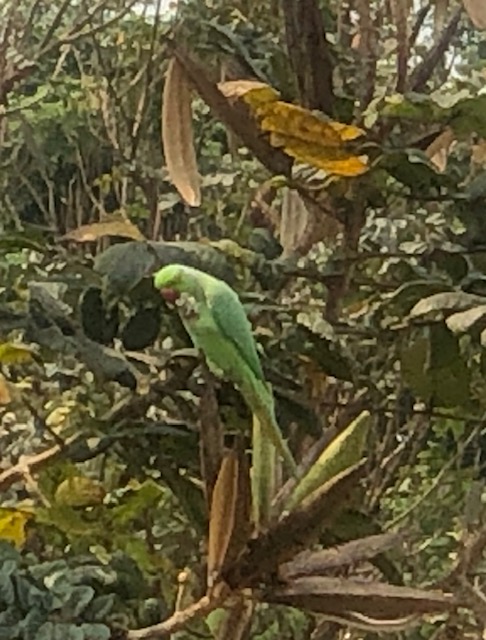

 AESTIVATION, lesser known cousin of hibernation, is ‘summer sleep’– a survival strategy used by many vertebrates and invertebrates to endure arid environmental conditions. Key features of aestivation, like hibernation (winter dormancy) include significant metabolic rate suppression, conservation of energy , altered nitrogen metabolism, and mechanisms to preserve and stabilize organs and cells over many weeks or months of dormancy. Even more than in hibernation, strategies to retain body water are important in aestivation, as dryness or aridity is the key trigger for the summer sleep.
 But for a South Indian like me, the most important person-colour association has of course to be ‘MS Blue’, said to be a favourite of legendary singer M.S. Subbalakshmi. This colour became synonymous with her after she started wearing Kanchipuram silk saris of this shade at her concerts. These were specially made for her by Muthu Chettiar, a weaver from Madurai. The savvy businessman that he was, he carefully regulated supplies to ensure enduring demand from Madras high society ladies! It has been clarified that MS Blue is not peacock blue but ‘mid-sea blue’.
 ife Day. This marks the day of signature of the Convention on International Trade in Endangered Species of Wild Fauna and Flora (CITES) in 1973. Every year on this day, events are held around the world to celebrate and raise awareness of the world’s wild animals and plants.
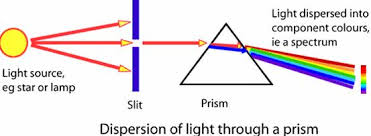 cutta, but Bangalore was also Sir Raman’s ‘karma bhoomi’, in that he worked at the Indian Institute of Science from 1933 till his retirement in 1948, after which he founded the Raman Research Institute in the city, and continued working there till his death in 1970.
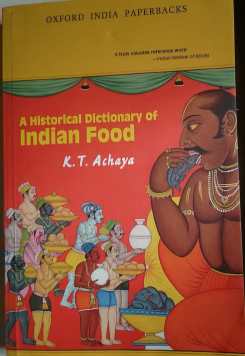 thoritative volume on the history of Indian food titled Indian Food: A Historical Companion. This led me to my bookshelf to pull out another book by this renowned authority on Indian food. This one, titled A Historical Dictionary of Indian Food followed his earlier ones. In this he attempts to bring together, in alphabetical order, material from his vast work on the subject. The book draws upon historical writing, archaeology, botany, genetics and ancient literature in Sanskrit, Pali, Tamil and Kannada to trace the gastronomic history and food ethos of India. The entries cover a wide range including recipes; narratives of visitors to India, starting with the Greeks in the fourth century; the etymological evolution of certain words, and the close links of food with ancient health systems such as Ayurveda. While this is a valuable scholarly work with meticulous and voluminous referencing, it is simply written, with a delightful menu–from A to Z–that one can dip into, and savour according to one’s own taste and appetite.
 Millennial Matriarchs