
 Well, years come and go, so what is so special about 2020?
Nothing really, except that it is the start of a new decade. And 20/20 is symbolic—understood in common parlance to stand for perfect vision! 2020, a few decades ago, also stood for some far-away date, by which the world would be perfect–a happily ever after year. No particular reason for this, that I can see. Maybe simply because it was an easy-on-the-tongue alliterative year? Or maybe because of the pharmacological implication?
But what is 20/20 vision?
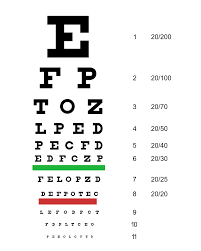
Actually, it denotes clarity of vision—visual acuity, to state it in slightly more ‘ophthalmological’ terms! To explain in layman terms, 20/20 is simply your ability to read a particular line on the eye chart from a distance of 20 feet. The size of the letters on one of the smaller lines near the bottom of the eye chart (or Snellen chart, after the Dutch doctor who developed this system in 1862) is standardized to correspond to “normal” visual acuity — this is the “20/20” line. If the letters on this line are the smallest you can identify, you have normal (20/20) visual acuity. The increasingly larger letter sizes on the lines on the Snellen chart above the 20/20 line correspond to worse visual acuity (20/40, 20/60, etc.). If you can read lines with smaller letters below the 20/20 line, then you have better than 20/20 vision (e.g., 20/15, 20/12, 20/10). The single big “E” at the top of the eye chart corresponds to 20/200 visual acuity. Legal blindness is when this is the smallest letter size someone can read even with corrective lenses.
Vision is more than visual acuity or eyesight. In addition to clarity of sight, “vision” is all interactions between the eyes and the brain, and all neurological processes that take place in the brain to make the sense of vision possible.
Here are some of things we envisioned would happen by 2020:
VISION 2020 was a global initiative that aimed to eliminate avoidable blindness by the year 2020. It was launched in 1999 by the World Health Organization along with over 20 other international non-governmental organisations, I am not sure how well it has succeeded. (https://www.who.int/blindness/partnerships/vision2020/en/)
Closer home, India’s Vision 2020 was a document prepared by the Technology Information, Forecasting and Assessment Council (TIFAC) of India’s Department of Science and Technology under the chairmanship of Dr. A. P. J. Abdul Kalam and a team of 500 experts, which set out a plan to change the country by 2020. In Dr. Kalam’s words the objective of the plan was “Transforming the nation into a developed country, ..based on India’s core competence, natural resources and talented manpower, for integrated action to double the growth rate of GDP and realize the Vision of Developed India”.
The reality is here for everyone to see—even those who don’t have 20/20 vision!
Well, be that it may, let us pray not only for 20/20 vision in 2020, but also that our reality is closer to our vision!
So that these are indeed visions, not dreams!
-Meena
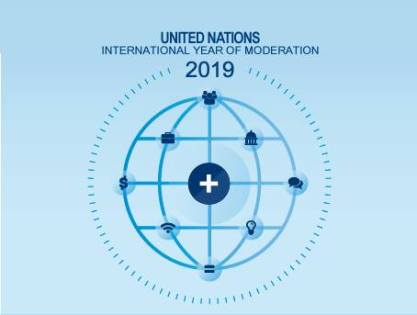 he Year of Moderation was declared in “an effort to amplify the voices of moderation through the promotion of dialogue, tolerance, understanding and cooperation.” The resolution did not pass without huge amount of discussion, debate and dissension. Even at the end, it was not passed unanimously. There were two votes against.
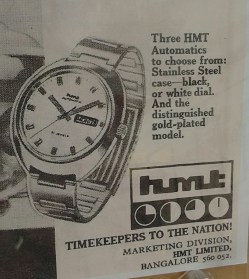 e passage of time was marked by the HMT watch! One’s first watch, the graduation watch, the watch that one was gifted, or gifted for a wedding—all these came in the form of an HMT watch.
 I hate when shops ask me to leave behind my handbag at the counter and give me a token in return. Apart from the general feeling of insecurity in being parted from my bag, there is the very real problem of juggling phone and purse as I shop. I certainly, however, will not be amenable to using ‘wallet parking’, though the service should be offered generously, as it is in a restaurant close to my office.
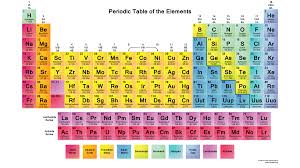 Year of the Periodic Table of Chemical Elements, did bring back some memories.
 ate on which the Universal Postal Union was established in 1874, in Bern, Switzerland. It was declared as World Post Day at the UPU Congress held in Tokyo in 1969. In just 50 years technology has hugely changed our modes of written communication. Soon there will be an entire generation that has never handled pen, paper, envelopes and stamps, and will never know what the age of physical post was all about. I do feel sorry for them!
 Millennial Matriarchs