Born July 12, 1895. A tribute on his birth anniversary.
When I moved to Ahmedabad in 1984, one of the ‘must see’ places was the Calico Dome. So dutifully, I went there as part of the Old City sightseeing and shopping experience.
It took me quite a while to figure out what the big deal about the dome was.
….That the dome was more than a showroom for the Calico Mills. That it was more than a venue for a fashion show that Parveen Babi had once taken part in as a student. That it was a historic structure, the first space frame structure in India (today so common in airports, for instance). That it was a design inspired by Buckminster Fuller‘s geodesic domes, and designed by Gautam and Gira Sarabhai and inaugurated in 1962.
Well, so what? Nothing, except the geodesic dome is ‘recognized as the strongest, lightest, and most efficient means of enclosing space yet devised by man’.
A geodesic dome is composed of a complex network of triangles. These structures are extremely strong. They can withstand high winds, earthquakes and heavy snow, making them ideal structures for any type of environment. They are also efficient and sustainable. Due to their spherical nature, dome homes provide a large amount of living space, while taking up very little surface area. And due to their lower area-to-volume ratio, they require less energy for heating and cooling.
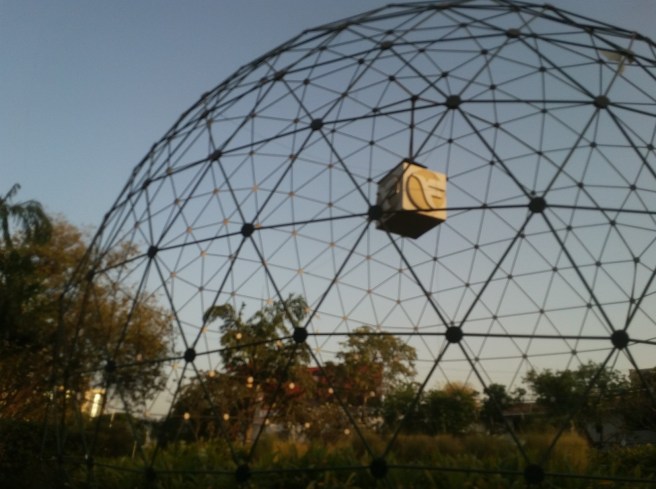
The geodesic dome embodies all that Buckminster Fuller stood for— ‘Less is More’, and a constant effort towards sustainability through design. Dedicating his life ‘to making the world work for all of humanity’, his designs have continued to influence generations of designers, architects, scientists and artists working to create a more sustainable planet. He was the first person to use the term ‘Spaceship Earth’.
He was a practical philosopher who contributed to many facets of life and has been called a ‘comprehensive, anticipatory design scientist.’. Just a few examples of how his work has contributed beyond architecture and design: Molecular biologists have now established that his mathematical formula for the design of the geodesic dome applies perfectly to the structure of the protein shell that surrounds every known virus. Several leading nuclear physicists are convinced that the same formula explains the fundamental structure of the atomic nucleus, and is thus the basis of all matter.
Other paradigm shifting designs include the Dymaxion houses, cars and map.
He visited India several time, giving the Nehru Memorial lecture in 1969. During one of his visits to India, he helped build a geodesic structure on the campus of Bengal Engineering College (now, Indian Institute of Engineering Science and Technology, Shibpur, West Bengal)
Happy that geodesic domes were something I encountered, including on drives to the airport at Ahmedabad for 20 years, at one of the garden-chowks!
—Meena
The mills and shops closed in the 1990s and the dome went into disrepair. In the 2001 earthquake, the centre of the dome collapsed and heavy rains damaged the interior of the underground shop. Later the dome collapsed completely.[3] [4]
On liquidation of Calico Mills, Ahmedabad Municipal Corporation (AMC) bought it as a heritage property in 2006.
Putting their novelty aside, dome homes have the potential to solve many of our most pressing environmental and societal challenges. R. Buckminster Fuller’s ultimate goal in designing geodesic dome structures was to solve the housing challenges of an ever-increasing population. He set out to design human shelters that were strong, sustainable and affordable.
The geodesic design is a perfect marriage of the sturdy arch and the rigid triangle, which enables dome homes to be extremely strong. They can withstand high winds, earthquakes and heavy snow, making them ideal structures for any type of environment, especially in an increasingly volatile climate.
Along with their strength, dome homes are incredibly efficient and sustainable. Due to their spherical nature, dome homes provide a large amount of living space, while taking up very little surface area. And due to their lower area-to-volume ratio, they require less energy for heating and cooling.
Additionally, dome homes require far less building materials than traditional homes do, and can be made out of a variety of eco-friendly building materials. They’re also typically less expensive to make than traditional homes, and the fact that they are much smaller than traditional single-family homes also helps keep the costs down. These factors make them ideal for people looking to build an environmentally friendly home on a budget.
While the residential application of the geodesic dome is most heralded in American culture, the original Fuller domes—as well as many since—were actually constructed for commercial use.
In fact, the first dome that was constructed after Fuller filed his patent for the structure was part of the Ford Motor Company headquarters in Dearborn, Mich., in 1953. The Ford Rotunda was originally an open-air pavilion, which the company then retrofitted with a roof to create an indoor space. However, the building could not sustain a traditional roof, which would weigh more than 160 tons. Ford turned to Fuller to design a geodesic dome that weighed just 8 tons. Although the Rotunda was destroyed in a fire in 1962, it was proof of concept for many commercial buildings to come.
After the success of the dome used for the Rotunda, other clients came calling, including the U.S. military. The government looked to the Fuller domes for two reasons. First was for how impervious they were to wind and weather, as the military needed shelter for their radar equipment that could withstand the harsh conditions at the Arctic Circle. The dome shape proved to be ideal to withstand high winds with minimal maintenance.
And second, the U.S. government explored using geodesic domes for their light weight and ease of construction. The domes were used to create “speedy but strong” housing for soldiers overseas in the 1950s, according to the Buckminster Fuller Institute. In fact, the Marines went as far as creating a 30-foot dome that could be delivered by helicopter and assembled in just over two hours—and that could withstand a day-long barrage of 120-mile-per-hour wind gusts.
MODERN DOMES AND POTENTIAL IMPACT
Since the early days of experimentation with geodesic structures, many have been built, including Epcot Center’s Spaceship Earth (although it’s technically a geodesic sphere, not a dome), the Tacoma Dome in Tacoma, Wash., the original hangar used to house the Spruce Goose, and the Amundsen–Scott South Pole Station (from 1975–2003). As architecturally impressive as they are utilitarian, these domes allow their proprietors to do more with less.
This do-more-with-less mentality has also led optimistic individuals to use the geodesic dome shape to solve urban problems such as creating transitional housing in Silicon Valley. A recent proposal by the entrepreneur Greg Gopman aims to provide a small village of dome homes available to rent for just $250 per month.
After all, what the geodesic dome—and its potential—shows us is the impact that architects and builders can have when they truly think outside the box.
https://blueprint.cbre.com/the-impact-and-importance-of-the-geodesic-dome/
- Buckminster Fuller was a renowned 20th century inventor and visionary born in Milton, Massachusetts on July 12, 1895. Dedicating his life to making the world work for all of humanity, Fuller operated as a practical philosopher who demonstrated his ideas as inventions that he called “artifacts.” Fuller did not limit himself to one field but worked as a ‘comprehensive anticipatory design scientist’ to solve global problems surrounding housing, shelter, transportation, education, energy, ecological destruction, and poverty. Throughout the course of his life Fuller held 28 patents, authored 28 books, received 47 honorary degrees. And while his most well know artifact, the geodesic dome, has been produced over 300,000 times worldwide, Fuller’s true impact on the world today can be found in his continued influence upon generations of designers, architects, scientists and artists working to create a more sustainable planet.
The Dymaxion Map, 1943
Not limiting himself to any one discipline, Fuller took on cartography with this invention – credited as the first two-dimensional map of the entire Earth’s surface that shows it without distortions.
To create the piece, Fuller projected the world map onto the surface of a three-dimensional icosahedron, which was then unfolded and laid flat.
https://www.dezeen.com/2018/08/27/eight-forward-thinking-ideas-buckminster-fuller-exhibition-los-angeles/
he Dymaxion map or Fuller map is a projection of a world map onto the surface of an icosahedron, which can be unfolded and flattened to two dimensions. The flat map is heavily interrupted in order to preserve shapes and sizes.
The projection was invented by Buckminster Fuller. The March 1, 1943 edition of Life magazine included a photographic essay titled “Life Presents R. Buckminster Fuller’s Dymaxion World”. The article included several examples of its use together with a pull-out section that could be assembled as a “three-dimensional approximation of a globe or laid out as a flat map, with which the world may be fitted together and rearranged to illuminate special aspects of its geography.”[1] Fuller applied for a patent in the United States in February 1944, the patent application showing a projection onto a cuboctahedron. The patent was issued in January 1946.[2]
—————————————————————————————————————-
geodesic dome, which has been recognized as the strongest, lightest, and most efficient means of enclosing space yet devised by man.
Molecular biologists have now established that his mathematical formula for the design of the geodesic dome applies perfectly to the structure of the protein shell that surrounds every known virus. Several leading nuclear physicists are convinced that the same Fuller formula explains the fundamental structure of the atomic nucleus, and is thus the basis of all matter.
Gira and Gautam Sarabhai and his team designed the Calico Dome, inspired by Buckminster Fuller‘s geodesic domes. The dome housed the showroom and shop for Calico Mills, which opened in 1962. The first fashion show in Ahmedabad was organised in the Dome.[2] Indian actress Parveen Babi took part in shows in the 1970s when she was a student.[2]
Inaugurated in 1962, the 12-meter wide structure
It was the first space frame structure in India
The mills and shops closed in the 1990s and the dome went into disrepair. In the 2001 earthquake, the centre of the dome collapsed and heavy rains damaged the interior of the underground shop. Later the dome collapsed completely.[3] [4]
On liquidation of Calico Mills, Ahmedabad Municipal Corporation (AMC) bought it as a heritage property in 2006.

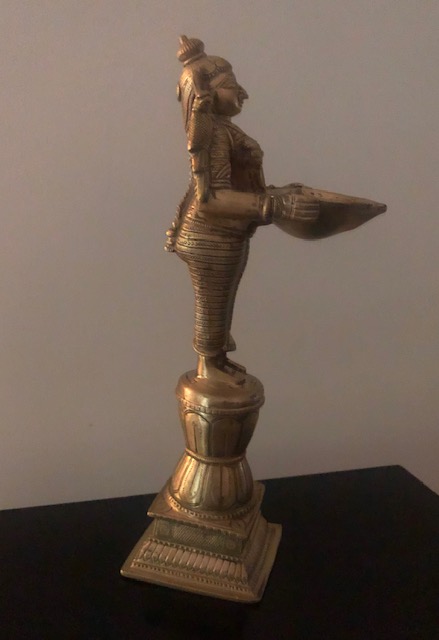
 Kaikeyi, goaded by Mantra, decides that her son Bharata must be crowned King of Ayodhya, in place of Rama, the first-born. But convincing her husband the King, was not going to be easy. As the first step, she retreats to her kopagraha (literally, Hall of Rage). She flings off her jewels, unfastens her hair, puts off her silks and flings herself on the bed, before sending word to the King that he better come there post-haste, or else…


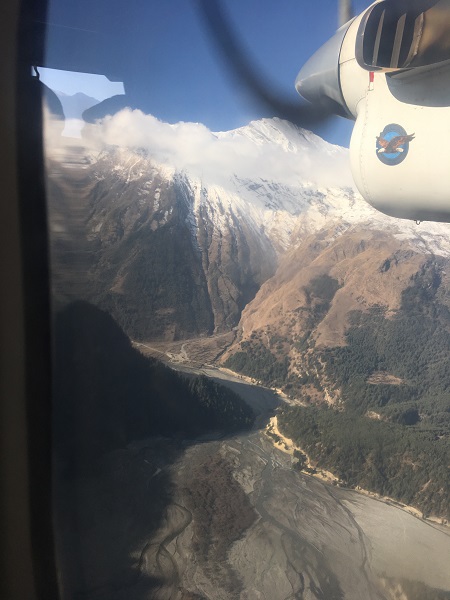 Day 6 (Tuesday): Travelled from Pokhara to Jomsom by 7.50 hrs Tara Air flight. Flight didn’t take off on scheduled time due to bad weather. Till 10.45 am, we had no idea whether flight would take off. Luckily weather cleared by 11 am and we were on the way. It was a spine-chilling experience in a 12-seater charter flight, flying at a very low height of 30 mts among Himalayan glaciers.

 Millennial Matriarchs