
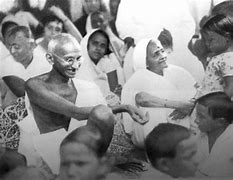
As we approach Gandhi Jayanti with the New Education Policy (NEP) now a reality, it is an appropriate time to re-visit Gandhiji’s philosophy of education as encapsulated in his Nai Talim (New Education)—Basic Education for All.
The fundamental premise of Nai Talim is that basic education is a holistic process, where all aspects of the individual—intellectual, physical, social, and spiritual—are given opportunity for development. The curriculum seeks to impart learning through hands-on skill-based work that prepares young people for the real world, rather than creating islands where education has nothing to do with the surrounding community. The centrality of skills aims to reinforce the dignity of labor, the value of self-sufficiency, and strengthen local culture. In this approach to education, craft-skill serves as the center of the holistic development of the student. Other skills such as literacy and mathematics are learned in the context of their craft, and subjects are taught in an interdisciplinary way and never separated from their practical application in the world.
Some other perspectives that under-pinned Gandhiji’s thinking on education were:
- That education should include a “reverent study of all religions.”
- Education meant lifelong learning
- And a re-definition of the role of the teacher, which is summed up by him as : “A teacher who establishes rapport with the taught, becomes one with them, learns more from them than he teaches them. He who learns nothing from his disciples is, in my opinion, worthless. ..In this way, a true teacher regards himself as a student of his students.”
A national education conference held at Wardha on 22–23 October 1937 wherein Gandhiji shared his vision of education led to the setting up of two model schools at Wardha and nearby Segaon. A few years ago, I was in Wardha and sadly, it did not seem that the school was doing too well, or that it was at the forefront of educational innovation. It would seem that it is not easy to implement the philosophy of Nai Talim in a way that is relevant to today’s world.
They say the NEP has some influences from Nai Talim. How far these elements are implementable or how seriously they will be implemented is yet to be seen. My feeling is that it will take very creative re-interpretation of the philosophy of Nai Talim, if we want the spirit of it to infuse our education system. And as of now, I am not aware of any exciting experiments in this direction.
I often find myself returning to these two quotes from Gandhiji after discussions and debates on education. To me, they are the touchstone by which any educational initiative must be evaluated:
“By education I mean an all-round drawing out of the best in child and man–body, mind and spirit. Literacy is not the end of education nor even the beginning. It is only one of the means by which man and woman can be educated. Literacy in itself is no education.’
“The real difficulty is that people have no idea of what education truly is. We assess the value of education in the same manner as we assess the value of land or of shares in the stock-exchange market. We want to provide only such education as would enable the student to earn more. We hardly give any thought to the improvement of the character of the educated.’
–Meena

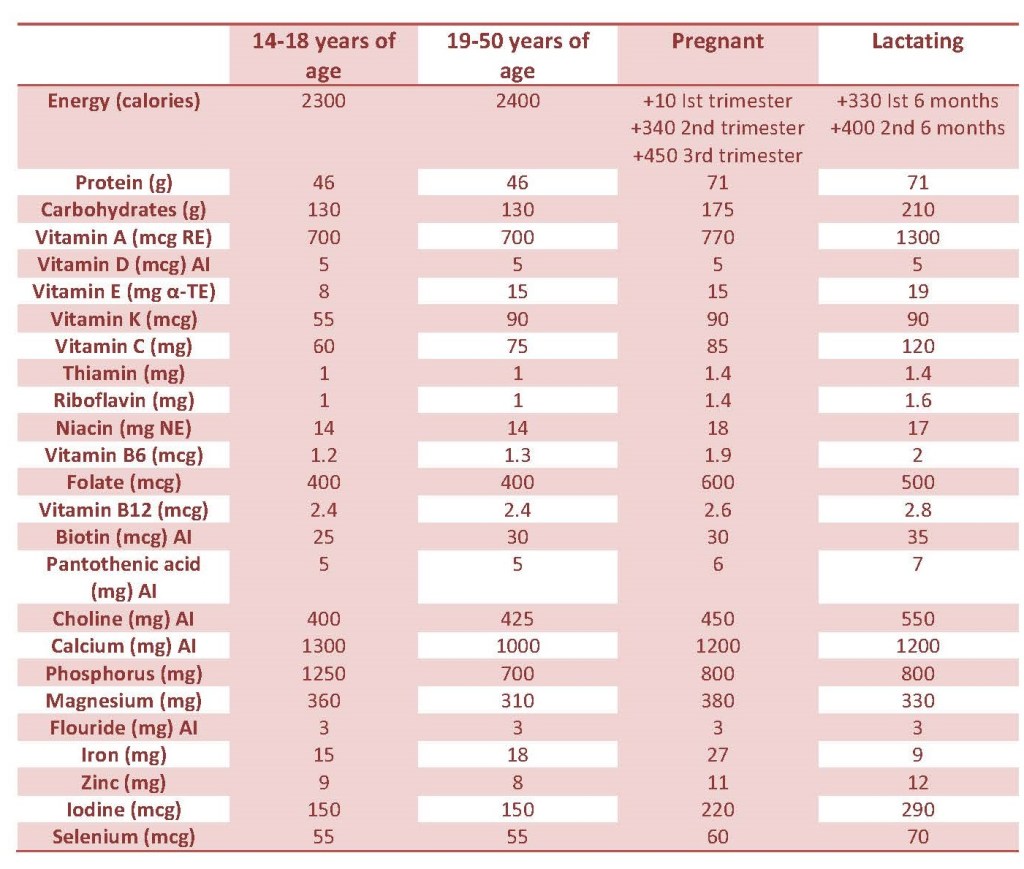
 September is observed as Nutrition Month in India. And God knows we need to do all we can, considering how poorly we are faring. Just to reiterate some of our national statistics:
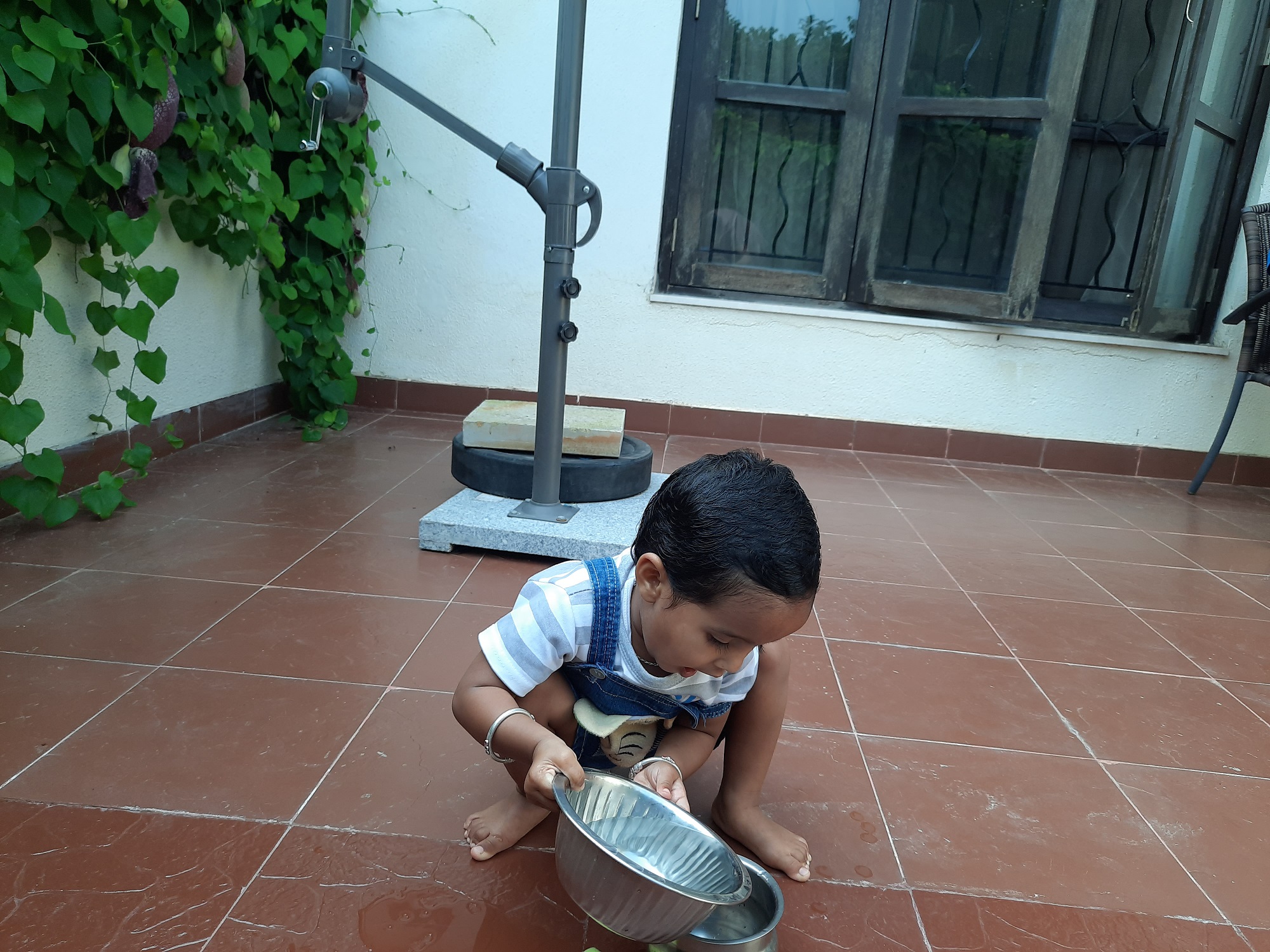 The school showed amazing results. Soon the children exhibited great interest in working with puzzles, learning to prepare meals and clean their environment, were calm, orderly, self-regulating, and engaging in hands-on learning experiences—essentially teaching themselves.
 But I think this puts a greater and different responsibility on the Ministry of Women and Child Development—viz, the responsibility of educational inputs in the home environment for children below the age of 3. Ages 0-3 is when a baby’s brain grows to 80% of its adult size and is twice as active as adults. Research in developed countries has shown that at age 2, toddlers from low-income families are already 6 months behind in their language processing skills. Without greater investment in the first 3 years, many children will miss the opportunity to reach their full potential. And inputs and influences at this age come mainly from the home environment.
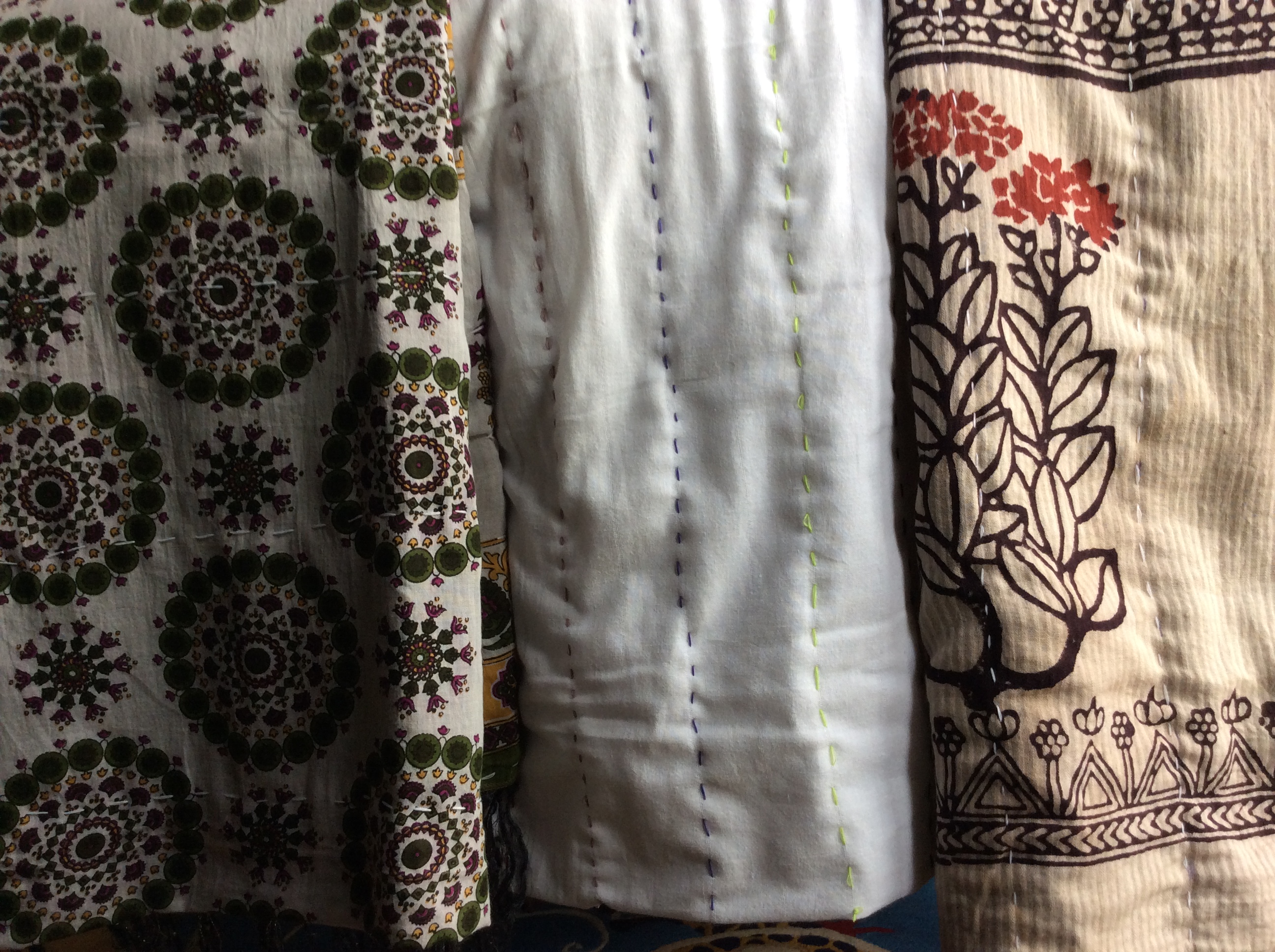 So I thought I would turn these into baby quilts. My interpretation of
 Today, All India Radio is the largest radio network in the world, and one of the largest broadcasters i in terms of the number of languages broadcast (23 languages and 179 dialects!), and the range of audiences it serves. This is done through 420 stations located across the country, reaching nearly 92% of the country’s area and 99.19% of the population. AIR also operates close to 25 FM stations.
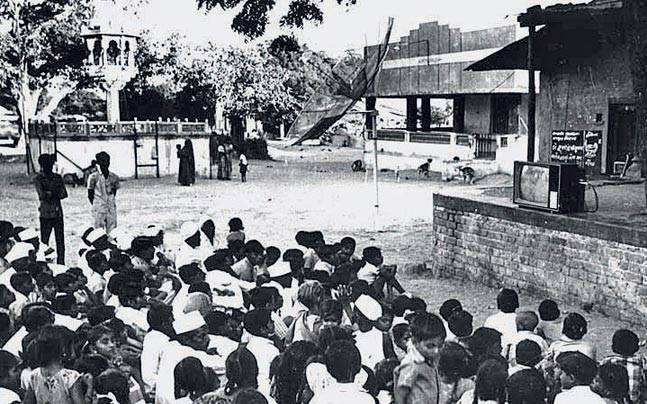 The programs were broadcast for a few hours a day, and hundreds of
 Millennial Matriarchs