Poet with the Piercing Gaze: Subramania Bharathi

The image of Che Guevera, his hair flowing to the shoulders, eyes looking off-camera and a beret on his head, is the international image of revolution, of the oppressed fighting against the powerful, of idealism, of nobility.

No less iconic for Tamilians is the image of Subramania Bharathi, turban on the head with the end wound around his throat, a mustache, and eyes that seem to pierce into the soul. It stands for all of the above, and in addition, for sublime poetry and an idealistic vision for India.

Poet Subramania Bharathi
Mahakavi Bharathi

We mark a century of Mahakavi Subramania Bharathi’s passing this month. He died at the age of 39, tragically trampled to death by the elephant at the Parthasarathy Temple, Triplicane, Chennai. He used to feed the elephant regularly, and they were friends. But on that particular day, something went drastically wrong. His death, as his life, was completely out of the ordinary.

But he is very much alive today, a living tradition. The versatility of Bharathi’s composition is one reason—his songs of national pride, his songs of revolution and social change, of romance, of bhakti—there is something for every occasion.

There is no schoolchild in Tamilnadu who does not know his poems and writings. Not a musician—classical or light-classical or filmi or pop–who does not have a repertoire of Bharathi songs. Not a film-maker who has not used a song or at least a verse from one of his compositions at one time or the other. Not a Tamilian who has not been touched, moved, affected by his poems.

He was something of a child prodigy, being conferred the title of ‘Bharathi’—one who was blessed by the Goddess Saraswathi—at the age of 12, by the Raja of Ettayapuram, for his poetic genius.

He knew 14 languages, but chose to write in Tamil. He was a teacher, a journalist, a poet, a writer, a freedom fighter. He was deeply spiritual, delving deep into Hinduism. It is said that he adopted his trademark turban in admiration of the Sikhs.

The British Empire feared his pen so much that there was an arrest warrant out for him. He spent almost 10 years in exile in Pondicherry (a French territory), so escape imprisonment.

He was an ardent proponent of the emancipation of women, and advocated that they take their place shoulder to shoulder in the freedom struggle and in the development of the nation. In fact, traditional Madras of over a century ago was shocked and agog when he insisted on walking in public, holding hands with his wife!

Poetry in translation seldom works anywhere as well as the original. But even with that, a poet’s words speak louder than anyone else can, of his thoughts, ideas and ideals. So here is an excerpt from one of his most stirring songs:

‘With the name of Bharat Desh on our lips

Let us shake off our fears and poverty

And overcome our sorrows and enemies.

We shall stroll on the snow-clad silver heights of the Himalayas

Our ships shall sail across the high seas

We shall set up schools—scared temples for us.

We shall span the sea to reach Sri Lanka

And raise the level of the Sethu and pave a road on it

We shall water Central India with the bounteous rivers of Bengal.

We shall have such devices that sitting at Kanchi

We will listen to the discourses of scholars in Varanasi.

We shall make tools and weapons

We shall produce paper

We shall open factories and schools

We shall never be lazy or weary

We shall ever be generous

We shall always speak the truth.

Both scriptures and sciences we shall learn

The heavens and oceans we will explore

The mysteries of the moon we shall unravel

The art of street-sweeping too, we shall learn.’

Be inspired, be elevated. Listen to renditions of Bharathi even if you don’t understand the words. And do look out for translations of his work. This translation is from a 1984 publication brought out by NCERT, which also has a well put-together summary of his life. Proving once again that NCERT has done some wonderful work!

https://archive.org/stream/in.ernet.dli.2015.231768/2015.231768.Poems-Subramania_djvu.txt)

–Meena

Blender-Composting for the Lazy Gardener

Compost as we all know, is decomposed organic matter. Rich in nutrients, it is also known as ‘black gold’ for the vigour and fortification it brings to soil. Compost is the end-result of the natural degradation of biomaterials like garden waste and kitchen waste. Everything in nature will degrade in the natural course. But left to itself, it may take years or even decades. Composting is a way to nudge the process along. Win-win, because it reduces the amount of green and brown waste entering the garbage management system, and because the end-product enriches soil.

During composting, microorganisms—bacteria, fungi etc.–decompose the bio-materials. Among these, bacteria play a large part—they secrete a variety of enzymes which chemically break down organic materials. Worms, bugs, nematodes, and other critters in the soil contribute by physically breaking down those materials, which makes it easier for the bacteria, fungi and others to do their work.

The resultant compost provides the soil nitrogen, phosphorus and potassium, along with a host of micronutrients and trace minerals.

Fundamentally, there are two types of composting processes which can go to work. The first is aerobic composting, in which the kind of bacteria at work use air to help speed up the breakdown of materials. The other is anaerobic composting, where the bacteria do not need oxygen to carry out the process.

There are several types of composting methods which can be used, basically classified as:

* Hot Composting: This quickly turns organic material into usable compost, but requires a lot of time and effort. Hot composting involves keeping the temperature at the center of the compost pile elevated, ideally to somewhere between 43-60o Celsius. The pile needs to be kept turned once a week or so to move colder material from the outside of the pile to the inside where it is heated and so breaks down into rich humus more quickly

* Cold Composting: Cold composting essentially means creating a compost pile and leaving nature to do its job. It requires less input from the gardener, but does mean that useable compost can take up to a year to be ready.

* Vermicomposting: Here worms are added to hasten the process of composting.

Popular domestic composting methods include open air composting, bin composting, tumbler composting and vermi-composting.

On and off, I have tried my hand at composting my kitchen waste. But being both lazy and inept, it was a mess each time!

Then I came across a method called trench-composting, which basically involves digging up the area around your plants in a shallow ditch, spreading the cut-up kitchen waste in the ditch, and covering it back with soil. I liked this method. Kind of no-fuss, no-muss; possible even for the ten-thumbed like me; and can be done on a daily basis. But then I ran into a problem. This was possible in the kitchen patch or even in the flower-beds. But what about the lawn? I could obviously not dig trenches there.

Then an idea struck. Why not blend up the kitchen waste and just pour it on the lawn? I reasoned that it would return nutrients to the soil, and would also results in a huge reduction of the kitchen waste going out into the waste management system. I started doing this.

And also decided to check if this idea had struck anyone else. Well, yes. Looks it has! The internet has accounts of what is called Blender-Composting. Several gardeners use it, though I could find no scientific papers on it. As some of the participants in the debates point out, this is not composting at all, since one is only physically crushing the pieces. But since that is the starting point of the composting process, I suppose it will help the bacteria and other micro-organisms do their work faster. Gardening experts say that addition of reasonable amount of bio-waste in this form can only have positive effects on the soil, even though it is not clear how much. However, they do caution against adding too much of this, as the early stages of the composting process could deplete nitrogen from the soil.

I can vouch that there is no smell and the goop, properly diluted and spread, attracts no flies or other insects. But depending on what goes into it, the goop can sometimes be yucky-looking, in fact referred to by some as ‘dragon-vomit’. I can vouch for this also—the day the goop is papaya-based, I definitely have to hide it in the soil in the hedges and bushes!

I am sold—it is either trench composting or blender composting for me!

–Meena

Telling Stories on Cloth: Patachitra

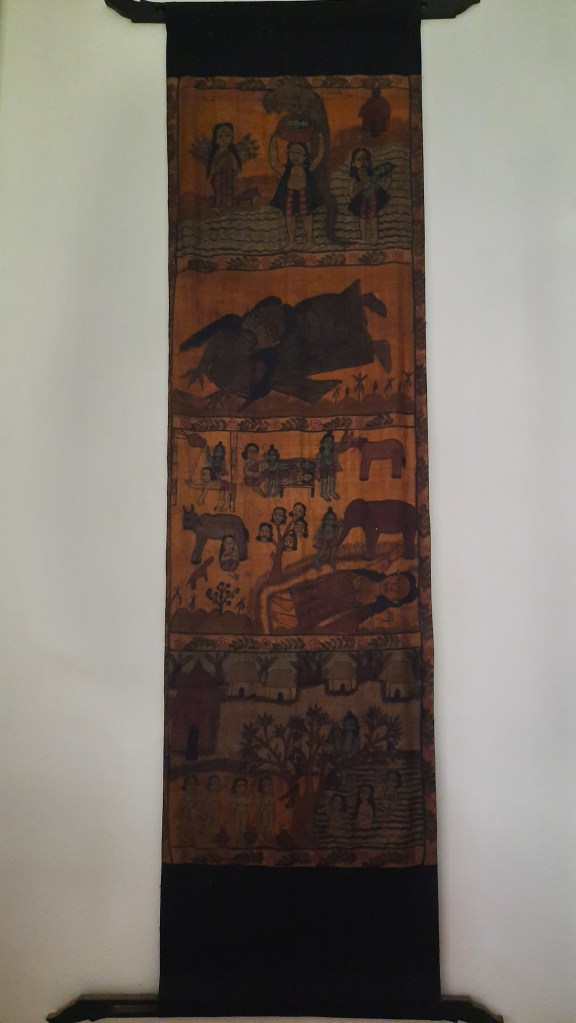
Patachitra, from ‘patta’ meaning cloth, and ‘chitra’ meaning picture, is an art form of East India, which tells stories on cloth. Believed to have originated in the 12th century in Odisha, Patachitra traditionally depicts stories of Krishna. So what better way to mark Janmashtami than to talk of Patachitra!

The art probably originated around the Puri Jagannath temple, serving both ritual uses and as souvenirs for devotees visiting the temple.  The pieces depict Lord Jagannath and the other deities of the Puri temple—Subhadra and Bhalabhadra, and temple activities. These are called Badhia paintings. Other themes include the exploits of Krishna as a child (Krishna Leela); Dashavatara (the ten incarnations of Krishna); and scenes from the Geeta Govinda. Some Patachitras are centred on Ganesha, usually depicting him with five heads (Panchamukhi). There are also Ramayana-themed ones, as well as those which are based on Lord Shiva and the stories about him. The art-form is also well-developed in West Bengal with several schools of Patachitra. Here, the Goddess Durga is a very popular theme, along with other mythological tales and folktales.

The Patachitra is not just a painting to be put up and worshipped or admired (or both!). Especially in Bengal, it is often a prop used by itinerant story-tellers called patuas. Some of these paintings are made up of several panels which are kept rolled up. The story teller unfolds the cloth to progress the story, accompanied by songs and verses which narrate the events depicted—the original moving pictures! Such paintings and story-telling are not confined to religious or mythological tales, but extends to contemporary news, juicy scandals, and even messaging for social change!

The paintings are made on strips of cotton cloth prepared by coating the clothing with a mixture of chalk and a special gum made from tamarind seeds. The coating is rubbed using two different kinds of stones to smoothen it. After this, it is dried before the artist starts work. The process results in a leathery surface.

There are specific rules that all Patachitra paintings follow. For instance, paintings are enclosed in borders decorated with flowers and other motifs. Krishna is always painted in blue, while light pink, purple or brown are used to paint Gopis. There are usually no landscapes, distant views or perspectives. Only natural colours—vegetable dyes or mineral colours–are used in Patachitra. The luminescent white comes from ground conch shells.

The master-craftsmen are so skilled that they do not draw outlines of the figures and motifs with pencil or charcoal. They directly paint it on the cloth using fine brushes. After this, the colours are filled in. A single panel may take 5-10 days, while a more elaborate work may take months.

Contemporary artists are now adapting the style to make new products, from saris to bags to decorative items, which can be commercially viable At the forefront of keeping the art form alive is the heritage village of  Raghurajpur in Odisha. About 160 families here practice this art, and even the younger generation, many professionally qualified, follow the tradition and continue to paint.

May their tribe increase!

–Meena

Beauty and the Bees

If last week was about boring bees, this week it is about beautiful bees—bees in art, bees and art.

Bees have been depicted in art through the ages, the oldest known been a Spanish cave painting dating back 15,000 years. These insects also have great symbolic value—variously standing for peaceful coexistence, teamwork, industriousness. In some cultures, they are symbols for fertility and healing. In Hindu mythology, Kamadev’s sugarcane bow is strung with a row of bees, thus symbolizing the sting of love.

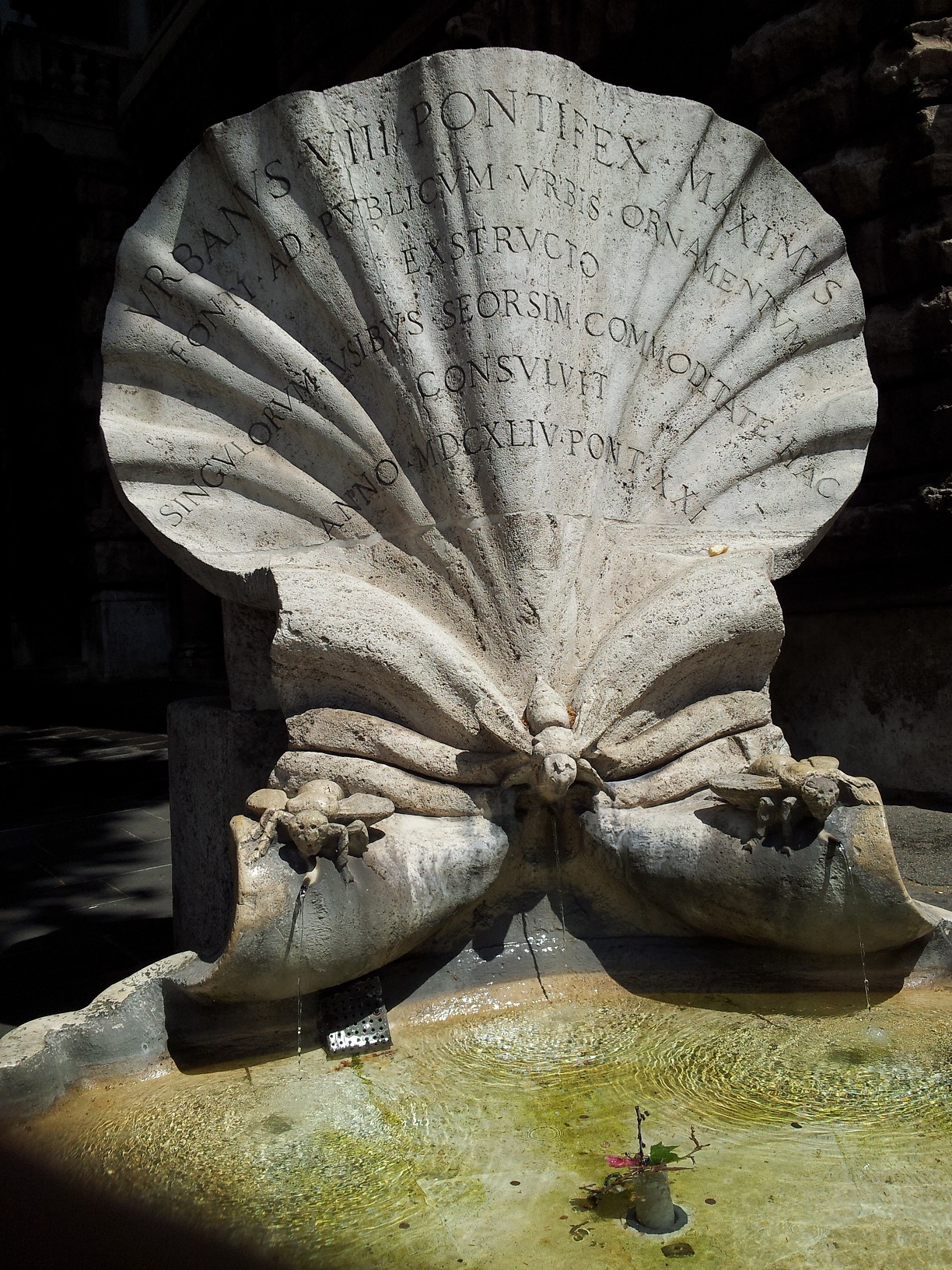
One of the most popular works depicting bees has to be the Fontana delle Api, or Fountain of Bees in Rome. In a city replete with fountains, this one stands out for its elegance and creativity. Built in 1644, it prominently features bees because it was commissioned by Pope Urban VIII, who belonged to the Barberini family, whose symbol was the bee. The 3-bee symbol of the family was also immortalized with St. Peter’s Basilica in the Vatican, in the Baldacchino sculpture.

Fountain of Bees
Fountain of Bees, Rome

Napoleon did his part for bees—they were one of his imperial symbols. His red coronation robes were embroidered with gold bees. It was not just the beauty of bees which captured Napoleon’s imagination. He consciously used this symbol as a rejection of the fleur-de-lis, which was the symbol of the previous regime of the Bourbons. His use of bees started a rage, and they were used as decorative symbols on everything, from porcelain to textiles.

Coming to contemporary arts, in something called bee sculpture, artist Tomas Libertiny collaborates with bees and bee keepers, to re-create famous sculptures in beeswax. He makes 3-D replicas of the originals—from the Nefertiti bust to Micaheangelo’s sculptures—and creates a wire frame of the same shape. He gives these frames to beekeepers, who encourage bees to build their hives on these. In a matter of months (or years if it is a large and complex structure), the bees build in the desired shape. Not a simple process though—Libertiny compares it to doing bonsai, with the constant need for adjusting, trimming and building the growth in the desired shape. The result is a beautiful and very durable piece of art made of beeswax.

The Hive is a huge immersive exhibit at the Kew Gardens. It is a huge structure made of metal. It reflects the activity of a real bee hive in the Kew. An accelerometer (a device which detects vibrations) is placed in the real hive. It picks up the vibrations of the bees and transmits them to the metal hive in real time. There are 1000 LED lights in the structure, which light up in tandem with these vibrations. There are also recorded sounds from hives to add an audio dimension. It is the closet a human can safely get to being in a beehive!

Then there are artists for bees. The Good of the Hive initiative of artist Mathew Willey has made it a mission to depict 50,000 bees in murals and installations across the world, towards raising awareness of the role of bees in our lives, and the threats they face. The number 50,000 is chosen because that that is the number of bees which can sustain a healthy colony. Louis Masai Michel is another artist with a similar mission.

On the one hand there are humans celebrating bees in art. On the other, there are bees exhibiting a developed sense of art recognition! There is a fascinating experiment concerning bees and art conducted by scientists in Australia. Bees were shown 8 paintings, four by the French artist Claude Monet, and four by Australian Indigenous artist Noŋgirrŋa Marawili. The scientists placed a small blue dot at the centre of each painting. The ones on the painting by Monet had a bitter quinine drop in it. The ones by Marawili had a drop of sugar solution. After letting the bees interact with these paintings for some time, the scientists replaced the paintings with two new paintings which the bees had not seen, one by Monet and one by Marawili. The bees made a beeline for the painting by Marawili! In other words, they were able to distinguish the styles of the two artists, and knew which painting would yield the sugar!

Long live bees!

–Meena

Portrait of a Potato

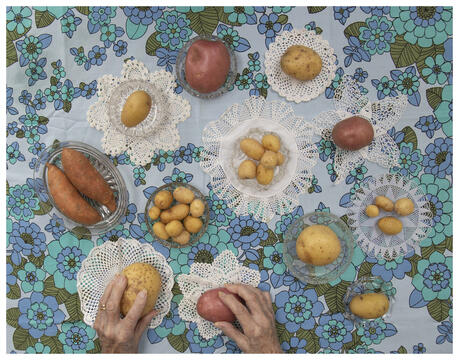
I am an unabashed and unapologetic potato-worshipper. I was therefore thrilled to learn about a competition called the Potato Photographer of the Year. The inaugural edition of the competition was held in 2020, and the results of the 2021 competition were just announced. And I could see the love and appreciation for the vegetable in the superbly imaginative prize-winning entries. Poems for the eyes!

The Potato Photographer of the Year competition has an eminent panel of judges including photography-great Martin Parr. The prizes will not make your fortune, and come to about £2000 worth of stuff, including a lens kit, camera case, backpack, coveted (by photographers) subscriptions, and a photography workshop. But the good part, apart from celebrating the potato, is that all entry fees (£5 per single entry) are donated to the Trussell Trust, a food bank charity that aims to end food poverty in the UK.

Potato Photo Competition
One of the winners of the Potato Photo Competition 2021!

Prosaically, the potato (Solanum tuberosum) is a tuber. It is an annual plant of the nightshade family. It is native to the Peruvian-Bolivian Andes and is one of the world’s main food crops. It is a great source of Vit C, protein, thiamin, and niacin.

Potatoes were domesticated and cultivated in South America by the Incas as early as 1,800 years ago. Spaniards who invaded South America transported them and introduced them into Europe during the second half of the 16th century. By the end of the 17th century the plant was a major crop in Ireland, and by the end of the 18th century it was being grown in significant quantities in continental Europe, particularly Germany, and in the west of England. The Irish economy became dependent on the potato, and the disastrous failures of the Irish crops in the mid-19th century because of late blight, and the resulting Irish Potato Famine had huge impacts in terms of human life, the economy and demographics.

The potato reached India in the late 16th-early 17th centuries, most likely aboard Portuguese and Dutch ships. Today, India ranks as the world’s third largest potato producing nation—with about 4.9 crore tonnes grown here in 2017. Potato is not only a staple, but a cash crop that provides significant income for farmers, through domestic sales and exports.

Though the potato reached India through the Portuguese and Dutch, it initially remained confined to the Malabar cost. It was the British who were responsible for its spread. The East India Company wanted to replace local vegetables which they thought were of low quality, with superior vegetables, viz, potato—basically because they wanted to have a reliable source for this food which had become part of their staple. So they aggressively evangelized and promoted it in every which way, including giving out the seeds and plants to farmers for free. Apart from a source to supply their own tables, the British also pushed the potato as a panacea for several ills in India. The 1838 records of the Agricultural and Horticultural Society of India states that through growing European-introduced crops such as the potato, “happiness till now unknown in India, will be diffused abroad.” Similarly, the East India Company records that growing potatoes would help “alleviate the Miseries” in India caused by frequent failures of rice crops. So the potato is indeed part of our troubled colonial past.

But to imagine a present without potatoes, I do not want to do!

While the Potato Photographer of the Year celebrates visual depictions of the tuber, the vegetable does not seem to have found much favour from wordsmiths. Poems eulogizing the potato are few and far between. One that I liked was Potatoes by Lucy Adkins.

But names of Indian potatoes are pretty poetic! Kufri Jawahar, Kufri Chandramukhi, Kufri Sutlej, Kufri Bahar, Kufri Anand, Kufri Ashoka, Kufri Pukhraj, Kufri Sindhuri, Kufri Jyoti, Kufri Megha, Kufri Lauvkar and Kufri Swarna are a few. (Kufri, I think must come from the place in Himachal which is a major potato growing area, and the location of Research Station of the Central Potato Research Institute).

Long live the potato, and may we find ways for all our senses to celebrate it!

–Meena

VASCSC: Dr. Vikram Sarabhai’s Vision for Science Education

As we approach Dr. Sarabhai’s birth anniversary (12 August), time to pay tribute to a great visionary, scientist and institution-builder.

His role in the nation’s space and atomic energy programmes, in creating institutions like ISRO, PRL, IIM-A, ATIRA is well known, as was his zeal for the planned use of science and technology in the development of a newly-independent India are known. His passion for science education however, needs to be more widely discussed.

Dr. Sarabhai was keenly aware that creating a scientific temper and promoting scientific thinking among the population was fundamental in our progress as a nation. He felt that science teaching needed to be innovative to achieve this, and also that the best scientists should engage with young minds, and inspire them towards science. His own background of being home-schooled in a very open learning environment, where exploring and innovating were the key, may have been the foundation of his conception of science education.  

Vikram Sarabhai as a boy, with his model train

It was in this background that in 1963, Vikrambhai got scientists of the Physical Research Laboratory (PRL) involved in a project called ‘Experiment for Improvement of Science Education’, to take science to citizens. These early efforts were institutionalized in 1966, with the creation of an institution called the Community Science Centre (CSC), whose foundation stone was laid by Dr. Sarabhai’s guru, the Nobel Laureate, Sir CV Raman.  The famous lecture ‘Why the Sky is Blue’ was delivered by Sir Raman at the Centre on this occasion.

CSC was the trailblazer in the country, and the country’s active Science Centre/ Science Museum movement owes a lot to the pioneering work of this institution. CSC was re-named Vikram A. Sarabhai Community Science Centre (VASCSC) after the passing away of Dr. Sarabhai.

To quote VASCSC’s website, ‘The core of the Centre’s philosophy is to take school and college students out of the rigid framework of textbooks and encourage them to think, explore and create. Over the years, the Centre has combined formal and non-formal techniques to formulate many innovative methods to give students a better understanding of Science and Mathematics, which not only make the process of learning enjoyable but also sustained and long-lasting.’  It aims to bring teachers, students, research workers, administrators and the community together for a better appreciation and understanding of science.

VASCSC has been the pioneer of several innovative science education programmes, including interactive science exhibitions, open laboratories, math-lab, science playgrounds. These are today the backbone of many a science education programme in the country.  The educational kits and materials developed by it are of a very high quality.

A landmark initiative of VASCSC was the Science Express, done for the Department of Science (DST), which ran for several years. This was an innovative science exhibition mounted on a 16-bogey train, specially designed by the Indian Railways. Launched in October 2007 by DST, Science Express covered over 1,22,000 km across the country, receiving more than 1.33 crore visitors at its 391 halts, over 1,404 days. It has thus become the largest, longest running and most visited mobile science exhibition, probably in the world and has created several records in its wake’ (DST). The exhibition has six entries in the Limca Book of Records.

Mrs. Mrinalini Sarabhai wrote of Dr. Sarabhai: ‘‘He often said that on retirement he would like to spend time with young children talking to them about science.’ Sadly Dr. Sarabhai died young, so he could not fulfill this dream. But the initiative he started at the CSC has indeed contributed to the vision of transforming science-education in India

–Meena

I am privileged to be a member of the Governing Council of VASCSC.

Vikram Sarabhai Centenary

A Life Too Short: A Tribute to Dr. Vikram Sarabhai

Vikram Sarabhai Centenary

A Life Too Short: A Tribute to Dr. Vikram Sarabhai

Vikram Sarabhai Centenary

A Life Too Short: A Tribute to Dr. Vikram Sarabhai

Snail Alert

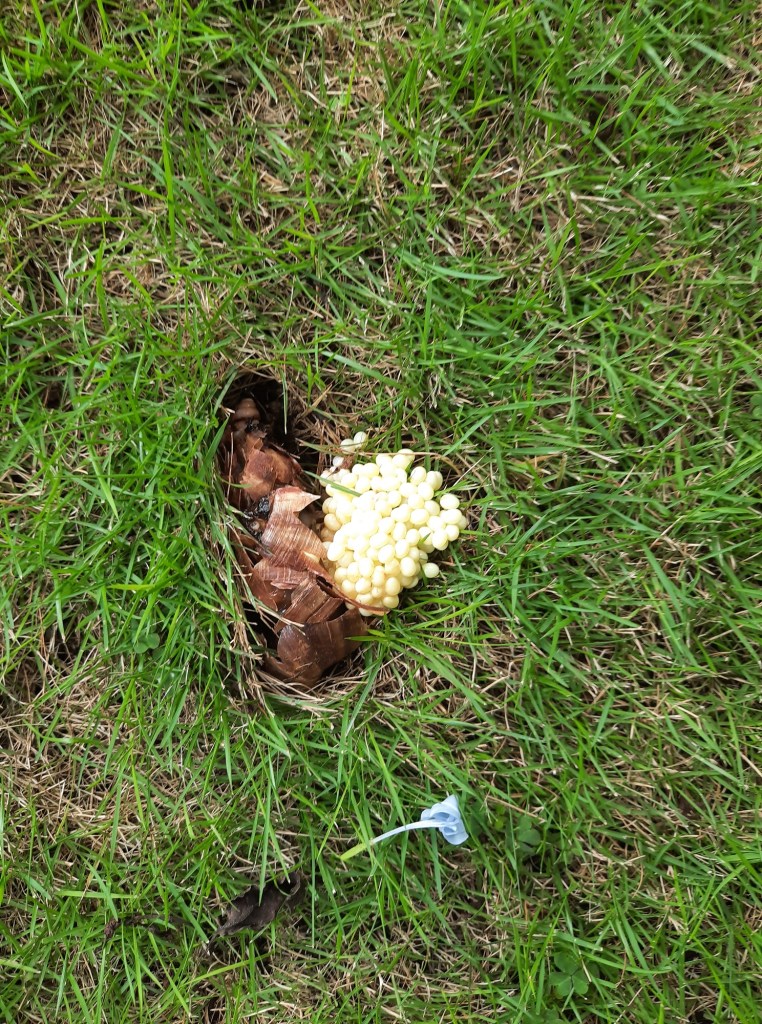
As I was walking along in my colony the other day, on a patch of grass I saw a gory sight. Someone had stepped on a snail. It was crushed. And beside it, I saw a yellow outgrowth. I couldn’t figure out what that was: for a moment I thought that the snail had been dead for a few days maybe, and some kind of mushrooms or fungi had grown there, thanks to the nutrients available. That didn’t seem too plausible. So my next idea was that in fact the accident was very recent, and these were the snails innards. But a closer look revealed that small yellow balls made up the outgrowth.  So the final conclusion (borne out by web-searches) was that the crushed snail had been pregnant, and the eggs had come out and lay beside the dead father/mother.

Father/mother? What does that mean? Well, if you remember your high-school biology, most snails are hermaphrodites–which means that they have the reproductive organs of both males and females. In theory therefore, they have the ability to self-fertilize. However, they don’t usually do that. They mate in the “traditional way.” As a result, both of the partners lay eggs.  Each clutch has about 200 eggs on average, and each snail may lay 5-6 clutches per year.

And this high reproductive ability is a cause of great concern. Because the crushed specimen was a Giant African Land Snail, one of the most invasive species ever. A native of East Africa (mainly Kenya and Tanzania), today the snail has spread across almost the whole world, an active and aggressive pest. Given the rate of its reproduction the snail spreads like a wildfire. It is extremely adaptable, and eats about 500 species of plants, and hence poses a threat to both agricultural crops and native plants wherever it goes. Not only does it eat the plants but it is also a vector for plant pathogens, thus causing further damage to agricultural crops and native plants. It carries the rat lungworm parasite and can transfer it to humans, causing meningitis. And once entrenched, the snails are almost impossible to get rid of. Some states of the US have spent millions of dollars to eradicate the creatures, but with limited success.

But coming back to snails in general. Well, snails are gastropod mollusks, which means they are related to both octopuses and slugs.  There are some species adapted to living on land—the land snails, and there are aquatic snails, which live in either fresh water or the sea. All snails carry shells into which they retreat when threatened by predators, or in unfavorable weather. They hatch out of the eggs with small shells, which grow as they grow. The shells are made of calcium carbonate, and they keep adding more of it to the edges of the shells till they are adults. They don’t have legs, but move thanks to the muscular movement of their bodies, and aided along by the mucous they secrete which helps them to reduce friction and slide along. And moving along at snail’s pace means maintaining an average speed of about half-an-inch per second. They can’t hear, but their sight is good and sense of smell even better. They live for 3-7 years. While most species are hermaphrodite, there are some which are not and have distinct males and females.

Well, we do know that snails are a delicacy in some parts of the world. But lesser known is that in places in the UK, snail-racing is a sport! Snail shells are also sometimes incorporated in jewelry. Certain varieties of snails, especially the Muricidae family, produce a secretion that is a natural dye. In ancient times, purple and blue dyes were made from these snails, and were very expensive and prized. There was also belief that snails had medicinal properties, especially for bronchial problems, tuberculosis, etc., and some of these uses are still being investigated. And not to forget, snail slime may well be a part of that anti-aging cream or moisturizer you just bought!

Coming back to my crushed snail.

I know the person who stepped on him/her did so unknowingly.

And that if that clutch of eggs had hatched, we would have hundreds of more pests to ruin our gardens.

But still I cannot but feel a little sad, at the memory of the crushed body and the doomed eggs.

–Meena

‘Things Indian’

…is a book by William Crooke, first published in 1906. It fully lives up to its sub-title ‘Being Discursive Notes on Various Subjects Connected with India.’

William Crooke served in the Bengal Civil Services. He spent 25 years in active service in India.

Aside from his duties in this service, his major contribution was in research and documentation as an ethologist and folk-lorist, deeply studying traditions, practices and stories of many parts of India. His contribution to the study and documentation of ethnology and folklore is acknowledged by scholars across the world.

 He published several academic papers and edited journals.

As well as this, he wrote books–a huge output including:

  • A Rural and Agricultural Glossary for the N.W. Provinces and Oudh.
  • An Ethnographic Handbook for the N.W.P. & Oudh. Allahabad.
  • An introduction to the popular religion and folklore of northern India.
  • An introduction to the popular religion and folklore of northern India, in 2 volumes
  • The tribes and castes of the North-western Provinces and Oudh, in 4 volumes.
  • The North-Western Provinces of India: their history, ethnology, and administration.
  • Things Indian: being discursive notes on various subjects connected with India
  • Natives of northern India. A Rural and Agricultural Glossary of the NW Provinces and Oudh.

I have not read any of his other works, but ‘Things Indian’ which has been on my bookshelf for many years, which I just picked up, is a testimony to his scholarship. And also, to a fairly (for the time) non-judgmental perspective on things Indian, written with understanding, empathy and appreciation.

The book covers topics as diverse as Agriculture and Bazaar, Camel and Curry, Polo and Precious stones, Wine and Wood carving.

He records such practices as: ‘When a widower marries again, his second wife wears an amulet, which she calls the ‘crown of the co-wife.’ Or the annual game of tug–of-war of the Khasis in Assam in which ‘..one side represents the village and the other a gang of demons…with the intention being that the evil spirits may lose and quit the neighbourhood.’ Or that ‘Opprobrious names are often given to a baby after its parents have lost elder children, in the belief that, when the child bears a ridiculous name, it is less liable to be attacked by the Evil Eye or other uncanny influence.’ (My grandmother suffered thus, named Picchamma (pichhai=begging in Tamil), following as she did two siblings who died at birth).

He refutes sanctioned colonial wisdom in many instances, for example when he says: ‘Much ill-informed criticism has been directed against the methods of the India farmer’, and goes on to counter many criticisms of farming methods by quoting the logic and reasons given by farmers which he agrees with. He pays respect to the weaving of India, saying ‘it is impossible to discuss the numberless products of the Indian loom’, and laments how the introduction of aniline dyes have brought down the quality of dyed products.

He notes with delight that in kathputli performances ‘..all well-known members of native society and, in particular, the Sahib and the English lady are freely satirized.’

By quoting a report on the contents of the stomach of a gharial shot at the time, which consisted of ‘About a dozen large bunches or pellets of hair, probably human; sixty-eight rounded pebbles; one large ankle-rink; twenty-four fragments of Churis or glass bangles; five bronze finger-rings; a sliver neck-charm; a gold bead; thirty small red coral beads’, he tries to dispose of the belief of the time that gharials did not prey on humans.

Eclectic in his choice of topics, the book is a delightful browse—with both solid documentation and gems of quaint information.  And a tribute to a curious and meticulous mind.

Sure, Crooke was part of the colonial machinery. But to make a distinction—there were those among them who contributed in various ways, going beyond the call of duty. He was one of them.

–Meena

An allied reading is ‘Beyond the Call of Duty’, V. Raghunathan. Harper-Collins.

Toy Town

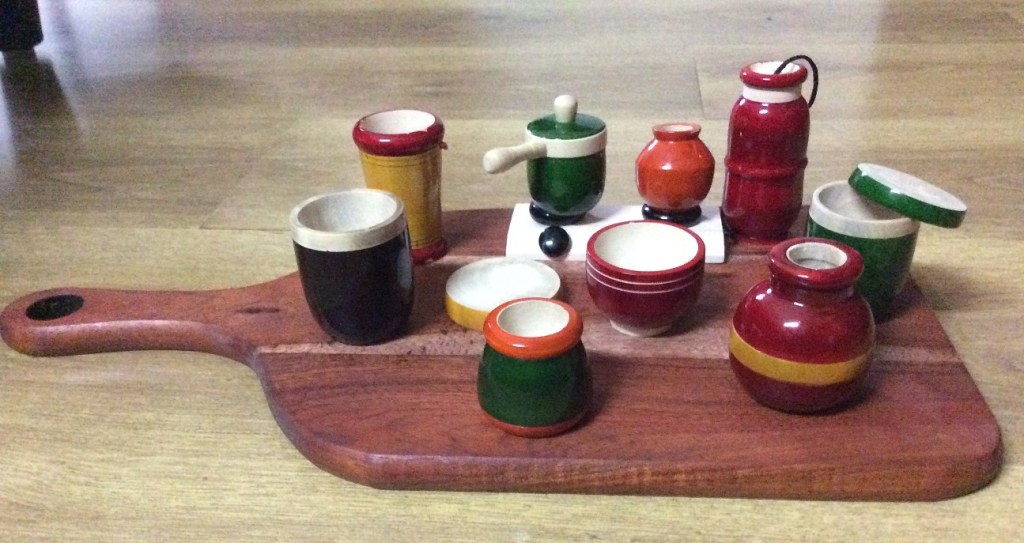
Brilliantly coloured, ingeniously designed, safe, pocket-friendly, environment-friendly, contributing to the livelihoods of craftspeople, and carrying forward a tradition.

Now, how many objects can you say that about? Not too many, sadly.

Which is why Channapatna toys are special.

These wooden toys are made in the town of Channapatna in Karnataka, about mid-way between Bangalore and Mysore. As you pass through this stretch of road, the eyes will be gladdened by shops full of these bright and beautiful toys. And you wish you knew dozens of children to gift them to. In fact, so prevalent is toy making in Channapatna that it is also called Gombegala Ooru, or Toy Town!

Channapatna toys are traditional wooden toys (now given modern design twists), which have been made in this town for over 200 years now. The tradition came here in the time of  Tipu Sultan, who was fascinated by these wooden objects, and invited Persian craftsman to this area to teach the local craftsmen these techniques. Since then, it has remained a part of the livelihood of the people here. Bavas Miyan is credited with having made this happen. He was a master-craftsman who brought a high level of excellence to the craft by incorporating Japanese techniques. Bavas Miyan trained a generation of artisans and helped them perfect their skills.

Traditionally, the toys were made from the wood of the Wrightia tinctoria tree (referred to as aala mara or ivory wood), though today a wider variety of woods, including rosewood, teak and rubber wood are used.

The wood is first carefully seasoned, then cut to the required size. Traditionally, the pieces used to be then cut into spheres, squares or any required shape by hand, but today this is done by lathe. Then it is sand-papered to smoothen it. While it is still on the lathe, the craftsmen hold a lacquer stick to the wood so that the piece gets coated with this, thanks to the heat generated in the turning process. Then the lacquer is spread out smoothly over the whole surface using dried palm leaves, giving the piece a brilliant shine. After this, the toys are decorated with bright colours. Only natural colours are used: from turmeric for yellows to kum kum for reds and katha for browns.

The Channapatna toys have seen their ups and downs, and will continue to do so. The changing preferences with respect to toys, the limited reach and distribution, the need for constant innovation in the sector, the ability of the toy sales to support livelihoods at scale—all of these are challenges. The Government of Karnataka has taken many measures—from setting up an Artisan Training Institute, to supporting marketing and developing schemes to support the craftspeople. Market reach is an area where NGOs and others have been involved, and today, Channapatna toys do reach and are appreciated in many parts of the world.

Channapatna toys are unique—in fact, they have GI (Geographical indicator) status. Having a GI tag means  that the product has a specific geographical origin and has the qualities or reputation that are due to that origin. They enjoy legal protection. So only toys made in Channapatna can be called Channapatna toys.

Gift yourself a Channapatna toy, gift yourself a smile.

And support so many causes, all at one go.

–Meena

What Shall I Be?

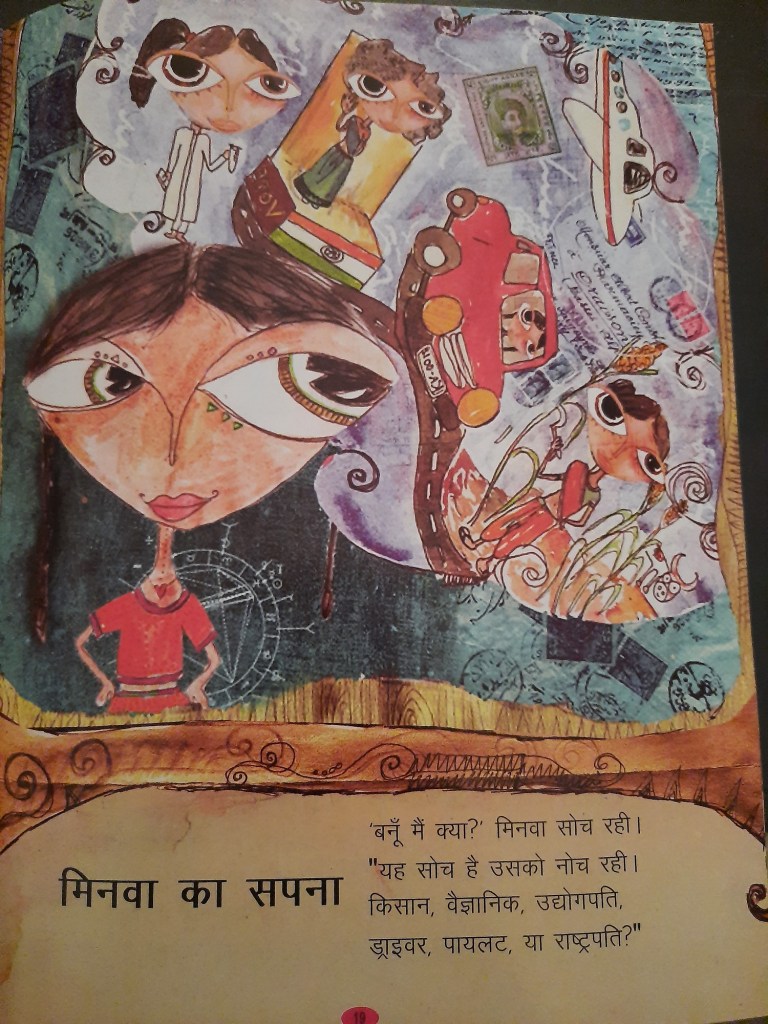
In our experience of working with rural youth and those from smaller towns, we often found that when we asked them about their career aspirations, they would mention ‘engineer’, ‘teacher’, or ‘police’. With good reason, because these were among the few professionals they came across in their day to day lives. This gave us a good insight into the need for expanding horizons by introducing them to a variety of careers.  And it did make a difference. From forensic science to data science, from yoga teaching to wood-working, from optician to wildlife biologist—once the children knew about them, they were inspired to dream differently.

From Minva Aur Dumpua ke Karnaame, by V. Raghunathan, illustrated by Shilo Shiv Suleiman. Diamond Press

But never in my wildest dreams would I have thought to introduce some of the following careers to the young people. But maybe it’s time we get youth excited about some of them.

Given these COVID times, it would be good to inspire people to become aerobiologists–scientists who understand Aerobiology, the branch of biology which focusses on organic particles which are passively transported by the air, including bacterial viruses, fungal spores, pollen grains etc.! Or for that matter, to study Loimology, that is, gain knowledge of plagues and other pestilential diseases. Hygiology, the study of cleanliness could become big too

I would urge those interested in nature, wildlife or conservation to specialize in Caliology, or the study of bird’s nests– ‘calio’ comes from the Greek καλιά [kalia], a wooden dwelling, hut, or nest. Nidology means the same too, but the origin is from the Latin ‘nidus’ meaning nest. Or take up Myrmecology, the study of ants. Some could opt for Ophiology, the study of snakes.

Garbologists are going to become very important too—they study garbage, and hopefully will help to solve the world’s solid waste crisis. Given that our weather predictions are not too accurate with the monsoons more often missing than hitting on the given date, maybe more people should get into Anemology–the study of winds, and Brontology, the study of thunder. And we will always need people to take up Bromatology, the study of food. Bromotologists create new food products and also work to ensure food safety.

While I would urge young people to study Demology, that is, the study of human activities and social conditions, I would have to ensure they don’t confuse it with Demonology, the study of demons or beliefs about demons.

While not so disastrous a difference, I would still urge making the point that Mycology is the study of fungus, and Myology the study of muscles; Nephology the science of clouds, and Nephrology the study of kidneys; Pedology the study of soils, and Pedagogy the method and practice of teaching; Tribology the study of friction and wear between surfaces, and Trichology, the study of hair and its disorders.

And I would ask students to double check that they know what they are aspiring for when they decide to study Nosology—it is the study of diseases; or Trophology—it is the study of nutrition; Potamology the study of rivers; or Carpology the study fruits.

At any rate, no one can complain of lack of choices!

–Meena

Whatever you choose to be, whether a surgeon or a welder, make sure your skills are the best!

On the occasion of World Youth Skills Day, July 15.