Celebrating Sapodilla: GI Tag for Amalsad Chikoo

Not long ago I wrote about the Kuchchhi Kharek or Date that was given a GI tag. Just last week another fruit from Gujarat has been given this tag, making it the third fruit from the state (after the Gir kesar mango and Kuchchhi kharek) to be tagged thus. This is the Amalsad chikoo or sapodilla.

We generally think of the chikoo as being a very ‘desi’ fruit with its grainy texture, caramelly flavor and colour, and sticky latex at the stem of the fruit. However, the origin of the fruit can be traced back to the Yukatan peninsula in Mexico. Its history goes back to ancient Mesoamerica where it was cultivated by the Mayans and Aztecs who used its sweet and nutritious pulp was a part of their indigenous diet. European explorers to this region discovered this fruit, and the zapote or chicle spread with them as they continued their explorations across Central America and the Caribbean, and then further afield, reaching Asia, Africa and the Pacific. The well-travelled chikoo adapted to different climates and cultures, thriving in tropical and sub-tropical regions, to become a ‘local’ favourite across different continents. Manilkara zapota (its botanical name) acquired local names like chicozapote, naseberry, nispero, soapapple, sapota, sapodilla, and chikoo.

As with most fruits, chikoo has its share of health and nutrition benefits. Several parts of India provide ideal soil and climatic conditions for cultivating chikoo. In fact India is the world’s largest producer of the chikoo which is also widely exported. There are also several varieties of chikoos grown here. But not every variety of chikoo has the distinction of gaining a GI Tag.

What is this tag and how is it obtained. A Geographical Indication (GI) sign is used on products that have a specific geographical origin and possess qualities or a reputation that are due to that origin.

Geographical Indications are typically used for agricultural products, foodstuffs, wine and spirit drinks, handicrafts, and industrial products. In the case of fruits and vegetables the product needs to conform to certain parameters such as size, colour, number of seeds, flavour and aroma.

What is important is that the qualities, characteristics or reputation of the product should be essentially due to the place of origin. Since the qualities depend on the geographical place of production, there is a clear link between the product and its original place of production.

The use of place names to identify the place of origin of products goes back centuries. However the legal connotations of such names were introduced in the form of Geographical Index by the World Trade Organization in 1994. In India, the GI tag system came into force in 2003. Darjeeling tea was the first product in India to get a GI tag. But since then the awarding of GI tags has been active, and as of July 2024, there were 605 products with GI status, spread across agricultural, natural, manufactured goods, and handicrafts.

One of the main objectives of the GI tag is to protect and preserve traditional goods and crafts, and the communities that make them. It functions as a seal of authenticity to highlight that a product claiming to be from a certain region is in fact from that region, is produced by people living in that region, and that it meets certain quality standards set up to ensure this. The GI status also offers legal protections since only registered or authorised producers are allowed to use the tag. The GI registration allows registered parties to launch a lawsuit for infringement against unauthorised parties using the tag.

The GI tag values the traditional skills of artisans, unique ingredients, and region-specific delicacies, and agricultural produce. The attraction of a GI tag is that it is believed that it will give the producers a better status and the ability to get better price for their products.

In India, the process of obtaining a GI tag is rigorous, and often takes time. It begins by submitting a physical application by an association of persons producing the goods to the Geographical Indications Registry in Chennai, which is under the purview of Department of Promotion of Industry and Internal Trade, Ministry of Commerce and Industry.

 The information in the application needs to prove the historical and regional antecedents of the product. In the case of agricultural produce, details required include the exact area, the cultivar, how it’s grown, how long it had been linked to the region, and agricultural factors that make the ingredient unique. The approval process can take anywhere between one and three years to get the tag, sometimes even longer. For example, it took eight years for the Erode turmeric and Basmati rice to get their GI status. The GI tag is only valid for 10 years, which means that producers have to renew their application to keep the status.

The Amalsad chikoo is not the first chikoo to get the GI tag. It was preceded by another chikoo variety called the Dahanu Gholvad Bordi Chikoo in 2017.This variety cultivated on the Maharashtra-Gujarat border was recognized for its unique sweet taste, soft creamy texture and high nutrition value attributed to the high calcium content in the soil of the area. This region has been a hub of chikoo cultivation for over a hundred years; also it is possible to harvest the fruit here round the year.

Now the Amalsad chikoo joins the club. It was awarded the Geographical Indication (GI) tag in recognition of its “unique characteristics and deep rooted connection to the region”. The chikoo gets its name from a village in Gujarat’s Navsari district. However the region recognised by the GI covers 51 villages in Gandevi taluka, 6 in Jalalpore and 30 in Navsari which together produce about 30% of Gujarat’s chikoo yield. The region has ten chikoo cooperative societies which contribute substantially to the export of this fruit.

The application for GI certification was made jointly by the Gujarat Council on Science and Technology (GUJCOST) and Navsari Agricultural University (NAU). GUJCOST carried out research on proof of origin of the fruit cultivation in Amalsad while NAU worked on the special characteristics of this chikoo variety. This variety is recognised for its exceptional sweetness, fine texture, and long shelf life compared to several other varieties of India. The region’s unique soil composition, coupled with traditional farming practices passed down through generations have contributed to its quality and reputation. The GI certification acknowledges “the distinct quality, taste, and cultivation methods that make Amalsad chikoo a symbol of excellence in Indian horticulture.”

The GI tag is not only enhances the reputation of this chikoo but is a recognition of the traditional agricultural practices of the local horticulture community; this also boosts their business while giving them a level of legal protection. For the rest of us, it is one more incentive to enjoy a chikoo shake, ice cream, or simply chilled slices of this delicious fruit this summer.

–Mamata

Freedom of Imagination Makes a Book

A few years ago an exhibition at a Research Centre at the University of Chicago was titled But is it a Book? The exhibition broke down the classic elements of ‘bookness’ like format, shape and binding.

The walk-through exhibition had a number of objects that through history were considered as ‘books’, ranging from a clay tablet made in the 3rd century BCE to a modern audiobook. But are either of these books? It was up to the visitor to decide. The exhibition posed a series of questions: “Does a book need to have pages? Does a book need text?” It was up to the visitors to decide. And each decision led the decider down a different path.

If some adults find the journey of exploring and discovering what makes a book, and furthermore, what makes a good book interesting, this exploration is even more adventurous when we enter the realm of children’s books. It is generally accepted that good children’s books are a blend of engaging storytelling, relatable characters, age-appropriate language, vibrant illustrations, cultural diversity, emotional depth, interactive elements, and timelessness. Each of these elements is deep and has numerous facets. And there is no magic formula; even if all these elements are present, it does not guarantee that the outcome is a ‘great’ children’s book.

Perhaps one element that is not explicitly listed, and which may be the key, is the ability of the author to think like a child; to recall how the world seemed as a child—the sense of mystery and discovery, the sense of wonder and anticipation, the sense of being insignificant and powerless in a world of adults…And to translate these complexities into a story that feels true to its young readers, wherein the spark of their imagination is ignited, to explore their imagination, and develop their creativity.

These are the guiding tenets of the International Board on Books for Young People (IBBY), an organization which represents an international network of people from all over the world who are committed to bringing books and children together. The mission of the IBBY includes the promotion of international understanding through children’s books, giving children everywhere the opportunity to have access to books with high literary and artistic standards, and encouraging the publication and distribution of quality children’s books, especially in developing countries.

The IBBY also promotes the celebration of International Children’s Book Day. This is celebrated every year on 2 April, to mark the birthday of Hans Christian Andersen, whose fairy tales have been an integral part of the childhood of many generations.

International Children’s Book Day (ICBD) emphasizes the significance of high-quality literature for children and the creativity it fosters. It highlights the love of reading that unites children worldwide. In high-quality children’s books, the reader’s imagination is kindled and developed. These books help children to explore their imagination, to develop their creativity and to see the world in a new way.

Each year a different National Section of IBBY has the opportunity to be the international sponsor of ICBD. It decides upon a theme and invites a prominent author from the host country to write a message to the children of the world and a well-known illustrator to design a poster. The host country for this year’s ICBD is the Netherlands. The theme for 2025 is The Freedom of Imagination. This derives from the belief that good books invite readers to interpret the words for themselves, making the story their own.

The poster for the theme is designed by two Dutch creators of children’s books, and the message of the theme is highlighted with the last sentence of the poem The Language of Pictures: Make pictures for my poem, and please feel free: these words belong to you even though they came from me.

Reading about this brought back memories of a wonderful project that I was involved in, many years ago, and which was sparked by the same message.

As environmental educators at the Centre for Environment Education, my team and I had diverse opportunities to develop creative teaching-learning resources for teachers and children. Perhaps the most exciting of these was a project to develop children’s books on four different themes: Pollution, Forests, Waste, and Conservation of Natural Resources. The form, format and presentation was left for us to decide. This presented an exciting blank canvas, as well as the challenge to be creative while still retaining the educational objectives for each theme. The outcome was the decision to develop books in four very different formats: a magazine format for Pollution; a collection of folk tales from the region for Forests; a quirky mystery story for Waste. But when it came to Natural Resources we were stumped! What was a manageable way of covering the wide range and scope of the theme?

Much brainstorming later this took the form of verses through which we could take “poetic liberties” by bringing together different natural resources. To make it more fun, we decided to do this alphabetically. Hence the title ABC…Naturally. And so the R page could have a verse with the words: rivers, rainbows, reptiles, roots, rainforests, resources, recycle, reuse and reduce.    

With such a motley assortment of words in place, there arose the next challenge. How would an artist illustrate these verses? As adults we are so conditioned to ‘labels’ and fixing of labels in ‘appropriate places’; this would need a huge leap of imagination. But Eureka! Children could make these leaps effortlessly. And so, we walked into a school and handed it over to more creative minds! We simply gave different children the verses, and gave them the Freedom of Imagination to interpret the words through their pictures, as they saw fit. The result was an incredibly rich and many-layered tapestry where disparate elements seamlessly fell into place. ABC…Naturally became a shared work, with every child feeling a sense of ownership and pride at being a ‘creator’. It was a true reflection of the freedom of imagination! It was also a validation of the belief that good books invite readers to interpret the words for themselves, making the story their own.

As someone who was deeply engaged in every part of this process, I am excited that the IBBY is celebrating International Children’s Book Day this year by providing a similar opportunity to

children across the world. IBBY Netherlands has launched an International Illustration Competition to encourage children worldwide to use and express their imagination and creativity by creating works of art inspired by the theme The Freedom of Imagination and the associated motto: “Make pictures for my poem, and please feel free: these words belong to you, even though they came from me.”

Details are available on https://www.ibby.org/fileadmin/user_upload/icbd/icbd_2025/ICBD_2025_international_illustration_competition_-_regulations.pdf

https://www.ibby.org/awards-activities/activities/international-childrens-book-day/icbd-2025-sponsored-by-the-netherlands#:~:text=The%20theme%20of%20the%202025,’

–Mamata

Colours of Childhood: Crayons

A recent weekend spent with a toddler revived the memories and joys of crayons. While playthings and pastimes have changed considerably, especially in this digital age, there are some that continue to retain their charm. Crayons are among these.

Opening a fresh box of these colourful sticks neatly lined up with their wrappers, has been a special feeling, over generations. The distinctive smell from the paraffin used in their making, equally triggers memories, long after childhood. According to a Yale University study the scent of Crayola crayons is among the 20 most recognizable scents to American adults; coffee and peanut butter are numbers 1 and 2!

The attractive colours and the smell almost triggers an urge to bite into one. And, certainly, most toddlers are often more interested in tasting the colours, rather than drawing with them!

What makes crayon? A crayon (or wax pastel) is a stick of pigmented wax used for writing or drawing. Wax crayons differ from pastels, in which the pigment is mixed with a dry binder such as gum arabic, and from oil pastels, where the binder is a mixture of wax and oil.

While these wax sticks as we know them date back a few hundred years, the technique of using wax with colours was a method known to Ancient Egyptians who combined hot beeswax with coloured pigment to fix colour into stone. Ancient Greeks and Romans used wax, tar and pigment to decorate ship bows and for drawing. The first crayons, used for marking, appeared in Europe, and were made with charcoal and oil, and hence were in a single colour—black.

Crayons in their more recognizable form were invented in the United States in 1903. They were developed by a company called Binney and Smith who were originally manufacturers of red iron oxide for painting barns and lamp black which had a number of applications including making rubber tyres black.

In the early 1900s the company moved on to making marking crayons for commercial use. These were used as waterproof markers in factories but they contained toxic substances and were not suitable to be used by children. The company then entered into the school market with slate school pencils and dustless chalk. Here they saw that there was potential for the use of colouring tools for educational use in the classroom. Based on feedback from schoolteachers Edwin Binney and his wife Alice developed wax crayons. They mixed waxes, talcs and pigments to form non-toxic sticks which were wrapped in paper, making these safe and mess-free. They put these on the market in 1903 under the brand name Crayola. The name was created by Alice as a blend of craie, the French word for chalk and ola from oleaginous (oily paraffin wax). Ola was also a popular ending for products at that time. The first boxes had 8 coloured crayons (red, orange, yellow, green, blue, violet, black, and brown), and sold for 5 cents, in yellow-and-green boxes which were labelled ‘school crayons’. For the next 45 years, the colour mix and the colour names remained unchanged.
While later many companies began manufacturing crayons, the word Crayola became synonymous with crayons and continues to be so to this day.

For the first forty years, each Crayola crayon was hand-rolled in paper wrappers with distinctive labels and names. Automated wrapping started only in the 1940s. Over the next hundred years Crayola introduced packs of 16, 24, 32, 48, 64, and 96 crayons. There have been over 400 Crayola colours created since the crayons were launched. The company now manufactures 120 standard crayon colours. In addition, there are specialty crayons like metallic, gel and glitter crayons.

The history of naming the colours is a reflection of the changing times and perceptions. While the set of 8 colours remained unchanged for the first 45 years, by 1949, with 48 colours in the box, the palette included colours with more imaginative name such as thistle, periwinkle, carnation pink, bittersweet, cornflower, melon, salmon, and spring green. With the addition of new crayons taking the number up to 64 the colours included Copper, Plum, Lavender, Mulberry, Burnt Orange, and Aquamarine. The psychedelic spirit of the 1970s was reflected with the addition, in 1972, of fluorescent colours: Chartreuse, Ultra Blue, Ultra Orange, Ultra Red, Hot Magenta, Ultra Green, Ultra Pink, and Ultra Yellow.

The 1990s saw the retirement of eight old shades and their replacement with new ones–Cerulean, Vivid Tangerine, Jungle Green, Fuchsia, Dandelion, Teal Blue, Royal Purple, and Wild Strawberry. The decade also reflected the response to cultural sensitivities. In 1999, the name Indian Red was changed to Chestnut because educators believed that children would think the name represented the skin colour of American Indians rather than the reddish-brown pigment found near India.

In 1993, to mark its 90th birthday Crayola invited the public to name 16 new Crayola crayon colours. Some of the winning suggestions included Asparagus, Macaroni and Cheese, Timber Wolf, Cerise, Mauvellous, Tropical rainforest, Denim. Pacific Blue. Granny Smith Apple, Shamrock, Purple Mountains Majesty, Tickle Me Pink, Wisteria and Razzmatazz. The last name was the suggestion of 5 year-old Laura Bartolomei, who was declared the younger Crayola colour winner.

In 2000 Crayola’s first online consumer poll to name the favourite Crayola colour was held. Blue emerged as the all-time favourite, and six shades of blue made up the list of top ten colours!

Crayola marked its 100th anniversary by once again inviting crayon users to contribute names. With increasing diversity in schools and growing awareness of being ‘politically correct’, in 2020 Crayola introduced a new line of 24 colours named Colors of the World to reflect the multicultural skin tones of people around the world.

Thus Crayola remained on top of the game by always being dynamic, responsive, and participatory to reflect the signs of the times, as it were. Crayola continues to be synonymous with crayons, not only in the USA, but now across the world. I remember when we were children, and our local palette limited to the standard box of 12 colours from Camel or Camlin, our great dream was to be gifted with multi-layered jumbo box of Crayola crayons by a relative coming from the USA!

Today perhaps the choices of art materials and techniques have increased, but the fascination with crayons certainly has not decreased! There are Crayola crayon collectors who are always searching for samples of rare or discontinued colour pieces. And America celebrates National Crayon Day on 31 March every year, to celebrate the colourful history of these simple sticks that have provided generations of children with hours of creative fun.

–Mamata

International day of Happiness: Caring & Sharing

In recent times there have been a number of articles about experiments/initiatives to create ‘safe’ places for GenZ achievers where they can simply meet others of their ilk, and as one piece put it “form communities of shared interests and ideas, far away from the superficial posing of the digital world”.   

It is thought provoking, and indeed saddening to read about these. Caught in the frenetic pace of a work culture where people feel they do not have the ‘luxury of time’ that they perceive friendship demands. As one person put it “Colleagues can never be your friends in a competitive space; besides you don’t want to see them in your private time and space”.  The frequent moves from job to job, even place to place, the “stress” of meeting targets, and the long hours spent in cyberspace where the screen is king, leave little time and energy for meaningful human interactions. There is a sense of isolation, leading to a precipitous plunge towards the ultimate act of giving up everything, including one’s own life. What a very sorry state of affairs. Such futility, such a waste of the best years of one’s life. “Burning out” at an age when they should be blossoming into vibrant human beings. 

I feel so blessed that I grew up, and came of age, in an age of friendship. A time when ‘Time’ was a gift freely given and shared between human beings, and not the ubiquitous screen. When families caught up on the day’s doings and happenings over the evening meal, talking face-to-face. When the school days ended with playing with neighbourhood friends at whose homes we were fed and pandered to, as they were in ours. Graduating to college where new friendships blossomed in canteens and bonded through bunked classes. College was indeed the cradle for what was later to be described as the ‘all-round development’ for which today there are Life Coaches. Not to forget a course offered at Yale University called Psychology and the Good Life which is basically about teaching college students how to be happy! A course that “teaches” that feelings of happiness are fostered through socialization, exercise, meditation and plenty of sleep!

A bigger reminder of how far away we have come from those days is the designation of an international day by the United Nations which is called the International Day of Happiness.

The idea for the International Day of Happiness was proposed by UN advisor Jayme Illien in 2011. The UN General Assembly adopted a resolution which recognised happiness as a “fundamental human goal” and called for “a more inclusive, equitable and balanced approach to economic growth that promotes the happiness and well-being of all peoples”.

In 2012 the first ever UN Conference on Happiness took place, and the UN General Assembly adopted a resolution which decreed that the International Day of Happiness would be observed every year on 20 March. The resolution was initiated by Bhutan, a country which recognized the value of national happiness over national income since the early 1970s and famously adopted the goal of Gross National Happiness over Gross National Product. All 193 United Nations member states have adopted the resolution calling for happiness to be given greater priority.

The day was celebrated for the first time in 2013. This day aims to highlight the importance of happiness and well-being as universal goals and aspirations in the lives of people around the world. 

Every year, on this day, the United Nations publishes the World Happiness Report which explores the latest research on the importance of benevolence, empathy and trust as vital drivers of both individual and national happiness. It also announces the theme for the year.

The theme for the International day of Happiness 2025 is Caring and Sharing. This is a reminder that lasting happiness comes from caring for each other, feeling connected and being part of something bigger. The theme brought for me a flashback to my years of work in a workplace where this was the very theme that ran through every day of every year. I remember how this was also the name of the precious meeting space and time that the ‘girls’ called their own—one where, in addition to “theme sari days” there was an open and non-judgemental sharing of angst, anxiety, dilemmas and doubts, highs and lows, laughter and tears. This engendered a seamless blending of many generations, and the mutual caring and sharing that made our lives so rich. This was the ‘safe space’ where bonds were built; bonds that endure even when time and distance have separated us physically.  

A more inclusive gender-neutral space and time was the twice a day tea-table time. Tea table became the venue for easing in the newcomers; teasing and ribbing the old-timers; there were no hierarchies and no bosses. The agenda was whatever the mood of the table—sharing, admonishing, admiring, agonising and venting, and yes, laughing a lot.

It was an important support system in so many ways. After just 15 minutes, one returned to one’s desk feeling much better. You weren’t the only one who struggled to keep going as you juggled work and home; your child’s behaviour was not as worrisome as you imagined it was; and yes, in-laws happened to the best of us! It was not only about chit-chat and food; it was where serious discussions took place—about work and work culture; about the state of the world and the nation; about books read and films seen, people met and to be met. It was where so many “aha” moments happened. Above all it was a sense of sharing and caring that permeated.

It is sad that people today are craving such time and space, and above all the comfort of sharing and caring. It is sad that we need a reminder that the world is a better place when we connect and care about the people around us.

Many years before such a reminder became necessary, Eleanor Roosevelt, wife of Franklin D. Roosevelt who was the President of the United States during the Great Depression and World War II shared these words of wisdom:

Someone once asked me what I regarded as the three most important requirements for happiness. My answer was: A feeling that you have been honest with yourself and those around you; a feeling that you have done the best you could have in your personal life and in your work; the ability to love others. Happiness is not a goal, it is a by-product. Paradoxically, the one sure way not to be happy is deliberately to map out a way of life in which one would please oneself completely and exclusively. After a short time, a very short time, there would be little that one really enjoyed. For what keeps our interest in life and makes us look forward to tomorrow is giving pleasure to other people.

–Mamata

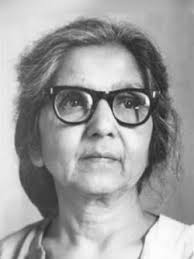
A Woman of Many Parts: Sarojini Naidu

In a week when women are being celebrated, and their achievements extoled, it is fitting to remember that in every era of history, in every part of the world, there have been women who have broken boundaries and glass ceilings, and have excelled in numerous fields. This is a good week to celebrate a woman who combined seemingly contrary abilities, and played a significant role in several fields of endeavor. This is Sarojini Naidu.

Textbooks traditionally describe Sarojini Naidu as the Nightingale of India. But she was far more just a singer of songs. A poetess, patriot, fierce nationalist and freedom fighter, politician, eloquent orator, inspirer of masses, perfect hostess, and a feminist and firebrand leader in every sphere.

Sarojini was born on 13 February 1879 in a Bengali Brahmin family, the eldest of eight siblings. Somewhat of a prodigy, she entered the University of Madras at the age of 12; she composed 1000-line poems at 13. After graduating in 1895 with the highest rank, she was awarded a scholarship by the Nizam of Hyderabad, and she spent three years in England, studying at King’s College London, and later at Girton College in Cambridge. During this period she also became involved with the suffragist movement in England. She returned to India in 1898 and married Dr M Govindarajulu Naidu whom she had met in England, (the inter-caste marriage attracted opposition) when she was 19. By the age of 25, Sarojini was mother to four children. Her first major collection of poems was published when she was 26. She had literary fame, and a comfortable lifestyle in Hyderabad where she played the perfect hostess.But this was hardly a deterrent to what was to be an extremely active political life.

Sarojini and Gandhiji shared a special relationship. She had first met him in 1914 in London just as the First World War had broken out. That was the start of a long and close bonding between the two. Sarojini was one of the few who could joke about, and with, Gandhi (she nicknamed him Mickey Mouse!). The two exchanged witty repartees, and reproaches, which were totally free from malice. She could stand up to Gandhi and never hesitated to speak her mind. Yet she remained one of his staunchest supporters all her life, and revered him as a guru.

Sarojini Naidu was drawn to Gandhi’s non-cooperation movement and in 1924 travelled across the world to spread the word about the movement. She was a sought after public speaker. In 1925 she became the first Indian President of the Indian National Congress. She was a front-line participant in the Independence movement. Her participation in the Salt Satyagraha and the Quit India Movement was deemed as ‘anti-British activity’ and she was imprisoned several times for this.

Sarojini Naidu believed that the nationalist cause could not be separated from the movement for women’s rights. She helped establish the Women’s Indian Association along with Annie Besant and a few others, in 1917, which championed women’s right to vote. The same year, along with Annie Besant she went to London to represent the case for women’s franchise before the Joint Select Committee.

She was elected to the Constituent Assembly that drafted the Constitution of India. After India achieved independence on 15 August 1947, Sarojini Naidu was appointed governor of the United Provinces, making her the first woman governor in the country. She remained in the post until she passed away on 2 March 1949.

Sarojini Naidu’s contribution to the freedom movement and to the early years of our new republic was marked by her total dedication combined with her boundless energy and multi-faceted brilliance. This was summed up thus by her fellow freedom fighter Jawaharlal Nehru: She began life as a poet, in later years when the compulsion of events drew her into the national struggle, she plunged into it with all the zest and fire she possessed…. whose whole life became a poem and a song and who infused artistry and grace in the national struggle, just as Mahatma Gandhi had infused moral grandeur to it.

Despite her active political life Sarojini’s literary output was also prolific. She published several volumes of poetry, and held ‘salons’ which attracted an array of intellectuals. She led a hectic and productive life despite suffering from a variety of ailments throughout her life. Her zest for life was undiminished till the end, when she passed away at the relatively young age of 70.   As she wrote to her youngest child a few years earlier: One is not so concerned with a long life as with a ‘merry one’—merry as the sum of worthwhile, rich, full, interesting, and who can say that mine has not been and is not in that sense ‘merry’ as well as long?

On a more serious note, several years earlier when she was in Yervada jail, Sarojini wrote to her daughter Padmaja Naidu: In the course of a long and most variegated life I have learned one superlative truth…that the true measure of life and oneself lies not in the circumstances and events that fill its map but in one’s approach and attitude and acceptance of those things.

An inspiration, and a role model indeed!

–Mamata

Missing People: The Village of Dolls

It sounds like something out of an imaginary futuristic scenario. Entire countries with no young people, no babies being born, and the old dying out until finally there are entire countries without a human population. Incredibly, this is happening here and now. Many countries in Eastern Europe, Southern Europe and East Asia are facing drastic declines in new births, even as the elderly population declines due to deaths. News reports say that the number of babies born in Japan in 2024 was the lowest since records began in 1899. The prospect of population extinction is becoming a reality in South Korea, which has been moving towards a childless society. Of the already dwindling population, young people are abandoning their rural homes and migrating to cities in search of work, leaving no workforce for agriculture and fishing. What will these abandoned villages look like?

There is a village in Japan which is an ironically graphic example of such a scenario. This is Nagoro, an isolated valley town on the Japanese island of Shikoku, the smallest and least visited of Japan’s four main islands. Originally populated by around 300 people, a few years ago only about two dozen old people remained. One of these old people was a father whose daughter moved back to the village to be with him. Tsukimi Ayano who had spent most of her life in Osaka moved back to the island in 2002. 

One of the things that Ayano did when she came back was to make a scarecrow (called kakashi in Japanese) that resembled her father to scare away the birds that were raiding the seeds that she planted on the family plot. In addition to keeping the birds away, Ayano liked that the scarecrow added a dash of something different in the deserted landscape. Having the time, and the skills, Ayano continued making these life-sized and life-like scarecrows for other people’s fields also. From scarecrows, Ayano moved on to making other figures. It became her hobby, and her pleasurable pastime. Initially she made the scarecrows for the fields; then she started making figures that resembled old neighbours who had passed away, or people who had moved away. Ayano felt that these gave her a sense of having some company. It was also a way of commemorating the erstwhile residents of the village, while infusing some spirit in their rapidly vanishing village.

These figures (she calls them ‘dolls’) soon began to populate different parts of the village. They were placed in people’s gardens, at bus stops, in village meeting places—depicted as being engaged in everyday tasks. Walking around the village one could see figures of construction workers installing a road sign, a fisherman on his porch with his daughter, a couple sitting on a river bank, all looking real and ‘ready for action’. After the village school closed down as there were no students, Ayano recreated a classroom with students and teachers, with two of the dolls wearing the same clothes as the last two students who had attended the school.

As she said “I just wanted people to enjoy looking at the dolls and I want to enjoy making them.” Ayano makes all the dolls herself using wooden slabs for the base, cotton clumps for the head and rolled newspapers for the ‘skeleton’ as well as straw and fabric. The dolls come to life with the unique facial expressions she gives each one, shaping the nose and the mouth, choosing the buttons for the eyes, and meticulously crafting the ears. Ayano wants to make sure that her kakashi can hear well!  She dresses them in clothes that, in many cases, belonged to the real characters, or are donated. It takes Ayano about three days to make a doll. Each doll has a life of two to three years as the natural materials weather quickly. Ayano tries to recycle as much of the material as she can, as she makes new dolls to replace the old ones.  

Ayano’s village of dolls Nagoro remained undiscovered and unknown until 2014 when a German filmmaker made a short documentary titled Valley of Dolls. This attracted global attention, and led to an influx of curious tourists to this remote island. Ayano personally felt that the film was dark and sad, whereas for her the process of creating the dolls is a joyous one, and the village itself is a now a curiously vibrant and animated place. Ayano’s acknowledgement of the filmmaker is his replica doll as a figure at a bus stop!

For Ayano these dolls are a celebration of life, not weird reminders of the past. In her mid-seventies now, Ayano continues to live in the village with its population that she has created and continues to nurture.

–Mamata

Advocate for Invertebrates: EO Wilson

Call them spineless, or call them creepy crawlies! As Meena wrote this week, they make up a majority of the living things on earth, and yet they are largely unnoticed (unless of course one is stung by one, or has one creeping up your leg!) Invertebrates however have had their own champions. One of whom is EO Wilson that Meena has quoted as saying that “invertebrates don’t need us, we need them!”

This was indeed the case with EO Wilson one of the most distinguished and recognized American scientists in modern history. While he began his scientific career by specializing in the study of ants, Dr Wilson became an advocate for all species, particularly invertebrates, as essential to the health of the planet and people.

While his key discovery was the chemical by which ants communicate, EO Wilson spent the rest of his life also looking at the bigger picture of life on Earth. And so, to his lifelong fascination with ants, E. O. Wilson added a second passion: guiding humanity toward a more sustainable existence. He devoted his life to studying the natural world, and inspiring others to care for it as he did.

Edward Osborne Wilson was not just the world’s foremost authority on the study of ants (a myrmecologist!) but one of the founding fathers of, and leading expert in, biodiversity. His autobiography titled Naturalist traces his evolution as a scientist. Young Wilson knew early that he wanted to be scientist. A childhood accident left him with weak eyesight and hearing, so instead of studying animals and birds in the field, he concentrated on the miniature creatures such as ants and bugs that he could study right under his nose through a microscope. This was the perfect tool to spark a lifelong passion for insects.  I turned to the teeming small creatures that can be held between the thumb and forefinger: the little things that compose the foundation of our ecosystems, the little things, as I like to say, who run the world.

As a schoolboy Wilson was not a great reader. But he claimed that one of the few books that he read from cover to cover was The Boy Scout Handbook. (I wrote about this in my recent piece Be Prepared!) It was the Boy Scouts which nurtured his early love for nature. As he once said: The Boy Scouts of America gave me my education.

His autobiography Naturalist also reveals how these first steps led to a lifelong journey of exploration and discovery which involved a mix of endeavour, random encounter, enthusiasm and opportunism. Underpinning all these was his sheer delight of the pursuit of knowledge. As he wrote about an expedition to Fiji in 1954:

Never before or afterward in my life have I felt such a surge of high expectation—of pure exhilaration—as in those few minutes. I know now that it was an era in biology closing out, when a young scientist could travel to a distant part of the world and explore entirely on his own. No team of specialists accompanied me and none waited at my destination, whatever I decided that was to be. Which was exactly as I wished it. I carried no high technology instruments, only a hand lens, forceps, specimen vials, notebooks, quinine, sulfanilamide, youth, desire and unbounded hope.      

Edward Osborne Wilson is widely considered one of the greatest natural scientists of our time. He is also credited for being the founding father of the branch of biology known as socio-biology and biodiversity. He was a pioneer in the efforts to preserve and protect the biodiversity of our planet and was instrumental in launching the Encyclopaedia of Life, a free online database documenting all 1.9 million species on Earth recognised by science.

In a tribute to his lifelong dedication to science, two species of organisms have been named after him. Myrmoderus ewolsoni, an antbird indigenous to Peru, and Miniopteru wilsoni, a long-fingered bat discovered in Mozambique’s Gorongosa National Park. Wilson once told Scouting Magazine that being recognized in this way was an honour akin to being awarded a Nobel Prize because it’s such a rarity to have a true new species discovered.

EO Wilson was driven by the passion of guiding humanity toward a more sustainable existence. To do that, he knew he had to reach beyond the towers of academia and write for the public. He believed that one book would not suffice because learning requires repeated exposure. Thus he wrote several bestselling books that eloquently pleaded his case, while also providing facts and figures backed by solid research. His books On Human Nature and The Ants received the Pulitzer Prize.

While he remained a Harvard professor for 46 years, he was conferred with many accolades and honours by universities and organizations across the world. EO Wilson passed away on 26 December 2021 at the age of 92, leaving behind a legacy of conservation action that continues to inspire the global movement to end the threat of extinction.

In 2023, the United Nations Convention on Biological Diversity (COP15) agreed to a Global Biodiversity Framework (GBF) with a goal to maintain, enhance, and restore Earth’s natural ecosystems by 2030, halt human-induced extinction of known species, and by 2050, reduce the extinction rate tenfold and increase the abundance of native wild species to healthy and resilient levels. A key component to the GBF is a target to conserve at least 30 percent of land, seas, and freshwater by 2030 (known as “30×30”).

EO Wilson once wrote:

Looking at the totality of life, the Poet asks, who are Gaia’s children?

The Ecologist responds, they are the species. We must know the role each one plays in the whole order to manage Earth wisely.

The Systematist adds, then let’s get started. How many species exist? Where are they in the world? Who are their genetic kin?

EO Wilson was a rare combination of all three.

–Mamata

Be Prepared! World Thinking Day

A recent mention of World Thinking Day to be marked on 22 February set me thinking! This was the first time I had heard about such a day, and I was curious about what lay behind it. There I discovered an unusual link to a collective that was very much a part of my life in my primary school days. This was the Scouts and Guides.

The history of this global movement goes back more than a hundred years. Robert Baden-Powell a military officer who had been in the Boer War organized an experimental camp in 1907 on Brownsea Island off the southern coast of England. The idea was to immerse young boys in activities aimed at developing in them various outdoor skills, chivalrous behavior and good citizenship. This was inspired by the military “scouts” in the army who were sent out to gather information, learn survival skills, and be prepared to help others.

Baden-Powell’s idea was that boys should organize themselves into small natural sub-groups of six or seven under a boy leader. They would be trained in all skills that would be required in camping–tracking and reconnaissance, mapping, signalling, knotting, and first aid.

The camp was a success. Following this, and based on his ideas for training boys, Baden-Powell published a book Scouting for Boys. The book became one of the bestsellers of the twentieth century. Thousands of boys began to join the Boy Scouts movement. To become a scout, a boy would promise to be loyal to his country, help other people, and in general obey the scout law, which was a simple code of chivalrous behaviour.

In 1909 Baden-Powell organized a Boy Scout rally in London. It was here that a small group of girls ‘gate crashed’! The girls had been secretly following the activities that their brothers did, and they demanded that there be something similar for girls. This was radical in a period when girls were expected to be docilely engaged in domestic tasks and ‘ladylike’ activities such as needlework and art. Baden-Powell was encouraging. He asked his sister, Agnes Baden-Powell, to help him with a girls’ organization and she became the first President of the Girl Guides. Working together, the two outlined programme ideas for girls, and later produced The Handbook for Girl Guides. Visitors to Britain were impressed by this and took the idea back to their own countries. By 1910 Guiding had started in Canada, Denmark, Finland and South Africa. Within the next two years it spread to Ireland, Holland, Sweden and the United States. The movement continued to spread across the world. The girls who joined acquired many skills. During World War I they made important contributions to war efforts including growing food, working in hospitals, factories and soup kitchens.

The First World Conference held in England, in 1920 was a historic occasion that gave representatives of the Girl Guiding and Girl Scouting world the opportunity to meet and exchange ideas and experiences and shape the future and direction of the Guiding and Scouting World. As the Movement grew and expanded, country representatives began to feel that it was time to create something more solid and binding and the idea of forming a world association was proposed after the 4th World Conference in 1926. The delegates from across the world also decided to create a special day for guides and girl scouts. They selected the joint birthday of Lord Baden-Powell, the founder of the scout and guide movement, and his wife Olave as appropriate to mark such a day. This was 22 February, and the day was to be called Thinking Day.

The World Association of Girl Guides and Girl Scouts (WAGGGS), was formed when Delegates from 26 countries met at the Fifth International Conference in Hungary in 1928. Its Secretariat was to be located in London.

The World Association of Girl Guides and Girl Scouts grew to become the largest voluntary Movement dedicated to girls and young women in the world, representing millions of girls and young women from 152 countries. Through innovative non-formal education programmes, leadership development, advocacy work and community action, the movement has empowered girls and young women to develop the skills and confidence needed to make positive changes in their lives, in their communities and countries.

India was not far behind in this movement. The Girl Guiding Movement was started by Dr Cullen in 1911. The Boy Scouts had been established in 1910. But at the time India was under colonial rule, and no Indian boys and girls were included in the movement till 1916. A number of different Guiding and scouting Associations were formed in the following years. In 1928 the All India Girl Guide Association was admitted as a founding member of the World Association of Girl Guides and Girl Scouts (WAGGGS). 1951 On 15 August 1951, the All India Girl Guide Association merged with the Bharat Scouts and Guides. Following the merger, the Girl Guide Association ceased to be a member of WAGGGS.

In the 1960s and 1970s Girl Guides and Boy Scouts were part of the extra-curricular school activities. I clearly remember that as a Bulbul (as the younger guides were called in India) I struggled with learning how to tie different kinds of knots. My dark-blue Bulbul uniform with epaulets, scarf, and a brown leather belt stayed with me for many years. I am not sure if Bulbuls still have a place in the myriad of extra-curricular activities that schools offer. Today the educational system advertises that it trains children in ‘life-skills’ and ‘global citizenship’. To my mind, Girl Guiding introduced these a century ago, along with the attributes of being a good human being. The essence of these are encapsulated in its Motto: Be Prepared. And elaborated in the nine points of Guide Law: A Guide is trustworthy; A Guide is loyal; A Guide is a friend to all and a sister to every other guide; A Guide is courteous; A Guide is a friend to animals and loves nature; A Guide is disciplined and protects public property; A Guide is courageous; A Guide is thrifty; A Guide is pure in thought, word and deed.

As we approach the centenary of World Thinking Day, 22 February is a good day to reflect on these simple but powerful tenets. It is also a day to celebrate friendship, sisterhood, and empowerment, as also to take action to speak out for the millions of girls who, even today, do not have an equal voice, nor the opportunity to Be Prepared. 

–Mamata

A Kumbh Experience

It has dominated the news for the last month or more. It has broken records. The numbers are counted not in thousands, but in crores. It is the headline-making event of a century and a half…It is the Mahakumbh Mela.

The many records being broken may also include the media coverage which breathlessly recounts every VIP visit and holy dip that has become a “must do must show” part of every itinerary.

Over a hundred years ago, another newsmaker also visited the Kumbh. And as was his wont, wrote about the experience in his own words. This was Mohandas Karamchand Gandhi.

Gandhi had returned to India in January 1915 after spending almost a quarter century in South Africa. After spending a few days in Mumbai, he proceeded to Pune to meet Gopal Krishna Gokhale who he considered as his mentor. Gokhale advised that if Gandhi were to plan to remain in India and work for the people of this country, he first needed to acquaint himself better, first hand, with the country and its people. It was decided that this orientation would be through a journey across India by train, travelling by third class, as the common people did. Gandhi did indeed embark upon such a journey after a short visit to Calcutta, Shantiniketan and Burma.

In his own words: I, having been out of India for so long, have no business to form any definite conclusions on matters essentially Indian, and that I should pass some time here as an observer and a student. This I have promised to do, and I hope to carry out my promise.

Early in these travels Gandhi visited the Kumbh Mela at Haridwar. He recounts his experiences and impressions in his autobiography. Some excerpts:

This year – 1915 – was the year of the Kumbha fair, which is held at Hardvar once every 12 years. I was by no means eager to attend the fair, but I was anxious to meet Mahatma Munshiramji who was in his Gurukul. Gokhale’s Society had sent a big volunteer corps for service at the Kumbha. Pandit Hridayanath Kunzru was at the head, and the late Dr. Dev was the medical officer. I was invited to send the Phoenix party to assist them, and so Maganlal Gandhi had already preceded me. On my return from Rangoon, I joined the band.

Our stay in Shantiniketan had taught us that the scavenger’s work would be our special function in India. Now for the volunteers in Hardvar tents had been pitched in a dharmashala, and Dr. Dev had dug some pits to be used as latrines. He had to depend on paid scavengers for looking after these. Here was work for the Phoenix party. We offered to cover up the excreta with earth and to see to their disposal, and Dr. Dev gladly accepted our offer. The offer was naturally made by me, but it was Maganlal Gandhi who had to execute it. My business was mostly to keep sitting in the tent giving darshan and holding religious and other discussions with numerous pilgrims who called on me. This left me not a minute which I could call my own. I was followed even to the bathing ghat by these darshan-seekers, nor did they leave me alone whilst I was having my meals. Thus it was in Hardvar that I realized what a deep impression my humble services in South Africa had made throughout the whole of India.

But this was no enviable position to be in. I felt as though I was between the devil and the deep sea. Where no one recognized me, I had to put up with the hardships that fall to the lot of the millions in this land, e.g., in railway travelling. Where I was surrounded by people who had heard of me I was the victim of their craze for darshan. Which of the two conditions was more pitiable, I have often been at a loss to determine. This at least I know that the darshanvalas’ blind love has often made me angry, and more often sore at heart. Whereas travelling, though often trying, has been uplifting and has hardly ever roused me to anger.

I was in those days strong enough to roam about a lot, and was fortunately not so known as not to be able to go in the streets without creating much fuss. During these roamings I came to observe more of the pilgrims’ absent mindedness, hypocrisy and slovenliness, than of their piety. The swarm of sadhus, who had descended there, seemed to have been born to enjoy the good things of life.

The day of the fair was now upon us. It proved a red letter day for me. I had not gone to Hardvar with the sentiments of a pilgrim. I have never thought of frequenting places of pilgrimage in search of piety. But the seventeen lakhs of men that were reported to be there could not all be hypocrites or mere sight-seers. I had no doubt that countless people amongst them had gone there to earn merit and for self-purification. It is difficult, if not impossible, to say to what extent this kind of faith uplifts the soul.

I therefore passed the whole night immersed in deep thought. There were those pious souls in the midst of the hypocrisy that surrounded them. They would be free of guilt before their Maker. If the visit to Hardvar was in itself a sin, I must publicly protest against it, and leave Hardvar on the day of Kumbha. If the pilgrimage to Hardvar and to the Kumbha fair was not sinful, I must impose some act of self-denial on myself in atonement for the iniquity prevailing there and purify myself. This was quite natural for me. My life is based on disciplinary resolutions.

So I pledged myself never whilst in India to take more than five articles in twenty-four hours, and never to eat after dark. I gave the fullest thought to the difficulties I might have to face. But I wanted to leave no loophole. I rehearsed to myself what would happen during an illness, if I counted medicine among the five articles, and made no exception in favour of special articles of diet. I finally decided that there should be no exception on any account whatsoever.

But the Hardvar experiences proved for me to be of inestimable value. They helped me in no small way to decide where I was to live and what I was to do.

Just over a century later, how much has changed, and yet, how much remains the same? Food for thought!

–Mamata

Pulses Rule!

They are at the heart of every meal; they come in many colours, shapes and sizes; they can be used in a large range of permutations and combinations. They are the pulses that are an integral part of all cuisines in India. In a country with such immense diversity in culinary traditions, food habits, and meals, pulses are the one common as well as essential element. Our daily meal is incomplete with a dish made from a pulse, and many of our favourite snacks would not be what they are without pulses. Yet there is much that we have never stopped to really think about.

Technically pulses are the edible seeds obtained from the cultivation of leguminous plants for both food and feed. India has an immense diversity of pulses at the genetic and species level, as well as their uses at the culinary level. What makes pulses the original ‘wonder food’?

These seeds are a rich source of nutrients, mainly proteins, that are crucial for a healthy and balanced diet. It is estimated that 100 grams of dry lentils contain about 25 grams of protein. Thus pulses can become a backbone of a vegan diet.

They are naturally low in fat and contain no cholesterol, reducing the risk of cardiovascular diseases. They are also low in sodium chloride or salt which is a contributor to hypertension. They are high in potassium which plays an important role for digestive and muscular functions.

Pulses are a good source of iron and a great answer to address iron deficiency. The iron in pulses is best absorbed in the body by combining them with foods containing vitamin C. They are an excellent source of folate, a B-vitamin essential for nervous system function. They have a low glycaemic index, which makes them suitable for people with diabetes. They are naturally gluten-free, making them an ideal option for those who are gluten intolerant.

They can be stored for a long time and can be used even when fresh seasonal fruits and vegetables are not available. Their long shelf-life prevents food loss and wastage.

Pulses are incredibly versatile and can be used in an endless variety of cuisines and dishes in numerous forms. 

That is so far as human health goes, and most people are, at some level, aware of these attributes of pulses (a lot of which is passed down through generations by family recipes and ‘granny’s words of wisdom’). But there is not as much awareness about the fact that pulses are as important for environmental health as they are for human health.

Pulses play a vital role in soil health by providing essential nutrients, maintaining soil biodiversity, and enhancing soil structure. They improve soil health by hosting helpful bacteria, called rhizobia, in their roots. These bacteria convert nitrogen from the air into fertilizers in the soil. Additionally, other bacteria and fungi help release phosphorus in the soil, providing essential nutrients for plants and promoting soil diversity. The fertilizers produced by pulses benefit not only the pulses, but also other crops grown alongside them, reducing the need for chemical fertilizers. This makes pulses ideal for sustainable farming practices like intercropping or crop rotation. Additionally, pulses and their by-products are utilized as animal feed.

The benefits are not limited to soil alone. Pulses also perform other ecosystem services. Many pulse species are drought tolerant and resilient to adverse climate, such as drought and heat. Their cultivation optimizes fertilizer use, thus reducing greenhouse gas emissions.

Pulse crops have a lower carbon footprint than most foods because they require a small amount of fertilizer to grow. They also have a low water footprint as they are adapted to semi-arid conditions and can tolerate drought stress.

Despite their immense value for human and environmental health, pulses are not generally ‘stars’; they are often undervalued and under-recognized. In an effort to highlight the importance, as well as potential, of pulses as a global food the United Nations declared 2016 to be the International Year of Pulses. As the then UN Secretary General Mr Ban-ki-Moon said: “The International Year can help overcome this lack of knowledge. Much work needs to be done to end hunger and provide food security and nutrition for all. One concrete, promising opportunity lies with pulses. Let us join forces to raise awareness of the benefits of pulses”.

As the world was embarking on efforts to achieve the newly-adopted Sustainable Development Goals it was hoped that this International Year would help raise awareness of the benefits of pulses globally. The year-long celebration was implemented by the Food and Agriculture Organization (FAO), a specialized agency of the United Nations. The year was a success, and recognizing the potential of pulses in further achieving the Sustainable Development Goals, since 2019 the United Nations General Assembly has designated 10 February as World Pulses Day to be celebrated every year.  

This celebration is a recognition of the decisive role that pulses can play in achieving the comprehensive, far-reaching and people-centred set of universal and transformative goals and targets of the United Nations’ 2030 Agenda for Sustainable Development.

The World Pulses Day celebrations are an opportunity to raise public awareness about pulses and the fundamental role they play in the transformation to more efficient, inclusive, resilient and sustainable agrifood systems for better production, better nutrition, a better environment, and a better life, leaving no one behind.

This is a good day to look more closely at our own meal! What is the original colour of the pulse on your plate? Green, yellow, red, brown, orange, black, white…

In what form are you eating your pulses? As a Dal (sweet Gujarati or Punjabi tadka?) Rajma-chaval or chana puri? As a part of your idli-sambar? As the partner to rice in khichadi? As the coating on your pakodas? As the sweet moong dal halva or payasam? Each platter will have a different version of pulses!

Whatever the form and whatever the taste, pulses rule our plates and palates!

–Mamata