Women in War

Every year in the run up to India’s Independence Day we are reminded of the events and people who played a significant role in taking India to freedom from the rule of the British Raj. We remember our history lessons about how women played an active role in the movement to boycott British goods and pave the way for Swadeshi.

In the past month, quite by chance I read four books which described what England and women in England were going through during almost the same period—the first half of the 1940s. It was something that perhaps most of us are not so familiar with, and made me want to know more.

In the 1930s, social roles were clearly defined in English society. A woman’s place was in the home, a man’s place was out at work. It was acceptable for women to work outside the home if they had no family to look after, but they were paid less than men were — even when doing the same jobs, and most would have expected to leave as soon as they married, or when they had their first child.

With the outbreak of the Second World War in 1939, and in the following years, men in England joined up for military service and there was a big vacuum in the labour force in essential services. This was filled by women. Unmarried women between 20 and 30 were called up to join a variety of services from working in factories manufacturing armaments, to those on the fringes of the war front. Among these was the Auxiliary Territorial Service (ATS) that recruited female volunteers for driving, clerical and general duties including anti-aircraft searchlights. The Women’s Royal Naval Service (WRNS) that maintained ships of the Royal Navy and were involved in some of the most secret planning for D-Day. The Women’s Auxiliary Air Force (WAAF) that was used for maintaining and flying barrage balloons, and the London Auxiliary Ambulance Service which was on duty through the German bombing “blitzkrieg” (lightning war) of 1940-1941.

Many of these were dangerous jobs, which carried the very real risk of death or serious injury and many at first thought that the jobs were not only unsuitable for women but that they did not possess the physical strength needed to carry out the tasks which were being asked of them. This was to be proven wrong time and again. And there are many tales that tell of heroic feats of these women.

The books tell stories from the point of view of ordinary women who had never stepped out of their home, and how their new roles were the leveller of the very-English class distinctions. Working class girls who worked as domestic help in mansions, now worked shoulder-to-shoulder with genteel middle class girls as ambulance drivers and munition factory workers. Ladies with large estates took in evacuees from all backgrounds, and turned their manicured gardens into food-growing plots, while lawns were dug up to make Anderson shelters in which to stay during air raids. Timid girls from villages who were skilled in living frugally were appointed by the Food Ministry as Home Front Economists and Kitchen Economists to give talks and demonstrations to women’s groups on how to conserve food rations and fuel.

Cargo ships carrying vital supplies imported from the colonies were being bombed on high seas. It was a time of shortages, rationing, hoarding, and black-marketing, it was also a time for austerity—managing with less. There were coupons for food, for petrol, and clothes. Fashion was dictated not by French designers but by the Board of Trade; hemlines were decreed to be shorter to save cloth, and there were a limited number of basic, no-extra-frills styles, with Utility Labels which could be bought using coupons. Various schemes gave advice on recycling or making clothes last longer, two of these were the Make Do and Mend, and Sew and Save, schemes for which women were called upon to share ideas and experiences.

The stories tell of lasting friendships in a fragile time… Knitting together while waiting for an emergency call out; driving through darkness of curfew and blackout, through rubble of collapsed buildings, pulling out people from the debris, bonding by the uncertainty that they never knew if they would come back after a call; sharing picket duty during the hours of darkness to stop anyone from pilfering petrol.

The stories also reveal how the new roles raised the self-esteem of the women by allowing them to become an integral part of the overall war effort in every way. Gone were the housewives of the 1920’s and 30’s and in their place were an army of skilled and resilient workers, farmers, builders, and defenders—women with gumption and spirit. Women whose tales need to be shared.

Coincidentally, one of the last living female pilots of World War 2, Mary Ellis died on 24 July this year at the age of 101. She was a pilot of the Air Transport Auxiliary service, and delivered Spitfires and bombers to the front line during the war. Having flown about 1000 planes during her service, she once again flew a Spitfire for 15 minutes at the age of 100! Way to go!

–Mamata


A Life Too Short: A Tribute to Dr. Vikram Sarabhai

Today all of us as Indians, and the whole world in fact, see India as a technological power, a force to reckon with. It is easy for us to be confident of ourselves, our technical prowess, and our growing economic power. But in the ‘40s and ‘50s? We were a fledgling nation, and even food security was an issue. Many around the world wondered whether we would survive as a country, as a democracy. And at such a time, there were some people who had the daring, the vision and the confidence, to dream of being a country that would make a difference. One of them was Vikram Sarabhai.

‘Vikram Sarabhai—A Life’ by Amrita Shah tells this story well. It is a book which made me feel proud as an Indian; which said individuals can make a huge difference; which revealed glimpses of what it takes to build institutions of excellence; and which, most importantly said that it is possible to be a wonderful, warm, caring and very human person, and a high-achiever at the same time.

We look around us today—India is launching rockets for developed countries, it is accepted as a nuclear power, it is on the forefront of the IT revolution. But how did we get here? This book gives us some insights. I think this is an important role that a biography plays—being able to connect the present with the historical context, through the achievements and the legacy of one person.

And the book gives us glimpses of other very extraordinary individuals who played a part in Vikram’s life. The book helps one understand the impact that Ambalal Sarabhai or Kasturbhai Lalbhai or Bhabha had on Sarabhai’s work. But though we catch glimpses of the next generation–Dr Kalam, Mr Seshan, Kiran Karnik or Madhavan Nair—we don’t get an insight into how they, as people and professionals, were impacted by Sarabhai. But that’s probably another book!

The book chronicles well the span and breadth of Sarabhai’s achievements—from pure research to scientific administration; from running a pharmaceutical concern to laying the foundation for management education as we know it today; from market research to bringing in scientific approaches to looking at industrial operations; from space to atomic energy.  But what it does even better is to reveal that he set out on each of these diversified ventures with a clarity of purpose and a remarkably unified approach to seemingly very different issues. Sarabhai knew what he was doing. He was not a vain man, but definitely he had no doubts about his ability to take on the most impossible-seeming jobs—even when older and wiser heads thought otherwise. His charm and charisma, which probably helped him overcome many an obstacle, come through. But what also comes through is that his relationship with people was based on a real sense of caring. He did not set out to charm people for what he could get out of them, but probably ended up charming because he was a warm, caring and joyous person who believed in people and respected them.

Vikram the father, Vikram the husband, Vikram the boss, Vikram the son, Vikram the scientist, Vikram the manager—they are all there. Maybe not in depth but definitely outlined evocatively enough to give one a flavour of the person in his multiple roles.

The book is remarkably non-judgmental and matter-of-fact. Though Ms. Shah says that Vikram Sarabhai was a childhood hero and that is why she set about writing his biography, she seems to have been able to resist the temptation to fuzz not-so-pleasant realities. Whether it is his marriage, or his inability to really assert himself and take a firm stand vis a vis individuals in the Department of Atomic Energy, it is told like it was.

I would like to thank Amrita Shah for this biography. We cannot afford to forget our heroes—and Vikram Sarabhai was certainly one of them.

–Meena

Vikram Sarabhai, A Life by Amrita Shah was published in 2007. It is reviewed today to commemorate Dr. Sarabhai’s birthday which falls on 12 August.

The Millennial Matriarchs both count Ahmedabad as home and have worked in institutions which were part of Vikrambhai’s dream. I had the additional good fortune of living on the campus of IIM Ahmedabad as a faculty-spouse. In a large part, we owe what we are to him, albeit indirectly.

Inside Outside

Through the glass, curiously

IMG_20180805_120336063.jpg

Little bird looking in

What do you see?

Strange giants pacing within.

Trapped in a cage of steel, stone and wood

In an existence that your kind has not understood.

Harried human looking out

What do I see?

A fledgeling just sprouting wings

To soar wide and free with a song to sing

Of the air and light, the trees and the sky.

Grow strong little one, spread your wings and fly

And I will wait for you to sometime come by.

–Mamata

Crossed Digits

“Digits crossed!” is an expression that my friends and I use when we are hoping for things to turn out well—with double the power of “fingers crossed!” Yes, we hope to ensure this by metaphorically crossing not just the fingers, but also the toes.

In today’s ‘digital age’ where the digit-related terms  are so commonly used—digitization, digital camera, digital natives, digital divide, digital detox….we relate the word only to numbers. We seem to have forgotten that the word’s anatomical meaning. The word digit has its roots in the Latin root word digitus which means “finger or toe,” and English borrowed from this to mean “number.”

In fact, the practice of calling numbers digits comes from the digits on the hands — specifically, the habit of counting to ten on one’s fingers.

The digit in this sense was also a unit of measurement, long ago when  people used their hands and arms for measuring things. The width of a first finger was called a digit. This was used to measure things. The width of a palm was called a hand breadth. The width of an outstretched hand was called a span. The distance between an elbow and the tip of the longest finger was called a cubit.

The Egyptians had a standard length from the elbow to the middle fingertip, a distance of about 45-50 cm which they called a cubit. The width of the hand or four fingers was called a palm or hand and was about 9-10 cm. Hands is still used for measuring horses.

The ancient fathom was the distance between the outstretched arms about 1.8 metres. It is still used for measuring depth at sea.

The foot may have come from an ancient Babylonian brick measurement but in fact it works out to the approximate length of a man’s foot about 30 cm. The finger became an inch, which the Roman’s made one-twelfth of a foot.

In this digital age, if you want to sound smart, you can refer to your finger, thumb, or toe as a digit!

If you want to sound smarter still, go digital in Latin!

Here’s what they are called:

Thumb Pollex

Index finger  (pointer finger, fore finger) Digitus Secundus Manus

Middle finger Digitus Medius Manus

Ring finger Digitus Annularis Manus

Pinky ( little finger) Digitus Minimus Manus

And keep your digits crossed!

–Mamata

digits
source: Google

In Fashion

“Fashion sometimes ignores convenience, sometimes even causes inconvenience. All fashions may not have great thinking behind them, and sometimes thinking people fall prey to fashion.

Children of fashion-conscious parents have also to swim with the tides of the times. Children are often made to exhibit what parents find fashionable or what is ‘in style’ at the moment.

Take an example of girls’ dresses. Most of these have buttons at the back. No one knows who thought of this style, but children wear it, parents demand it and tailors stitch accordingly. So far, so good.

But what happens when a child wears a dress with buttons at the back. “Mother do my buttons.””Papa please fasten my hooks.” The parents are hassled with other tasks. The mother calls for the older sister. “Help her with her buttons”, or she calls for the servant,”Why don’t you close the buttons for her?”

The child with her own two hands is helpless. She is dependent on someone else to complete dressing. She cannot go out unless someone is there to button her up. She has to request, or plead, or shout for this. She is dependent all for the sake of being dressed in the fashion, a dress with buttons at the back!

That is just for dressing. What about undressing?

If the dress gets wet the child cannot take it off. If she is feeling hot, she can’t take it off. And, heaven forbid, if her dress catches fire, she can’t take it off.

But still the child wears such dresses. She likes them because her parents do. They like them because they want their child to be ‘well dressed.’

But fashion is really a series of fads. Started somewhere by someone who wants to be different, it sometimes catches on, and then everyone wants to follow blindly.

Sometimes the glamour of being different, or being in style blinds people to the basic tenets of simplicity, comfort, and practicality in the way they dress.

We might, as adults, indulge in this. But when it comes to our children we must first think of their comfort and convenience with respect to what they wear. Even infants often show distinct preferences for what they like, or do not like, to wear.

At our Balmandir we have a ‘front button’ attendance. Children whose clothes have buttons at the back take home a note requesting parents to get them clothes with buttons in the front. And parents do make an attempt to do so.

Sometimes they have not even thought about the difference it would make: that changing the orientation of a few buttons is indeed rendering a great service to their child.”

This is not taken from, nor meant for, a magazine on New-age Parenting. These words were written in the early 1930s–nearly 90 years ago, by my grandfather. The author Gijubhai Badheka is well known not only as the creator of some of the best loved and popular children’s literature in Gujarat, but equally for his writings for parents and teachers. He was also one of the pioneers of the Montessori system of education in India. Gijubhai observed children and adults and recorded his thoughts; he described dilemmas faced by both, and explored how these could be handled. Many of these were complied in a series of books in Gujarati called It Is Not Easy Being Parents.

This is one of the many pieces translated from the original Gujarati by me.

–Mamata

Magnificence—Endangered

Not just endangered, critically endangered. We are talking of the Great Indian Bustard (GIB). There are only about 200 birds left in the wild in India, mainly in Rajasthan and Gujarat. There are a few birds still in Maharashtra, Andhra Pradesh, Gujarat, Karnataka and Madhya Pradesh. But they have completely disappeared from Punjab, Haryana, Uttar Pradesh, Orissa and Tamil Nadu.

GIB has been listed as Critically Endangered in 2011 on the IUCN Red List, which means that it faces an extremely high risk of extinction in the wild. When we say that a species is extinct it means that there is not be a single living member left of that species.

The Great Indian Bustard is a magnificent bird, standing about 1 metre tall. Its wingspan is more than 2 metres. It is mostly brown, with a light-coloured head and neck. The distinguishing feature is the black crown on the head. Interestingly although they look closer to ostriches or cranes, most recent research shows that the Bustard family is more closely related to the cuckoo family!

At about 15 kg, it is the heaviest flier in India, but not in the world. The world record is held by a relative, if we may call it that, the Kori Bustard which is found in Africa. The Kori often weighs upwards of 18 kg.

These birds live in wide open landscapes which have sparse grasses and shrubs. They spend most of their time on the ground. Their long legs and front-facing toes help them to run fast. Although they are usually seen striding or running, they also have strong wings and can fly well.

Their diet varies depending on what is available during a particular season. These birds feed on grass seeds, agricultural crops such as groundnuts, millets and legumes, as well as insects like grasshoppers and beetles, and rodents and lizards

They usually breed in the monsoon season which is when food is most easily available. The female scrapes the soil in a secluded place to lay her egg. Generally, she lays only one egg. She incubates the egg for 25 days before the chick is hatched. The exposed egg is always in danger from predators. The mother has to be alert to keep the egg and the new chick safe. The male does not play any part in making the nest, incubation or raising of the chick. It is the Mother GIB who does this alone!

What are the threats? Plenty! GIB can be found in some parts Pakistan also, and there, it is still hunted. There is also some amount of poaching occurring in India. Apart from that, the natural home of these birds is reducing in size. A major cause for this is expansion of agricultural fields and increase in mechanized farming in the areas where the GIB live. This also means that human settlements get closer. Then there other very mundane reasons. Dogs are a major threat to GIBs. As I told you, GIBs lay their eggs on the ground. With the villages so close, dogs often eat the eggs. Also, there has been a huge increase in high tension electric wires in the habitat area. GIBs often dash against these and get electrocuted. They may also get hit by fast-moving vehicles.

Only urgent mission-mode action can save the GIB. Can we let this magnificent bird got the way of the Dodo?

–Meena and Mamata

What’s in a Moth?

When is a butterfly not a butterfly? When it is a moth!

20180725_163659_resized.jpg

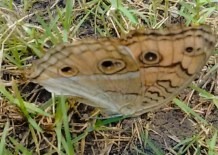
Butterflies have always hogged the limelight with their beauty and colour. Moths have always been the Cinderella, perceived as drab and uninteresting, and usually overlooked. Yet, moths greatly outnumber butterflies by a ratio of 10:1 and there are more than 12,000 species of moths.

There’s a lot in a moth for Dr Shubhalakshmi Vaylure, the first woman in India to study moths! “Why moths?” she was often asked when she started her research over 15 years ago. In fact, as she related in an interview, once she was asked why she chose to spend the nights studying moths (not quite suited to being a girl!) when she could study butterflies during the day, she replied “Well, someone’s gotta do this unpleasant night shift.”

It is that approach – Passion, Persistence and Push that sums up India’s Moth Lady!

Shubhalakshmi started by studying zoology and entomology in college, which is also when she signed up with Bombay Natural History Society (BNHS) as a student member to use the library, and volunteering, joining nature walks and trails. After graduation she joined the Conservation Education Centre of the BNHS as an administrative assistant. At the time BNHS was the only institution in Mumbai which was offering a master’s degree through research, and she signed up for this.  Isaac Kehimkar, an eminent butterfly expert, suggested she study moths as they had not  been much studied in India. And that is where it all began. On completing her master’s degree, she became an Education Officer at the CEC, and went on to head the Centre.

As fellow environmental educators and Fulbright scholars, Shubha and I have met several times, and her energy and enthusiasm have been inspiring and infectious. Over the years I have been following Shubha’s journey and have seen how capably she has combined her passion for nature with smart use of technology and successful entrepreneurship.

Shubha is one of the pioneers of Citizen Science in India which empowers and enables ordinary citizens to be part of wildlife and environmental research by observing, collecting and sharing local data.

In 2014 she started a social enterprise Ladybird Environmental Consulting. The first project that Ladybird undertook was the development of three mobile-based applications iButterflies, iTrees, iNaturewatch birds under iNaturewatch Urban Challenge, a citizen science programme that worked with schools in Mumbai, New Delhi, Kolkata and Hyderabad to collect data on their city’s flora and fauna. Following this she set up iNaturewatch Foundation, to continue such urban biodiversity citizen projects.

For those who are inspired to become citizen scientists, and follow in the steps of the Moth Lady, a great start will be Shubhalakshmi’s book Field Guide to Indian Moths. The culmination of 15 years of research, this reader-friendly field guide features descriptions of 733 species of moths, supported by over 1000 colour photographs. Shubha also coined for the first time, common names for several of the species. Way to go Shubha!

What better way to mark this week which is designated as National Moth Week.

–Mamata

What Say You?

When I lived in Kenya, and learnt a little bit of Kiswahili, it was great fun to discover curious words or phrases. One of the best ones was to the local word for curd/yogurt. This was called Mazeevaa Lala—literally “sleeping milk!”

I was reminded of this recently when I chanced upon a Maltese saying My eye went with me, to mean that you have fallen asleep, as not taking your eyes with you would result in a sleepless night!

This is one of the many sayings in a delightful book titled Speaking in Tongues: curious expressions from around the world–a compilation of proverbs, idioms and sayings from different languages of the world, put together by Ella Frances Sanders. What brings the words alive are the accompanying illustrations, also by Ella who describes herself as “a writer out of necessity and an illustrator by accident.”

IMG_20180725_181146775.jpgFrom Finnish to Igbo, Armenian to Yiddish, each double spread presents delectable sayings and drawings that blend the wit and wisdom of the ages while also placing these in their cultural context.

Cannot resist sharing some:

Even the monkeys fall from trees. This well-known Japanese saying reminds that even the best and the cleverest can still make mistakes, and cautioning to keep overconfidence in check!  Perhaps the recent World Cup surprises where the superheroes fell from grace is an apt analogy!

You are my orange half. A Spanish term of endearment that means that someone is your soulmate or love of your life. Not quite sure what is so endearing about an orange, but reminded of the Amul chocolate ads that urged us to “Share it with someone you love!”

Horse horse Tiger tiger. To describe something that is so-so, or neither here nor there. This is a Mandarin expression; its origin lies in a story about a painter who painted a half tiger half horse but nobody bought it as it was neither one nor the other.

To pull someone out of their watermelons. A Romanian idiom that means to drive someone crazy! Not much light on why being in or out of watermelons can be harmful to mental health!

Stop ironing my head. An Armenian way of saying “Stop bugging me!” Popularly used when someone keeps asking irritating questions and won’t leave you alone. In many Indian languages we have our own equivalents in the form of “Don’t eat my head.”

To give a green answer to a blue question. A Tibetan reference to when the answer is completely unrelated to the question asked. Something that people in politics are adept at!

This is just a sampler of the 52 proverbs, expressions and idioms that have been passed on from one generation to another in diverse cultures. Interestingly, they reflect not just diversity, but also the sameness as it were. As I read I immediately thought of similar ones in Hindi and Gujarati, as will surely be the case in all languages. Remember how we had to memorise proverbs in our language subjects in school and what a pain it was? Maybe it is time to revisit these!

A perfect one to end with. To have a head full of crickets. 

IMG_20180725_181247.jpg

How the Spanish describe a mind buzzing with crazy, wonderful ideas, whims, and flights of fantasy…(what some would call nonsense!)

Nicely sums up how I often feel!

–Mamata

Otherness and Sameness

When we were in school one of the most assigned topics for essay was Unity in Diversity. We prepared hard for this by finding out many examples from India to demonstrate this. We were proud of living in a country where people of such diversity could co-exist, and celebrated this diversity. We also sang with fervour a school song in Hindi that proclaimed that all people of Hind were one, even though there were many colours and features, attires and languages. Hind desh ke nivasi, sabhi jan ek hai, Rang, roop, vesh-bhasha chahe anek hai.

 My heart breaks today, day after day, to read about a country and a world where it is this very diversity that is broken into identity fragments that divide rather than unite; a world that is increasingly emphasising the ‘otherness’ to create chasms, rather than the ‘sameness’ that builds bridges.

This sentiment is beautifully expressed by Maria Popova:

“Where Walt Whitman once invited us to celebrate the glorious multitudes we each contain and to welcome the wonder that comes from discovering one another’s multitudes afresh, we now cling to our identity-fragments, using them as badges and badgering artillery in confronting the templated identity-fragments of others.”

And then, this past month there was a ray of hope in the World Cup with the multi-ethnic compositions of many of the teams, and much was written about how the not-so-long ago ‘outsiders’ had become integral parts of National teams. This was best demonstrated by the multicultural French team that lifted the Cup…where the Otherness was transcended by the Sameness.

“You gave me blue and I gave you yellow

Together we are simple green. You gave me

What you did not have, and I gave you

What I had to give—together, we made

Something greater than the difference.” (Alberto Rios)

Yes it can happen, and yes there is hope, even in these strange and uncertain times, as Barack Obama said in his centennial memorial lecture to Nelson Mandela, and reminding us of his words: “No one is born hating another person because of the color of his skin, or his background, or his religion. People must learn to hate, and if they can learn to hate, they can be taught to love, for love comes more naturally to the human heart.”

–Mamata


Talk Time

All through school and college, one of the best parts was the ‘night-spend’ (before it was called ‘sleep-over’!) at a friend’s place. The high point of this was staying awake till very late, sometimes even till dawn, simply nattering the hours away. Though well past our school and college days, for myself and my friends, this continues to be so, even today!

We never seemed to run out of conversation. Conversation was comfort, it was catharsis, it was heart-to-heart and tête-à-tête, and more. Conversation was face-to-face communication.

It was not just with friends–face-to-face communication was a way of life. Families caught up with doings and happenings/news over daily meals, and at family get-togethers; colleagues exchanged views over a cup of tea; housewives met at the corner for a chinwag to exchange neighbourhood gossip, and senior citizens bemoaned the state of the world as they took their constitutional in the park. We communicated daily with the shopkeepers, the domestic help, the essential service providers like the milkman, the presswalla, the newspaper supplier, and the auto drivers.

Today we are told that the world is “connected” like never before. We are in constant communication, as it were…Through the press of a button we can order our groceries and daily requirements; we can book tickets for movies or order in food; we can upload pictures of our latest travels; we can stream live the family wedding from the exotic destination; we can open our hearts to the BFF through Twitter and Instagram…and we can even text our children in their bedroom to say that dinner is ready!

The world is “connected” 24/7. Time saving, effort saving, technological marvels we say.  But somewhere in all this, have we not lost something precious? Something that is a basic human need–Face-to-face communication, an ancient and abiding human gift? Are we losing a vital connection?

“When you speak a word to a listener, the speaking is an act. …Listening is not a reaction, it is a connection. …And it is a mutual act: the listener’s listening enables the speaker’s speaking. It is a shared event, intersubjective: the listener and speaker entrain with each other.  …When you can and do entrain, you are synchronising with the people you’re talking with, physically getting in time and tune with them. No wonder speech is so strong a bond, so powerful in forming community.” (Ursula K. Le Guin in a piece titled Telling Is Listening.)

Perhaps the next time, before we sign up for “Unlimited Talk Time” offers, let us see if we can make real Time for Talk.

–Mamata