May 23 is World Turtle Day. And this is my turtle tale!
It was an unlikely subject–not one that I would have volunteered for! Among the diverse subjects that I had an opportunity to learn about when I was developing a series called NatureScope India, Turtles happened to be the subject of the next issue. That was going to take some research on my part! As it turned out, I found out a lot about turtles, but also had the wonderful opportunity to meet someone extraordinary–Dr Priyambada Mohanty-Hejmadi.
Dr Priyambada was a member of our Governing Council in the early 2000s. Sarees being a greater passion for me than turtles, I always admired this elegant lady who used to wear the most beautiful handwoven sarees from Odisha. Then I found out that she was one of India’s foremost authorities on turtles! And that she was also one of the earliest and well-known proponents of the Odissi dance form. What an awesome combination!
Over 60 years ago, Priyambada was already learning Odissi, when as a student she represented Odisha at an Inter-University Youth Festival in New Delhi and gave a performance of Odissi. This was perhaps the first time that the dance was performed outside of Odisha. The audience was rapturous, and a review by a Hungarian dance critic, put Odissi on the pan-Indian map. Today this dance form has found a niche in the international arena.
Priyambada continued to dance, but also to pursue her studies in Zoology. She moved to the United States on a fellowship to pursue higher studies in Zoology. Though her dance workshops and learning continued, her academic work took precedence. Her research on marine turtles has been globally recognised.
Of the seven species of turtles in the world, five species are known to occur in Indian coastal waters—the Olive Ridley (the smallest), Hawksbill, Loggerhead, Green, and Leatherback (the largest). Sea turtle females come ashore to lay their eggs. Orissa is the only state in India which has three large rookeries or turtle nesting sites of which Gahirmatha is the world’s largest known sea turtle rookery.
Priyambadaji has been at the forefront of the efforts to protect the Olive Ridley Turtle. Not so long ago these turtles were endangered due to the disturbances in the areas where they nested. With the active campaigns and efforts of a number of groups, and with inspiration and support from people like Priyambadaji, there is now a resurgence of nesting turtles. This February-March it is estimated that nearly four lakh turtles came ashore for Arribada—a Spanish term for mass nesting, to lay their eggs on beach at Gahirmatha that was declared a marine sanctuary in 1997 by the Odisha government.
Advocating policy changes, supporting local NGOs to create awareness, and guiding plans for protection, while also pursuing academic research and writing, Dr Priyambada has been an inspiring supporter of the Turtles.
Dr Priyambada’s work in science earned her a Padma Shri. Her academic excellence saw her as the Vice Chancellor of Sambalpur University. Her passion for, and life-long immersion in dance has led her to write a number of books and articles on Odissi and related subjects.
I feel honoured to have had the opportunity to have interacted with this inspiring lady, who so graciously took the time to give her comments and guidance on the draft of the NatureScope book on Turtles. Priyambadaji truly demonstrates an interweaving of Science and Art, as beautiful as the sarees she wears!
A crossword clue led me to this by chance. The clue was ‘word was first coined in the book If I Ran a Zoo by Dr Seuss’. The answer was Nerd! This immediately caught my attention because Dr Seuss is one of my all-time favourite children’s writers. I adored his books when I was young and tried to pass on the love to my children by reading out his quirky verses night after night, twisting our tongues over his wonderful, wacky invented words.
But it is only now I discovered that the word Nerd is thought to have been coined by none other than Dr Seuss in his book If I Ran a Zoo published in 1950! The book is about a boy named Gerald McGrew who, when visiting a zoo, finds that the exotic animals are “not good enough”. He says that if he ran the zoo, he would let all of the current animals free and find new, more bizarre and exotic ones. Among these fantastical animals is a critter called a Nerd! To quote directly: “And then, just to show them, I’ll sail to Ka-Troo/And bring back an It-Kutch, a Preep and a Proo/ A Nerkle, a Nerd, and a Seersucker too!”
One year later, in 1951, Newsweek magazine included the word in an article using it to define someone who is a “drip” or a “square”. Today the word ‘nerdy’ is used to describe someone who is not attractive, and awkward or socially embarrassing; or someone who is extremely interested in one subject, especially computers, and knowing a lot of facts.
A ‘word-nerd’ would tell you that when we use Twitter, and Tweet away today, it would be worth remembering that the word was coined by Geoffrey Chaucer, known as the father of English poetry, who died 620 years ago, to describe the continuous chirping of a bird.
And that, well before a search engine was named Yahoo, the Yahoos appeared as legendary creatures in Gulliver’s Travels published in 1726.
Surprisingly a number of words that we tend to believe are so ‘trending’ and ‘21st century’ were coined well over a hundred years ago. These can be attributed to 19th century authors, many of whom were creative wordsmiths–inventing, importing, adapting, and generally messing about with language!
The revered Bard, Shakespeare was one of the first to print words like Obscene and Eventful, as well as much-used phrases such as Bated Breath and Love is Blind.
And for those of us who plodded through Charles Dickens it is he, himself who coined the word Boredom! Writing in the early 1800s Dickens also coined very not-boring words like Abuzz, Flummox, and Devil-May-Care!
And to think that bureaucratic red tape is an affliction of modern times, Wait! The word Red Tape comes from the English practice of using red or pink tape to tie official documents and, as early as 1851 Dickens coined the apt term ‘red tape’ as slang for “the collection or sequence of forms and procedures required to gain bureaucratic approval for something, especially when oppressively complex and time-consuming.” Thus according to the OED, a Red Tape-worm’ is “a person who adheres excessively to official rules and formalities.” Sounds like a breed we all know too well!?
For those of us who describe our calling as ‘Freelance’ writers, we may be interested to learn that in 1820 author Sir Walter Scott used the term free-lance to describe a mercenary soldier, one whose lance (a long spear) was not exclusively in the service of a single master, but was hired out along with its owner to those to needed, and paid for, the service.
Today the lance has replaced by the pen (or its electronic version) but the nature of service remains the same!
I can never forget mum meticulously grinding whole spices using a mortar and pestle and cooking Meen Kuzhambu (fish curry) in rustic looking manchattis (earthenware). Mum loved cooking fish in clay since it retained nutrition and made the dish flavoursome.
As a tribute to the good old days, one of the first things I did as a married woman and novice cook-in-charge of an entire kitchen for the first time, was to purchase a manchatti. I resolved to carry and pass on mum’s traditional ways. This was my favourite piece of cookware until I was introduced to Longpi.
I first read about Longpi in a blog post. What drew my eyes to the article were beautiful pictures of black earthenware with cane trimming. I was intrigued! I quickly dialled the numbers mentioned in the post and got in touch with Ms. Priscilla Presley. As luck would have it, she was in Bangalore at the time and had an exhibition-stall at the famed Chitrakala Parishath. The very next day, I met Priscilla, who enthusiastically introduced me to the history of Longpi stone pottery.
Traditionally called, “Loree Hamlei”, this pottery was historically used exclusively by the royal and noble families of Manipur. The original name is derived from the village of Longpi in Manipur where the Tangkhul Naga tribe specialise in creating this pottery.
The materials used are called weather rock and serpentinite found in abundance along the river banks of Longpi. The two rocks are crushed together and mixed in the ratio of 5:3, using very little water, and are then kneaded and shaped by artisans with bare hands and placed in moulds. This makes it one of the rarest forms of pottery as it does not use the potter’s wheel. Once it is dried and hardened, the mould is placed in a kiln and fired for about 5 to 7 hours till the temperature reaches 9000 C. It is then removed whilst still hot and rubbed with a local leaf known as Machee(Pasania Pachiphylla).
These vessels get better with age and can easily go from cookware to serveware due to their elegant and simple designs. They can also be popped into the oven and microwave provided they do not have the cane accents. Additionally, they can be easily cleaned using a mild soap solution.
Today as my cooking improves (slowly), I beam joyfully whenever guests ask me about the origin of the black beauties laid out before them.
To learn more about Longpi pottery you can contact Priscilla at 9902370318.
–Sudha
PS: Intrigued when I saw her collection of this pottery, I requested my friend Sudha to do a piece. Meena.
On the occasion Malaria Day (April 25), marked across the world to focus on efforts to rid humanity of this scourge, here is a short sketch of the life of Sir Ronald Ross, who made a life- mission of cracking the puzzle of the spread of malaria.
From: ‘Beyond the Call of Duty’. V. Raghunathan, Veena Prasad. Harper Collins.
Ronald Ross was born in 1857 – the year of Indian Mutiny — in Almora, to Campbell Ross an army officer. When ten, he was sent home to England for his schooling. Ronald was an average student, interested more in composing music and writing poems and plays than in academics. But his father would have none of it and forced Ronald into taking up medical studies, threatening to stop his money if he did not!
Young Ronald respected and trusted his father enough to give up his own ambitions and in 1875 ended up at St. Bartholomew’s Hospital, in Smithfield, London to study medicine. This was the oldest hospital in all Europe, established in 1123, and then re-founded by King Henry VII in 1546. The hospital occupies its original grounds even today.
Completing his medical studies, Ronald Ross landed up at Bombay on 23rd October, 1880 to join the Indian Medical Service in the army the following year.
Ronald, thanks to his mediocre performance in the LSA examination, was at first relegated to the Madras Services, considered the least attractive of the three presidencies – Bengal, Bombay and Madras. Then he was posted as acting Medical In-Charge to the 17th Madras Infantry for six months at Vizianagaram. Later Ronald would reminisce about his life in Vizianagaram as being “better than the home life of a professional man in England”.
He soon was sent to the Presidency General Hospital in Calcutta where his early work on mosquitoes took shape. Visitors to Kolkata can still find the beautiful red brick Hospital within a stone’s throw of the Victoria Memorial. Today, it houses the Post Graduate Medical Education and Research Centre. The hospital, built in 1707, was probably the first hospital ever built in Kolkata, and was initially meant only for the British army. It was probably only after 1770 that the hospital was thrown open to the non-Europeans.
Malaria: The Mother of All Killers
In ancient times, it was assumed that malaria spread through bad air; hence the name mal-aria – Italian for bad air. Perhaps malaria and humanity evolved around the same time, somewhere in Africa (fossils of mosquitoes as old as 30 million years old have been found). It probably came to be recognized as a disease as early as 4000 B.C.
Malaria has killed millions over the centuries. Fortuitously, at the turn of the sixteenth century, Peruvian Indians found a cure f in the bitter bark of the Cinchona tree. By mid-seventeenth century the bark reached England, where quinine – the toxic alkaloid extracted from the bark – was used for the benefit of victims suffering from “agues”.
Quinine notwithstanding, as late as the turn of nineteenth century, the British Army in India which at the time had a strength of about 180,000 men, some 75,000 were found to be suffering from malaria. In 1897 alone, an estimated 5 million Indians would succumb to malaria. In 1935, about 1 million Indians died of malaria.
Ronald’s Medical Career in India Unfolds
Following his transfer to the Presidency Hospital, Ronald spent the next seven years in Calcutta, though from here was constantly being shunted to various other places including Calcutta, Bangalore, Burma and the Andaman Islands. His experience in Madras and Calcutta presidencies undoubtedly brought him close to the strange battlefields in which thousands of soldiers suffered at the hands of an enemy called malaria. Ronald an inquisitive and dogged mind which he would bring to bear on solving the mysteries of malaria.
Some kind of association of mosquitoes with certain diseases was not entirely unknown. For instance, only five years before, around 1878, one Patrick Manson had discovered that mosquitoes could be hosting the parasites responsible for filaria. Around 1880, another scientist, Charles Lavarean, had shown that the malaria parasite must in all probability lie outside the human body.
Since both mosquitoes and malaria are abundant where bad air prevailed, mosquito was beginning to emerge as a seriously shortlisted suspect in relation to malaria, and if, as Lavarean had shown, malaria probably had an external carrier, the mosquito was the the prime suspect– and the mosquito-malaria hypothesis was born.
In 1883 Ronald Ross built a small residence at Mahanad village on the Bandel-Burdwan line, and housed a little laboratory there. He would frequent this house every now and then journeying from Calcutta on mosquito-collecting forays to Mahanad and nearby villages, rich in mosquitoes, and peer into the innards of the pests for hours in his makeshift lab, trying to make the link with malaria in some way.
His work was interrupted when he was transferred to Bangalore as Acting Garrison Surgeon. Here he was attached to the well-known St. John’s Hospital. For most, the transfer would have been excuse enough to let the study he had commenced in Calcutta to be disrupted. But not for Ronald Ross, who seems to have found a mission in life – to solve the puzzle that mal air, mosquito and malaria together seemed to present.
In Bangalore, Ronald, still only in his twenties, found his living quarters quite acceptable, though he could hardly relax here, what with the buzz of mosquitoes forever assaulting the eardrums. He noticed too that his own quarters seemed to be a more attractive destination of for these mosquitoes than the adjoining ones. The specific beacon to which the mosquitoes were drawn seemed to be an old drum with some stagnant water, near one of the windows. A closer inspection into the contents of the barrel revealed a mass of tiny grubs writhing in the water.
A very basic demonstration of cause-effect relationship between stagnant water and mosquitoes seems to have revealed itself to Ronald.
Ronald would take the lead from here and work on and on to study the malaria parasite – the grubs – all the way through their life cycle. Such was his diligence and sincerity of purpose that he spent his own money and earned leave to go collecting mosquitoes for his studies, because research into Malaria was not part of his official responsibility!
Commemorative Plaque at Presidency General Hospital, Calcutta
His laborious exertions through 1880s and 90s, would ultimately prove the precise mosquito-malaria hypothesis, resulting in his winning the Nobel prize in 1911. Ross became Kolkata’s first Nobel Laureate (also the United Kingdom’s first, and the first laureate to be born outside of Europe).
With his growing fame and influence, it was only a matter of time before his admirers set up a prestigious Institution in his honour. Ross Institute and Hospital of Tropical Diseases and Hygiene was set up in London and Ronald Ross appointed its President for life. He also remained the President of the Society of Tropical Medicine.
In fact his fame had spread far and wide. There were few countries with scientific culture where Ronald had not been honoured for his many contributions. His was an extraordinary story of the triumph of perspiration over inspiration.
Why should a lock be shaped like a lady? Perfect to every last detail—the braid at the back, the holes in the ears and nose for ornaments, the necklace, the drape of the dress. Every feature sharp and defined.
Did someone commission the craftsman, saying ‘I want a very unusual lock. Shaped like a lady.’ Or did the craftsman himself decide to create something original, a break from his routine, a need to speak to his buyers and to the future about his skills, his imagination? And if he did, did he show it off to lots of people? Did the owner show it off, or since it was a lock, was it hidden away somewhere, fastened on a secret cabinet or door? What drove the artist to take so much trouble and pour in so much of his energy and love into this?
Even more mundane, a chuna-spreader (used by paanwallahs to spread lime on betel leaves). Was it a particularly quirky shopkeeper who commissioned this? Or a nawab or zamindaar addicted to paan, who wanted to add a touch of beauty to the ritual of making his beedas? Or was it just the artist indulging himself?
The two preceding objects were probably custom-made or made in small numbers. The first is about 200 years old, and the second may be from the turn of the last century.
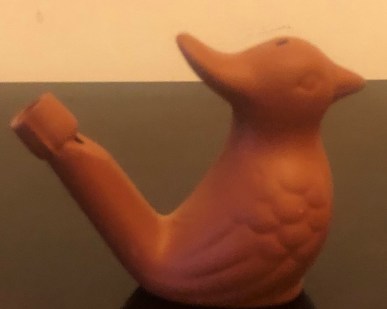
But this whistle, available at Rs. 20 in many melas today, is contemporary. A potter’s piece, this is shaped like a bird. But even more fascinating, it sings like a bird! Fill it to the halfway mark with water and blow into it, an unsuspecting guest will think that a melodious bird co-habits the house with you. Who dreamt this up?
I just picked three random objects from my house. The beauty and aesthetic of Indian crafts! But sadly, much of what is produced today in the name of craft displays neither the aesthetic nor the pride of craftsmanship. How is lost pride brought back?
It’s Women’s Day, and as the media reminds us, a time to celebrate the ME! A time to indulge oneself, pamper oneself and assert oneself, with all the accompanying gloss and glamour.
But is “all about me” really the formula for happiness? Consider this:
“Someone once asked me what I regarded as the three most important requirements for happiness.
My answer was: A feeling that you have been honest with yourself and those around you; a feeling that you have done the best you could have in your personal life and in your work; the ability to love others. Happiness is not a goal, it is a by-product. Paradoxically, the one sure way not to be happy is deliberately to map out a way of life in which one would please oneself completely and exclusively. After a short time, a very short time, there would be little that one really enjoyed. For what keeps our interest in life and makes us look forward to tomorrow is giving pleasure to other people.
It is easy to slip into self-absorption and it is equally fatal. When one becomes absorbed in himself, in his health, in his personal problems, or in the small details of daily living, he is, at the same time losing interest in other people; worse, he is losing his ties to life”.
Words of wisdom from Eleanor Roosevelt, wife of Franklin D. Roosevelt who was the President of the United States during the Great Depression and World War II. Eleanor was more than First Lady, she went on to play a leading role as a diplomat in the United Nations, and was one of the most loved and influential women of the 20th century. At the age of 76, she compiled her thoughts and experiences into a simple guide to living a fuller life based on her own philosophy on living, and informed by her personal experiences as a daughter, wife, parent, and diplomat. Titled You Learn by Living: Eleven Keys for a More Fulfilling Life, this is a simple but powerful reminder of enduring common sense ideas and heartfelt values that resonate even 60 years after the book was first published.
A good day to share her words, and remind ourselves how enriching and invigorating it is to be able go beyond the ME! Let us celebrate the power of caring and sharing!
The other day my grand-nephew, not quite nine months old and just starting to discover the world around him, was crawling towards a line of ants on the veranda. Immediately there was a chorus of calls from the vigilant adults around him. “Be careful, the ants will bite him”. “Be alert that he doesn’t put a few in his mouth!” “Mind the ants don’t get into his clothes.” The little boy was picked up and taken away many times, and just as many times he determinedly crawled right back to the tiny creatures that were neatly marching away on their own business.
The ants took me back to my early days as an environmental educator. One of the first publications of CEE was a simple 8-pager called Ant. I was fascinated at how much one could write about creatures that were either not noticed, or when noticed, decried as pests! Further down the line I ended up putting together an entire teaching-learning manual on Insects. Besides opening up a whole new world this also led me to EO Wilson whose writings became a great inspiration, not just for what he studied, but equally for how wonderfully he shared his thoughts.
Edward Osborne Wilson is not just the world’s foremost authority on the study of ants (a myrmecologist!) but one of the founding fathers of, and leading expert in, biodiversity. His autobiography titled Naturalist traces his evolution as a scientist. Young Wilson knew early that he wanted to be scientist. A childhood accident left him with weak eyesight and hearing, so instead of focussing on animals and birds he concentrated on studying the miniature creatures. Thus the dreamy child turned into the focused scientist. Naturalist also reveals how these steps from daydream to determined endeavour involved a mix of random encounter, enthusiasm and opportunism.
My little nephew’s first explorations reminded me of EO Wilson’s words. “Why do I tell you this little boy’s story of medusa rays, and sea monsters nearly sixty years after the fact? Because it illustrates, I think, how a naturalist is created. A child comes to the edge of deep water with a mind prepared for wonder. He is like a primitive adult of long ago, an acquisitive Homo arriving at the shore of Lake Malawi, say, or the Mozambique Channel….The child is ready to grasp this archetype, to explore and learn, but he has few words to describe his guiding emotions. Instead he is given a compelling image that will serve in later life as a talisman, transmitting a powerful energy that directs the growth of experience and knowledge. But the core image stays intact. When an adult he will find it curious, if he is at all reflective, that he has the urge to travel all day to fish or to watch sunsets on the ocean horizon.”
In the current age of over-protective parenting, and educational systems that feel that rote learning is the key to science, EO Wilson’s words hold truer than ever: “Hands-on experience at the critical time, not systematic knowledge is what counts in the making of a naturalist. Better to be an untutored savage for a while, not to know the names or anatomical detail. Better to spend long stretches of time just searching and dreaming.”
There are few inventions and innovations which are ‘Made in India, For India’. We either reverse engineer, adapt, copy or adjust!
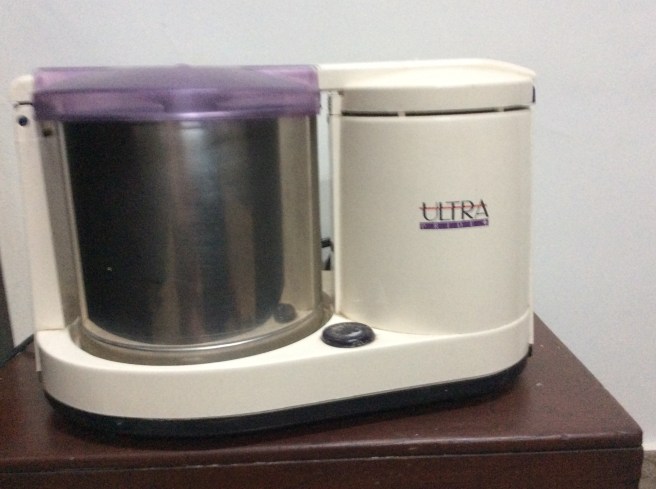
So from that perspective, I think the Coimbatore Wet Grinder is a marvel. The need for batters on an everyday basis is Indian. How can households run without a steady supply of idli batter, dosa batter, vada batter, adai batter, pesarattu batter, appam batter, paniyaram batter etc., etc.? While these dishes are all South Indian, they are extremely popular across India too.
In the days of yore, women used to grind these batters in a stone device. Frail-looking mamis turned into Karnam Malleswaris and Kunjarani Devis, wielding huge stone pestles with nonchalance! It took an hour or more of this heavy duty work to grind the breakfast batter for a large family and clean out the device.
Then came electric mixer-grinders. But always the refrain: ‘Oh, so small a jar. I have to do so many rounds for the quantity I need.’ Or ‘The motor heats up the batter as it grinds. Dosas never taste the same.’ Or ‘Uff, so much time it takes, I have to stand holding the lid.’ Because the mixer-grinders were not really conceived for our needs.
And then came WET GRINDERS! Magic! Small enough to fit in a corner of the kitchen but fairly good capacity; using the familiar stone-on-stone approach, thereby making mamis fully comfortable; no heating while grinding; and pretty easy to clean too!
An amazing individual called P. Sabapathy developed the wet grinder in Coimbatore in 1955, after much trial and error. Sabapathy introduced the grinders to other cities such as Chennai and Madurai. From the basic model, others innovated the tilting wet grinder, the table top grinder etc.
Coimbatore developed as the center for the manufacture of wet grinders. This was helped along by the fact that granite was available nearby. Also, as Coimbatore is anyway an industrial hub, manufacturing equipment, electrical motors etc. were all available within the same area. The city contributes to about 75% of the 1 lakh total monthly output of wet grinders in India. And apparently, there are 40 types of wet grinders today, from domestic to commercial. In 2007, Tamilnadu Government opened a center for manufacturing raw materials for wet grinders and a research center here.
Historian CR Elangovan has documented the history of Coimbatore wet grinders in his book ‘Automatic Aataangal: Kovaiyin Seetanam’. Alas, I cannot read Tamil. But I shall search to check if there is an English translation.
It is said that Mr. Sabapathy invented the wet grinder to save his wife labour. In the process, he has saved lakhs of women-hours. But who even knows his name? Shouldn’t he be in textbooks, as a supporter of women’s emancipation and a designer-inventor-entrepreneur of the highest order? We may even classify him as a social entrepreneur in today’s jargon! Shouldn’t he have got the Padmashri?
And coming back to one of my recent-favourite topics, the Coimbatore Wet-Grinder is GI (certified for Geographical Indicator).
A tribute to the architect on his birthday (Louis Kahn: Born 20 Feb, 1901)
When did it really strike me that I was living somewhere very special? Well, when one of my architect colleagues introduced me to his sister—another architect—as follows:
‘Meet Meena. She lives in a Louis Kahn.’
Wow! That’s the nearest I ever got to being a brand person! No one is going to ever accuse me of ‘wearing a Satya Paul’ or ‘carrying a Prada’. But this felt good!
I lived on the campus of IIM Ahmedabad, as a faculty-spouse for over 15 years. On an everyday basis, living in the IIM houses was/is about: ‘Oh God! The wall is seeping again’. Or ‘Why are these rooms so cold?’ or ‘This red brick is completely impractical for Ahmadabad. Look how they pit’. I suppose it needs an outsider’s perspective and a bit of distance to help us appreciate things we take for granted or actively crib about!
Living on the IIM-A campus is something special—it’s being part of history and a special vision. A vision forged by the founders of the institution, and given physical shape primarily by the architect (because, frankly, there is no landscaping to talk about!!).
Some things about the campus never cease to surprise, for instance: How is that there are so many students around, but it’s still such a quiet and serene place? How is it that the lives of the families living on campus and the lives of students almost never intersect? The only time you see students is if you go to the bank or decide to walk the path going between the dorms to reach the main gate. The only time you hear students is when they do a particularly loud ‘Tempo’ shout. Considering it’s not a very large campus, how does this work?
The arrangement of houses is again something special. There is such a respect for personal space. At an everyday level, that translates to ‘You simply don’t have to ever see your neighbours unless you want to!’ But at the same time, there is the comforting feeling that the community is there when you need them!
IIM houses, are to say the least, quirky! Anyone who has lived in different ‘regular’ houses (and believe me, we have!) would know that it is not possible to take it for granted that door and window curtains are transferrable from one house to another. Why do measurements differ from house to house? No one I know has an answer! And the door from the drawing room to the rest of the house! Some houses have wooden doors, some glass; the position is a bit different in each house. That ‘below the staircase’ storage space bang opposite that door and how to screen it visually has perplexed one and all!
And the completely non-uniform lawns! We’ve lived in a house with the most luxurious 3-sided lawn; one which had decent-sized lawns on both the back and front; and one which had a shamefully tiny odd-sized strip in the front, and a lovely one at the back!
Nature is very much a part of life on campus! Butterflies, dragonflies, birds nesting in the bushes, bats mucking up the verandahs! On and off, monkeys were an active presence in our lives—they would jump on the cars, topple over the scooters and kick over the dustbins. It was as if all these had been set up as a gym for them to use! And the famous campus crow, which has been much studied by Prof. Venkat Rao, and which took a malevolent pleasure in messing up his scooter. We always had lots of vultures. But what with the general decline of the species, they almost disappeared from the campus. Hopefully now, with the banning of the drug implicated in the decline, the campus too is seeing a revival.
I’ve written only about the physical aspects of the campus. But I believe that this actually governs to a large extent the other aspects, and is what makes the IIM campus what it is, and defines the community. Detached but supportive. Making one feel a part of something larger, a grand vision. Quirky and individualistic. And just a bit impractical!
–Meena
This is about the old campus only. I don’t relate to the new campus, having left the campus by the mid-naughts.
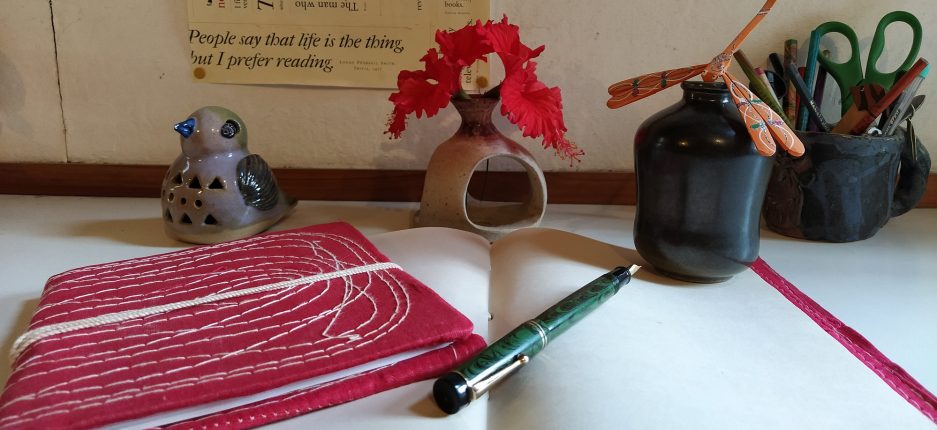

 my attention because Dr Seuss is one of my all-time favourite children’s writers. I adored his books when I was young and tried to pass on the love to my children by reading out his quirky verses night after night, twisting our tongues over his wonderful, wacky invented words.
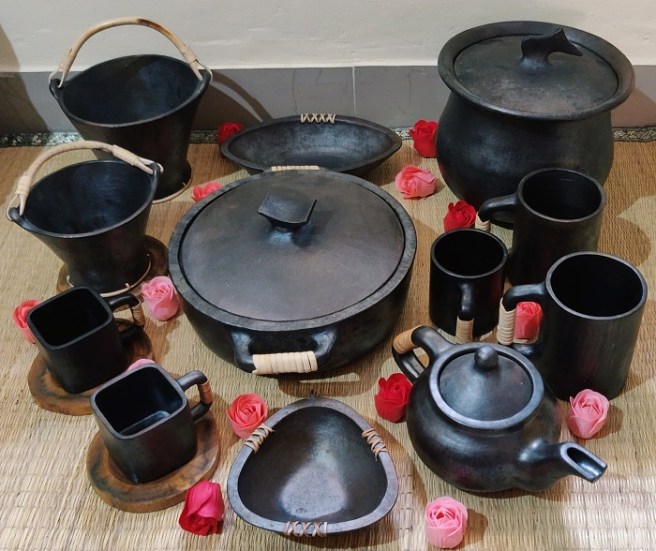 Traditionally called, “Loree Hamlei”, this pottery was historically used exclusively by the royal and noble families of Manipur. The original name is derived from the village of Longpi in Manipur where the Tangkhul Naga tribe specialise in creating this pottery.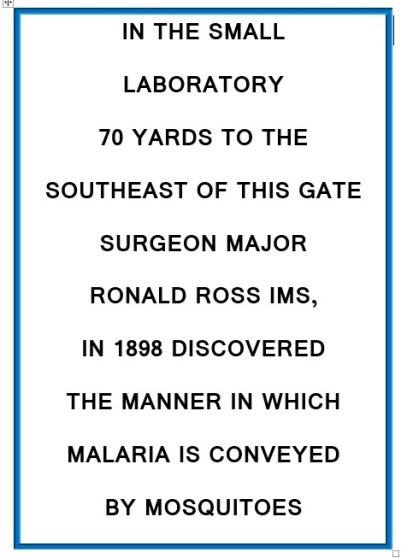
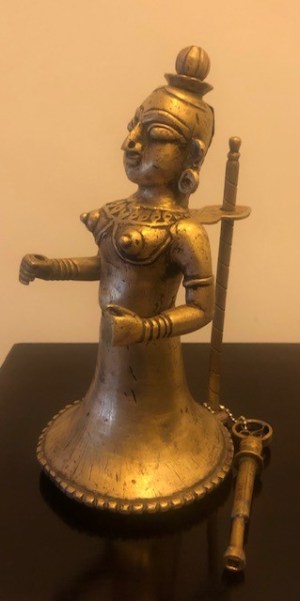 Why should a lock be shaped like a lady? Perfect to every last detail—the braid at the back, the holes in the ears and nose for ornaments, the necklace, the drape of the dress. Every feature sharp and defined.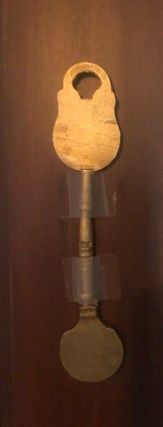
 anying gloss and glamour.
 So from that perspective, I think the Coimbatore Wet Grinder is a marvel. The need for batters on an everyday basis is Indian. How can households run without a steady supply of idli batter, dosa batter, vada batter, adai batter, pesarattu batter, appam batter, paniyaram batter etc., etc.? While these dishes are all South Indian, they are extremely popular across India too.
 Millennial Matriarchs