Rooh Afza: Soul Refresher

Last week Meena wrote about the thirst quenchers–sherbets and squashes that make the long Indian summers bearable. The famous Rooh Afza headed the list. Quite by coincidence, I recently read more about the interesting history of this sticky red drink that is a favourite of the Indian subcontinent.

Sharing the cool story for the long hot days.

The tale dates back to the early twentieth century and a Hakim named Hafiz Abdul Majeed. When he was very young Hafiz memorized the holy Quran and learnt the Persian language. He then went on to earn a degree in Unani medicine.

The Unani system follows the humoural theory which postulates the presence of four humours in the body: dam (blood), balgham (phlegm), safra (yellow bile) and sauda (black bile), a parallel to kapha, vata and pitta, the three doshas in Ayurveda. In the Unani system of medicine there are six basic factors which are considered essential for the maintenance of good health and prevention of diseases. These are: air, drinks and food, sleep and wakefulness, excretion and retention, physical activity and mental activity, and rest.

In 1906, Hakim Hafiz opened a clinic in the by-lanes of the old city of Delhi,  that was then undivided India’s capital. The clinic was to treat poor people based on the Unani system of medicine. He called his clinic Hamdard Dawakhana. Hamdard is a combination of two Persian words hum (used in the sense of ‘companion’) and dard (meaning ‘pain’). Hamdard thus stood for ‘a companion in pain’.

Hakim Hafiz also experimented with different herbs to create medicines. He was looking for something that could help in the treatment of heat stroke, dehydration and diarrhoea that were very common in the summer when the hot dry ‘loo’ wind blew cross the northern plains. He combined a number of ‘cooling’ ingredients (mainly herbs and fruits) to produce a thick red syrup which he believed would combat the effects of severe heat.

It is believed that the original formulation included the following:

Herbs: Purslane (luni-bhaji or kulfa seeds), chicory, wine-grape raisins (Vitis vinifera), white water lily (Nymphaea alba), blue star water lily (Nymphaea nouchali), lotus (Nelumbo nucifera), borage (starflower) and coriander.
Fruits: Orange, citron, pineapple, apple, berries, strawberry, raspberry, loganberry, blackberry, cherry, concord grapes, blackcurrant and watermelon
Vegetables: Spinach, carrot, mint and luffa gourd.
Flowers: Rose, kewra (Pandanus fascicularis), lemon and orange.
Roots: Vetiver (Chrysopogon zizanioides).

The story goes that when Hafiz made the concoction for the first time in 1907, the fragrance was so enticing that curious crowds collected. The entire first batch was sold within one hour. Soon it was not just the fragrance, but also the taste that became so popular that demand for this ‘herbal medicine’ soared. The Hakim gave his creation the name Rooh Afza which in Urdu literally means ‘something that refreshes the soul’. It also reflects the Hakim’s early exposure to Persian literature. Rooh Afza is the name of the daughter of King Firdaus (Heaven) in a book Masnavi Gulzar -e- Naseem.

As the popularity of the syrup grew beyond its medicinal uses to become a refreshing summer drink, the Hakim turned his attention to its marketing. In 1910 he took help of an artist Mirza Noor Ahmad to create a logo that integrated flowers, fruits and herbs in its design. The overlays of colour in the design could not be accurately printed in the printing presses in Delhi. So the printing of the labels was done by the Bolton Press run by Parsis in Bombay.

At that time, there was also no standard container for the syrup. Hakim’s Hamdard Dawakhana used old wine bottles of any size, colour and shape that were available for the other syrups. For Rooh Afza Hamdard started using white bottles of uniform size (750 ml) and shape which were called ‘Pole’ bottles. It became the first sherbet to be bottled in these bottles. It was also the first sherbet to be presented in a beautifully printed wrapper of butter paper.

In the early days the news of the product was spread through pamphlets that were literally thrown in the air for wide outreach.  With growing attention, Hamdard increased its marketing activity by advertising in national newspapers. By 1915 the drink became very popular well beyond Delhi as a thirst quencher and refresher.

Hakim Hafiz Abdul Majeed died in 1922 at the age of just 34 years. His sons were only 13 and 2 years old at the time. His widow Rabia Begum took charge of her husband’s Hamdard Dawakhana. But instead of running it as a private clinic she declared Hamdard as a Waqf or Islamic Charitable Trust, where the entire profits would be used for public welfare.

While Rooh Afza was initially prepared and bottled in a small kitchen, the growing demand required larger premises. A factory was set up in Daryaganj in Delhi in 1940, and his two sons managed the business. The Partition of the country in 1947 led to the parting of ways of the brothers. Abdul Majid’s eldest son Abdul Hamid remained in India and continued to manage Hamdard India. The younger son Hakeem Muhammad Saeed went to Pakistan in 1948, where he founded a clinic named Tibb-e-Unani in Karachi. This subsequently became Hamdard Pakistan. Both brothers continued to carry on the legacy left behind by their father. Rooh Afza has transcended political and geographical boundaries and continues to be a favourite in both countries.

Apart from the India and Pakistan, Hamdard also has a presence in Bangladesh. Hakim Saeed had opened a branch of Hamdard in what was then East Pakistan. After the creation of Bangladesh, instead of winding up the operations in the country, he gifted the plant to the people of Bangladesh to be run and managed by its workers.

In all the three countries, Hamdard is registered as Waqf (a Muslim endowment entity). It means it is a non-profit organisation under Islamic Law. In India, Rooh Afza sells close to 40 million bottles a year. Hamdard reinvests only 15 per cent of their profits in business and the rest is transferred to Hamdard National Foundation (HNF) which distributes it to different charitable organisations.

Rooh Afza—truly the refresher of the collective soul of the subcontinent! And a drink that triggers a kaleidoscope of personal memories for so many, across generations.

–Mamata
Henry Dunant: The Man Behind the Red Cross

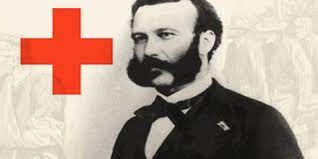
The words Red Cross literally, and immediately, bring to the mind’s eye the image of the red cross on a white background. This has become a universal symbol of humanitarian help and healing wherever there is a situation of war, natural or man-made calamity. The history of what has, for over a century been an international movement can be traced back to a much earlier war, and to the humanitarian vision of a businessman named Henry Dunant.

Photo source: https://elm.com.sg/

Henry Dunant was born on May 8, 1828 in Geneva in a Swiss family that was religious and civic-minded. Henry himself, in this youth, was closely involved with the Young Men’s Christian Association. After he completed school he was initially apprenticed to a Swiss bank. When he was twenty-six he joined as a representative of a company that had commercial interests in Swiss colonies in North Africa.

As part of his work Dunant travelled to Algeria to take charge of the Swiss colony of Setif. While he was there he attempted to become an independent entrepreneur and set up a wheat mill. For this he needed a large tract of land and water rights for the same from Napoleon III. Napoleon was at the time headquartered near the northern Italian town of Solferino, directing the French and Italian armies in the battles to drive the Austrians out of Italy. Dunant arrived in Solferino in time to witness one of the bloodiest battles of the nineteenth century. On that memorable twenty-fourth of June 1859, more than 300,000 men stood facing each other; the battle line was five leagues long, and the fighting continued for more than fifteen hours.

Dunant was also witness to the horrific aftermath of the battle which left behind hundreds badly wounded and dying without any kind of help. Dunant was deeply moved by his experience. He wrote about it and published a small book titled Un Souvenir de Solferino (A Memory of Solferino). He began the book with these words: I was a mere tourist, with no part whatever, in this great conflict; but it was my rare privilege, through an unusual train of circumstances, to witness the moving scenes that I have resolved to describe.

The book, published in 1862 had three parts. The first described the battle itself. The second described the battlefield after the fighting: chaotic disorder, despair unspeakable, and misery of every kind. It also described all the efforts to care for the wounded in the small town of Castiglione. The third section proposed a plan. It suggested that the nations of the world should form relief societies to provide care for the wartime wounded; each society should be sponsored by a governing board composed of the nation’s leading figures, should appeal to everyone to volunteer, and should train these volunteers to aid the wounded on the battlefield, and to care for them later until they recovered.

As he wrote: But why have I told of all these scenes of pain and distress, and perhaps aroused painful emotions in my readers? Why have I lingered with seeming complacency over lamentable pictures, tracing their details with what may appear desperate fidelity? It is a natural question. Perhaps I might answer it by another: Would it not be possible, in time of peace and quiet, to form relief societies for the purpose of having care given to the wounded in wartime by zealous, devoted and thoroughly qualified volunteers?

This report shook the whole of Europe. What was unusual about it was that rather than being just a reporting of the battle, Dunant also provided ideas and proposals aimed at preventing a repetition of the horrifying happenings in Solferino.

His two main proposals were: i.That countries adopt an international agreement, which would recognise the status of medical services and of the wounded on the battlefield. ii. The creation of national relief societies, made up of volunteers, trained in peacetime to provide neutral and impartial help to relieve suffering in times of war.

In response to this, on 7 February 1863, the Geneva Society for Public Welfare appointed the International Committee for the Relief of the Wounded, a committee of five people, to find ways to put the plan into action. The committee consisted of the banker Gustave Moynier, the general Guillaume-Henri Dufour, as well as the doctors Louis Appia and Théodore Maunoir, along with Henry Dunant. Dunant, poured his own money and time into the cause, travelled over most of Europe to meet governments and convince them to send representatives to a conference which would develop the plan of action. The founding charter of what was to become the International Red Cross Movement was drawn up in 1863.

An international conference was held from 26 to 29 October 1863; it included delegates from sixteen nations. The result of the conference was an international treaty with ten articles that were signed by twelve nations on 22 August 1864. This became known as The Geneva Convention. The Treaty guaranteed neutrality to sanitary personnel and protection of sanitary establishments, guaranteed free access for such personnel to grant material assistance.

The Convention also adopted a special identifying emblem. A red cross on white base was selected as a recognition and protection sign. It was the reverse of the Swiss Federal colours and was selected in honour of the Swiss origin of the initiative to provide humanitarian assistance in times of armed conflict.

While Dunant was putting all is time and resources in making his humanitarian dream a reality, his personal and professional life went into a steep decline. His business ventures failed and he became bankrupt; he was also cast out by the Geneva society of which he was once a part; he was penniless and unmoored. In September 1867 he resigned from his post as secretary, as well as member of the International Committee.

For the next 20 years from 1875-1895 Dunant became a wandering recluse, living on charity. In 1887 he ended up in a small Swiss village where he fell ill and found refuge in the local hospice where he spent the remaining years of his life. In the meanwhile he was almost forgotten, and even presumed dead, until a journalist discovered him in 1895 and wrote an article about him. The article was printed all over Europe. Henri Dunant was rediscovered by the world.

In 1901, Dunant was awarded the first-ever Nobel Peace Prize for his role in founding the International Red Cross Movement and initiating the Geneva Convention. The prize was divided equally between Jean Henry Dunant “for his humanitarian efforts to help wounded soldiers and create international understanding” and Frédéric Passy “for his lifelong work for international peace conferences, diplomacy and arbitration”.

Despite the prizes and honours Dunant continued to live in his one room in the hospice until he died in 1910, and as per his wishes, there was no funeral ceremony.

Henry Dunant’s vision and creation of the worldwide movement continue to be play a critical part, in a world that is conflict-torn even today, helping people in need during armed conflict, natural disasters and other emergencies. The movement’s ethics are based on seven Fundamental Principles: Humanity, impartiality, neutrality, independence, voluntary service, unity and universality.

May 8 is marked as Red Cross Day in memory of the contribution of Henry Dunant to building this international Movement, and to celebrate these principles.

–Mamata

Not quite the Big Top, But a Circus Nevertheless

Growing up, the circus was definitely a major event in our lives. Every two or three years, a circus would come to town, and we would be taken to see it. Mothers used this as major leverage as in: ‘study for your tests and get a good score, otherwise no circus’; ‘you keep staying out beyond 6.30, and no circus for you’, etc.

After a gap of about four and a half decades, last week I went to the circus again.

So much had changed. And so much was the same.

What had changed? Well to begin with, the circus was no longer in a tent. That itself was a shock, because down the centuries, at least starting 1825, when Joshuah Purdy first used a large tent for his circus, the circus has been synonymous with the ‘big top’, which symbolized the big round tent in which circuses were staged. The circus I went to was staged in a closed auditorium!

The setting itself obviously gave rise to changes in the acts and the format. There was no longer space for simultaneous acts which added to the melee and the excitement—remember the elephants in the inner ring, as acrobats rode unicycles in the next ring, and clowns ran around hitting each other in the outermost one?

And which really struck awe in us, like the trapeze or the intrepid motorcyclists in the dome of death were not possible in the confined space.

There were two welcome changes.  There were no animal acts. While the central government released a notification in 1998 barring bears, monkeys, tigers, panthers, and lions from being exhibited or trained as performing animals, there were some exceptions made. A more total ban started being imposed in 2013. We also used to see child acrobats in those days, which again was banned around the same time.

Another major difference was the quality of the costumes. Gone the tawdry and shabby clothes. Today the clothes were slick and tastefully designed.

But the core had not changed! The excitement of the children which is the spirit and soul of the circus was intact. They were totally absorbed in whatever went on in the stage, oohing and ahhing at the stunts and tricks. They were glamour-struck with the performers and vying with each other to reach out and touch them. They were laughing at and with the clowns. They were dancing in the aisles with the music. The bottom line is that children don’t change!
And the size of the audience was heartening too. The circus was running in town for 15 days, with three shows per day. The show we went to easily had an audience of about 500. The circus obviously is able to compete quite effectively with more modern means of entertainment.

It gave hope that the circus is alive and well. After all, the circus has pretty old roots in India. Giuseppe Chiarini brought the Royal Italian Circus to India and put up shows for the first time in Bombay in 1879. It is said that the Rajah of Kurduwadi along with his riding master Vishnupant Chatre had gone to see the circus. Chiarini in a conversation told the Rajah that no Indian would be able to put up a circus comparable to his even in a year’s time. Chatre, who did a lot tricks with horses, took up the challenge and succeeded, and the Great Indian Circus was born. Chatre did equestrian performances while his wife was a trapeze artist at the circus. Chatre toured around India with the circus. On these travels, he reached Thalassery (Tellicherry) in Kerala with the circus, where he met Keeleri Kunhikannan a martial arts and gymnastics teacher. Chatre knew that the trend elsewhere in the world was the increasing mix of gymnastic and acrobatic acts in the circus. So he asked Kunhikannan to train acrobats for his circus, which the master began to do in 1888. At the turn of the centry, Kunhikannan opened a full-scale circus school in Chirakkara, a village near Kollam, which gave rise to several great circus performers and entrepreneurs.

And so the show goes on! In fact, a new circus school opened in Pondicherry as recently as 2012. This is run by Kalou Achaia who has trained as a circus artist around the world. The school attracts a large number of students.

A good thought on World Circus Day marked on the third Saturday of every April, to celebrate circus creators, performers, and artists.

–Meena

PS: Thank you Rambo Circus, for giving the childern a taste of the circus!

Hang it!

Did you know that if you pick up a clothes hanger anywhere in the world, there is a 12% chance that it was made in India? India is the third-largest exporter of hangers in the world, after China and Vietnam, sending out 11.1 thousand shipments a year, mainly to the US, Germany and Sweden.

There are of course several origin stories for the ubiquitous clothes hanger. The third US president Thomas Jefferson is supposed to have used some such device to keep his clothes in good order, but that story can’t be verified. Some versions take the invention back to 1869 and attribute it to one OA North, but some people believe it was invented by AJ Parkhouse in 1903. He arrived at work one morning to find all the coathooks taken. Irritated, he picked up a piece of wire lying there and bent it into the shape we all know today, and proceeded to hang up his coat.

Hangers are made from a variety of different materials–wire, wood, plastic, cardboard tubes, etc.  Now, in the quest for sustainability, the focus is shifting to use of recycled materials. Some hangers are padded with fabrics like satin and are used for delicate clothes. There are even luxury and custom-made hangers.

Fundamentally, a hanger is a device which mimics the shape of human shoulders, and is used to hang coats, shirts, dresses etc. so they don’t crush or wrinkle. A lower bar is used to hang pants or skirts. The other basic type of hanger has clamps to hold trousers or skirts.

Through the early 20th century, the popularity of the clothes-hanger grew—professionals like doctors and lawyers needed their clothes to look good, and hanging them up neatly was an easy way to always look dapper.

Hangers evolved to meet specific needs—there are foldable hangers for travel, scarf hangers, blanket hangers, tie hangers, etc.

Even more than domestic use is perhaps retail use, wherein the hanger has not only its functional use, but is also seen as an integral part of branding. The proper display of clothes depends a lot on the hanger used.

Mainetti is the world’s largest hanger manufacturer. The story of this giant began in Italy in the 1950s. A smart young man Romeo Mainetti worked for a racing car driver. The driver’s father was an industrialist involved in the textile industry, as the textile pioneer, the world-famous Marzotto corporation. The company had realized that there was an increasing demand for ready-made suits and started to make them. Each suit required a hanger. Originally, these were made of wood and were bulky and costly. Romeo’s brother Mario worked in a plastics factory, and together the two of them came out with the plastic hanger.

The quality of the product took the industry by storm and they soon had operations in the UK, France, Canada, and the Netherlands. Today the company has spread to 90 locations across 6 continents. India is a significant manufacturing hub.

Clothes hangers are used not just for hanging clothes, but have found innovative uses—they are popular welding rods, used for unclogging drains, for supporting plants, in children’s schools projects, etc. They are quite a favourite with car-thieves too! But hangers have a very dark side too– their use in illicit abortions.

Today, the major concern is from the angle of sustainability specially in terms of materials used. Hopefully we will find innovative ways to sustainably keep our clothes wrinkle-free.

–Meena

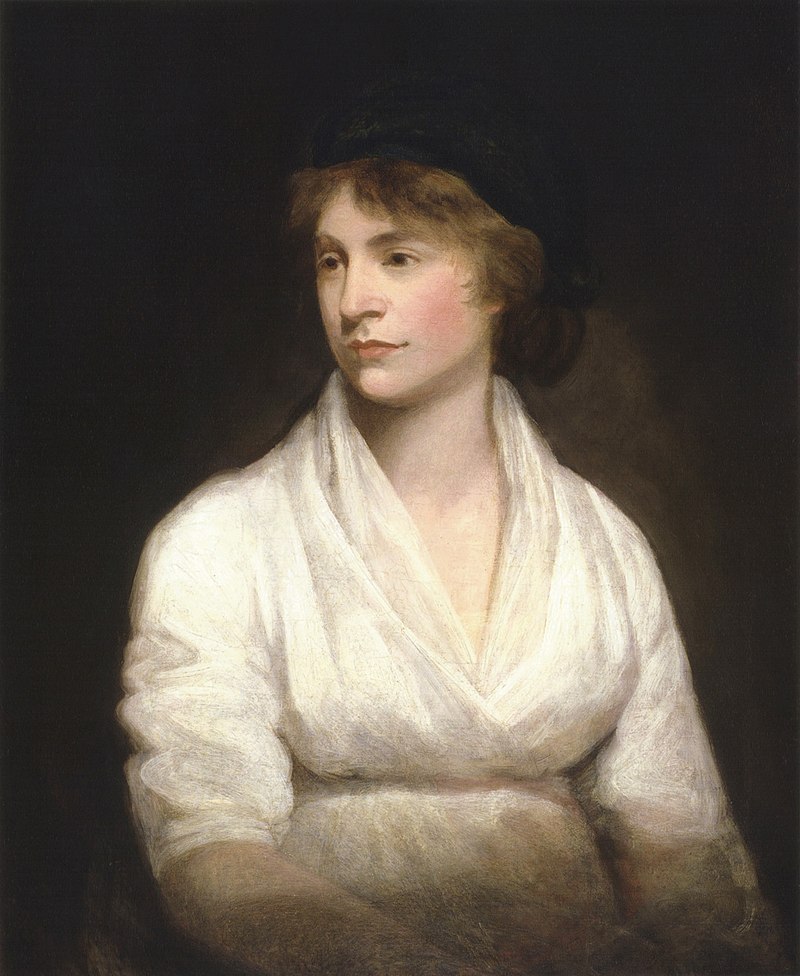
Early Feminist: Mary Wollstonecraft

Earlier this week Meena wrote about the characteristics of ‘good girls’ that include: fear of disappointing others, fear of speaking out for fear of hurting others, need to always excel, avoid conflict, obey rules.

Good girls make up the majority in every generation. And certainly they are no less in any way than the others. But it is the few in each generation, who due to a combination of inbuilt traits, circumstances, passion and perseverance defy these norms. It is these path breakers who open up previously untrodden terrain, and clear the path for their contemporaries, and the generation to follow.

Today it is fashionable to be a ‘feminist’ and women are fighting for “more”. More avenues for better education and employment, more freedom of choice, more say in their own life and matters. This is a good time to remember that this “more” is a luxury compared with a generation of women who did not even have “basic” access to any of these things. And that it is women who have fought hard battles to achieve what we take for granted today.

Mary Wollstonecraft was one of these women.

Mary Wollstonecraft was born April 27, 1759, in London in a family that had once been prosperous but had been reduced in circumstances. While her elder brother, and the favoured child received a proper ‘gentleman’s education’, Mary had only a basic formal education when she learned to read and write. This was probably the root of her life-long battle for equal educational opportunities for women. In the meanwhile Mary taught herself a number of languages and spent considerable time exploring a library that one of her friends had. Through these friends, she met Fanny Blood, two years older and skilled at sewing, painting, and the piano. She inspired Mary to take initiative in cultivating her mind.

The financial situation of her family necessitated that Mary find some form of employment. In those days, opportunities for girls from this background were limited to teaching, needlecraft, and being a lady’s companion. At 19 Mary got a job as a live-in helper for a wealthy widow. She could not take it for more than a year. Her independent mind and belief in a girl’s right to a good education led her to found a small girl’s school in London in 1784, with her sister Eliza and friend Fanny Blood. The school closed two years later but this period served as the starting point for Mary’s radical ideas about the necessary equality of female and male education, and belief that the government was responsible for making this happen. She expressed these strong views in her book Thoughts on the Education of Daughters which was published by the radical publisher Joseph Johnson in 1786.

In the meanwhile Mary also made the radical decision to support herself as a professional writer, something very few women of the time could do without an aristocratic sponsor. Settling in London to pursue this new career, she did translations from French and German, read widely, and wrote reviews. She became a regular contributor to Johnson’s new literary magazine, the Analytical Review . During this period she was also introduced to such radical freethinkers as Thomas Paine and William Godwin, and she thrived in this intellectual circle.

In Western Europe during the late 18th century, single women had little protection under the law and married women lost their legal identity. Women couldn’t retain a lawyer, sign a contract, inherit property, vote, or have rights over their children. Mary’s career choice, and especially her decision to write about political and philosophical issues, was not merely unconventional, it was perceived as ‘unwomanly’ and ‘unnatural’. But as she reflected “I am then going to be the first of a new genus”. It was a harsh struggle every step of the way, but Mary continued to pursue her beliefs, and further develop her ideas. Based on her own experience of denial of education, and building upon the thinking in her earlier book, Mary argued that the educational system deliberately trained women to be frivolous and incapable and that if girls were allowed the same advantages as boys, women would be not only exceptional wives and mothers but individuals who could contribute better to society. She declared that both women and men were human beings endowed with inalienable rights to life, liberty, and the pursuit of happiness. To suggest women were equal to men was close to blasphemy at the time.

Mary grew up in England during the Enlightenment, an intellectual period that advocated for the use of reason to obtain objective truths. It is this very advocacy for reason that was the guiding principle for her book A Vindication of the Rights of Woman, published in 1792. The book argued that because women share the gift of reason and have the same innate human value as men, both women and men should be educated rationally, allowed to exercise their natural abilities, and held to the same reasonable standards of behaviour. In order to contribute at the same level as men, women must be educated equally to men. If women were not afforded this opportunity, social and intellectual progress would come to a halt. As she wrote in the introduction to the book: My main argument is built on this simple principle, that if she be not prepared by education to become the companion of man, she will stop the progress of knowledge and virtue. 

The trailblazing book went a step ahead of education for girls. It argued that girls and boys should be co-educated, and that women and men should share parental responsibilities. It also insisted that women should be free to enter business, pursue professional careers, and vote if they wished.

A Vindication of the Rights of Woman sold out within a year, and Johnson issued a second edition. An American edition and translations into French and German followed.

Mary Wollstonecraft’s personal life was equally unconventional for the time. While in France she fell in love with an unscrupulous American businessman and had a child with him. He abandoned both mother and child. Mary was heartbroken and even attempted suicide. Later she was in a relationship with William Godwin and when she was carrying his child, the two married but maintained separate domestic establishments. On 30 August 1797 Mary went into labour and after about 18 hours she gave birth to a daughter, also named Mary. Thereafter she had postpartum complications, and died eleven days later at the age of 38.

Her daughter, who grew up to be Mary Shelley the author of the book Frankenstein, never knew her mother in life, but only through her writing. Mary Wollstonecraft had been working on a novel when she died. In this she wrote, almost as if addressing her daughter: Always appear what you are, and you will not pass through existence without enjoying its genuine blessings, love and respect.

Mary Wollstonecraft lived boldly, and died young. But her ideas went way beyond her own time and life. They planted the seed which eventually led to the Suffrage Movement in the early 20th century. Her book A Vindication of the Rights of Woman is considered the earliest and most important treatise advocating equality for women. This essay is often seen a classic of rationalist feminism that laid the foundation of modern women’s rights movements in the Western world.

–Mamata

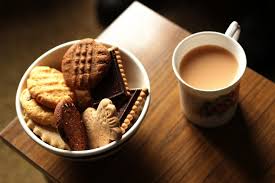
Tea and Biscuits

One has always associated the typical English cuppa with a snack of biscuits. A recent news item reported that the new trend in England, especially among the younger generation, is the popularity of samosas as the preferred snack with tea. This is indeed a total reversal of the traditional colonial notion of appropriate accompaniments to tea.

The English connection between biscuits and tea saw two different aspects during the two World Wars. Huntley & Palmers, the first officially designated biscuit manufacturers in England set up a factory in Reading in 1846. By 1874 it was producing tens of thousands of tonnes of biscuits, becoming the world’s largest biscuit manufacturer. When World War I started in 1914 it received a substantial order from the War Office to manufacture biscuits for the British army. The company manufactured Army Biscuits Number 4 and 9. The ‘Service’ biscuits as they were called, were about four inches square, and were made of whole wheat flour, without sugar. The biscuits provided sustenance, but were very hard and could only be eaten when soaked in tea or water. The fact that some of the biscuits survived intact for a hundred years attests to their durability!

Biscuits and tea found a different connection during World War II in England. By then sweet tea was favoured by the British working class. During the war, tea as well as sugar were severely rationed; there were complaints that tea was not sweet enough. So biscuit manufacturers stepped in by supplying the canteens for civilian war volunteers and other services with biscuits which would add a touch of sweetness with the tea. By the end of the war, it became a reflex for many to have biscuits with their tea. This English tea habit also took roots in what were then colonies of the British Empire.

In India, for many of a certain generation, the words ‘Britannia biscuits’ were almost synonymous. The history of these is interesting. Britannia Industries is one of India’s oldest existing companies. It was founded as a small operation in 1892 by a British businessman, with an investment of Rs 295/-.The first biscuits were manufactured in a small house in what was then central Calcutta. In 1897, the outfit was acquired by four Indian brothers, the Gupta brothers, and was called VS Brothers. In 1918 Charles Holmes, an English building contractor and friend of the Gupta family became a partner in the business. Holmes had a construction firm called Britannia Construction Co. and thus VS Brothers the biscuit manufacturer was renamed by him as Britannia Biscuit Company Ltd.

World War 1 (1914-1919) provided a huge boost for the newly-named company Britannia which was contracted by British colonial government in India to supply specially made biscuits for its soldiers on the frontlines. Thus Britannia joined Huntley & Palmer as suppliers of Service biscuits.

Britannia became the first biscuit maker in India to mechanize production, and the first one east of the Suez Canal to use gas ovens, which it imported in 1921.

In the early 1920s the two most successful biscuit manufacturers in the UK Peek Freens and Huntley & Palmers merged to create a company called Associated Biscuit Manufacturer’s Ltd. This led to world-wide expansion. Britannia merged with this larger company in 1924, and set up a factory in Bombay to meet with the growing demand. The company began establishing a reputation for quality and value. It further strengthened its position by expanding the factories at Calcutta and Mumbai.

During the Second World War, once again the company was contracted to produce Service biscuits, and from 1939-45 almost 95% of its total production capacity was used for this war-time effort. 

In 1952 the Calcutta Factory was shifted to spacious grounds at Taratola Road in the suburbs of Calcutta. During the same year automatic plants were installed there, and later in Mumbai in 1954. The same year the company began production of high-quality sliced and wrapped bread in India. This was first manufactured in a new factory set up in Delhi and first sold there. In 1955 the company launched the all-time favourite Bourbon biscuit in India, followed by Britannia cakes in 1963. In 1978, the Indian shareholding in the company crossed 60%. The Company was re-christened from Britannia Biscuit Company Limited to Britannia Industries Limited with effect from 3rd October 1979. By 1994 the annual production crossed one lakh tonne of biscuits. In 1995 Britannia made it a mission to make every third Indian a Britannia consumer and changed its corporate identity to “Eat Healthy, Think Better”. Since then the company has grown from strength to strength, introducing new brands that rapidly became household names. The company sells its Britannia and Tiger brands of biscuits, breads and dairy products throughout India and in more than 60 countries across the world.

While Britannia is one of the oldest biscuit manufacturing companies in India, today there are several companies that offer choices of sweet or salty biscuits. From Parle G, the world’s largest selling biscuit brand in 2021, to the cream or chocolate-filled cookies, to a host of “healthy, low-carb hi-fibre” options. These are not necessarily ‘tea biscuits’. They are multi-place, multi-use snacks, easy to carry, quick to unwrap and fun to savour even on their own. Even while crunching and munching on biscuits, Indians also continue to enjoy the traditional teatime snacks and savouries of which every state and even every household have their own specialties and favourites—from ganthiya in Gujarat, to murukku in south India, to regional varieties of vadas and pakoras. And of course, the transnational favourite samosa. 

Now it looks like we have come full circle—from Indians adopting English biscuits with chai, to the English adopting samosa with tea!

–Mamata

A House for Mr. Narayan

Generations of Indians have grown up on RK Narayan’s writings. If you have not read his novels, maybe you have seen ‘Guide’, starring Dev Anand and Waheeda Rehman? Or the charming TV series ‘Malgudi Days’? Well, suggest you visit or re-visit all of the above!

RK Narayan was one of the first Indian authors to gain international recognition. His first novel, Swami and Friends, which he wrote in 1930 did not find a publisher for many years. But sometime in 1933, his friends in Oxford to whom he had sent the manuscript, showed it to the famous author Graham Greene. The senior author liked it so much that he recommended it to his publishers and the book saw the light of day in 1935. It got good reviews across the world. RKN followed this up with The English Teacher and The Dark Room, which also won appreciation. From then, it was a steady stream of novels, short stories and articles.

Narayan created the fictional town of Malgudi as the setting for his novels. So authentic was it to his readers that many even today believe it is a real place.

But why the sudden piece on RK Narayan, one might ask.

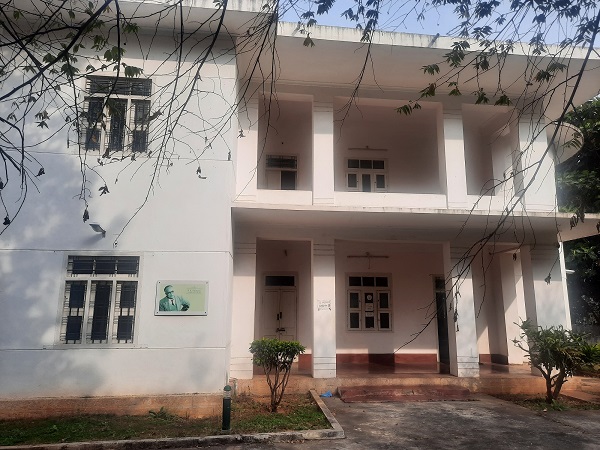
Well, it has been triggered by a visit to his house in Mysuru. Just last week, when I was there, I was lucky to get to visit this house. RKN spent many years in Mysore (as it was spelt then)—some of his growing up years, as well as his adult life when he accepted a commission in the State of Mysore.

It was in the second stint that he built a house which I visited. Set in the quiet area of Yadavagiri, it is a beautiful house typical of the 1950s, full of light and air, with red oxide floors and a beautiful balcony.

It was indeed gratifying to see the house so well preserved. Especially after we heard the story of how it was almost demolished. The author passed away in 2001. All of his family had left Mysuru by then. The house was falling to rack and ruin, when a builder wanted to pick it up and re-develop it. It was at this time that Mysuru woke up to this legacy. Led by a journalist, the people of the city protested. Finally in 2011, the city corporation bought the house and restored it.  

And we must be thankful for this! For not only is the house in good shape, it seems to have been restored fairly faithfully. There is also an exhibition of several artifacts, including his awards, personal items etc., many photographs, as well panels of text for those who have the patience to read them.

But…

And it is a very big BUT!

When one thinks of the potential that the house has for the students, literature lovers and citizens of Mysuru, not to mention the thousands of tourists the city attracts, it is a tragedy to leave it to routine care-taking and not very imaginative management.

As we reflected on our visit, we could come up with more than 10 ideas in less than 5 minutes:

  • Have a lively permanent exhibition, along with special temporary exhibitions to explore specific themes: maybe selected books; his relationship and collaboration with his brother, the famous RK Laxman, who illustrated so many of his books; maybe the process of turning his books into movies or TV (he is said to have hated the movie Guide), RK Narayan compared to comtempory Indian writers, etc., etc.
  • Sell RKN’s books (no, unbelievably, they don’t!)
  • Make it the hub for meetings of book-clubs
  • Make it a venue for book-launches
  • Host lit fests
  • Have literary events for children
  • Have screenings and discussions of movie and TV shows based on his books
  • Have an author-in-residence programme
  • Develop an archive related to his life and work
  • Create and sell souvenirs based on Malgudi
  • Start a café in the lovely little garden space around the house, and serve his favourite dishes
  • Make it a wifi café, so young people hang out
  • And charge a small fee for entrance (the Corporation has kept entry free..generous but it would be more sustainable to charge something).

Ideas are of course easy. Execution is difficult. But do this for RK Narayan’s house we must. He is a very important part of Indian writing in English.

While India does not have a great tradition of making author’s houses into educational and enjoyable experiences, there are more than enough international experiences to learn from: Shakespeare’s birthplace; Mark Twain’s house; Emily Dickenson’s House; Jane Austen’s House; Milton’s House are among the many which are successfully keeping the legacy of these authors alive.

Maybe RK Narayan House can set the example for homes of other Indian authors?

–Meena

Janakidevi Bajaj: Embodying Gandhian Values

Jamnalal Bajaj was considered Gandhiji’s fifth son, and adopted all his values—from Ahimsa to his dedication to the poor, to his commitment to locally made goods and his patriotic spirit. He was an active member of the Congress Party, and gave up the Rai Bahadur title conferred on him by the British Government, and joined the non-cooperation movement.

Importantly, Jamnalalji, in line with the trusteeship concept propounded by Gandhi, felt that inherited wealth was a sacred trust to be used for the benefit of the people and dedicated most of his wealth for the poor and under-privileged.

It was a stupendous level of sacrifice. Would it have been easy to accomplish without the support of his family? Probably not. But Jamnalal Bajaj was lucky in his life’s companion, Janakidevi Bajaj, who not only supported his ideals, but was a freedom fighter and social activist in her own right.

Janakidevi was just eight years old when she married the 12-year old Jamnalal. Both of them were highly influenced by Gandhiji. When Jamnalal took to the Gandhian way of life, Janakidevi was not far behind.

In letter and spirit, she willingly and happily gave up the comfortable lifestyle of a successful industrialist’s wife. At the age of 24, answering the Mahatma’s call, she gave up all her gold ornaments. To her dying day, she never wore any gold again. At the age of 28, she took the vow to give up foreign clothes, and to wear only Kadhi. She burnt all the foreign clothes they had in the house at the central chowk of Wardha. These included expensive saris, silks, suits, woollens and even tapestries depicting Gods. She spun khadhi and encouraged others to take up the vocation. She also gave up purdah in 1919, and motivated other women to do the same, striking a blow for freeing women.

Jamnalal and Janakidevi lived by every ideal they professed. With a deep desire to abolish untouchability, they were the first to open the doors of a temple to Harijans. On 17th July, 1928, the couple threw upon the doors of their family temple in Wardha to Harijans. This was a revolutionary move. Going further, she also hired a Dalit as part of her household staff to serve food to the family.

Throughout the years of the freedom movement, she travelled across the country and addressed and inspired thousands with her message of Swaraj, of the need to boycott foreign goods, of the importance of spinning cloth, the need to eradicate the evil of untouchability, and for social reform.

Janakidevi Bajaj

After 1947 when the country became free, she continued her social work. She was an ardent follower of Vinobha Bhave and worked tirelessly in the Bhoodhan movement. She came out with the innovative idea of ‘koopdaan’, the donation of wells, and collected resources with the ambition that every household could have a well. She also worked for education of women, and espoused the cause of gau-seva.

She was a respected and inspiring figure for those working in the development sector in India, and was awarded the Padma Vibhushan in 1956, in recognition of a lifetime of service.

It was men and women such as these who kept the spirit of Gandhiji and his ideals alive. As we mark the Mahatma’s martyrdom day, it is an appropriate time to remind ourselves of these ideals—non-violence, brotherhood, a burning desire to correct social and economic wrongs, tolerance, and goodwill towards all.

–Meena

A Sweet Welcome to the New Year!

A sweet dish popular in Karnataka, but not too well-known in other parts of the country, is Hayagreeva. Intensely sweet and very rich, the major ingredients are ghee, chana dal and jaggery. How can you go wrong with that?

One should indulge a bit in the New Year, so here is urging everyone to make it during the week (before guilt catches up!).  I shall leave the recipe for you to look up—it is easily available (as what is not, these days?).

I would rather get into the Who, How, Why?

Few of us would associate the name ‘Hayagreeva’ with a sweet. Let alone the sweet, in fact not many may even be aware of Hayagreeva the god. So let’s start at the very beginning.

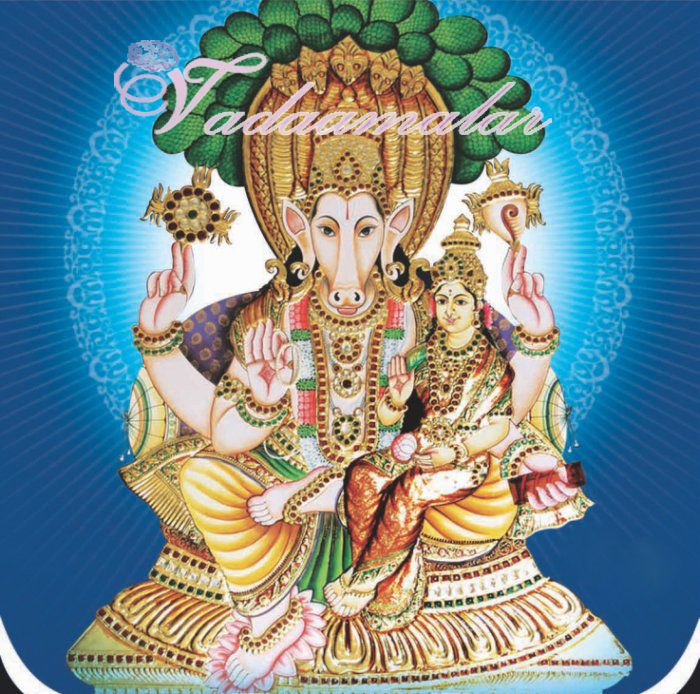
 Hayagreeva is an avatar of Vishnu. Hayagreeva means the ‘horse-necked one’, and that is how this avatar is depicted, with a human body and a horse’s head, and a brilliant white in colour. He is shown clothed in white garments and seated on a white lotus. Hayagreeva represents knowledge and wisdom, and the triumph of knowledge over the evil forces of passion and darkness. He is shown as having four hands. One of these is in the gyana mudra—giving of knowledge, while another holds books. The third and fourth hold a conch and discus, the traditional items associated with Vishnu.

So how does the transition from the name of a God to the name of a sweet happen? Many centuries ago there was a devout disciple of Hayagreeva called Vadiraja Thirtha (1480 to 1600 AD). He was a renowned philosopher and a great scholar, who translated many works of Madhavacharya from Sanskrit to Kannada. He served as the pontiff of the Sodhe Mutt in Karnataka. He was particularly devoted to the Hayagreeva avatar of Vishnu.

It is said that Vadiraja Thirtha would make a sweet by cooking chana dal and jaggery (the two items most beloved to horses) in ghee, and place the dish on a tray on his head. The Lord Hayagreeva would emerge out of his statue in the temple in the form of a horse, and partake of the prasaada. He would spend time playing and dancing for his bhakt, and then go back into the idol.

And thus the tradition of hayagreeva as an offering to the gods was born.

There is another interesting story associated with Hayagreeva. It is said that a goldsmith was once trying to make a statuette of Ganesha. But every time he did this, the head kept taking the shape of the head of a horse. The artisan tried many times, but it was always thus. The goldsmith got frustrated and started to hit the statue with a hammer to break it. But however hard he tried, he could inflict no damage to the idol. That night, in his dream, Lord Hayagreeva himself appeared, and told him to give the statue to a holy man whom he would meet the next day.

And sure enough, Vadiraja Thirtha met the goldsmith the next day. Lo and behold, he knew about the statue and asked the goldsmith about it. He of course gave it to him, and Shri Vadiraja consecrated it and started worshipping it.

May your New Year be as sweet as the hayagreeva!

–Meena

STRIKING TIMES

On 15 December 2022 an estimated 100,000 nurses went on strike across hospitals in the UK, marking the first-ever nationwide walkout in the history of the nursing union in the country. This is probably the culmination of a year that has seen a great deal of labour unrest across Britain which has manifested in a series of strikes. From British Rail workers, to postal workers, bus drivers and baggage handlers at airports, and NHS nurses, several essential services have been disrupted and daily activities affected by these.

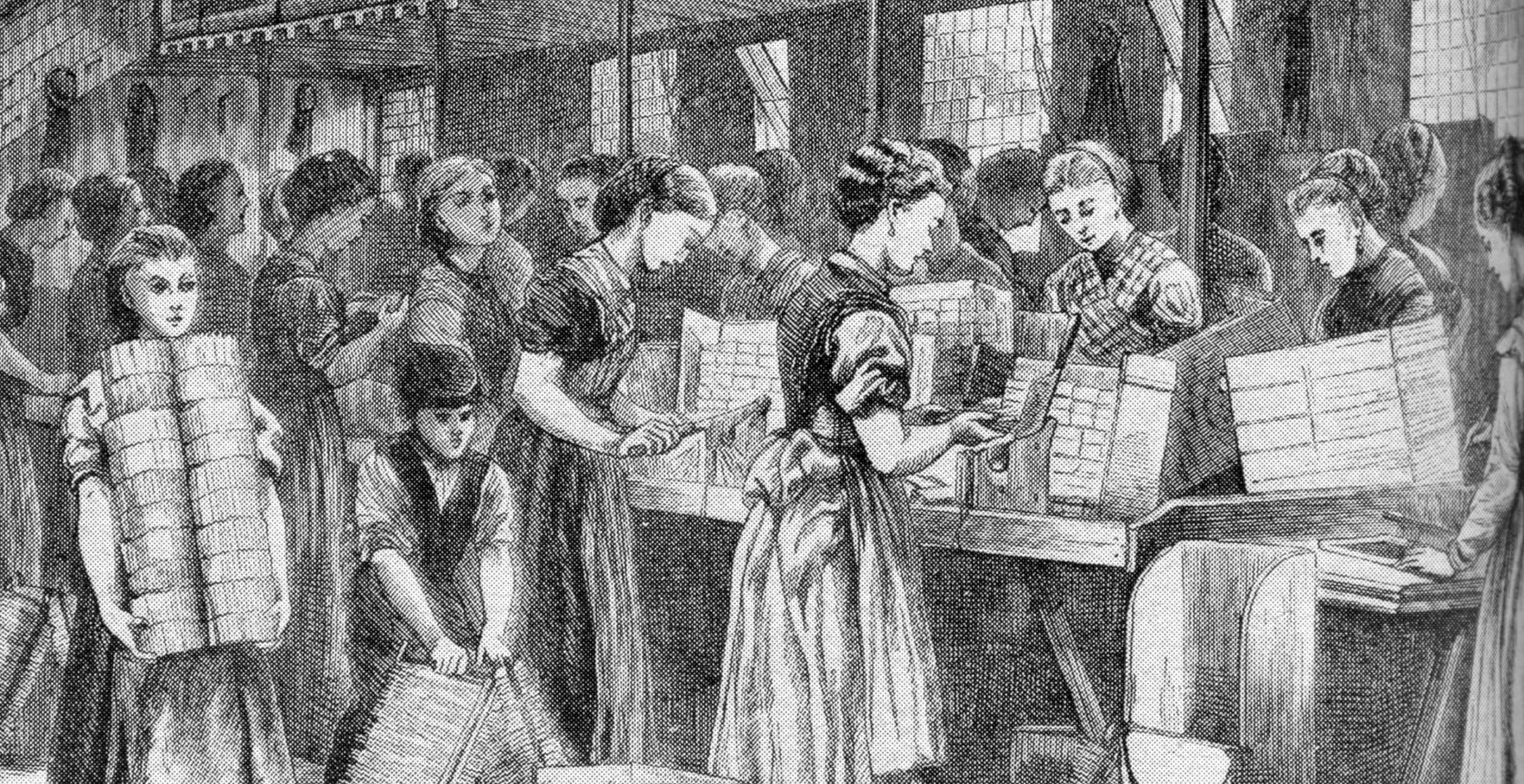
Labour unions have had a long history in Britain. It is interesting that one of the earliest examples of labour militancy, was in 1888, and was sparked off by young girls who worked in appalling conditions in a match factory. The Match Girls’ Strike as it came to be known was a key moment in British history and a milestone in the labour movement.

This historic development dates back to the late-nineteenth century in London’s East End, an area inhabited by the very poor, with unsanitary living conditions and rife with disease and malnourishment. This area also provided cheap labour for the nearby factories. Among these was the Byrant and May Match Company. The company employed young girls (starting as early as age 13) who worked, standing on their feet, for 14 hours a day, for very meagre wages from which they had to also feed, clothe and house themselves. Their earnings were further cut by fines and deductions for small mistakes such as leaving a match on the work bench. The girls who were forced to work as they came from large and poor families, had hardly anything left to take home. The girls also suffered abuse at the hands of the foremen. Over and above the economic exploitation, was the hazardous work environment.  

The production of match sticks involved dipping the sticks, made from poplar or pine wood, into a solution made up of many ingredients including phosphorus, antimony sulphide and potassium chlorate. Within this mixture, it was the white phosphorus that was extremely hazardous for bones and lungs. Inhaling it would cause toothaches, and in the long run, a condition called “phossy jaw” an extremely painful type of bone cancer leading to horrendous disfiguration of the face.

Matchgirls strike work!

The Company employed around 1400 such women and made huge profits, even as they managed to circumvent some of the basic labour rules of the time. It was fully aware of the impact of phossy jaw but if anyone complained, they simply instructed them to have the tooth extracted. While discontent simmered within the workers, there was little that the girls could do to change the situation; but the glowing embers were getting hotter; until a spark ignited the matches.

Henry Burrows a social activist and Theosophist, and a close friend of Annie Besant, had heard rumours about the work conditions in the match factory. He first made contact with some of the girls who worked in the factory, and Annie Besant met many of them and heard from them about their appalling work conditions. This prompted her to write an article about this titled White Slavery in London. The article was published on 23 June 1888 in a weekly magazine called The Link which was published by Annie Besant.  

The powerful matchstick industry had never been challenged like this before, it was outraged, and promptly denied everything. Bryant and May threatened to sue Annie Besant for libel and demanded that their employees sign a statement claiming that  the article was untrue. They refused. The company retaliated by sacking one of the workers who they accused of being ring leader. This was the final straw for the Match girls. And so it was that on 5th July 1888, 200 girls and women downed their tools walked out. They marched to the office of The Link and their representatives met Annie Besant. Mrs Besant did not agree with the strike action in principle but she agreed to help them. Her leadership helped to give the girls direction and organization. The ripples spread quickly, and soon about 1,400 workers had walked out in sympathy. 50 girls visited Parliament, to describe their grievances to MPs “in their own words”.

Besant and Burrows proved crucial in organising the campaign which led the women through the streets whilst setting out their demands for an increase in pay and better working conditions. Such a display of defiance against a powerful industrial lobby was met with great public sympathy, and donations for the cause started pouring in. The empathy demonstrated for the plight of working women was also a sign of changing times.

The factory management saw that the bad publicity could harm their interests and they had no choice but to offer improvements in wages and working conditions. This agreement represented a resounding success for the Match girls, who returned to work the next day. Although it would not be until 1908 that the House of Commons finally passed an act prohibiting the use of the deadly white phosphorous in matches.

An important outcome of the Match girls’ strike was the creation of a union for the women to join; this was extremely rare as female workers did not tend to be unionised even into the next century. The Union of Women Matchmakers, which lasted until 1903, was extremely significant, considering that even as late as 1914, less than 10 per cent of female workers were unionised. It also meant that the organisation of the workers did not just disappear after the strike, as had been the case previously.


The Match girls’ success gave the working class a new awareness of their power, and unions sprang up in industries where unskilled workers had previously remained unorganized. As The Link wrote on 4 August 1888 the strike “put new heart into all who are struggling for liberty and justice”. The next year saw the Great Dock Strike, where many of the dock workers were male members of the families of the Match girls. Ultimately, these two strikes led to the formation and growth of the labour movement and Labour Party itself. 

–Mamata