WEIGHTS AND MEASURES

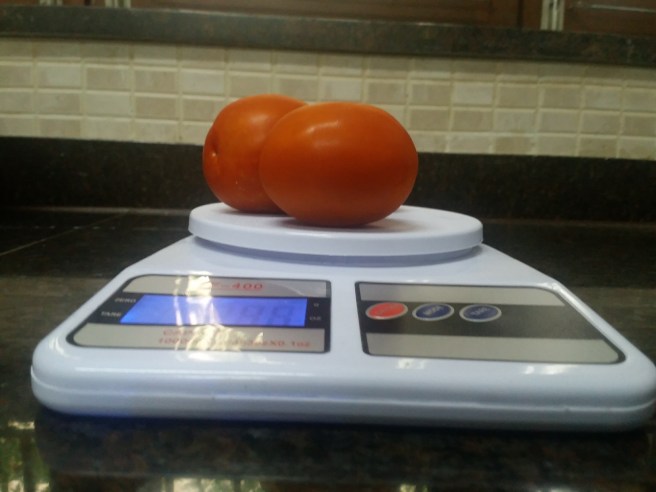
On 20 May this year the definition of kilogram changed. The new definition fits in with the modern definitions for the units of time (second) and distance (metre).

weights

Most of us grew up using the metric system which is an internationally recognised decimalised system of measurement used to measure everyday things such as the mass of a sack of rice, the height of a person, the speed of a car, and the volume of fuel in its tank.

It is interesting to go into the history of this system. The metric system was introduced by the French after the French Revolution at the end of the 18th century, at a time when there was a chaotic state of thousands of traditional units of measurement in use. Twelve scientists were appointed to organise a universal and accurate system of measurement. They chose ‘metre’ after the Greek word for measure ‘metron’; and for simplicity of multiplying and dividing they decided to base it on the number ‘ten.’ One metre was to be one-tenth millionth of one quarter of the circumference of the Earth, measured from the Pole to the Equator.

By 1795 all metric units were derived from the metre, including the gram for weight and the litre for capacity. At first people were reluctant to accept the new measures but in 1840 they were legally enforced and there were punishments for those who refused to use the metric system.

The history of the predecessor to the Kilometre—the Mile, can be traced back to the Romans who invented a way of measuring distance in footsteps. A Mile was a thousand footsteps. The Romans marked their miles with special stones called Milestones.

Measuring land was difficult in olden days. Sometimes fields were measured according to how much land could be ploughed by a pair of oxen in one day.  In an unusual way of measuring land—if someone wanted to buy land, coins were put around the edges of the piece of land with all the coins touching each other. The cost of the land was said to be the number of coins that it took to surround it.

Today the global standards for measurement are set by the International Bureau of Weights and Measures which is located in Sevres near Paris. It is this international laboratory where international standards are kept; national standard copies inspected, and metrological research is conducted. The General Conference on Weights and Measures (CGPM), with diplomatic representatives of some 40 countries, meets every six years to consider reform. The conference selects 18 scientists who form the International Committee for Weights and Measures that governs the bureau.

As science advances so does precision, and today measurements are finely honed towards a hundred per cent accuracy. Thankfully, for most of us laymen this fine tuning does not mean too much change. News reports assured us that the ‘new improved’ kilogram would not impact weight watchers or grocery shoppers.

–Mamata


Aspirations

The last few weeks, my newspapers have been full of news about newly-crowned Queens. There is a Miss World, and a Miss Universe, and numerous other regal titles bestowed on young girls. So far so good.

As a passive observer peeping through the window of the pages of my newspaper, over the years I have been noticing how the run-up to such pageants is becoming more and more elaborate and ostentatious. Qualifying rounds are held in different cities, in the most luxurious hotels. Several glossy pages of the paper feature spreads of photographs of the pretty young ladies going through a variety of activities in different settings, clad to the nines in appropriate designer wear. There is an ever-growing list of event partners—dress designers, hair stylists, skin gurus, make-up magicians, tutors to (re)teach the girls how to walk and talk, and so forth. And, of course how can all this work without the sponsors? So you have sponsors for everything from the eyes to the toes–Miss Expressive Eyes, Miss Dazzling Teeth, Miss Scintillating Smile, Miss Satin Skin, Miss Shining Hair—and on till there is nothing left to miss!

Possibly thousands of girls apply for these pageants with these very visions becoming the stuff of their dreams. I suspect that even as they start the process, so much time and hard-earned money is spent in preparing the portfolios to enter the race. For those “lucky” ones who make it through the various rounds, the metamorphosis begins as they are taken through the paces. But behind the scenes? A bunch of still naive girls living in close proximity, in a fiercely competitive environment–I cannot begin to imagine what the atmosphere will be like—the anxieties, the hostilities, the petty politics, the pressures. As murky as the intrigues in the court of a royal family!

The newspapers kindly give us ‘”the underprivileged outsiders” glimpses into the culminating moments of the qualifying events. The full spread pictures of an array of pretty girls with similar hairstyles, smiles and dresses makes it difficult to tell the difference between them. Until voila—we have the coronation of the Queens. Usually the brouhaha ends there. This year there has been a follow up. We also had the privilege of following the Queens as they visited their “native places”—the town or village that their family hailed from. We saw pictures of cheering crowds, motor cavalcades, cameramen and interviews and family and village elders welcoming their local girl who became Queen.

And I think—Is this the role model for all the young girls in the small towns and villages? Is this what it means to have “arrived?” Is this what parents dream of for their daughters from the day that they are born? Aspirations!

It is a very worrying trend. One observes young girls (almost children) being accompanied to beauty parlours for a host of grooming and beauty treatments. Parents spend much money on consulting nutritionists and dieticians, trainers and gyms, and of course the latest fashion in clothes. “Looking good” becomes the end all and be all. Aspirations!

An even more frightening extension of this is the pushing of young children into the numerous reality shows. I am appalled at the occasional glimpse of children cavorting to Bollywood numbers dressed in vulgar outfits and plastered with make-up. A recent piece about a five-year old girl who won a dance show talked about her childhood in a slum of Kolkata, and how she has made her parents so proud. Her dream is to live in all all-pink fairy tale house. Aspirations!

How disturbing. How sad that in a country where we are still talking about Save Our Daughters, Educate Our Daughters, we seem to be building aspirations that promote superficial showmanship, branding, and objectification of our daughters.

–Mamata

Nature Deficit Disorder

Among the many new medical disorders that have entered into our consciousness and everyday vocabulary in the last decade or so, a new one was added in 2005— Nature Deficit Disorder. The term was coined by Richard Louv as a way to describe the psychological, physical and cognitive costs of human alienation from nature, particularly for children in their vulnerable developing years.

As we live in our concrete jungles, increasingly cut off from the sight, sound and feel of Nature, these senses are steadily diminishing. Increasingly medical research is now proving that our sedentary lifestyles or “epidemic of inactivity” is the cause of a host of appropriately-called ‘lifestyle diseases.”

Richard Louv in his book Last Child in the Woods: Saving Our Children From Nature-Deficit Disorder expressed his apprehension at the growing phenomenon of alienation from Nature, and built a case for consciously building closer links between young children and Nature, through opportunities to go outside, be in Nature, and learn from Nature.

Times have changed—and not for the better. Almost fifteen years after Louv articulated his concern, the “wave from the West” has reached our homes in India, as it has most parts of the world. Children don’t seem to get as much opportunity to play outdoors and explore and discover independently anymore; meeting friends is usually organised and supervised in “play dates” rather than children spontaneously getting together and simply “mucking and mooching around!” Yes, there are genuine issues—safe spaces, security and time; but this over-protectiveness can actually be detrimental to children’s health, if they don’t get enough outdoor time and experiences. Difficult though it is, while we as parents, leave no stone unturned to give our children the best opportunities that money can buy for their all-round development, are we giving them enough exposure to the outdoors? For children and their development Nature is not “optional”, it is as essential as a healthy diet for growing up.

I do believe that the same formula applies equally to adults. Nature and the outdoors are vital for our physical and emotional development and well-being; it is only here that can we encounter all four non-negotiable sources for self-development: freedom, immediacy, resistance and relatedness (connection). In fact, it is for us to take the lead.

An even more alarming trend has been towards the gradual deficit of Nature, even in our language. Since 2007 the Oxford Children’s Dictionary has been dropping words related to nature to replace them with words that they felt better represented the present day and age. Acorn, Buttercup, Conker gave way to Attachment, Blog, and Cut-and-Paste. In 2015, some of the world’s most prominent authors composed an open letter of protest and alarm at this impoverishment of children’s vocabulary by replacement with words “associated with the increasingly interior, solitary childhoods of today,” and its consequent diminishment of children’s belonging to and with the natural world. A frightening manifestation of Nature Deficit Disorder. The authors expressed their distress that such culling of words would “deny children a store of words that is marvellous for its own sake, but also a vital means of connection and understanding.”

As one of the authors said, “If you can’t name things, how can you love them?”

–Mamata

crabs claw close 2.jpg
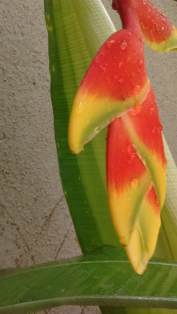
A flower by any other name…Crab’s Claw 

On Time

“Time you old gypsy man, will you not stay? Put up your caravan just for one day?

hourglass.jpg
Source: Google

These lines from a poem learnt by rote in school, still remembered. Time had a different connotation when one was just fifteen. It was more about the “present”, and something one needed to cram in all the activities of teenage life.  Today with several decades behind one, Time is more about looking back, while Time the old gypsy man seems to be flashing past at the speed of light.

Today we live “by the clock”. Not only are our daily activities monitored by the clock, we depend on Apps to remind us to get up, to drink water, and to call our friends. Interestingly, the regular linear time line, cut up into days and weeks, is barely two and a half centuries old. In ancient times, time-keeping was more of an art than a science. People in most old civilizations relied on natural events–the turn of the seasons, the waxing and waning of the moon as some ways to measure time.  Different cultures had their own ways of measuring time.

The concept of time has always been relative and contextual. An essay that I read explores these dimensions of time through different cultures and history. Titled Cartographies of Time, the two-part essay by authors Jonny Miller and Dorothy Sanders is fascinating reading. Sharing some excerpts.

In Madagascar if you asked how long something was going to take, you might be told it would be “the time of rice cooking (about half an hour) or “the frying of a locust” (a few minutes).

For monks in Burma there is no need for alarm clocks. They know when it is time to get up when “there is enough light to see the veins on their hand.”

The Andamanese, a tribe that lives on the Andaman Islands have constructed an annual calendar built around the sequence of dominant smells of trees and flowers in their environment. Instead of living by a calendar, this tribe “simply smell the odours outside their door.’

The Amondawa tribe that lives in the Amazon Rainforest have no specific word in their language for ‘time’ nor do they determine any discrete periods of time such as a month or a year. They only have divisions for night and day, and rainy and dry seasons. Even more intriguing is that nobody in the community has an age. Instead they change their names to reflect their stage of life and position within the community. What a wonderful way to go through life, rather than our obsession with the number of candles on a birthday cake!

The fact remains that time, at least the way we understand it today, is always passing. But what we make of it, is entirely up to us.

As the Dalai Lama has said: “Old friends pass away, new friends appear. It is just like the days. An old day passes, a new day arrives. The important thing is to make it meaningful: a meaningful friend, or a meaningful day.”

–Mamata


Distances Are Measured In..

Musings as the monsoons approach….


How strange to live in a world (or shall I say, a city)

Where distances are measured not in units of length

But in units of time!!

So that when Kiran says

“I am at Bannerghatta. How far is your place?’

I say not ‘10 kms or 12 kms’

But ‘40 minutes–keep your fingers crossed’.


And distances depend on time of day and day of week!

So that when Pramod asks me on a Sunday afternoon

‘How long will it take me to get to your place?’

I say ‘I will put on the tea. You can be here in 10 minutes.’

But when his wife calls on Tuesday evening and asks me the same question,

I say ‘Oh, oh! Our other guests will be here in 15 minutes,

And its going to take you at least 45!’


They also depend on time of year

For after the monsoons, when the roads are more holes than road,

A 1 km stretch is a 15-minute ride

While in winter, with the roads freshly—if superficially—done up,

It is a whiz-past of 2 minutes!


And did you know, distances depend on who is in town?

For when the PM or the FM or any other M visits,

We count distances in hours, not in minutes.


My science teacher, who poor soul,

Lived in as high an ivory tower as is possible,

Will be most deeply disturbed

Because it seems

That nothing is absolute anymore!


–Meena Raghunathan


PS: I live in Bangalore, most notorious of all cities in regard to traffic. But many others are not far behind, unfortunately. When will we plan for sustainable cities?

Our Life Our Story

The wonderful tradition of keeping diaries and journals is ages old. The exercise of recording one’s thoughts, memorable moments, and pouring out teen-age angst was pretty much a part of our growing up years. And now, many years down history as it were, revisiting these is a wonderful trip down memory lane. Sadly in this an age of instant communication (often only in limited characters) and fleeting memory, there seems to be no time to spend on recording what will, some day, be history—our own and that of the world we live in.

The recent engagement of the Matriarchs in developing textbooks for young children has brought us again and again to the challenge of ‘how do we instil in children a sense of history?’ Not history in terms of dates and names and events, but the idea that where each of us is today, is one point in the continuum of time and generations. In this age of small nuclear (and often single-child) families, the tradition of oral histories passed on through generations seems to be getting lost. Children need to know “where do we come from, what is our family like, what have we learnt from our family experiences and history?”

Well here is someone who is trying to address similar concerns in a new way through History Hive, the brainchild of Moon Moon Jetley, a historian and researcher, who looks beyond academia.

Moon Moon and I worked together on a project last year, and bonded over many shared interests, and love for cold coffee and French fries! I was excited when she told me about her project-in-making for trying to connect people with history in an innovative way.

This is now up and running as History Hive, with its first product My History Kit. The inspiration behind the kit is personal history and the necessity to record it. This is a hands-on creative history experience that helps its users to connect with, and record their personal history with family stories, experiences and milestones. The kit contains a journal, a map, a dice and a puzzle. The Journal is a space to write your own story, the dice is a writing prompt, the puzzle a fun element, and My History Map is a space to creatively recreate your story, not only in words but by sticking mementos of the moments—pictures, souvenirs and anything associated with the experience.

The kit can be used by a wide age group (15-95 years) and people from diverse professions–doctors, writers, lawyers, home makers, teachers, travellers, entrepreneurs, start up owners, actors, and just about anyone who wants to tell, and keep their own stories.

Make your own history! Check out https://www.historyhive.in/

–Mamata


The Worshipful Bull

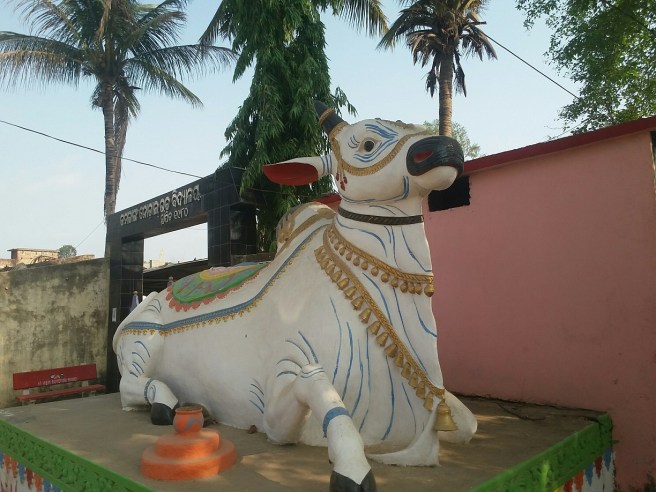
In Indian mythology, Nandi the bull is both the guardian of Mount Kailash, and the vehicle of Lord Shiva. The worship of Shiva and Nandi goes back to the time of the Indus Valley Civilization. The bull-seals found in Mohenjodaro and Harappa  have led some researchers to conclude that Nandi worship goes back many thousands of years.

A statue of a seated Nandi is often found in front of Shiva temples, facing the God. In metaphysical terms, Nandi represents the individual soul, looking to unite with the universal soul or Shiva. At a mundane level, people often use Nandi as a communication medium, whispering wishes into his ears, so that he may convey them to Shiva, who may listen to him more readily than to us!

Why suddenly this interest in Nandi? Because I was in Orissa this week, and did a three-hour road journey and also visited 5-6 villages.

Still doesn’t explain it?

nandi

Well, it was the number of Nandi statues I saw in this time. Almost every hamlet and village had one. Pretty big and prominent. Sometimes the shrines they were in front of were smaller than the Nandis. And there were also some stand-alone Nandis! They were in all shapes and sizes.  A few small, most medium sized and a few really large. Some smiling, some serious, some with inscrutable expressions. Some puny and under-fed, some healthy. Some in proportion and some not-so.  But Nandi, after Nandi, after Nandi.

I have travelled to several states. I have seen ever-increasing number of stand-alone Hanuman statues; and several Shiva statues. But as far as I can recall, I have not come across so many Nandis. I am not sure why there should be so many in Orissa particularly, because traditionally, large Nandi statues are more prevalent in the South—Andhra Pradesh, Karnataka, Tamilnadu. But I do not recall that Nandi statues are found so commonly in these states.

The largest bull statue is in the Mahanadiswara Swamy temple in Kurnool, AP. It stands 15ft by 27 ft. This is followed by the bull in the Lepakshi Temple, also in AP. Other prominent Nandis are the ones at Chamundi Hills, Karnataka, Brahadishwara Temple, Tamilnadu, and of course, Banagalore’s own Bull Temple. Orissa does have one of the big 10 Nandis, at Bhanjanagar town.

But I think the state must beat all simply in the number of Nandis dotting the state scape. These are not old—would not think many are over a decade in age. It would indeed be interesting if someone could undertake a study to understand why there is such a proliferation in recent times. Wish it could be me, but sadly, I don’t think I can do it at the moment. So when I go back to Orissa, I will content myself with just looking out for them, counting them and clicking them

–Meena

What-a-Melon!

What is red and green and white,

And a summer delight?watermelon slices.jpg

Watermelon!

This uncomplicated sweet and juicy fruit has always marked the onset of summer (prelude to the more sensuous, refined flavours of the mango!).

A recent family discussion on whether there was more to this melon than a lovely colour, sugar and water led me to explore. This is what I discovered!

Yes, it is 91.5% water, and thus a great antidote to dehydration; the juice is also full of good electrolytes which can even help prevent heat stroke.

But what else?

Watermelon is great for your health! It not just refreshes, a watermelon…

Is loaded with vitamin C and vitamin A, and contains essential minerals like potassium.

Has dietary fibre for digestive health.

Is bursting with lypocene which is considered to be a super antioxidant that prevents damage to cells and immune system.

Contains a natural substance called citrulline that is said to improved artery function and lower blood pressure, as well as protect against muscle pain. Watermelon juice before a gruelling workout may help reduce muscle soreness. But guess where citrulline is concentrated most? In the white flesh near the rind, which also has blood-building chlorophyll! So instead of throwing this away–try putting it in a blender with some lime for a healthy, refreshing treat.

And for something that tastes sinfully good, it is fat-free, and very low in sodium and calories.

Curiously the watermelon (Citrullus lanatus) wears a dual hat of being fruit as well as vegetable, belonging to the Cucurbitaceae family which includes cucumber and pumpkin.

It is believed to have originated in the Kalahari desert of South Africa. It may have been carried by seafaring merchants across the world–as far as China which is today said to be the highest producer of watermelons. It is believed that it reached the United States with the slaves from Africa.  Today watermelon is the most consumed melon in the United States, where July is celebrated as National Watermelon Month!

And we thought that it was our own special summer delight!

What-a-Melon! Supermelon!

–Mamata