Nom de Plume

My library has recently acquired the complete set of Agatha Christie novels in attractive new editions. They take up two long shelves and I was immediately drawn to them. As with most of my generation, Agatha Christie was a must read. We were intrigued and impressed by the eccentricities and grey cells of Hercule Poirot and the genteel but no-nonsense sharp mind of Miss Jane Marple.

Agatha Christie, the Queen of murder mysteries, outsold, it is said, only by the Bible and Shakespeare! The best-selling novelist of all time with her 66 detective novels and the world’s longest-running play The Mousetrap.

While I was browsing the shelves, I also saw books by the name Mary Westmacott alongside. And it is these that I decided to explore. These are the books that Agatha Christie wrote under the pen name or pseudonym Mary Westmacott. Why a pen name? Explaining this in a piece written for her centenary celebrations in 1990, Christie’s daughter wrote “As early as 1930, my mother wrote her first novel using the name Mary Westmacott. These novels, six in all, were a complete departure from the usual sphere of Agatha Christie Queen of Crime.” The novels explored human psychology and emotions and relationships that intrigued her, in a genre that was totally different from her murder mysteries, and writing under a different name freed her from the expectations of her mystery fans.

How did she choose the name? It seems that Mary was Agatha’s second name and Westmacott the name of some distant relatives. She succeeded in keeping her identity as Mary Westmacott unknown for nearly twenty years and the books, much to her pleasure, were modestly successful.

I have so far read two of her six Westmacott novels and am enjoying the language, style and substance greatly. They so sensitively capture what seem to be very contemporary intricacies of human psyches and complexities of relationships, even though they were written in the period of 1930s and 1940s. One of these, Absent in the Spring, was published in 1944. About this book Agatha/Mary wrote: “I wrote that book in three days flat…I went straight through…I don’t think I have ever been so tired…I didn’t want to change a word and although I don’t know myself of course what it is really like, it was written as I meant to write it, and that is the proudest joy and author can have.”

Using a nom de plume has been common throughout the history of literature. Authors have adopted pseudonyms for different reasons. Some to make their voice heard under authoritarian regimes; some to break the mould of what their readers expect from them, and, in some cases, women have used masculine noms de plume during times when men had an easier time getting published. While the phrase nom de plume means “pen name” in French, it doesn’t come from French speakers, but was coined in English, using French words.

An antithesis of Agatha Christie is JK Rowling, who after her huge success as the creator of Harry Potter, moved from Muggles and Magic, to murder and detective Cormoran, under the name Robert Galbraith. Her intention in taking on the nom de plume was for her crime fiction books to be judged on their own merit.

As for me, Christie or Rowling, by any other name, are favourite reads all the same!

–Mamata
 

And The Butterfly Flapped its Wings…

Edward Lorenz articulated this metaphor to imply that a small, inconsequential-seeming event can have huge unforeseen effects. He in fact drew the metaphor from weather phenomena, specifically, the details of a tornado (the exact time of formation, the exact path taken) being influenced by minor perturbations such as the flapping of the wings of a distant butterfly several weeks earlier.

Ironically, the cyclone that just struck Orissa and part of Andhra Pradesh coast, and caused heavy damage, is called TITLI—butterfly. Was the agency which names cyclones aware of this?

Anyway, the name is not the point. The damage is. As in the after-math of every disaster, lives and livelihoods have to be restored. And we have to learn from each disaster how to proof ourselves better against future disasters, and how we can handle the relief and rehab phases better.

These lessons are important for us. 87 per cent of India’s land is prone to one or the other kind of disaster—floods, droughts, cyclones, earthquakes etc. India is second among all countries affected by disasters every year. Over 50 million people are affected by disasters every year, and on an average, over 1 million houses damaged.

Cyclone is a natural disaster of meteorological or climatic origin. It is classified as an ‘immediate onset disaster’ (it manifests its complete effects in 1-7 days). The Bay of Bengal and Arabian Sea experience about 6-7 per cent of the world’s annual cyclones. The majority occur from October to December, and a smaller number in April-May. Though the percentage of cyclones hitting the Indian Ocean region is low, the wind speeds are moderate and the cyclones are relatively short lived and smaller in size, they cause heavy damage when they strike the coastal areas of Bay of Bengal. This is because the conditions of the region favour huge storm surges. The combination of high astronomical tide, shallow water and the special coastal configuration of north Bay of Bengal result in the generation of devastating storm tides.

These are the natural reasons. But humans have contributed hugely too. The destruction of coastal forests is a major issue. Mangrove tidal forests are natural cyclone barriers and invaluable protectors. But alas, these are disappearing. Rice paddies and prawn farming are cited as some of the reasons for this.

So Titli came and caused destruction. The preparedness and timely actions of the State and Disaster relief agencies have ensured that the destruction was less devastating that it could have been. But still, nine lives were lost.

Today is International Day for Disaster Reduction. A day to pledge that we will commit ourselves to at least halt the human exacerbation of destruction due to disasters, and to stand by those impacted by them.

–Meena

Acknowledgement: ‘Dealing with Disasters: Awareness, Preparedness, Response.’ Meena Raghunathan, Avanish Kumar. Centre for Environment Education. Ahmedabad. 2004.

What is Wild?

The first of week of October is marked as wildlife week in India. Wildlife safaris are advertised, with promises of sightings of lions and tigers and elephants.

How about a rethink on “What is Wild”?


Does it roar, does it growl? Is it beast, fish or fowl?

Inhabit rainforests or snowy peaks? Live in deserts, or the ocean deeps?

Does it have stripes, wear armour? Exotic feathers or thick fur?

Is it whiskered, huge and ferocious? Have claws on its paws, good gracious!

Does it grow wild in forests deep? Tangled in branches where monkeys leap?

That’s just where we all go wrong. Thinking wild is a lion or gorilla strong.

What’s wild can be large: a blue whale or an elephant.

But also teeny weeny: an amoeba, a mite or an ant.

Wildlife can be insect, reptile or bird. Living alone in a cave, or all in a herd.

It can be the trees in a jungle dark. It can be weeds in a garden or moss in a park.

It is the living things that we have not tamed; As pets in our house, or on farms retained.

That live on their own, as creatures free; In cracks in our homes, or up on a tree.

Lizards, spiders, weeds, rats and snails… Are wildlife as much as tigers or whales.

You don’t have to climb mountains or dive very deep. Plunge into dark jungles, or ride miles in a jeep.

There’s a wildlife safari you can take any day. Through home or garden or just along the way.

Just keep your eyes open and all your senses alert. Look out for these creatures, even in the dirt.

You’ll find the world around teeming with life. From tiny to enormous, you can call it all wildlife!IMG_20181001_091041103.jpg

–Mamata


A Tribute to Wildlife Researchers

Ravi Chellam, as a student and then faculty of Wildlife Research Institute of India, did his research on Gir lions. His work on understanding the lions, their threats, and the work he did for recommending an alternative habitat, were a huge contribution. This piece is a tribute at a time when his recommendations should be taken very seriously. Equally it is a tribute to so many other wildlife researchers from WII and other institutions, whose courage and commitment have helped preserve our biodiversity.

The following pieces are excerpts from Ravi’s piece ‘A Roaring Career’ in a publication titled ‘Walking The Wild Path’.

On the excitement of wildlife research:

‘A radio-collar is a piece of wildlife research equipment, which consists of a radio transmitter that is mounted on a collar made of some tough material.  The transmitter constantly emits signals, which enables the researcher to track and locate the animal that is carrying it.  The collar is for fixing the transmitter on the animal.  A very wide variety of organisms have been studies by this method of radio-telemetry, ranging from whales, elephants, lions, tigers, snakes, to even very small birds like the hummingbird.

Shortly, we heard the regular rustling of the leaf litter, a clear indication that a large animal was approaching us.  A large male lion emerged out of the shadows of the forest and it immediately saw the tethered buffalo.  It looked around, as if to check that there were no human being around and then rushed to kill the buffalo bait.  As the lion locked its jaws around the neck of the buffalo, it presented a clear and close enough target for Dr. Johnsingh.  The dart went into the rump of the lion.  Startled by the loud report of rifle, the lion left the bait and walked away into the forest.

We waited for about ten minutes, to allow time for the drug to take effect.  Then I cautiously led the search team to locate the darted lion.  It had not gone very far.  It was lying on the ground, barely one hundred meters from the bait.  I threw a level of immobilisation.  The lion responded by slowly lifting its head, and it was evident that the drug had taken its effect; but to safely work with the animal, we needed to give it an additional top up dose.  I crept up to the lion with two of my assistants and we soon physically restrained the drugged animal by sitting on its head and rump.  This enabled the delivery of the additional dose of drug by means of an injection.

Once the lion was completely immobilised, we fixed the radio-collar around its neck, took the required measurements of the lion’s body, treated the minor external injuries, weighed it and then left it in a cool place to recover.  I sat at the safe distance to monitor its recovery.’

And, on the vulnerability of the Gir lions:

‘Based on the results of my doctoral research I surveyed potential lion habitats to locate a suitable site for the translocation.  In January 1995, I submitted my report to the Government of India and since then efforts are underway to manage the forests of Kuno-Palpur in Madhya Pradesh for making them suitable for lions.

If this translocation effort is undertaken and succeeds, it will be a majof step in ensuring the log-term conservation of the lions and a major personal achievement for me.  Translocating large carnivores and ensuring their successful establishment in a new habitat is not an easy task.  People resident in the forest and the adjoining areas will always be worried about their personal safety and that of their livestock when a population of large carnivores is established.

Additionally, great care needs to be taken to ensure that the animals are captured and transported without causing any physical injury to them.  There are also many political angles to be considered.  This is in a way part of the challenge of doing wildlife conservation.’

From ‘Walking the Wild Path’. Mamata Pandya, Meena Raghunathan (eds). Center for Environment Education. Ahmedabad. 1999.


Will I Hear the Lion Roar?

Reports of the deaths, within a few weeks, of 23 lions of a pride in Gir Forest, the only home of the Asiatic Lion, have deeply disturbed us all.

Historically, the range of the Asiatic lion included South-eastern Europe, Black Sea basin, Caucasus, Persia, Mesopotamia, Baluchistan, and the Indian subcontinent from Sind in the west to Bengal in the east. (IUCN). Today Panthera leo persica is confined to the Gir Forest and its environs, in Saurashtra, Gujarat.

As per a 2015 census, there were only 523 lions and they were all in the Gir area. Nowhere else in the world!

‘The lions face the usual threats of poaching and habitat fragmentation. Three major roads and a railway track pass through the Gir Protected Area (PA). Also, there are three big temples inside the PA that attract large number of pilgrims, particularly during certain times of the year. There has been an increase in lion population, and more than 200 lions stay outside the PA. Though the conflict is not high now, with changing lifestyles and values these may increase in the future. There are also cases of lions dying by falling into the unguarded wells around the Gir PA.’ says WWF.

But the single most serious threat could be the fact that the population is confined only to one place. It is well established scientifically that any such population is vulnerable to threats of various types.

One obvious danger is the risk of genetic inbreeding arising from a single population in one place.

But the other, even more serious risk, as IUCN puts it, is: ‘The small pocket of distribution of the Asiatic lions has led IUCN to consider them an endangered species, in fears that if an epidemic or forest fire were to break out, the whole population of Asian lions would be wiped out from the wild.’

The worst fears are coming true. A single episode has brought a whole pride to the brink in a few days. What is the guarantee that the epidemic will not spread? We can only pray.

For decades, biodiversity and conservation experts have been advocating that some lions from Gir be re-located to another suitable habitat, after proper research and preparation, so as to create another viable population. It is not that efforts have not been made. Palpur Kuno Sanctuary in Madhya Pradesh has been identified, numerous studies undertaken and a lot of preparation done.

But Gujarat has refused to let the lions be re-located, claiming that these lions are the Pride of Gujarat.

No doubt they are! But they are also the universal heritage of humankind. The loss of a species is irretrievable and irreversible. When we lose a species, we lose something of ourselves. In such a situation, is there a ‘mine’ and a ‘yours’? Or is there only an ‘ours’?

Vasudhaiva kudumbakam.

–Meena


Time and Tide…

Time was of utmost value to Mahatma Gandhi. His day was meticulously scheduled, and every minute counted. A typical day when he was in the Ashram would be like this.

4.00 a.m. Get up from bed

4.20 Morning community prayers

5.00-6.10 Exercise and bath followed by study

6.10-6.30 Breakfast

6.30-7.00 Women’s education classes followed by prayer

7.00-10.30 Physical labour, activities and chores in the Ashram (latrine cleaning, helping in the kitchen, spinning)

10.45-11.15 Lunch

11.15-12 noon Rest

12.00-4.30 p.m. Physical labour, classes

4.30-5.30 Reading, meeting people

5.30-6.00 Evening meal

6.00-7.00 Meeting people

7.00-7.30 Prayer

7.30-9.00 Study, correspondence, meeting people

9.00 Go to bed

On Mondays he would maintain silence and complete all his pending work.

Bapu’s trusty personal time-keeper for years was a silver Zenith pocket watch with an alarm function. The watch had been gifted to him by young Indira Gandhi. For a man with few personal possessions this watch became his constant companion. To his great regret, it was stolen from him during a train journey to Kanpur in May 1947. Gandhi wrote in a letter “I may add that the one that was stolen had radium disc as yours has and had also a contrivance for alarm. It was a gift to me. But the cost then was over Rs 40/-. It was a Zenith watch.”

Interestingly, the watch was returned to him six months later by the thief who begged him for forgiveness. Shortly before his death, Gandhi passed on this legendary watch to his granddaughter and assistant, Abha.

The watch subsequently came into the hands of private collectors abroad. In 2009 it came up for auction as part of a lot of the Mahatma’s former belongings including his famous round spectacles, a bowl and dish as well as a pair of leather sandals. It was reported that these were bought by an Indian billionaire and returned to the country of their origin. From the Mahatma to Mallya…how time flies!

–Mamata


My Gandhi Year

One of the first assignments that marked my transition from Environmental Educator to Editor-at-Large as it were, was to work on redoing an exhibition gallery at the Sabarmati Ashram in Ahmedabad. The Gallery aptly called My Life is My Message was a chronological walk-through of Gandhiji’s life. I had, long ago read Gandhi’s Autobiography or The Story of My Experiments with Truth. As a student of political science, I had also studied Gandhi’s role in making an independent India. Now I was excited to be a part of this project because I felt it would give me a better understanding of the entire life and thought of Mahatma Gandhi.

And it was indeed a year when I discovered the many many facets of Mohandas Karamchand Gandhi!

These facets were revealed in Gandhi’s own words through the incredible collection of over 34,000 letters, articles and speeches, which have been complied in 100 volumes titled Collected Works of Mahatma Gandhi (CWMG). They have also been published in Hindi as Sampurna Gandhi Vanghmay and Gujarati as Gandhijino Akshardeh.

As fascinating as the contents, is the process that culminated in the volumes.

The mammoth project on translating and compiling all of Gandhi’s writings and speeches covering the period from 1884-1948, and almost 60 years of very active public life, in South Africa, England and India, was launched in 1956 by the Government of India under the supervision of a one-time advisory board formed of Gandhi’s closest associates. Most of the works were collected between 1960 and 1994 under the chief editor the late K. Swaminathan—who started the project when he himself was 64 years old. He continued on the project till he lost his eyesight when he was in his early 90s. The English CWMG project closed in 1994 with the publication of the 100th volume.

Gandhi wrote and spoke in three languages—English, Gujarati and Hindi. So the project involved not just collecting but also translating from the original to the other two languages. The compilation was to be published in all three languages. For each individual version there was a 25-35 member team including proof readers, translators and editors carefully handpicked for their knowledge of world literature, world religions and world history besides their professional expertise. They took around 40 years to translate the collected material.

The arrangement of materials is chronological with all items of a particular date, whether article, speech or letter being placed together. This gives the reader a picture of how Gandhi functioned and how he dealt with issues as they came up—dealing on the same day with matters of great public importance as well as concerning himself with intimate personal problems of individuals.

It is also astounding to find what a prolific writer Gandhi was, and how much writing he could manage in a tightly-packed day. For a great period of his life he did not take the assistance of any stenographer or typist and used to write in his own hand. When he was physically unable to write with his right hand he trained himself to write also with his left hand.

The 100 volumes of the English edition run into more than 50,000 pages; and CWMG has long been recognised as one of the finest examples of editorial and translation work undertaken anywhere in the world.

I had the incredible experience of working with the tireless and dedicated team in the Archives at Sabarmati Ashram, to track what Gandhi did, said and wrote day after day, through the original editions of the CWMG. To flip through the fragile yellowing pages and to read about the amazing variety of topics that Gandhi could think over, and write about, on any single day was uplifting and at the same time humbling. (We who feel so smug at turning out a 500 word piece in a day!).

It was the year I discovered Gandhi—a friend to children and the challenger to the Raj; the gentle nurse and the Satyagraha planner; the nature cure experimenter and the shrewd negotiator….and so much more.

Today this awe-inspiring treasure is available at the touch of a button through the Gandhi Heritage Portal—a digital platform that hosts the all the works of Gandhi, writings on Gandhi by other authors including books, tributes, journals and other media such as videos, photos, among others in 28 different languages from across the globe.

This in itself is a project that is as big in scale as the original compilation. Take a look at the world’s largest digital repository on Mahatma Gandhi www.gandhiheritageportal.org

–Mamata

Swadeshi and My Ratnam Pen

“(Swadeshi) means production and distribution of articles manufactured in one’s own country.”

“Swadeshi is that spirit in us which restricts us to the use and service of our immediate surroundings to the exclusion of the more remote…  In the domain of politics, I should make use of the indigenous institutions and serve them by curing them of their proved defects. In that of economics, I should use only things that are produced by my immediate neighbours and serve those industries by making them efficient and complete where they might be found wanting.”

Mahatma Gandhi

For Gandhiji, swadeshi was the key to independence. To him, swadeshi had several dimensions including the political—revolving around revival of indigenous institutions and their strengthening; and the economic—as a powerful tool for local production and therefore decentralized livelihoods.

Which brings me to the story of my Ratnam/Guider pen. Inspired by Gandhiji’s call for swadeshi, K.V. Ratnam started manufacturing fountain pens in Rajahmundry, Andhra Pradesh in 1932. Mr. Ratnam sent one of the pens to Gandhiji in 1935, and Gandhi wrote back to him (presumably with the gifted pen).  The shop(s) proudly display the quote: “I have used it and it seems to be a good substitute for the foreign pens one sees in the bazars.” Nehru is said to have made a trip to the shop during one of his visits to AP, to get himself a pen or two. One wonders which of his literary works were penned with a Ratnam! Ratnam pens were symbols of self-reliance and national pride!

My Rajahmundry Trip Helped Me With an Innoavtive Birthday Gift for My Husband

AFFD4873-7031-484F-8189-C6EF792B50F3

Today, Rajahmundry boasts more than one shop which are offshoots of this legacy of hand-made pens—two Ratnam Pen shops run by Mr. K.V. Ratnam’s two sons, and the Guider pen shop which also claims its lineage to this.

I have had the fortune of visiting Rajahmundry and two of these shops. It was an experience to go to the back of the shop and see a workman turning the pen and shaping it by hand! I bought more pens in more sizes and colours than I know people who still write with fountain pens! But those to whom I have gifted them, cherish them.

Not only for the historical connection, but also these pens write beautifully and are beautifully hand-crafted. They are highly prized by pen collectors and orders come in from across the world.

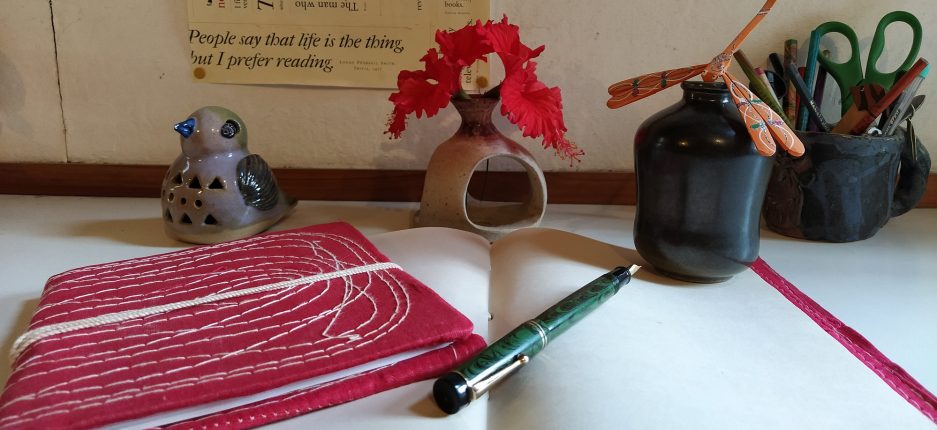
I may not be written about in history, but I can write with a piece of history!

–Meena

P.S: Even as the nation gears up to mark Gandhi Jayanti, here is a sad piece of news:

97-year-old school founded by Bapu closes as funds dry up – https://timesofindia.indiatimes.com/city/rajkot/97-year-old-school-founded-by-bapu-closes-as-funds-dry-up/articleshow/65987400.cms?utm_medium=referral&utm_campaign=iPadapp&utm_source=email


Bapu

While Gandhiji was the Father of the nation to millions, he was simply Bapu to the many children to whom he was friend, philosopher and guide. Many of these were the children of inmates of the Ashrams that Gandhji lived and worked from. Bapu always had time for the children—they would accompany him on his daily tasks, and he in turn would take them to task! Nothing was too trivial or beneath notice. Even when he was away from the Ashram, Bapu would include letters to the children, individual as well as collective, as part of his voluminous daily correspondence. No letter went unanswered, and every lack of response from a child was duly noted!

Here are just a few of the hundreds of letters that he wrote while he was detained in Yeravda jail in Pune in 1932, which reveal another side of Bapu as he fondly scolds, cajoles and motivates.

Dear Boys and Girls,

…Most of you cannot think what to write in a letter. …You should overcome this weakness. So many things happen every day around you that, if you properly observe them, you would be able to write enough to fill pages.  Why then should you be unable to think of anything to write about when you sit down to write to me? One can write all that one did or saw and thought during a day. You can say in the letter why you felt happy or unhappy on that day as the case may be. You may also say what good or bad thoughts came to you on that day.  It is possible that you are not sure whether you can write about these things in a letter. If so let me tell you that you need have no such doubts. You can write just as you would talk to me.      Blessings from Bapu.

[Letter to Ashram Boys and Girls      February 13, 1932]


Dear Boys and Girls,

All or most of you write to me on sheets taken out from exercise books. That is not right. It means waste of paper and slovenliness. You should use writing paper. …Those of you who feel sleepy during prayers should stand up without feeling shy. Even if you do a few pranayamas sitting down the sleepiness will go. One cannot sleep while doing pranayama. …A child may learn to read and write and still remain mentally dull. If you do not understand this fully ask me to explain again. Use your intelligence in doing everything you are asked to do. Even cleaning a lavatory requires intelligence. If you do not know how ask me.  Bapu

[Letter to Ashram Boys and Girls   June 24, 1932]


Chi Manu,
I got your letter. Your handwriting is improving now. For increasing your weight you should do exercise in open air and include sufficient milk and ghee in your diet. How much milk do you get? If I can say everything I wish to in a short letter why should I write a long one?     Bapu

[Letter to Mahendra V Desai   June 24 1932]


Dear Boys and Girls

…It seems that you have not still understood one special feature of the Ashram. It is that farm work, carpentry etc. are part of your education, and develop your intellect and some of the bodily senses.  If these crafts are taught as part of your education they would do more good, as I have already explained in one of my previous letters to the Ashram than a purely literal education does.  If you have forgotten what I said in that letter or cannot find that letter, let me know and I will write to you again about it, for the point deserves to be understood by all. Do not think that I say this because I wish to run down book learning. I fully understand its value. You will not come across many men who put such knowledge to better use than I do.  My purpose in saying this is to put training in crafts on the same footing as education in letters. …If you understand this fully, all of you will be ready to take out the cattle for grazing.  Bapu

[Letter to Ashram Boys and Girls   December 17, 1932]

[Source: Collected Works of Mahatma Gandhi]

On a more personal note. On reading these letters I discovered that I myself had met some of of Bapu’s children, (as friends and relatives of my parents) when I was much younger, and they were much older. They have since, joined their Bapu, but it gives me a frisson of excitement to feel a tiny link to Bapu today!

–Mamata

The Timeless Wisdom of Gandhi

This week, up until Oct 2, the posts will be dedicated to remembering Gandhiji. This issue, it is quotes from his writing, focussing on the ethical foundations of economics. As relevant today, as ever. As relevant at an individual level, as for a country. Food for thought indeed.

Earth provides enough for every man’s need, but not every man’s greed.

Popularized by Gandhi

Civilization, in the real sense of the term, consists not in the multiplication, but in the deliberate and voluntary reduction of wants.

Complete Works of Mahatma Gandhi. Vol 44, 103-104.

This mad rush for wealth must cease, and the labourer must be assure, not only of a living wage, but a daily task that is not mere drudgery.

Young India, 13 Nov 1924.

I must confess, I do not draw a sharp or any distinction between economics and ethics.  Economics that hurt the well-being of an individual or nation are immoral and therefore sinful. Thus the economics that permit one country to prey upon another are immoral. It is sinful to buy and use articles made by sweated labour.

Young India, 13 Nov 1924.

We may neither take nor keep a superfluous thing..

Harijan. 31 March, 1946.
The real meaning of economic equality is ‘To each according to his need.’

Harijan. 31 March, 1946.

A certain degree of physical harmony and comfort is necessary, but above a certain level it becomes hindrance instead of help. Therefore the ideal of creating an unlimited number of wants and satisfying them seems to a delusion and a snare.

CWMG. Vol  63. 241.

I will give you a talisman. Whenever you are in doubt, or when the self becomes too much with you, apply the following test. Recall the face of the poorest and weakest man whom you may have seen, and ask yourself if the step you contemplate is going to be of any use to him. Will he gain anything by it? Will it restore to him a control over this own life and destiny? In other words, will it lead to Swaraj for the hungry and spiritually starving millions? Then you will find your doubts and your self melt away.

CWMG. Vol 89. 125.

Economic equality …mean(s), however, that every will have a proper house to live in, sufficient and balanced food to eat, and sufficient khadi with which to cover himself. It also means that the cruel inequality that obtains today will be removed by purely non-violent means.

Harijan. 18 August, 1940.

–Meena

These are from a compilation I was lucky enough to work on, launched at the Gandhi Ashram by Mr. Steven Rockefeller, to commemorate the Tenth Anniversary of the Earth Charter.

Sarabhai, K., Raghunathan M., Modi A. (Compiled). Earth Charter & Gandhi: Towards a Sustainable World. Ahmedabad. Centre for Environment Education. 2010.