
The recent weeks have seen a number of news items starting with ‘Woolly…’. That is not very normal—the phrase ‘woolly-thinking’ is too archaic to be used as a pejorative across the lines in Parliaments.
But this bandying about of the word is neither from debates nor about shearing of sheep and records set therein.
The references all come from the world of science.
The first set of references stem from experiments of mixing mutations from the extinct mammoth and extant mice to create a woolly mouse! No, creating mice, woolly or otherwise, is not the purpose of the group of scientists which is working on this. The ultimate objective is to actually re-create the woolly mammoth itself. This is only a small intermediate step.
Now who would want to do such a thing, and why? Well, a company appropriately called Colossal Laboratories and Biosciences is behind this. Colossal refers to itself as a ‘de-extinction’ company. In a throwback to Jurassic Park, this company has retrieved the DNA of the 8-ton giant woolly mammoths which walked the earth over 4000 years ago from permafrost. They have mixed this with the genes of mice through complex gene-editing processes and have, after over three years of trials and experiments, created litters of normal sized mice which however have the ‘long, wavy, woolly hair of the mammoth’. They also have fat metabolism that mimics that of the giants. Colossal sees these mice as the first step in the route to actually re-create mammoths. They plan to work up to editing Asian elephant genes to express the traits of the woolly mammoth, and introduce the stem cells into an elephant embryo. The embryo would then be implanted into the womb of a female elephant, and lo and behold, a mammoth would be born to her!
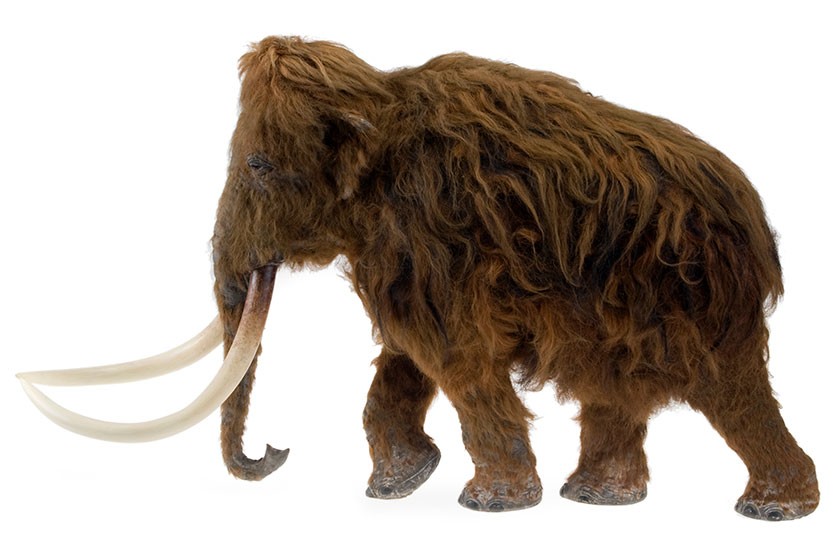
For those who thought only a few years ago that this was the height of woolly thinking, well, maybe with the birth of the woolly mice, they are re-thinking!
Apart from the mind-boggling technical prowess required however, there are many debates about the ethical and environmental dimensions of ‘de-extinction’. (A TED Talk by Stewart Brand titled ‘The Dawn of De-extinction: Are you Ready?’ offers interesting insights).
The second set of woolly references is nothing so controversial. It is the recent discovery of a flowering plant whose flowers, rather meanly, have been called Woolly Devils. The plant or the flowers don’t seem to do any harm to anyone, but have been so dubbed because the flowers are hairy-looking, have florets which resemble devils’ horns, and the plant has been discovered in the desert in Chihuahua (an ecoregion that covers areas of northern Mexico and the southwestern U.S., including west Texas, parts of New Mexico, and southern Arizona) along some paths in in an area known as the Devil’s Den. The plant belongs to variety known as “belly plants”—because scientists find it comfortable to study them while lying on their bellies!
How unfair it is to name this newly-discovered plant (Ovicula biradiata) as Woolly Devils is borne out by the fact that scientists think they may produce chemicals of medicinal value.
Only time will tell where the quest for the woolly mammoth leads, and what benefits the woolly devil brings us.
In the meantime, we can pray for an end to woolly thinking.
–Meena

 Millennial Matriarchs