
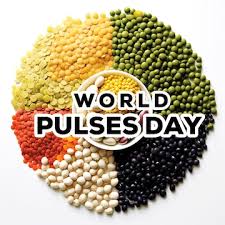
They are at the heart of every meal; they come in many colours, shapes and sizes; they can be used in a large range of permutations and combinations. They are the pulses that are an integral part of all cuisines in India. In a country with such immense diversity in culinary traditions, food habits, and meals, pulses are the one common as well as essential element. Our daily meal is incomplete with a dish made from a pulse, and many of our favourite snacks would not be what they are without pulses. Yet there is much that we have never stopped to really think about.
Technically pulses are the edible seeds obtained from the cultivation of leguminous plants for both food and feed. India has an immense diversity of pulses at the genetic and species level, as well as their uses at the culinary level. What makes pulses the original ‘wonder food’?
These seeds are a rich source of nutrients, mainly proteins, that are crucial for a healthy and balanced diet. It is estimated that 100 grams of dry lentils contain about 25 grams of protein. Thus pulses can become a backbone of a vegan diet.
They are naturally low in fat and contain no cholesterol, reducing the risk of cardiovascular diseases. They are also low in sodium chloride or salt which is a contributor to hypertension. They are high in potassium which plays an important role for digestive and muscular functions.
Pulses are a good source of iron and a great answer to address iron deficiency. The iron in pulses is best absorbed in the body by combining them with foods containing vitamin C. They are an excellent source of folate, a B-vitamin essential for nervous system function. They have a low glycaemic index, which makes them suitable for people with diabetes. They are naturally gluten-free, making them an ideal option for those who are gluten intolerant.
They can be stored for a long time and can be used even when fresh seasonal fruits and vegetables are not available. Their long shelf-life prevents food loss and wastage.
Pulses are incredibly versatile and can be used in an endless variety of cuisines and dishes in numerous forms.
That is so far as human health goes, and most people are, at some level, aware of these attributes of pulses (a lot of which is passed down through generations by family recipes and ‘granny’s words of wisdom’). But there is not as much awareness about the fact that pulses are as important for environmental health as they are for human health.
Pulses play a vital role in soil health by providing essential nutrients, maintaining soil biodiversity, and enhancing soil structure. They improve soil health by hosting helpful bacteria, called rhizobia, in their roots. These bacteria convert nitrogen from the air into fertilizers in the soil. Additionally, other bacteria and fungi help release phosphorus in the soil, providing essential nutrients for plants and promoting soil diversity. The fertilizers produced by pulses benefit not only the pulses, but also other crops grown alongside them, reducing the need for chemical fertilizers. This makes pulses ideal for sustainable farming practices like intercropping or crop rotation. Additionally, pulses and their by-products are utilized as animal feed.
The benefits are not limited to soil alone. Pulses also perform other ecosystem services. Many pulse species are drought tolerant and resilient to adverse climate, such as drought and heat. Their cultivation optimizes fertilizer use, thus reducing greenhouse gas emissions.
Pulse crops have a lower carbon footprint than most foods because they require a small amount of fertilizer to grow. They also have a low water footprint as they are adapted to semi-arid conditions and can tolerate drought stress.
Despite their immense value for human and environmental health, pulses are not generally ‘stars’; they are often undervalued and under-recognized. In an effort to highlight the importance, as well as potential, of pulses as a global food the United Nations declared 2016 to be the International Year of Pulses. As the then UN Secretary General Mr Ban-ki-Moon said: “The International Year can help overcome this lack of knowledge. Much work needs to be done to end hunger and provide food security and nutrition for all. One concrete, promising opportunity lies with pulses. Let us join forces to raise awareness of the benefits of pulses”.
As the world was embarking on efforts to achieve the newly-adopted Sustainable Development Goals it was hoped that this International Year would help raise awareness of the benefits of pulses globally. The year-long celebration was implemented by the Food and Agriculture Organization (FAO), a specialized agency of the United Nations. The year was a success, and recognizing the potential of pulses in further achieving the Sustainable Development Goals, since 2019 the United Nations General Assembly has designated 10 February as World Pulses Day to be celebrated every year.
This celebration is a recognition of the decisive role that pulses can play in achieving the comprehensive, far-reaching and people-centred set of universal and transformative goals and targets of the United Nations’ 2030 Agenda for Sustainable Development.
The World Pulses Day celebrations are an opportunity to raise public awareness about pulses and the fundamental role they play in the transformation to more efficient, inclusive, resilient and sustainable agrifood systems for better production, better nutrition, a better environment, and a better life, leaving no one behind.
This is a good day to look more closely at our own meal! What is the original colour of the pulse on your plate? Green, yellow, red, brown, orange, black, white…
In what form are you eating your pulses? As a Dal (sweet Gujarati or Punjabi tadka?) Rajma-chaval or chana puri? As a part of your idli-sambar? As the partner to rice in khichadi? As the coating on your pakodas? As the sweet moong dal halva or payasam? Each platter will have a different version of pulses!
Whatever the form and whatever the taste, pulses rule our plates and palates!
–Mamata

 Millennial Matriarchs
Loved reading this post! Taking it as a prompt to write about the growing/production side of it.
LikeLike