
Last week, we talked about the International Dolls’ Museum in Delhi. And we lamented about its not keeping up with the times and re-inventing itself.
A model from which it could draw inspiration is The Strong National Museum of Play, Rochester, New York, USA. It was established in 1969 based on the collection of one individual, Margaret Woodbury Strong, who by that point in time has collected over 27,000 dolls. Like Shankar who set up the Dolls’ Museum, she started by exhibiting parts of her collection and later added two wings to her palatial house to exhibit to select visitors. Over time, she started thinking about setting up a museum for the public. Margaret Strong died in 1969, leaving her collection and her wealth for a museum, which was finally opened to the public in 1982.
The Museum’s display of the collection of dolls is only a small part of what it does. It is ‘a highly interactive, collections-based museum, devoted to the history and exploration of play’ and sees itself as ‘the ultimate play destination of all ages’. To meet this mission, it has interactive exhibits in a space of 1,50,000 sft, online exhibits, the World Video Game Hall of Fame, a Play Lab which is a maker-space, and a Skyline Climb. The Strong Museum takes the effort to ensure that the experiences are accessible for people of all abilities. Many of the exhibits on the online museum are viewable to all of us on Google Arts and Crafts.
A very interesting initiative of the Museum is the National Toy Hall of Fame. Every year, the Hall of Fame recognizes and inducts toys that have ‘inspired creative play and enjoyed popularity over a sustained period’. The public (I think only those who live in America) are invited to nominate their favorite toys based on the following criteria:
- ‘Icon-status: the toy is widely recognized, respected, and remembered.
- Longevity: the toy is more than a passing fad and has enjoyed popularity over multiple generations.
- Discovery: the toy fosters learning, creativity, or discovery through play.
- Innovation: the toy profoundly changed play or toy design. A toy may be inducted on the basis of this criterion without necessarily having met all of the first three.’
What a wonderful way to engage with the community at large! The toys in the Hall of Fame include everyday objects, like sand which is one of the most popular materials for children to play with; blankets which children can make into anything from tents to disguises; to cardboard boxes which as we know are more interesting to kids than the most expensive toy packed inside. The list of course includes items created to be played with—from balls, playing cards, rubber ducks, girl-dolls, hoola-hoops, jump-ropes and jigsaw puzzles to Rubik’s Cube and Nintendo.
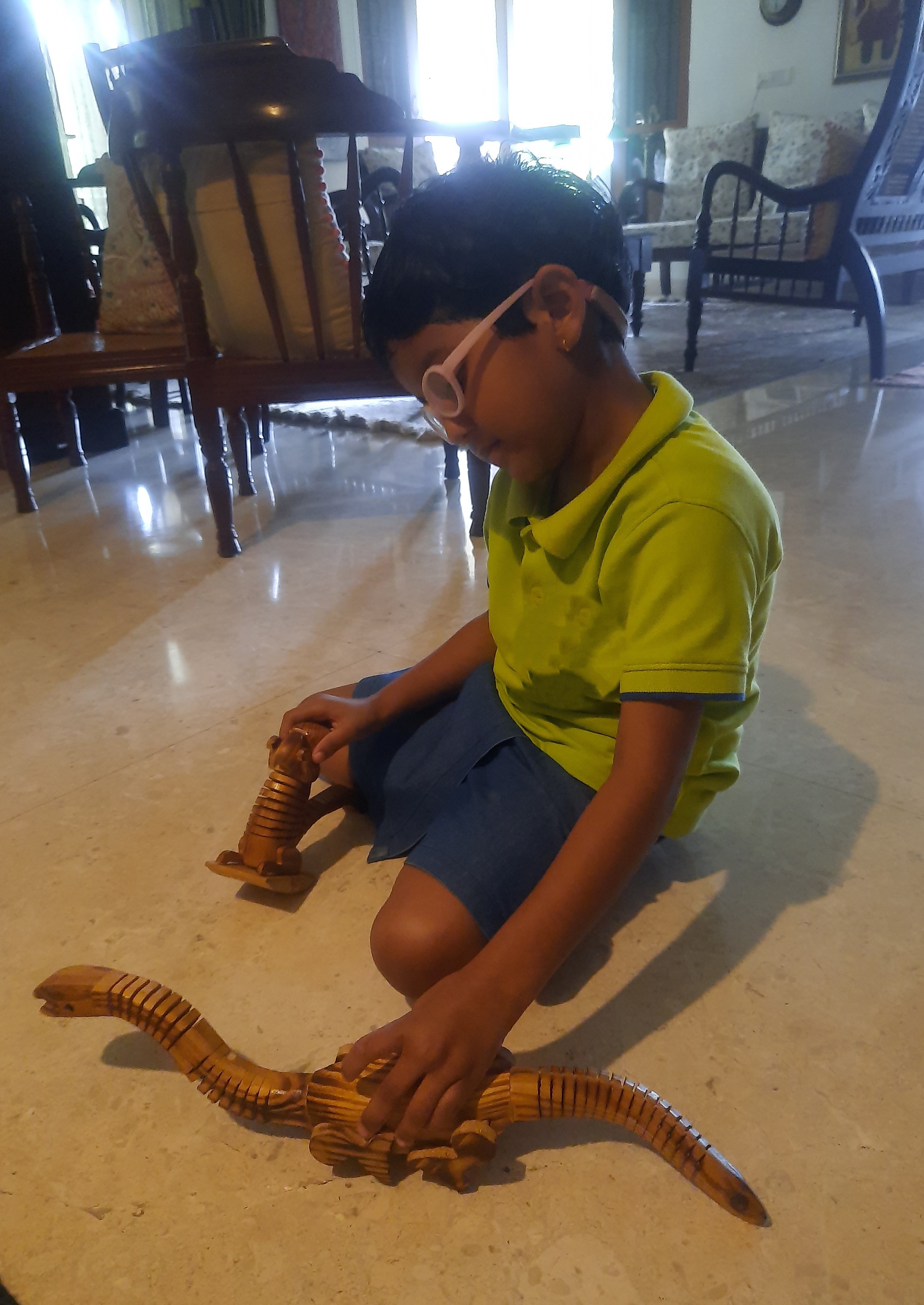
The Museum has the core philosophy that ‘Play sharpens minds and boosts creativity. When children play, they learn to solve problems, make decisions, express ideas and recognize boundaries’, the Museum focuses attention on educators, with special grade-related exhibits and lesson-plans for teachers.
The Museum plays a very serious role in research too. The Strong’s Brian Sutton-Smith Library and Archives of Play is devoted to the intellectual, social, and cultural history of play and is a 230,000-volume research library and archives of primary and secondary sources, including scholarly works, professional journals, periodicals, trade catalogues, children’s books, comic books, manuscripts, personal papers, business records, and more.
Another important collection is The International Centre for the History of Electronic Games which has 60,000 artefacts and thousands of archival material on the history of video games.
A third collection is The National Archives of Game Show History which ‘preserves the history of game shows—from the earliest panel shows and quiz scandals, to the games and puzzles of the 1970s, to the big money network series and the classic games now in primetime’.
So efforts on every front to be relevant to a wide audience, and to keep up with the times.
A lesson or two or three, our museums can learn?
–Meena

 Millennial Matriarchs