Pencil in the Dates: Stationary Fairs around the World

Two weeks ago, we dipped our toes into the pastel-hued wonderland of Japanese stationery. This week, starting from Japan, we do a world-trip of Stationery Expos.

Japan: Two Shows, Two Personalities

Japan doesn’t just have one stationery expo—it has two, each with its own character.

The Japan Stationery Show, held every November in Tokyo, is the country’s premier industry fair. Here, manufacturers reveal their latest innovations: notebooks that open perfectly flat, mechanical pencils that never break lead, and pens that glide like a brush. It is also home to the coveted Stationery of the Year awards, which often set the trends for the year ahead. Though businesslike in its purpose, the show is open to consumers too, making it a buzzing space where industry professionals and stationery fans meet.

The Stationery Girls Expo (Bungu Joshi Haku), by contrast, is pure celebration. Launched in 2017, it caters to bungujoshi—literally “stationery girls,” a term now used for anyone who adores stationery as a lifestyle. Here, washi tapes in hundreds of designs, pastel highlighters, limited-edition pens, and playful planners dominate the stalls. The mood is festival-like—queues of eager shoppers, arms full of bags, and excited chatter about the season’s “must-have” notebook. If the Japan Stationery Show sets the industry agenda, the Stationery Girls Expo captures the culture of stationery—personal, expressive, and joyful.

With the cheerful tagline “the most enjoyable event for stationery lovers,” this expo is playful, creative, and community-driven. Its name might suggest it’s just for girls, but the event welcomes anyone with a soft spot attractive staionary. Spread across several days in Tokyo and Osaka, it has grown into Japan’s largest stationery festival, drawing nearly half a million visitors cumulatively.

The expo is also known for its Bungu Joshi Awards, where visitors vote for their favorite products—categories range from Tokimeki Design (heart-fluttering design) to Heart-throbbing Convenience (products that spark delight through functionality). The audience becomes part of the show, giving the event a democratic, festival-like atmosphere.

What’s especially interesting is the shopping system. Each visitor is given a transparent bag at entry. As they wander through stalls, they pick up treasures and drop them into their bag, paying for everything at a central cashier. It’s a clever system that avoids long queues at individual stalls and keeps visitors free to browse. The expo also offers exclusive merchandise only available on-site—tiny rewards for the true devotees.

Germany and USA

Germany’s Paperworld (now merged with Ambiente), has for decades set the global benchmark. Here the focus is on sustainability, efficiency, and innovation. Think paper made from stone, packaging that biodegrades in weeks, and pens that feel like sleek machines. It is vast, professional, and very B2B—corporate buyers and distributors scanning stalls with intent.

Then there’s the US National Stationery Show (NSS) in New York. This one feels closer to Japan in spirit—independent designers, hand-illustrated journals, greeting cards that are art in themselves. The joy of paper and pen as a form of self-expression is what binds the NSS community.

India: Now taking Mainstage

And, did you know, India has its own Expos too—two of them!

A Stationery Fair has long been part of the well-known Delhi Book Fair. Last month saw not only the 28th Delhi Book Fair, but also the 24th Stationery Fair at Bharat Mandapam. “Besides promoting books of all genres, the aim is to focus on providing students with educational books and stationery,” says Hema Maity, general manager, India Trade Promotion Organisation (ITPO).

The newer entrant is the Stationery & Write Show which debuted in 2019 in Mumbai, co-located with gifting and lifestyle fairs. That first edition saw 272 exhibitors and over 12,000 visitors—a remarkable start for a new platform. By 2022, the event had grown into a three-in-one showcase—Paperworld India + Corporate Gifts Show + Interior Lifestyle India—drawing nearly 15,000 trade visitors and 215 exhibitors. Fast forward to 2025, and the growth is striking: 18,000+ visitors from 285 Indian cities and 49 countries, with 340+ exhibitors. The annual fair, usually held in late January at the Bombay Exhibition Centre, now rivals international events in scale. It has a Delhi edition too.

And the highlights? Eco-friendly stationery made from recycled paper, cork accessories, even moss-covered desk décor. Alongside these, educational toys, quirky notebooks, and premium pens jostle for attention.

What makes India’s fairs unique is the mood—serious business buyers walk the aisles, but so do college and school students and stationery lovers. It is equal parts trade fair and festival.

The Magic That Endures

Whether in Tokyo, Frankfurt, New York, or Mumbai, expos remind us that stationery is not just about function. It is about beauty, culture, even memory. And perhaps that is why, year after year, these fairs continue to draw thousands: they affirm that ink on paper still carries magic in a screen-dominated world.

–Meena
Casting a Spell

The Indian-American domination of a peculiarly American phenomenon—the Spell Bee—is something that intrigues me no end. Not to say Indian-Americans don’t excel in many pursuits out there, but these kids winning the national level spelling competitions year after year after year after year is quite something.

The American tradition of spelling competitions may have started with the Puritans. By the mid-18th century, spelling competitions were common across the country. In 1750, Benjamin Franklin apparently recommended their use in a proposal for a school. Spelling challenges were quite the rage with both adults and children in the 19th century. Mark Twain apparently mentions ‘spelling fights’ in Adventures of Tom Sawyer!

The use of the term ‘bee’ for these competitions started in the mid 1870s. It is an unusual usage of the word, as ‘bee’ usually refers to a community activity with a shared goal—like quilting bees or knitting bees.

English, with words from various sources and a variety of languages, probably peculiarly lends itself to this pastime. Afterall, I don’t think there can be much confusion how 99% of words are spelt in Tamil or Kannada or Oriya– languages with phonetic writing systems do not have so much confusion in spelling. Moreover, because English has borrowed words from many languages through its history, the result is a diverse vocabulary with inconsistent spelling patterns which are carried over from the mother-languages.

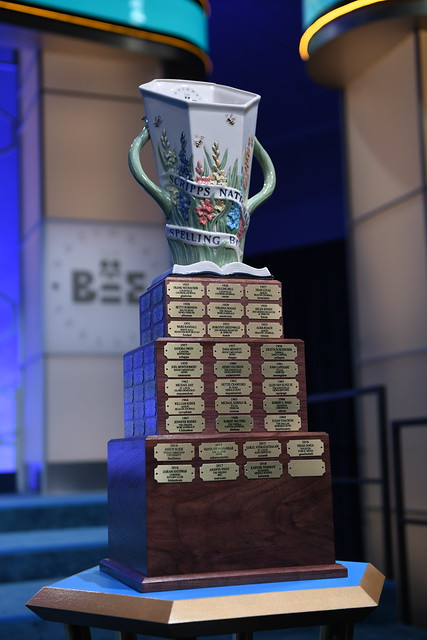
In the US, the National Spelling Bee, as we know it today, was established in 1925. The Louisville Courier-Journal was the first sponsor, who saw it as a way to foster interest in spelling and language. 

The E.W. Scripps Company acquired the rights to the National Spelling Bee in 1941. This company was started by E.W. Scripps who founded The Penny Press, a daily newspaper in Cleveland. Today, the company is involved in investigative documentaries and enterprise journalism with the purpose to ‘…advancing understanding of the world around us.’

The Spell Bee has been held annually, in late May or early June since its inception, except for a few years during World War II and in 2020 due to COVID-19.  It has evolved over time, beyond just spelling, encompassing vocabulary development and broader language knowledge. 

The first winner of the Spell Bee, in 1925, was Frank Neuhauser of Louisville, whose winning word was “gladiolus”. The next year saw a girl winning for the first time– Pauline Bell, also of Louisville, who spelt the word “cerise”. (Incidentally, girls won nine consecutive competitions from 1932 to 1940.)

Now coming to winners of Indian origin. 30 of the last 36 competitions have been won by them. Which is surely not a chance thing. Before 1999, there were only two spelling bee winners of Indian-American descent—Balu Natarajan in 1985, with the word “milieu”, and Rageshree Ramachandran in 1989 with “elegiacal”.  Nupur Lala opened the floodgates in 1999 winning with “logorrhoea,” and there has been no looking back since then! This year of course we celebrate Faizan Zaki, a 13-year-old Indian-American student from Texas, who won with the word ‘éclaircissement”

Rebecca Sealfon who won in 1997 against Prem Murthy Trivedi, has done some analysis on the subject of Spell Bee competitors, and tells us that children practice for about 500 hours in the years in which they compete; some hire ex-competitors as coaches; and they typically and unsurprisingly relax by playing word games like Scrabble or Boogle. Some try to learn every word in the dictionary. She further tells us that double ‘ll’ words are the ones which have tripped up a large number of contestants, along with the words ‘metastasize’ and ‘metonymy’.

Since I don’t know many of these words, and would certainly not be able to spell them, I can only express my wonder at these sub-14 year olds who can.

Kudos to all of you! You have cast a spell on me!

–Meena

Pic: https:spellingbee.comblogscripps-cups

Green Amber Red

Imagine that you are cruising along a highway; enjoying the smooth flow and passage of time and miles. On the other hand, imagine you are in a city, driving at the required speed, eagerly crossing the green lights, slowing at the amber, and every now and then, stopping at the red light. There is a sense in both the experiences; in both cases, a different kind of pace is set.

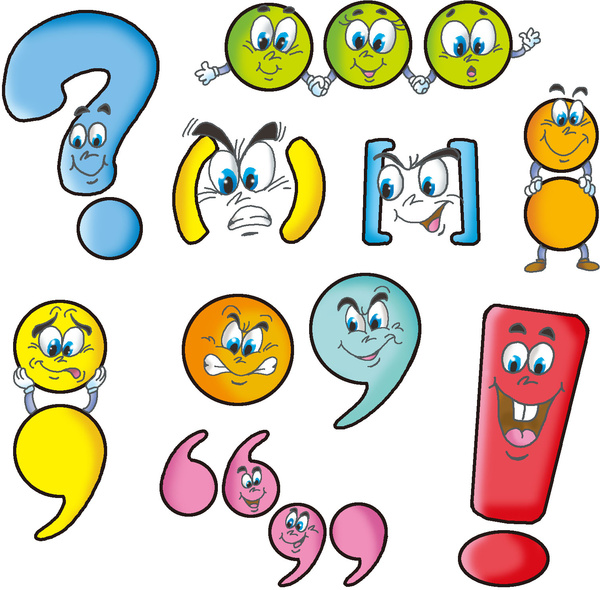
The act of writing could perhaps be compared to this. Every writer sets their own pace and rhythm of how the words flow. For some the long uninterrupted cruise is the mode of choice; others prefer the ordered structure of breaking the flow, sometimes with a pause and sometimes with a longer halt—from green to amber to red. It is the punctuation marks that represent these traffic lights.

Many writers have expressed their thoughts on these—essential parts of tImage result for image punctuation marks cartoonhe tools of their trade. Some have celebrated punctuation as the friendly spirits whose bodiless presence nourishes the body of language”,  while another believes that each writer has a lifetime quota of them, to be used judiciously. I myself have always enjoyed the mental exercise of fixing the appropriate place for the appropriate mark, and am always attracted by how authors perceive and practice the use of punctuation marks.
I recently read a delightful articulation of this in an article which had excerpts from an essay titled Notes on Punctuation by Lewis Thomas. Thomas was an American physician, poet, etymologist, essayist, administrator, educator, researcher and teacher. Amidst his serious research and writing, Thomas applied equal affectionate attention to the traffic signals, giving each one a distinct character and identity.

Sharing some in his own words.

, The commas are the most useful and usable of all the stops. It is highly important to put them in place as you go along. If you try to come back after doing a paragraph and stick them in the various spots that tempt you you will discover that they tend to swarm like minnows into all sorts of crevices whose existence you hadn’t realized and before you know it the whole long sentence becomes immobilized and lashed up squirming in commas. Better to use them sparingly, and with affection, precisely when the need for each one arises, nicely, by itself.

; I have grown fond of semicolons in recent years. The semicolon tells you that there is still some question about the preceding full sentence; something needs to be added; it reminds you sometimes of the Greek usage. It is almost always a greater pleasure to come across a semicolon than a period. The period tells you that that is that; if you didn’t get all the meaning you wanted or expected, anyway you got all the writer intended to parcel out and now you have to move along. But with a semicolon there you get a pleasant little feeling of expectancy; there is more to come; read on; it will get clearer.

: Colons are a lot less attractive, for several reasons: firstly, they give you the feeling of being rather ordered around, or at least having your nose pointed in a direction you might not be inclined to take if left to yourself, and, secondly, you suspect you’re in for one of those sentences that will be labeling the points to be made: firstly, secondly and so forth, with the implication that you haven’t sense enough to keep track of a sequence of notions without having them numbered.

!!! Exclamation points are the most irritating of all. Look! they say, look at what I just said! How amazing is my thought! It is like being forced to watch someone else’s small child jumping up and down crazily in the center of the living room shouting to attract attention. If a sentence really has something of importance to say, something quite remarkable, it doesn’t need a mark to point it out. And if it is really, after all, a banal sentence needing more zing, the exclamation point simply emphasizes its banality!

As for me, I do so love the comma, and simply cannot resist the !!!

–Mamata


Moon Tiger

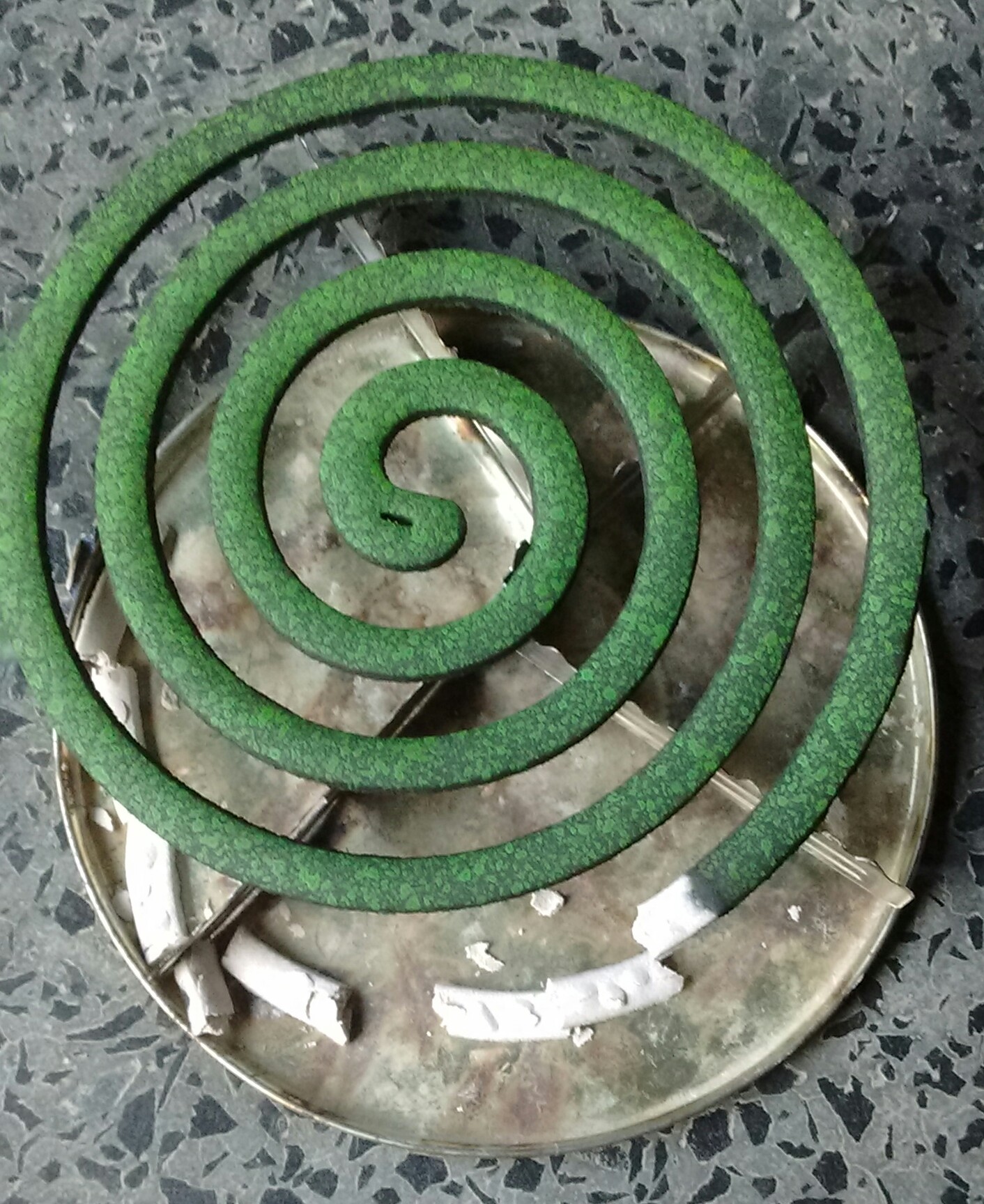
“On the bedside is a Moon Tiger. The Moon Tiger is a green coil IMG_20181211_082936 (1).jpgthat burns slowly all night, repelling mosquitoes, dropping away into lengths of green ash, its glowing red eye a companion of the hot insect-rasping darkness. She lies there thinking of nothing, simply being, her whole body content. Another inch of Moon Tiger feathers down into the saucer.”

When I read these words my eyes fell on the Good Knight coil by my bedside…and I looked at it with completely new eyes.  Imagine, this taken-for-granted necessity being described so eloquently. Even more interesting was the fact that this description refers to the period of the first World War II in Egypt when mosquito repellent coils were widely used and sold under the name of Moon Tiger. So much for my thinking that Good Knight was a very desi product of our times!

The revelation came as I was recently reading a book by the same name. Moon Tiger by Penelope Lively was published in 1987 and won the Booker Prize that year.

Moon Tiger is the tale told by Claudia Hampton, a beautiful, once-famous writer of history books, who lies dying in hospital. As she lies there she is conjuring in her mind ‘a history of the world … and in the process, my own’. Gradually she re-creates the rich mosaic of her life and times peopled with those near and dear to her. In doing so she confronts her own, personal history, unearthing the passions and pains that have defined her life.

The most poignant of these is her memories of her time in Egypt as a war correspondent and her brief affair with her one great love, both found and lost in wartime Egypt. The description of the Moon Tiger that burns all night, slowly dropping its coil into ash, forms both the central image of the story and its structure.

Penelope Lively, an acclaimed novelist and children’s writer was herself born in Cairo, Egypt, in 1933 and brought up there. In this novel she weaves an exquisite mesh of memories, flashbacks and shifting voices, in a haunting story of loss and desire. Moon Tiger is also about the ways in which we are connected to people, places, and history.

I have always enjoyed reading Penelope Lively, but this book soars above them all in terms of the language, the flow and the sensitive journey through the landscape of the mind.  The title itself is ‘a metaphor for the persistence of some experiences and the burning present-ness of some memories’.

Coincidentally I discovered this book this year—2018—the same year that the Golden Man Booker list, which chose one book for each of the five decades that the Booker Prize has been running, announced that Moon Tiger was the chosen book for the decade of the 1980s.

–Mamata

My Gandhi Year

One of the first assignments that marked my transition from Environmental Educator to Editor-at-Large as it were, was to work on redoing an exhibition gallery at the Sabarmati Ashram in Ahmedabad. The Gallery aptly called My Life is My Message was a chronological walk-through of Gandhiji’s life. I had, long ago read Gandhi’s Autobiography or The Story of My Experiments with Truth. As a student of political science, I had also studied Gandhi’s role in making an independent India. Now I was excited to be a part of this project because I felt it would give me a better understanding of the entire life and thought of Mahatma Gandhi.

And it was indeed a year when I discovered the many many facets of Mohandas Karamchand Gandhi!

These facets were revealed in Gandhi’s own words through the incredible collection of over 34,000 letters, articles and speeches, which have been complied in 100 volumes titled Collected Works of Mahatma Gandhi (CWMG). They have also been published in Hindi as Sampurna Gandhi Vanghmay and Gujarati as Gandhijino Akshardeh.

As fascinating as the contents, is the process that culminated in the volumes.

The mammoth project on translating and compiling all of Gandhi’s writings and speeches covering the period from 1884-1948, and almost 60 years of very active public life, in South Africa, England and India, was launched in 1956 by the Government of India under the supervision of a one-time advisory board formed of Gandhi’s closest associates. Most of the works were collected between 1960 and 1994 under the chief editor the late K. Swaminathan—who started the project when he himself was 64 years old. He continued on the project till he lost his eyesight when he was in his early 90s. The English CWMG project closed in 1994 with the publication of the 100th volume.

Gandhi wrote and spoke in three languages—English, Gujarati and Hindi. So the project involved not just collecting but also translating from the original to the other two languages. The compilation was to be published in all three languages. For each individual version there was a 25-35 member team including proof readers, translators and editors carefully handpicked for their knowledge of world literature, world religions and world history besides their professional expertise. They took around 40 years to translate the collected material.

The arrangement of materials is chronological with all items of a particular date, whether article, speech or letter being placed together. This gives the reader a picture of how Gandhi functioned and how he dealt with issues as they came up—dealing on the same day with matters of great public importance as well as concerning himself with intimate personal problems of individuals.

It is also astounding to find what a prolific writer Gandhi was, and how much writing he could manage in a tightly-packed day. For a great period of his life he did not take the assistance of any stenographer or typist and used to write in his own hand. When he was physically unable to write with his right hand he trained himself to write also with his left hand.

The 100 volumes of the English edition run into more than 50,000 pages; and CWMG has long been recognised as one of the finest examples of editorial and translation work undertaken anywhere in the world.

I had the incredible experience of working with the tireless and dedicated team in the Archives at Sabarmati Ashram, to track what Gandhi did, said and wrote day after day, through the original editions of the CWMG. To flip through the fragile yellowing pages and to read about the amazing variety of topics that Gandhi could think over, and write about, on any single day was uplifting and at the same time humbling. (We who feel so smug at turning out a 500 word piece in a day!).

It was the year I discovered Gandhi—a friend to children and the challenger to the Raj; the gentle nurse and the Satyagraha planner; the nature cure experimenter and the shrewd negotiator….and so much more.

Today this awe-inspiring treasure is available at the touch of a button through the Gandhi Heritage Portal—a digital platform that hosts the all the works of Gandhi, writings on Gandhi by other authors including books, tributes, journals and other media such as videos, photos, among others in 28 different languages from across the globe.

This in itself is a project that is as big in scale as the original compilation. Take a look at the world’s largest digital repository on Mahatma Gandhi www.gandhiheritageportal.org

–Mamata

Bapu

While Gandhiji was the Father of the nation to millions, he was simply Bapu to the many children to whom he was friend, philosopher and guide. Many of these were the children of inmates of the Ashrams that Gandhji lived and worked from. Bapu always had time for the children—they would accompany him on his daily tasks, and he in turn would take them to task! Nothing was too trivial or beneath notice. Even when he was away from the Ashram, Bapu would include letters to the children, individual as well as collective, as part of his voluminous daily correspondence. No letter went unanswered, and every lack of response from a child was duly noted!

Here are just a few of the hundreds of letters that he wrote while he was detained in Yeravda jail in Pune in 1932, which reveal another side of Bapu as he fondly scolds, cajoles and motivates.

Dear Boys and Girls,

…Most of you cannot think what to write in a letter. …You should overcome this weakness. So many things happen every day around you that, if you properly observe them, you would be able to write enough to fill pages.  Why then should you be unable to think of anything to write about when you sit down to write to me? One can write all that one did or saw and thought during a day. You can say in the letter why you felt happy or unhappy on that day as the case may be. You may also say what good or bad thoughts came to you on that day.  It is possible that you are not sure whether you can write about these things in a letter. If so let me tell you that you need have no such doubts. You can write just as you would talk to me.      Blessings from Bapu.

[Letter to Ashram Boys and Girls      February 13, 1932]


Dear Boys and Girls,

All or most of you write to me on sheets taken out from exercise books. That is not right. It means waste of paper and slovenliness. You should use writing paper. …Those of you who feel sleepy during prayers should stand up without feeling shy. Even if you do a few pranayamas sitting down the sleepiness will go. One cannot sleep while doing pranayama. …A child may learn to read and write and still remain mentally dull. If you do not understand this fully ask me to explain again. Use your intelligence in doing everything you are asked to do. Even cleaning a lavatory requires intelligence. If you do not know how ask me.  Bapu

[Letter to Ashram Boys and Girls   June 24, 1932]


Chi Manu,
I got your letter. Your handwriting is improving now. For increasing your weight you should do exercise in open air and include sufficient milk and ghee in your diet. How much milk do you get? If I can say everything I wish to in a short letter why should I write a long one?     Bapu

[Letter to Mahendra V Desai   June 24 1932]


Dear Boys and Girls

…It seems that you have not still understood one special feature of the Ashram. It is that farm work, carpentry etc. are part of your education, and develop your intellect and some of the bodily senses.  If these crafts are taught as part of your education they would do more good, as I have already explained in one of my previous letters to the Ashram than a purely literal education does.  If you have forgotten what I said in that letter or cannot find that letter, let me know and I will write to you again about it, for the point deserves to be understood by all. Do not think that I say this because I wish to run down book learning. I fully understand its value. You will not come across many men who put such knowledge to better use than I do.  My purpose in saying this is to put training in crafts on the same footing as education in letters. …If you understand this fully, all of you will be ready to take out the cattle for grazing.  Bapu

[Letter to Ashram Boys and Girls   December 17, 1932]

[Source: Collected Works of Mahatma Gandhi]

On a more personal note. On reading these letters I discovered that I myself had met some of of Bapu’s children, (as friends and relatives of my parents) when I was much younger, and they were much older. They have since, joined their Bapu, but it gives me a frisson of excitement to feel a tiny link to Bapu today!

–Mamata

A Soft Pause

I like the comma! It is perhaps my favourite among the punctuation marks! Many years ago when I started out as an editor, it was a comfort and joy to work with Kiran, my “commarade”, who an equally ardent follower of the comma! Over the many years of copy editing since then, I am finding that the comma is increasingly dispensed with (as are most punctuation marks, as emoticons take over). Most people see no use or value in it, or maybe they haven’t ever paused to think about it!

Ah commas, these often overlooked tiny squiggles that lend order, and often sense, to a sentence. While a full stop ends a sentence, a comma indicates a smaller break–as a soft pause that separates words, clauses, or ideas within a sentence.

Indeed that is what it was always meant to be. The word comma itself comes from Greek word koptein, which means “to cut off.” The comma, as we know it, was introduced by a 15th century Italian printer Aldo Manuzio as a way to separate things.

While word lovers like us value the comma, it takes a master word-crafter like Pico Iyer to eloquently express these sentiments.

“The gods, they say, give breath, and they take it away. But the same could be said — could it not? — of the humble comma. Add it to the present clause, and, of a sudden, the mind is, quite literally, given pause to think; take it out if you wish or forget it and the mind is deprived of a resting place. Yet still the comma gets no respect. It seems just a slip of a thing, a pedant’s tick, a blip on the edge of our consciousness, a kind of printer’s smudge almost. Small, we claim, is beautiful (especially in the age of the microchip). Yet what is so often used, and so rarely recalled, as the comma — unless it be breath itself?

(In Praise of the Humble Comma. Essay in Time Magazine 24 June 2001)

So there is the humble comma, and then, as I discovered, there is the Oxford comma! The Oxford or ‘serial’ comma is an optional comma before the word ‘and’ at the end of a list: We sell milk, cheese, and icecream. It is known as the Oxford comma because it was traditionally used by printers, readers, and editors at Oxford University Press.

While this may seem not so important to worry about, this little squiggle before an ‘and’ can create hilarity, or confusion. For example if you write ‘I love my parents, Amitabh Bachchan, and Mary Kom’ without that little squiggle before the ‘and’, you may end up, unwittingly,  being the offspring of AB and MK!  

A comma, then, is a matter of care. Care for words, yes, but also, and more important, for what the words imply!

–Mamata