The Matilda Effect: When Women-Scientists are Written Out

As appropriate to the month when we mark International Women’s Day, our pieces have revolved around women, their achievements and barriers to their growth. This week, we look at an uncomfortable historical pattern: how many of the contributions made by women have been ignored, minimized, or credited to men. This phenomenon has a name — the Matilda Effect.

The term was coined in 1993 by historian of science Margaret W. Rossiter, who used it to describe the systematic denial of recognition to women-scientists whose work was often attributed to male colleagues. Rossiter named it after the 19th-century American activist Matilda Joslyn Gage, who had earlier observed how women’s intellectual achievements were routinely erased from public record.

In simple terms, the Matilda Effect refers to the tendency for women’s scientific or scholarly contributions to be overlooked while men receive the credit.

Why the Matilda Effect Matters

Recognition is not just about credit; it shapes opportunity.

Academic promotions, research funding, leadership roles, and history are all tied to who gets acknowledged. When women’s contributions are under-recognized, it creates a cycle in which fewer women are visible as role models for the next generation.

Young girls interested in science, technology, engineering, and mathematics often search for people who look like them in positions of intellectual authority. When those figures are missing from textbooks and public discourse, aspirations can quietly narrow.

The Matilda Effect therefore operates not only as a historical injustice but also as a structural barrier to gender equity in knowledge systems.

History’s Striking Examples

Consider Rosalind Franklin’s whose X-ray crystallography images were critical to understanding the structure of DNA and enabled the breakthrough model proposed by James Watson and Francis Crick. Yet when the Nobel Prize was awarded in 1962, Franklin — who had already passed away — received little recognition for her role.

Another well-known case is of Lise Meitner, the Austrian physicist who played a key role in explaining nuclear fission. The Nobel Prize for the discovery went solely to her collaborator Otto Hahn.

India’s own intellectual history reflects similar patterns.

Take Janaki Ammal, the pioneering botanist and cytogeneticist whose work significantly advanced plant breeding and biodiversity studies in India. Despite her groundbreaking research, she remained far less publicly known than many of her male contemporaries.

Or Anna Mani, the pioneering physicist and meteorologist whose work laid the foundation for modern meteorological instrumentation in India. She played a crucial role in standardizing weather measurement systems and advancing research in solar radiation and wind energy, contributing significantly to India’s renewable energy potential. Despite the far-reaching impact of her work, she remained relatively under-recognized outside scientific and policy circles.

(MM blogs on these two amazing ladies are linked below)

Similarly, Asima Chatterjee, one of India’s foremost organic chemists, made pioneering contributions to the chemistry of natural products and anti-malarial drugs. Although widely respected within scientific circles, her name rarely appears in popular narratives of Indian science.

Signs of Change

Things are hopefully changing. An example is Tessy Thomas, often called India’s “Missile Woman.” As a senior scientist at the Defence Research and Development Organisation, she played a key role in the development of the long-range ballistic missile Agni‑V. Her journey from a small town in Kerala to leading strategic defence projects has made her an inspiration for many young women considering careers in engineering and defence research.
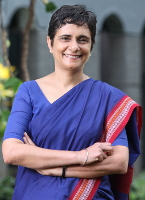
Another widely admired figure is Gagandeep Kang, a leading medical scientist known for her work on infectious diseases and vaccines. As the first Indian woman elected Fellow of the Royal Society in the field of biomedical science, she has become a powerful role model for girls interested in medical research and public health.

In the world of space science, Ritu Karidhal and Muthayya Vanitha gained national recognition for their leadership roles in India’s lunar mission Chandrayaan‑2 at the Indian Space Research Organisation. Their visibility during the mission helped reshape public perceptions about who leads complex scientific and technological projects.

Similarly, Nandini Harinath, another senior scientist at ISRO, became widely known after the success of the Mars Orbiter Mission, where she was part of the core navigation and mission design team.

Dr. Gagandeep Kang

What distinguishes these scientists is not only their technical expertise but also their public presence. Through lectures, interviews, and outreach programs, they actively encourage young girls to consider careers in STEM — science, technology, engineering, and mathematics.

Recognition is the first step. Structural barriers — from access to research funding to representation in leadership — still need attention.

Here is to women-scientists having their day and say in scientific research!

–Meena

Picture: Indian Academy of Sciences

​See Magnoila Lady Janaki Ammal https://millennialmatriarch464992105.wordpress.com/wp-admin/post.php?post=2994&action=edit

and Weather Woman Anna Mani at https://millennialmatriarch464992105.wordpress.com/wp-admin/post.php?post=3235&action=edit
In Pursuit of Criminals: A Women’s Day Special

Not chocolates and roses. Here is a Women’s Day post that is about gore and crime.

Though not often associated with forensic science, women down the ages and across the world have played a huge role in defining it. We celebrate a few of them.

The Dollhouse Decorator

At a time when women were expected to add beautiful touches to drawing rooms, Frances Glessner Lee was building miniature crime scenes.

Often called the ‘Mother of Forensic Science’, she started recreating dollhouse-scale reconstructions of unexplained deaths in exquisite detail. This stemmed from her inherent interest in solving crimes, and inputs from a close friend who was a medical examiner, who believed that investigators often disturbed crime scenes, missed small but critical evidence and jumped to conclusions too quickly.

These “Nutshell Studies” became training tools for investigators at Harvard University. Every curtain hem, every blood spatter, every overturned chair was re-created down to the smallest detail. Trainees had to study the model for a fixed amount of time, take notes, propose the cause and manner of death, and defend their reasoning. Thousands of police personnel were trained using these tools which contributed greatly to the professionalization of forensic science

Born in 1878 to a wealthy family, she was denied a formal education in medicine simply because she was a woman. Later in life, after inheriting a substantial fortune, she used her resources to support the emerging field of forensic science at Harvard University.

The Woman in the Mass Graves

Fast forward to the 1990s.

In post-genocide landscapes in Rwanda and the Balkans, a young forensic anthropologist named Clea Koff was working with teams assisting the International Criminal Tribunal for Rwanda and the International Criminal Tribunal for the former Yugoslavia. 

She is best known for her work investigating mass graves and gathering forensic evidence of genocide and crimes against humanity for United Nations tribunals in the 1990s and early 2000s. In Rwandashe worked in exhuming mass graves of victims from the 1994 genocide, documenting and recovering remains used as evidence in genocide prosecutions; in Bosnia, Croatia, Serbia, and Kosovoshe participated in multiple missions documenting war crimes and crimes against humanity.

Her efforts in unearthing skeletal remains, establishing identity, and collecting evidence to support criminal prosecutions helped in proving many crimes against humanity.

She is also known for her widely read memoir The Bone Woman.

The Woman Who Said, “Check Again.”

Then there is contemporary Britain.

Angela Gallop, born 1950, joined the Forensic Science Service in 1974 as a senior biologist — one of the few women in the laboratory at the time. She visited her first crime scene in 1978, investigating the murder of Helen Rytka by the Yorkshire Ripper.

She contributed decisively to many cases: in the case of Roberto Calvi, she could prove murder rather than suicide; her meticulous re-examination of microscopic blood evidence helped to identify the real criminal in the Lynette White murder; she found evidence to tie the murderer to the crimes in the Pembrokeshire Coastal Path Murders. Her work helped to re-open several cases like the Rachel Nickell murder

She was also involved in the review of the death of Diana, Princess of Wales, finding no scientific support for conspiracy theories.

After her contributions to the government, she founded Forensic Alliance, an independent consultancy known for revisiting controversial cases.

She was one of the first people to warn about confirmation bias–the human tendency to decide first and prove later. Her stance was always that evidence must lead.

Thanks to her, criminals were brought to book, and maybe even more importantly, innocents were released.

And Closer Home…

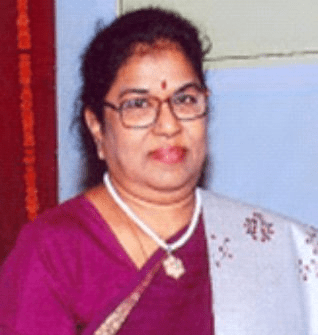
Dr. Rukmani Krishnamurthy is widely recognised as India’s first woman forensic scientist.

She entered forensic science in 1974 (the same year that Angela Gallop began her career!), joining the Directorate of Forensic Science Laboratories (DFSL) in Mumbai at a time when the field was overwhelmingly male-dominated and went on to become Director of DFSL Maharashtra and later took up many senior forensic leadership roles.

Dr. Rukami Krishnamurthy

She led major forensic examinations in high-profile cases such as the 1993 Mumbai blasts, the Matunga train fire, Joshi-Abhyankar serial killings, dowry deaths, and others.

Under her leadership, forensic labs adopted advanced methods including DNA profiling, cyber forensics, and lie detection techniques.  She helped transform Indian forensic practice from a peripheral support function to a central scientific pillar in criminal investigations.

Another star is Sherly Vasu, a trailblazing forensic pathologist and surgeon, known for her deep impact in medico-legal work in Kerala. She completed her MD in Forensic Medicine and became the first woman forensic surgeon in the state.  She headed departments of forensic medicine at prestigious medical colleges and later served as Principal of a medical college. She has not only trained generations of forensic scientists, but has conducted around 15,000 autopsies and contributed to evidence in many criminal cases.

So this Women’s Day, let us pay homage to these women who made their mark in a very offbeat career path—bringing criminals to book. It is women like them, who quietly established that expertise is all that counts, who have paved the way for all women in all careers.

Happy Women’s Day!

–Meena

International Day of Women and Girls in Science, 11 February

Gagandeep Kang: Virologist, Professor, Department of Gastrointestinal Sciences at Christian Medical College, Vellore, India.  First Indian woman to be elected as a Fellow of the Royal Society.  At the forefront of COVID science.

Kiran Majumdar Shaw: Chairman-MD of Biocon India Group known for its breakthroughs in clinical research. The first Indian company to export enzymes to the United States and Europe, the first Indian company to gain the approval of the U.S. Food and Drug Administration for the manufacture of a cholesterol-lowering molecule.

Vijayalakshmi Ravindranath: Chairperson at Centre for Neuro Sciences at Indian Institute of Science, who leads research that will help us understand and cure Alzheimer’s and Parkinson’s.

Tessy Thomas: Expert in ‘solid propellants’, which fuel India’s Agni missiles developed by Defence Research and Development Organization (DRDO). Called Agniputri by media, after the missiles she has helped develop.

Ms J Manjula:  DRDO Outstanding Scientist, and Director, Defence Avionics Research Establishment.

Minal Sampath, Systems Engineer working on India’s mission to Mars. Anuradha TK, senior-most women officer at ISRO. Nandini Harinath, Project Manager Mission Design, Deputy Operations Director, Mars Orbiter Mission, ISRO. And the many other Mars-Mission Women.

Inspirations, one and all. And they are not the only women-achievers in science and technology.

But still such a minuscule number!

Not just India, but the world and Asia too have this challenge of attracting and retaining women in these fields.

For instance, worldwide:

  • Only 35% of all higher education students enrolled in STEM-related fields are female.
  • Only 28% of all of the world’s researchers are women

Recently, UNESCO Bangkok brought out a report on STEM (Science, Technology, Engineering and Math) education for girls and women in Asia, 2020. The report points to a cycle which hinders girls for pursuing STEM education and hence careers in science.  It highlights the reality that right from a young age, girls receive messages that these subjects are not suitable for girls. One of the issues is that girls do not see any role models of successful women scientists around them. Even when girls do take up this stream of education, there are several barriers to success—from discrimination, to having to handle multiple responsibilities outside the job, to glass ceilings.

It is in recognition of these challenges that the United Nations in 2015, decided that ‘In order to achieve full and equal access to and participation in science for women and girls, and further achieve gender equality and the empowerment of women and girls, the United Nations General Assembly adopted resolution A/RES/70/212 declaring 11 February as the International Day of Women and Girls in Science’.

The theme for this year is ‘Women Scientists at the forefront of the fight against COVID-19’. Indeed it is a matter of pride that so many women are indeed there—whether as researchers, as doctors, healthcare professionals or in manufacturing vaccines and medicines.

The journey has started, but there is such a long way to go. Leaving 50 per cent of humanity’s brainpower and entrepreneurial energies out of the search for fundamental scientific truths and putting these to the service of humanity, seems a sad waste indeed!

Make a resolution today to encourage a girl in science. Take her to visit a Science and Technology museum. Buy her a science kit. Take her on a visit to a Scientific Institution on its Open Day. Tell her stories of women-scientists. Gift her a book about science and scientists. In fact, gift a few boys some books about women scientists too!

Do anything, but do something…

–Meena

PS: Two books by women, to get the reading list started:

The Spark that Changed Everything. Veena Prasad. Hachette.

Fantastic Adventures in Science—Women Scientists of India. Nandita Jayaraj, Aashima Freidog. Puffin Books.

Women and the Vaccine

8A469CF6-0898-430D-A845-0891A2DF7944

Lady Mary Montagu

In 2020, it is not surprising that there are many women playing a prominent part in developing vaccines to protect us against the current scourge—Covid 19. I know nothing about this field, but a casual search threw up many names—Prof Sarah Gilbert, Dr. Kizzmekia Corbett, Dr. Nita Patel. And Dr. Patel had a good explanation—she says that lab work in science is mostly done by women, so it is not surprising that women are prominent in the race to find the vaccine.

But it was not always so. Even though women have played a critical role in the development of many vaccines, they have not always got their due.

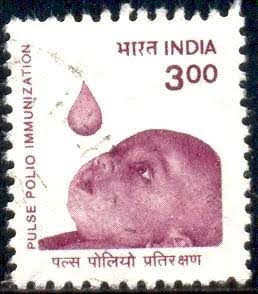
A8B3BB67-7240-4270-8ABC-F7F482BB6F30Polio was a dreaded disease in the early 20th century. It left death in its wake, but even more, it paralysed. Till date, there is no cure for polio, and the only defence is vaccination. Jonas Salk rightly deserves the credit for the polio vaccine, but there were two women, without whose work things would not have happened as they happened, when they happened. One was Dr. Isabel Morgan of Johns Hopkins University, whose work was a turning point in understanding host immunity to polio and on use of killed-virus (vs. live-virus) as the basis of vaccines for this disease. The other was Dr. Dorothy Horstmann of Yale and her team, whose work is said to have paved the way for oral polio vaccines.

Other women to whom we owe a safer world are: Dr. Anna Wessels Williams, who developed a diphtheria vaccine; Drs. Pearl Kendric and Grace Eldering who developed a vaccine for whooping cough; Dr. Margeret Pittman, whose work led to the vaccine against meningitis and pneumonia; Dr. Anne Szarewski, whose breakthroughs helped to develop vaccines against cervical cancers; and Dr. Ruth Bishop who led the team which developed a vaccine against rotavirus which is a major cause for diarrhoea in children.

But the best for the last! The most amazing story is of the woman who introduced the concept of immunization to the Western world, Lady Mary Montagu. Born in 1689, she was a path-breaker in many ways. But her contribution to vaccination is the one we are going to focus on here. She was a brilliant and beautiful woman, whose beauty was marred by an attack of smallpox in 1715. Earlier she had lost her brother to it. So it was no wonder that the deadly disease was something she worried about where her children were concerned. Lady Mary’s husband Lord Edward Montagu was posted to Constantinople as Ambassador in 1716. There she interacted closely with Turkish women and got to know their customs. One of these was the practice of variolation, wherein women would take the pus from the smallpox blister of someone who had a mild case of the disease, and introduce it into the scratched skin of uninfected children. Lady Mary observed that children thus infected never did contract the disease seriously.

She developed such a strong belief in this that she got the Embassy surgeon to inoculate her five year old son.

When she got back to England, she promoted this procedure with all her passion, but the medical establishment blocked and resisted it. The reasons are probably two-fold—it was seen as an Oriental folk treatment, not a Western, scientific one. And it was being promoted by a woman!

In 1721, a smallpox epidemic struck England, and Lady March had her daughter also inoculated. She persuaded the Princes of Wales on the efficacy of this, and the Princess had her two daughters inoculated. And though it took a long, long time for Jenner to come along and develop a safer technique of vaccination, using cowpox rather than smallpox virus, the concept started taking root, and the foundation for vaccination had been laid!

With thanks to all the back room girls (and boys) helping find vaccines and cures, as well as all front line workers.

–Meena