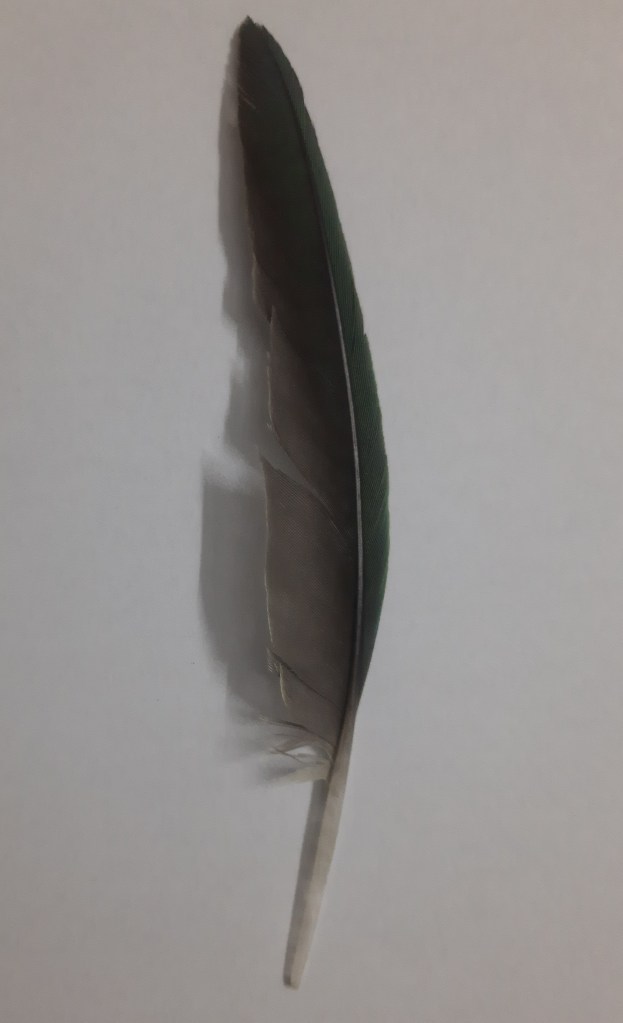
How often we randomly pick up a feather as we walk along. And wonder which bird it could belong to.
A feather library is where we can turn to for help in such a situation. These are digital or physical collections of bird feathers, used for research and education. They are an invaluable resource for understanding bird species, identifying feathers, and gathering data on bird health and natural history. These libraries are important tools for the study and conservation of bird species, offering insights into bird morphology and helping in the identification of feathers found in the wild.
There are not too many across the world. Some of the established ones include:
1. The Feather Atlas created by the U.S. Fish and Wildlife Service is a comprehensive image database of North American birds and covers about 438 species. It can be browsed by bird order, family, or species. It has an open identification tool in which one can fill in details about feather patterns, colors, size, and position, which can help you identify the bird your feather belongs to.
2.Featherbase (Germany) has been created by a working group of German feather-scientists and other collectors worldwide who have come together and contributed their personal collections. It holds close to 8000 specimens from over 1,000 bird species, with a focus on European and African birds. The collection includes high-resolution images and detailed anatomical information, and has supporeted studies in forensics, conservation, and biodiversity monitoring. It is rigorously classified and offers options of various languages so that birders from across the world can use it.
3. Found Feathers (iNaturalist Project) is a citizen science initiative where users contribute observations of feathers they find. The project encourages the collection of feather length and placement data, enhancing the database’s utility for researchers and birders. There are over 2,00,000 observations from across the world.
Special among these is India’s Feather Library. This pioneering initiative is the first of its kind in India and the world, dedicated to documenting, identifying, and studying the flight feathers of Indian birds. It is the passion project of architect Esha Munshi, a dedicated bird watcher who has seen over 1500 bird species across the world, and veterinarian Sherwin Everett who works in a bird hospital in Ahmedabad. They have created the library with the aim of having all feather-related data under one roof, fostering collaboration and advancing the collective understanding of Indian birds. In the short span of time since inception on Nov 15, 2021, 135 species have been documented.
The process is rigorous. They collect feather specimens from dead birds at rescue centres to establish a primary database of bird species. They then make detailed notes on the flight feathers, taking into account the number of Primaries, Secondaries, Tertials (Wing Feathers), and Rectrices (Tail Feathers), along with basic details such as overall length, bill length and width, leg lengths, etc. Then they stretch out one wing and fan the tail in both dorsal and ventral views to document the exact number of feathers, unique characteristics, colour, pattern, and size etc. The physical collection is housed at the National Centre for Biological Sciences (NCBS) in Bangalore.
The database is open to all and provides easy access.
Kudos to the dedication and passion of people like Esha and Sherwin who through their efforts help support avian research, conservation efforts, and educational outreach. And make a better world.
Hampi. On the list of history-buffs. On the list of backpackers. On the list of pilgrims. On the list of UNESCO World Heritage Sites. It is indeed a ‘listed site’!
This is what UNESCO has to say about it:
‘The austere and grandiose site of Hampi comprise mainly the remnants of the Capital City of Vijayanagara Empire (14th-16th Cent CE), the last great Hindu Kingdom. The property encompasses an area of 4187.24 hectares, located in the Tungabhadra basin in Central Karnataka, Bellary District.
Hampi’s spectacular setting is dominated by river Tungabhadra, craggy hill ranges and open plains, with widespread physical remains. The sophistication of the varied urban, royal and sacred systems is evident from the more than 1600 surviving remains that include forts, riverside features, royal and sacred complexes, temples, shrines, pillared halls, Mandapas, memorial structures, gateways, defence check posts, stables, water structures, etc.’
Lakshmi Narasimha Statue, Hampi
On a recent visit to Hampi (I know, I know. Who goes there in April???) we were of course awed by the architecture and the sculptures there. At a landscape level (over 4000 hectares as UNESCO says) like Angkor Wat, one can believe that this was the capital-complex of one of the most powerful and rich kingdoms India has ever seen.
So much has been written about this by experts, I don’t think there is much I can add. Of course, we were there only for two brief days, and in fact sight-seeing was not even top of the agenda. But personal impressions are unique, and I shall share them.
There is no charge to visit any of the sites except a nominal charge to go into the Vithala temple. Pre-Covid, the number of visitors to Hampi was about 7 lakh annually, and is likely to be much higher today. Many of these people go for worship to the temples. But for those purely on the tourist trail, surely it makes sense to charge something? Maybe Rs.100/monument or Rs. 500 for a day pass or something? Surely the case cannot be that our archaeological sites don’t need money for conservation and upkeep? Or that tourists who travel all the way to Hampi and spend on hotels will grudge the small amount for actually seeing what they have come to see? But it felt that the locals see this as a sign of hospitality, with two guides telling us ‘No charge to see anything here. Happy Hampi!’ That is rather nice!
Another thing was that the guides were not overwhelming or too persistent. Just appropriately persistent! In fact, we did not encounter too many of them, maybe because it was off-season. As well-informed and articulate as any to be met anywhere in India—which means they all told more or less the same stories and the same jokes, but pleasantly.
There were not enough toilets, and those there were, were not inviting! They were not dirty per se, but definitely yellowing, stained and wet, exhibiting a lack of an active effort to keep them up. This also probably circles back to the point on charging for entrance. If there were more money to spend on toilets, would there be more of them and would they be better kept? (Of course, in the convoluted system of incomes and allocations to such sites, there is little correlation between the two!). The strangest thing was that while the sites open 8.30 a.m., we found the toilets locked on arrival, and informed that they would open at 9.30 a.m. only!
And Hampi and other sites do have some structures in the name of toilets, we simply do not provide for drinking water. While most of us carry water these days, what about the unfortunates who forget? In a place like Hampi, it is quite possible for someone to come down with a heatstroke, and having access to clean, potable water is an essential that must be provided, not a luxury.
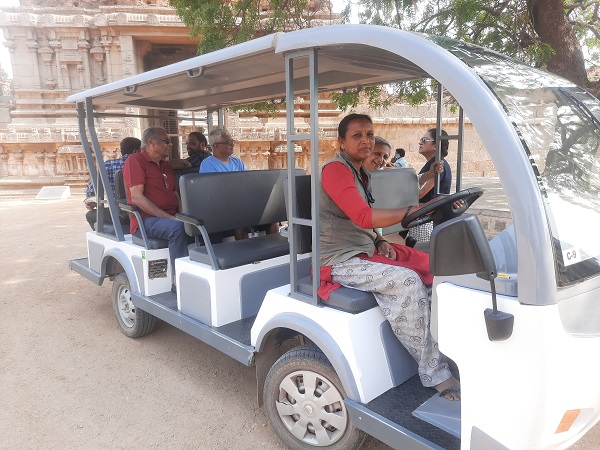
5.A very welcome move by the State Tourism is the introduction of e-vehicles to take the tourists to the various sites. Cars have to be parked at a certain point, and only these electrical vehicles run by the government are allowed beyond that. They charge a nominal amount. And it gets better! All these vehicles are driven by women. Our feisty driver went through a training of 15 days after selection, and confidently drove us around!
Hampi is divided into three core zones–the Sacred Centre, the Royal Centre and the Islamic Quarters. We got to see some parts of the Sacred Centre, so a lot is waiting.
Hampi is happy indeed, but with a little care, could be so much more so.
My friend Sudha, her husband Gladson, and 2+ year old Evan, recently had a wonderful and off-beat holiday in Sri Lanka. In Sudha’s words….
‘Beauteous in grace and love,
Laden with grain and luscious fruit,
And fragrant flowers of radiant hue,
Giver of life and all good things.’
The words from the Sri Lankan national anthem resonated with me, as the train chugged along from Colombo to Hikkaduwa. We had chosen to travel in the A/C coach that was mostly filled with tourists, eagerly looking out the windows as the train chugged along the railway line that runs along the south coast. We passed charming railway stations, such as the one in Bentota, designed by the erstwhile Geoffrey Bawa- heralded as the father of the tropical modernist movement. From time to time, Evan, my two year old son Evan would shriek in excitement at passing trains: ‘Mama looook, Thomas the train’.
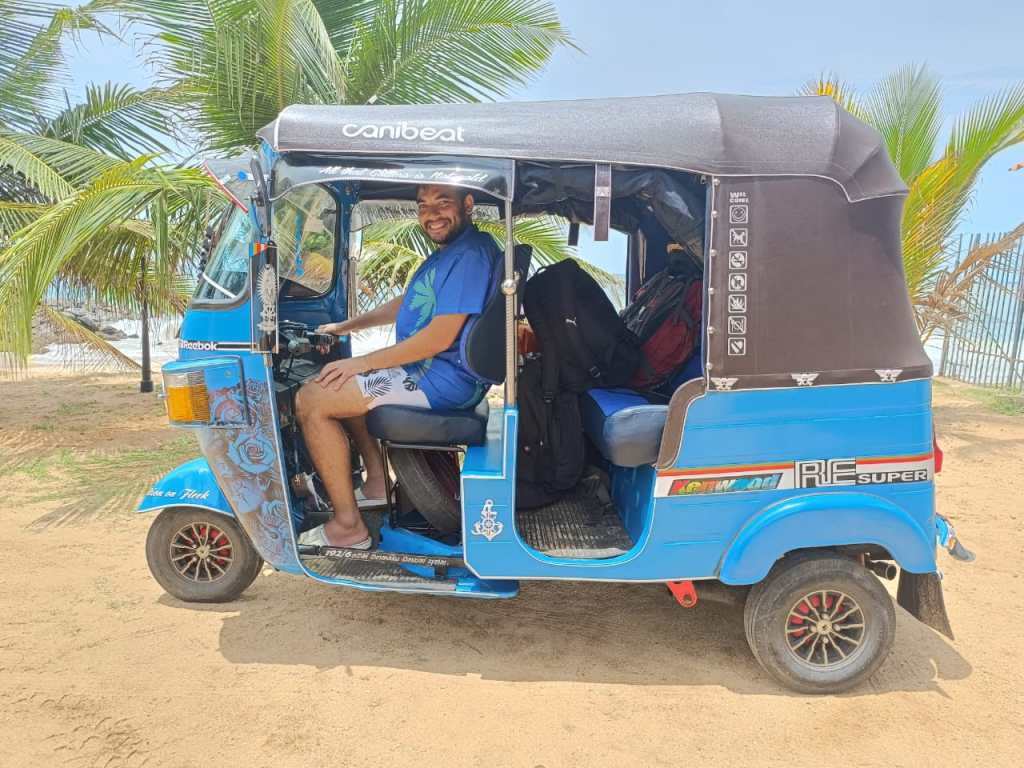
Amidst the beauty of the coastal line, my mind meandered to what was to come. Was renting out a tuktuk – known commonly as three-wheeler in Sri Lanka – a good idea? My husband and I for years have been in the practice of renting out a motorcycle, no matter where in the world we were. But with a toddler in tow, a motorcycle was out of question. The more sensible and economical option was to rent a tuktuk and drive it oneself, which tourists in Sri Lanka are permitted to do.
Having enquired with many rental agencies online, we found a reasonably rated one in Hikkaduwa. The rental was going to cost us USD 10 per day which was a few dollars less than most agencies. We had to pay a deposit and an insurance amount before we took the vehicle for the stipulated period of 10 days.
We arrived in Hikkaduwa, which is one of the more expensive destinations along the south coast. The person-in-charge promised to hand over the tuktuk by 9 a.m. the next morning. 9 a.m. came and went, and he assured to meet us by afternoon. Hours later, we took custody of a blue tuktuk, that had in-built speakers. The exterior was customized with fun stickers and graffiti of the fictional pirate, Jack Sparrow. Having taken a short spin in it, my husband G and I started our journey to Tangalle as planned. Evan approved of the bright blue ‘toooktooook’, and couldn’t contain his excitement at the sight of his father riding it.
We stopped for a late lunch ‘Dilshan Beachhouse & Cafe’ in Unnawatuna, a quaint beach town 40 minutes away. The scrumptious lunch was cooked by a young couple who have turned their little ancestral property into a beach side café. The husband, Dil, was a hardworking man who had dreamt of starting a cafe of his own ever since he worked in a restaurant washing dishes as a 20 year old. He mastered the art of cooking by simply observing the chef cooking elaborate seafood meals for hungry tourists.
Having eaten a satisfyingly good meal, we boarded the tuktuk and mentally prepared ourselves for the second half of the journey. G however found it impossible to start the tuktuk. Dil came over and lent a helping hand, but to no avail. Noticing the overcast skies, Dil called a few of his friends to help us. They pored over the engine and found nothing noticeably wrong. They then called over a mechanic friend, who found that the gear selector – which allows the vehicle to be put into different gears on a manual transmission – was broken. By this time, it had started to rain heavily. Gauging this was no ordinary situation, Dil’s wife proceeded to give Evan a tall glass of milk. She at first refused to charge us for it, but knowing how expensive milk is in Sri Lanka, we insisted on paying. When we offered to buy tea for the friends who continued examining the engine in the rain, they just refused and carried on with their work.
Upon the mechanic’s suggestion that it would take an entire day to fix and cost around 10,000SLR (2360 INR), G called the vehicle’s owner. The latter insisted that it was our fault, despite the mechanic taking over the conversation and assuring him that it was a matter of gradual deterioration over weeks and days. The owner finally relented and agreed to bear the entire cost of repairs. But Dil and his friends were sceptical, saying he might go back on his word. G and I contemplated the pros and cons and decided to go ahead and fix the gear selector. My toddler and I proceeded to walk to a nearby guesthouse, run by an elderly woman, fondly called ‘Mama’, where we decided to book a room given the situation. Mama welcomed us and cooked Evan hot rice. In the meantime, G, Dil and the mechanic continued working on liaising with mechanics from nearby towns to get the replacement part. Having finalized the details, Dil dropped G off at the guesthouse way past bedtime. Dil would not agree to take any money for the all the time and effort he had put in to help us, and none of our protestations worked.
The following morning, we visited Dallawella beach, renowned for the numerous sea turtles found on the shoreline. Our little one had the time of his life, watching the turtles swim and eat algae. ‘Mamaaa, Dadaaa OhMyGod, Looook’ he cried out excitedly, every few minutes.
By evening the tuktuk was in running condition, and true to Dil’s warning, the owner insisted we cover the cost. For years, we have been fully aware of the downside of renting a vehicle in any country as tourists, having heard tales of woe from fellow travellers. We considered ourselves lucky since we never experienced it – until NOW. But it was close to impossible for short term travellers to insist on being repaid since (a) You do not know who the owner of the vehicle rental maybe locally; (b) They have your passport in custody until you handover the vehicle; (c) With a toddler in tow, it probably isn’t prudent to get into fights. We decided to pay for it ourselves and carried on to Tangalle, 76 kms away.
20 minutes before reaching our hotel, the tuktuk abruptly stopped on the side of the highway. Thankfully a group of youngsters came forward to help G push the tuktuk to the side of the highway. Turns out that the mechanic who had assured G that there was enough fuel to reach Tangalle was wrong – rookie mistake. The youngsters immediately called a friend of theirs to take G to the nearby petrol bunk to fetch fuel in a bottle. I initiated a conversation with some of the young boys, and found that they too ran a café nearby. Intrigued, I jotted down the details and told G about it when he returned. We promised we would return to their beachside café the next day and left for the hotel.
The Tuktuk Gods however had one last surprise for us that day. Two cops on a motorcycle flagged us down and came over to tell G that our brake light wasn’t working and we needed to get it fixed. We thanked them for letting us know and promised to fix it. Turned out it was a matter of electrical earthing and didn’t cost us anything.
The following day, as promised we headed to the café run by the youngsters. The Top Surf was a charming café, with great food on an isolated stretch of beach accessible only to guests of an elite hotel. PERFECT! We spent the day snorkelling and unwinding.
The rest of our tuktuk journey was thankfully seamless. We spent idyllic days in beach towns such as Mirissa and Welligama, ate good seafood, snorkelled and spotted turtles. Our little one was smiling throughout the journey and woke up each morning saying, “Let’s GOOO, Mama, Dada’. The beach road along the south coast of Sri Lanka is magnificent! Winding toll-free roads along the coastline, wild peacocks flying by, and people who are always willing to lend a helping hand. Overall, the journey was peaceful and accomplished what we were looking for – blissful days by the beach.
Last week, along with dear friends, we had driven to Shimoga to see the Jog Falls, maybe visit the Bhadravathi Sanctuary, and do the other local sights.
Alas, trouble broke out there and we decided to cut short our visit and drive back—fortunately after seeing the Falls. While we were not heart-broken to return a day early, there was an air of slight disappointment in the two cars.
When…
…we suddenly saw a sign ‘Welcome to Amrutapura: City of Ancient Amrutesvara Temple’ (Karnataka has a wonderful practice of labeling its towns, from Chennaptana: Toy Town, to others which are Silk Towns, Arecanut Towns, Coffee Towns etc.). We recollected that the Hotel Desk had cursorily told us that Amrutapura was a possible place to visit, but we hadn’t really registered it it was a casual mention.
But now that we were here with a day to spare, we decided to explore the possibilities.
And what an experience awaited us!
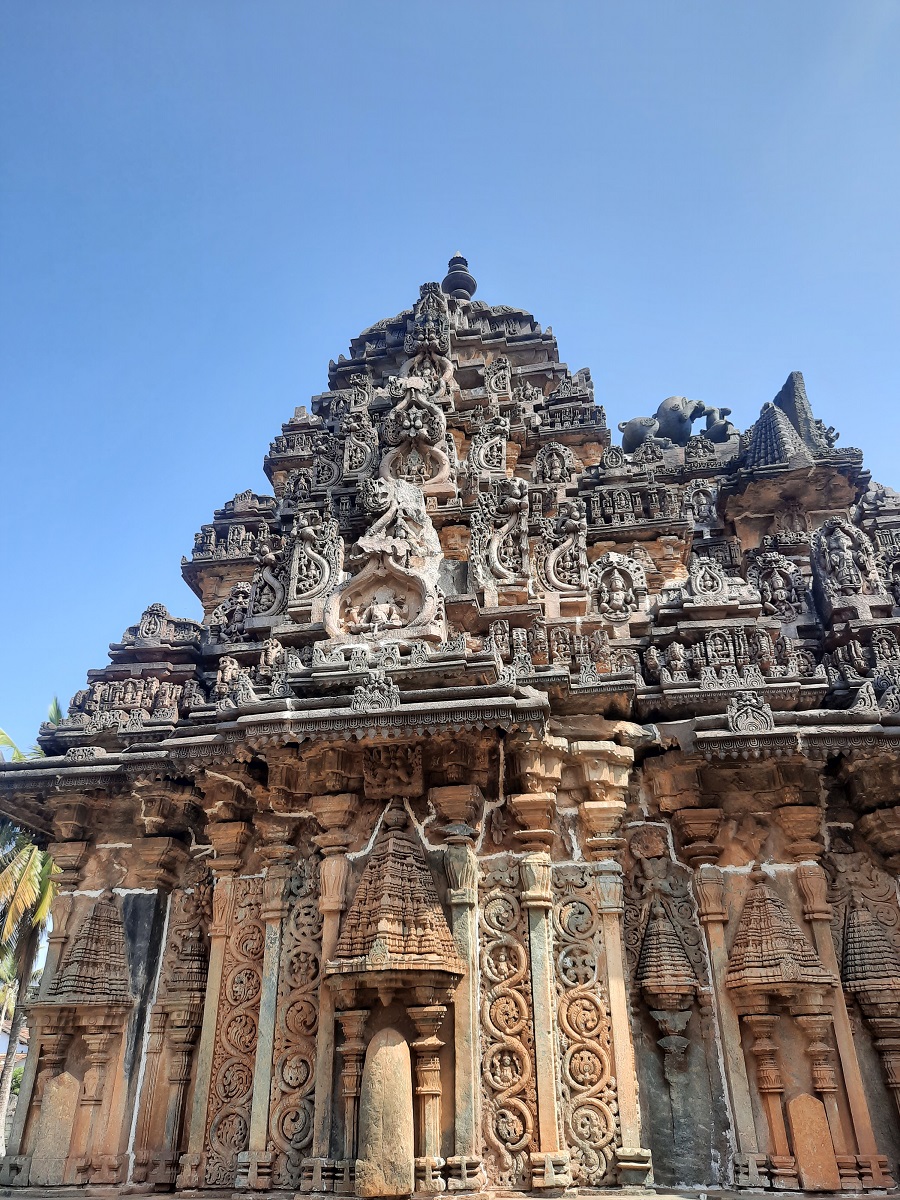
Gopuram of Amruthavarsha Temple, Karnataka
Built in what experts deem the older Hoysala style, this 12thcentury Shiva temple was commissioned by Amrutheshwara Dandanayaka, one of the commanders of Veera Ballala II, the Hoysala King. The beautiful little temple, where worship still happens, is dense with an amazing array of sculptures. Friezes from the Ramayana adorn one side of the structure, while stories of Krishna and tales from the Mahabharatha decorate the other. One tower has a detailed panel of Shiva slaying Gajasura. Another tower showcases the emblem of the Hoysalas, a young man battling a lion. As per folklore, a young man, Sala, saved his Jain guru, Sudatta by striking dead a lion near the temple of the goddess Vasantik. The name of the dynasty itself comes from this incident– ‘Hoy’ meaning strike, and ‘Sala’ for the young man’s name. (I am a little confused about this story, not being able to make out the connection between Sala and the dynasty–did he found it? Was he one of the scions? Obviously, more research is called for on my part. But what really intrigues me is the killing of a tiger to save a Jain muni. Surely the teacher could not have approved of this?). There is also a large stone embedded in the premises, with a poem inscribed on it, which is believed to have been written by Janna, one of the most famous poets of the region and times.
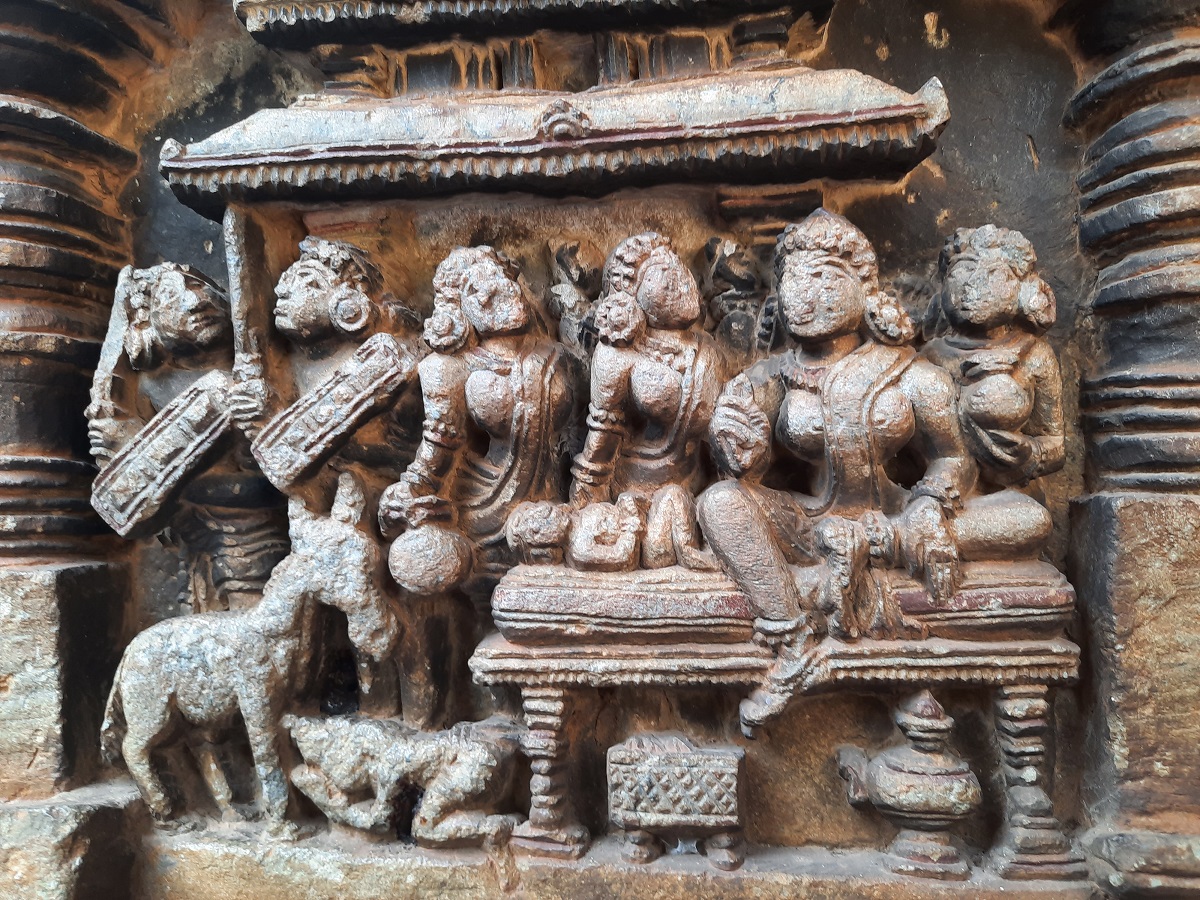
Vasudeva praying to the Donkey
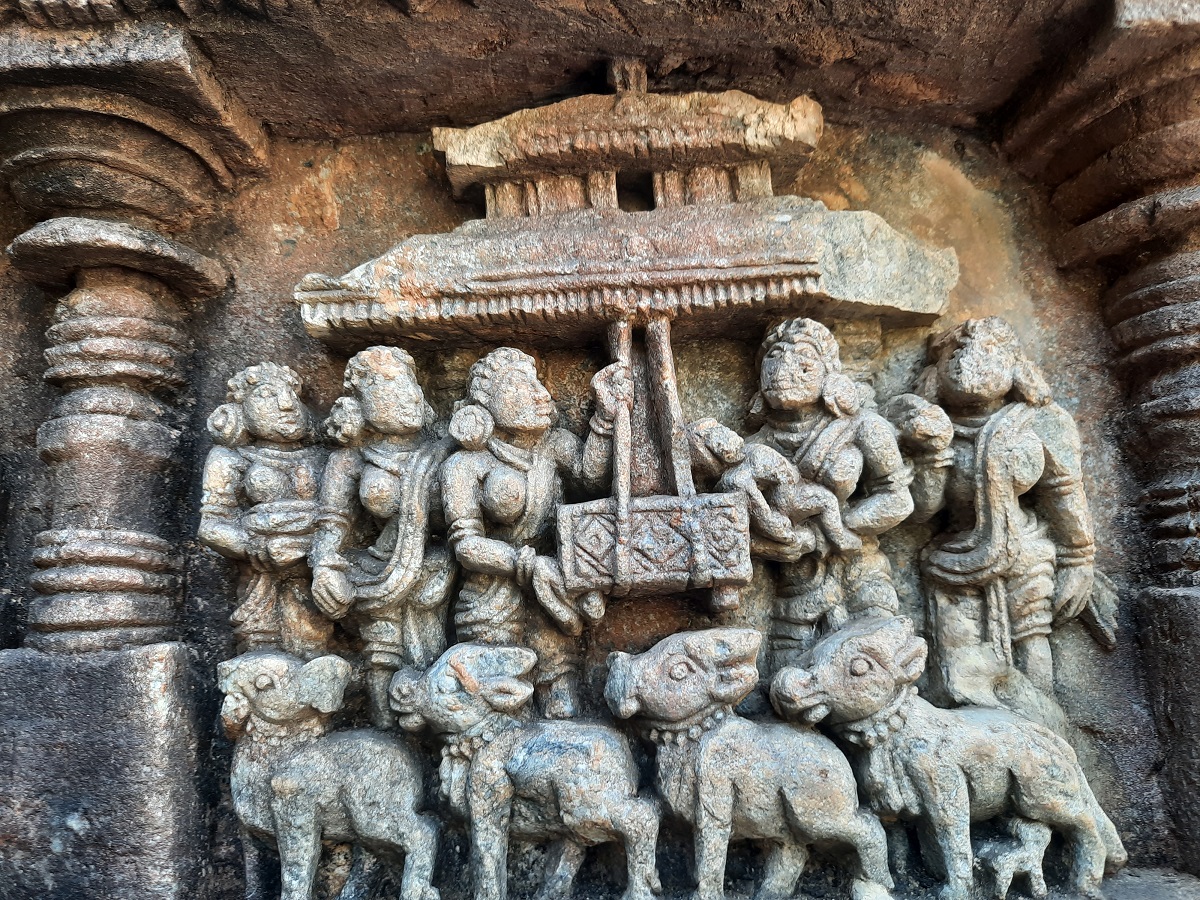
It would seem that a lot of thought had gone into selection of the incidents to be depicted on the friezes. Krishna’s birth, the events subsequent to that, the various attempts of various hideous demons to kill him in his infancy, and his mischievousness as a child form a large part of the display. The most intriguing was of one of a man bowing to a donkey. We could not figure it out, but the temple priest was kind enough to tell us the story. It seems that when Vasudeva was preparing to smuggle Baby Krishna out in a basket on the night he was born, to deliver him to Nand at Mathura to save him from Kamsa, there was a donkey outside the prison gates, all ready to bray aloud and attract the attention of the guards. Vasudeva prostrated himself in front of the donkey, pleading with it not to make a noise. And it finally agreed, thus allowing the clandestine operation to proceed smoothly.
Krishna’s Cradle Ceremony
There is of course the aesthetic beauty of the temple created in ancient times. But at a time when my 7-year old house has leaks and cracks and sundry problems, it is amazing to see how the 12th century structure is still so well maintained and standing so strong. And then, the peaceful and serene ambience of the temple, the spotless cleanliness, the well-maintained greenery. Kudos to the ancient masters, the priests who have taken care of the temple for 900 years+, and now the ASI, which seems to be managing it. But also a small request to ASI: how about a sign somewhere on the temple with its name (no, there was no hint that it was indeed the Amruthavarsha Temple)? How about some information on the temple itself, apart from signs warning of dire consequences of defacing the structure? How about a little more publicity for such a wonder? How about public conveniences built somewhere in the vicinity for travellers who drive many miles to get here?
But no complaints. The temple just blew our minds. Maybe it is only in India that one would serendipitously happen on a 12th century masterpiece while driving along desultorily.
Thanks to COVID and the search for not-too-popular sights, we ended up visiting the Chikkajala Fort last weekend. On the way to Bangalore Airport and not too far from my home, we have been meaning to go for a long time.
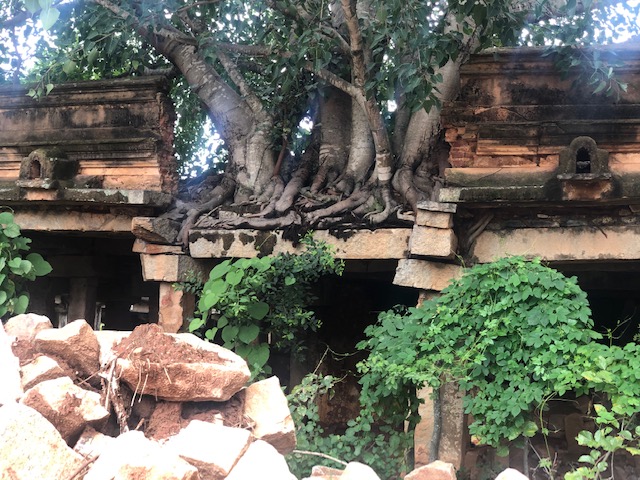
‘Fort’ is a misnomer today—what stands is a temple with what once must have been a beautiful, deep temple-tank in front of it, and a few long corridor-like stone structures. The site of Chikkajala is a prehistoric one apparently. It is likely there was a ‘vassal fort’ but it no longer stands. The estimates of the age of the temple and extant structures range from 300 to 950 years!
Apart from the general ravages of time and the overall neglect, apparently some parts of the structures were demolished for road widening after the new airport came up.
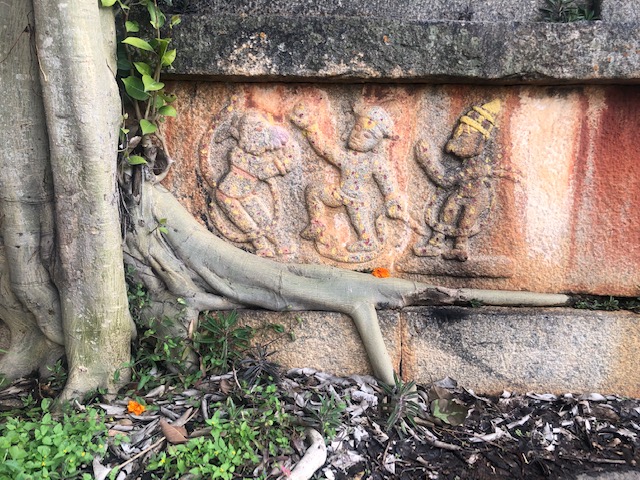
Whatever the reasons, it was sad! To see a construction which must have a thing of beauty, lying in rack and ruin. The structure just falling down as it stands. Carvings defaced. Trees growing on and through the buildings. Cows grazing and leaving behind generous piles of cow dung. The temple tank completely overgrown with vegetation. Plastic water bottles and discarded chips packets.
It was particularly poignant because only last week, Karnataka announced its Tourism Policy for 2020-25. The State aims to be among the top two tourist destinations in the country. I confess I have not read the 104-page document completely, but what I have read leaves me completely confused! While it talks at length of developing tourism infrastructure, ‘products and services’, I am amazed that it says nothing about the core of tourism—the sights that tourists go to see. What is to be done to preserve and enhance the condition of the cultural artefacts and natural heritage. Agreed, this is in the purview of other departments, but does a tourism policy not have to be in sync with these other departments, and should the synergies not be laid out as a part of the Policy?
The strategic intervention as mentioned by the Policy, and which seem to me to sadly lack so many, many critical elements, are:
Position Karnataka as a preferred tourism destination at state ,national and international levels
Facilitate improvement of Infrastructure, Tourism Products and Services
Streamline processes for obtaining approvals and clearances
Prioritise Human Resources Development & Capacity Enhancement
Promote ICT based initiatives for providing timely and reliable information services to tourists
Create institutional structures for effective implementation of the Policy
Provide attractive concessions and investment subsidies for various tourism
Admittedly I know nothing about Tourism or Tourism policy. But I do know when an ancient monument next to my house is falling to bits. I do see that a monument right on the main road to the airport can attract a lot of footfalls. I can gauge that it is about some money, but much more about caring.
A small piece of heritage in a country which has so much that we can’t be bothered about any of it? A tiny blip in a list of monumental tragedies?
–Meena
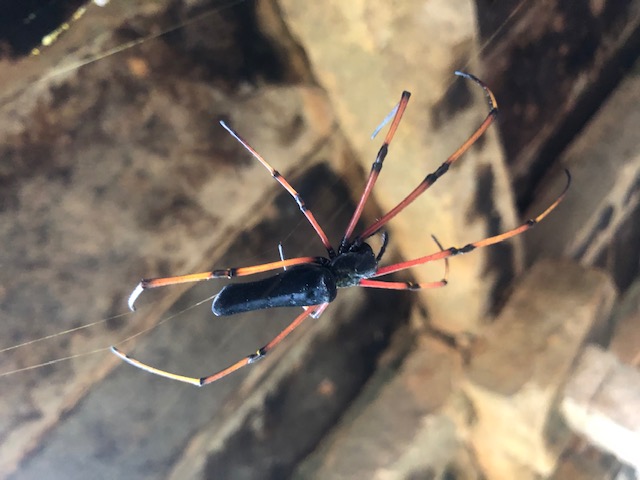
PS: A lovely spider sighted in the ruins. About 5 inches across, it had spun a web which was about 4 ft across. Maybe Nephila pylipis, but I am not quite sure.
Why would a Penguin ever come to tea? But so goes the nursery rhyme my foster-grandchild and I are currently hooked on.
If I were to write the poem, I would say
‘Have you ever seen, a penguin out at sea’.
Would make a bit more sense.
Of course, the other argument is, why should nursery rhymes make sense?
But that is not the subject of the blog today. April 25th is marked as World Penguin Day, and that is the occasion of the blog. This day coincides with the annual northern migration of Adelie penguins.
Any ‘Day’ is a way to focus attention and raise awareness about an issue. Penguins evoke immediate love and interest. And hence are a great species to highlight when it comes to conservation education in general, and education about the species in particular. Alarmingly, of the 17 recognized living species, 11 have been listed as Vulnerable or Endangered, and hence awareness about penguins is important. And talking about penguins also ensures we talk about the health of the waters where they spend 75 percent of their lives.
It was only very recently that I saw my first-ever penguins in the wild. It was an unforgettable experience—a visit to the Omaru Penguin Colony in New Zealand, where visitors can spend a few hours freezing on stands, waiting for Little Blue Penguins to come home to their colony for the night. And believe me, it was worth every chilly bone to see this phenomenon. Groups of ten or more penguins coming in over a period of about an hour, after spending the whole day in the waters feeding—for themselves and to regurgitate for their children. What a hard life! The Little Blue Penguins are really tiny, just about a foot high. And we were lucky enough to see pair of chicks—cuddly balls of down.
And to end, some trivia:
The origin of the word ‘penguin’ is not clear. It may either be derived from a synonym for ‘great auk’, a bird familiar to Europeans who thought penguins looked like auks when they first saw them. (Great auks are flightless birds not related to penguins. They became extinct in the 19th century). Or it could be from the Latin pinguis, which means fat or oil.
Some prehistoric species of penguins stood almost as tall and heavy as an adult human. Today, the largest species, the Emperor Penguin, stands at about 3 1/2 feet.
Although except one, all species are found only in the Southern Hemisphere, most do not live in extreme cold areas like the Antarctic. Many are found in temperate areas too.
There are two names for penguin collectives—when there is a group of them in water, they are called a ‘raft’. When there is a group on land, it is called a ‘waddle’.
Here is to World Penguin Day, may their tribes increase!
Heroing and highlighting individual trees is a great way of drawing attention to trees in general, and to reinforce the value of nature, wildlife and biodiversity.
An example of a successful initiative in this direction is the European Tree of the Year contest started in 2011, inspired by an older competition which originated in the Czech Republic in the late nineties. According to the Czech Environmental Partnership Foundation which started it all: ‘Tree of the Year is a contest looking for a tree with a story. The aim of the contest is to empower people and get local communities involved in the environmental and local heritage protection. We believe that by gathering around a tree, people are more likely to take action again in the future for other environmental causes and for the wellbeing of the community.’
The process of selecting the European Tree of the Year starts with a well set-out voting process at the national level of the participating countries (16 this year), and ends with a finale consisting of online voting to select from among the national winners.
Now the competition is moving to other parts of the world: In 2016, Sri Lanka started the Asian Tree of the Year, with India, Nepal, Malaysia and Singapore joining in soon after. Canada, Australia and Russia have also held national competitions, though not on an annual basis.
Beautiful old trees, with history and cultural connections to the community have found their spot under the sun through this process, and also generated a lot of public interest, involvement and learning.
Sounds good! But what has all this to do with the title?
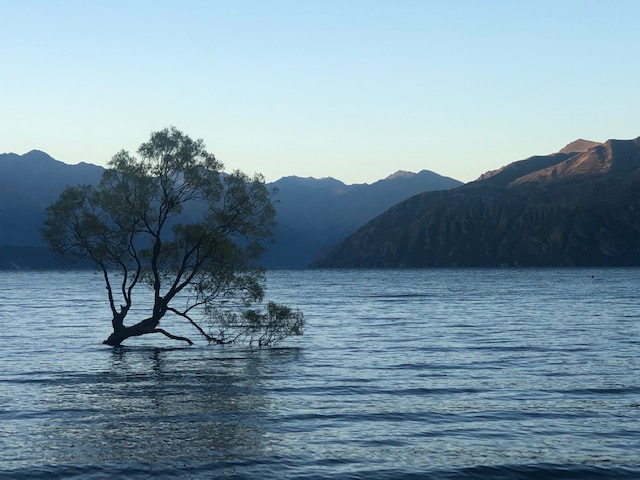
The connection is a tree that is reputed to be the most instagrammed tree in New Zealand, almost a symbol of NZ tourism. On a recent trip there, we were urged to set aside time to see the tree, specifically around sunset. So we worked around our program to ensure we got to the spot—a stretch of a beach—well ahead. We drove past a few times, keenly looking at the beach. We could see some people, but nothing special in the way of trees. We asked natives and tourists alike, and they all pointed us to the same area which our GPS had shown us, and which we had passed, looking in vain for a landmark. We decided to make our way down to the beach anyway. Lo and behold, there were many, many people there, jostling for some spot (we could not figure out what the spot was for), all setting up professional looking camera equipment. It came to a pass when we had to ask a friendly-looking lady what everyone was waiting to photograph, where the famous tree was, and what it was about. She kindly pointed to this spindly willow tree, standing a few feet into the waters of the beautiful Wanaka Lake, against a beautiful background of majestic mountains. But the tree itself? In my mind, this will forever define and exemplify ‘under-whelming’. ‘Why is the tree famous’, we asked many around us in bewilderment. While there was some story of how it was part of a fence and had survived in the water for several years, the general consensus was that it was famous because it was famous! So famous , it even has its own insta handle #ThatWanakaTree.
Does the title begin to make sense?
But yes, surely is a lesson to countries like ours, where we have such unimaginable treasures of cultural and natural heritage, but simply are not able to create anywhere near a proportionate buzz!
The verdant forests of Panna, Madhya Pradesh. We were able to visit two weeks ago. And were lucky enough to see a tigress and her cub. What a majestic sight! The tigress was pretty big and healthy, the cub frisky and curious. The mother was contemptuous of the humans in their vehicles going into contortions to catch a look, to take a pic, to exclaim to each other. She moved when she felt like, sat down and relaxed when she felt like. Not looking in the direction of the vehicles even once, though she knew we were there. She was the queen of her territory and saw no reason to acknowledge us.
It was a wonderful feeling. To see the healthy tigress and her confidence in her security. The active cub, about 5 months old. The number and variety of herbivores. And the thick forests and healthy, lush greenery.
It would be good to have seen this in any of our protected areas. But especially gratifying when we go into the story of Panna. Panna was declared a National Park in 1981, and subsequently a Tiger Reserve in 1994. The tiger population in Panna was down to zero in Feb 2009, thanks to poaching. It was a sad time indeed for India’s conservation efforts.
Things started to change with the posting of Mr. Sreenivasa Murthy, who took over as Chief Conservator of Forests and Field Director, Panna Tiger Reserve. They speak of the tough measures he took in securing the Park, coming down hard on all incursions, trespass, illegal activities and poachers. Even as he protected the area and worked on the morale of the Forest Staff, he built on the already initiated plan for re-introduction of tigers into the Park. Starting with one tigress in 2009, six of the species were introduced from different parts of the country. And it was not an easy task. As the Panna website tells it, one of the re-introduced males strayed out of the protected area into unsafe terrain, and 70 Park staff led by the Field Director followed it on elephants for 50 days, securing it from gunshots, poisoning and electrocution, till at last they were able to tranquilize it and bring it back into the safe area. All the hard work paid off and the re-introduction worked, with the first litter of cubs born in Panna in 2010. The results are obvious today, with the Park now home to 51 tigers. Several cubs have been born this year too.
Nothing is achieved by one man alone. But equally, individuals make all the difference. And in the case of Panna, this individual was Mr. Murthy. He has been posted out of the Park, but even today, drivers and guides speak his name in hushed tones, in tones of awe. And when respect and admiration penetrate to all levels, it is surely the greatest homage to the real difference someone made.
So a huge THANK YOU Mr. Murthy and all our Forest Dept. staff who work in extremely difficult situations to ensure that our biodiversity and natural heritage are safe. The thick forests of Panna, the variety of animals and birds we saw, of whom of course the tigress and cub were at the peak, the flourishing trees and plants—all of these stand testimony to your efforts.
–Meena
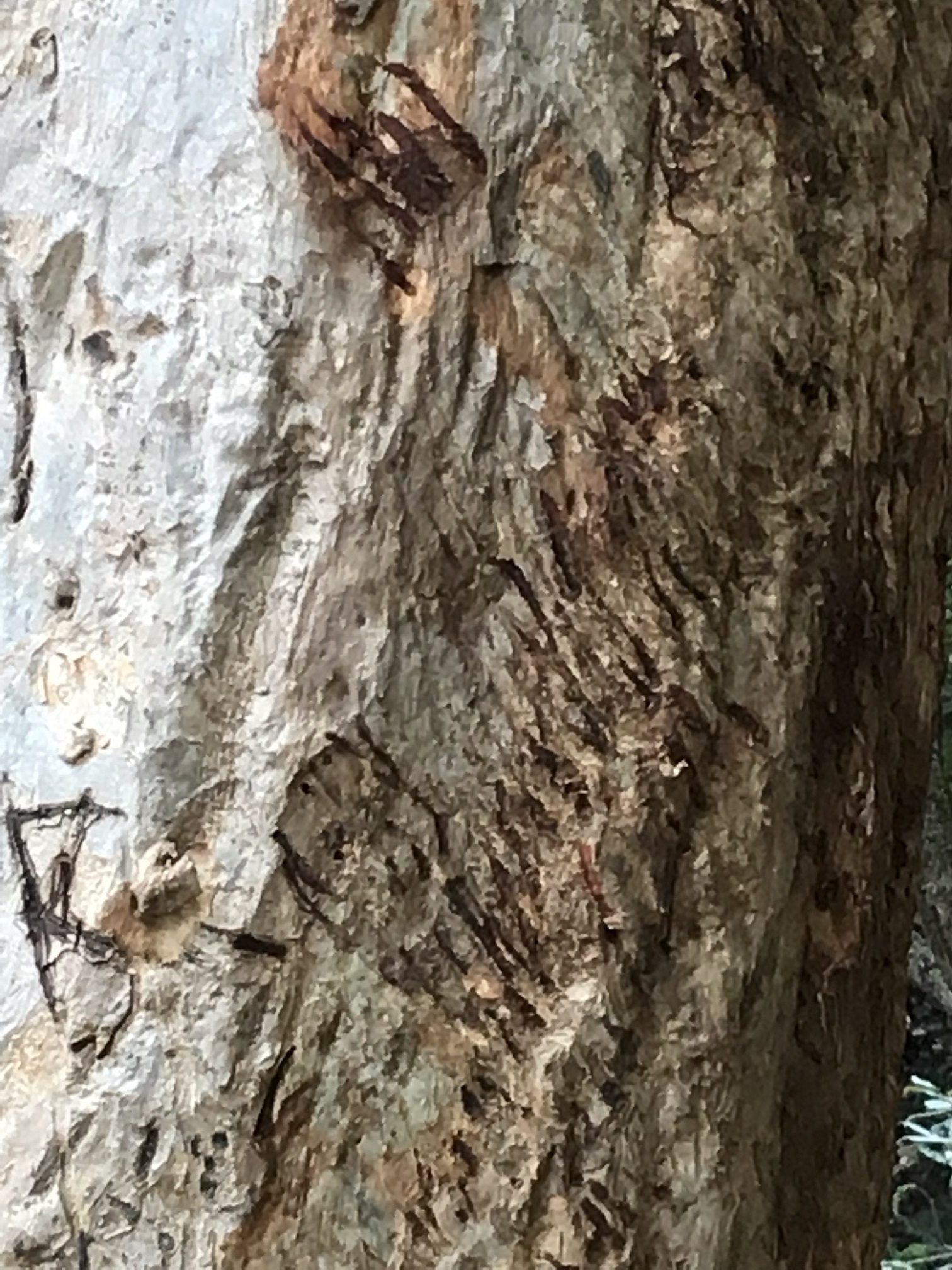
(There are many trees like the pic, with nail marks made by bears climbing them to get at honeycombs.)
PS: We did not get any pics of the tigers—we were too busy looking at them. And anyway, they were far away and our phone-cams were not up to the task.
But a few other pics from the Park and Pandava Falls nearby. Photo credits: Prof Samir Barua.
Khajuraho. Memories of history textbooks. Also of sniggers and side glances among us as school girls.
When our friends and we decided to visit, it was on a whim. We wanted to see the monuments which are counted among the best in terms of the flowering of Indian art, architecture and creative expression. But we half-feared we would see badly maintained ruins.
What an amazing surprise! We were awe-struck with the boldness of imagination and design of the 25 out of 85 temple structures still standing. We marvelled at how, more than a 1000 years ago, buildings of such complexity and technical perfection could have been built. Even in terms of just moving material and creating such huge structures—how did they manage it? Truly a civilization at the height of its cultural powers.
We were equally impressed with how well the structures have been restored and how well they are being maintained. No ugly and inappropriate renovation. No vandalism. No graffiti. No unpleasant solicitation by guides or vendors. No garbage. No muck.
The cluster of temples (85 at the peak), were built between about 950 and 1050 AD, by kings of the Chandela dynasty. And the eclectic collection of Gods to whom they were dedicated is interesting—Shiva, Vishnu and even Jain temples (Devi temples being conspicuous by their absence). The erotic nature of the carvings in Khajuraho is much talked about, but it constitutes only 10 per cent of the total. And done in a completely matter of fact way, juxtaposed with everyday scenes of life and times.
What I found most fascinating was the Varaha temple. A temple dedicated to the 3rd avatar of Vishnu–Varaha or Boar. I don’t recall any other temple devoted to this avatar. The sculpture is a humungous sandstone monolith—2.6 metres long and 1.7 metres tall. It boggles the mind how they got the stone up there and carved it. Because carve they did—every inch of the boar’s body is covered with numerous figures. Between the nose and mouth is a carving of Goddess Saraswathi, with the Veena in her hands—a tribute to knowledge. In the Varaha avatar, the demon Hiranyaksha kidnapped Goddess Earth and hid her under the cosmic ocean. Varaha battled the demon for a 1000 years and brought back the Goddess. Well, the Varaha statue has battled the elements for over a 1000 years, and stands testimony even today, to the skill of its creators. It looks fresh, exudes power, and is almost shiny metallic looking.
Other sculptures that stand out are a dancing Ganesha. You can see his paunch swaying as he dances! An elephant with a sense of humour, who looks with a twinkle in his eyes, at an amorous couple.
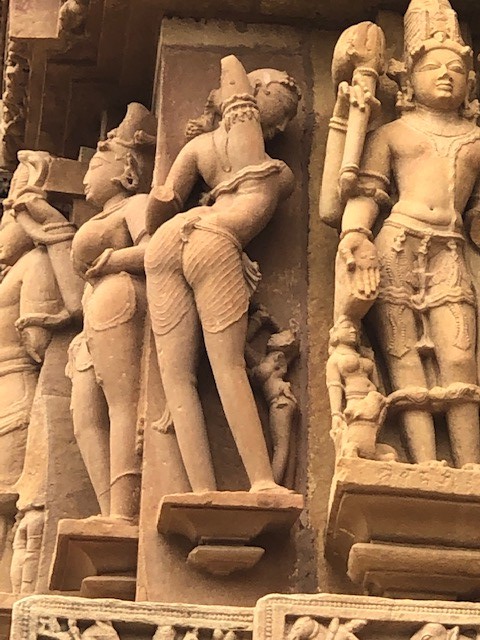
And most interesting of all, a man who is ‘upskirting’ a voluptuous beauty with the help of a device that looks like a telescope. But the telescope was invented only in about 1608!! So what could this device be?
While Khajuraho was an amazing experience, getting there was not! There is an airport, but flights seem seasonal, and only connect to Delhi, Agra and Varanasi. There is a station there, but only serviced by a few trains. We got there by road from Jabalpur. A distance of about 250 kms which took about 6 hours, thanks to 30 kms of potholed roads, and 20 kms of no road at all!
So while I bow to those who conceived and created Khajuraho, and bow to those who have restored and are maintaining it, I definitely do have a bone to pick with those who are doing their best to make getting there such a pain. A real disservice to anyone who wants to see India’s heritage in its glory, a disservice to the world in making access to a World Heritage site so difficult.
May 29th is Nepal’s Republic Day. To mark this upcoming day, here is my friend Anuradha’s travelogue, which could help those planning a trip to this amazing country. Meena.
We planned a 10-day trip and booked air tickets much in advance by Nepal Air direct flight from Bangalore to Kathmandu @ Rs.14K /ticket for round trip. With Kathmandu as a base, we took a package @ Rs.1.3 lacs for 3 pax which included flight tickets from Pokhara to Jomsom round trip, a private car with driver, and accommodations in 4* plus hotels for 9 nights.
Day-1: We were off! Reached Kathmandu by evening.
Day-2 (Friday): Kathmandu local city sightseeing -Swyambhunath Stupa, Darbar squares of Kathmandu & Patan, Pashupathinath Temple. The ‘Living Goddess’ of Darbar square, hand-made idols of brass and metals at Patan, ancient Pashupathinath Temple were the most memorable.
Day-3 (Saturday): Early morning drive to Chitwan—a distance of around 120 Kms. On the way, there is a popular cable car ride to Mano Kaamana temple. Saturday being a state holiday, there were long queue. Though we spent half day on the whole process of cable car ride, it was worth it. Reached Chitwan around 5.30 pm and checked in to Hotel Green Park. As it was already dark, no activity was scheduled. We hired an auto and went around Chitwan and nearby villages, spoke to local people, did some food shopping. Annual Elephant festival was happening nearby and we dropped in. We enjoyed watching elephant racing and elephant Polo.
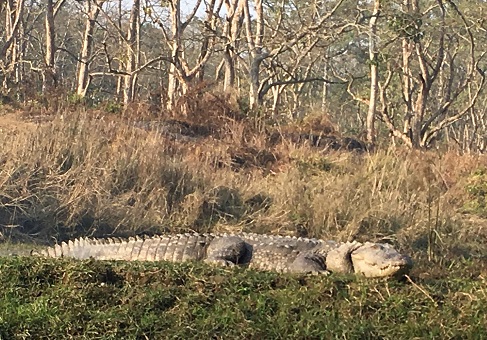
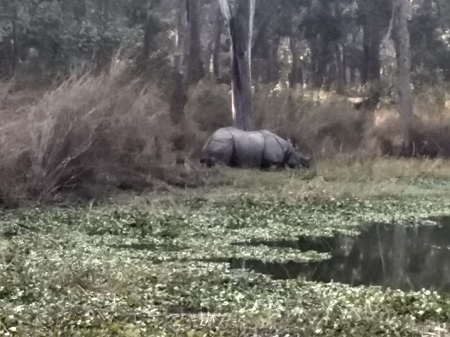
Day 4 (Sunday): Chitwan National Park visit, Elephant safari, Boating, bird watching, visit to Elephant Breeding centre and cultural evening. Rhinoceros is a star of Chitwan. There are an estimated 600+ plus Rhinos here. Elephant Safari of around 1.5 hours across a river and inside the jungle was an amazing new experience. We could see Rhinos, Deer, Crocodiles and rare birds.
Bird watching from a boat across River Budiramati was amazing. Jungle walk with guide across National Park, viewing rare Himalayan medicinal plants, creepers, birds was truly educational. We were excited to see a just-born baby elephant in the breeding centre.
Day 5 (Monday): Drove to Pokhara from Chitwan. Beautiful drive across rivers, valleys of Himalayan stretch. View of Dhaulagiri, Nilgiri and Annapurna range of Himalayas, Matsyangadi, Sethi Gandaki and Gudi Gandaki Rivers. Compared to Kathmandu, Pokhara looked more developed with better infrastructure. Our hotel was right opposite the famous Fewa lake. Visited couple of local places in Pokhara. As it was 31st Dec, entire city was decorated and Street Festival was going on. We roamed around here and got to know about local Mela. It was indeed a memorable great experience to be in Nepal’s happening Pokhara, on the New Year eve.
Day 6 (Tuesday): Travelled from Pokhara to Jomsom by 7.50 hrs Tara Air flight. Flight didn’t take off on scheduled time due to bad weather. Till 10.45 am, we had no idea whether flight would take off. Luckily weather cleared by 11 am and we were on the way. It was a spine-chilling experience in a 12-seater charter flight, flying at a very low height of 30 mts among Himalayan glaciers.
Flight landed in a small place Jomsom, surrounded by mountains. Temperature was minus (going down to -17o C). Stay was arranged in Om’s Home, a beautiful heritage hotel. Understand Amitabh Bachchan stayed in this Hotel during shooting of his movie Khuda Gawah. To our excitement, the same room was allocated to us. We quickly freshened up for a local visit around Jomsom, to a lake which was frozen and a beautiful Morpha village. Since it was off-season, not many tourists found and it was calm and heavenly. The apple-growing Morpha village was very clean and neat with wooden houses. Dining room at Hotel was kept warm by non-electrical boiler heater. Internet connectivity was very good though it is a remote place.
Day 7 (Wednesday): Mukthinath Darshan. We started around 9 a.m. from Hotel by jeep towards Mukthinath. There are no words to explain our experience of passing through the Himalayan valley. We filled our hearts and minds with the Himalayan view and took pics. We crossed Khinga, Jarkot, Kakbani villages, Kali Gandaki river and drove towards Mustang and arrived to Mukthinath base. After 30 mts trek, we reached the holy temple. Our dream of seeing god Mukthinath has come true. We bathed in icy cold holy water here. We had a very good darshan as there were no crowds, thanks to the cold.
As we had read that ‘Saligrama’ is found at Kali Gandaki river, we requested our driver to take us to the river bank . He was good enough to do so and after an hour of searching, we found a few. On the way back we bought fresh Walnuts and dried apple.
Day 8 (Thursday): Departure from Jamsom by Tara Air and back to Pokhara around 9 a.m. Full day Pokhara local visit was planned. We have covered Museum on Mountaineering-definitely worth a visit. 4.5 km boat ride in Fewa Lake was a wonderful experience.Peace Pagoda stupa at Pokhara was also interesting.
Day 9 (Friday): Sunrise view from Sarangkot is not to be missed. The view of Davalgiri and Annapurna Himalayan ranges, sun rising on these mountain ranges can’t be explained but has to be experienced. We were in no mood to leave the place and were there till 8.30 a.m. filling our eyes with mountain ranges and sun rise view. As next visit was to Nagrkot a long drive from Pokhara, we had to leave to continue the journey.
It was full-day awesome drive across river Trishooli, Sethu Gandaki. On the way, we visited an extremely old temple Changinarayan. Wooden crafts and masks are famous here. We reached Nagarkot mountain peak around 8 p.m. Our stay was arranged in Country Villa wherein each room is on a mountain edge and built in such a way that sunrise can be viewed from the room itself. The great Everest mountain ranges are visible from Nagarkot. It is better to plan for more time at this beautiful place.
Day 10 (Saturday): Morning, we checked out of the to drive towards Bhaktapur, a heritage city. Bhaktapur is famous for Thangka art and paintings. City looked red–all brick buildings without paint. We visited Darbar square of Bhaktapur, saw beautiful sculptures and heard stories behind these. We quickly finished our Bhaktapur visit so as to reach airport by 12 noon to catch our return flight.
Reached Bangalore around 5 p.m. with amazing memories of Nepal, eyes filled with Himalayan glaciers, blessings of Lord Pashupathinath and Mukthinath.
Our observation of Nepal on our 10-day tour is that people of Nepal are very proud and concerned about the Himalayas and treat their land as God’s home. Women are respected, they go all alone freely. People are sincere and happy. All the places we visited in Nepal were clean and well maintained. Rest rooms were hygienic. Garbage bins are available in most of the places and also getting cleared every now and then. Nepal is truly a worth visiting destination.



 But that is not the subject of the blog today. April 25th is marked as World Penguin Day, and that is the occasion of the blog. This day coincides with the annual northern migration of Adelie penguins.
 The connection is a tree that is reputed to be the most instagrammed tree in New Zealand, almost a symbol of NZ tourism. On a recent trip there, we were urged to set aside time to see the tree, specifically around sunset. So we worked around our program to ensure we got to the spot—a stretch of a beach—well ahead. We drove past a few times, keenly looking at the beach. We could see some people, but nothing special in the way of trees. We asked natives and tourists alike, and they all pointed us to the same area which our GPS had shown us, and which we had passed, looking in vain for a landmark. We decided to make our way down to the beach anyway. Lo and behold, there were many, many people there, jostling for some spot (we could not figure out what the spot was for), all setting up professional looking camera equipment. It came to a pass when we had to ask a friendly-looking lady what everyone was waiting to photograph, where the famous tree was, and what it was about. She kindly pointed to this spindly willow tree, standing a few feet into the waters of the beautiful Wanaka Lake, against a beautiful background of majestic mountains. But the tree itself? In my mind, this will forever define and exemplify ‘under-whelming’. ‘Why is the tree famous’, we asked many around us in bewilderment. While there was some story of how it was part of a fence and had survived in the water for several years, the general consensus was that it was famous because it was famous! So famous , it even has its own insta handle #ThatWanakaTree.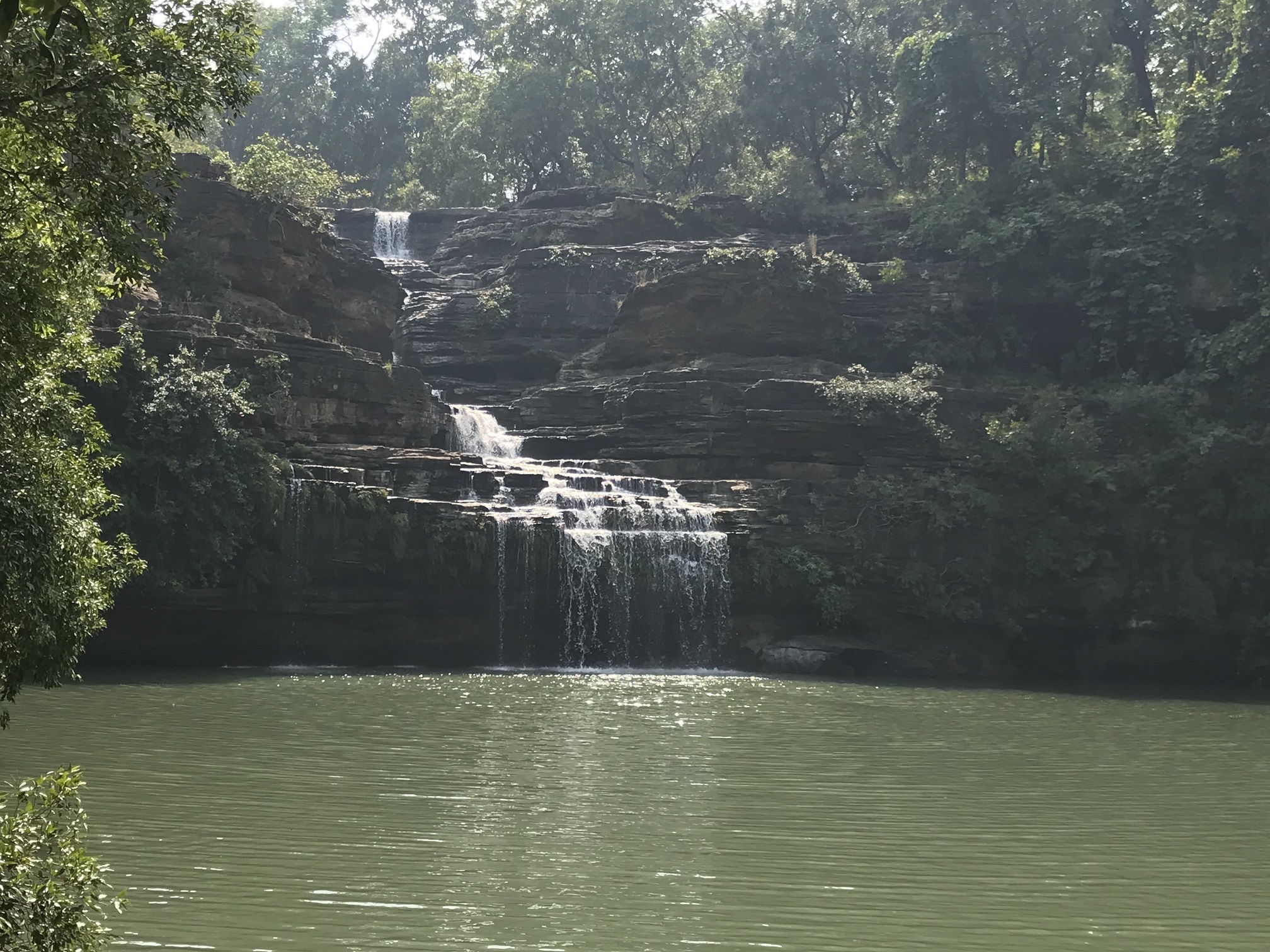
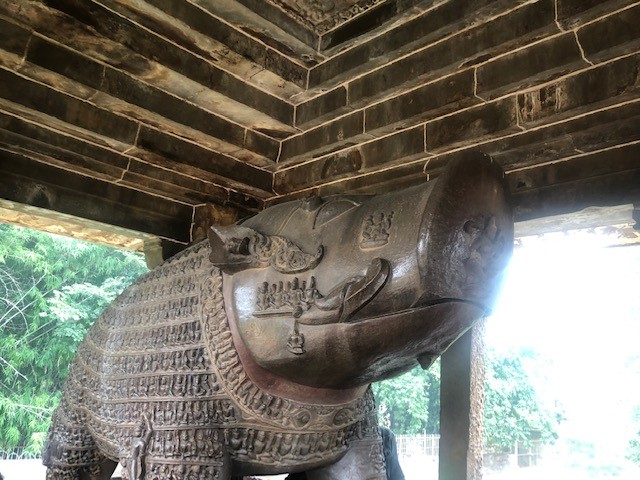 What I found most fascinating was the Varaha temple. A temple dedicated to the 3rd avatar of Vishnu–Varaha or Boar. I don’t recall any other temple devoted to this avatar. The sculpture is a humungous sandstone monolith—2.6 metres long and 1.7 metres tall. It boggles the mind how they got the stone up there and carved it. Because carve they did—every inch of the boar’s body is covered with numerous figures. Between the nose and mouth is a carving of Goddess Saraswathi, with the Veena in her hands—a tribute to knowledge. In the Varaha avatar, the demon Hiranyaksha kidnapped Goddess Earth and hid her under the cosmic ocean. Varaha battled the demon for a 1000 years and brought back the Goddess. Well, the Varaha statue has battled the elements for over a 1000 years, and stands testimony even today, to the skill of its creators. It looks fresh, exudes power, and is almost shiny metallic looking.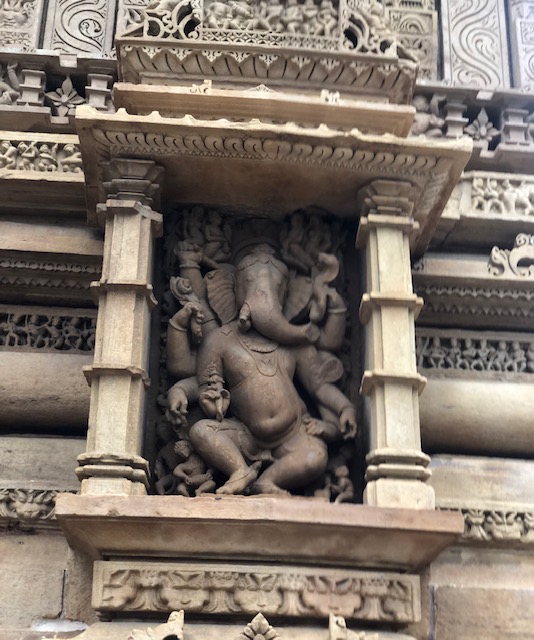
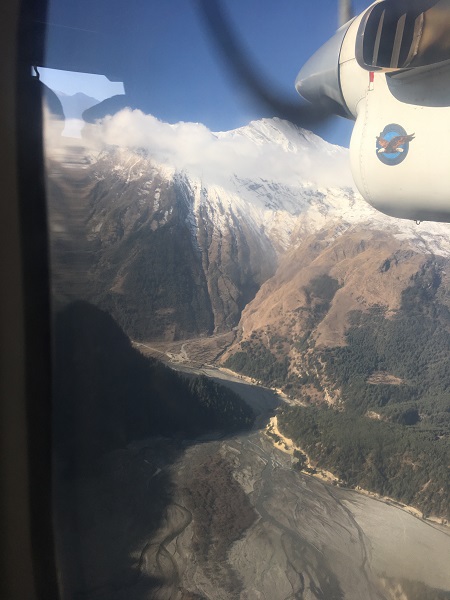 Day 6 (Tuesday): Travelled from Pokhara to Jomsom by 7.50 hrs Tara Air flight. Flight didn’t take off on scheduled time due to bad weather. Till 10.45 am, we had no idea whether flight would take off. Luckily weather cleared by 11 am and we were on the way. It was a spine-chilling experience in a 12-seater charter flight, flying at a very low height of 30 mts among Himalayan glaciers.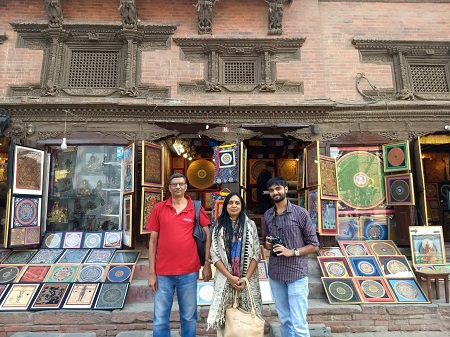
 Millennial Matriarchs