
We celebrate November 14th, the birth anniversary of our first Prime Minister Pandit Jawaharlal Nehru, as Children’s Day. This is because not only did he love children, but children loved him right back! They called him ‘Chacha’—a name that stuck even with adults.
Nehru understood children and the need for loving and carefully nurturing them, as also their importance to the future of the nation. ‘Children are like buds in a garden and should be carefully and lovingly nurtured as they are the future of the nation and citizens of tomorrow. The children of today will make the citizens of tomorrow. The way we bring them up will determine the future of the country’ he said. He also had a clear vision on the purpose and role of education: ‘The object of education is to produce a desire to serve the community as a whole and to apply the knowledge gained not only for personal but for public welfare.’
A contemporary who also loved and valued children was Shankaran Pillai, India’s first political cartoonist. Shankar, as he was called, and Nehru, enjoyed a great friendship, though the cartoonist featured the PM in over 4000 cartoons, many of which were merciless. Nehru was a tall leader—not only could he laugh at himself but he also appreciated the need to do this: ‘It is good to have the veil of our conceit torn occasionally’. He urged the cartoonist on, saying ‘Don’t spare me Shankar.’ Nehru even used to enclose Shankar’s cartoons in his letters to his daughter Indira Gandhi when he was in prison.
Those were different times, those were different people!
Shankar founded the Children’s Book Trust (CBT) in 1957 to ‘to promote the production of well written, well illustrated and well designed books for children.’ CBT has been bringing out high-quality books in English and Indian languages and these are highly subsidized, to make them widely accessible. In 1968, CBT started a magazine called Children’s World. An International Children’s Competition for Painting and Writing has been on-going since 1951. These were pioneering initiatives.
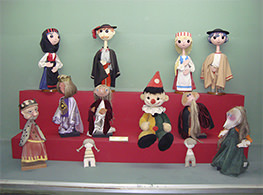
But maybe the most innovative idea was The Shankar’s International Dolls Museum, which has now grown into one of the largest collections of costume dolls anywhere in the world, housing over 7500 dolls from 85+ countries. And it all started with a single doll—sometime in the ‘fifties, the Hungarian Ambassador gave Shankar a typical doll from his country, to give away as one of the prizes in the International Children’s Competition. So fascinated did Shankar become with this doll that he started collecting costume-dolls whenever he travelled.
He did not just do this for his own enjoyment. He often held exhibitions so that children of all strata could see and enjoy them. Pandit Nehru and Indira Gandhi visited one such event, and Indira Gandhi suggested then that Shankar should set up a permanent museum of these dolls. The idea slowly crystallized, and the Museum was inaugurated in 1965. The building where it was housed was appropriately named Nehru House. Nehru gifted a large number of dolls to the Museum and these were the core around which the collection was built. Subsequent PMs as well as Ambassadors and visiting dignitaries from various countries also added special and unique dolls from their nations. And thereby, a landmark institution was created.
While these were pioneering ideas in their times, the question that needs to be asked is how can the Museum be made relevant for today? How can modern understanding of museums and collections be brought in to revitalize the display and hold the attention of today’s children? The collection is unique ,and the rich collection of artefacts would be a dream for many a researcher to delve into –how can that be facilitated?
We are sitting on a treasure-trove. If we respect the legacy left by Pandit Nehru and Shankar, we have a duty to use this better.
Happy Children’s Day!
–Meena
Pic from https://www.childrensbooktrust.com/dollsmuseum.html
 Millennial Matriarchs