Under the Same Moon

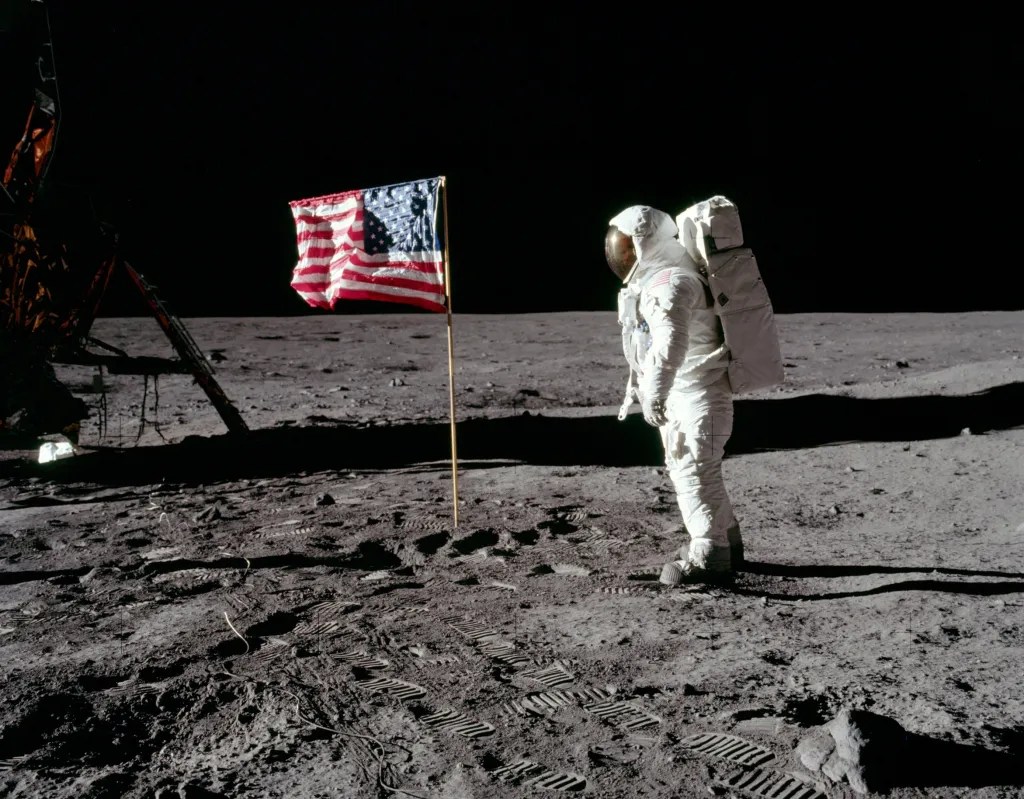
July 20 is a day with special significance for humanity. It is Moon Day—it commemorates the day humans first set foot on the Moon in 1969—a moment that changed forever human imagination, and our relationship to the rest of the universe.

For many of us, the Moon is far more than a historic rock in the sky. It has always fascinated us. It is companion, compass, calendar, and comfort.  It’s poetic, scientific, spiritual, and personal. Whether it is its influence on tides or moods or menstrual cycles—there’s no denying its pull on our lives. It is a part of folklore—in India, a part of the family, with the moon referred to as Chanda mama.

India is writing its own Moon story, with the first manned flight planned for 2027. Grp. Captain Shukla’s sojourn at the International Space Station is part of this preparation. But we have chalked up some notches already:

  • In 2008, Chandrayaan-1 confirmed the presence of water molecules on the Moon—yes, our lunar scout found signs of water where many others hadn’t.
  • Chandrayaan-2 in 2019 didn’t land as planned, but gave us valuable data.
  • And then came Chandrayaan-3 in 2023 when India became the first country to successfully land near the Moon’s south pole—a scientific and symbolic triumph.

This is India’s contemporary moon-story. Here is a beautiful ancient one.

The Rabbit in the Moon: A Buddhist Tale

One of the most enduring tales about the moon is of the rabbit in the Moon, a story rooted in Buddhist Jataka tradition and echoed across generations.

Long ago, the story goes, a kind and gentle rabbit lived in the forest. One day, Lord Indra came down disguised as a hungry old man, asking for food. The rabbit, seeing he had nothing else to offer, jumped into the fire to offer himself as a meal. Touched by this ultimate act of generosity, Indra rescued the rabbit and immortalised him on the Moon—his shape etched forever in the lunar light.

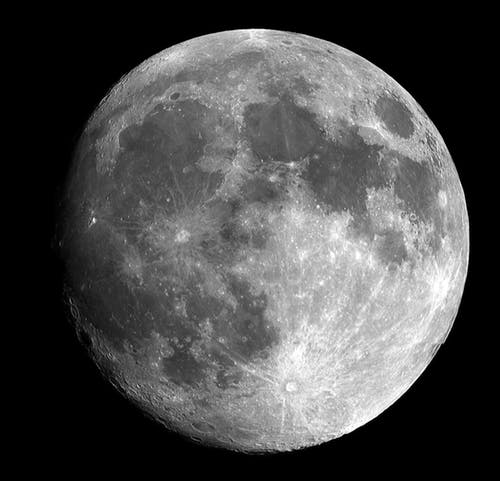
Even today, if you look closely on a clear full moon night, you can make out the shape of a rabbit crouched gently on the surface. Some say he’s still keeping watch. Some say he’s a reminder of kindness and quiet courage.

So on the July 20th, look up at the moon, wonder at its beauty, and ponder the words of some wise people:

“Three things cannot be long hidden: the sun, the moon, and the truth.”

—Buddha

“Don’t tell me the sky is the limit when there are footprints on the moon.”

—Paul Brandt

“The moon is the first milestone on the road to the stars.”

—Arthur C. Clarke

“Always remember we are under the same sky, looking at the same moon.”

—Maxine Lee

“The moon does not fight. It attacks no one. It does not worry. It does not try to crush others. It keeps to its course, but by its very nature, it gently influences. What other body could pull an entire ocean from shore to shore? The moon is faithful to its nature and its power is never diminished.”
― Deng Ming-Dao

–Meena

Next week, some more explorations related to the moon.

Pic: nasa.gov/mission/apollo-11/

Reach for the Sky: Recalling Interactions with Dr. Kasturirangan

Last week, India and the world of science lost a doyen: Dr. Kasturirangan who in the decade till 2003, led the Indian Space programme as Chairman of the Indian Space Research Organisation, as Chairman of the Space Commission and as Secretary to the Government of India in the Department of Space. During this period, India saw the launch of PSLV, our indigenously developed launch vehicle; the testing of Geosynchronous Satellite Launch Vehicle (GSLV); and IRS satellites among others.

Before that, as the Director of ISRO Satellite Centre, he headed the development of the Indian National Satellite (INSAT-2) and the Indian Remote Sensing Satellites (IRS-1A & 1B) as well as scientific satellites. He was Project Director of BHASKARA-I & II. He was also the Project Director for India’s first two experimental earth observation satellites, and subsequently was responsible for overall direction of the first operational Indian Remote Sensing Satellite, IRS-1A.

It was in his time as ISRO chief that Chandrayaan-1 was conceived.

I am proud to say that I had the chance of a few personal interactions. However, not in the context of high-science and technology!

As everyone in the country knows, Dr. Rangan was deeply involved in education, and obviously had a passion for science education (what we today call STEM). It was in this context that I had the chance to interact with him. He was the Chairman of the Board of Governors of the Vikram A. Sarabhai Community Science Centre (VASCSC), where I serve as a member. VASCSC was the result of Dr. Vikram Sarabhai’s vision of enabling the country’s top scientists to contribute to science education. The institution was started in 1966 as a facility where people concerned about the quality of science education could come together to try new ideas and methods of science teaching.

The institution has deep programmatic and emotional links with the various institutions associated with Dr. Sarabhai, the father of India’s space programme.  Dr. Kasturirangan was an obvious choice to chair it!

When very busy people take on yet another committee or chairmanship, it is often really only ornamental. With the best of intentions, they lack the time or mind-space to get deeply involved.

Not so with Dr. Rangan. He ensured to attend VASCSC Board meetings, sometimes in person, otherwise by Zoom. He was there on the dot even for Zoom meetings. He was completely clued in and asked sharp questions about the Action Taken Report. He had a prodigious memory and made quick decisions. He was always supportive of the programmes and publically appreciative of the management and staff for their innovative initiatives and their commitment. He never allowed himself to be distracted with anything else during the course of the meetings, and ensured everyone had their say. It was a humbling experience as well as a learning for all of us.

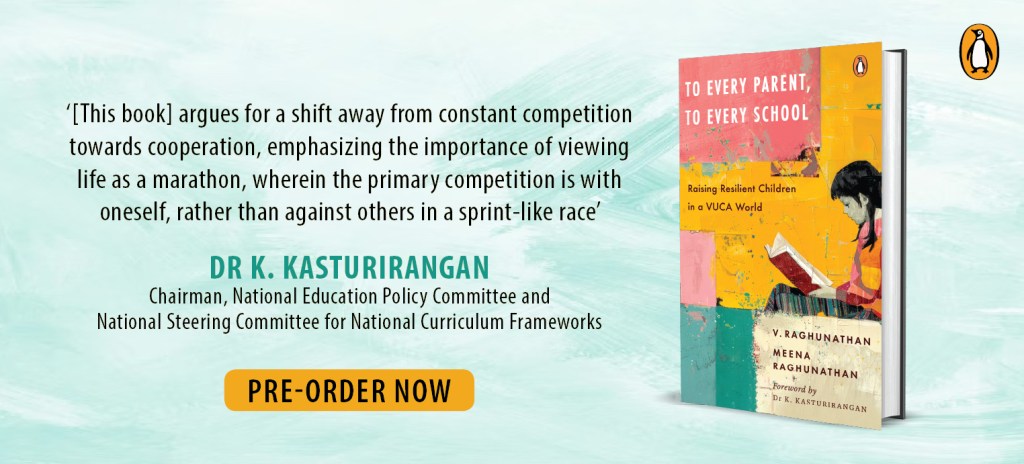
Raghu and I count it as a privilege that he consented to write the Foreword for our book: TO EVERY PARENT, TO EVERY SCHOOL: RAISING RESILIENT CHILDREN IN A VUCA WORLD (Penguin India). Even after he agreed, we were apprehensive: would he find the time to do it within the publisher’s deadline, given the enormous calls on his time? But we need not have worried. The write-up was with us a few days before the date we had indicated! And what a gracious Foreword it was!

These were people cut from a different cloth. They dedicated their lives to their mission. They wore their myriad achievements lightly. They were courteous to one and all. They listened. Nothing was too small for their attention. And they cared.

Grateful for the opportunity to interact with such inspirations.

–Meena

Communications Research: Pioneering Work of Dr. Binod Agrawal in SITE

Last week, another of our gurus passed away. Dr. Binod C. Agrawal wore many hats in his life, and it is impossible in a short piece to do justice to his work . But we knew him as a kind and generous mentor, who never stinted in sharing his time, advice, wisdom and wit with the young rookie educators we were when we first met him.

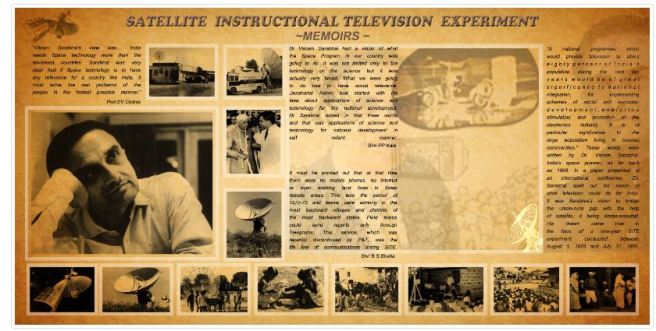
He was then at the Development Communications Education Unit of ISRO. In the communications sector, he was legendary. He had after all been part of the historic SITE (Satellite Instructional Television Experiment), termed by some as the greatest communication experiment in history. SITE was an experimental satellite communications project designed jointly by NASA and the Indian Space Research Organization (ISRO) which made available informational television programmes to rural India. It broadcast programmes to over 2500 villages across 6 states in India, in 1975-76. Dr. Vikram Sarabhai’s dream of India using technology to reach the most deprived was the basis of the experiment.

Everything about the project was unique—the vision, the audacity of the dream, the technological challenges, the operational challenges, and the challenge of making a difference to people’s life.

The last is where Dr. BA’s contribution came in. The contours of the programme were clear. It would broadcast (a) educational television (ETV) school children in the age group of 5-12 years and (b) instructional television (ITV) for adult audiences, primarily designed for neo-literates and illiterates. ETV programme was focussed to make education more interesting, creative, purposive and stimulating and also to create an awareness in the changing society. The ITV for adult viewers was to cover incidents of national importance, improved practices in agriculture, health, hygiene, family planning, nutrition, etc. and some recreation programmes.  

The purpose of the project was to provide information that was useful, relevant and actionable by the target audiences—the people in these most remote, deprived villages. But what did the people there need and want to know? This was the first question that Dr BA and others in the team had to grapple with. What were the information gaps? Without a proper understanding of that, the programme would not really be useful. Hitherto, such studies used to depend essentially on survey methods. Dr. BA, with his background in anthropology, for the first time deployed qualitative studies, to supplement and complement traditional methods. Through innovative research design and large field teams spending time in the target villages, SITE programming could answer the real questions and concerns that people had.

Dr. BA’s work did not stop there. At the instance of the Planning Commission, the impact of SITE was thoroughly evaluated—through a Bench-Mark Survey during July, 1975, a Concurrent Observation, and Repeat Survey in 1976. He was involved in these as well.

The evaluation validated the needs assessment done by the communications research team. 78% of the development programmes were rated as good and over 90% as relevant to the local situations. About three-fourth of the respondents felt that the development programmes were, on the whole, useful and conformed to the local conditions. Over one-fourth of the viewers could acquire detailed knowledge of the new practices shown on the television.

Dr. Agrawal’s contribution to communications research through his involvement with SITE and agriculture research before that, is summed up in a paper by his long-time associates Dr. Arbind Sinha and Dr. Sudhakar Rao: ‘..it is Binod C. Agrawal, trained in cultural anthropology, who devoted his time for conducting communication research using anthropological methods at the Indian Agriculture Research Institute, New Delhi during the early 1970s. A major boost to this field came with his engagement with the now iconic Satellite Instructional Television Experiment (SITE) of Indian Space Research Organization (ISRO) in the mid-1970s..that has brought anthropology in close relationship with development and communication, especially, in the rural context. It helped make communication an integral part of the discipline of anthropology.’

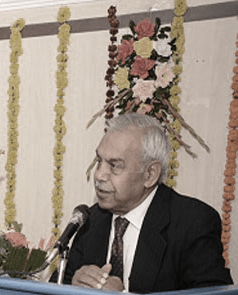
Dr. Binod Agrawal

Dr. BA was not one to sit in an office and design research protocols. How deeply he and his team were involved in the field during SITE can be gauged from a report by the Resident Representative of NASA in India, Dr. Howard Galloway: ‘Just checked with Dr. Binod Agrawal, Chief of the Research and Evaluation Cell (REC). He gave me the following information. All of his staff take evaluation very seriously. When their DRS has trouble, they get immediate help. Example: Recently Dr. Binod was in a village when the TV cut off. Within five minutes his staff had borrowed a motor bike and set off for the subcluster maintenance center (SCM). Returning shortly, he brought the needed part and put the set back into operation. Because it is so much effort for a service man to get to the village to replace a fuse as a circuit card, the REC staff has relieved his burden. They carry fuses and set right the TV sets at once. On his recent trip, Binod saw a villager from a nearby village come furiously pedalling to an REC village, His TV was out. The REC staffer, riding on the back of the bike, went to the sick set, replaced the fuse and restored peace in the village.

It was this commitment and passion shared by the SITE team which made the project an international landmark in space experiments. Talking to Dr. BA more than a decade after these experiences, we could still feel the excitement.

Dr. Agrawal was Founder Director of Mudra Institute of Communications Ahmedabad (MICA), which is one of the most respected communications institutions in the country. He was also Founder Vice Chancellor of Himgiri Zee University, and till recently Professor of Eminence and Director General TALEEM Research Foundation.

He taught so many of us so much.
May his soul rest in peace.

–Meena

To Shruti, his daughter who was a dear colleague.

And thanks to Dr. Arbind Sinha his colleague and another doyen in the world of development communications, for the chat which helped develop this article.

And Long Before E-Education, there was SITE…

In the education space, stakeholders in India ( at least private
schools and ’learning solution providers’) have moved to E-learning. An estimate is that overall, technology adoption has been accelerated by upto two decades,
thanks to COVID.

Two things stand out. We would not have done it, if we did not have to
do it! While online tutoring had caught on in a big way, educational
institutions were definitely not leveraging technology to the extent
it should have happened—till COVID. The other, more heartbreaking, is
that this is adding to the already stark inequity in educational
access. The point is not to deny access to some because it cannot be
universal. The point is rather to go on a mission to make it
universal!

In contrast—SITE (Satellite Instructional Television Experiment)
undertaken by India in 1975, was a proactive effort to use technology
for education and development communication for the most-unreached.
Imagine 1975, when TVs were hardly seen even in urban households. Here
was an unimaginably bold initiative to take TV to 2400 of India’s most
backward villages in 6 states.

There were questions even apart from our technical ability to do this—was such an experiment necessary for a country at our level of poverty and problems? Surely, there were more pressing problems and more immediate use for the scarce resources? But the conviction of a team led by Dr. Vikram Sarabhai, that technology-leapfrogging was critical to solve India’s development challenges,
ensured that the topmost decision makers saw the advantages and they
could make  it happen. (‘Technology-leapfrogging occurs when
decision-makers choose to adopt leading-edge technology, skipping one
or more technology generations’).

This was a NASA-ISRO partnership with the objective of using technology for the education of communities in the most deprived and unreached parts of the country . A NASA broadcasting satellite was used. In the first-ever Indo-US space collaboration, it was positioned over India for the
duration of the experiment (August 1, 1975 to July 1976). The
deeply-researched content on critical issues faced by the community,
from agriculture and health, to culture to short films promoting
scientific temper, the production was done mainly by All India Radio,
with social research and evaluation done by a special team from ISRO,
and with the involvement of experts from a range of the most
significant institutions of India-Tata Institute of Social Sciences, to NCERT. Apart from community programs, there was a rich variety of special educational programs for schools as also massive teacher training.

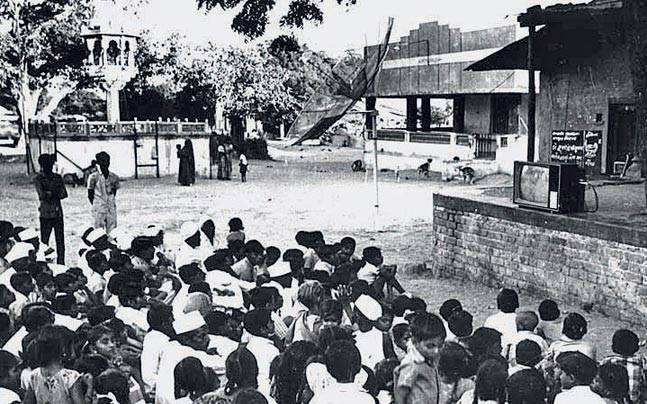
AA930C61-3377-476F-B4AC-6E6DE5EAB179The programs were broadcast for a few hours a day, and hundreds of
people would gather in the village community hall or wherever the
village had installed the TV. In villages which did not have
electricity, truck or car batteries were used to power the viewing.
People in remote Bihar were watching television while many in Delhi
had never seen one!

SITE was a resounding success in proving that technology had a huge
role to play in solving the real development challenges of the
country. It helped ISRO develop its capabilities in operational
satellite systems and contributed to a sound platform for the Indian
National Satellite System (INSAT). It helped us develop an
understanding of educational software programming, from social
research to production to evaluation. And it helped develop managerial
capacities. It was probably also the first time in India that a very
young group (mainly in their 20s) formed the core of the team taking
responsibility for such a complex task of national importance.

Well-known science fiction writer Arthur C. Clarke called SITE ‘the
greatest communication experiment in history’.

So even as education (for some) moves online, here is a Hurrah for the vision of the
giants on whose shoulders we stand! Can that infuse us once again?

And a Hurrah from the Millennial Matriarchs for some of the amazing
people who were part of SITE, whom we have had a chance to interact
with—Prof. Yashpal, Kiran Karnik, BS Bhatia, Binod Agarwal,
Vishwanath, Mira Aghi—to name just a few. We are thankful to life for
giving us these opportunities.

–Meena

The Moon Is Not Going Anywhere

full-moon-moon-bright-sky-47367If there were no failures associated with space forays, what would Hollywood do, considering that so many of its blockbusters are centered around this theme!

We lost contact with Vikram Lander. But we will still be getting information from Chandrayaan, which will be useful to the world’s scientific community. And if not this time, next time around, we are going to make it to the moon and other frontiers.

Dr.Vikram Sarabhai, father of India’s space program and the person for whom the Lander was named, would laud the spirit of ISRO which has dusted itself after the setback and is all gung-ho to carry on. This was the spirit he tried to imbue his institutions with, as testified by a quote from a paper on him:

“He has come. Tell him.”

“I didn’t do it. You tell him.”

“No, you tell. I feel scared.”

“What is it ?’

“The meter is burnt, sir. We passed too much current.”

“Oh, I see. Well, don’t worry. How else would one learn? Next time you will be more careful.”

That, in a nutshell, was Professor Vikram Sarabhai. Meters were scarce those days. In fact, we did not get a new one for almost two months and the work was held up. But the human qualities of this great man were evident even before he took courage in both hands and shaped the destiny of the scientific institution that was to be PRL, and brought it national and international repute. Visionaries there are many and finally nothing succeeds like success; but in the case of Vikrambhai one could see straightaway that he had to succeed; there was just no other alternative!”

The world’s scientific community is with ISRO. India is with ISRO.

It is a universal human quest—to explore the frontiers and expand our knowledge. This is, in the ultimate analysis, beyond boundaries. It is about the human spirit.

–Meena

Vikram Sarabhai Centenary

header_leftA remarkable man was born a hundred years ago in our country. He dared to dream impossible things and proceeded to make them possible. I would have thought the country would have been abuzz this year, with multitudes of events to remind the younger generation of his achievements in myriad fields from space science, to management, to atomic energy, to textile research, to education. That the institutions he had set up would not just celebrate the moment but also introspect and re-dedicate themselves to his principles.

ISRO is the only one which seems to be doing it at any scale. Chandrayaan went up, and all those associated with ISRO did remember and thank him. The mission’s lander is appropriately called Vikram. They are also launching a year-long calendar of programs for schools; awards for journalists in space science, technology and research; releasing a commemorative coin, a coffee table book, a space education van, etc.

But what is really disappointing for me is that his contribution to management and institution building is not being celebrated. Everyone acknowledges that his greatest achievements were probably in institution building. ISRO, IIM, PRL are just some of the prominent institutions which stand testimony to this in the public eye, but ‘Sarabhai was a prolific institution builder. He set up an institution every year beginning from 1947 till his death in 1971. He left his imprint in fields as diverse as space technology and performing arts.’

That makes it about 2 dozen institutions!!

There are a few old papers on his approach to institution-building. But I would have thought it should be seriously taught in management schools; there should be training programs for all levels of managers based on his thinking; that academics would delve into it and write papers by the dozens; that seminars and workshops would be held. In this year at least! But I haven’t heard of any such.

Indian organizations wither and die (if not physically, in spirit and achievements), within decades of their birth. Is it not important for managers in both the public and private sectors to understand how institutions that Dr.Sarabhai built have been able to retain the spirit and reaching the heights—literally the moon—close to five decades after his passing away? Dr.Sarabhai straddled the worlds of industry, government, academia and research, and used the same approach to all. So his approach to institution building should have messages for every manager.

Well, I owe a lot to his approach to institution building. So I thought to put together something as my tiny tribute. (The following are quotes majorly from two sources, one whose authorship it has not been possible to find. Since this is not an academic paper, I have taken liberty to quote from it.).

On Institutional Culture:

‘Trust was an important element of both personal and organizational relationship’.

‘The operating culture of (his) institutions were such that administration played a supportive role and helped the institutional growth through implementation of research programmes. This is unlike many organizations, especially educational, research, governmental, and public sector organizations, where the tail wags the dog.

He believed that an institution based on caring for people gave assurance to individuals to innovate and to respond to situations creatively.

Sarabhai was opposed to rigid controls and often wrote and spoke against controls which, he believed, “damaged innovative behaviour and consequently the growth of new institutions.”

On Building People to Build Institutions:

‘Sarabhai’s institution building philosophy was centered around development of individuals. For him people were more important than buildings. He created and nurtured various institutions through developing and nurturing young individuals. He gave trust, freedom of work and autonomy and showed care and concern to them in return he received creativity and commitment, which ultimately strengthened the institutional goals’.

On Institutional Leadership:

‘Vikram Sarabhai was very particular in selecting the head of an institution. The chief executive can make or mar the institutional fabric.’

In selecting a head of institution, it was very important to Dr. Sarabhai to see ‘how suitable he is as a human being’.

‘According to Sarabhai, a basic requirement of an institutional leader is the ability to provide the appropriate operating culture which would be created by the attitudes and assumptions of its people rather than by the formal organizational structure’.

On Staffing A New Institution:

‘In selecting researchers for ATIRA, Sarabhai insisted on recruiting fresh candidates with knowledge of scientific methodology and preferred those without previous experience. This was a deliberate move, for he believed that taking away experienced and trained people from universities and research institutions would create a vacuum which would weaken them.’

Respect for Individuals:

He showed tremendous respect to each individual he, met. Parikh (1972, p44) described this “Many times I have seen Dr, Sarabhai patiently listening to people who would go on with long incoherent monologues which seemed to convey nothing. Yet, In the end, Dr. Sarabhai would summarise the monologue, giving it a very constructive interpretation and meaning. I am told that when asked why he suffered fools so lightly, Dr. Sarabhai had replied that in a vast country like India where people come from diverse backgrounds not everyone has had a privileged upbringing. One should, therefore, allow for this in listening to people and try to see behind the words what they are trying to say.”

Summing up the Spirit:

And finally, in his own words: ‘There is no leader and there is no led. A leader, if one chooses to identify one, has to be a cultivator rather than a manufacturer. He has to provide the soil and the overall climate and the environment in which the seed can grow. One wants permissive individuals who do not have a compelling need to reassure themselves that they are leaders through issuing instructions to others; rather they set an example through their own creativity, Love of nature and dedication to what one may call the ‘scientific method.’ These are the leaders we need in the field of education and research’.

References:

Institution building: Ganesh S.R., Joshi P. (1985) Lessons from Dr. Vikram Sarabhai’s leadership. Vikalpa. Vol. 10, No 4.

Click to access 09_chapter%204.pdf

–Meena