Look, See, Wonder…

As environmental educators, our most important task with children as well as adults was to awaken them to the wonders of the world around them. From this wonder of the variety of life and the intricate connections therein would come an intellectual curiosity to understand the world better, followed by a passion to do something about it. So the responsibility was to take people through the steps of Awareness, Appreciation, Skills, Knowledge and Action.
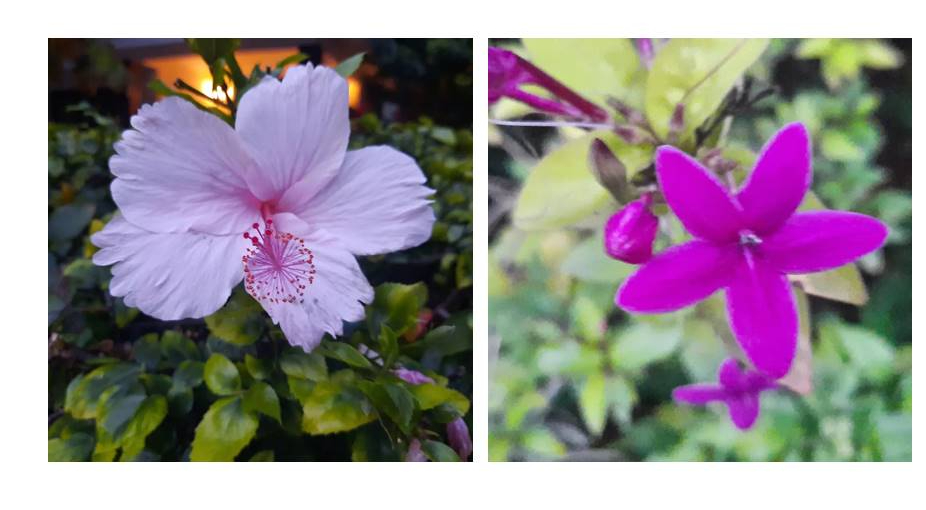
So the first step seeing and sensing the world. I remember some of the exercises we used to do in our workshops to help people do this:

  1. Observe the greens : Closely observe the shades of the leaves of different plants/trees. Try to describe the differences.
  2. Observe the shapes of leaves: Sketch different leaves to scale.
  3. Bark rubbings: Find a tree, place a piece of paper on the bark and colour over with a pencil to get the impression of the bark design. Repeat with another tree.
  4. Listen to sounds: Sit in absolute silence for 5 minutes in a natural area and note down the sounds your hear.
  5. Smells: Go around a garden and sniff the flowers, the leaves, the plants, the soil.

Even the most cynical adult would get completely involved and excited, and the result would be a ‘Wow, who would have thought that there were so many shades of green;  that soil smelt like this; that there were so many different types of sounds in nature!’
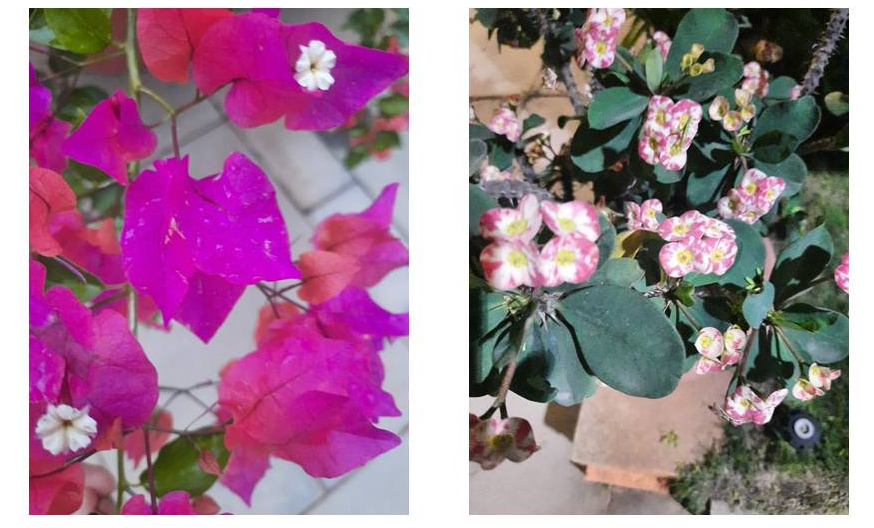
Roles got reversed when the world decided to environmentally educate me two days ago, as I was on my walk. The very same path that I follow every day, but I was out a little earlier than usual. So the light was different and everything stood out with a brightness and clarity that I did not get to see later in the evenings.
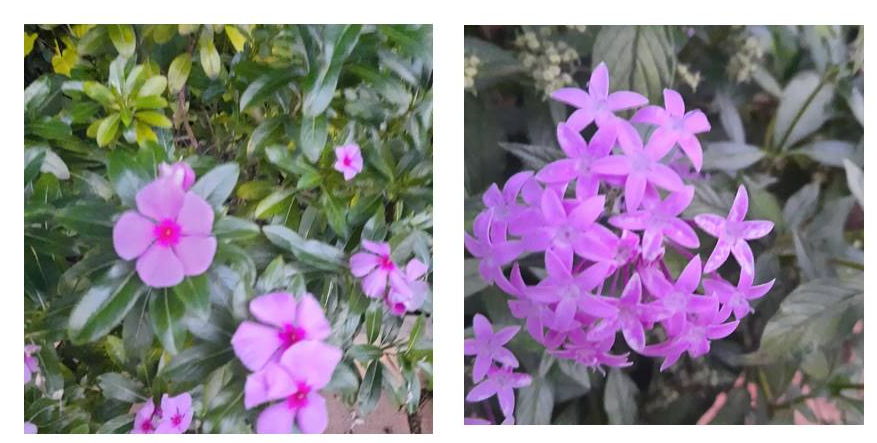
I saw one beautiful pink flower and decided to take a pic. I continued for 2 meters, and saw another one. And within the space of 10 minutes, I had 11 flowers in different shades of pink captured in my phone. I was wonder-struck!

I had obviously only been ‘looking’. I had forgotten to ‘see’. The difference, as Grant Scott, a famous photographer puts it: there is ‘.. a seriousness of intention that one of these words suggests, whilst the other gives the impression of a casual approach to perhaps what is the same thing. The word ‘see’ suggests a depth of visual engagement that allows the person ‘seeing’ to control the action and retain control of any further action that may take place after the initial seeing. To look suggests an observation of surface, it does not suggest any further depth than that. To look suggests both the beginning and end of the action, whereas to see suggests the beginning of a process of investigation.’

So while the popular adage is that we should take the time to smell the flowers, I would also urge that we take the time to see the flowers. And even more important, take the time to let a sense of wonder overtake us!

From this sense of wonder will come the sense of urgency to take care of our world!
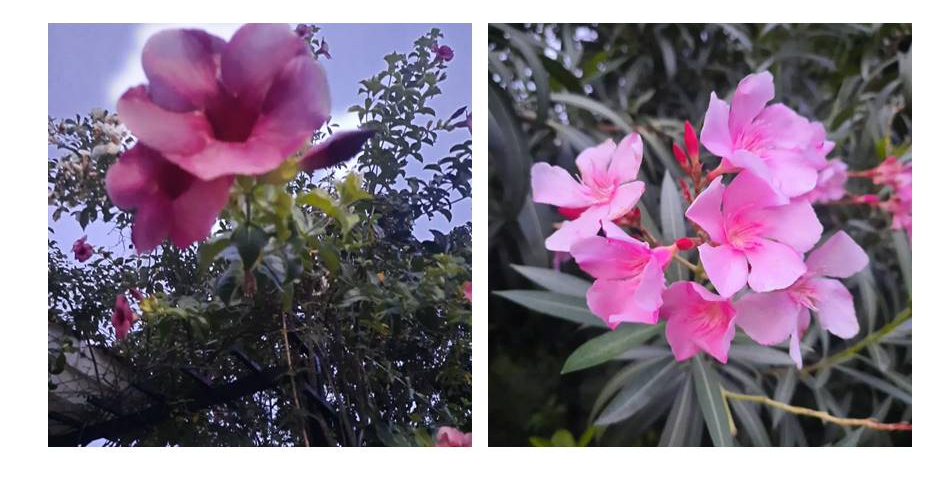
–Meena

A Day for Sea Monkeys

My generation grew up reading comics usually borrowed from lending libraries. Foreign comics were very expensive and there were few parents in our circles who allowed us to buy them often. Maybe once or twice a year.

These precious comics therefore, were read and re-read and savored cover to cover. The last few pages would often carry ads for a fascinating variety of knick-knacks and gimcracks, of which the most fascinating were the quirkily illustrated ads for ‘Sea monkeys.’ Just add the contents of the package to a tank of clean water the ads promised, and lo and behold, in a few seconds or minutes (I forget which), your tank would have these fascinating little creatures swimming around.

Digging a little deeper, I found that in fact sea-monkeys are in a way manmade creatures. They were ‘invented’ in the 1950s and are a hybrid breed of brine shrimp  (Artemia NYOS, a hybrid of Artemia salina) created artificially by a person called Harold von Braunhut. Traditionally used as fish food, von Braunhut felt that brine shrimp could easily be maintained in home aquaria, and used to foster a love of nature among children and help them observe nature. He set about experimenting and found a way through which his hybrid shrimp could be preserved in dry conditions, and brought back to life when they came in contact with water. He patented the process, which is still a secret today. Sea monkeys are translucent and breathe through their feathery feet. They start life with one eye, and then in the course of time, develop two more. Von Braunhut named them ‘sea monkeys’ because of their monkey-like tails. Initially, these creatures lived only for a month or so, but with the help of marine-biology experts, he was able to create creatures which live up to two years.

Von Braunhut introduced them commercially in 1960 under the name ‘Instant Life’.

But marketing the concept and the product was not easy. No toy shops or pet shops would stock them. So von Braunhut came out with the idea of advertising them in comic books, to be bought directly from the company. Sales took off and never looked back! Generations of children in the US have kept sea-monkeys and become acquainted with the wonders of nature through observing them, caring for them and nurturing them. They are still very much an in-demand product.

Sea monkeys did not just find their way into homes and hearts. 400 million of them accompanied astronaut John Glenn to space. Sea monkeys even had their own TV show in the ‘90s revolving around the adventures of three microscopic sea monkeys which are enlarged to human size by a Professor. They have also featured in several TV shows and movies including The Simpsons. Needless to say, there are also several internet fora which discuss these creatures. Sea monkeys have their own Day too—May 16th is marked as National Sea Monkey Day in the US.

Sea monkeys continue to be ‘manufactured’ and sold, and are quite popular even today. They are available on the company site http://www.sea-monkeys.com/, as well as on Amazon, including in India. I am not sure if they are still advertised in comics though!

I have to confess that in my confused mind, for a long time I thought sea-monkeys and seahorses were the same. It was only many, many years later that I realized they were completely different. Sea horses are more bonafide– any of about 50 species of marine fishes allied to pipefishes.

Happy belated Sea Monkey Day!

–Meena

Image: Shutterstock

Close Encounters with Al-Seshan: Tribute to the Man Who made Elections Free and Fair

TN-seshan-_16e58b8495a_largeWe who worked at the Centre for Environment Education (CEE) were lucky. The list of luminaries with whom we had the opportunity to interact was beyond belief.

Mr. TN Seshan was one of them. During his stint as Secretary, Ministry of Environment and Forests, he was on our Governing Board, as CEE was a Centre of Excellence under the Ministry. Apart from that, since CEE was part of Nehru Foundation for Development founded by Dr. Vikram Sarabhai (whom Mr. Seshan counted as a guru), he took interest in the institution beyond his term also.

When he was on the Board, he made it a point to visit CEE whenever he was in Ahmedabad. And review the programs. He could pick holes in any presentation in a matter of minutes, if not seconds, and ask the most unanswerable questions. And his questions were certainly not put gently! While it was traumatic, when we dried our tears and reflected back on the experience, what he pointed out were indeed basic shortcomings in the program design or implementation.

All of us at CEE used to get all primed in the weeks preceding The Visit. We tried to ensure that everything was in order, but sure enough his perfectionist eye would catch just that smallest detail that we had overlooked. And someone had better have had a convincing answer for that! As Mamata remembers: “My personal Encounter with Mr Seshan was when I had to present some parts of a compilation of what was, in future, to become a publication titled ‘Essential Learnings in Environmental Education’. As someone who was still very new and untutored in the subject, this was an absolute trial by fire. Mr Seshan ruthlessly ripped apart every sentence, and reduced me to tears in front of the entire gathering of CEE! In the many years that followed, the Day that Mr Seshan Made Mamata Cry, became one of the memorable milestones in the institutional, and my personal history! As I grew older, and perhaps a little bit wiser, and Mr Seshan became a national icon, every time he was in the news, I remembered with greatest respect how he ingrained in me the importance of working towards ‘excellence’ in whatever one did”.

During his tenure as Secretary Environment, he gave CEE the task of doing a review of the state of Environment Education in the country. And a ridiculous deadline. In those unimaginable days before internet and Google and emails, we set about physically gathering reports, syllabi, textbooks from each state and UT. Almost 30 people worked day and night for about 20 days trying to make sense of the mounds of material. And then the day of the first presentation was upon us! Our director, Kartikeya Sarabhai and a small team of us were to take the 8 a.m. flight to Delhi. We were in the office till 4.30 a.m. putting the report together. While we went home for a quick shower, a team continued work printing and photocopying the report. We and the reports just made it onto the flight!

The meeting was set for 11 or 11.30 in the morning. It was a large Board room where about a dozen officials and our team were gathered. We had about 3-4 copies of the report. We put one at the head of the table where Mr. Seshan would sit. And waited, with butterflies in our tummies. He walked in almost on time; gave us barely a look of acknowledgement, picked up the report and rifled through it. For exactly about 7 minutes. And then tore us and the report to shreds! He started with the shortcomings in the framework that we had created for the analysis, the data gaps, the facets we had not even tried to look at, etc. etc. The meeting lasted about 15 minutes. He spoke in a flow for the latter 8 minutes, tossed the report back on the table, and told his office to fix another date for the next presentation the following week.

It was a learning like no other! We had worked on the report for days, but he was able to get a better perspective in 7 minutes!

The story had a fairly happy ending in that we completely re-thought our approach, and worked on the report over the next month, with interim presentations. The report became a baseline for our work on Environmental Education, and definitely impacted subsequent policy directions.

I had the chance to interact with Mr. Seshan on many occasions, including teaching him how to use the new Apple Computers, a big novelty at that time! He would often call us home for meetings early in the mornings, and his gracious wife would give us wonderful coffee. After the official work, over the coffee, he was not averse to chatting about this and that, including Mamata Kulkarni and Shilpa Shetty!

It is indeed a privilege to have seen Mr. Seshan in action, and worked with him in a small way. When media referred to him as Al-Seshan, he would joke that Bulldog might be more appropriate than Alsatian! Well, from my memory of him, his bark and his bite were both scary. But they did set India’s democracy on a solid footing!

–Meena