Libraries Take Wing

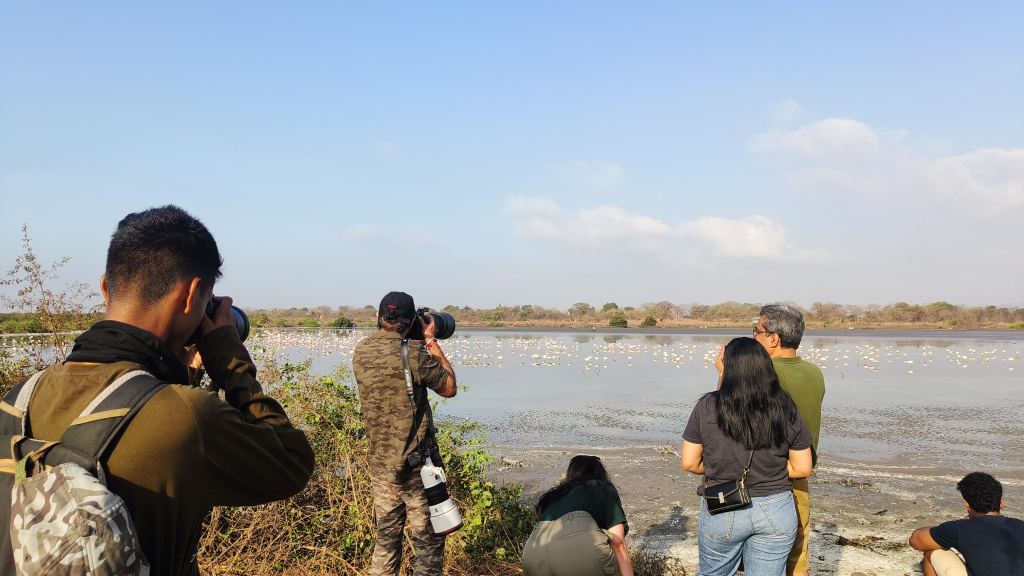
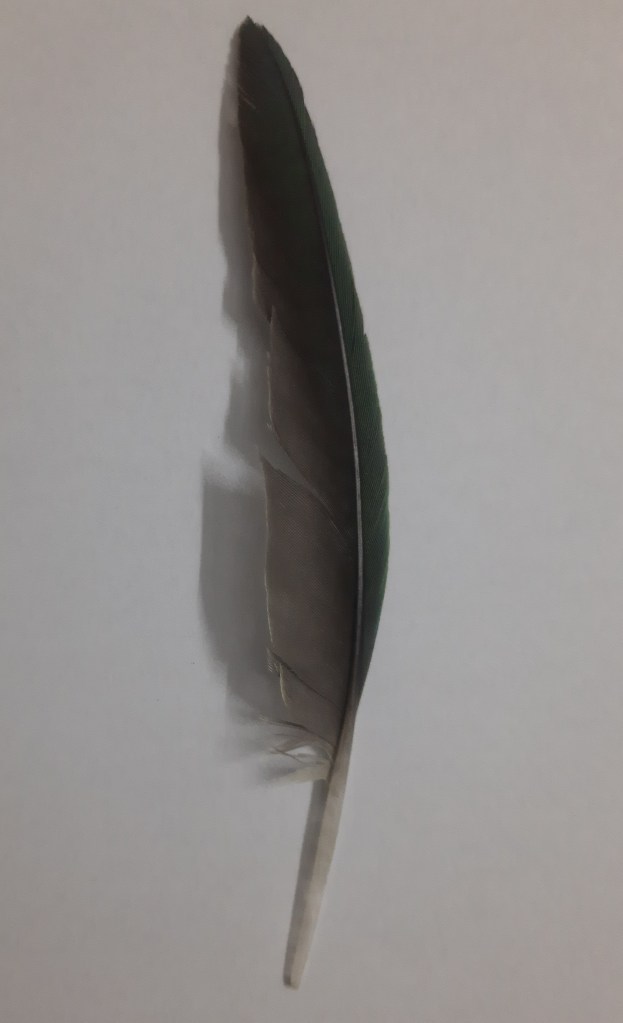
How often we randomly pick up a feather as we walk along. And wonder which bird it could belong to.

A feather library is where we can turn to for help in such a situation. These are digital or physical collections of bird feathers, used for research and education. They are an invaluable resource for understanding bird species, identifying feathers, and gathering data on bird health and natural history. These libraries are important tools for the study and conservation of bird species, offering insights into bird morphology and helping in the identification of feathers found in the wild.

There are not too many across the world. Some of the established ones include:

1. The Feather Atlas created by the U.S. Fish and Wildlife Service is a comprehensive image database of North American birds and covers about 438 species. It can be browsed by bird order, family, or species. It has an open identification tool in which one can fill in details about feather patterns, colors, size, and position, which can help you identify the bird your feather belongs to.

2.Featherbase (Germany) has been created by a working group of German feather-scientists and other collectors worldwide who have come together and contributed their personal collections. It holds close to 8000 specimens from over 1,000 bird species, with a focus on European and African birds. The collection includes high-resolution images and detailed anatomical information, and has supporeted studies in forensics, conservation, and biodiversity monitoring. It is rigorously classified and offers options of various languages so that birders from across the world can use it.

3. Found Feathers (iNaturalist Project) is a citizen science initiative where users contribute observations of feathers they find. The project encourages the collection of feather length and placement data, enhancing the database’s utility for researchers and birders. There are over 2,00,000 observations from across the world.

Special among these is India’s Feather Library. This pioneering initiative is the first of its kind in India and the world, dedicated to documenting, identifying, and studying the flight feathers of Indian birds. It is the passion project of architect Esha Munshi, a dedicated bird watcher who has seen over 1500 bird species across the world, and veterinarian Sherwin Everett who works in a bird hospital in Ahmedabad. They have created the library with the aim of having all feather-related data under one roof, fostering collaboration and advancing the collective understanding of Indian birds. In the short span of time since inception on Nov 15, 2021, 135 species have been documented.

The process is rigorous. They collect feather specimens from dead birds at rescue centres to establish a primary database of bird species. They then make detailed notes on the flight feathers, taking into account the number of Primaries, Secondaries, Tertials (Wing Feathers), and Rectrices (Tail Feathers), along with basic details such as overall length, bill length and width, leg lengths, etc. Then they stretch out one wing and fan the tail in both dorsal and ventral views to document the exact number of feathers, unique characteristics, colour, pattern, and size etc. The physical collection is housed at the National Centre for Biological Sciences (NCBS) in Bangalore.

The database is open to all and provides easy access.

Kudos to the dedication and passion of people like Esha and Sherwin who through their efforts help support avian research, conservation efforts, and educational outreach. And make a better world.

Happy Environment Day!

–Meena

AJT Johnsingh: The Highest Standards of Wildlife Research

A few days ago came the sad news of Dr. AJT Johnsingh’s passing. And for once, mainstream media covered this event—from AIR to Times of India to Hindu to several other national and regional papers. 

For media to so widely cover the passing of a wildlife researcher is sure indication that there was something special about him. And indeed there was.  He was one of India’s best and most respected field researchers. And even more, he put all that knowledge into practice in conservation.  He strongly believed that knowledge should not lie in books, but be used to develop better policies and practices to support conservation on the ground.

Born to teachers who were both nature-lovers and outdoor people, he grew up in a small town called Nanguneri in Tirunelveli district of Tamil Nadu. His parents encouraged him to be outdoors, and family outings generally meant picnics in the wilderness areas of the Western Ghats. They were early and important influences in his love for nature. Another source of inspiration was Jim Corbett, whom he read avidly when young, and whose approach to conservation he admired—it was an approach that was unsentimental, and doing what needed to be done, extending to killing maneaters when there was no other way out.

JC Daniel of BNHS whom he first met when trekking up in the Kalakad hills in 1971, and who mentored him at various stages in his career, was a great influence.  George Schaller,  American mammalogistbiologistconservationist and author recognized by many as the world’s preeminent field biologist, studying wildlife throughout Africa, Asia and South America, was a role model for Johnsingh.

AJT went to St. Xavier’s College, Palayankottai, and then Madras Christian College, Tambaram. He started his career as a professor at Ayya Nadar Janaki Ammal CollegeSivakasi, He worked as a postdoctoral fellow at the Smithsonian Institution in Washington, D.C. He returned to India in 1981 to work with the Bombay Natural History Society. In 1985, he joined the faculty of newly-established Wildlife Institute of IndiaDehradun, and helped shape this premier institute which has developed the cadre of India’s current wildlife professionals. He retired as the Dean WII in 2005. In this period WII trained over 300 managers and several M.Sc Wildlife and PHD students.

He was the first Indian to carry out field research on free-ranging large wild mammals. He focussed particularly on the dhole (wild dog) in Indian forests. His research in the early years focused on the ecology and prey-predator relationships of dhole, other carnivores and ungulates in Bandipur National Park. His interest and research covered several large mammals, and his knowledge of many species saw him on the IUCN Asian Elephant Specialist Group, as well as the Cat, Canid, Bear, and Caprinae Specialist Groups. He also researched the Mahseer fish.

Tigers also fascinated him. He is credited with having taken the first good photo of a tiger in Bandipur. Talking about this photo in an interview to Sanctuary, he said: ‘ For years, no one had been able to take a clear picture of a tiger in Bandipur. Because my dhole study area was littered with tiger spoor, I always carried a camera around ‘just in case’. On May 23, 1978, around 7 a.m., I was sitting eight metres up on a mango tree in the Ministerguthi nullah, which was frequented by tigers whose pugmarks could easily be seen and whose spray markings, I could smell. I sat for around 45 minutes, barely breathing when a movement in the tall grass caught my eye. The tiger walked towards a clearing right in front of me and when it reached a patch of sunlight, I whistled and with a perplexed look on its face, it froze staring straight at me. But the moment it heard my camera shutter, it vanished. Interestingly, I cannot stop smiling whenever I see this picture.’

He authored several research papers, but what got him know widely across the general public where his three popular books: ‘Field Days: A Naturalist’s Journey through South and Southeast Asia’ (2005), ‘Walking the Western Ghats’ (2015) and ‘On Jim Corbett’s Trail and Other Tales From the Jungle’ (2018). He also edited two volumes of The Mammals of South Asia which in total has 69 chapters.

AJT was decorated with many honours including the Distinguished Service Award by the Society for Conservation Biology, the Carl Zeiss Wildlife Conservation Award, the ABN AMRO Sanctuary Lifetime Wildlife Service Award, ‘Kirloskar Vasundhara Sanman’ and Salim Ali Conservation Award.

The government also respected and valued his expertise. He was on the Standing Committee on the National Board for Wildlife, Government of India, and served for three years as a member of the National Tiger Conservation Authority. He was also a Padma Shri awardee. His voice, opinion and work contributed to the creation of wildlife areas including the Kalakkad-Mundanthurai Tiger Reserve.

We at CEE had the opportunity to interact with Dr. Johnsingh on different occasions when we sought his expertise on various projects. Two in which I was personally involved where he was on the Advisory Committee were the Snow Leopard Education project, and the ‘School Education to Support Asian Elephant Conservation’ project. In the days prior to Zoom and video calls, we could not get into discussions with him, but sent him drafts on which he gave his insightful comments.

The conservation world and India have lost a unique researcher and spokesperson who had the knowledge and courage to speak out, and the stature to be listened to. As a message from his family puts it: ‘The Green Warrior has landed safely in his Valhalla, after a war well fought, to save mother nature, for all mankind.’

And to end with a quote from him which underlines the spirit behind his research: “I used to ask questions about wildlife that no one could answer. So I began to search for answers myself by observing animals. Curiosity is the greatest trigger for good science.

RIP, Dr. AJT Johnsingh.  Your passing is personal loss to your family and friends, and as great a loss to the wildlife and environment you worked so hard to protect.

–Meena

.

Homes for Hippos

Hippos hit the news every now and then. And in the past weeks, they have been a topic of some discussion in India, thanks to a request from the Colombian Government for us to provide a home to some of the ‘cocaine hippos’ that have become feral there. Actually, it is quite unfair to call them ‘cocaine hippos’—it is not like they snort cocaine. Their ‘fault’ is that they (or their parents/grand-parents) were owned by the infamous cocaine smuggler Pablo Escobar.

Pablo Escobar was a Colombian druglord, who was called the ‘King of Cocaine’, due to his monopoly of the cocaine trade into the US. He was the founder of the Medellin Cartel, and the wealthiest criminal ever, with his wealth being estimated at $ 30 billion in 1993, when he was killed at the age of 44, by the Colombian National Police.

Every aspect of Escobar’s life was larger-than-life. Like the emperors of old, he set up a menagerie at Hacienda Napoles, his huge ranch east of Medellin, and kept giraffes, elephants, ostriches, and other exotic species there. Four hippos—three males and one female–were part of this menagerie.

When he was killed, authorities did not quite know what to do with these animals, and just left them in the estate—where not unexpectedly, they multiplied. In about 25 years, there were close to a 100 individuals (the number may stand at over 150 today). A single hippo can eat over 35 kg of grass and other green plant material in a day, posing a threat to local biodiversity. Being large and heavy animals, they stomp the ground and compact it as they move over the same area day after day. They defecate in the water, and end up polluting rivers and water bodies.

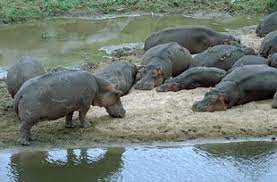
Hippos
Pic: Encyclopedia Britannica

Efforts to curb the population explosion have not met with success. About 15 years ago, the local government tried culling the animals, but this led to protests across Colombia and was thankfully stopped. A sterilization programme is in place, but the hippos breed faster than local experts can find, catch and castrate them (We can’t even manage it with stray dogs, what to talk of hippos!).

Hence the plan to ship the hippos to various countries which are ready to receive them. Mexico has agreed to take 10 of them. Colombia has approached India to house 60 of the animals at the ‘Greens Zoological Rescue and Rehabilitation Kingdom (GZRRC)’, being created by Reliance Industries in Jamnagar, Gujarat. The plan has not met with enthusiasm by any wildlife expert. Housing them in zoos is an expensive proposition.  Hippos are native to Sub-Saharan Africa, not India, and definitely cannot be released into the wild. (However, based on a small fragmented tooth unearthed in Madhya Pradesh, researchers claim that India was home to hippopotami nearly 5.9 million to 9,000 years ago. The hypothesis is that they entered Eurasia from Africa, and then diversified in South Asia before going extinct. But even if they ever were native here, they haven’t been for many millennia.)

There is no doubt Colombia has a problem. Apart from destroying vegetation and biodiversity, hippos are also a threat to humans. They are known to be very aggressive, and can chase people on land, as well as capsize boats in the water. They sometimes raid fields and come into conflict with humans.

And it is also true that a safe home must be found for the hippos—they are only living their life as they were meant to. How can they help it if someone uprooted them from their home and brought them to a new continent?

But bringing them to India definitely does not sound like a good idea. The recent import of cheetahs should serve as a cautionary tale. We need to protect our biodiversity and trying to introduce non-native (at least in human memory) species is not going to help either our diversity or the introduced species.

–Meena

Paper Tigers

29 July is International Tiger Day. The day was first launched at the Saint Petersburg Tiger Summit in Russia in 2010 and is observed annually to remind the world about the decline of the global tiger population, and to encourage efforts for tiger conservation. On this day we will see many reports and statistics about tigers and their falling/growing population, and many conferences and seminars will be held on research and studies on tigers.

This is perhaps a good time to look at the tigers that roam not the forests, but that have also populated the pages of language and literature. The tiger has been a dominant character in folklore and mythology in many cultures.  

Perhaps China is the richest country in myths, representations, traditions, and legends related to tigers. Tigers have been a Chinese cultural symbol which has inspired story tellers, singers, poets, artists, and craftspeople for over 7000 years. In Chinese folklore, tigers are believed to be such powerful creatures that they are endowed with the ability to ward off the three main household disasters: fire, thieves and evil spirits. A painting of a tiger is often hung on a wall inside a building, facing the entrance, to ensure that demons would be too afraid to enter. Even in modern- day China, children wear tiger-headed caps, and shoes embroidered with tiger heads to ward off evil spirits; they are given tiger-shaped pillows to sleep on to make them robust. During the year of the Tiger, children have the character Wang painted on their foreheads in wine and mercury to promote vigour and health.

The tiger has equally captivated the people of the Indian subcontinent since time immemorial – feared and revered at the same time. These majestic beats and the lives of the people, especially those that live in close proximity to the tiger and its habitat, have long been intertwined, giving rise to several myths and legends surrounding them. Tiger lore has been interwoven with gods and legends, giving it a mythical status.

According to stories from Indian mythology, the tiger is believed to have powers to do everything from fighting demons, to creating rain, keeping children safe from nightmares, and healing. Humans are often attributed as having tiger characteristics. The consecration ceremony of a king in ancient times required the king to tread upon a tiger skin, signifying the King’s strength.

Songs, proverbs, and sayings in most Indian languages feature tigers as part of their treasury of folk lore and literature. Tigers appear in many stories in the Panchatantra.

A popular belief among many tribes in the Northeast of India is that the cosmic spirit, humans, and tigers are brothers. There are many folk tales based on this theme, with local variations. The belief that the tiger is a human’s brother has meant that the people of these tribes would rarely kill a tiger. There are traditional rituals performed even today to honour and worship the tiger.  

In more recent times, tigers were introduced to non-Asian audiences through the writings of Englishmen who had lived in colonial India by authors such as the famous hunter-turned-conservationist Jim Corbett. His books like The Man Eaters of Kumaon were perhaps some of the early depictions of human-tiger conflict.

In the culture of the West, where they are not found in the wild, tigers have nevertheless sparked the imaginations of writers, and have become popular fictional characters in stories, films, cartoons, songs, and even advertisements. Perhaps the best recreation of the fearsome tiger is Shere Khan of the Jungle Book fame.

Anthropomorphized tiger characters in children’s books have won their place in millions of hearts. There is boisterous and exuberant, Tigger, who is a one-of-a-kind friend in the world of Winnie the Pooh. He eagerly shares his enthusiasm with others—whether they want him to or not, and steals our heart.

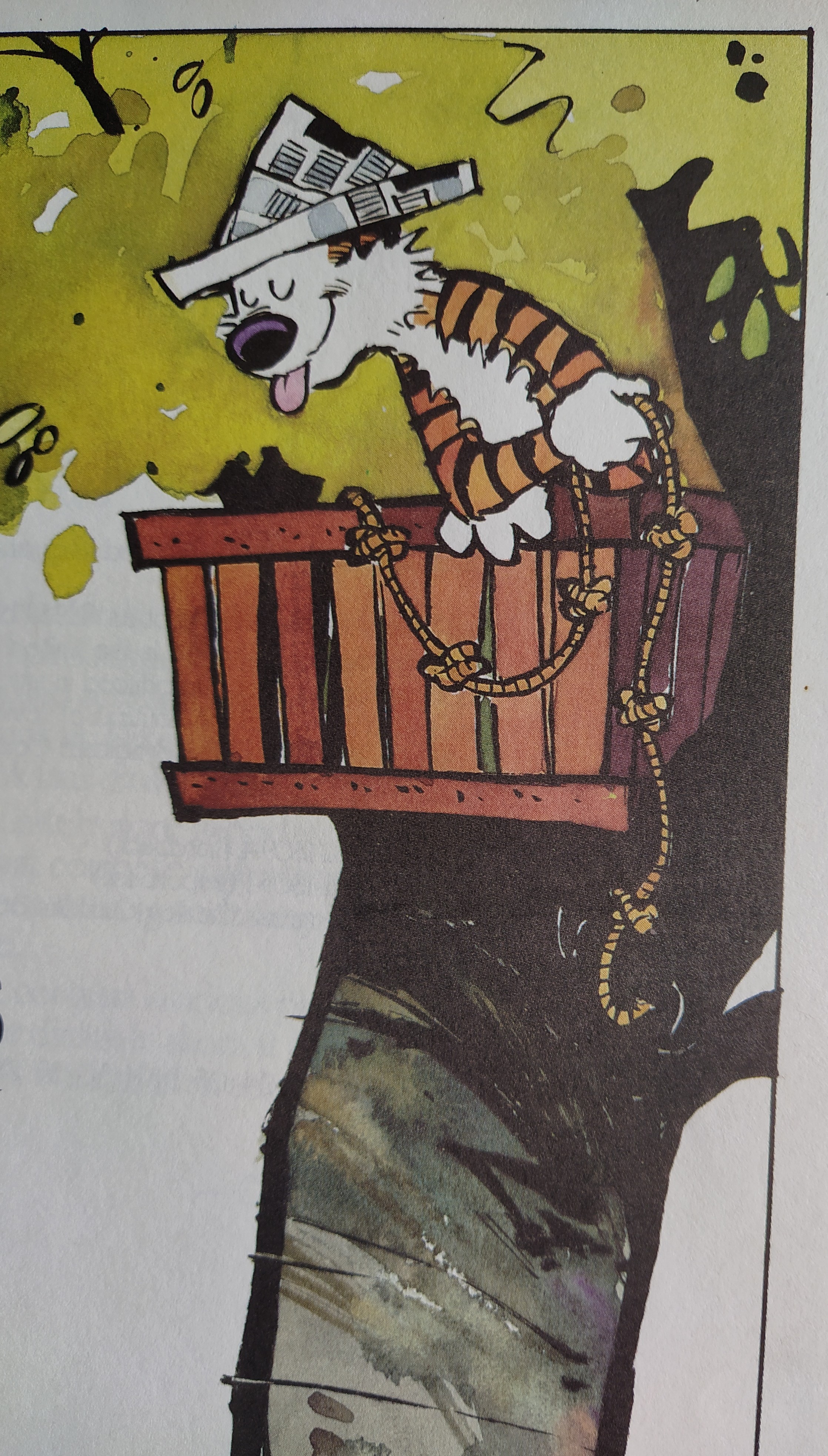
Calvin and Hobbes

And we have the imaginary stuffed tiger Hobbes in the cartoon strip Calvin and Hobbes, who is very real to the irrepressible six-year-old Calvin—a faithful companion in all the capers, sometimes a comforting friend, sometimes a savage beast. The two friends have deep philosophical conversations, ruminating on how best to find meaning in their lives, the essence of which is what all of us are seeking.

Other than literature, tigers have permeated our language through numerous aphorisms, proverbs and sayings. Here are a few ‘tigerisms’.

Paper tiger: Someone who at first glance seems to be in charge but who, on closer examination, is completely powerless.

Tiger economy: A dynamic economy usually referring to of one of the smaller East Asian countries, especially that of Singapore, Taiwan, or South Korea.

Tiger mom: A particularly strict mother who makes her children work very hard in school to achieve success.

Catch a tiger by the tail: Try to control something that is very powerful; have a difficult problem to solve.

A tiger cannot change its stripes: You can’t change your true nature, even if you pretend or claim otherwise.

Eye of the tiger: Determined and focused

A new-born calf has no fear of tigers: A Chinese saying that means that the young are brave, but often due to inexperience.

As tigers in the wild continue to be threatened and pushed towards extinction, International Tiger Day is also an occasion to celebrate the power of words that keep the tiger alive and vibrant in the pages that they also inhabit.

Some beautiful words by Ruskin Bond capture this spirit.

Tigers Forever

May there always be tigers

In the jungles and tall grass

May the tiger’s roar be heard.

May his thunder

Be known in the land.

At the forest pool by moonlight

May he drink and raise his head

Scenting the night wind.

May he crouch low in the grass

When herdsmen pass.

And slumber in dark caverns

When the sun is high.

May there always be tigers

But not so many that one of them

Might be tempted to come into my room

In search of a meal!

Ruskin Bond

–Mamata

The Silent Valley Saga: A Landmark in India’s Environmental Movement

Last week, we paid our tribute to Prof. MK Prasad—one of the key people behind saving Silent Valley. This week, I thought I would re-visit some details about Silent Valley and the campaign.

The Silent Valley deep in the Western Ghats of Kerala is a very special forest. In fact, it is one of the oldest stretches of rainforest in the world, ‘the last authentic sizeable evergreen forests left’, in the words of MK Krishnan, the eminent naturalist.

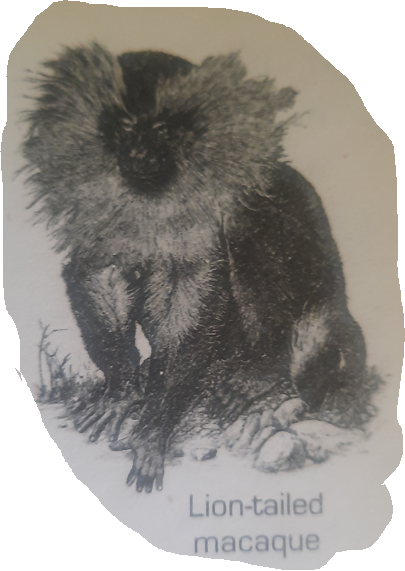
Lion tailed Macaque
Lion-tailed Macaque. Illustration: CEE

It is home to about a 1000 species of flowering plants, 107 species of orchids, 100 ferns, 200 liverworts, 75 lichens and about 200 algae, many of them endemic to the area. It counts 34 species of mammals, 292 species of birds, 31 species of reptiles, 22 species of amphibians, 13 of fishes, 500 of butterflies and moths, besides a multitude of other orders of animal life (keralatravels.com). And these are only the species documented! The valley’s flagship species is the lion-tailed macaque, a species endemic to the Western Ghats.

Many are the myths and legends associated with this forest. It is said that the Pandavas, during their peregrinations after they lost their kingdom to the Kauravas, happened to come to this forest. So enchanted were they that they decided to make it their temporary home. The river that runs through the forest is called Kuntipuzha, in memory of their mother, and the forest itself was called Sairandhari, this being another name for Draupadi.

In 1847, the Englishman Robert Wright came upon the thick forest. He or his colleagues named it Silent Valley. There are several theories about why this name was given. It could of course be an Anglicization of Sairandhari, the traditional name. Or it could be because there are no cicadas in this forest. The constant hum in most forests is due to cicadas, and the absence of this noise can be quite stark. Cicadas do not thrive in wet climate, and that is why they are not common here. Yet another theory is that the British gave it this name due to the presence of the rare lion-tailed macaque whose Latin name is Macaca silenus. But in spite of its name, the Silent Valley resounds to the cadences of the river, bird-calls, monkey-whoops, and insect chirrups.

Silent Valley burst into the national consciousness in the 1970s, when the Kerala Government proposed to construct a dam on River Kuntiphuzha, to generate electricity for the State’s growing needs. When scientists and environmentalists came to know about this, they were very concerned, as it would mean that the Silent Valley would be flooded, and that would be the end of that very special habitat and the unique flora and fauna there.

Kerala Sastra Sahitya Parshat (KSSP), a people’s science movement, took up the cause. On the one hand they did techno-economic and socio-political studies to show the impact of the project, and its pros and cons. On the other hand, they mobilized public opinion, and garnered the support of eminent scientists and people. They also came up with alternatives to building the dam e.g., building a series of small dams, rather than one large one.

It was a long and hard battle. It became a bitter war between the State which wanted the project, and the people who did not. The Centre through the course of the controversy saw many changes, and some of the PMs were for and others against the project. Each set up Committees of scientists. Media was also ranged on the two sides, beginning with local media predominantly in favour of the project, and then slowly veering against it. For a long time, national media paid little attention to the issue, but later weighed in favour of the environment. International environmental organizations also came into the fray. The matter went to court to—with the High Court at some stage giving the go-ahead.

It was when Mrs. Indira Gandhi came back as PM that it began to look as if the conservation movement would win. In 1981, she declared Silent Valley a protected area. But it was found that the hydroelectric dam was not covered in the area under protection. Protests began anew, till finally the project was scrapped in 1983. In 1984, Mrs. Gandhi declared it a National Park—the highest level of protection that can be given. And Silent Valley was saved!

Kerala government has recently decided to declare the buffer zone of Silent Valley National Park as a wildlife sanctuary—the Bhavani Wildlife Sanctuary spread across 148 square km.  So hopefully, Silent Valley continues to remain safe!

Hats off to the scientists, environmentalists, poets, artists, students, NGOs , media, politicians and the common people who fought the long and hard battle to preserve our common heritage.

There are other such success stories, but sadly not very many. And even more sadly, hardly any in recent times.

–Meena

Save the Paradox!

An impossible creature like the platypus cannot but fascinate.

  • It has the beak of a duck; the tail of a beaver; the feet of an otter.
  • It is a mammal but it lays eggs.
  • It is bio-luminescent–a rare charecteristic for a mammal.
  • It is a rare venomous mammal–the males of the species have a spur on the hind feet which can deliver venom.

No wonder early scientists thought it was a hoax—that the preserved specimen they were shown had been made up by sewing together parts of various animals.

It was certainly an animal which changed world views.

It shook up the scientific world. Robert Persig, the American author and philosopher thought this pointed to the inadequacy of scientific thinking, when he said, “…when the Platypus was discovered, scientists said it was a paradox. But Pirsig’s point was it was never a paradox or an oddity. It didn’t make sense only to the scientists because they viewed the nature of animals according to their own classification, when nature did not have any.” ― Robert M. Pirsig, Lila: An Inquiry Into Morals.

It also shook up the world of religion, with anti-evolutionary theory proponents using it to cast doubt on Darwin and his theories.

The animal is found in Australia and Australia alone. Till recently, the overall conservation status of the platypus was not a matter of very deep concern. But recent reports are throwing up some red flags. Platypus habitat is reported to have shrunk by almost 25% in the last three decades. In the last decade or two, they have not been sighted in some of the areas which they traditionally inhabited. The reasons are not difficult to find—urban sprawl encroaching upon creeks and waterways which are platypus habitats; land clearing; disruption of the natural flow of rivers; building of dams and weirs; erosion of river banks; and unstable climate and increased droughts due to climate change.

Fortunately, conservation scientists don’t think the situation is beyond repair, but feel it is time to sit up and take steps. And let us hope they do! The world cannot lose this creature, for then, where would be our sense of wonder? Where the hope of a world which still holds secrets waiting to be discovered? Of the sense that ‘There are more things in heaven and earth, Horatio, than are dreamt of in your philosophy’?

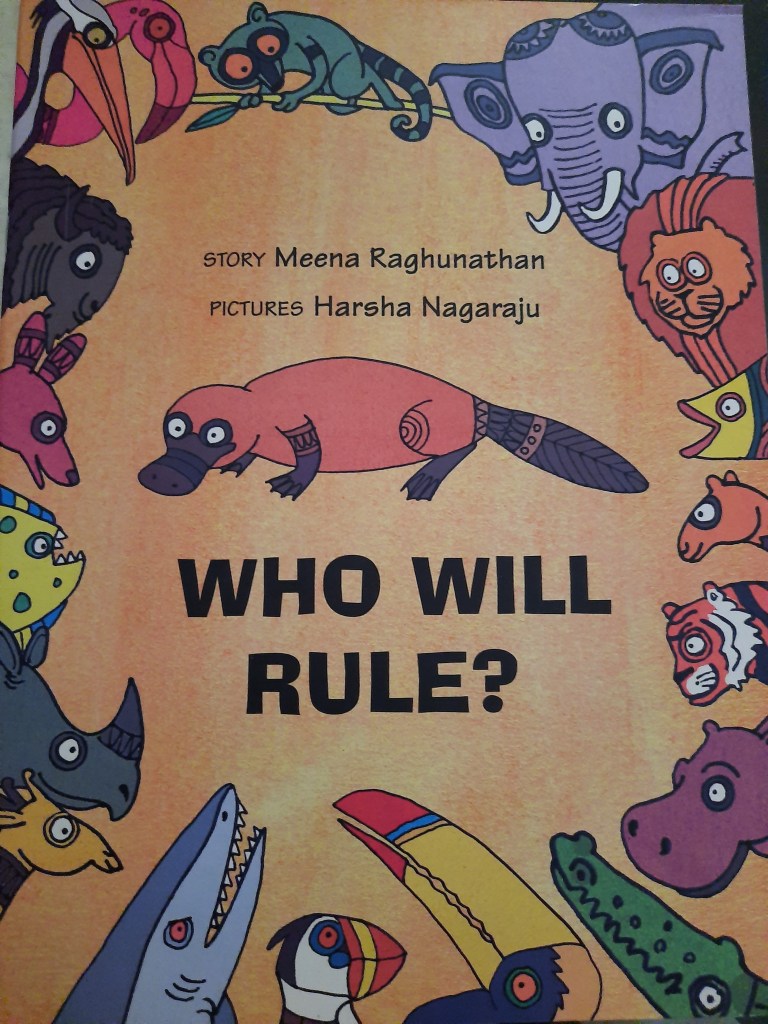
The platypus has inspired its share of lore, legend, stories and poetry. My visit to an aquarium in Australia was the only time I ever saw a platypus. And a story from Native Australian lore re-told there inspired me to write ‘Who Will Rule’, a children’s book brought out by Tulika and translated into many languages.

And to end, a classic platypus poem:

THE PLATYPUS

by: Oliver Herford (1863-1935)

A sad example sets for us: From him we learn how Indecision

Of character provokes Derision.

This vacillating Thing, you see,

Could not decide which he would be,

Fish, Flesh or Fowl, and chose all three.

The scientists were sorely vexed

To classify him; so perplexed

Their brains, that they, with Rage at bay,

Called him a horrid name one day,–

A name that baffles, frights and shocks us,

Ornithorhynchus Paradoxus.

–Meena

Beach Lore

The good news that newspapers brought us yesterday was that eight Indian beaches had qualified for the Blue Flag tag—an achievement indeed! This Certification is awarded by Foundation for Environmental Education (FEE), an NGO, and is a respected one, with stringent requirements. There are 33 criteria spanning environmental, educational, access and safety related parameters. Beaches tagged as Blue Flag provide clean and hygienic bathing water, along with basic infrastructure for tourists.

It is not impossible to spruce up for an inspection and get a certification or award. The challenge is make the improvement sustainable, and an inclusive shared vision with all stakeholders. Let us hope these eight beaches are able to do this and stay on the list, even as more join them in the years to come.

At any rate, it provides an opportunity to revise some beachy information:

A beach is a narrow, gently sloping strip of land that lies along the edge of an ocean, lake, or river (yes, technically, even the land around a lake or along a river is a beach!).

Beaches are made of materials such as sand, pebbles, rocks, and seashell fragments. Over the decades and centuries, forces of nature—water, wind, erosion, weathering—act on the cliffs, rocks and landforms at the edge of the waters, and break them down.  As tides come in, they deposit sediment which may have sand, shells, seaweed, and even marine organisms like crabs or sea anemones. When they go out, they take some sediment back with them.

Beaches are constantly changing. Tides and weather can alter beaches every day, bringing new materials and taking away others. There are seasonal variations too. In the winter, storm winds throw sand into the air. This can sometimes erode beaches and create sandbars. In the summer, waves retrieve sand from sandbars and build the beach back up again. These seasonal changes cause beaches to be wider and have a gentle slope in the summer, and be narrower and steeper in the winter.

At 7500 kms, India has the world’s seventh-longest coastline, with nine states and two union territories having coasts.

Apart from aesthetics, beaches are habitats for many, many species. The Olive Ridley coming to nest in the Gahirmatha beach of Orissa is a phenomenon that naturalists come from around the world to witness. In all, about 2,50,000 to 3,00,000 turtles nest here every year, in the space of about two weeks. Thousands of female turtles arrive each night to lay eggs. They make nest holes, lay 100-300 eggs, smooth the nests over, sometimes covering them with vegetation, and go back. Fifty days later, the eggs hatch, and millions of little turtles, each the size of a brooch, make their way into the ocean to start their lives.  

Our coasts and beaches are also witness to a hoary past: The rockcut temples of Elephanta date back to the 6th century AD. The temples of Mahabalipuram are almost as old—going back to the 7th century. The Konarak temple dates back to the 13th century, at which point it stood directly on the sea, though today the sea has moved about 3 km away. Dwarka is believed to have been the Krishna’s capital, and is said to stand on the site of five earlier cities. Fort Aguada, Goa, built in the 17th century has a unique lighthouse. Rameshwaram has the largest temple in India.

And of course, on April 5, 1930, Gandhiji and 78 satyagrahis reached the beach at Dandi on the coast of Gujarat to make salt and history.

So let’s protect our beaches! Let’s Blue Flag them all!

–Meena

The Sparrow and The Peacock

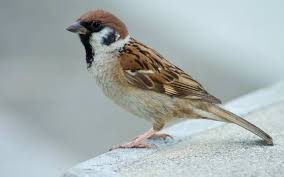
Whesparrown I was growing up in Delhi, house sparrows were very much a part of our lives. They were everywhere, and by the dozens. In fact, most children of those times got their first nature lessons by watching sparrows—the sex differentiation, how they built their nests, the eggs hatching and the parents feeding the young, their mud-bathing etc.
Everyone loved them, but that is not to say they did not give us some headaches. In the summers, they would fly into the house, and it was a mad scramble to switch off the fans and shoo the birds out before they were hit by it and died. And mothers would keep long sticks handy to chase them when they showed signs of making nests in the fan-cups.

For many years now, sparrows are not to be seen so easily. Now, the recently published ‘State of India’s Birds’ assures me that I need not worry because the population of sparrows has been stable in India for the last 25 years. I believe it, because the report is the result of a collaboration among ten of the most respected research and conservation organisations in the country. But I do know that the population has significantly declined from say 35 years ago. And I do wish I would see more of chirpy little birds.

The report also says that the population of peafowl has increased manifold. This may be attributed, it is being said, to the spread of aridity in the country. This is not all good news, as peacocks come into cultivation and eat up growing shoots, causing harm to crops.

The report identifies 101 bird species as needing special efforts for conservation, including specially raptors and water-birds.

The report is a landmark in Indian conservation efforts, because it provides good quality baseline data, which can help shape conservation efforts and their monitoring. It is also unique in that it is based on data collected by citizens across the country–10 million observations collected by over 15,500 birdwatchers across the country. Truly participatory and truly large scale. And the fact that hard-core research organizations are guiding the effort, gives authenticity to the data and findings.

Knowing is the first step to acting. Now we know to some extent what we should worry about. Time to act now!

–Meena

Tribute to India’s Birdman: Dr. Salim Ali

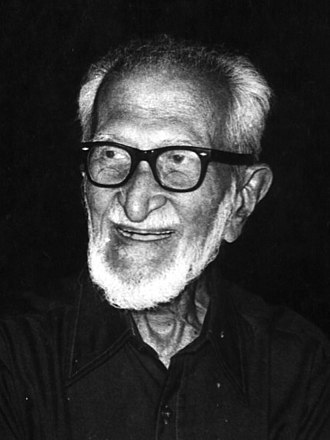
330px-Salim_ali_mnsSalim Ali’s birthday falls on 12 Nov. He was born in 1896 and passed away in 1987. He may be credited with single-handedly bringing ornithology to India. And this interest in ornithology, as it spread, led to interest in wildlife and biodiversity; in environmental issues; in conservation; and in sustainable development.

He inspired generations in India and created a culture of systematic and scientific study of wildlife. If his ‘Book of Indian Birds’ is the easy guide which every bird watcher starts with, the landmark ten volume Handbook of the Birds of India and Pakistan which he wrote with Dillon Ripley is the authoritative guide. Dr. Salim Ali was respected across the world, and decorated with the Padma Bhushan and Padma Vibhushan.

On this his birth anniversary, here are excerpts from an interview of Dr. Salim Ali (when he was 85+ years of age!), with Dr. HSA Yahya of Aligarh Muslim University, and taken from http://wgbis.ces.iisc.ernet.in/ envis/doc97html/biosalim24.html. My only contribution is to have picked out two sections that I found of particular interest.

MONEY MATTERS NOT A JOT

‘Then I told Prater ” look we have so many places in India and we know nothing about birds.”  Hyderabad for instance, was a complete blank on the ornithological map. So I said ” if you write to the British Residents who are really interested in these kinds of things we can probably get some financial support. I do not want any pay. I only want my expenses paid and I will be quite happy to go, study and collect birds.”So the Society got in touch with the Hyderabad Government which had largely British heads of Departments. They were very glad. But it is really quite laughable, the amount we asked for and which we got and in which I was able to complete the survey. I think for the whole of the Hyderabad State survey for six months we got about 6000 Rupees (NOTE: THIS WAS WAY BEFORE INDEPENDENCE!).  Yes, six thousand which included the food of the skinner, our own food, cost of travelling and everything (laughter)! We were able to do it with a lot of trouble, many of our camp shifts had to be done by bullock carts because there were no roads in the places where we were camping. After Hyderabad I did Kerala which was then two states, Cochin and Travancore. Then one after the other Central India, Gwalior, Indore, Bhopal. So all these were done under the same system: asking for small amounts and doing it. I could do it because I had the time, I mean, I was just doing it and nothing else and I did not have any ambition to try again for some bigger job somewhere and so on. Not because bigger jobs were not there and perhaps I would have not got them, but they were not in the line in which I was interested.’

ON THE IMPORTANCE OF A LIKE-MINDED PARTNER IN FOLLOWING A PASSION

‘I tried all kinds of jobs for a long time. Finally, I said that, well, I have all these trainings and I have my chief interest in birds so why should I not do this on my own. My wife had a little money and I had a little investment and so on. Then we worked out and found that we had just enough if we left Bombay, which was very expensive and went to live in some quieter place which would give more facilities for bird study, we will be far happier. My great fortune was that my wife who had had all her education in England and been used to quite a different sort of life to what she would have in the kind of work I wished to do. She insisted that I should take up only the work that I was interested to do. She said ” now we have enough to live quietly, we would go to some small place, I will be quite happy.” She was keen on poetry and Urdu and various kinds of reading and so on. Then she got very interested in birds too, and in outdoor life and in things she had never had any experience in England of.’

From: TRANSCRIPT OF AN INTERVIEW WITH SALIM ALI by Dr H S A Yahya Reader, Centre for wildlife & ornithology, Aligarh Muslim University, Aligarh.

–Meena

PS: ‘The Fall of a Sparrow’ his autobiography,  is a must-read.

The Dodo and The Myna

The Dodo is the textbook example of man’s role in driving other species to extinction. This defenceless bird was hunted and harried to disappearance through the appearance of humans on the uninhabited island of what is now called Mauritius. Sailors on the high seas—the Arabs, the Portuguese and then the Dutch, discovered and re-discovered the pristine isle. For dodos, the beginning of the end was in 1598 when the Dutch discovered them on the island. Dodos were flightless birds, and also fearless because they had never encountered predators. So when humans appeared with their guns and weapons, they had no clue how to protect themselves. Moreover, humans brought along dogs, cats, pigs, rats—all which hunted the birds and raided their nests. Till there were none left.

8887BB0D-6F92-4CD0-AE58-EDF689F6A0AA

But if this is a story of man’s role in the loss of a species, what follows is an equally sorry tale of havoc cause by man’s deliberate introduction of a species into an alien eco-system. And on the very same island of Mauritius!

Sugarcane did and continues to play a key role in the economy of Mauritius. The sugarcane crop in Mauritius was beset by grasshoppers, which ate the leaves. In the 1780s, the French deliberately introduced mynas to the island to help control these. To a certain extent they did, but soon enough the mynas figured out the local lizards were easier to catch than the grasshoppers, and so made the lizards the mainstay of their diet. One consequence of this was that the insects that the lizards fed on multiplied, as they now had no predators! And even more seriously perhaps, the mynas themselves became pests to native species. Mynas are by nature aggressive and raid nests for eggs and newly hatched chicks. They compete with native birds for nesting sites. In Mauritius, they have been known to compete with an endemic species, the endangered Echo Parakeet, for nesting spaces.

Island ecosystems are very special. Human interventions can have disastrous results. To quote the IUCN Island Ecosystem Specialist Group:

‘Earth is home to over 100,000 islands, which support 20% of global biodiversity. The characteristics of size, shape and degree of isolation make many of these islands ecologically and culturally unique.

However, these same characteristics also make islands fragile and vulnerable ecosystems. Islands have the highest proportion of recorded species extinctions. Eighty percent of known species extinctions have occurred on islands and currently 45 percent of IUCN Red List endangered species occur on islands.’

Mauritius and all islands are beautiful and special! Let’s hope that we humans can preserve what makes them special, and leave the generations to follow this precious legacy.

An interesting aside:  A Mughal-time painting found in St. Petersburg  shows a dodo along with several Indian birds. The painting is believed to be from the 17th century and is attributed to the artist Ustad Mansur. The bird depicted probably lived in Emperor Jahangir’s zoo in Surat!

–Meena