The Tale of Two Gentlemen

An uncommon name. But two people of this name, had a profound impact on India.

The first was Abel Joshua Higginbotham, who established the famous Higginbothams Bookshop in 1844–an institution which stands even today. The other was Samuel Evans Higginbottom who founded the Allahabad Agricultural Institute in 1904.

Abel Higginbotham was certainly an interesting character. He boarded a ship from England in the mid-1800s without a ticket or papers. The captain of the ship threw him out at Chennai when he was discovered. The stowaway was a trained librarian, and so could land a job at the city’s Wesleyan Book Shop run by Protestant missionaries. But the store suffered heavy losses and the missionaries who ran the business had to sell their shop at a low price. The enterprising Higginbotham bought the business, set up his own store in the year 1844 and called it “Higginbothams”—making it India’s first general bookstore. It gained a reputation for quality. The Guidebook to the Presidencies of Madras and Bombay by John Murray, which came out in 1859, describes Higginbothams as the “premier bookshop of Madras”. Higginbotham’s were appointed as the “official bookseller to His Royal Highness, the Prince of Wales” during the royal visit to India in 1875. The shop started stocking stationery too, and subsequently started printing its own books.
The second Higginbothams store came up in Bangalore in 1905 on MG Road making it the oldest bookstore in the city. In the 19th century, this was the largest chain of bookstores in the county. Even today, there are over 40 stores across the country.

To add to his achievements, during 1888 and 1889, Higginbotham served as the Sheriff of Madras!

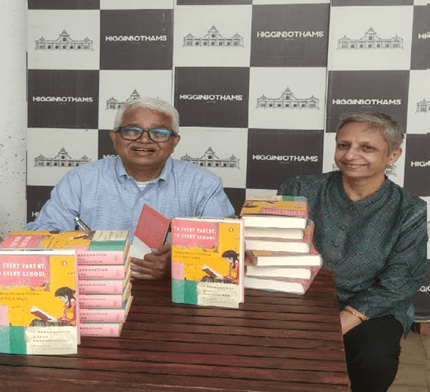
Our book-signing at Higginbothams, Bangalore

The other gentleman, Samuel Higginbottom was a missionary and agricultural reformer who arrived in India as part of the North India Mission of the Presbyterian Church, and landed up in Allahabad. He started as a teacher of economics but was deeply disturbed by the deep poverty of the farmers in the villages and districts around. The land here was not of the best, and agriculture was of very low productivity. He realized that modernization of agriculture was critical for the prosperity of the region, and returned to the United States and studied agriculture at Ohio State University for three years. He came back to Allahabad, to teach scientific methods of farming. But he was convinced that he had to take these efforts to the next level, and set about raising funds for an institution. His educational programs grew into the founding of Allahabad Agricultural Institute in 1919. Higginbotham developed close friendships with Mahatma Gandhi and Jawaharlal Nehru during the course of his work.The institute has done pioneering work for the advancement of agriculture, including introducing pest-resistant high yielding-seeds, improved farm implements and extension programs for farmers. In 2009, this was rechristened as Sam Higginbottom University of Agriculture, Technology and Sciences (SHUATS) in honour of the founder. He left India in 1945.

Sam Higginbottom wrote two books: a book about his work published in 1921 and an autobiography published in 1949.

As the sharp reader would have noticed, the name is spelt differently in the two cases. The two gentlemen were not related. Abel Higginbotham was Irish-born British, while Sam Higginbottam was American.  The similarity in names is purely coincidental — different families, different geographies, different spellings, different national origins.

But we owe thanks in equal measure to both of them for their pioneering services!

–Meena
Food for Thought

October 16 marks World Food Day—the day in 1945 that the Food and Agriculture Organization (FAO) was set up. FAO is a specialized agency of the United Nations that leads international efforts to defeat hunger. FAO’s goal is to achieve ‘food security for all and make sure that people have regular access to enough high-quality food to lead active, healthy lives.’ 194 countries and the European Union constitute its membership and FAO works in over 130 countries worldwide.

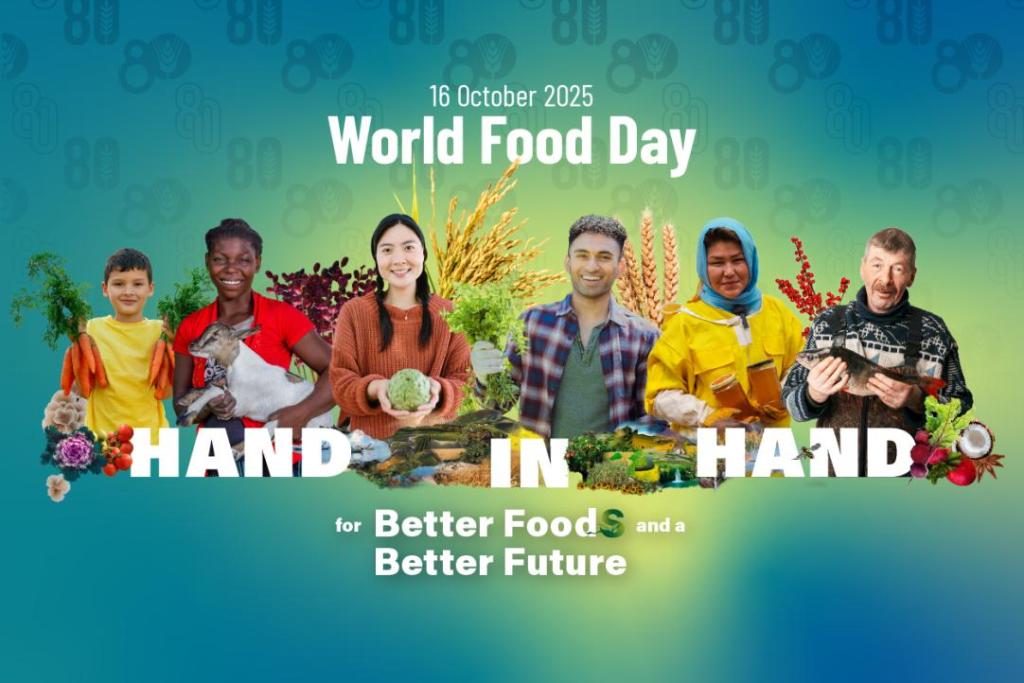
World Food Day aims to raise global awareness about food security and hunger, promoting actions to eradicate hunger and malnourishment. The day focuses on sustainable food systems, healthy diets, and equitable food distribution to ensure a better future for all.  The theme for World Food Day 2025 is “Hand in Hand for Better Foods and a Better Future”.

One would hope that with world attention on this critical issue, things would have gotten better in the decades since the establishment of FAO. Well, in fact measures of world hunger over time do show a general decline from that time. But the bad news is that progress has stagnated and reversed in recent years due to factors like conflict, climate change, and the pandemic.

Food Sufficiency

One area of concern in this turbulent world of conflicts and tariff wars is a country’s food self-sufficiency. The alarming fact is that as per a study reported in Science Alert, carried out by researchers from the University of Göttingen in Germany and the University of Edinburgh, only ONE country in the world can is self-sufficient in all seven key food groups (Fruits, Vegetables, Dairy, Fish, Meat, Plant-based protein, and Starchy staples).

And is Guyana! China and Vietnam were the runners-up, producing enough food to meet their populations’ needs in six out of the seven categories. Less than 15% of countries are self-sufficient in five or more food groups. Half a dozen countries– Afghanistan, the United Arab Emirates, Iraq, Macau, Qatar, and Yemen – are unable to meet self-sufficiency in any food group.

This is bad news in a world which cannot count on peace and fair trade across borders. Governments have to urgently re-think their agricultural policies.

India

India’s agriculture has come a long way from the days of ‘ship to spoon’ when we dependent on the largesse of developed countries. Today, we are net strong in staples (cereals including rice, wheat and coarse grains) and dairy.

But we have our vulnerabilities. The weakest points are pulses and oils.

We depend on pulse imports because production fluctuates.We produced around 24-25 million tonnes of pulses in 2024-25 and imported about 4.65 million tonnes. Domestic production fluctuates due to weather etc.

India meets only ~ 40-45% of its edible oil demand through domestic production. The rest is imported (for oils or oilseeds). In 2023-24, imports we imported approximately16 million tonnes of edible oils. Domestic production is increasing but yield gaps, land use, and competition with other crops are constraints.

The issue is not just the macro-numbers. The context of persistent malnutrition and food insecurity due to rising food prices, food wastage, farmer distress and the increasing impact of climate change on agricultural production must be kept in mind.

Respect Food and Farmers

While we hope our governments and institutions will sharply focus on this, as individuals, this World Food Day is an opportunity to think about where our food comes from; how we can eat healthy without imposing enormous costs on the earth; how we can bring food-waste down to zero. And renew our respect for the farmers who feed us, often without due return.

–Meena

Counting cows…

We the people of India have been waiting to be counted for over four years now. The decadal census of people, which is supposed to be the basis of policy-making has been delayed since 2021, breaking a tradition after seven fairly on-time exercises.

Well, our four-legged co-inhabitants are luckier. The 21st Livestock Census started last week, and will take places over almost five months, from October 2024 to February 2025. It will cost about Rs. 200 crore, and around 1 lakh field officials–mostly veterinarians or para-veterinarians–will be involved in the enumeration process. Though 95.8% of livestock population is in rural areas, the census will cover both rural and urban areas.

Livestock is defined as ‘domesticated animals raised in an agricultural environment to produce labour and commodities such as meat, eggs, milk, fur, leather and wool’. This particular census will collect data on15 species of livestock– Cattle, Buffalo, Mithun, Yak, Sheep, Goat, Pig, Camel, Horse, Ponies, Mule, Donkey, Dog, Rabbit and Elephant, capturing data on 219 indigenous breeds of 16 species. Apart from livestock,the headcount of poultry birds — Fowl, Duck, Turkey, Geese, Quail, Gini Fowl, Ostrich and Emu — will also be taken. The age, sex and use of each individual animal will be documented.

The census will involve officials going from door-to-door to collect detailed data on domesticated animals and birds across the nation—including not just households (about 30 crore), but also household enterprises, non-households (private sector, cooperative sector, etc.) and institutions. Information about the animals will be collected, as also information on instruments and machinery used for animal husbandry. This census will leverage mobile technology for data collection and transmission and hopefully, this will enhance the accuracy and efficiency of data collection.

The Livestock Census has a hoary history in India, with the first one being conducted in 1919-1920. It is conducted every five years with the 20th Livestock Census taking place between October 1, 2018 and September 20, 2019. It put the total Livestock population at 536.76 million, showing an increase of 4.8% over Livestock Census-2012.  Total Bovine population (Cattle, Buffalo, Mithun, and Yak) was 302.79 million in 2019 which shows an increase of 1.0 per cent over the previous census.

The livestock sector is critical in our country given that it provides livelihoods to over 2.1 crore people. It contributes about 6 per cent to the total GDP, and 25 per cent to the Agricultural GDP. The share of livestock in agricultural sector GDP growth has been increasing faster than the crop sector. This is fuelled by rising incomes, a rising population and increased urbanization, which are all propelling demand for livestock products, and hence the rising importance of this sector. As per the 20th Livestock census, the total livestock population shows an increase of 4.6 per cent over the Livestock census 2012. India has the largest population of cattle of any country in the world, with about 33 per cent of the total number.

Worldwide, livestock make up almost 10 per cent of vertebrate biomass—more than human beings, wild birds and wild animals put together! While today cattle make up the largest livestock group worldwide, it was sheep which were among the first animals to be domesticated—probably as early as 10,000 bce.

While there is enormous potential for livestock to contribute to livelihoods of the poor especially women, there are many challenges in India—from disease, to lack of access to veterinary care, vaccination, insurance, fodder and clean water, to diminishing grazing lands,  to challenges in increasing productivity, to lack of organized markets which leads to the exploitation of the sellers, to tackling the contribution of this sector to climate change.

The Livestock census aims to provide data to frame policies and programmes which will hopefully improve the situation.

But as they count cows, maybe they need to count humans too. We too could do with better policies and programmes in many, many areas of life!

–Meena

Charming Worms

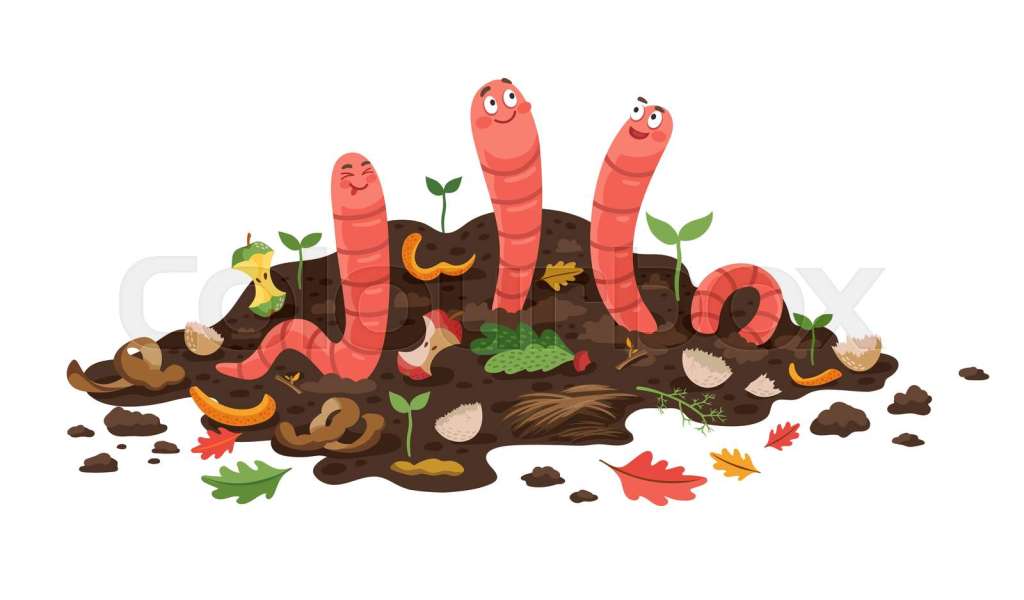
Aristotle called them the ‘intestines of the earth’. Cleopatra declared them to be sacred and forbade Egyptian farmers from removing them from the land. Japanese religious lore has a story about them. Certain of the Shinto gods decided to create the world’s creatures from living clay; formulating, in turn, animals, birds, fish and insects. At each stage their creations asked: ‘What shall we eat?’ When they created Man, he was told to eat everything. Then, the gods noticed some small clay scraps that had been dropped and decided to create worms, which they instructed to live underground and eat soil – although they could come to the surface from time to time in search of anything they found edible.

These creatures are what we call earthworms. Archaeological evidence suggests that worms have been around for 600 million years. These underground creatures hardly made news or were subjects of serious scientific research. It was Charles Darwin who studied earthworms for 39 years, who reaffirmed the value of these lowly creatures when he said, “It may be doubted whether there are many other animals in the world which have played so important a part in the history of the world than the earthworm. Worms are more powerful than the African Elephant and are more important to the economy than the cow.”

Darwin’s observations, investigations, conclusions and pronouncements were published in 1881, six months before his death under the title The Formation of Vegetable Mould through the Action of Worms. Darwin estimated that an acre of mid-19th-century arable land, the result of centuries of gentle pummelling and fertilisation by farm animals and traditional toil by countrymen, contained 53,000 earthworms. He further calculated that, over the course of a year, the worms moved 15 tons of soil to the surface – a process known to agrology as bioturbation.

Many years later, in more recent times, when much of the soil surface has been degraded from the onslaught of chemicals and industrial agricultural processes, scientists have once again recognized that the presence and activities of earthworms have a dramatic effect on the soil habitat.

While eating the soil, the earthworm absorbs the nutrients it needs and casts off the rest. Under ideal conditions, earthworms are believed to eat and digest their entire weight in castings in a mere 24 hours. The nutrient content of the castings, which have gone through the earthworm’s digestive system, was found to have 5 times more soluble nitrogen, 7 times the soluble phosphorus, 11 times the soluble potassium, and 3 times the soluble magnesium plus a smaller amount of calcium. Most earthworms also mix the plant litter and organic matter into the soil, increasing the speed at which they decay and release nutrients into the soil. In these ways, earthworms recycle nutrients from dead plants and other soil organisms so that they can be used again.

Earthworms are also incomparable builders of soils. Their means of travel thorough the soil — pushing, tunnelling and eating their way through all kinds of organic matter. soil opens it up for the benefit of aeration and water seepage. The underground burrowing systems that they create increase the amount of water and air that reaches the plant roots and other soil organisms, helping their growth. Soil that has a good population of earthworms is always easier to work and plants seem to thrive in it. Thus earthworms have been given new sobriquets such as “farmers’ friends’ and ‘ecosystem engineers’.

Earthworms are getting their due. One of the quirky celebrations of these usually hidden-from-sight creatures is a festival held in some parts of England–the Festival of Worm Charming. While we know of snake charming and snake charmers, this one is certainly not part of a regular vocabulary.

Traditionally worm charming, worm grunting and worm fiddling refer to methods of attracting earthworms from the ground, mainly through creating vibrations on the ground.

Darwin was perhaps the first to study earthworm sensitivity or otherwise to light, warmth and sound. His experiments included placing lamps, candles and hot pokers close to them, blowing tobacco smoke over them, sounding a tin whistle and playing a piano close by and having his son play a bassoon loudly. He observed that it was only vibrations that caused them to become active.

Scientific experiments apart, using vibrations to bring worms to the surface has been traditionally used by fishermen to collect worms as bait. In recent years, this activity has taken the form of a competitive sport.

An International Worm Charming festival is held every year June in Devon in England. As with all competitions, this one has its rules and etiquette. 

The aim of the competition is to “charm” the earthworms to come to the surface of the soil by creating vibrations on the ground. Traditionally this was done by sticking a rod called a ‘stob’ (like a pitchfork) in the dirt and smacking it with a simple rod known as a ‘rooping iron’. This competition allows different ways of creating the vibrations—tapping the soil with feet, “twanging” the ground with a fork in the soil, but strictly no digging.

The wormers are given a 3×3 meter square of land to fiddle, grunt, and charm their way to championship glory by collecting more worms than anyone else.

Each teams comprises 3 members: a Charmerer, a Pickerer and a Counterer.

Once all teams have found their plot everyone is allowed to begin “Worming Up”. This is doing whatever you need to do to get the worms out of the ground without digging, forking or pouring harmful liquids onto plots.

“Worming Up” lasts for 5 minutes after which the competition really gets underway.

 15 minutes are allotted to all teams to get as many worms charmed out of the ground.

Any team or competitor caught cheating will be publicly humiliated and almost certainly disqualified.

The International Judges’ decision is final.

All worms must be returned unharmed to the ground after the competition.

The Worm Master presides over the Festival. The Official Cheat tempts entrants by offering them worms so that they can cheat. Old Father Worm Charming offers advice and guidance to would be worm charmers. Finally, there’s the International Judge who is the rule of law in all things to do with arbitration in worm charming disputes.

What a way to spend a sunny summer’s day! While India is known as the ‘land of snake charmers’, this festival may well lead England to be known as the ‘land of worm charmers’!

–Mamata

Scarecrows Forever

For as long as humans have cultivated crops, they have had to worry about keeping birds away from the fields. Not that birds don’t play a huge positive role in agriculture. They do—by pollinating some species, and by eating pests and rodents which destroy crops.

But the damage they do to crops is considerable too. A government of India report has identified 63 species of birds that are responsible for the bulk of this damage in India. Cereals seem particularly attractive to birds, with 52 bird species feasting on these crops. 14 bird species enjoy pulses, while 15 species like oilseeds. Fruit crops attract 23 species.

Traditionally in India, children or others who could not put in hard labour in the fields were deployed to guard crops with the help of slings. They took up a vantage highpoint among the crops and aimed at the birds—hopefully only scaring them and not injuring them. Scarecrows were also put up.

Across the world, maybe because there were not so many children or people to deploy, the use of scarecrows was more widespread. Scarecrows are decoys, usually made of straw or farm waste and fabric, made to look somewhat human and dressed in human clothes. They often have loose sleeves and pants, which move in the wind and scare the birds.

But the scarecrow is not really effective for too long. Once the birds get used to the scarecrow, they barely spare it a glance. In fact, they often use it as a perch!

So agriculturists have gotten innovative too, and come out with many ingenious ways to scare birds, including:

  1. Using shiny, reflective objects: Birds are bothered by the reflection of light from these and keep away. Farmers hang old CDs, aluminium cans, small mirrors or just plain metallic wrapping paper.
  2. Hanging balls: Round colourful garden balls are hung from trees, fences, etc.  Large eyes are often painted on them to mimic predatory birds. Birds get confused and try to avoid them.
  3. Balloons: Large floating balloons too, especially with eyes painted on them, work effectively.
  4. Predator images: Placing objects in the shape of birds’ natural predators– cats, owls, and larger birds of prey—does deter birds. But like with scarecrows, they will get used to these too. So these ‘predators’ need to be moved around frequently. Or they need to be hung from somewhere so that they move. One particular variation of this marketed in some countries is an owl than can be hung, which not only swings around in the wind, but also emits owl-like sounds every now and then.
  5. Sound-based repellents: Birds can hear in the 1-4 kHz range, a range human ears can’t hear too well. Electronic pest control devices take advantage of this by creating sound deterrent-devices that emit distress calls and predator growls in this range, which confuse birds and scare them away. 

Experts agree that no matter which the method deployed, the key is change. Birds quickly recognize that these objects don’t actually harm them, and are emboldened to flock to the fields. So the trick is to keep changing the position of the bird-scarers and add new ones frequently.

There are of course less kind ways to scare away birds.  The use of dogs and predatory birds which attack birds, drones which chase them, letting off cannons or fire crackers, firing plastic projectiles, and use of lasers are among these methods.


But of all these methods, the one that has been around the longest and plays a big part in our imaginations, stories, myths and films is the scarecrow. The most famous one of course is the Scarecrow in search of brains, who plays an important part in ‘Wizard of Oz’.  The Scarecrow is also one of the villains in the contemporary Batman trilogy.

Scarecrows
Scenes from Scarecrow Festivals

Scarecrows also figure in myths and legends of old—for instance, there is a story about a scarecrow in ‘Kojiki’, the oldest surviving book in Japan, dating back to about 712 A.D. A scarecrow called Kuebiko figures in this. He is a god who cannot walk, but knows everything that is happening.  

Several villages and towns in England have Scarecrow festivals.US and Canada also have their share. Many of these are of fairly recent origin. Phillipines is the latest entrant, with the Province of Isabela starting a festival a few years ago.


So even as newer methods of scaring birds emerge—from electronic, to laser, to drone–the fascination with scarecrows continues!

–Meena

Festival of Farming

20181117_120113_resizedThe annual Krishi Mela is an event Bangaloreans look forward to. Organized in November every year, the 3-day Mela showcases the latest in agriculture and livestock related developments—from technologies, to equipment and tools, to new varieties of seeds, to green farming.

First a word about the Gandhi Krishi Vignana Kendra (GKVK), the venue of the mela. This amazing 1300+ acre campus has a hoary history. More than a century ago in 1899, Her Excellency Maharani Vani Vilasa, Regent of Mysore donated 30 acres of land for an Experimental Agricultural Station at Hebbal, which initiated research projects related to agriculture. In 1963, the Government of Mysore decided to establish University of Agricultural Sciences (UAS) along the lines of Land Grant College system of USA and passed the University of Agricultural Sciences Bill. It granted 1300 acres to the GKVK Campus.

UAS was inaugurated by Dr Zakir Hussain, then Vice President of India, on 21st Aug 1964. Speaking at the event, he set the institute a lofty mandate: “By bringing about significant improvement in every phase of rural life, by much needed change in methods of production, by influencing the whole outlook of the rural community and rural home, by giving them a new vision and new hope, this university will be able to make great contribution to national welfare”.

The Krishi Mela sees visitation in the lakhs—from farmers to students to urbanites interested in agriculture, it is a joyous (though somewhat hot and tiring) occasion.

For farmers, it is an opportunity to see the latest advancements in the field of agriculture; to interact with agro-business companies and see demonstrations of agricultural implements; to get advice from university researchers on best methods of farming for a particular crop; and be exposed to practices like biological control of insects, organic farming in polyhouses, setting up biogas plants and extracting biodiesel.

For a layperson like me, it is an occasion to buy seeds and gardening implements; get some advice on how to look after plants; get to know something about the complexities of farming; marvel at things like a 70 kg bunch of bananas and a magnificent Gir bull; and gawk at sights like a drone which can be used for spraying pesticides. Also to partake of a traditional lunch (Menu: ragi muddu, palya, rice-rasam, curd-rice and a sweet) at Rs.50!

For me, the best thing about bringing such a mela into the heart of a city like Bangalore is the value it has as a reminder to us of who feeds us, and the challenges they face to do so!