Growing Older With Ruskin Bond

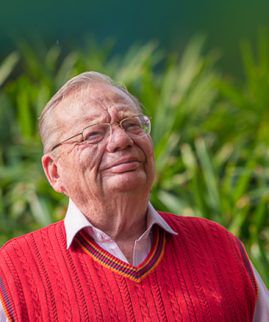
Ruskin Bond celebrated his 91st birthday on 19 May. One of India’s most well-known writers, Ruskin Bond has spent over seven decades as a prolific author, delighting readers of all ages with his simple, beautiful and ‘from the heart’ words. When many put down their tools of trade when they reach “retirement age”, Ruskin Bond celebrates every day of each advancing year with reminiscences, observations of life around him, and above all gratitude for the magic of Nature.

As he puts it: For writers, the nice thing about growing old is that it gives us more to write about—all those years of love, friendship, adventure, achievements, a changing country, a changing world, changing ways of life, history in the making. There may have been dull moments, but most of the time, something was happening—and things continue to happen today.

Many people who have been touched and inspired by Ruskin Bond’s writing have shared their memories. I feel that this is also my opportunity to pay my small tribute.

I was introduced to Ruskin Bond over three decades ago by Uncle Ken and Rusty. These were the characters in the first books that I translated. I was invited by the National Book Trust to translate two of Ruskin’s books into Gujarati. Having neither read him, nor having translated before this, but game for trying something new, I embarked on the project. I so enjoyed the madcap adventures of the eccentric Uncle Ken and the restless school boy Rusty, not just for the stories but for the simple style of writing and the lovely use of language. As a translator it was a challenge to try to retain the spirit and the form in another language.

Following this introduction I continued to follow Ruskin Bond on his wanderings and meanderings through his essays and columns. Here was someone who was not only sensitive to, and entranced by every minute detail of nature, but one who could share this evocatively through words. As an environmental educator who was trying to communicate the wonders of the world around us, and sensitize children to the intricate but fragile web of life, it was inspiring, and humbling to see how effortlessly Ruskin Bond could do just that.

Moving on, as the years went by, one could find new nuances and meaning in his words; words that also reflected the passage of time, both as it affected a human being, but also the environment of which we are all a part. With the passing years, Ruskin Bond’s prolific writing reflects his life journey.

It is the journey that fascinates him, the spirit of wandering and exploring that leads him, and the childlike joy of discovery that makes every step exciting. The adventure is not in the arriving, it’s the on-the-way experience. It is not the expected; it’s the surprise. You are not choosing what you will see in the world, but giving the world an even chance to see you.

Ruskin Bond reminds us that the journey will be much enriched when we use all our senses to the fullest. Sight, hearing, smell, taste and touch. He highlights how each one is capable of giving us joy.

The eyes are our windows to the world, the great wide beautiful world that there is for all of us to marvel at—the skies, wandering clouds, mountains, forests, rivers, the sea; the moon, the stars, the rising sun—all the wonder of creation. The eyes see it all.  

And we hear too. We hear the sounds of nature—the wind, the rain, the sound of birds. We hear the voices of our friends, our loved ones. We hear great music. There is so much to hear and enjoy.

And we smell. The fragrance of roses, of jasmine; of gardens, of wildflowers, the mountain air, the sea breeze. We smell good food—appetizing odours! We eat what smells good.

The sense of taste—we take it for granted, but life wouldn’t be much fun without it. If everything tasted the same from chocolates to fish and chips, we would take no interest in our food and would fade away due to lack of nourishment.  Our taste buds keep us going, make life worth living!

And then there’s touch. The touch of a loving hand, the feel of things, good things—your clothes, your books, your intimate belongings, your own flesh. Cold and warmth, pain and pleasure are felt by our sensitive systems. The sense of touch is felt in our brains, and it is there that all happiness resides.

Value those five senses of yours. The more you use them, the better you will be able to appreciate your life and all that the world has to offer.

Ruskin Bond reminds us to value ourselves, our time and everything from the tiniest to the largest that weaves the web of life. His words are an island of calm in turbulent seas. He does not paint the world as perfect, but urges us to look for the rays of sunshine amidst the dark clouds: The human race is destructive by nature, only too ready to go to war or to pollute and do away with seas, rivers, forests, and our natural inheritance; but now and then along comes someone who can create something beautiful, meaningful—a great painting, a piece of music, a work of literature or philosophy, something that survives the conflicts  and injustices that are the main features of human civilization, past and present. But in the darkness there is a gleam of light, and we can turn away from the ugly to appreciate the beautiful.

Simple words that have continued to offer solace, hope, and a quiet joy as I have grown older with Ruskin Bond over the decades.

Happy Birthday Ruskin Bond. As you remind us: Don’t wait for your birthday. Make today your birthday.

(Excerpts from The Golden Years: The Many Joys of Living a Good Long Life. Ruskin Bond 2023)

–Mamata

MOOMINS

Way back in the ‘60s and ‘70s growing up in Delhi, the family newspaper was The Statesman. It was considered by Tamilian families to be the closest substitute for The Hindu, which in those days used to arrive in Delhi with a delay of a day or two.

So like all good Tamilian families outside Tamil Nadu, we too took The Statesman. And through this, got introduced to the Moomins, which was the only cartoon strip that the paper carried.

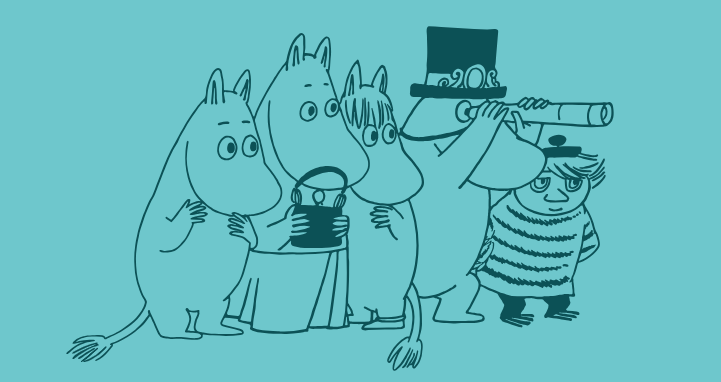
The central characters of the cartoons, which have just turned 80, are gentle-looking hippo-like creatures called the Moomins . They are white and roundish, with large snouts. The Moomin world and its characters are the creations of the Swedish-Finn illustrator and writer Tove Jansson, and the books and comic strips were originally published in Swedish in Finland.

The core family consists of the main protagonist, Moomintroll, a small and well-meaning Moomin who who is forever having adventures and often finds himself in trouble; his mother, the nurturing and loving Moominmamma; and his father, the restless Momminpappa. And besides, there are many of their friends.

The first book was written during World War II as a fairytale for Tove to comfort herself during dark times.  It is based on the situation and stories of  millions of displaced people seeking refuge. The Moomins live in a tall blue house – a joyful place where everyone is welcome, whoever they are. The motto is ‘The door is always open’. The blue-purple Moominhouse is thus a symbol of security, shelter and a sense of belonging. No wonder then that even today the Moomins represent hope for refugees, so much so that UK cities are using this as an the inspiration for a series of art installations in UK cities, in collaboration with Refugee Week. 

The Moomin stories are tales of adventure and overcoming adversities, always with a sense of inclusion and tolerance, and living together in cheer and happiness. Harmony with nature is a recurring underlying theme. The underlying message of all the Moomin stories is that it’s the simple things that are valuable in any situation, and that one’s attitude can often change a bad day into a good one.

Many in India may not be very familiar with these characters, but there are nine Moomin novels which were all successful. The cartoon strip was syndicated in 1954, to over 120 publications in 40 countries. This comic strip reached 20 million readers daily. There was a TV show too, which was originally broadcast in Poland and then sold to other countries including the UK, and aired on PBS in the US. There are even two Moomin theme parks, one in Finland and the other in Japan. Moomin stories have been adapted for the theatre, the cinema, and as an opera.

Here are some Moomin quotes, encapsulating good sense and postivity:

‘That’s most extraordinary, but I’m so used to your doing extraordinary things that nothing surprises me.’

‘Perhaps it will come – perhaps not. It’s all the same to a person who knows that everything is unnecessary.’

‘How nice to be on your own for a bit and do what you like.’

‘I like you, I don’t want to make you feel unhappy.’

‘The main thing in life is to know your own mind.’

In a conflicted world, Moomins may be the cartoon characters we need!

–Meena

Visual: From http://www.moomins.com

WAR AND PEACE: BERTRAND RUSSELL

The media has been bringing to our homes never-ending images of different parts of the world which are in the throes of war. The world is on the brink of what could well be the third world war. At some level people are becoming dangerously inured to the horrors through the never-ending barrage of images and reports that have almost become a part of daily sights and sounds. This in itself is frightening; are we accepting that violence (and its consequences) are an inescapable part of life? And while the world is led by egoistic power-hungry leaders, there is a rapidly declining number of people who feel helpless, even hopeless at the situation as it spirals towards a possibly irrevocable conclusion. Amidst the clamour of belligerent war cries, are some who lament that there are, today, so few voices of reason to remind the world of the precipitous path that we seem to be treading.

What does war achieve? And why do we need to seek peace?

Questions that have been asked since millennia. And answered in different ways in different periods of history. Perhaps one of the most pertinent answers came over a century ago, at a time when the sparks of what became the First World War were just beginning to fan the fire that would rage for the next four years. This was an essay titled The Ethics of War, written by Bertrand Russell in 1915. This was first published in the International Journal of Ethics 25, in January 1915.   

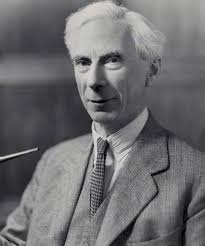
Bertrand Russell is considered as one of the greatest philosophers of the twentieth century. He was actively engaged in numerous social and political issues controversies of his time. A mathematician, educator, social critic, pacifist and political activist, Russell authored over 70 books and thousands of essays and letters addressing a wide range of subjects. He was awarded the Nobel Prize for Literature in 1950 in “recognition of his varied and significant writings in which he champions humanitarian ideals and freedom of thought. Bertrand Russell died in 1970 at the age of 97. Till the end of his life he supported free thought in religion and morals, he opposed war, nationalism and political persecution.

Bertrand Russell’s thoughts on all of the above are beautifully articulated in the essay The Ethics of War. Here are some excerpts:

The question whether war is ever justified, and if so under what circumstances, is one which has been forcing itself upon the attention of all thoughtful men. On this question I find myself in the somewhat painful position of holding that no single one of the combatants is justified in the present war, while not taking the extreme Tolstoyan view that war is under all circumstances a crime. Opinions on such a subject as war are the outcome of feeling rather than of thought: given a man’s emotional temperament, his convictions, both on war in general and on any particular war which may occur during his lifetime, can be predicted with tolerable certainty. The arguments used will be mere reinforcements to convictions otherwise reached. The fundamental facts in this as in all ethical questions are feelings; all that thought can do is to clarify and systematize the expressions of those feelings, and it is such clarifying and systematizing of my own feelings that I wish to attempt in the present article. 

At the beginning of a war each nation, under the influence of what is called patriotism, believes that its own victory is both certain and of great importance to mankind. By concentrating attention upon the supposed advantages of victory of our own side, we become more or less blind to the evils inseparable from war and equally certain whichever side may ultimately prove victorious. Yet so long as these are not fully realized, it is impossible to judge justly whether a war is or is not likely to be beneficial to the human race. Although the theme is trite, it is necessary therefore to briefly remind ourselves what the evils of war really are.

To begin with the most obvious evil: large numbers of young men, the most courageous and the most physically fit in their respective nations, are killed, bringing great sorrow to their friends, loss to the community and gain only to themselves. Many others are maimed for life, some go mad, and others become nervous wrecks. Of those who survive many will be brutalized and morally degraded by the fierce business of killing, which however much it may be a soldier’s duty, must shock and often destroy more humane instincts.

The evils which war produces outside the area of military operations are perhaps even more serious, for though less intense they are far more widespread. …The extent and consequences of the economic injury inflicted by war are much greater than is usually realized. …Thus war, and the fear of war, has a double-effect in retarding social progress: it diminishes the resources available for improving the condition of the wage-earning classes, and it distracts men’s minds from the need and possibility of general improvement by persuading them that the way to better themselves is to injure their comrades in some other country.

Of all the evils of war the greatest, in my opinion, is the purely spiritual evil: the hatred, the injustice, the repudiation of truth, the artificial conflict, where if once the blindness of atavistic instincts and sinister influence of anti-social interests, such as those of armaments with their subservient press, could be overcome, it would seem that there is a real consonance of interest and essential identity of human nature, and every reason to replace hatred by love.

It has been over a century since this impassioned plea by Bertrand Russell. Much has changed since then, but much remains the same. Let us remind ourselves of the futility of mindless violence. Let us Give Peace a Chance.

–Mamata

Prickly Love

May 10 is celebrated as Cactus Day in the US. It is “a day dedicated to recognizing and appreciating the unique and fascinating world of cacti. This day also serves as a reminder of the many cactus species facing extinction and the need for their conservation, especially in their natural habitats.” Cacti are flowering plants that produce seeds. They are able to bloom every year, but they will produce an abundance of flowers in response to heavy rains. The family Cactaceae comprises many species of flowering plants with succulent (water-storing) stems.

It is entirely appropriate that it is a day marked in the US. Because 1749 out of the known 1750 species of cacti are native to the Americas! In other words, cacti were not originally found in any other part of the world.

I have to admit, this kind of blew my mind. All of us, from the time we are children, when asked to draw deserts or make an exhibit around the theme, have always generously populated our deserts with our own versions of cacti.

But cacti occur naturally only in the Americas–from Patagonia in South America, through the US, to parts of Canada. Anywhere else we see them, they have been taken by humans.

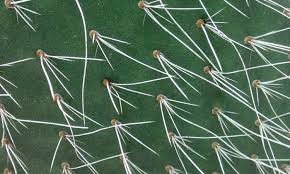
There are however equivalents in other parts of the world. There are the Euphorbs, tamarisks, saltbrushes etc. in Africa, and succulent and spinifex grasses in Australia. In India we have khejri, thoor, acacias etc. all of which grow in our deserts. But these are not cacti. All them have various adaptations to dry conditions like small or no leaves, spines, thick stems and deep roots. But they differ from cacti in that they do not have areoles. The presence of a structure called the areole is what sets cacti apart from all other plants. Areoles are round or elongated, often raised or depressed area on a cactus which is equivalent to a bud and from which spines, flowers, stems, or roots grow.

Cacti were introduced to Europe by, no surprises, Christopher Columbus. In 1493, on his second voyage to the Americas, he brought back a specimen of the prickly pear—the first time a cactus was seen in Europe. It caught the fancy of botanists, horticulturists and the public, and led to widespread cultivation of these plants.

They came to India with the Europeans, most likely sometime in the 16th or 17th century. In recent times, there has been much interest in these plants. They are much prized for their dramatic looks and are a feature in every balcony garden and indoor succulent-tray.  At a commercial level, the dragon fruit, cultivated widely across the country and now found in roadside fruit stands everywhere, is a cactus. Known  as pitaya or pitahaya, it is native to southern Mexico, Central America, and parts of South America. It is a climbing cactus species. The fruit is low in calories, rich in antioxidants and is said to have many other wonderful properties. But frankly, I am yet to get used to the bland taste!

For a few years now, our Central Arid Zone Research Institute (CAZRI), and ICARDA, an international organization, have been experimenting with cultivation of cacti, with a view to using it as fodder. Cacti as a fodder crop is seen as having the potential to help in the widespread shortage of green fodder, particularly during the summer months in many parts of the country. While still in experimental stages, it is thought to have some possibility.

India also has large and scientifically significant cacti collections. The National Cactus and Succulent Botanical Garden and Research Centre is located in the city Panchkula, the satellite town of Chandigarh. It is spread over seven acres and houses over 2500 species of cacti and succulents. The Regional Plant Resource Centre at Bhubenehswar has Asia’s largest collection of cacti. This Centre has created 200 new varieties and hybrids of cacti by breeding, growth manipulation, etc.

We said at the start that all except one cactus species was native to the Americas. The one exception is Thipsalis baccifera also know as the mistletoe cactus, which occurs naturally not only in the Americas, but also Africa, Madagascar, and close home in Sri Lanka. Scientists are still figuring out the how and why of this exception.

So look at cacti with new eyes. Love them, but don’t hug them!

-Meena

A Curious Herbal: Elizabeth Blackwell

One has heard of herbal teas, herbal treatments and herbal facials, but this was the first time that I heard about a curious herbal! Of course my curiosity was piqued! I discovered that while today the word ‘herbal’ is generally used as an adjective, it is also a noun that refers to ‘a book of plants, describing their appearance, their properties and how they may be used for preparing ointments and medicines’. And thus this was the title of such a book first published in England in 1737. The book consisted of five hundred illustrations drawn, engraved and hand-coloured by Elizabeth Blackwell. This was indeed a voluminous ‘herbal’. Why the added adjective ‘Curious’? This refers to an old use of the word to mean ‘accurate and precise’.

The story of Elizabeth Blackwell herself, and how she came to create this book is itself curious and unusual.

Elizabeth Blackwell was born in 1707 in Aberdeen in Scotland. Her father Leonard Simpson was a painter and his daughter inherited his artistic talent. From a young age she loved drawing and painting, and was constantly observing and sketching the natural world around her.

Elizabeth married Alexander Blackwell a doctor and an accountant. They had to move to London when it was discovered that her husband was practicing medicine illegally. But even there Alexander’s unlawful activities resulted in heavy debts that caused him to be imprisoned. Elizabeth was left alone to fend for herself and her child.  In an age when women were not part of the work force Elizabeth drew upon her skill as a botanical artist for survival and sustenance.

In the early eighteenth century, plants were an essential resource for healthcare. Choosing the right plant to treat an ailment was an increasingly precise science, and mistaking one plant for another could have severe consequences. Elizabeth thought of creating an ‘herbal’, an illustrated reference book to help doctors and apothecaries to develop an “exact knowledge” of medicinal plants, their uses and effects in medicine. Before embarking on the project she consulted various botanists and herbalists who advised her that pictures alone would not suffice, these needed to be accompanied by descriptive and explanatory notes. Elizabeth, being trained neither in botany nor in medicine, realized that she would need these inputs from experts. 

But in order to do all this she first needed access to the plants. The Apothecaries Garden (later called the Chelsea Physic Garden) had a vast collection of medicinal plants from many parts of the world. The garden’s director Isaac Rand gave Elizabeth access to the garden. Elizabeth moved with her daughter, to some rooms close to the garden, and threw herself into making botanical drawing from the actual specimens. She began to document the garden’s many indigenous plants, as well as specimens arriving from across the British Empire. She set about not only making highly detailed, analytical drawings of plants from different perspectives and in different stages of growth within the same picture. In addition to their physical characteristics, she also included information about where and when they could be found; their names in a variety of languages; and their curative properties

Her paintings of the plants were precise, and with an artist’s eye, she described the colour and texture of plants in minute detail. She would take each set of completed drawings to her husband in prison and he drafted descriptions for each one. She also managed to get for each plant, along with its English common name, its name in Latin, Greek, Italian, Spanish, Dutch and German. This was in the days well before the Linnaean system of binomial nomenclature provided a system of universal identification. In fact Linnaeus was born in the same year as Elizabeth.

She also became known to prominent doctors and intellectuals who also helped with the supporting text. When a number of the drawings were ready, a team of nine eminent physicians, apothecaries, and a surgeon examined them, and endorsed their authenticity

Elizabeth worked non-stop. She drew, engraved, and hand-coloured each image, managing the work that would normally require several different craftsmen. She prepared four plates every week in instalments, (125 weeks) until she had produced 500 images with bullet points for the medicinal uses for each plant. Elizabeth Blackwell’s illustrations deeply impressed many English physicians, botanists, and apothecaries in mid-18th century London.

Originally published in weekly parts, the first collected volume of A Curious Herbal appeared in 1737. A Curious Herbal received an official commendation from the Royal College of Physicians. Capitalising on this support, E. Blackwell advertised her publication through word of mouth and journal advertisements. It met with moderate success. A second edition was printed 20 years later in a revised and enlarged format.

Through her industry and perseverance Elizabeth was able to pay off her husband’s debts and secure his release from prison. However her personal life continued to be challenging. Her husband Alexander got himself into fresh financial and political difficulties, and was forced to move to Sweden where he was eventually executed for conspiracy. Elizabeth never saw her husband after he left England for Sweden. But she continued to be loyal to him, even sending him a share of the royalties from her book.

She produced no more botanical works. But A Curious Herbal remains a landmark book in the field of medical botany and botanical illustration. In eighteenth century England, with no standing within London’s scientific and medical institutions, Elizabeth Blackwell managed to produce a work that became a standard reference for apothecaries. A Curious Herbal is a monument to Elizabeth Blackwell’s skill not only as a botanist and artist, but also a testament to her remarkable strength of purpose, and entrepreneurship in a male-dominated age when women were only seen as wives and homemakers.

–Mamata

Be Safe!

Last week on April 28th, we marked World Day for Safety and Health at Work. This day has been observed since 2003, when the International Labour Organization (ILO) declared it an occasion to stress the prevention of accidents and diseases at work. It is an opportunity to raise awareness of how to make work safe and healthy, and of the need to raise the political profile of occupational safety and health.

India especially needs all the focus it can give on this. We have seen horrific accidents in tunnels, mines and building sites. Last year saw 240 significant workplace accidents being reported in manufacturing, chemical, pharma, mining and energy sector operations. And these are only the reported accidents—it would be safe to say that many  go unreported. These accidents resulted in over 400 lives being lost and about 850 serious injuries.

We in India deal in large numbers and hence these may not look very serious. The gravity of the situation hits a bit harder when we see from ILO statistics that per 1,00,000 workers, India sees about 117 fatalities, compared to  China’s figure of 7, Brazil’s 7.4, Malaysia’s  14.6, Canada’s  5, etc.

In our everyday lives, we see indifference to safety all around us.  Metro rail construction, overbridge construction, electrical and mobile tower repairs—we never see proper safety measures , or the use of harnesses or personal protective equipment. When an electrician or TV dish installer comes home, their daredevil feats raise the blood pressure.

What to talk of others, we ourselves are not 100% perfect when it comes to donning helmets on two wheelers or seat belts in cars. (I must plead guilty here myself). There seems to be a feeling that ‘it can never happen to me.’ In fact, I recall a colleague conducting surveys about safety measures with those handling hospital waste. The general response was ‘Oh, we have been doing this for years without gloves and masks. Nothing has happened to us. Nothing will. All this just interferes with our work and slows us down. So we don’t really want to wear these things.’

We cannot afford this level of indifference. At one level, is tough laws are needed.  Of workplace safety laws, we have aplenty. We have the Factories Act, 1948, Mines Act, 1952, Dock Workers (Safety, Health and Welfare) Act, 1986, and the Building and Other Construction Workers (Regulation of Employment and Conditions of Service) Act, 1996.

However, the new Occupational Safety, Health and Working Conditions Code, 2019 brought in a few years ago is controversial in that some feel it dilutes safety provisions. “The new occupational safety and health law has severely weakened the inspectorate system, prioritizing ease of doing business over labour rights and worker safety. Inspectors can no longer conduct unannounced inspections, take immediate legal action against violators, or verify compliance effectively due to self-certification and private audits,” to quote Sanjay Vadhavkar, executive committee member of IndustriAll.

While India is good at making laws, their implementation is definitely not as strict as needed. Factory inspectors and traffic cops are equally easy to get by with a little gratification. Never mind that we are talking lives here.

The answer probably lies in education. Children educated about the hazards of fireworks are transforming how Diwali is celebrated. Maybe an equally serious focus on risk, hazard and safety can make a difference. If we catch them young and teach them young, maybe our factories, mines and roads will be safer.

–Meena

Wordsmithery: Animals as Verbs

I am a logophile! A lover of words in all their forms. So I was excited when I discovered that there is a day called Wordsmith Day! What is a wordsmith and what is this day all about? The term wordsmith is derived from other words like blacksmith, goldsmith, silversmith and locksmith, all of which refer to a high level of competence and expertise in a particular technique, and who work to create something using that mastery. Wordsmith thus denotes a person who possesses a mastery of words and who can mould and craft words to form thoughts and ideas.

Wordsmith Day celebrates authors, editors, poets and other writers and their ability to weave words to create masterful word pictures. 

While I am not sure if I can count myself among the club of wordsmiths, I surely appreciate and enjoy the works of master wordsmiths, in all genres. So it was a happy coincidence that I recently came across an interesting way of comparing characteristics. This initially triggered memories of grammar periods in school when we were learning Similes. As strong as an ox. As busy as a bee. As slippery as an eel. As proud as a peacock. As slow as a sloth…

A simile is an expression which describes a person or thing as being similar to someone or something else. Usually similes combine an adjective with a noun to make the comparison, drawing upon a characteristic feature of the creature.

It is interesting that similes compare unlike things, which makes them different from usual comparisons. However there is another way of comparing. Here, the animal becomes a verb rather than a noun. I thought it would be fun to mix and match, and see how both these kinds of comparisons play out.

Ape: The simile could be ‘as clumsy as an ape’. But we also use the word to mean imitate or mimic. Another member of the menagerie performing the same action would be parrot.

Bat: ‘Blind as a bat’ is an apt description of the bat in the daytime. But the other ‘bat’ (also a noun) has a place of honour in many sports. However ‘to bat’ becomes an action word when it is used to strike a ball. And there you have the batter in action.

Dog:  As ‘loyal as a dog’ is a reassuring trait. But when that loyalty is demonstrated by faithfully following the master, it becomes a verb that indicates the action of ‘following closely and persistently’. When the dog is a hound, the action becomes somewhat distressing as in “that moneylender is hounding me day and night”.

Badger: Is an animal with a tenacious bite that is difficult to loosen. One does not usually compare anyone to a badger, but when someone repeatedly asks questions or makes demands in an annoying fashion, we can rightly demand: ”Stop badgering me!”

Fish: ‘To swim like a fish’ denotes ease and grace of moving through water. But the act of ‘fishing’ is one that pulls the fish out of water by hook (or crook). And hopefully when we describe someone as feeling like ‘a fish out of water’, we assume that person is still very much alive (though probably uncomfortable!) But we also ‘fish’ for items out of our pockets or handbags, as well as ‘fish’ for compliments.  

Slug: Along with snail, this indicates slow and lazy. But the action words are far from sluggish. When you ‘slug’ someone or ‘slug it out’, it takes speed and strength to deliver that punch in the fight. Loading a gun with bullets is also called ‘slugging’, and once fired, a bullet moves with a speed that no slug can ever dream of. ‘Slugging back’ a beer equally denotes a fast gulping action.n.   

Worm: Denotes a creature of the dirt, and may be used synonymously with creep, or louse. While a worm may burrow in the soil, its action verb, ‘to worm out’ means to extract or remove what should remain within. ‘Worming out’ such information may require a range of tactics from subterfuge to manipulation to force. While it generally denotes extraction, one can also say that someone will ‘worm’ their way in. 

While worming usually involves indirect methods, information that is ‘ferreted’ out is usually obtained by searching for it in a determined and assiduous way: a close match to the ferret’s hunting instincts and natural ability to navigate burrows to search out animals.  

Leech: There was a time when ‘to leech’ meant to heal or to cure. To leech someone was to care for their wellbeing. This referred to the time when leeches were used to drain out bad blood to remove the toxins in the body. With medical advances, these references became obsolete. Now we use ‘to leech’ to refer to the act of being parasitic, sponging, or freeloading.  

Wolf and Pig: In the old fairy tale it was the hungry wolf who huffed and puffed to bring down the houses of the three little pigs, in the hope of a tasty meal. Today too, it is hunger that drives us to ‘wolf down’ food (devour ravenously). Interestingly it is probably the same hunger that leads us to sometimes ‘pig out’, that is to gorge on something or eat greedily.   

Ram: When two rams fight for dominance, they charge at each other head-on, and smash into each other locking their strong horns. The action has evolved into a verb that evokes a smashing forceful action as in ‘the car rammed into the pillar’, or ‘that really rammed home the message’.  

Bear: Some people are as grumpy as a bear in the morning. But the description does not have much in common with the verb that denotes more responsible actions—‘to carry, to bring, to endure’. People bear children, some bear arms, others bear responsibility for their actions. We bear the weight of, and some bear the brunt of, and a tree will bear fruit. Not quite relatable to the animal at all!   

Lots of play on words! A fun way to mark Wordsmith Day on 3 May!

–Mamata

Reach for the Sky: Recalling Interactions with Dr. Kasturirangan

Last week, India and the world of science lost a doyen: Dr. Kasturirangan who in the decade till 2003, led the Indian Space programme as Chairman of the Indian Space Research Organisation, as Chairman of the Space Commission and as Secretary to the Government of India in the Department of Space. During this period, India saw the launch of PSLV, our indigenously developed launch vehicle; the testing of Geosynchronous Satellite Launch Vehicle (GSLV); and IRS satellites among others.

Before that, as the Director of ISRO Satellite Centre, he headed the development of the Indian National Satellite (INSAT-2) and the Indian Remote Sensing Satellites (IRS-1A & 1B) as well as scientific satellites. He was Project Director of BHASKARA-I & II. He was also the Project Director for India’s first two experimental earth observation satellites, and subsequently was responsible for overall direction of the first operational Indian Remote Sensing Satellite, IRS-1A.

It was in his time as ISRO chief that Chandrayaan-1 was conceived.

I am proud to say that I had the chance of a few personal interactions. However, not in the context of high-science and technology!

As everyone in the country knows, Dr. Rangan was deeply involved in education, and obviously had a passion for science education (what we today call STEM). It was in this context that I had the chance to interact with him. He was the Chairman of the Board of Governors of the Vikram A. Sarabhai Community Science Centre (VASCSC), where I serve as a member. VASCSC was the result of Dr. Vikram Sarabhai’s vision of enabling the country’s top scientists to contribute to science education. The institution was started in 1966 as a facility where people concerned about the quality of science education could come together to try new ideas and methods of science teaching.

The institution has deep programmatic and emotional links with the various institutions associated with Dr. Sarabhai, the father of India’s space programme.  Dr. Kasturirangan was an obvious choice to chair it!

When very busy people take on yet another committee or chairmanship, it is often really only ornamental. With the best of intentions, they lack the time or mind-space to get deeply involved.

Not so with Dr. Rangan. He ensured to attend VASCSC Board meetings, sometimes in person, otherwise by Zoom. He was there on the dot even for Zoom meetings. He was completely clued in and asked sharp questions about the Action Taken Report. He had a prodigious memory and made quick decisions. He was always supportive of the programmes and publically appreciative of the management and staff for their innovative initiatives and their commitment. He never allowed himself to be distracted with anything else during the course of the meetings, and ensured everyone had their say. It was a humbling experience as well as a learning for all of us.

Raghu and I count it as a privilege that he consented to write the Foreword for our book: TO EVERY PARENT, TO EVERY SCHOOL: RAISING RESILIENT CHILDREN IN A VUCA WORLD (Penguin India). Even after he agreed, we were apprehensive: would he find the time to do it within the publisher’s deadline, given the enormous calls on his time? But we need not have worried. The write-up was with us a few days before the date we had indicated! And what a gracious Foreword it was!

These were people cut from a different cloth. They dedicated their lives to their mission. They wore their myriad achievements lightly. They were courteous to one and all. They listened. Nothing was too small for their attention. And they cared.

Grateful for the opportunity to interact with such inspirations.

–Meena

Celebrating Mother Earth: Pachamama

This week the world celebrated Earth Day on 22 April. What started in the United States in 1970 as a one-day demonstration of concern about the threats to the natural environment, grew into a sustained global movement to conserve and protect our Planet Earth which is increasingly threatened in every way. Earth Day continues, to this day, as the largest secular day of celebrating Mother Earth across the world.

The reverence and celebration of Earth as the all-sustaining and nurturing Mother goes back millennia. All indigenous cultures believe that Earth sustains and nurtures all living things, of which humans are but one part. This belief is manifested in the traditions and practices of communities in different parts of the world. One of these is the deification of the Earth as a Goddess, especially in indigenous cultures of the Meso-Americas. This Goddess is Pachamama.

In the culture of the Andean people Pachamama represents the Earth and all its life forms. The word Pachamama comes from the Quechua, an ancient language of the Andean people. Pacha means ‘world’ and mama means ‘mother’, translating to ‘Mother Earth’. It represents the Goddess that exists in all elements of nature. It is the spirit of the land, the essential force that sustains life. Communities celebrate Pachamama through ceremonial rituals and offerings before embarking on any important activity: as a prayer for good crops; to overcome adversities, or requesting protection for livestock, people, and all living things. They also offer thanksgiving for each season’s harvest. The ceremonies demonstrate the integral role that Pachamama plays in agriculture and their daily sustenance. For the Andean people, who have a tradition of herbal medicine, Pachamama is also integral to health and well-being. They believe that honouring Pachamama supports both physical and spiritual health.

Pachamama is a vital life force encompassing four cosmological Quechua principles of Water, Earth, Sun, and Moon, which she embodies as the ultimate Earth Mother deity. The word thus is also taken to mean Mother Cosmos.

For the Andean people Pachamama’s presence is woven into the daily fabric of their lives. As a powerful force that sustains and nourishes, they are careful that their actions should not provoke her wrath. They believe that earthquakes are a manifestation of her displeasure. The rituals and traditions such as challa a ritual where a small portion of chica a fermented corn drink is poured on the ground as an offering to the Goddess, and offerings of cocoa leaves are a symbol of the respect and reverence of the people for Mama Pacha or La Pachamama as she is also called. Another ritual includes burying food, throwing sweets and burning incense to give thanks for the harvest. This is an expression of Ayni, the principle of reciprocity, a giving back to the earth, fostering a balanced relationship between Nature and humans. Shrines dedicated to the goddess are also constructed from natural materials such as tree trunks or rocks.

As in all cultures, culinary traditions also play a part in expressing gratitude for the sustenance that the earth provides. The preparation and sharing of Pachamanca, as part of community feasts is rich in symbolism. The word comes from the Quechua words for ‘earth’ and ‘pot’, and refers to the feast of potatoes, meats, vegetables, and sweet potatoes and corn that have been steamed in a stone-heated, herb-infused underground oven. The oven is made in a pit in the earth, lined with a sequence of layers of stones which have different heat holding capacities. The stones symbolize Inti, the Sun God, and the source of warmth. The ingredients are wrapped in banana leaves and also layered according to their cooking time, from meat and potatoes at the bottom to fruits such as plantains and pineapples at the top. Following a smattering of herbs and beans, the earthen oven is covered with soil and the buried ingredients cook slowly as they are imbued with aromatic heat and smoke. The ritual of burying the food signifies a return to the womb of Mother Earth. Pachamanca is a tribute to Pachamama, with all the offerings fed to the Earth before they are ceremonially dug out and shared to be eaten by the community. Even today this traditional feast symbolizes the community’s history and tradition of thanksgiving and reverence for the all sustaining Pachamama.

The concept of Pachamama symbolizes the interconnectedness of all living things who are sustained and nurtured by a healthy and vibrant Earth. This concept has resonated with ecological movements across the world. And yet, day-after-day, this Earth is being damaged, disturbed and pushed to the brink in every sphere.

It is in such dire moments that we need to look for some rays of hope. The concept of Pachamama is a reminder that we need to look beyond our own needs, wants and luxuries to remember and respect the source of all that meets these human demands. 

Several years ago I was part of an international project that invited contributions from young people around the world to read the UN Global Environment Outlook Report and send in their reactions and responses to the state of the environment, as well as suggest possible ways of tackling these issues. Case studies and examples of positive actions were also collected. The enormously rich inputs (text as well as visual) were sorted and edited also by a panel of young editors. The outcome was a heart-warming book. The unanimous choice for the title: Pachamama: Our Earth Our Future.

This stemmed from one of the young editors: I have visited South America and I have a personal relationship with Pachamama. I know her—she exists. She breathes in the forests, she rages in the earthquakes and volcanoes, she flows through the rivers and crashes on the shore with the sea. I feel her arms around me, nurturing me and all she asks of me in return is to love her, care for her, nurture her.

–Mamata

Money, money, money….

Well, it’s what makes the world go around for sure! But some people love money for reasons other than what it can buy.

Bangalore has one such lover of money—Rezwan Rajak, the world’s biggest collector of Indian paper money. And fortunately, he has chosen to share this passion. No, not by giving away the notes, but by setting up a museum!

Rezwan is the co-founder and Managing Director of the Prestige Group (there is a good chance you resident of a Prestige property if you live in Bangalore!). His passion for collecting Indian paper money started when he was 13 or 14. He came across some old currency notes from British India, which no longer were legal tender (think de-mo!) and were stamped ‘Refused payment’. The story behind these intriguing notes goes back to partition. Apparently, when partition happened, the new country of Pakistan did not have currency notes of its own. So for the initial period, they used the notes from undivided India, with their own stamp on them. . So the notes said ‘Reserve Bank of India’ but had an additional over-printing of ‘Government of Pakistan’.  While these were accepted in Pakistan, they were not in India. Some smart people in India of course tried to scratch off the Pakistan stamp and use them here. But the banks had a record of the notes printed for Pakistan and refused payment, in fact stamping these notes with ‘Payment refused.’

From this, to the world’s largest collection! The Museum of Indian Paper Money has over 700 specimens of Indian paper currency collected by Rezwan Razak over the decades. And the fascinating stories that go with them! For instance, there are specimens of notes of Hyderabad state which were printed in England and were being transported by sea. The ship sank with the notes and a million pound worth of gold. After 12 years, bounty hunters after the gold salvaged the ship’s cargo inlcuding the currency, and the notes were still intact in their vault.

All the currency notes printed after Independence, as well as notes from the princely states of India are displayed. There are beautifully designed Portuguese-India notes which were used in their territories, which Razak values very highly for their aesthetic appeal. There are also French-India notes.

Also on view are tokens which 36 princely states were permitted to print when metal for minting coins ran out during World War II. They look like stamps or the platform tickets which those of an older generation will be familiar with.

Another fascinating set of items on display are the prisoner of war money-coupons. During WWII, prisoners of war of various nationalities were housed in India. They could do voluntary work during this time, for which they were paid. But the payment could not be in real money as then they could use this to bribe the jailers. So coupons which looked like currency notes, but were stamped ‘Prisoner of War’ were given to them as payment. These were used to buy luxuries in jail like post-cards, chocolates, etc.

And so on and on….

India also has  the Reserve Bank of India (RBI) Monetary Museum in Mumbai. This displays about 1,500 items including coins dating back to the 6th century BC, and covering the Indus Vally period, the Gupta period, the Kushana empire, coming right up to notes and coins of modern times.  

But Razak’s museum, housed in Prestige Falcon Tower, Bangalore, the corporate headquarters of the Group, is different because it is a result of what the collector himself refers to as: ‘… a hobby which became a passion which has in turn become an obsession.’!

Sadly however, physical money may soon completely disappear with almost all transactions moving to electronic payments.  These museums become even more precious in this context!

–Meena