Valentine’s-Galantine’s

Media are frantically trying to sell us everything from roses to chocolates to romantic dinner. ‘Tis the season—the Valentine season. The origins of Valentine’s Day as a day to celebrate romantic love go back a long time.  But the commercialization is a phenomenon of the last century.

Fortunately, at least in India, the sellers have not fully caught on that it is actually Valentine’s Week celebrated from 7 February to 14 February, with the seven days including  Rose Day, Propose Day, Chocolate Day, Teddy Day, Promise Day, Hug Day, Kiss Day, and finally, Valentine’s Day.

The origins of Valentine’s Day may lay in the Roman festival of Lupercalia which used to fall around the same time–essentially a spring festival which included fertility rites. A 5th century pope banned the celebration of Lupercalia, but it came back with renewed vigour in the 14th century and has been celebrated since then.

There have been many St. Valentines down history, and it is not quite clear after whom the festival is named. From a priest who was martyred about 270 CE by the emperor Claudius? According to legend, this priest who was incarcerated by the Romans, was friendly with his jailer’s young daughter, whose blindness he is said to have cured, and subsequently wrote her a letter which he signed off with “from your Valentine”. Or was it St. Valentine of Terni? Or a St. Valentine who defied the emperor’s orders and secretly married couples to spare the husbands from war?

At any rate, the festival is now celebrated world-wide on the 14th of Feb as a day of love.

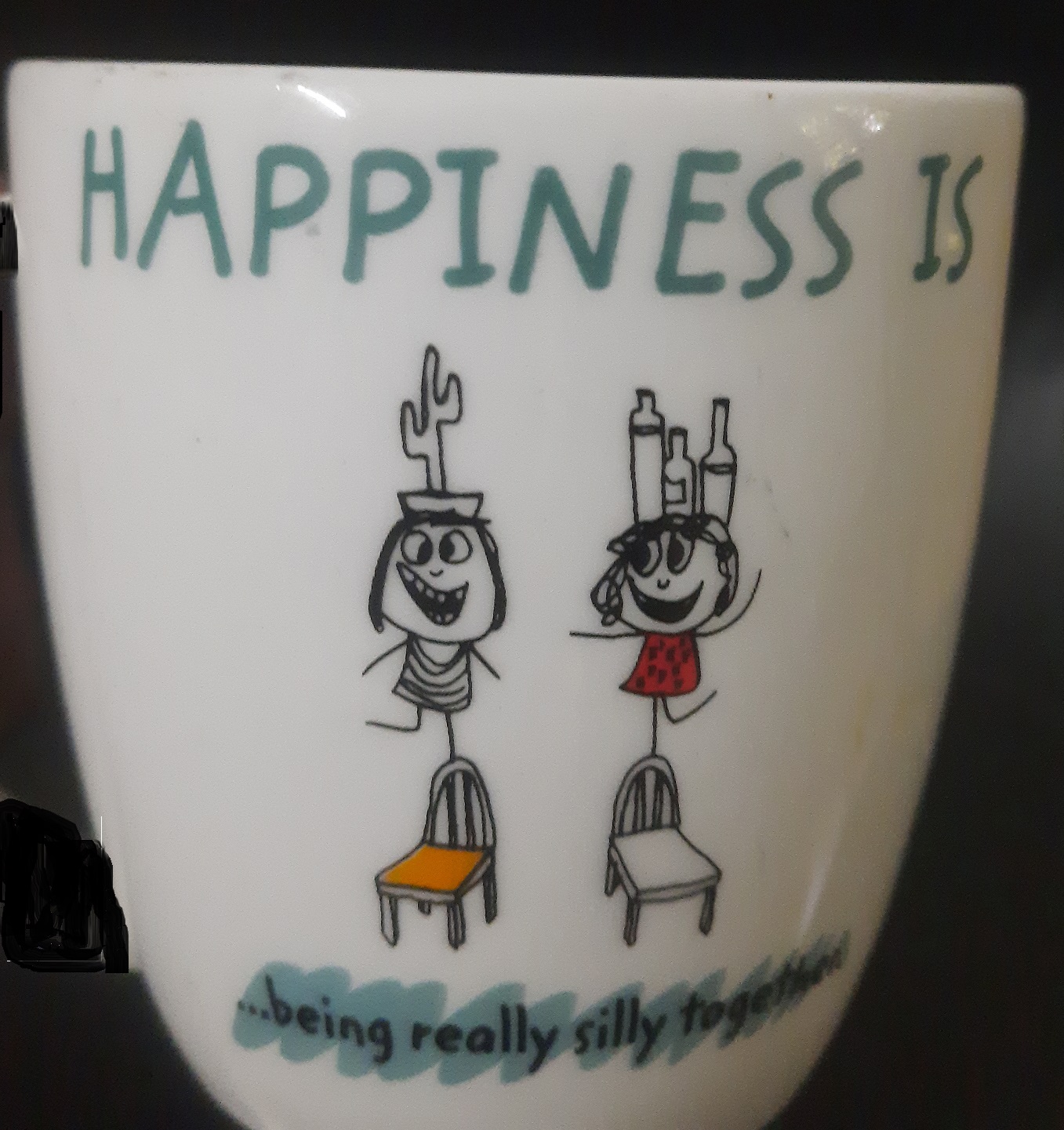
But another day which is of fairly recent origin, and celebrated on 13th Feb is Galantine’s Day. It is like Valentine’s Day, but for girl-pals! It celebrates the bonds between best friends, sisters, moms, grandmoms….

The origins of this one are quite clear—it all started with the comedy show ‘Parks and Recreation’. Leslie Knope, played by Amy Poehler used the term in the second season of the show in 2010. She kind of makes up this day and says ‘What is Galentine’s Day? Oh, it’s only the best day of the year. Every February 13th, my lady friends and I leave our husbands and our boyfriends at home, and we just come and kick it… ladies celebrating ladies.”

Guys of course don’t need to feel left out. After all, the term ‘bromance’ is much better known than Galentine’s Day. It was coined sometime in the 1990s, by Dave Carnie, the editor of the skateboard magazines Big Brother, in reference to the close bond that develops between skaters who spend a lot of time together.

Bromance is a portmanteau word, made up of bro (or brother) and romance  A bromance is officially defined as ‘a very close and non-sexual relationship between two or more men’. It is distinguished from normal friendship by a particularly high level of emotional intimacy.

Here is to Galentine’s Day! May we celebrate it in the true spirit of friendship and bonding, and not let it go the commercial way of Valentine’s Day.

With a shout out to all my girl-pals!

–Meena

PS: www.millennialmatriarchs is a Galentine initiative!

A Special Date: Kuchchhi Kharek

It is perhaps the most ancient cultivated tree in the world. Fossil evidence indicates that the date palm has been cultivated in the Middle East and North Africa for at least 5000 years. The tree has a place in mythology of several cultures. The Sumerians believed that the palm tree was the first tree ever created and that it was tended by a godly raven. In ancient Mesopotamia it was called the ‘road to the moon’ and associated with lunar worship. In Egyptian hieroglyphs the tree was used as symbol for year, and its frond as the symbol for a month. The Roman author and naturalist Pliny the Elder believed the tree to be the nesting site of the Phoenix, the self-resurrecting mythological bird.

There are several special botanical features that make the date palm unique among fruit trees. The height can exceed 20 m, and trees survive over a hundred years, and a tree can produce more than 70 kg of fruit a year. To grow and thrive, date palms require scorching dry summers, low humidity, no frost and ample sunshine. As a saying in the Middle East says: The date palm needs for its feet to be in running water and its head in the fires of the sky.

In practical terms, almost every part of the tree provided useful material for construction, roofing and ropes and baskets. Popularly referred to as the ‘tree of life’, ancient civilisations once looked to the date palm for life’s necessities.The soft wood, with its ability to withstand hot, dry conditions was useful for construction of houses, as well as certain parts of dhows, the traditional sailing vessels that carried out much of the maritime trade across the Indian Ocean. The fronds were used for roofing.  The tree also inspired architectural elements. Capitals of columns were carved to resemble palm trees, the form features in artistic mosaics, weaves and embroideries in many ancient cultures.   

And the fruit has long been recognized as a concentrated powerhouse of nutrients. The date has provided vital nourishment for generations living in the hot arid climes of the Middle East and North Africa. Dates are rich in vitamins, high in antioxidants and loaded with fibre. Dates are resilient to pests, do not rot when ripe and can be transported easily. Thus the old Arabic saying: The uses of dates are as many as the days of the year.

The date fruit itself gives the name to its parent tree the date palm—Phoenix dactylifera derived from the Phoenix (perhaps a reference to the mythical bird, as this tree can also regrow after a fire) and dactylifera meaning finger. The date’s English name comes from the Greek word dactulos meaning finger referring to its elongated shape and form.

Dates hold significance in major religions and cultures. In the Middle East and South Asia the fruits symbolize gratitude, generosity and good health and are served at weddings, religious ceremonies and festivals. The Jews considered dates as one of the seven holy fruits and paid special attention to it during their auspicious occasions and festivals. Dates are mentioned more than 50 times in the Bible. In the Holy Bible, palm trees are associated with symbols of prosperity and triumph. One legend says that the date palm was the tree of knowledge of good and evil and the date was the actual fruit (not the apple) that Eve offered to Adam in the Garden of Eden. In Islam the Prophet Muhammad considered dates to be a superior food and encouraged people to break their fasts with them. The date palm is mentioned 22 times in the Quran. Dates are considered a fruit, food, medicine, drink and sweetmeat. Their high sugar content makes them self-preserving and long-lasting. Dried dates can be stored for a long time, and transported easily across seas and deserts. They can be boiled and strained to produce a honey-like syrup, they can be fermented to make date wine. Desert nomads have used dates in traditional health remedies for thousands of years.

While not among the group of highest date growers, India grows 40-50 varieties of dates, both of the soft and dry type. One of the key date-producing regions in the country is Kuchchh in Gujarat. Date palms are believed to have been established in this region around 400-00 years ago. It is speculated that these grew from seeds thrown by pilgrims who visited the Middle East countries for Haj, and traders who also brought back these plants; or Arab gardeners working in the palaces of the local rulers who may have acquired and planted date seeds or shoots. Date varieties have been developed by thousands of years of selection of seedlings and only those possessing desirable characteristics have been propagated. Today there are believed to be around 1.7 million date palms in the area propagated from indigenous seedlings.

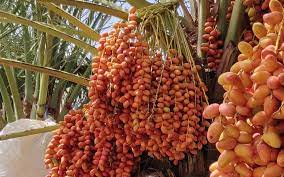
While the history of date cultivation here is not as old as that in other parts of the world,Kuchchh is probably the only place in the world where fresh dates are economically cultivated, marketed and consumed. The Kachchhi Kharek or Khalela as it is locally called is unique in that it is the fresh fruit that is eaten. While in most parts of the world dates are allowed to ripen until they become soft, and dark brown or black in colour, the Kuchchhi dates are harvested at the stage when the fruits have matured, accumulated sucrose, and have turned yellow or red, but are still crisp. This stage of harvesting is called the khalal stage. It is usually done just before the monsoon rains reach the region. The colour and crispness gives these dates a distinctive identity, and make for a delicious eating experience.

This identity has been formally recognized with the awarding of the GI Tag to this indigenous variety of dates—the Kuchchhi Kharek. The Geographical Indication Tag (GI Tag) is a sign assigned to products that have a specific geographical origin and possess intrinsic qualities due to said origin. This date is the second fruit from Gujarat to get a GI Tag, the first being the Gir Kesar mango grown in some districts of Saurashtra. The Kesar mango makes the intense heat of the summer bearable, while the Kuchchhi date adds energy and warmth to the nippy days of winter.

A special date indeed!   

–Mamata

Words Over the Years

It is the time of the year when important dictionaries of the English language have just announced their Word of the Year 2023.

Collins Dictionary has picked AI (Artificial Intelligence) the term that describes ‘the modelling of human mental functions by computer programmes’. In other words, a computer system that has some of the qualities that the human brain has, such as the ability to produce language in a way that seems human.

The Cambridge Dictionary has chosen Hallucinate which has traditionally been defined as“To seem to see, hear, feel, or smell something that does not exist, usually because of a health condition or because you have taken a drug.” But is now expanded to include: ‘When an artificial intelligence (AI) hallucinates, it produces false intelligence’.

The Merriam-Webster dictionary’s Word of the Year is Authentic. Authentic has a number of meanings including “not false or imitation,” or “true to one’s own personality, spirit, or character”. It is a synonym of real and actual. It is perhaps an appropriate antidote in an age of Fake News.

To have been selected as Word of the Year means that a word has great resonance for the year in which it was chosen. These are terms that describe the prevailing trends, moods (including anxieties), attitudes, and cultural climate of our time.

Indeed these three words succinctly sum up the year which has been headlined by AI and its potential, including the dangers of false intelligence and fake news, and the growing need to have ‘authentic’ reliable information to draw upon in such times.

The Dictionaries follow a rigorous process leading to the choice. It includes research by hundreds of lexicographers, and now, evidence gathered from millions of new and emerging words of current English from web-based publications, as well as referring to dictionaries themselves, using sophisticated software.

Thus do dictionaries grow, adding words and usages as they emerge in response to changing times and modes of expression. We often forget that the process of creating a dictionary from scratch was, in its time, a complex and gargantuan task, which took years of painstaking manual and mental labour.

The first fully-developed representative of the monolingual dictionary in English is believed to be Robert Cawdrey’s Table Alphabeticall, first printed in 1604. Its first edition had 2543 headwords for which Cawdrey provided a brief definition. While small and unsophisticated by today’s standards, the Table was the largest dictionary of its type at the time.

As the century rolled by, there was a growing feeling that the English language “needed improvement” and that it lacked standardisation. From the mid-17th century many literary figures proposed ideas and schemes for improving the English language, but none really came to fruition. Until Samuel Johnson, an English poet, satirist, critic, lexicographer embarked upon his Plan of a Dictionary of the English Language.

Johnson had several issues with the English language as it was at the time. As he wrote, he had found the language to be ‘copious without order, and energetick without rules’. In his view, English was in desperate need of some discipline: ‘wherever I turned my view … there was perplexity to be disentangled, and confusion to be regulated’.

A group of London booksellers first commissioned Johnson’s dictionary, as they hoped that a book of this kind would help stabilise the rules governing the English language. The booksellers’ interest was purely commercial. They were aware that this kind of work would be popular with the general public, but as such a project would be long and risky, a number of booksellers formed temporary partnerships, thereby sharing the costs as well as the risks. Also the copyright belonged to the publisher, so aside from a one-time payment to the author for commissioning the work, the publishers could enjoy the massive profits from the sales.  

In 1746 Johnson entered into an agreement with the booksellers to write an English dictionary, and began work the same year with only six assistants to aid him. A year later he published a plan for the dictionary in which he outlined his reasons for undertaking the project and explained exactly how he intended to compile his work. Johnson projected that the scheme would take about three years, but he seriously underestimated the scale of the work involved. In the end it took him three times this length of time to write over 40,000 definitions and select nearly 114,000 illustrative quotations from every field of learning and literature. Each word was defined in detail, the definitions illustrated with quotations covering every branch of learning. Johnson’s was the first dictionary to use citations for the words it listed. He sourced books stretching back to the 16th century, and used quotations from Shakespeare, Spenser and other literary sources. This was with his intention to acquaint users with the classic literary greats. Johnson was the first English lexicographer to use citations in this way, a method that greatly influenced the style of future dictionaries.

In the process of compiling the dictionary, Johnson recognised that language is impossible to fix because of its constantly changing nature, and that his role was to record the language of the day, rather than to form it.

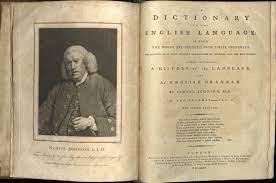
First published in two large volumes in 1755, the book’s full title was A dictionary of the English Language: in which the words are deduced from their originals, and illustrated in their different significations by examples from the best writers. To which are prefixed, a history of the language, and an English grammar. It became popularly known as Johnson’s Dictionary.

The dictionary was a huge scholarly achievement, a more extensive and complex dictionary than any of its predecessors. The closest to compare was the French Dictionnaire which had taken 55 years to compile and required the dedication of 40 scholars. Still, Johnson’s dictionary was far from comprehensive, even by mid-eighteenth-century standards. It contains 42,773 entries, but there were almost 250,000 words in the English language, even during Johnson’s time.

Even as new words are added to the number of dictionaries today, and some of these are crowned as words of the year, here is an educational, and entertaining peek at some of the entries from Johnson’s dictionary. Starting with how he defines himself!

Lexicographer: A writer of dictionaries; a harmless drudge that busies himself in tracing the original, and detailing the signification of words. A paltry, dirty, sorry wretch.

Cough: A convulsion of the lungs, vellicated by some sharp serosity.

Distiller: One who makes and sells pernicious and inflammatory spirits.

Dull: Not exhilaterating (sic); not delightful; as, to make dictionaries is dull work.

Excise: A hateful tax levied upon commodities, and adjudged not by the common judges of property, but wretches hired by those to whom excise is paid.

Far-fetch: A deep stratagem. A ludicrous word.

Jobbernowl: Loggerhead; blockhead.

Kickshaw: A dish so changed by the cookery that it can scarcely be known.

Network: Any thing reticulated or decussated, at equal distances, with interstices between the intersections. (See how he defined ‘reticulated,’ below.)

Oats: A grain, which in England is generally given to horses, but in Scotland appears to support the people.

Patron: One who countenances, supports or protects. Commonly a wretch who supports with insolence, and is paid with flattery.

Politician: 1. One versed in the arts of government; one skilled in politicks. 2. A man of artifice; one of deep contrivance.

Reticulated: Made of network; formed with interstitial vacuities.

To worm: To deprive a dog of something, nobody knows what, under his tongue, which is said to prevent him, nobody knows why, from running mad.

Samuel Johnson, was in fact much more than a lexicographer; he was a prodigious writer who published periodicals, plays, poems, biographies and a novel, as well as a celebrated humourist.

–Mamata

Cufflinks are a Man’s Best Friend

It seems a little unfair to insist that only women crave for diamonds and gold and jewelry. Down the ages, men have worn a lot of jewelry—one only has to look at paintings and pictures not only of Indian Kings and nobles, but of rich people from around the world. If the Koh-i-noor is on the crown of the Queen of England, the Cullinan (the largest gem quality diamond ever found on earth)  is on the scepter of the King of England, and Cullinan II, the second largest diamond, is on his imperial state crown.

Today, male jewelry is back with a bang. One only has to look at rappers and their gold chains. Closer home, apart from being a means of self-expression, it is both a way to show off wealth, as well as to appease the gods. The popularity of the navaratna ring, which is supposed to cure all ailments, bring wealth and good fortune, is more often seen on men than women. As also rudraksha bracelets and chains.

Of course it’s not all about flashy chunky stuff which sometimes runs into kilos (think Bappi Lahiri). There is also well-designed, subtle stuff.

From crowns to chains to jeweled collars, to bracelets, pendants, brooches, ear rings, to ankle adornments, there have been male versions of almost every piece of jewelry.

However, cufflinks are fairly unique in that they are quintessentially male jewelry rarely worn by women.  There has always been a need for some device to fasten shirt cuffs. In the 13th century, men used ribbons to do this. It was in the early 17th century that cufflinks as we know them today started to emerge. King Charles II popularized them, but they still remained very expensive items which were handmade, and therefore confined to people who could afford them.

It was only in 1876 that George Krementz, a German immigrant, adapted the manufacturing process used to make bullets to make cufflinks, and started mass production. And from that point on, they gained wide usage and popularity.

A cufflink has three parts:

The front face – the top of the cufflink, which is the decorative part, with a design, gemstone, or any other attractive design.

The post – the part that goes through the cuff holes and is attached to the toggle.

The toggle – the bottom part of the cufflink, which locks the link in place and prevents the cufflink from slipping out of the cuff holes

Cufflinks

While a cufflink may be a cufflink to many of us, apparently there are several types:

Whale Back cufflinks have a straight post, a flat head, and a tail shaped like a “whale” flips completely flat against the post.

Fixed back or fixed stud cufflinks do not have any moveable hardware. This means putting them in requires that they are manually secured by pushing the backing through the buttonhole. 

Bullet back cufflinks have a metal bar that attaches to the bridge of the cufflinks. This metal bar, which has a bullet aesthetic, rotates 90 degrees.

Chain link cufflinks are made of two usually identical faces attached by a chain.

Stud or button cufflinks look and work like studs.

Ball return cufflinks are those whose rear features a largish ball, attached to the decorative face by either a chain or curved post.

Locking Dual-Action cufflinks are secured shut with a mechanism similar to that of a wristwatch.

Silk Knot cufflinks are made entirely from silk, with two identical knots attached to a cord.

As I look around me, fewer and fewer men seem to be wearning cufflinks, something I felt sad about, because this is definitely an elegant addition to men’s attire. But a report on the cufflinks market says that the market is at $1.52 billion, and predicted to grow at 5.9% over the next few years. So maybe their demise is not so imminent after all!

Predictably, China is the biggest exporter, but surprisingly, India is one of the importers!

I shall surely look out more carefully to spot cufflinks around me!

–Meena

Trendhim.com; Nextmsc.com

Story in a Teacup: Wagh Bakri Chai

In Gujarat tea is literally ‘the cup that cheers’ at any time of the day or night. From the age-old kitlis the small roadside tea stalls where the sweet milky chai is constantly boiling on the hissing kerosene stove, to the upmarket ‘tea lounges’ where the menu offers a range of fancy artisanal teas, people of all ages and walks of life hang out. Tea is the essential companion to the range of farsans (savoury snacks) that are the identifying hallmarks of Gujarati food.  

While Gujarat is geographically almost across the country from the tea producing states in the east and south, it is probably the biggest consumer of tea leaves. The large-scale sale of tea leaves in the region began with the crossing of continents by a Gujarati entrepreneur Narandas Desai. The company he founded was to grow into one of the largest tea companies in India—Wagh Bakri chai.

The story begins in 1892 when Narandas Desai crossed the ocean to South Africa with the dream to start a business. He took on lease 500 acres of tea estates near Durban, and threw himself with focus and passion into learning the intricacies of cultivating and producing tea, as well as the business of selling it. While he was there he came in touch with Gandhiji who was beginning his own journey of learning to live and work on foreign soil. The two mutually respected each other’s work, values, and personal and professional ethics. They also equally faced the challenges of racial discrimination, which eventually led them both to return to their home country.

Narandas Desai returned to Gujarat in 1915, leaving behind a successful tea business. He came home with very little material wealth, but carrying a prized letter from Gandhi which stated: “I knew Mr Narandas Desai in South Africa, where he was for a number of years a successful tea planter”. He also carried in him the strong Gandhian ethic of hard work and honesty, as well as a sound knowledge of teas and the tea business.

After working briefly at a tea estate in Maharashtra, Narandas moved to Gujarat. He took a loan to establish, in 1919, the Gujarat Tea Depot, the first store in Ahmedabad to sell wholesale loose tea. The original clientele were workers in Ahmedabad’s many textile mills. The tea was procured from estates in different parts of the country; Narandas, from his South Africa experience had learnt how difficult it was to own and run a tea estate. As business grew, Narandas began sourcing and blending better varieties of tea leaves, and expanding his clientele.

In 1934, for the first time, the Gujarat Tea Depot, started selling tea under its own brand. The name selected for the brand was Wagh (tiger) Bakri (goat). The twinning of two disparate characters was intended to represent social equality—tiger representing the upper class and goat representing the lower classes. This was visually represented by a picture of a tiger and a goat drinking tea from the same cup. Here too Gandhi’s influence was visible. The company was not only a swadeshi one, its logo also indicated the support of the movement against caste-based discrimination. The unusual logo became an icon for the company’s ethos, and continues to be so even today.  

Narandas Desai’s three sons Ramdas, Ochavlal amd Kantilal joined their father in managing the growing business. The company also started an office in Kolkata to oversee and check the purchase of tea at auction centres there. Till 1980 Gujarat Tea Depot continued to sell tea in wholesale, as well as retail through 7 retail outlets. But by that time they also foresaw the burgeoning market for packaged teas. In response, the group launched Gujarat Tea Processors and Packers Ltd. in 1980, introducing packaged tea. Initially people were sceptical and hesitant to buy packaged tea as they were used to feeling and smelling loose tea leaves before buying. 

In the early 1990s, the company decided to introduce the concept of tea bags. This again, was uncharted territory. In a culture where boiling tea thoroughly was the norm, the idea of instant ‘dip dip’ tea was alien. Wagh Bakri took the risk and imported state-of -the-art tea bag machines from Argentina. The introduction of tea bags marked a paradigm shift in the tea scene.

The company continued to experiment and innovate, introducing new dimensions and products to the tea drinkers. All the generations of the Desais engaged totally in carrying Narandas’s vision to new heights and breadths, introducing new varieties into the packaged tea market. Through the journey they continued to adhere to their founder’s strong commitment to quality and affordability, targeting “decent profits, but not profit maximisation at any cost to company image and standing”. Even in the face of stiff market competition and many financial pressures, their product range has always carried an economically-friendly price tag. 

But before the product reaches the shop shelves, it is preceded by a great deal of research and evaluation. The research includes understanding the specific tastes of the region where the product is to be introduced. It even includes a study of the local water and milk commonly used for brewing the tea. Every region, if not every home, has its own preferences and tea-brewing processes. The Wagh Bakri team invests a great deal in understanding the preferences of its consumers and putting together suitable blends.

The ultimate test is the tea tasting in which the company’s directors are personally involved. The company’s headquarters in Ahmedabad has a large Tea Tasting Department. Tea samples procured from auctions of different estates, saucers of milky teas blended according to the quality of local water and milk, and weighing scales are systematically arranged. The company’s directors personally taste each sample and rate it according to colour, strength, taste and briskness. On some days 400-500 samples of tea are tasted. There is no compromise on taste and quality. Little wonder then that 50 per cent of the tea consumed in Gujarat is from Wagh Bakri.

While continuing to cater to the traditional tastes, the company is also aware that with international exposure, the younger generation is open to more flavours and trends. In response the company has launched a wide range of offerings from Oolong tea to Matcha tea. It was also the first to offer suitable settings to savour these gourmet teas by setting up Tea Lounges in Ahmedabad in 2006, and later in a few other cities.

The corporate office of Wagh Bakri was inaugurated in 2006. A fitting tribute to the founder whose vision, dedication and trust guided the company for over a century. While largely confined to Gujarat for nearly a century, the company started selling its tea in other states as well between 2003 and 2009. Wagh Bakri is not pan-Indian in its sales, but even with the limited states that it sells in, it is the third largest tea brand in India. It also has an international presence. As its directors believe, it is more than a tea company, it is a creator of connections and a nurturer of relationships.

Wagh Bakri’s executive director, and one of its key tea tasters, Parag Desai recently passed away at the age of 49, after a brain haemorrhage caused by a freak accident. A sad loss for the Wagh Bakri family of tea drinkers across the world. 

–Mamata

Fun and Games

Play is something the young of many species indulge in. Play is of course a part of the life of young humans, but we also see puppies, kittens, the young of many mammals and even some birds play.

The study of play is however, a serious matter, as can be seen from this definition: ’ play is repeated, seemingly non-functional behavior differing from more adaptive versions structurally, contextually, or developmentally, and initiated when the animal is in a relaxed, un-stimulating, or low stress setting’ (Burghardt, 2014).

If that sounds a bit complex, here is a breakdown of the behaviours associated with play, i.e. play should

‘*be incompletely functional in the context in which it appears;

*be spontaneous, pleasurable, rewarding, or voluntary;

*be different from other more serious behaviors in form (for example, be exaggerated) or timing (for example, occur early in life, before the more serious version is needed);

* be repeated, but not in abnormal and unvarying stereotypic form (for example, rocking or pacing); and

* be initiated in the absence of severe stress.’

Till a few decades ago, it used to be believed that only the young of warm-blooded animals and birds played. But research is showing that many other creatures play too, including the young of some fish, frogs, lizards, turtles and even Komodo dragons. Coming from a human perspective, we may not recognize this as play. But going by the definition and framework above, many of the activities of the young of these species fall in the category.

Play is of critical importance in the development of all species who indulge in it. In the case of human children, it helps in the development of cognitive, physical, social, and emotional well-being. It helps children learn about themselves and the world, and through play they learn many life-skills like confidence, resilience, cooperation, team spirit, coping with challenging situations etc.

Play itself can be of different types: Physical Play, which helps in physical development and skills like coordination; Social Play which helps children develop the skills of how to interact with others, taking turns, cooperation, etc.; Constructive Play, wherein children create things—arts and crafts including drawing, painting, building things, etc.; Fantasy Play, that is using the imagination to create situations and enacting parts; and Games with Rules, which helps the child develop cognitively and learn how to follow instructions and rules.

If the topic of the conversation is play, can toys be far behind? Toys too date back to ancient times– archaeologists excavating the ancient city of Kültepe Kaniş-Karum in Turkey discovered a 4,000 year old ceramic rattle, which is believed to be the oldest children’s toy yet uncovered.

Toys
Photocredit: Harini M.

Today toys and games are a highly sophisticated market with several categories including puzzles, dolls, soft toys, fidget toys, modelling clay and related products, movable vehicles, construction toys, constructed toys, board games etc. 

It is also a huge market–in 2022, this market generated total revenue of US$122.90 billion. India is a tiny part of this—with the Indian toys market size reaching $ 1.5 billion last year, with barely $ 1.14 per capita spend on toys. Which means most of our children don’t have access to toys, or have too few toys—which is definitely disadvantages their development. Not that I am saying that store-bought toys are the only way to go. We know that children show enormous ingenuity in making anything into a toy–kitchen vessels, sticks and stones, boxes and cartons. And creative parents and teachers can make toys at no or low-cost. (For ideas, you can visit https://arvindguptatoys.com/, the website of Padma Shri awardee Shri Arvind Gupta, who has spent his life developing and advocating for the use of no- and low-cost toys with educational value). But having said that, I do believe that every child has the right to a new, shiny toy once in a while. So not only must we manufacture more toys, but low-cost, innovative ones which don’t compormise on safety.

Equally important are innovative ideas like toy libraries so each child does not have to buy every toy and less-advantaged children can get access too; toy hospitals so toys can be mended and their life extended;  and NGOs which collect, refurbish and re-distribute toys. Another complex challenge is how to keep toys from reaching solid waste dumps—how to recycle them safely and cost-effectively?

So toys may be fun and games, but it’s definitely not all child’s ply!

–Meena

PS: The image is from a storybook Harini and I created using toys as charecters. ‘My Sunday with Daadu and Deedu’ available on Amazon. The Telugu version by Manchi Pustakam is available on their site.


Pothole Patcher: Ememem

This morning’s newspaper tells me that the city Municipal Corporation is on the move to fill up potholes in the city’s roads as a Diwali gift to citizens. While this is indeed a noble announcement, it is a bit ironic as the sorry state of the roads needs much more than a superficial patching up of random ruts and depressions on the road, with more of the substandard material and workmanship that causes the potholes in the first place. In fact on many roads across the city, there are more ragged and rough patches than there are even surfaces. These make headlines a couple of times a year, especially during the monsoon when there are accidents, sometimes serious, caused by two-wheelers and pedestrians slipping and falling into waterlogged potholes. Potholes are not only dangerous, they are also a major source of frustration and inconvenience for commuters. This receives a few days of media coverage where questions of quality and responsibility are raised, and a few contractors are taken to task and fined, before returning to ‘business as usual.’

While I had not given it any thought, for the first time I wondered why these depressions are called ‘potholes’? The origin of the word is not clear. From the purely linguistic angle it could be the literal meaning of the word ‘pot’ that meant a ‘deep hole’, or referred to deep cooking vessels; and the word ‘hole’ being self-explanatory. There is a more interesting version. In 15th and 16th century England wagons and coaches with heavy wooden wheels were the main form of transportation. As they traversed the roads, the wheels gouged deep ruts in the soil. Pottery makers would take advantage of these ruts to dig deeper to reach the clay deposits beneath to make their clay pots. Those driving wagons and coaches over those roads knew who and what caused these holes, and referred to them as ‘potholes’.

Whatever the origins of the word, potholes are a feature of roads in almost all parts of the world. Potholes are caused by a variety of factors, including poor quality of construction materials and labour, lack of proper maintenance and repair, heavy rainfall, and high traffic volume. In cold climates the expansion by freezing of water that has seeped into the crevasses and depressions in the road surface also causes cracks which expand to become ruts and potholes.

Civic authorities in cities around the world do their bit to repair potholes, and are usually far behind in their reach. However, there is one man in Europe who has taken it upon himself to turn potholes into works of art!

While the artist’s work is in the public domain, the artist himself remains anonymous and enigmatic. His true name or identity are not known. He simply goes by the name Ememem. He gave himself this name as he felt that it sounded like his moped does when he sets off for his pothole repair mission. He does not give interviews, nor allow himself to be photographed; he prefers his work, rather than himself, to be seen, as he feels that he is not good at social interactions.

What he does interact with, are the roads that he walks along, absorbing the noises of city life as he looks, and absorbs. What grabs his attention are potholes on the roads. As he claims ‘some of these vibrate and some don’t.’ When he comes across a pothole that “speaks to him” he takes stock of its size and shape. This inspires him to put together pieces of colourful tiles, majolica (glazed earthenware with bright metallic oxides), and ceramics (mainly from waste material) to create artworks that fill or repair the pothole. For obvious reasons, (including that what he does is not strictly legal), he works at night when the roads are relatively less busy, and so that he can work without interruption, or identification. The on-site exercise is preceded by a study of his ‘canvas’, as he describes potholes, cutting the tiles to perfectly fit the space while creating an artwork, and using quick-drying glue to paste them in place. His pothole ‘makeover’ could take from one hour to six hours depending on the condition of the hole, the weather, and the time it takes for the creation to dry.

Ememem has coined the word ‘flacking’ to describe his technique. It is derived from the French word flaque which means puddle. The term is also used used figuratively to refer to an area that looks entirely different from its surrounding. And Ememem’s vibrant colourful designs certainly stand out in stretches of dull grey pavements.

Street art, a form of artwork that is displayed in public on surrounding buildings, streets, trains and other publicly viewed surfaces, is today regarded as one of the largest art movements. Much of this art (which includes graffiti) often reflects social and political issues. It is often also regarded as a form of vandalism.

Ememem does not see himself as an artist with a particular message, or a mission to change the world. Rather he says that his art focuses on the ‘art of healing the street’. He feels that he could just as well be called ‘bitumen mender’ or ‘poet of the asphalt’. In his hometown Lyon, Ememem is described as a “pavement surgeon” who heals fractures in the streets and gives them a new look. Fortunately the civic authorities in most of the places where his ‘operations’ take place let the art remain, to be appreciated by both the residents as well as visitors.

Today his healing works can be seen not only in France, but in many European cities including Paris, Barcelona, Madrid, Milan, and Oslo and Aberdeen.  He continues to keep his identity a secret, but displays his work on Instagram where he has a huge following.

As we prepare for Diwali with the beautiful floor art of rangoli, would it not be magical to wake up to see Ememem’s colourful mosaics brightening up our roads? One can only dream!

–Mamata

New Master Craftsmen

Last week Meena wrote about Master Craftsmen. From Vishwakarma, the  legendary master architect and craftsman and an era when manual skills were highly respected and valued, to the present day when such skills are not as highly valued, as a result of which skilled craftspeople are increasing hard to come by.  

In an age when manual work, with attention to the minutest detail and quest for perfection is often eclipsed by industrialized mass production, there is a small and surprising band of new-age Vishwakarmas. This is the league of Lego enthusiasts who spend hours and days (and considerable manual dexterity) putting together little blocks to create mind-boggling structures.

Nathan Sawaya is considered to be the first artist to use Lego bricks in fine art. A high-powered attorney, he would come home and build with Lego bricks as a way to relax. Eventually he gave up his law career to dedicate himself to Lego art. Today his sculptures which range from a 20-foot-long Tyrannosaurus Rex skeleton to a tiny tree consisting of one brown piece on the bottom and one green piece on the top, are exhibited in galleries.

A Chinese artist Ai Weiwei recreates classic paintings using Lego bricks. Among these is the famous painting by French painter Claude Monet called Water Lilies. Weiwei has recreated this as a 15-metre-long art piece using 650,000 Lego blocks.

Other artists around the world have used Lego blocks on many occasions to pass a message of social awareness, or simply to entertain the imagination. Street artist Jan Vormann fills in cracks and crevices in damaged walls with Lego building blocks. He calls this ‘art meets functionality approach to repairs’ Dispatchwork. Today there is a worldwide network of people inspired by him who contribute to this creative repair approach.

Lego is usually associated with a children’s hobby kit. It is considered the epitome of an educational toy, and Lego sets have long gained a place at the top of the list of the world’s most popular toys. 

Interestingly the simple interlocking block-shaped toys that we know today as Lego bricks were the invention of a Danish master carpenter and joiner named Ole Kirk Christiansen. In 1932 when Europe was in the throes of the Great Depression, Christiansen opened a small woodworking shop in the village of Billund, with his son Godtfred who was just 12 years old, to manufacture stepladders, and ironing boards from left-over wood. They soon expanded their products to include wooden toys like simple yo-yos, trucks and ducks on wheels, made out of birch wood. In 1934 they gave their business the name Lego, a contraction of the Danish words leg godt meaning ‘play well’.

The company soon built its reputation as a high-quality toy manufacturer and business spread. The company itself grew from only six employees in 1934 to forty in 1942. The product line also expanded to include clothes hangers, a plastic ball for babies, and some wooden blocks.

It was in 1947 that the company made the move that would define its future.  Lego bought a plastic injection-moulding machine, which could mass produce plastic toys. By 1949, Lego was using this machine to produce about 200 different kinds of toys, which included a plastic fish, a plastic sailor, and small plastic bricks which had pegs on top and hollow bottoms, allowing children to lock the bricks together and create structures which simple wooden blocks could not. The ‘automatic binding bricks’ as they were called, were the predecessors of the Lego toys of today. In 1953, the automatic binding bricks were renamed Lego bricks. In 1957, the interlocking principle of Lego bricks was born. But these bricks were not too sturdy, and they did not stick firmly to each other.

In the meanwhile Lego had been working on a stud-and-tube design that facilitated the bricks to snap together firmly. They obtained a patent for this in 1958. This was the game-changer. The new system gave children the chance to build something sturdy, without it wobbling, or coming undone. Lego also made sure that new bricks were always compatible with old ones. In fact Lego has not changed the design of its bricks since 1958 when they got a patent for what is called the “universal system” so that each piece is compatible with all other pieces, regardless of the year or set it belongs to.

As the interlocking blocks grew in popularity, it was observed that children used the bricks in innumerable different ways to create more than just single structures. This led to the Lego Sets which had additional components like vehicles, street signs, bushes etc. to create streets and cities. The landmark addition of the wheel (around brick with a rubber tyre) in the 1960s brought in numerous new possibilities. With the production of 300 million tiny wheels per year, Lego out-manufactures the world’s biggest tyre manufacturers! The younger children were roped in to Lego-land with the launch of the larger Duplo bricks for pre-schoolers. 

The 1970s saw more additions to Lego sets–miniature figures (referred to as a minifig) with moveable arms and feet to populate the Lego towns; castles and knights to create a medieval world; pirates to sail on high seas, and astronauts to ride into space, and almost everywhere that a child’s imagination could take it.

The introduction of the immensely popular themes like Star Wars and Harry Potter contributed to the soaring sales, making this a multi-billion dollar industry. However it is heartening to find out that Lego has a strict policy regarding military models. They do not make products that promote or encourage violence. According to the company “Weapon-like elements in a Lego set are part of a fantasy/imaginary setting, and not a realistic daily-life scenario.”

Despite the scale and volume of production, there is no compromise on quality. The process used to mould the bricks is so accurate that only 18 out of one million bricks fails to meet quality standards. The original founder Ole Christiansen believed strongly in the values of creativity, individuality and, above all, quality. The Lego Group’s motto, “Only the best is good enough” was created in 1936, and is still used today.

Today there is a large international AFOL (Adult Fan of Lego) community. One of the challenges in the Lego world is to become a “master builder”. Coincidentally one of the most expensive Lego items is the Taj Mahal set which has over 6000 pieces to construct the Taj Mahal. Where centuries ago master craftsmen toiled with slabs of marble to create this magnificent timeless edifice, today the new master craftsmen work with plastic bricks to create its replicas.

–Mamata

Rubik’s Magic Cube

It was all the rage in the 1980s. Every house had one, and it was fought over by adults and children. It was in everyone’s hands that were never still; it sparked contests and competition across the world. It was the Rubik’s Cube.

At first glance, the cube seems deceptively simple, featuring nine coloured squares on each side. In its starting state, each side has a uniform colour — red, green, yellow, orange, blue, or white. To solve the puzzle, you must twist the cubes so that eventually each side returns to its original colour. Easier said than done! To master the cube, you must learn a sequence of movements that can be performed in successive order. Mathematicians have calculated that there are 43,252,003,274,489,856,000 possible combinations or ways to arrange the squares, but just one of those combinations is correct.

The creator of the puzzle cube was an unassuming Hungarian architecture professor named Erno Rubik. Erno Rubik was born on July 13, 1944, towards the end of World War II in the basement of a Budapest hospital that had become an air-raid shelter. His father was an engineer who designed aerial gliders.

As Erno described his childhood: I was an ordinary boy, wanting to do everything possible—and not possible. I climbed trees and had fun in other ways that weren’t allowed but were exciting to me. And I was curious and tried to make things. Nothing special. He love to draw, paint and sculpt, and went on to study architecture at Budapest University of Technology because he felt it combined the practical with the aesthetic. He went on to teach architecture and taught a class called “descriptive geometry” where he encouraged students to use two-dimensional images to solve three-dimensional problems

In 1974, 29 year old Rubik was tinkering in his bedroom which had lots of odds and ends, including cubes made from paper and wood.  He tried to put together eight wooden cubes so that they could stick together but also move around, exchanging places. The object quickly fell apart. Erno kept at it, taking it as a challenge. After much trial and error, he figured out a unique design that allowed him to build a solid, static object that was also fluid. He then decided to add 54 colourful stickers to the cube, with each side sporting a different colour – yellow, red, blue, orange, white and green. That way the movement of the pieces was visible and trackable. Erno was lost in the colourful maze, but with no clue how to navigate it. It took many weeks of twisting and turning before he could finally get the colours to align.

Once he found that the cube could be restored to its original state Erno Rubik submitted an application at the Hungarian Patent Office for a ‘three-dimensional logical toy’. Rubik now looked for a company who was willing to produce the cube commercially. It was not easy as no one believed that people would ‘play’ with such a toy. Finally in 1977 a small company that manufactured chess sets and toys agreed to manufacture 5,000 such cubes. The toy entered toy shops with the name Buvos Kocka or ‘Magic Cube’.  By 1979, 300,000 cubes had sold in Hungary.

As the popularity of the cube grew and spread, even beyond Hungary, Rubik felt that taking it beyond Hungary needed an international collaboration, but that was the period of the Cold War when geopolitical tensions restricted collaboration with the so-called Western Bloc.

So Erno Rubik started to take his creation to international toy fairs where it met with lukewarm response. In 1980, at the Nuremberg Toy Fair, a marketer named Tom Kremer spotted the Magic Cube. He thought it was fascinating and made a deal to take it to America. Rubik got a contract at an American company, Ideal Toy, which wanted one million cubes to sell overseas. But due to copyright issues, they suggested that the name be changed. And so, Rubik’s Cube made its debut at a New York toy fair in 1980. Erno Rubik himself was invited to launch the cube. The shy professor with not very fluent English, was not the best of salesmen, but he was the only one who could demonstrate that the puzzle could be solved! The rest is history.

Rubik’s Cube became a craze. More than 100 million Cubes were sold over the next three years. Rubik initially believed the cube would appeal to those with science, math, or engineering backgrounds. He was shocked when, as he wrote, It found its way to people whom nobody would ever have thought might be attracted to it.

The Rubik’s Cube went on to become ‘one of the most enduring, beguiling, maddening and absorbing puzzles ever created’. More than 450 million cubes have sold globally, (not counting the many more imitations) making it the best-selling toy in history. It became much more than a puzzle. It has been described as ‘an ingenious mechanical invention, a pastime, a learning tool, a source of metaphors, and an inspiration.’ It has spawned speed-cubing competitions and an assortment of record breaking feats. But as Rubik once said, for him it is not the speed that is of essence; “the elegant solution, the quality of the solution, is much more important than timing.”

The educator in Rubik believes Arts should be an integral part of STEM education. He feels that the Cube demonstrates this fusion. The Cube has become a universal symbol of everything I believe education should be about: fostering curiosity, the rewards of problem-solving, and the joys of finding your own solution.

Even as the Rubik’s Cube became a global sensation, Erno Rubik remained a publicity-shy professor, continuing his “tinkering”. He started his own design studio in Hungary and began to work on new projects and revive abandoned ones, including puzzles called the Snake and Rubik’s Tangle. In an interview he said: I never planned to achieve this peak and had no idea that I would. And, after it, I had no thought that I’d like to do better. My only goal is to do well. I’m not thinking about whether people will like it or not. I need to love it and meet my targets, nothing else. What happens after that depends not on me but others. The Cube created the strongest connection with people—which is harder than being popular—maybe because it taught them that they could solve difficult problems and rely on no one but themselves to succeed. It has meaning, and that’s enough for me.

–Mamata

Cycle Away!

It has been a long ride for the bicycle. The simple two-wheeled means of transportation that does not burn fossil fuels, causes no pollution, is easy to maneuver and nifty to park, with the added nobility of having numerous health benefits has been around for almost two centuries.

The earliest avatar was in the form of a contraption called the ‘draisine’ invented by a German baron Karl von Draisin 1817. It was a “running machine” which had two wheels but no pedals, and no steering mechanism, and needed to be propelled by the rider pushing his feet against the ground.

But the bicycle as we know it began to evolve several years later. In 1861 French inventors Pierre Lallement, Pierre Michaux, and Ernest Michaux worked on creating a bicycle with pedals, but still no brakes. This was called a velocipede.

1870 saw the invention of the Penny Farthing bicycle. The name came from the design in which the wheels resembled two coins–the penny and the farthing, with the front “penny” being significantly larger than the rear “farthing”. The pedals were on the front wheel and the saddle was four feet high, making for a rather risky ride.

It was in 1885 that John Kemp Starley, an Englishman, perfected the design for a “safety bicycle” with equal-sized wheels and a chain drive. New developments in brakes and tires followed shortly, establishing a basic template for what would become the modern bicycle.

The bicycle became a symbol of affluence, especially in America. Bicycles were expensive, and cycling became a leisure activity for the rich. In fact it was the cyclists who initiated the Good Roads movement in America, especially in the countryside where roads used for horse carriages were rutted and not conducive to a smooth bike ride.

Interestingly, there was not a big time gap between the introduction of the “safety bicycle” and the development of the first automobiles. And the early German inventors like Gottlieb and Daimler used not only cycle technology, but also several components of the bicycle in the manufacture of the automobile. Soon cycle manufacturers became automobile manufacturers in France, Germany, and the U.K. They drew upon and further developed, products, production techniques, materials, innovations, and tooling originally developed specifically for cycles.

Today bicycles are seen as relics of a less-technologically advanced era, but in fact they were at the cutting edge of industrial design in the last quarter of the nineteenth-century. But while innovations continued in the field of motor cars, the bicycle receded in the background. Cars became the new status symbol and cycling came to be seen as a proletariat activity, something you did if you couldn’t afford a car.

The bicycle also played a significant part in the early days of the Women’s Movement. In the late 1880s women took to cycling, an activity that gave them freedom of mobility, independence and self-reliance in a period when they were largely housebound.

Nothing personifies this sense of liberation better than the story of Annie Londonderry.

Source: annielondonderry.com

Annie Cohen Kopchovsky, a Latvian immigrant who had married and settled in Boston, announced on June 25 1894, that she was going to ride around the world on a bicycle. She was 23 years old, and the mother of three small children. Her husband was a devout Orthodox Jew. Annie had ridden a bicycle for the first time just a few days before her announcement.

Furthermore she informed that she was doing this to win a bet for $10,000. The bet was between two Boston merchants that no woman could circumnavigate the globe on a bicycle.  Annie said that she would cycle around the world in 15 months, starting with no money in her pockets. She would not only earn her way, but also return with $5000 in her pocket.

Annie turned every Victorian notion of women’s roles on its head. Not only did she abandon, temporarily, her role of wife and mother, but for most of the journey she rode a man’s bicycle attired in a man’s riding suit, and carrying a small revolver.

Annie was a complete antithesis of the coy domesticated female. She was a shrewd self-promoter, and master of public relations. She even adopted the name Annie Londonderry when The Londonderry Lithia Spring Water Company of Nashua, New Hampshire became the first sponsor, by giving $100 for her journey. Annie continued to cash in on the glamour and novelty of her journey by renting space on her body and bicycle to advertisers, selling photographs of herself, and making guest appearances in stores along the way signing souvenirs, delivering lectures and giving newspaper interviews which she embellished with colourful tales of her adventures.

Annie’s trip had its share of detractors and disbelievers. There was speculation about how much truth there was to all her colourful tales. Annie returned to Chicago on 12 September 1895, 15 months after she had set off. She came back with $3000 dollars that she made on her travels. The newspapers described her global adventure as “the most extraordinary journey ever undertaken by a woman.”

For Annie the journey was more than a test of a woman’s ability to fend for herself. The bicycle was literally her vehicle to the fame, freedom and material wealth that she that craved. For the emerging women’s movement, Annie as well as the bicycle became a symbol of emancipation.

Today the uniqueness, longevity and versatility of the bicycle, which has been in use for two centuries, is being celebrated once again. In recent times, when the world is literally choking from exhausts from fossil fuel and traffic congestion from motorised transport, the bicycle is being promoted as a simple, affordable, reliable, clean and environmentally fit sustainable means of transportation, fostering environmental stewardship and health.

The return to the bicycle movement was started by Leszek Sibilski in 2018 by a sociology professor and cycling and physical education activist who lobbied to bring the importance of the bicycle to the international stage and pushed for a day that could highlight this. Sibilski also advocated for integrating cycling into public transportation for sustainable development resolutions.

In response to the growing momentum of the movement in 2018, the United Nations General Assembly, declared 3 June to be celebrated as World Bicycle Day.

The day encourages stakeholders to emphasize and advance the use of the bicycle as a means of fostering sustainable development, strengthening education, including physical education, for children and young people, promoting health, preventing disease, promoting tolerance, mutual understanding and respect and facilitating social inclusion and a culture of peace.

In an age of the power of social media to promote such days, this is a good time to remember how, in a much earlier time, Annie Londonderry single-handedly “promoted” the bicycle. She would have been a perfect “Influencer” for World Bicycle Day!

–Mamata