Living On…

August is a Month of Days! Well, I know all months are made up of days, but August is made up of many significant Days—from Independence Day to International Youth Day to Quit India Movement Day to World Mosquito Day, to….

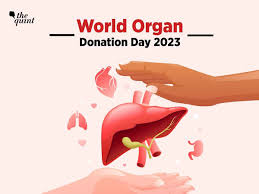
In the process, even media seems to get overwhelmed and is not cover many of the issues adequately.  One such day is World Organ Donation Day, marked globally on 13 August every year, to raise awareness on the need for organ donations, and to clear misconceptions around the issue.

For a quick overview: There are two major types of donations– deceased donation which is the process of giving an organ or a part of an organ after death, for the purpose of transplantation to another person; and living donation, wherein a donor can give part of certain organs to another person. (The other two types of organ donations are Vascularized Composite Allografts (VCAs) which involves the transplantation of multiple structures including skin, bone, muscles, nerves, connective tissue etc.; and Paediatric donations.)

In India, Deceased Organ Donation is usually done only from a person who has been declared brain-stem dead by a team of authorized doctors at a hospital. A person is said to be brain-stem dead when there is an irreversible loss of consciousness, absence of brain stem reflexes and irreversible loss of the capacity to breathe. These are often accident victims and others who have suffered fatal injuries to the head or have had brain haemorrhage. Organ donations after cardiac death are rare in our country. 

Sadly, the deceased donation rate in India is dismally low—it stands at under one donor per million population, and no upward trend has been seen for a decade now. It is estimated that 20 people die each day in our country waiting for an organ donation. Experts estimate that 65 donations per million population are needed to fill the gap.

Considering that we won’t need our organs after death, it would seem that this would be the easiest kind of donation! But in a country where charity and giving are a deep-rooted part of the culture, organ donation meets many barriers. A study published in a prominent medical journal regarding reasons why the figure is so low in India says: ‘Lack of awareness (80.1%), religious beliefs and superstitions (63.4%), and lack of faith in the healthcare system (40.3%) were cited as the three most probable reasons for poor deceased organ donation rates in India. Fear of disfigurement (29.5%), lack of government sponsored incentives (27.6%), fear of procedural delays (27%), and inappropriate counselling for deceased donation (26.4%) were also commonly cited reasons for poor organ donation rate.’ (J Clin Exp Hepatol. 2016 Jun; 6(2): 81–86.).

From the above, it seems that creating awareness and proper counselling are the urgent needs. Most of us don’t know that one deceased organ donor can save up to eight lives. He or she can contribute two kidneys to two people; two lungs to two people; one liver which can be divided among two people; one pancreas and one heart which can save one life each. Apart from this, eyes can give sight and donated tissue can help as many as 75 people. Increasing awareness and appealing to the inherent giving instinct could be critical factor in increasing donations. This is borne out by the fact that in the study mentioned above, people said that the ‘the thought of saving someone’s life’, as well as a ‘feeling of improved sense of humanity’ were motivators for such donations.

You can register your intent to donate organs with the National Organ & Tissue Transplant Organisation (NOTTO). Such a pledge does not carry legal weight as the consent of family is necessary for the donation of organs of deceased people, but it is a clear signal of the wish of the deceased. And if during life the donor discusses his or her wish with family members, they will surely do it, in respect of the loved one’s last wishes. Afterall, what can be more satisfying that their loved one lives on!

So go ahead and visit https://notto.mohfw.gov.in/ today!

–Meena

Rubik’s Magic Cube

It was all the rage in the 1980s. Every house had one, and it was fought over by adults and children. It was in everyone’s hands that were never still; it sparked contests and competition across the world. It was the Rubik’s Cube.

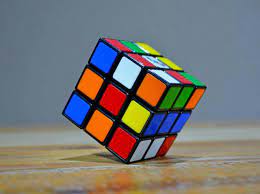
At first glance, the cube seems deceptively simple, featuring nine coloured squares on each side. In its starting state, each side has a uniform colour — red, green, yellow, orange, blue, or white. To solve the puzzle, you must twist the cubes so that eventually each side returns to its original colour. Easier said than done! To master the cube, you must learn a sequence of movements that can be performed in successive order. Mathematicians have calculated that there are 43,252,003,274,489,856,000 possible combinations or ways to arrange the squares, but just one of those combinations is correct.

The creator of the puzzle cube was an unassuming Hungarian architecture professor named Erno Rubik. Erno Rubik was born on July 13, 1944, towards the end of World War II in the basement of a Budapest hospital that had become an air-raid shelter. His father was an engineer who designed aerial gliders.

As Erno described his childhood: I was an ordinary boy, wanting to do everything possible—and not possible. I climbed trees and had fun in other ways that weren’t allowed but were exciting to me. And I was curious and tried to make things. Nothing special. He love to draw, paint and sculpt, and went on to study architecture at Budapest University of Technology because he felt it combined the practical with the aesthetic. He went on to teach architecture and taught a class called “descriptive geometry” where he encouraged students to use two-dimensional images to solve three-dimensional problems

In 1974, 29 year old Rubik was tinkering in his bedroom which had lots of odds and ends, including cubes made from paper and wood.  He tried to put together eight wooden cubes so that they could stick together but also move around, exchanging places. The object quickly fell apart. Erno kept at it, taking it as a challenge. After much trial and error, he figured out a unique design that allowed him to build a solid, static object that was also fluid. He then decided to add 54 colourful stickers to the cube, with each side sporting a different colour – yellow, red, blue, orange, white and green. That way the movement of the pieces was visible and trackable. Erno was lost in the colourful maze, but with no clue how to navigate it. It took many weeks of twisting and turning before he could finally get the colours to align.

Once he found that the cube could be restored to its original state Erno Rubik submitted an application at the Hungarian Patent Office for a ‘three-dimensional logical toy’. Rubik now looked for a company who was willing to produce the cube commercially. It was not easy as no one believed that people would ‘play’ with such a toy. Finally in 1977 a small company that manufactured chess sets and toys agreed to manufacture 5,000 such cubes. The toy entered toy shops with the name Buvos Kocka or ‘Magic Cube’.  By 1979, 300,000 cubes had sold in Hungary.

As the popularity of the cube grew and spread, even beyond Hungary, Rubik felt that taking it beyond Hungary needed an international collaboration, but that was the period of the Cold War when geopolitical tensions restricted collaboration with the so-called Western Bloc.

So Erno Rubik started to take his creation to international toy fairs where it met with lukewarm response. In 1980, at the Nuremberg Toy Fair, a marketer named Tom Kremer spotted the Magic Cube. He thought it was fascinating and made a deal to take it to America. Rubik got a contract at an American company, Ideal Toy, which wanted one million cubes to sell overseas. But due to copyright issues, they suggested that the name be changed. And so, Rubik’s Cube made its debut at a New York toy fair in 1980. Erno Rubik himself was invited to launch the cube. The shy professor with not very fluent English, was not the best of salesmen, but he was the only one who could demonstrate that the puzzle could be solved! The rest is history.

Rubik’s Cube became a craze. More than 100 million Cubes were sold over the next three years. Rubik initially believed the cube would appeal to those with science, math, or engineering backgrounds. He was shocked when, as he wrote, It found its way to people whom nobody would ever have thought might be attracted to it.

The Rubik’s Cube went on to become ‘one of the most enduring, beguiling, maddening and absorbing puzzles ever created’. More than 450 million cubes have sold globally, (not counting the many more imitations) making it the best-selling toy in history. It became much more than a puzzle. It has been described as ‘an ingenious mechanical invention, a pastime, a learning tool, a source of metaphors, and an inspiration.’ It has spawned speed-cubing competitions and an assortment of record breaking feats. But as Rubik once said, for him it is not the speed that is of essence; “the elegant solution, the quality of the solution, is much more important than timing.”

The educator in Rubik believes Arts should be an integral part of STEM education. He feels that the Cube demonstrates this fusion. The Cube has become a universal symbol of everything I believe education should be about: fostering curiosity, the rewards of problem-solving, and the joys of finding your own solution.

Even as the Rubik’s Cube became a global sensation, Erno Rubik remained a publicity-shy professor, continuing his “tinkering”. He started his own design studio in Hungary and began to work on new projects and revive abandoned ones, including puzzles called the Snake and Rubik’s Tangle. In an interview he said: I never planned to achieve this peak and had no idea that I would. And, after it, I had no thought that I’d like to do better. My only goal is to do well. I’m not thinking about whether people will like it or not. I need to love it and meet my targets, nothing else. What happens after that depends not on me but others. The Cube created the strongest connection with people—which is harder than being popular—maybe because it taught them that they could solve difficult problems and rely on no one but themselves to succeed. It has meaning, and that’s enough for me.

–Mamata

Sky-gazing

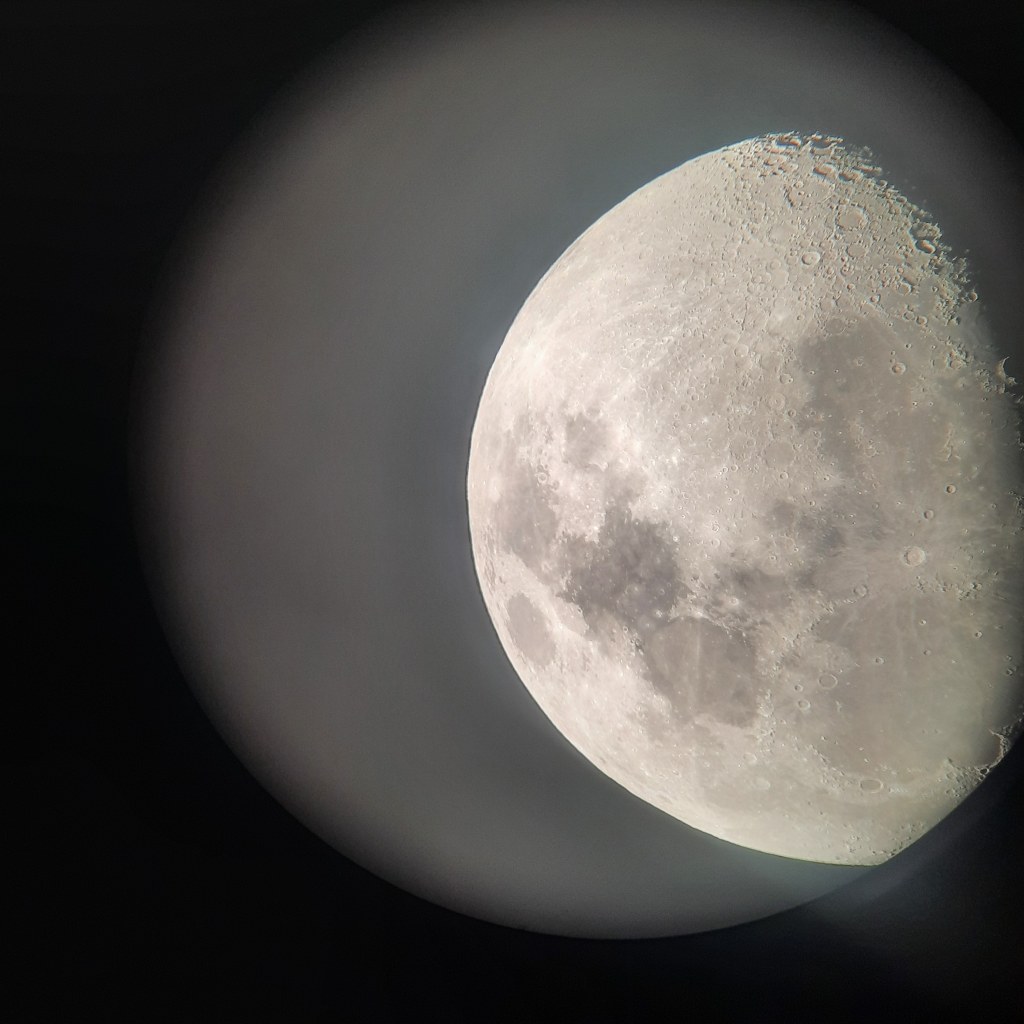
A few weeks ago, when we were in the Western Ghats, the resort manager kindly set up a telescope in the evening. It was for the kids who were our co-guests, but ultimately it was the adults who hogged the eyepiece! It was amazing to see the craters on the moon; Mars and Venus; and sundry stars. And we were reminded once again of the fascination that the sky has always held for humans.

The conversation obviously took a turn towards raking up memories about telescopes. Techy-types among the group reminded us that the magnification power of a telescope essentially indicated the size of an object observed inside the eyepiece relative to the size of that object when observed with the naked eye. For example, when looking at Mars at 50x magnification, the red planet will appear 50 times larger than if one looked at it with one’s eyes.  Factors like light pollution, atmospheric turbulence, temperature, wind, and much more affect the viewing experience. When viewing conditions are bad, the view will be blurry, fuzzy, shaky and unstable.  That is generally why telescopes are set up in high altitudes: the atmosphere is thinner at higher levels, and makes for better viewing. Air quality is important for good observations because any particles in the air will reflect light–so higher altitudes work better in this aspect too. Also, telescopes need to be located as high above the clouds as possible. And of course remote areas have less pollution.

Humans have been gazing through telescopes since the 17th century. The earliest existing record of such an instrument is a 1608 patent submitted to the Dutch government by a spectacle-maker called Hans Lipperhey. While the actual inventor of the refracting telescope is not known, Lipperhey was the one to file the patent. Scientists all over Europe were fascinated by the invention and many started their own attempts to come up with one. Galileo built his own version a few years afterwards, and started making his telescopic observations of celestial objects. The word telescope itself was coined in 1611 by the Greek mathematician Giovanni Demisiani for one of Galileo Galilee’s instruments, and translates roughly into ‘far-seeing.’

To most of us, the word ‘telescope’ probably brings to mind the Hubble, launched by NASA in April 1990 and still in operation today.  What we refer to as the Hubble Telescope is in fact a large, space-based observatory. It has been in operation for over 31 years, and in fact, its observation abilities have grown with time because new, cutting-edge scientific instruments have been added to the telescope over the course of the years through five astronaut servicing missions. It has made over 1.5 million observations over the course of its lifetime including seeing the collision of a comet with Jupiter, and has discovered moons around Pluto. It is truly one of the instruments which is shaping our understanding of the world.

Indians of course have always been fascinated with the skies, and down history have built different kinds of instruments to study the stars and other celestial objects. The observatories built by Maharaja Sawai Jai Singh of Jaipur between 1724 and 1734–the Jantar Mantars in Jaipur, Delhi, Ujjain, Varanasi, and Mathura being among the recent ones. 

India’s focus on space observations has continued into the modern era, with ISRO launching our first dedicated Space Astronomy Observatory—Astrosat–in September 2015. India’s biggest telescope currently is the 3.6m Devasthal Optical Telescope, a custom-built instrument of great complexity. Built in collaboration with Belgium and Canada, this telescope has the distinction of being largest telescope in India for the study of celestial objects at optical wavelengths. Devasthal is a district of Nainital, at a height of about 2,450 mt.

Women have had their share in these explorations. The ancient scholar Gargi (somewhere between 800-500 BC), engaged in questions about astronomy. In a dialogue with Yajnavalkya, she asks ‘what is that which pervades above the heavens, below the earth and in between the two (heaven and earth)’.

In the present day too, we have our share of astronomical stars (pun intended).  G. C. Anupama, the former Dean and Senior Professor (retired), Indian Institute of Astrophysics (IIA) is a world renowned astronomer. She has served as president of the Astronomical Society of India (ASI), the first woman to head this association of professional astronomers.  She is a member of the Indian core team which is part of the international effort to establish the thirty meter telescope (TMT) in Hawaii, USA, as also the principal investigator of the project which led to the establishment of the 0.7m wide field telescope at Hanle near Leh in Ladakh, the world’s ninth highest site for optical, infrared and gamma-ray telescopes in the world.

Exploring the skies is fundamental to the human quest for understanding ourselves. And it can set children on a course to study the world around us scientifically. If you don’t want to invest in a telescope which may cost in the tens of thousands, if not in the lakhs, do check out DIY telescope kits, available for as little as Rs. 1000 (one such option available at https://scienceshop.vascsc.org/). Who knows, you could be starting some kid out to a journey to ISRO or NASA—if not the stars!

–Meena

A Windy Day

Is it windy outside? Not really! Then why this piece? Well, it is in anticipation of Global Wind Day, a worldwide event that is marked annually on 15 June. It is ‘ a day for discovering wind energy, its power and the possibilities it holds to reshape our energy systems, decarbonise our economies and boost jobs and growth.’

Fair enough!  Today, winds are gaining huge importance because of their potential to add to the basket of energy sources—a clean energy source that will help mitigate climate change challenges. It is because of this promise that wind power has grown rapidly since 2000, Global installed wind generation capacity has increased by a factor of about 100 in the past two decades. In 2021, the total wind generation capacity globally was 830 Giga Watts. India is proudly at Number 4 position in the world, with an installed capacity of 40+ GW. And there is still a long way to go, with estimated potential for wind in India being 200 GW.

Just to double back, what is wind? Put simply, it is the the movement of air relative to the surface of the Earth. Winds play a significant role in determining and controlling climate and weather.

And how is electricity produced from winds? Basically, it is by converting the kinetic energy of air in motion into electricity. Wind rotates rotor blades of a turbine, which converts kinetic energy into rotational energy. This rotational energy is transferred by a shaft to the generator, thereby producing electrical energy.

Windmills
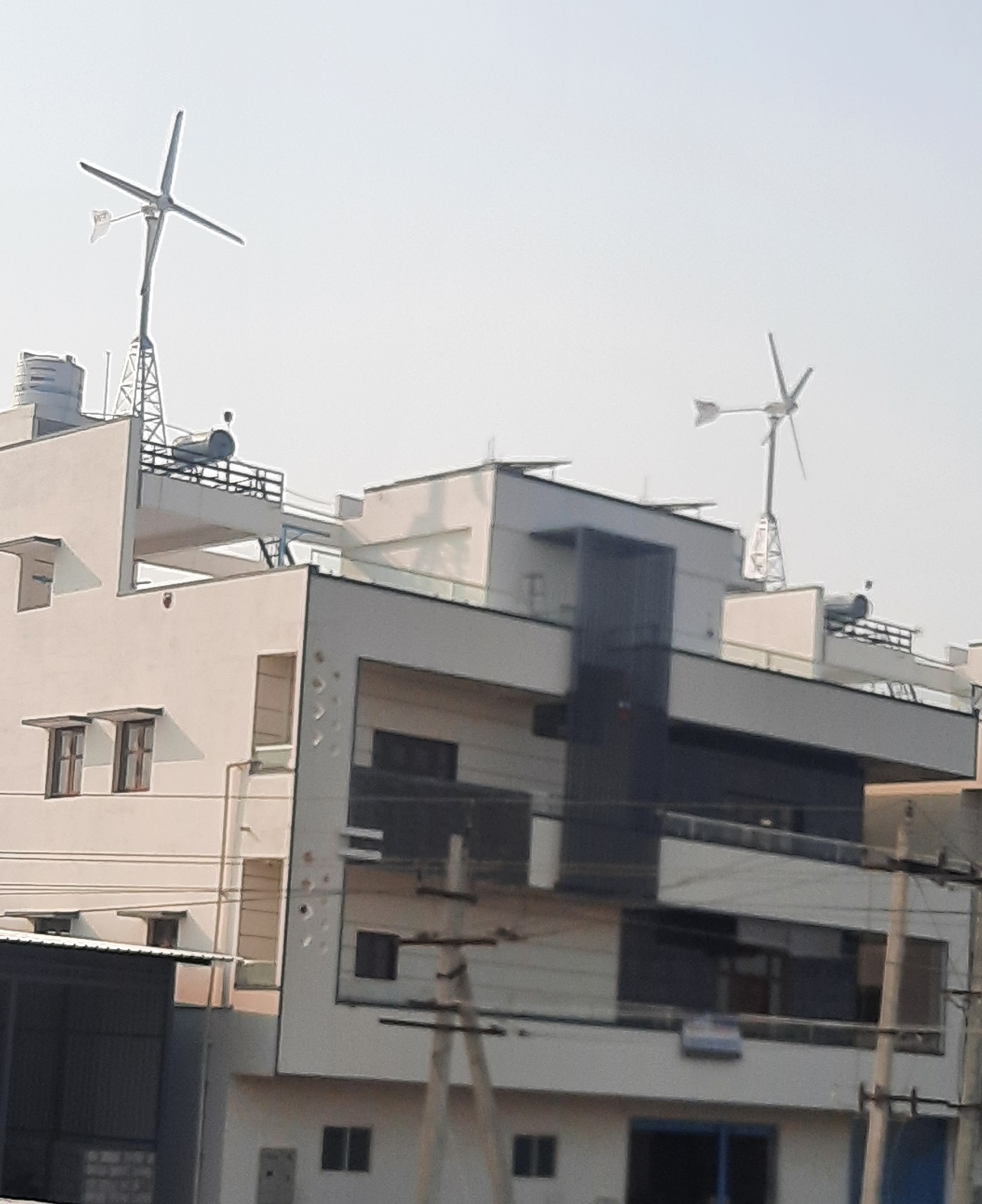
Domestic windmills are not common but I saw this somewhere near Mandya, Karnataka

So yes, wind is a harbinger of hope for the future.  Though maybe not without its own issues. Wind energy can obviously be produced only where the winds are strong and fairly sustained through the year—and there are not too many places like that in the world. Through the day and through the year, wind intensity changes, so that wind energy is not generated throughout—it is an intermittent source.  And of course, winds can be unpredictable, so the generation cannot be assured.  Wind turbines are noisy and also change the landscape drastically. Wind energy potential is highest in remote places, which makes investment in transmission lines and related equipment essential. They also have impacts on local biodiversity and even migratory birds. While the cost of producing wind energy has come down in the last few years, and it is a competitive source, technology and R&D have to progress further so that costs may be brought down.

India has committed to producing 140 GW of wind energy as part of its climate ambitions.

But for us in India, winds are not important just for their energy potential.  Lives and livelihoods here have always centered around the monsoon winds—which bring or don’t bring us our rains. The monsoon–a periodic wind in the Indian Ocean and southern Asia—is our lifeline. The summer monsoon usually happens between April and September and bring us our heavy rains. The winter monsoon, which lasts from October to April don’t bring much rain as far as India is concerned. The English word monsoon comes from the Portuguese monção, but ultimately from the Arabic  (mawsim, “season”). 

So all the more reason to understand the role of winds in our lives, and mark Global Wind Day!

And a fun fact to end with:

Ramakkalmedu, also called God’s Own Hill-station, in Idukki district, Kerala, is the windiest place in India and one of the windiest places in Asia. Throughout the year the wind speed here is around 35 km/hr. Located at a height of about 3500 feet, the place is home to–what else–a wind energy farm with a capacity of 12.5 MW!

–Meena

Planet Ocean Explorer: Jacques Cousteau

8 June is celebrated as World Oceans Day. Oceans cover the majority of the earth. In fact, it has often been said that our home should be called Planet Ocean rather than Planet Earth. But compared to terrestrial ecosystems, oceans are still less studied and understood. Scientists are continuing to explore and discover unimagined treasures in the marine world.

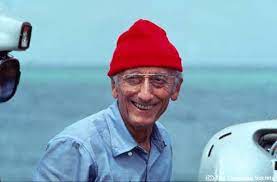
One man who understood before others did, how critical our Water Planet is to our survival and who dedicated his life to learning what lay deep in the marine waters, and opened up these hidden treasures for the world, was Jacques Cousteau.

Jacques-Yves Cousteau was born on June 11, 1910 near Bordeaux, in France. He learned to swim when he was just four. When he was 10 his family moved to New York for two years. It was at a summer camp that Jacques first learned how to go diving and snorkelling. He continued to snorkel after the family moved back to the Mediterranean city of Marseilles in France.

In 1930, at the of age 20, Jacques Cousteau passed the tough exams for the French Naval Academy where he trained for two years before spending a year at sea. In 1933, he was commissioned as a second lieutenant and spent most of the next two years sailing the world’s seas. In 1935, Cousteau started training to become a naval aircraft pilot. He had almost completed his training when, in 1936, he was involved in a near-fatal car crash. His right side was paralyzed and he had multiple fractures in his arms. This ended his dream of a career in flying. Cousteau underwent months of physical therapy, and spent a lot of time swimming in order to strengthen his fractured arms. He was not satisfied with skimming the surface of the water, he was curious to know what lay deep below. He started diving deeper with a pair of improvised swimming goggles and was amazed to discover the beauty of the sea-floor. He decided that he would make diving his life’s work. He also re-joined the navy as a naval gunnery instructor.

As he attempted deeper dives, Cousteau was frustrated about the limited amount of time that he could remain submerged. The only equipment available for divers then was the Self-contained Underwater Breathing Apparatus (SCUBA) that had been invented in 1926.  In 1943, Cousteau met Emil Gagnan a French engineer and together they experimented to develop a device which had compressed air cylinders that would enable divers to remain underwater for a longer time. Thus the diving regulator or aqualung was born, co-invented and patented by Gagnan and Cousteau. Cousteau immediately incorporated the new device into SCUBA apparatus. It gave him exactly what he needed. He could dive freely and stay under longer without the previous cumbersome equipment.

After the war ended, Cousteau began underwater research for the French Navy. In addition to this he also used the new equipment for underwater archaeology work to study the wreck of sunken ships.

In 1951, Cousteau took scientific leave from the Navy and began his own sea expeditions. Cousteau shared his plans to make undersea film documentaries with wealthy British philanthropist Thomas Loel Guinness. Guinness bought an old car ferry and leased it to Cousteau for a token 1 franc a year. Cousteau named the ship Calypso. Cousteau and Calypso would, not too far in the future, become popular names for TV audiences all over the world. But before the ship could become functional, it needed equipment and crew. Cousteau begged for government grants and pleaded with manufacturers for free equipment.

To raise more money, Cousteau and Frédéric Dumas co-authored a book The Silent World, about their pioneering adventures in SCUBA diving. Published in 1953 the book was an instant hit, and has continued to sell; to date it has sold over 5 million copies. In 1956, Cousteau released his first colour movie documentary, also called The Silent World. This was the first time that common people had a peep into a hitherto unimagined underwater world. Today we have access to incredible footage of the marine environment through numerous channels, and with the help of highly sophisticated technology. Cousteau’s film was the first to bring glimpses of this world onto TV screens. The film won the Academy Award for Best Documentary in 1957.

Cousteau’s film inspired a lot of people to take up deep sea diving and explore the ocean depths. This also led to a rise in the demand for SCUBA equipment, especially the aqualung.

Cousteau officially retired from the French Navy in 1956 with the rank of Captain. He continued to make underwater documentaries, exploring different facets of the marine environment. His films, and his pioneering work, won many awards. Jacques Cousteau became a familiar name for TV audiences in the 1960s and 1970s.

His work also created a new kind of scientific communication. The simple way of sharing scientific concepts, which characterized his books and films, was soon employed in other disciplines and became one of the most important characteristics of modern TV broadcasting.

Cousteau was more than an inventor, explorer and documenter of the oceans. He inspired generations of marine biologists, teachers, explorers, divers and others for whom the oceans became a personal and professional passion. He was also an activist, and advocate for respectful protection and conservation of the ocean and its resources. In 1973, along with his two sons and Frederick Hyman he created the Cousteau Society for the Protection of Ocean Life. The Cousteau Society continues its mission of exploring the seas, establishing protected areas for endangered species and advocating for the silent world which cannot advocate for itself.

Cousteau believed that people protect what they love. And he made it his life’s mission to create that love for Planet Ocean. Jacques-Yves Cousteau died age 87 of a heart attack on June 25, 1997 in Paris.

When Cousteau first discovered and shared the wonders of the ocean in the 1950s, plastic waste was relatively manageable. Today the oceans are threatened as never before with the issue of plastic pollution with an estimated 8 million tonnes of plastic entering the ocean annually. It is estimated that by 2050, there will be more plastic than fish in the ocean.

The theme of the recently celebrated World Environment Day (5 June) was Beat Plastic Pollution. The theme of World Oceans Day (8 June) is Planet Ocean. This is a good week to remember Cousteau who gave us the first glimpse of this wondrous planet. 

–Mamata

Carl Linnaeus: Giver of Names

May 22 marked the celebration of the International Day for Biological Diversity. What exactly does this term, or word Biodiversity mean? At the broadest level it refers to the variety among life forms. It describes not only the number but also the types and variety of living things. While there is a huge variety of sizes, structures and functions among living things, there are also sufficient similarities to permit their grouping together into orderly patterns.

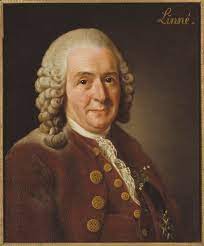
This grouping is called classification. The science of classifying organisms is called taxonomy. When talking about taxonomy, the name that immediately comes to mind is that of Carl Linnaeus, who is most famous for creating a system of naming plants and animals—a system we still use today. But Carl Linnaeus was much more than just the ‘father of modern taxonomy’. He was a renowned botanist, physician and zoologist; a pioneer in the study of ecology, and one of the most influential scientists in history.

Carl Linnaeus was born on May 23, 1707, the eldest of five children, in a town called Råshult, in Sweden. His father Nils, was a minister and keen gardener. From the time Carl was very young, his father used to take him to the garden and teach him about plants. Carl observed his father in the garden, and was soon as excited and interested in plants. He began growing plants and by the age of five had his own little patch in the family’s large garden.

His father believed that the best thing he could offer his children was a solid education and, in addition to botany, he taught Carl Latin, as well as about religion at an early age. Nils also realized that his son was exceptionally bright, and engaged a private tutor for him; but the boy found the tutor very dull as compared to his own explorations in the garden and countryside. This aversion to formal education continued when he joined school at the age of ten, and Carl was an indifferent student. The teachers ignored his immense knowledge and interest in Botany because it was not considered a ‘proper’ subject, and as he was not interested in subjects like Hebrew, mathematics and theology, they advised that he was not bright enough to go to University. Only one of his teachers saw his potential and advised his father that the boy should apply for admission to medical school. He also coached him in anatomy and physiology.    

At the age of 21 Carl enrolled in Lund University under the Latin form of his name Carolus Linnaeus. This was a common practice for students in Europe at that time. After a year he switched to Uppsala University as he was told that the medical and botany courses there were better. While he was there Carl wrote up some of his observations on reproduction in plants which were of such a high standard that he was offered a post of Botany lecturer at the University. In 1731 Carl began teaching botany, at the age of 23. He was a good teacher and his lectures were popular with students. As he continued his own botanical studies, Carl found that the way in which plants were classified was not satisfactory. He started jotting down ideas about how this could be improved. Linnaeus realized that he needed a cataloguing system that was easily expandable and easy to reorganize; for this he started using cards, thereby inventing index cards!

In 1732 Carl got funding for a botanical expedition to Lapland, in the far north of Sweden. For 6 months he travelled 2000 km across Lapland making notes on the native plants and birds. At this time it occurred to him that there could be another way of naming plants. He replaced some very lengthy plant names with logical, much shorter, two-part names which consisted of a genus and a species name. The genus describes a larger grouping of organisms with certain common characteristics, while the species name describes only one, unique particular organism grouped within that genus, or larger classification. The names were in Latin because at that time, Latin was the language of science. Highly educated people of the period could all read and write in Latin which enabled them to share scientific information, regardless of their native tongue.  

Carl Linnaeus described his observations of plants along with the newly-coined names in a book called Flora Lapponica, including his new discoveries. He also realized that he could use his new system to name animals as well as plants.

In 1735, at the age of 28 Linnaeus was awarded a doctoral degree in medicine for his thesis on malaria and its causes from a University in the Netherlands. While he was there he showed his continuing work on the classification and renaming of plants to a Dutch botanist who was very excited by its potential to transform botany. He supported the publication of Carl’s work which was published in 1737 under the title Systema Naturae (System of Nature). The first edition had 12 outsize pages.

Over the years, Linnaeus continued to develop his ideas and add new species. In the tenth edition of Systema Naturae published in 1758, Linnaeus classified all the animal kingdom into genera and gave all the species two-part names. The twelfth edition had 2400 pages. During his career, Linnaeus named about 13,000 life forms and classified them into suitable categories such as mammals, birds, fish, primates, canines, etc.

Linnaeus returned to Sweden in 1738, becoming a physician in the nation’s capital city, Stockholm. He helped found the Royal Swedish Academy of Science and became its first president. In 1741, aged 34, Linnaeus returned to Uppsala University and became a full professor of medicine, taking control of botany, natural history and the university’s botanical garden. He also revived his childhood passion by taking his students on walking trips in the countryside searching for plants. In 1750, at the age of 43, Linnaeus was appointed as Uppsala University’s rector. Carolus Linnaeus was knighted by the King of Sweden in 1761 and took the nobleman’s name of Carl von Linné. He died at the age of 70, on 10 January 1778, after suffering a stroke.

Linnaeus was the first person to place humans in the primate family and to describe bats as mammals rather than birds. He did this with the same reasoning he used to categorize all life, which was based on similarities he identified between species. Human beings are also among the thousands of species that were given a name by Carl Linnaeus—Homo sapiens meaning ‘thinking man or wise man’!

Today as the world sees a steady decline in the numbers of species and a severe threat to global Biodiversity due to anthropogenic factors, one wonders if Carl Linnaeus would regret giving humans the title of ‘wise’!

–Mamata

Focus on Citizen Science

April is marked as Citizen Science Month—not in India, but in the US. But it can only be to the good to take best practices from anywhere at all, and adapt them for our use, right? And an acceleration of the citizen science movement is something that is definitely a crying need in our country!

What is citizen science? The term probably appeared first in 1989, in an issue of the MIT Technology Review 1989, but till today, there is apparently no consensus on a single definition–one paper cites 34! But a working definition we could go by is the one given by the National Geographic Society: ‘Citizen science is the practice of public participation and collaboration in scientific research to increase scientific knowledge.’ The benefits of such initiatives are manifold: large public participation in scientific pursuits; raising scientific awareness and knowledge; democratization of science; ability to pull in indigenous and community knowledge, etc. In fact, without wide-spread involvement of a large number of people, many projects would be very difficult to do—nationwide bird counts, butterfly counts, monitoring water quality across large areas, weather monitoring, space watch, etc. 

India has its share of action on this front. The Indian Biodiversity Portal launched in 2008 is a prime example. It ‘aims to aggregate data through public participation and provide open and free access to biodiversity information’ and invites the public to participate in gathering and documenting such knowledge. It currently has 1.54 million observations on 58.3 thousand species. It is an invaluable resource, which would have been difficult to put together without the participation from people across the country.

Another interesting initiative is by the CitSci (Citizen Science for Biodiversity) India–they organize an annual Citizen Science of Biodiversity Conference. Their site also shares useful information on on-going biodiversity and conservation related citizen science projects undertaken by a host of NGOs, like the Citizen Sparrow initiative, which is ‘a public participatory project to which all members of the public are invited to contribute. ‘

It is not just conservation. There are projects in various other scientific research areas as well. The Pune Knowledge Cluster develops research projects where citizens from all walks for life can participate to help analyse big data from various scientific streams including astronomy. Yet another organization in this area is the Centre for Citizen Science (a Pune based organization with the explicit objective of promoting citizen science) whose ‘Project Meghdoot’ aims to study the phenomenon for monsoon across the country.

River Quality Monitoring, CEE
River Quality Monitoring, CEE (Joy of Learning II)

Nor is this a recent phenomenon. I recall in the 1990s, when I was working at Centre for Environment Education (CEE), we had a project wherein school children, as part of the Ganga Pollution Awareness programme, were monitoring and reporting the water quality in the river in their stretch. Similarly, we had green-cover mapping and biodiversity census by college students in Karnataka, which was then correlated to remote sensing data.

The initiatives for spreading scientific knowledge, a necessary precursor of citizen science, have a hoary history in India, and several institutions have been committed to doing this for decades now. Two of the oldest are VASCSC and KSSP. Dr. Vikram Sarabhai, in the ‘60s, created an institution, today called the Vikram A. Sarabhai Community Science Centre (VASCSC), one of whose objectives is to encourage scientific thinking. The Kerala Sastra Sahitya Parishad (KSSP) is a People’s Science Movement of Kerala, India, founded in 1962 has over 1200 units spread all over Kerala.

In fact, the recognition of the importance of science for national development is enshrined in the Constitution as a Fundamental Duty of every citizen! This section explicitly states that ‘It shall be the duty of every citizen of India.. to develop the scientific temper, humanism and the spirit of inquiry and reform.’

From here to citizen science should not be too long a distance to traverse. But it questionable if we have even achieved the scientific temper, so earnestly endorsed by Pandit Nehru as ‘the scientific approach, the adventurous and yet critical temper of science, the search for truth and new knowledge, the refusal to accept anything without testing and trial, the capacity to change previous conclusions in the face of new evidence, the reliance on observed fact and not on pre-conceived theory, the hard discipline of the mind—all this is necessary, not merely for the application of science but for life itself and the solution of its many problems.’

Even with such strong foundations and a bunch of dedicated organizations, neither scientific temper nor citizen science is very widespread in India today. While there is much talk of the importance of STEM, it is yet a theoretical approach aimed at cracking exams, and not an effort to inculcate scientific thinking and the spirit of science as a part of how we live, think and take decisions.

Maybe we should pause to ponder on this now—because it is Citizen Science Month somewhere in the world!

–Meena

For anyone who wants to explore the subject more, ‘Citizen Science in India: Introduction, Challenges and Way Forward’, a paper by Suryesh Namdeo and Moumita Koley provides a contemporary overview of the subject.

Communications Research: Pioneering Work of Dr. Binod Agrawal in SITE

Last week, another of our gurus passed away. Dr. Binod C. Agrawal wore many hats in his life, and it is impossible in a short piece to do justice to his work . But we knew him as a kind and generous mentor, who never stinted in sharing his time, advice, wisdom and wit with the young rookie educators we were when we first met him.

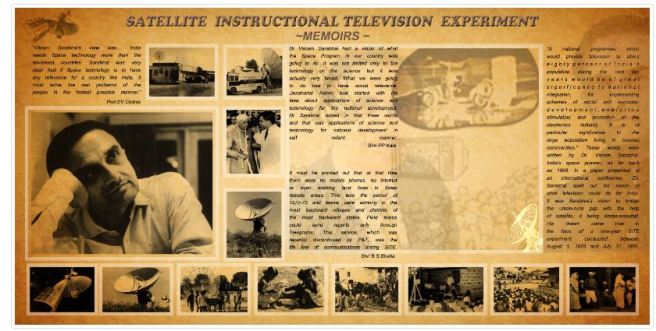
He was then at the Development Communications Education Unit of ISRO. In the communications sector, he was legendary. He had after all been part of the historic SITE (Satellite Instructional Television Experiment), termed by some as the greatest communication experiment in history. SITE was an experimental satellite communications project designed jointly by NASA and the Indian Space Research Organization (ISRO) which made available informational television programmes to rural India. It broadcast programmes to over 2500 villages across 6 states in India, in 1975-76. Dr. Vikram Sarabhai’s dream of India using technology to reach the most deprived was the basis of the experiment.

Everything about the project was unique—the vision, the audacity of the dream, the technological challenges, the operational challenges, and the challenge of making a difference to people’s life.

The last is where Dr. BA’s contribution came in. The contours of the programme were clear. It would broadcast (a) educational television (ETV) school children in the age group of 5-12 years and (b) instructional television (ITV) for adult audiences, primarily designed for neo-literates and illiterates. ETV programme was focussed to make education more interesting, creative, purposive and stimulating and also to create an awareness in the changing society. The ITV for adult viewers was to cover incidents of national importance, improved practices in agriculture, health, hygiene, family planning, nutrition, etc. and some recreation programmes.  

The purpose of the project was to provide information that was useful, relevant and actionable by the target audiences—the people in these most remote, deprived villages. But what did the people there need and want to know? This was the first question that Dr BA and others in the team had to grapple with. What were the information gaps? Without a proper understanding of that, the programme would not really be useful. Hitherto, such studies used to depend essentially on survey methods. Dr. BA, with his background in anthropology, for the first time deployed qualitative studies, to supplement and complement traditional methods. Through innovative research design and large field teams spending time in the target villages, SITE programming could answer the real questions and concerns that people had.

Dr. BA’s work did not stop there. At the instance of the Planning Commission, the impact of SITE was thoroughly evaluated—through a Bench-Mark Survey during July, 1975, a Concurrent Observation, and Repeat Survey in 1976. He was involved in these as well.

The evaluation validated the needs assessment done by the communications research team. 78% of the development programmes were rated as good and over 90% as relevant to the local situations. About three-fourth of the respondents felt that the development programmes were, on the whole, useful and conformed to the local conditions. Over one-fourth of the viewers could acquire detailed knowledge of the new practices shown on the television.

Dr. Agrawal’s contribution to communications research through his involvement with SITE and agriculture research before that, is summed up in a paper by his long-time associates Dr. Arbind Sinha and Dr. Sudhakar Rao: ‘..it is Binod C. Agrawal, trained in cultural anthropology, who devoted his time for conducting communication research using anthropological methods at the Indian Agriculture Research Institute, New Delhi during the early 1970s. A major boost to this field came with his engagement with the now iconic Satellite Instructional Television Experiment (SITE) of Indian Space Research Organization (ISRO) in the mid-1970s..that has brought anthropology in close relationship with development and communication, especially, in the rural context. It helped make communication an integral part of the discipline of anthropology.’

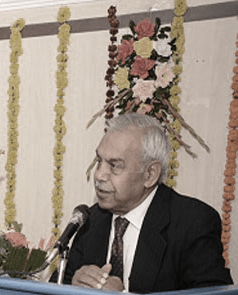
Dr. Binod Agrawal

Dr. BA was not one to sit in an office and design research protocols. How deeply he and his team were involved in the field during SITE can be gauged from a report by the Resident Representative of NASA in India, Dr. Howard Galloway: ‘Just checked with Dr. Binod Agrawal, Chief of the Research and Evaluation Cell (REC). He gave me the following information. All of his staff take evaluation very seriously. When their DRS has trouble, they get immediate help. Example: Recently Dr. Binod was in a village when the TV cut off. Within five minutes his staff had borrowed a motor bike and set off for the subcluster maintenance center (SCM). Returning shortly, he brought the needed part and put the set back into operation. Because it is so much effort for a service man to get to the village to replace a fuse as a circuit card, the REC staff has relieved his burden. They carry fuses and set right the TV sets at once. On his recent trip, Binod saw a villager from a nearby village come furiously pedalling to an REC village, His TV was out. The REC staffer, riding on the back of the bike, went to the sick set, replaced the fuse and restored peace in the village.

It was this commitment and passion shared by the SITE team which made the project an international landmark in space experiments. Talking to Dr. BA more than a decade after these experiences, we could still feel the excitement.

Dr. Agrawal was Founder Director of Mudra Institute of Communications Ahmedabad (MICA), which is one of the most respected communications institutions in the country. He was also Founder Vice Chancellor of Himgiri Zee University, and till recently Professor of Eminence and Director General TALEEM Research Foundation.

He taught so many of us so much.
May his soul rest in peace.

–Meena

To Shruti, his daughter who was a dear colleague.

And thanks to Dr. Arbind Sinha his colleague and another doyen in the world of development communications, for the chat which helped develop this article.

Lumps and Bumps

Skin

I was just thinking about the amount of time we spend worrying about lumps and bumps on our skin and other surfaces, those seen and those unseen. Parents worry about rashes, boils, sties and other sundry outbreaks on their children’s skin. Teen years are spent worrying about acne, pimples, blackheads, whiteheads. Tumours, cysts and polyps occupy significant mindspace in old age. And through all our living years, moles and warts are a part of life.

What on earth are these things? Here is a quick overview.

Rashes are any area of irritated or swollen skin. They involve changes in colour, feeling or texture of the skin.  They are often itchy and painful and can appear red, purple, grey, or white.

Boils are painful, pus-filled bumps that form under the skin when bacteria infect and inflame hair follicles. They usually start out start as reddish or purplish, tender bumps. The bumps quickly fill up with pus, growing larger and more painful until they rupture and drain. If that sounds bad, a carbuncle is worse. Carbuncles are a cluster of boils that form a connected area of infection under the skin.

A stye is an  inflamed oil gland on the edge of the eyelid, where the eyelash meets the lid. It appears as a red, swollen bump that looks like a pimple, and is often tender to the touch.

And here are the ones which trouble us during adolescence.

Acne is when hair follicles under the skin become clogged. Sebum—oil that helps keep skin from drying out—and dead skin cells plug the pores. Most often, the outbreaks occur on the face but can also appear on the back, chest, and shoulders. Acne is the generic name which includes pimples, zits, etc.  

To be specific, pimples are small pustules which develop when the oil glands become clogged and infected, leading to swollen, red lesions filled with pus.

Blackheads are also a type of acne, but different from pimples. They are open bumps on the skin that fill with excess oil and dead skin. They look as if dirt is in the bump, but it is irregular light reflection off the clogged follicle that causes the dark spots.

Whiteheads too are acne and occur when oil and dead skin close off hair follicles or oil glands. But they form closed bumps on the skin.  

Moving on from teen-woes, here are lumps and bumps we worry about as we grow older:

Tumours are solid masses of tissue that form when abnormal cells group together. Tumours can affect bones, skin, tissue, organs and glands. Many of them are not cancer but they still may need treatment. 

Polyps are tissue growths that most often look like small, flat bumps or tiny mushroom-like stalks. Most polyps are small and less than half an inch wide. A polyp can be flat, raised or on a stalk. Uterine and colon polyps are the most common, but it is also possible to develop polyps in the stomach, ear canal, nose, etc.

Another type of lump is a cyst which is a small pocket of tissue filled with air, fluid or other substances. Cyst maybe caused by genetics, inflammation, infection or other issues.

And the ones that are age-agnostic:

Warts are small, noncancerous growths which appear when the skin is infected with one of the many viruses of the human papillomavirus (HPV) family. The virus triggers extra cell growth, which makes the outer layer of skin thick and hard in that spot.

Moles are small dark brown spots and are caused by clusters of pigment-forming cells (melanocytes). Most people have 10 to 40 moles that appear during childhood and adolescence and may change in appearance or fade over time.

That was a yucky one! But yucky is part of life!

–Meena

It Takes Guts!

‘Gut Ecology’ is the name of a book brought out by the St. Marks Academic Institute which is dedicated to ‘advancing scientific knowledge of colorectal disorders’. I think the book, which features topics like ‘The gut microflora: traditional and molecular identification techniques’, and ‘The ‘unculturables’’ deserves to be a bestseller. Not that I would understand the contents, but I have to admire the dedication and scientific spirit it takes to spend a lifetime researching and writing on such topics! Guts indeed!

But what exactly would the book be about? Let’s break it down. Ecology is the study of organisms and how they interact with the environment around them. An ecologist studies the relationship between living things and their habitats. ‘Gut’ is commonly used to refer to the stomach, entrails, parts or the whole of the digestive tract. So a ‘gut ecologist’ would study the insides of our digestive tract to understand the micro-organisms (collectively referred to as gut microbiota) that live there, and how they interact in our digestive system.

For very long, the presence and role of micro-organisms in our body was not known. It was in the 1670s and ‘80s when Antoine van Leeuwenhoek started using his newly developed handcrafted microscopes that scientists started studying them. Leeuwenhoek described and illustrated five different kinds of bacteria present in his own mouth and that of others, in a letter he wrote to the Royal Society of London in 1683. He later also compared his own oral and faecal microbiota, and proved that there are differences in micro-organisms in body sites. (See why I say it takes guts to be in this field!)

Gut bacteria
Gut bacteria

Now we know that the human gastrointestinal tract—from mouth to anus– is divided into sections, and each provides a different environment and different kinds of micro-organisms thrive in each section. In all, about 100 trillion micro-organisms (most of them bacteria, but also viruses, fungi, and protozoa) exist in the human gastrointestinal tract. In fact, the colon contains the highest microbial density recorded in any habitat on Earth, representing between 300 and 1000 different species. There are actually about as many bacterial cells in our bodies as there are human cells, and they contribute over a kilogram to our weight! So Stewart Brand, the American writer, environmentalist and editor of the highly influential Whole Earth Catalogue was right when he said, ‘If you don’t like bacteria, you’re on the wrong planet.’

These organisms are such an integral part of the functioning of the human body that they are sometimes called ‘the forgotten organ’.

A foetus has no bacteria at all in the system. Through the process of birth, it picks up a good number, and then in the first few years of its life, the child picks up a huge number of different bacteria from its environment. Fascinatingly, like fingerprints, a person’s gut microbiota composition is unique to each individual.

These micro-organisms influence our energy metabolism and many other areas of human health, from immunity and the progress of diseases, to appetite, to nutrition uptake, and even personality! They therefore greatly influence our health, well-being, weight etc.

External factors influence the composition of these micro-biota but by changing our diet or fasting can change the composition of these life-forms in our systems, in a matter of days or weeks, and this is why it is important to pay attention to what we eat. This is also the reason why medical science is increasing focus on  prebiotics and probiotics. If like me, you are confused about the two terms, here are simple definitions:

* Probiotics are foods or supplements that contain live microorganisms intended to maintain or improve the “good” bacteria (normal microflora) in the body.

* Prebiotics are foods (typically high-fiber foods) that act as food for human microflora. Prebiotics are used with the intention of improving the balance of these microorganisms.

Kudos to the scientists who work so hard to help us understand our bodies and their functioning, ready to spend their lives poring over microscopes to figure out how we can live healthier and better!

–Meena