Walk, Don’t Run!

What is this life if, full of care
We have no time to stand and stare?

These words were penned by the Welsh poet W.H. Davies over a hundred years ago. Even as the world continues to progress rapidly in every way, and along it, also the pace of life, in every age there have been some voices that remind us about what we are losing as we rush headlong through our daily lives, in our quest to make a living. But as they remind us, are we, along the way not missing out on the simple joys of living?

One of the simplest joys is that of walking. Walking not as in getting from point A to point B, but walking for the sheer pleasure of it, with the senses attuned to the very act of moving while also imbibing the sights, smells and sounds around. And this sort of moving even has a word that defines it. The word is ‘saunter’.

The Merriam-Webster dictionary defines the verb ‘saunter’ to mean ‘to walk along in a slow and relaxed manner without hurry or effort’; and the noun ‘saunter’ to mean a ‘leisurely stroll’. According to the Cambridge dictionary, ‘to saunter’ is to ‘walk in a slow and relaxed way, often in no particular direction’. Saunter probably derives from the Middle English word santren, which meant ‘to muse’. The first modern use of the word ‘saunter’ in its current form was in the 17th century.

Definitions aside, the concept of a walk such as this was best described and promoted by Henry David Thoreau an American author, poet, and natural philosopher, in the mid-nineteenth century. While he wrote about the joys of a simple life in nature, Thoreau’s essay Walking focuses on the spiritual importance of walking in nature. The essay was first published in 1862, after his death. For Thoreau, the goal or destination of walking is less important than the meditative state of mind which walking induces. He argues that walking cultivates curiosity and wonder, qualities which are often discouraged or undervalued in society.

The walking of which I speak has nothing in it akin to taking exercise, as it is called, as the sick take medicine at stated hours–as the swinging of dumb-bells or chairs; but is itself the enterprise and adventure of the day. If you would get exercise, go in search of the springs of life. Think of a man’s swinging dumbbells for his health, when those springs are bubbling up in far-off pastures unsought by him!

As Thoreau describes it, the genius of walking lies not in mechanically putting one foot in front of the other en route to a destination but in mastering the art of sauntering.

Many years after Thoreau, and at a time when the pace of life had become much faster, and preoccupations with “getting there” propelling every kind of journey, some people felt that it was necessary to remind ourselves that “stopping to smell the roses” along the way was not a waste of time.

Among these was an American WT Rabe who was concerned about the growing popularity of jogging as a fitness trend in the mid-1970s. Rabe was a Public Relations professional who combined his skills and concerns to encourage people to slow down and appreciate the world around them. Rabe was then working as a PR person for the Grand Hotel on Mackinac Island in Michigan, which was famous for having the longest porch in the world. Rabe organised an event inviting people to spend a day taking a leisurely walk, free of stress and strain, focusing on the pure joy of the act. In other words–to saunter. Sauntering, as Rabe described it ‘is going from point X to point Z which means you don’t care where you’re going, how you’re going or when you might get there’. In response to this, thousands of people descended on the Grand’s famous front porch, simply to saunter (upon paying a fee of two dollars each). As Rabe’s idea caught on, and his followers increased, he went on to propose that there should be an annual day to celebrate the concept and the act. And so 19 June was designated as World Sauntering Day! 

While this may be a successful PR gimmick, sauntering has its advocates among some of my favourite writers. Thoreau’s conviction was that walking should involve a ‘connection’ with our natural world and approached with the mind set of becoming ‘fully present’. He believed that ‘busy’ was a conscious decision. He spoke of returning to his ‘senses’ after a saunter in the wild.

These sentiments are beautifully echoed in a recent essay by Pico Iyer, a contemporary essayist and novelist known for his travel writing. The essay describes the same walk that he has taken for over twenty-five years in Nara a small town near Kyoto in Japan.  

For years I used to take this walk as a break after five hours at my desk, a small reward, perhaps, for forcing myself to stay sitting through sunshine and mist. But then I began to notice something: walking shook things loose in me. The very act of ambulation sent my thoughts down different tracks. Movement in some ways—because I had no destination and didn’t have to notice where I was going—allowed my mind to run off the leash like a dog on a beach. If I was stuck at my desk, walking could unstick me.

As he further says, A wise friend from New York sent me his paraphrase from the American naturalist John Burroughs last year: To learn something new, take the same path you took yesterday.

Although this is not a day that is very well known, for most of us who spend a large part of our life with no time ‘to stand and stare’, World Sauntering Day is indeed a good reminder that it is important sometimes to be “pointless on purpose”. This Sunday, let’s celebrate the day with a saunter.  

–Mamata

Of Fireflies and Glowworms

When we were young, we used to see fireflies in the garden a few weeks in a year. What a magical experience it was! Like the stars had come down to visit us.

After that, I did not see them for many decades. Either I did not live in the right place, or I was not lucky enough to spot them in the short window that they glowed. But in the last few years, since we moved to Bangalore, I have been sighting a few. Year after year, the same two spots in our community hosted them—shrubby areas on the periphery. This year, for some reason, I am seeing many more . Each spot has only a couple, but from two, the number of spots has risen to six or so. That definitely sounds like good news!

But what are fireflies? Sorry if this takes the magic and romance away, but they are a type of beetle!  There are over 2,000 species of firefly spread across the world on every continent except Antarctica. However, in India, we have only eight. They are generally seen in the pre-monsoon season.

Why do fireflies twinkle? As is usually the reason for most beauty in the natural world, it is to attract a mate and reproduce! Fireflies use flashes as mating signals and the flashes we see are generally from males looking for females. They flash a specific pattern while they fly. If a female waiting in the greenery nearby is in the mood, she responds back with a flash. They will continue this flashy exchange till the male locates the female and they mate. Each species has its own pattern so that males and females of the same species can identify each other.

And how do they twinkle? Through a phenomenon called bioluminescence. At the risk of taking away even more romance, it is when two chemicals found in their bodies, luciferin and luciferase, lead to a reaction in the presence of oxygen, adenosine triphosphate  and other compounds, that they twinkle. The light they produce is called ‘cold light’– that is no heat is produced during the reaction. Which is a good thing, as otherwise not only would it waste energy, but also burn the poor creature.

This year was a lucky year, as I am seeing so many fireflies. Firefly populations are rapidly decreasing because of habitat degradation, light pollution, pesticide use, poor water quality, climate change, invasive species, and over-collection. In India, pesticide use may be the most significant cause of the falling numbers.

I was lucky enough to see another ‘glowing phenomenon’ — the glow worms of New Zealand. Of all my nature-travel experiences, I would count this as THE top! In an experience like no other, boats take groups of tourists through a waterway in an intricate web of caves. It gets darker and darker, till you are in the darkest-dark you will ever experience. The boat-captain guides the boat by pulling along ropes tied on the sides of the cave. Just as you start to wonder whether the sight you will see is worth the risk of being toppled into a water course of unknown depth in pitch dark which will make rescue impossible, you are rewarded with flashes of light which grow in intensity as you proceed. And then you know it is worth it as you see constellations of twinkling glow worms on the roof and sides of the cave!

These are glow worms—again, not actually worms, but in the case of those found in Australia and New Zealand, the larvae of fungus gnats, an insect that looks like a mosquito. Their bioluminescence works much the same way as that of fireflies, and they emit light from an organ near their tails that is similar to a human kidney. However, in their case, the glow is mainly used to attract prey. Smaller insects and flies are drawn to the light and fly towards it.

These special sparklers and their habitats are fragile. We don’t know what human actions can push them over the brink. We need to take care that our carelessness does not take the glow from our lives.

-Meena

LABURNUM: MOLTEN SUNSHINE

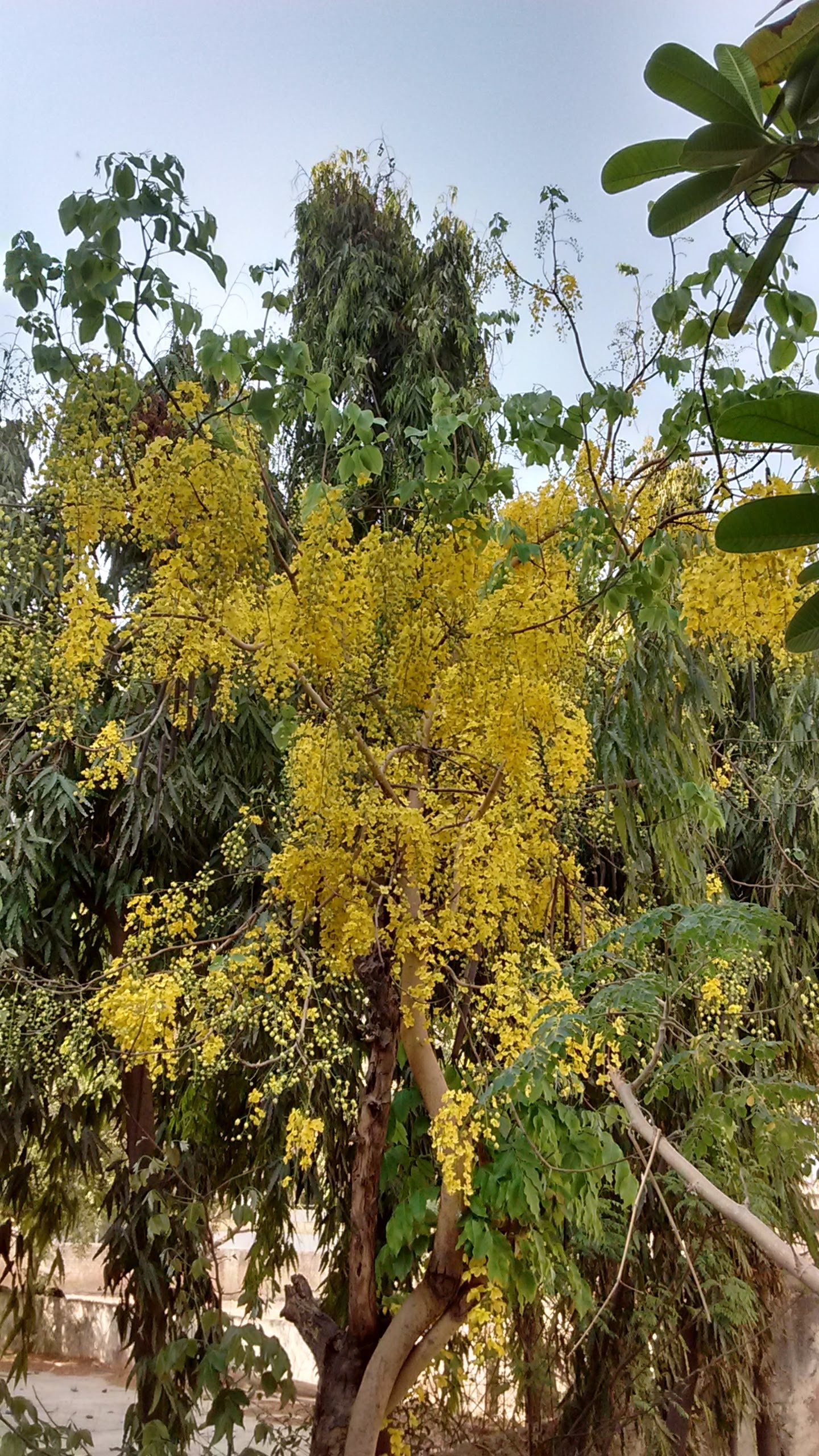
As the late April heat intensifies and the scorching sun begins to wilt and melt all that it beats down upon, it is time for the golden showers. The Indian laburnum or Golden Shower tree is in bloom. Its masses of yellow blossoms cascade from the tree like waterfalls of molten gold. Indian summer is really here!

laburnum

Indian laburnum or Cassia fistula gets its genus name from the word Kasia which was given by an ancient Greek botanist Pedanius Dioscurides, and its species name fistula meaning pipe, which refers to its tube-like pods.  

C. fistula is widely grown as an ornamental plant in tropical and subtropical areas. It is native to Southeast Asia and is found in Sri Lanka, Nepal, Bhutan, South and SW China, Myanmar, Malaysia, Indonesia, Pakistan and other tropical Asian countries, some parts of Australia and tropical Africa.

The Amaltas as it is commonly called in Hindi, is one of the most widespread of Indian trees and occurs throughout the country including the Andamans, and thus it has a vernacular name in all Indian languages. Many of the names refer to the long stick-like pods which appear almost alongside the blooms.

The Indian Laburnum is the common English name of this moderate-sized, deciduous tree. Its bark is greenish-grey and smooth on young trees, but with age it becomes brown and rough. This is not a tree that attracts attention for the large part of the year. It has a nondescript branching pattern and scant foliage. Between February and May the leaves get dull and ragged and many of them fall. New leaves are a beautiful fresh green sometimes tinged with pink, or a rich copper colour, and covered with a soft down; they remain folded and hang loosely downwards until they are fully grown.  It is with the onset of the summer that the laburnum bursts into full glory with sprays of golden flowers. It is the profuse mass of colour that attracts immediate attention. But a closer look reveals the delicate distinct beauty of the individual flowers that make up the mass. Each flower has five spoon-shaped petals of unequal size and ten yellow stamens of which three are long and curve gracefully upwards, the next four are shorter and curve the opposite way, while the remaining three are even shorter and straight. All are crowned with large, brown anthers where pollen is produced.

Around the same time, the long hanging cylindrical pods that give the tree some of its common names like Pudding Pipe tree appear in large numbers, making a striking picture of brown with yellow. At first the pods are green and soft, then they turn brown, and eventually become black and very hard. The pods contain large numbers of shiny brown seeds arranged in small compartments surrounded by a sticky brown pulp. 

In the scorching sun, the blooming flowers are a magnet for a wide range of insects and birds, which in turn creates dynamic ecological interactions. Bees and butterflies are important pollinating agents. The laburnum is specially connected to the Carpenter bees; the vibrations generated by the bees as they hover near the flowers cause the pollen grains to break out of the stamens, and attach to the bee’s body, and therefrom travel far and wide. Weaver Ants lurk around the flowers to pounce and prey on pollinators that visit the flowers. While flowers are the star attraction, the leaves too play important supporting roles. Greater Short-nosed Fruit Bats consume the leaves of the Golden Shower Tree, which are rich in protein and calcium. Butterflies like Mottled Emigrant, Common Emigrant and Common Grass Yellow, lay eggs on the leaves, which also provide the first food for the caterpillars as they emerge from the eggs. The ripe pods also attract mammals like monkeys, jackals, bears and pigs who break these open to eat the pulp, thereby helping to scatter the seeds that lie within, either directly or through their ingestion and excretion.

For humans, the Indian Laburnum also provides much more than sheer aesthetic pleasure. Its leaves, fruits and flowers are known to have medicinal relevance in Ayurveda and other traditional systems of medicine. In fact, in Sanskrit, the tree is revered as Aragvadha or ‘disease killer’. The fruit pulp is known to have laxative properties, while its flowers are used in certain folk remedies. The leaves have also been used as fodder to supplement the diets of domestic cattle, sheep, and goats, and as green manure. The flowers are also eaten by some tribal communities, and more recently, new age chefs are creating innovative ‘Amaltas’ recipes of teas, chutneys, jams, and salads using the flowers.

As with most indigenous trees, the Amaltas finds a place in culture and tradition. The tree finds mention in literature from the epics like the Ramayana and Mahabharata, to folk literature, and is depicted in paintings and pictures. The Indian Postal Department issued a stamp in its honour, and some cities in India have beautiful avenues of Laburnum trees, original planted by the British.

In Kerala, the Kondrai or Kannikona flower as it is locally known has great cultural and religious significance. According to traditional belief it is very auspicious to have a first sighting of the flowering tree at dawn on Vishu, the New Year’s Day. The Vishukanni (literally the first sight on the day of Vishu) ritual includes an offering of all the ‘golden items of seasonal harvest’ like jackfruit, golden cucumber, mangoes and cashews, on this day. In fact the Kannikona flower is the state flower of Kerala.

Several countries of South East Asia also honour this beautiful tree. The golden hues of the Laburnum flowers signify royalty in Thailand where this has been designated as the national flower, and there is an annual flower festival is named after this tree.  In Sri Lanka where it is called Ehela, this tree is planted around Buddhist temples. In Laos the blooming flowers known as Dok Khuan are also associated with their new year when the flowers are offered at temples and also hung in homes in the belief that they will bring happiness and good luck to the house and family.

As I look out from my window at the glorious golden cascade of the Amaltas, I too wish that the auspicious sighting will bring the same to my home.

–Mamata

The Meandering Beetle

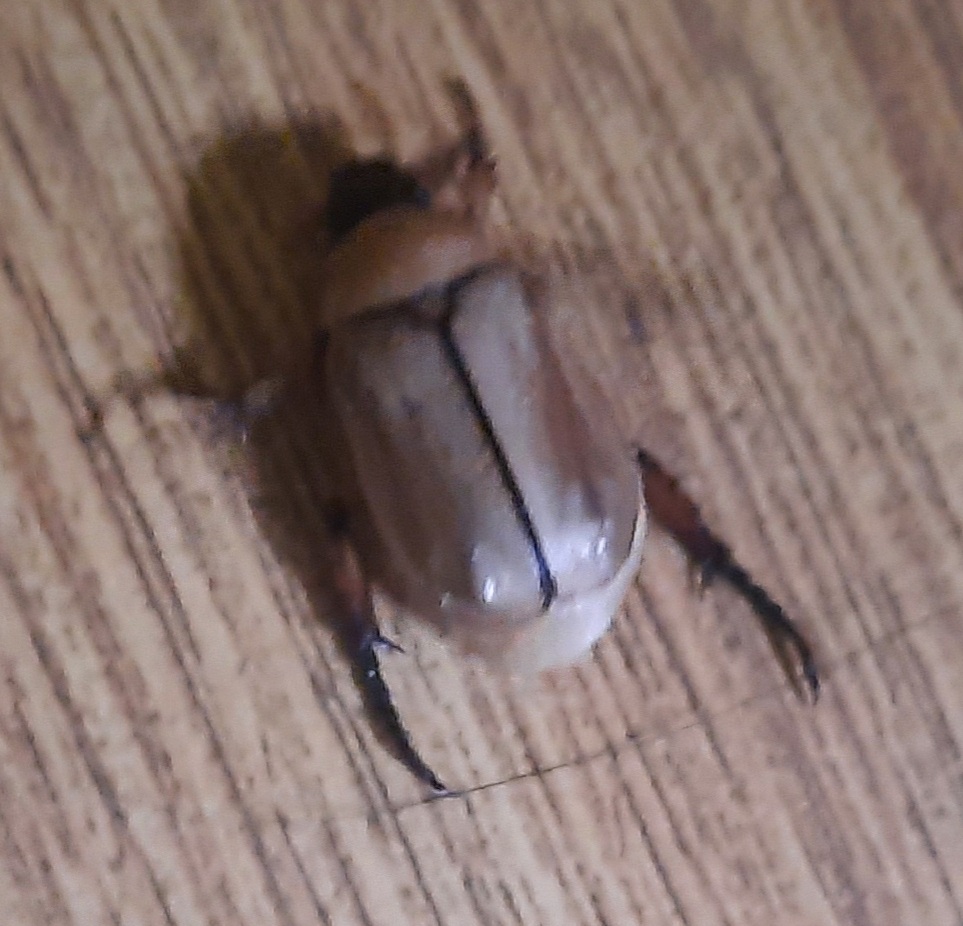
Sometime late last night, a beetle seems to have flown into my bedroom. I found it this morning, clinging stubbornly to my pillow. When I tried to push it away, it landed on the floor and walked around coolly, till I caught it up in a piece of paper and released it outside.

beetle
The Beetle Visitor (My phone did not get the colour right!)

Not a very unusual happening, except this beetle was one I had never seen before– about 2 cms in length, and a very pale colour, almost a dirty yellow.  I have seen large beetles but not one this large inside a home or building. The beetles that usually visit are black or brown or green or purplish, unlike the pale colour of this one. And my beetle was not iridescent, as beetles often are. But it did have the hooked strong legs that make it pretty unpleasant when a beetle lands on you!

But then beetles form the largest order among insects, with over 4 lakh species of them around. So coming across a new one is not unexpected. Nor is coming across one that is 2 cms long—after all, beetles can range in size from the barely visible, to large tropical species that are the size of a human hand. 

But what are beetles? Obviously a type of insect, but what distinguishes them is that their front pair of wings is hardened into wing-cases or elytra, which cover and protect the hind wings and abdomen. They belong to the order Coleoptera, in the superorder Endopterygota.

Coming to the iridescence of beetles and other insects, some are and some are not. But why are they iridescent?  Apparently, it helps in camouflage. It seems counter-intuitive, but field experiments found that birds found and ate 85% of non-iridescent baits, but only 60% of iridescent ones!

The most interesting of the beetles are the dung beetles, of which there are about 30,000 species. Basically, dung beetles fly around looking for the dung of herbivores, which has a lot of undigested and semi-digested stuff, which the beetles suck up as a great source of nutrition. There are three types of dung beetles: rollers, tunnelers, and dwellers. Rollers makes balls of bits of dung, roll it away, and bury it. The balls they make are either used by the female to lay her eggs in or as food for the adults to eat. Tunnelers dig into a pat of dung, and lay their eggs in these holes. Dwellers stay on top of the dung pat and lay their eggs, live there and raise the young. Thought most depend on herbivore dung, there are a few species which feed on carnivore dung.

Dung beetles, Scarabaeus sacer  fascinated the ancient Egyptians to the extent that they worshipped them. They believed the  dung beetle kept the Earth revolving like a giant ball of dung.

Another type of beetles which are general favourites are the Ladybirds. Farmers have special reasons to love them, as they eat aphids and other plant pests. One ladybug can eat up to 5000 aphids in a lifetime!

But sadly, a half-hour of googling through various identification sites hasn’t helped me identify my particular beetle-visitor. Google Lens helpfully tells me it a Christmas Beetle, but that seems unlikely because those are native to Australia, and my sighting was in Bangalore.

Well, the search will continue.

–Meena

The Wonder Bulb: Garlic

It adds a special flavour to numerous dishes, in many cuisines, across the world. In India, in many kitchens some dishes are incomplete without adding a dash of its paste, while some communities strictly abstain from it. It is often hailed as a wonder herb with numerous health benefits, while it also carries with it the lore of being a vampire repellent! This is the much used, but generally taken for granted–Garlic. However, this edible bulb which is a vegetable as well as herb, has been given its due in America which has designated 19 April as National Garlic Day!

Garlic or Allium sativum is a perennial flowering plant growing from a bulb. It belongs to the Lily family, in the onion genus Allium, and is a close relative of the onion, shallot, leek and chive. The word ‘garlic’ comes from the old English word garlēac, derived from gar (spear) and lac (plant), a reference to the long pointed shape of fresh garlic leaves.

While the name comes from the Anglo Saxon, the plant itself has a much older history. It is believed to be one of the oldest cultivated horticultural crops, with the centre of origin in Central Asia, mostly in Kyrgyzstan, Tajikistan, Turkmenistan, and Uzbekistan. It is mentioned in many ancient texts, and references to garlic have been found in Egyptian and Indian cultures dating back 5000 years. Later, it spread to China, and then into Southern Europe.

Garlic has also been part of human diet for thousands of years. It was first incorporated into ancient Egyptian cuisine, making it the first ancient civilization to use garlic. Ancient Egyptians included garlic in the diet of the labourers who built the pyramids, to boost their strength and endurance. King Tutankhamen (1500 BCE) was buried with garlic cloves, which were found in a well-preserved state when his tomb was excavated hundreds of years later. Garlic was also consumed by Greek and Roman soldiers, sailors and peasants. Olympic athletes in Ancient Greece were given garlic – possibly the earliest example of “performance enhancing” agents used in sports. For the Romans garlic was a spice and a medicinal herb. It was used to treat tuberculosis, fever and other diseases.

The ancient Greek physician Hippocrates known today as “the father of Western medicine,” prescribed garlic for a wide range of conditions and illnesses. Later research has indeed proved that this bulbous strong-smelling herb is an excellent source of minerals and vitamins necessary to maintain the body in a healthy condition. Garlic cloves are one of the richest sources of potassium, iron, calcium, magnesium, manganese, zinc and selenium.

The use of garlic for its antibiotic properties was also promoted in traditional and folk medicine from the earliest times. In ancient India garlic was a commonly-used medication for a wide range of ailments. An Egyptian medical guide from 1550 BCE, written on papyrus, prescribed garlic as a treatment for abnormal growths.  Ancient nomadic tribes knew the anti-microbial effects of garlic when they mashed and rubbed in a combination of salt, garlic and red peppers to preserve meat during their long caravan travels. In Europe medical practitioners used garlic throughout the Middle Ages. Doctors in eighteenth century England carried garlic in their pockets to ward of the odour of disease. Garlic remained in the realm of medicine for most of the 19th century. In 1861, a book titled The New Domestic Physician by John Gunn prescribed simple home remedies using medicinal plants in which garlic was included.

Louis Pasteur first discovered that garlic juice was a powerful antimicrobial in 1858; he maintained that it killed bacteria and was effective even against some bacteria that was resistant to other treatments.  At the time when antibiotics did not exist, a bulb of garlic was itself akin to a broad-spectrum antibiotic. It was used as the main antiseptic for treating wounds; there are stories of it being used widely in the trenches during the First World War as there were very few other substances available to kill bacteria and clean wounds. During World War II, Russian soldiers wounded in battle were treated with garlic when antibiotics were running out, and it became known as Russian Penicillin.

What was it that gave garlic these properties? It was in 1944 that the oily, colourless, unstable substance called allicin was isolated from garlic. Later it was established that allicin, the sulphurous substance that gives garlic its distinctive smell has strong antibiotic and antifungal properties, even when diluted. In 1947, the chemical formula of allicin was determined. Allicin is also the compound to which most potential health benefits attributed to garlic have been credited. The allicin in garlic is released only when the cloves are cut or mashed. So the most effective way to activate the allicin is to cut the garlic and let it sit for 10-15 minutes before using it.

Garlic also contains 17 amino acids. Amino acids are essential to nearly every bodily function, and make up 75 per cent of the human body. Every chemical reaction that takes place in the body depends on amino acids and the proteins that they build. Today garlic is being promoted as a wonder bulb that can be helpful in managing blood pressure, cholesterol and immune function.

No wonder then that the “stinking rose” as it has been called, has featured in the folklore, traditional medicine, and cuisines of so many cultures around the world. 

So as we inhale their “aroma” let us give those cloves of garlic a deeper thought as we add them to our cooking. Unless of course you suffer from alliumphobia—a fear of garlic! 

–Mamata

One-Bird Orchestra: Magpie Robin

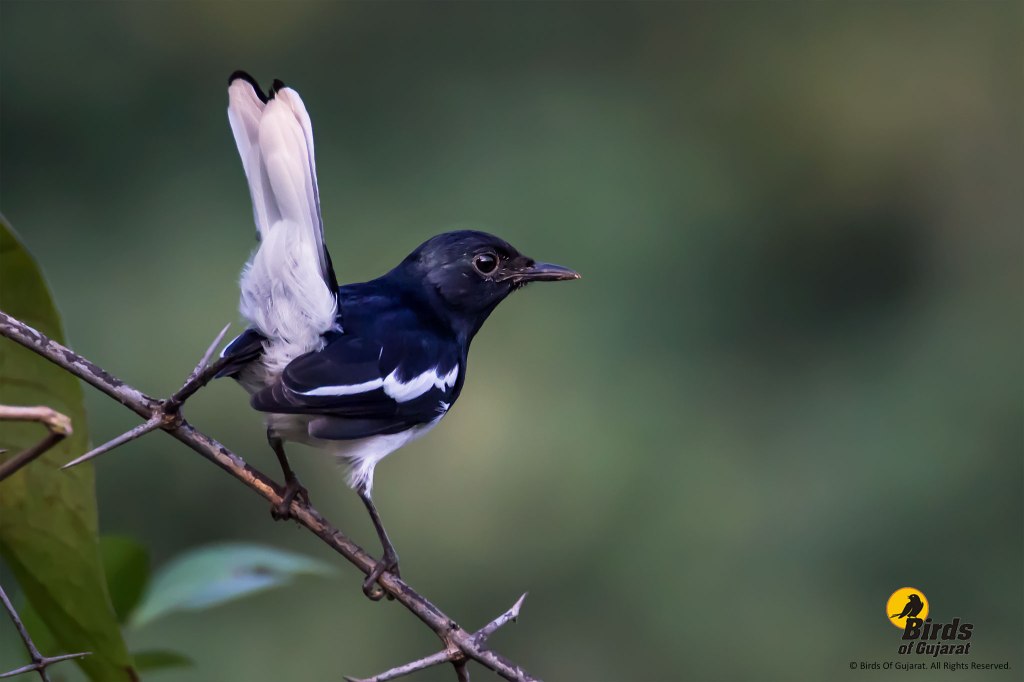
The mellifluous notes fill the pre-dawn darkness. You wonder who these “earlier birds” are that have already got their orchestra going in full throttle, even before the other ‘early birds’ clear their throats and tune up for the day ahead. As you walk along you see a little bird on the ground under a tall tree. Dapper in its neat dress of black and white, its tail is held upright as it moves, just as the baton of the orchestra conductor. This is the Magpie Robin—the conductor and orchestra all rolled into one.  This one does not need a warm up. It bursts straight into a symphony.

The Oriental Magpie Robin is a member of the order Passeriformes which includes more than half of all the bird species. Passerines are perching birds which are distinguished by their toe pattern—three toes facing forward and one toe facing backward—which allows the bird to easily grasp, and cling to both horizontal and nearly vertical perches, including branches and tree trunks

Its scientific name is Copsychus saularis. In the early days there was confusion about this name as early scientists were misled by its Indian name dhaiyal which they believed referred to sundial and hence ‘solaris’. An Englishman Edward Blyth thought that this was inappropriate, and rather felt that the Hindi term saulary (meaning hundred songs) was more fitting. A specimen of the bird along with its Hindi name, was even sent from Madras to James Petiver, a London apothecary famous for his collections of specimens.  

Saularis or hundred songs aptly describes this handsome song bird. A black-and-white bird with a cocked tail and upright stance, it is about the size of a bulbul. The male has glossy blue-black upper parts, head and throat, with a white belly, and a broad white band on the wing and white edges on the tail. The female has similar markings, but with slate-grey upperparts and buff flanks.

Magpie Robins are commonly found hear human habitation, in gardens, parks and wooded areas. They can be seen singly or in pairs near shrubs and bushes. But for the most part of the year they are not conspicuous, as they are shy and quiet, only uttering a plaintive swee-ee and harsh chr-r, chr-r notes from time to time.  

It is during their breeding season from March till June that they attract our attention, not so much by their sighting but by their sound. This is when the male Magpie Robin pours his heart out in song to attract a mate, as well as to declare and guard his territory. He can be seen perched on a post, or unseen, high up on a leafless tree top, filling the air with his musical notes, punctuated with upward jerks of his tail.

The little fellow has an amazing repertoire of tunes, switching effortlessly from one to another. Besides his own calls, he is also adept at perfectly mimicking the calls of other birds. This ability he uses, not so much to charm his future mate, but to guard his territory. Sometimes, by pretending to be three different birds calling from different locations, the magpie robin male can fool potential intruders into believing that the large territory is already occupied, and unavailable for new lodgers. In case a bold outsider ventures within, the songster transforms into a pugnacious defender, raising his bill, fanning the tail, puffing up his feathers, and strutting aggressively.   Additionally, the bird also emits different types of calls, such as threat calls and distress calls, depending on the occasion.

Having finally won over his mate with song and macho displays, the Magpie Robin is ready to set up home. It is the female who takes on the task of the nest builder, making a pad of grass, rootlets and hair in a hollow cavity in a tree trunk, old bough or wall. She lays three to five pale blue green eggs with brownish specks; the eggs are oval in shape. She alone incubates the eggs for 8-14 days, and then feeds her fledglings. Her musical mate however shares some other domestic duties such as protecting the nest from intruders or damage.

Magpie Robins are largely insectivorous. Though chiefly arboreal, they pick crickets, grasshoppers, ants, caterpillars and other insects off the ground, as well as eating worms, snails, centipedes and small lizards. They also visit Silk Cotton and Coral tree blossoms to feed on the nectar.  

The Magpie Robin is known by many names in different parts of India. Dhaiyal or Dhaiyar in Hindi and Bengali; Daiyyad in Gujarati; Dominga in Marathi; Kali sooi chiria in Madhya Pradesh.

The bird is equally familiar and known in our neighbouring countries where it is viewed in different ways. In Sri Lanka this bird is called Polkichcha (coconut bird) as well as Pahan-Kichcha (Dawn bird); and it was traditionally believed to be a bird of ill-omen. Its singing is believed to announce bad news, and villagers usually chase it away from the neighbourhood of their dwellings.

On the other hand, in Bangladesh the Magpie Robin known as Doyel or Doel is so well known, and liked, that it has been recognized as the national bird of the country, It is a widely used symbol, even appearing on currency notes in Bangladesh; and a landmark in the capital Dhaka is called Doel Chattar (Doel Square).

Unfortunately it is the song of this bird that puts its own survival in danger. Magpie Robins are popular as caged song birds and there is a widespread illegal trade in these birds, which are sold as pet songbirds. They are smuggled out in large numbers especially from Malaysia, leading to an alarming decline in their populations. As with all species, these birds are also threatened by habitat destruction and climate change. Although the International Union for Conservation of Nature (IUCN) Red List has listed the Oriental Magpie Robin as a species of Least Concern, the declining numbers are beginning to cause concern. In Singapore and Hong Kong, this species of birds is protected by law.

In these times when the senses are besieged 24/7 by sights and sounds of war and destruction, I feel blessed that I can start my day with the lilting music of the Magpie Robin. And I cannot but help wistfully thinking what the world would be like if we humans too could defend our territories with songs instead of guns and bombs.

–Mamata

Celebrating Slimy

You would have been exhorted to vote for Parliamentary and your State legislature. You would have been urged to vote at your college elections for your Union rep, or in your housing society for office bearers. . You are routinely encouraged to vote for your favourite participant in some reality show or other.

But have you ever voted for a mollusc?

Well, that is what researchers in Germany are asking you to do! Experts from Senckenberg Museum, Loewe-TBG and the worldwide society for mollusc research (Unitas Malacologica) have put together a shortlist of five molluscs, and the one that gets the most votes is crowned Mollusc of the Year!

And the prize? Well, a bit sad for one representative of the winning species, which will be euthanized, and its cells burst to extract its DNA, which will then be sequenced. But happy news for the rest of that species and molluscs in general, as hopefully it will lead to a better understanding of their evolution.

Why the song and dance? Why can’t the experts just decide which mollusc they want to study and go ahead? Well, essentially, the competition is a way to raise awareness about molluscs. And boy, do we need our awareness raised! The very title of this piece which is propositioned on the world ‘slimy’, is an indicator of the lack of awareness. Our perception of moullscs as slimy creatures comes from our encounters with snails and slugs. But these are just a few species of the over 1,00,000 known mollusc species. Slime is NOT one of the characteristics of that the phylum, unlike the common perception.

Molluscs are the largest family of invertebrates after arthropods, with fossil records going back over 550 million years. They span in size from the microscopic to 45 feet; can weigh up to 750 kgs; can live from hours to centuries—the longest-lived one is known to have survived over 500 years. There are species which live on land and water, both fresh and salt. They inhabit every continent and ocean.

Snails, octopuses, squid, clams, scallops, oysters, cuttlefish and chitons are all molluscs. All of them have soft bodies which typically have a “head” and a “foot” region, and often their bodies are covered by a hard exoskeleton.

These creatures have played a significant role in the lives of humans. At one level, they have been a source of protein down the ages; pearls are of course a coveted gem; mollusc shells have been used as money at many times and in many parts of the world. At the same time, some species are serious pests of crops, have destroyed ships at sea, and have led to economic devastation. 

Though there are so many species of molluscs and they are so wide-spread, very little is known about them, either to the general public, or even to scientists. And that is why the competition is important—to create a widespread awareness of this set of creatures which are such a large part of our living world; and to enthuse scientists in their work to study them.

Coming to the specifics of the competition, the five contenders this year are:

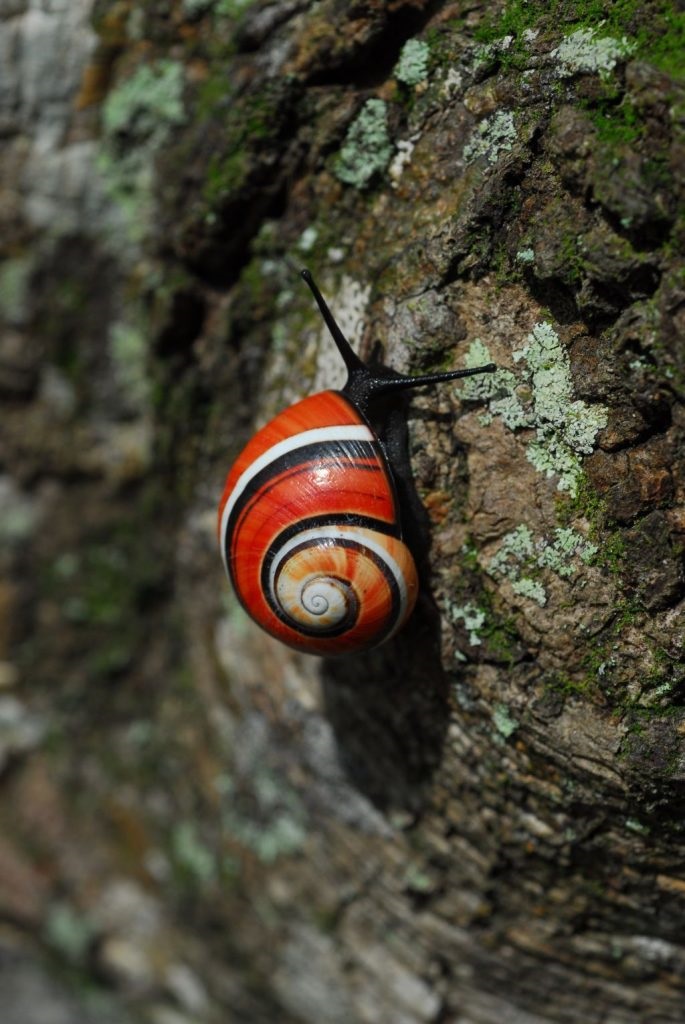
Painted Snail
Painted Snail

Tustiaria rubescens, the Barge-footer, also known as the tusk or tooth shell. They live in both the Mediterranean Sea and Eastern Atlantic Ocean, inhabiting muddy bottoms, normally offshore.

Telescopium telescopium, the Telescope Snail lives in mangrove forests along the Indian Ocean including parts of the coasts of Pakistan, Goa (India), Thailand, Philippines, Australia, Singapore, Madagascar, Cambodia, Indonesia, Iran, Malaysia, Vietnam, and  Papua New Guinea.

Cymbulia peronii, the Sea Butterfly, is a species that has been reported from all oceans around the world. These 6 cm wide animals have a gelatinous shell which looks like a transparent slipper. They also have what looks like two wings which enable them to “fly” through water columns.

Polymita picta, the Painted Snail is an endangered snail. known for its colourful shell and the ‘love dart’, a device to stab partners during mating to transfer ‘sexual hormones’. It is found only in Eastern Cuba.

Teredo navalis , the Naval Shipworm is a clam which looks like a worm. They are also called shipworms, as they used to eat through the hulls of wooden ships. They are said to have eaten through Columbus’ ships and stranded him in Jamaica! They are found throughout the tropics and subtropics. 

The competition (this is the second edition) closes today, 15 March. So hurry to https://tbg.senckenberg.de/molluscoftheyear-2022/ and cast your vote to support research which will help us understand our living planet better.

–Meena

The One Who Rolls Up: Pangolin

Valentine’s Day has just passed with all its lovey-dovey messages. But love is not only about humans to humans. In 2017 the Google Doodle for the day featured a little love story about pangolins!

Pangolins one may ask? What are they, and why were the stars for the day?

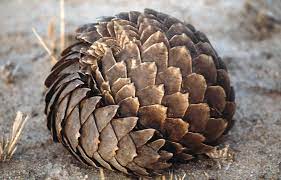
Pangolins are curious creatures. With their long tail, long snout and a body covered with scales, they are often thought of as reptiles. Pangolins, also known as Scaly Ant eaters are actually mammals. They belong to the taxonomic order Pholidota, meaning ‘scaled animals’, a group of unusual mammals with tough, protective keratin scales. Pangolins are the only scaled mammals on earth.  It is believed that the scales evolved as a means of protection. When threatened by big carnivores like lions or tigers, the pangolin usually curls into a tight ball, tucking its face under its tail. The overlapping sharp scales act as an armour protecting it from the predators. It is this ability to curl up into a ball that gives it the name Pangolin which comes from the Malay word pengguling, meaning “the one who rolls up”.

Pangolins have short legs with sharp claws which are effective for burrowing for shelter, as well as to get into ant and termite mounds. These form their primary diet, and also give it the name of Scaly Anteater. They have no teeth, but an unusually long and sticky tongue (up to 16 inches long) helps them to probe deep into the ant tunnels and termite mounds to retrieve their prey. They have poor eyesight, but a well-developed sense of smell and hearing which guides them when they come out, mainly at night.

The strange appearance and secretive nocturnal habits of the pangolin gave it a somewhat mythical association in some indigenous cultures, as well as a part in folk tales and legends. In Chinese legend pangolins are said to travel all around the world underground, and in the Cantonese language the name for pangolin translates to “the animal that digs through the mountain,” or Chun-shua-cap, which translates to ‘scaly hill-borer’.

Many indigenous African cultures have diverse beliefs associated with pangolins. Here is a delightful tale from a tribe in South Africa that tells how the pangolin came to be what it is today. 

Long long ago the pangolin did not have scales, and the pangolin did not eat ants. It had a thick coat of beautiful fur, and its favourite food was honey! The pangolin’s thick fur protected it from the bee stings when it raided beehives for honey. But the pangolin had a competitor for the honey. That was the honey badger whose thick skin was not as effective in warding off the bees as the pangolin’s fur. The bees were so harassed by the constant attacks from both these creatures that they called upon the Creator to protect them from the two honey raiders.

The Creator decided that the two would have a competition, and the one who proved to be the most cunning at the game would retain the privilege of getting its favourite food. 

Pangolin had long strong legs and sharp claws with which to open the hives, and a long tongue to lap up the honey. But it was also skilful enough so as not to do too much damage. The honey badger was in a hurry, and also clumsy, as a result of which he made quite a mess. It was a close competition. The honey badger realised that the pangolin’s biggest asset was its fur, and in jealously it began to plot about defeating the pangolin by unfair means.

One night as the pangolin slept, the honey badger stealthily poured honey over its coat with a trail leading to the nest of the fierce red ants. The army of ants attacked the sleeping pangolin and penetrated deep into its fur to get the honey. The pangolin was in great pain from the ant bites. Desperate for relief, it ran and rolled in the embers of a nearby bush fire until its fur was burnt away, leaving only sore and exposed skin. The pangolin lost its protection and could no longer raid bee hives, and the honey badger continued to do so, even though it had won by deceit. The Creator felt sorry for the pangolin and gave it another form of protection, an armour of tough overlapping scales, and also a new diet instead of honey—ants and termites. And so as the elders narrate, the pangolin got his scales and became an ant eater.  

Ironically, the very scales that the pangolin was given to provide protection have today become the cause of the greatest threat to this animal. This shy curious creature is the most trafficked animal in the world. Pangolins are heavily poached for their meat and scales which are in high demand in countries like China and Vietnam. Their meat is considered a delicacy and pangolin scales are used in traditional medicine and folk remedies, leading to huge illegal trade in pangolin skin, scales, and meat, which poses a grave threat to their very survival.

There are eight species of pangolins. The four species native to Asia–The Chinese, Sunda, Indian, and Philippine pangolins are listed by the International Union for Conservation of Nature (IUCN) as critically endangered. The other four species which are native to Africa– the Giant Ground, Ground, White-bellied, and Black-bellied pangolins are all listed as vulnerable. According to a study reported on by BBC an estimated 100,000 pangolins are illegally taken from the wild every year across Africa and Asia. One million pangolins are believed to have been trafficked between 2000 and 2013 alone.

World Pangolin Day is celebrated on the third Saturday in February every year as an international attempt to raise awareness about these unique animals, and the precarious state that they are in. It aims to bring together stakeholders to help protect this unique species from extinction.

This Saturday, let us join the world to celebrate ‘the one who rolls up’. 

–Mamata

Yellow is the Colour of Spring

Basant Panchami, celebrated on the fifth day of the Magha month, heralds the end of winter and the coming of spring. It precedes Holi which marks the beginning of summer  by about 40 days.

Basant Panchami

Yellow is the colour of this festival. With good reason—of the myriad flowers that bloom in the spring, many are yellow. Mainly the mustard flowers, which turn North India’s landscapes golden in these months. Yellow is also the colour of Goddess Saraswati, to whom this festival is dedicated in some parts of the country.

Apart from marking a major seasonal change, there are many stories and myths associated with the festival.

My favourite one is to do with Poet Kalidasa. The story goes thus, for those who need a refresher: The Princess of one of the kingdoms in the North (not at all clear which one!) was very intelligent. She laid down the condition that she would marry only the man who beat her in a contest of wits. Many a suitor came and was rejected, including the son of the CM of the country. Male egos were as fragile then (approximately 5th century CE) as now, and the CM and maybe some of the rejected suitors decided to give her her comeuppance. Imagine a girl proving that she was more intelligent than men! Anyway, they decided to hunt out the dumbest guy in the country in a kind of reverse intelligence test. They were thrilled when they located a shepherd who they felt was the epitome of dumbness—it is said that they spotted him when he was sitting on the tip of branch high up on a tree, and sawing away at the branch—which would of course have resulted in his falling down along with the branch. Through a series of ruses, they managed to trick the Princess into thinking he was very intelligent. The Princess married him, and obviously the secret came out pretty soon. The Princess threw the husband out. He was in despair and on the verge of suicide. At this point, Goddess Sarwaswati is said to have appeared in front of him, and asked him to take a dip in the river. And then the miracle happened! When he emerged shivering from the river, it was with a hymn to the Goddess on his lips—the Shyamala Dandakam! A miracle had happened–he had gained poetry, wisdom, language and knowledge! That was Kalidasa—the man who gave us works such as Abhijñānaśākuntalam, Kumārasambhava, Ritusamhara, Meghadhoota, etc. The episode of the Goddess giving him darshan and his gaining wisdom is said to have happened on the fifth day of Magha, which therefore we now celebrate as Saraswati Puja, and pray that the Goddess may bestow similar gifts on us. . (It has always intrigued me as to what happened with the marriage. Did Kalidasa and the Princess get back together? I don’t remember that the story ever referred to that.).Some people also mark this as Saraswati’s birthday.

The other story involves Shiva and Parvati and is a bit gory for my liking. Shiva’s beloved wife Sati had died, and he went into total depression (following a huge show of rage). He started meditating and was oblivious to the world and his duties. But the world needed him to keep the cycle of life going—an immediate requirement being that a son be born to him to destroy the demon of the moment. As per the larger plan, Sati had already taken her birth as Parvati, the daughter of the King of the Himalayas where Shiva sat in meditation. But nothing she did could even get him to open his eyes. That is when the gods sent Kamadeva, the god of love, who shot an arrow at Shiva and got him to open his eyes. So furious was Shiva that he opened his third eye and burnt Kama before anyone knew what was happening. But the purpose was achieved–he also saw Parvati and fell in love with her. Kama’s sorrowful wife Rati underwent rigourous penances for 40 days till Shiva relented and agreed to let Kama, the collateral damage, resume his physical form for one day a year. The day this happened was Basant Panchami.

East and North India seem to celebrate this festival much more than the South—at least, I don’t remember this as one the special days in our Tamil calendar. So for me Basant Panchami is memories of amazing bhogs at the houses of dear Bengali friends. And an opportunity to wear yellow, a colour too bright for my usual palate.

Grateful for the diversity of stories, traditions, celebrations. Surely makes our lives more colourful and interesting!

–Meena

The Silent Valley Saga: A Landmark in India’s Environmental Movement

Last week, we paid our tribute to Prof. MK Prasad—one of the key people behind saving Silent Valley. This week, I thought I would re-visit some details about Silent Valley and the campaign.

The Silent Valley deep in the Western Ghats of Kerala is a very special forest. In fact, it is one of the oldest stretches of rainforest in the world, ‘the last authentic sizeable evergreen forests left’, in the words of MK Krishnan, the eminent naturalist.

Lion tailed Macaque
Lion-tailed Macaque. Illustration: CEE

It is home to about a 1000 species of flowering plants, 107 species of orchids, 100 ferns, 200 liverworts, 75 lichens and about 200 algae, many of them endemic to the area. It counts 34 species of mammals, 292 species of birds, 31 species of reptiles, 22 species of amphibians, 13 of fishes, 500 of butterflies and moths, besides a multitude of other orders of animal life (keralatravels.com). And these are only the species documented! The valley’s flagship species is the lion-tailed macaque, a species endemic to the Western Ghats.

Many are the myths and legends associated with this forest. It is said that the Pandavas, during their peregrinations after they lost their kingdom to the Kauravas, happened to come to this forest. So enchanted were they that they decided to make it their temporary home. The river that runs through the forest is called Kuntipuzha, in memory of their mother, and the forest itself was called Sairandhari, this being another name for Draupadi.

In 1847, the Englishman Robert Wright came upon the thick forest. He or his colleagues named it Silent Valley. There are several theories about why this name was given. It could of course be an Anglicization of Sairandhari, the traditional name. Or it could be because there are no cicadas in this forest. The constant hum in most forests is due to cicadas, and the absence of this noise can be quite stark. Cicadas do not thrive in wet climate, and that is why they are not common here. Yet another theory is that the British gave it this name due to the presence of the rare lion-tailed macaque whose Latin name is Macaca silenus. But in spite of its name, the Silent Valley resounds to the cadences of the river, bird-calls, monkey-whoops, and insect chirrups.

Silent Valley burst into the national consciousness in the 1970s, when the Kerala Government proposed to construct a dam on River Kuntiphuzha, to generate electricity for the State’s growing needs. When scientists and environmentalists came to know about this, they were very concerned, as it would mean that the Silent Valley would be flooded, and that would be the end of that very special habitat and the unique flora and fauna there.

Kerala Sastra Sahitya Parshat (KSSP), a people’s science movement, took up the cause. On the one hand they did techno-economic and socio-political studies to show the impact of the project, and its pros and cons. On the other hand, they mobilized public opinion, and garnered the support of eminent scientists and people. They also came up with alternatives to building the dam e.g., building a series of small dams, rather than one large one.

It was a long and hard battle. It became a bitter war between the State which wanted the project, and the people who did not. The Centre through the course of the controversy saw many changes, and some of the PMs were for and others against the project. Each set up Committees of scientists. Media was also ranged on the two sides, beginning with local media predominantly in favour of the project, and then slowly veering against it. For a long time, national media paid little attention to the issue, but later weighed in favour of the environment. International environmental organizations also came into the fray. The matter went to court to—with the High Court at some stage giving the go-ahead.

It was when Mrs. Indira Gandhi came back as PM that it began to look as if the conservation movement would win. In 1981, she declared Silent Valley a protected area. But it was found that the hydroelectric dam was not covered in the area under protection. Protests began anew, till finally the project was scrapped in 1983. In 1984, Mrs. Gandhi declared it a National Park—the highest level of protection that can be given. And Silent Valley was saved!

Kerala government has recently decided to declare the buffer zone of Silent Valley National Park as a wildlife sanctuary—the Bhavani Wildlife Sanctuary spread across 148 square km.  So hopefully, Silent Valley continues to remain safe!

Hats off to the scientists, environmentalists, poets, artists, students, NGOs , media, politicians and the common people who fought the long and hard battle to preserve our common heritage.

There are other such success stories, but sadly not very many. And even more sadly, hardly any in recent times.

–Meena