Media are frantically trying to sell us everything from roses to chocolates to romantic dinner. ‘Tis the season—the Valentine season. The origins of Valentine’s Day as a day to celebrate romantic love go back a long time. But the commercialization is a phenomenon of the last century.
Fortunately, at least in India, the sellers have not fully caught on that it is actually Valentine’s Week celebrated from 7 February to 14 February, with the seven days including Rose Day, Propose Day, Chocolate Day, Teddy Day, Promise Day, Hug Day, Kiss Day, and finally, Valentine’s Day.
The origins of Valentine’s Day may lay in the Roman festival of Lupercalia which used to fall around the same time–essentially a spring festival which included fertility rites. A 5th century pope banned the celebration of Lupercalia, but it came back with renewed vigour in the 14th century and has been celebrated since then.
There have been many St. Valentines down history, and it is not quite clear after whom the festival is named. From a priest who was martyred about 270 CE by the emperor Claudius? According to legend, this priest who was incarcerated by the Romans, was friendly with his jailer’s young daughter, whose blindness he is said to have cured, and subsequently wrote her a letter which he signed off with “from your Valentine”. Or was it St. Valentine of Terni? Or a St. Valentine who defied the emperor’s orders and secretly married couples to spare the husbands from war?
At any rate, the festival is now celebrated world-wide on the 14th of Feb as a day of love.
But another day which is of fairly recent origin, and celebrated on 13th Feb is Galantine’s Day. It is like Valentine’s Day, but for girl-pals! It celebrates the bonds between best friends, sisters, moms, grandmoms….
The origins of this one are quite clear—it all started with the comedy show ‘Parks and Recreation’. Leslie Knope, played by Amy Poehler used the term in the second season of the show in 2010. She kind of makes up this day and says ‘What is Galentine’s Day? Oh, it’s only the best day of the year. Every February 13th, my lady friends and I leave our husbands and our boyfriends at home, and we just come and kick it… ladies celebrating ladies.”
Guys of course don’t need to feel left out. After all, the term ‘bromance’ is much better known than Galentine’s Day. It was coined sometime in the 1990s, by Dave Carnie, the editor of the skateboard magazines Big Brother, in reference to the close bond that develops between skaters who spend a lot of time together.
Bromance is a portmanteau word, made up of bro (or brother) and romance. A bromance is officially defined as ‘a very close and non-sexual relationship between two or more men’. It is distinguished from normal friendship by a particularly high level of emotional intimacy.
Here is to Galentine’s Day! May we celebrate it in the true spirit of friendship and bonding, and not let it go the commercial way of Valentine’s Day.
Play is something the young of many species indulge in. Play is of course a part of the life of young humans, but we also see puppies, kittens, the young of many mammals and even some birds play.
The study of play is however, a serious matter, as can be seen from this definition: ’ play is repeated, seemingly non-functional behavior differing from more adaptive versions structurally, contextually, or developmentally, and initiated when the animal is in a relaxed, un-stimulating, or low stress setting’ (Burghardt, 2014).
If that sounds a bit complex, here is a breakdown of the behaviours associated with play, i.e. play should
‘*be incompletely functional in the context in which it appears;
*be spontaneous, pleasurable, rewarding, or voluntary;
*be different from other more serious behaviors in form (for example, be exaggerated) or timing (for example, occur early in life, before the more serious version is needed);
* be repeated, but not in abnormal and unvarying stereotypic form (for example, rocking or pacing); and
* be initiated in the absence of severe stress.’
Till a few decades ago, it used to be believed that only the young of warm-blooded animals and birds played. But research is showing that many other creatures play too, including the young of some fish, frogs, lizards, turtles and even Komodo dragons. Coming from a human perspective, we may not recognize this as play. But going by the definition and framework above, many of the activities of the young of these species fall in the category.
Play is of critical importance in the development of all species who indulge in it. In the case of human children, it helps in the development of cognitive, physical, social, and emotional well-being. It helps children learn about themselves and the world, and through play they learn many life-skills like confidence, resilience, cooperation, team spirit, coping with challenging situations etc.
Play itself can be of different types: Physical Play, which helps in physical development and skills like coordination; Social Play which helps children develop the skills of how to interact with others, taking turns, cooperation, etc.; Constructive Play, wherein children create things—arts and crafts including drawing, painting, building things, etc.; Fantasy Play, that is using the imagination to create situations and enacting parts; and Games with Rules, which helps the child develop cognitively and learn how to follow instructions and rules.
If the topic of the conversation is play, can toys be far behind? Toys too date back to ancient times– archaeologists excavating the ancient city of Kültepe Kaniş-Karum in Turkey discovered a 4,000 year old ceramic rattle, which is believed to be the oldest children’s toy yet uncovered.
Photocredit: Harini M.
Today toys and games are a highly sophisticated market with several categories including puzzles, dolls, soft toys, fidget toys, modelling clay and related products, movable vehicles, construction toys, constructed toys, board games etc.
It is also a huge market–in 2022, this market generated total revenue of US$122.90 billion. India is a tiny part of this—with the Indian toys market size reaching $ 1.5 billion last year, with barely $ 1.14 per capita spend on toys. Which means most of our children don’t have access to toys, or have too few toys—which is definitely disadvantages their development. Not that I am saying that store-bought toys are the only way to go. We know that children show enormous ingenuity in making anything into a toy–kitchen vessels, sticks and stones, boxes and cartons. And creative parents and teachers can make toys at no or low-cost. (For ideas, you can visit https://arvindguptatoys.com/, the website of Padma Shri awardee Shri Arvind Gupta, who has spent his life developing and advocating for the use of no- and low-cost toys with educational value). But having said that, I do believe that every child has the right to a new, shiny toy once in a while. So not only must we manufacture more toys, but low-cost, innovative ones which don’t compormise on safety.
Equally important are innovative ideas like toy libraries so each child does not have to buy every toy and less-advantaged children can get access too; toy hospitals so toys can be mended and their life extended; and NGOs which collect, refurbish and re-distribute toys. Another complex challenge is how to keep toys from reaching solid waste dumps—how to recycle them safely and cost-effectively?
So toys may be fun and games, but it’s definitely not all child’s ply!
–Meena
PS: The image is from a storybook Harini and I created using toys as charecters. ‘My Sunday with Daadu and Deedu’ available on Amazon. The Telugu version by Manchi Pustakam is available on their site.
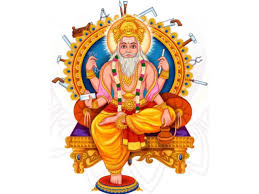
Vishwakarma Jayanthi is marked every year on Kanya Sankaranthi, which falls this year on September 17th. As per legend, Vishwakarma was a master architect and craftsman. The son of Brahma, he is supposed to have been the engineer for the creation of the world. He is also said to have built Lanka, Hastinapur and Dwarka.
Vishwakarma plays a pivotal role in the two great epics, Mahabharat and Ramayana. In the Mahabharat, the Pandavas retained him to plan and build their new capital of Indraprastha, which evoked the wonder and envy of all the other kings. One of the triggers for the Mahabharat war however was this amazing architecture. The pools of water looked like floors, and floors looked like water-bodies. Duryodhana mistaking a pool for a floor, slipped ignominiously and fell, evoking the mirth of the onlookers. He took particular exception to Draupadi’s laughing and commenting at his plight, and this was almost the last straw contributing to the breakdown of relations between the Pandavas and the Kauravas.
Vishwakarma’s work also features as a turning point in the other epic Ramayana. He is said to have built Pushpaka Vimana the flying chariot. It was built originally for Brahma, who at some stage gifted it to Kubera, the God of Wealth. But Ravana, Kubera’s half brother, stole the flying chariot, and used it for the infamous abduction of Sita. The Vimana however was also part of happy times, ferrying Ram and Sita back to India after the victory over Ravana. Ram later returned the vehicle to Kubera.
Vishwakarma has his equivalents in Greek and Roman mythology. The god Hephaestus was blacksmith to the Gods of Olympus, and made all their weapons of the gods in Olympus. He used to be worshipped in the manufacturing and industrial centres of Greece. Vulcan was the Roman God of fire and forge as well as fire and volcanoes. He was the patron of artisans and smiths, and there were several shrines dedicated to him. Vishwakarma like his peers also designed weapons, including Krisha’s Sudharshan Chakra and Indra’s Vajra.
We in India continue to remember and commemorate Vishwakarma. Vishwakarma Jayanthi is a special day for engineers, architects, mechanics, craftsmen, welders etc., and it is marked with pujas in factories and industrial estates. The prayers are for increased mastery and success in their field, as well as for safety.
As an ancient culture, excellence in engineering and the crafts were so revered that not only was there a God for this, but his achievements were enumerated and remembered. We still remember him and worship him. But ironically, we don’t seem to value the excellence he stands for. Our towns and cities are unplanned chaos—surely not Indraprastha or Hastinpur were.
In India, barely one in five persons at the workplace is skilled. We stand at 129 out of 162 countries ranked. As someone who has been involved in skill training, I am aware of some of the challenges in this sector. Critical among these are that skills except those related to IT and computers are not aspirational. To get a young person excited about being a master-electrician, master-plumber, master-anything that needs working with hands is next to impossible. In our culture, manual skills are not valued and respected—plumbers and masons feature way down in the social hierarchy. Nor are they paid in accordance to the value they bring. And sadly, career pathways don’t lead them very far.
Nor is the skill-training we provide of very high quality, such as will lead them to excellence in their vocations. Most skill training is outdated and out of sync with what industry needs. Our ITI and other skilling institutions are bureaucratic set-ups, far behind where they should be. The faculty has no real experience on the shop floor. Nor do most students ever go into a factory or workplace during their education.
For a country which marks Vishwakarma Jayanthi with widespread events, we don’t seem to really value skills or our skilled craftspeople. Until that changes, there does not seem much point in observing yet another day.
Hippos hit the news every now and then. And in the past weeks, they have been a topic of some discussion in India, thanks to a request from the Colombian Government for us to provide a home to some of the ‘cocaine hippos’ that have become feral there. Actually, it is quite unfair to call them ‘cocaine hippos’—it is not like they snort cocaine. Their ‘fault’ is that they (or their parents/grand-parents) were owned by the infamous cocaine smuggler Pablo Escobar.
Pablo Escobar was a Colombian druglord, who was called the ‘King of Cocaine’, due to his monopoly of the cocaine trade into the US. He was the founder of the Medellin Cartel, and the wealthiest criminal ever, with his wealth being estimated at $ 30 billion in 1993, when he was killed at the age of 44, by the Colombian National Police.
Every aspect of Escobar’s life was larger-than-life. Like the emperors of old, he set up a menagerie at Hacienda Napoles, his huge ranch east of Medellin, and kept giraffes, elephants, ostriches, and other exotic species there. Four hippos—three males and one female–were part of this menagerie.
When he was killed, authorities did not quite know what to do with these animals, and just left them in the estate—where not unexpectedly, they multiplied. In about 25 years, there were close to a 100 individuals (the number may stand at over 150 today). A single hippo can eat over 35 kg of grass and other green plant material in a day, posing a threat to local biodiversity. Being large and heavy animals, they stomp the ground and compact it as they move over the same area day after day. They defecate in the water, and end up polluting rivers and water bodies.
Pic: Encyclopedia Britannica
Efforts to curb the population explosion have not met with success. About 15 years ago, the local government tried culling the animals, but this led to protests across Colombia and was thankfully stopped. A sterilization programme is in place, but the hippos breed faster than local experts can find, catch and castrate them (We can’t even manage it with stray dogs, what to talk of hippos!).
Hence the plan to ship the hippos to various countries which are ready to receive them. Mexico has agreed to take 10 of them. Colombia has approached India to house 60 of the animals at the ‘Greens Zoological Rescue and Rehabilitation Kingdom (GZRRC)’, being created by Reliance Industries in Jamnagar, Gujarat. The plan has not met with enthusiasm by any wildlife expert. Housing them in zoos is an expensive proposition. Hippos are native to Sub-Saharan Africa, not India, and definitely cannot be released into the wild. (However, based on a small fragmented tooth unearthed in Madhya Pradesh, researchers claim that India was home to hippopotami nearly 5.9 million to 9,000 years ago. The hypothesis is that they entered Eurasia from Africa, and then diversified in South Asia before going extinct. But even if they ever were native here, they haven’t been for many millennia.)
There is no doubt Colombia has a problem. Apart from destroying vegetation and biodiversity, hippos are also a threat to humans. They are known to be very aggressive, and can chase people on land, as well as capsize boats in the water. They sometimes raid fields and come into conflict with humans.
And it is also true that a safe home must be found for the hippos—they are only living their life as they were meant to. How can they help it if someone uprooted them from their home and brought them to a new continent?
But bringing them to India definitely does not sound like a good idea. The recent import of cheetahs should serve as a cautionary tale. We need to protect our biodiversity and trying to introduce non-native (at least in human memory) species is not going to help either our diversity or the introduced species.
Recently I was reading ‘Strictly Personal’ an account of the lives of Dr. Manmohan Singh and Mrs. Gurcharan Singh, by their daughter Daman Singh.
The-then Mr. Manmohan Singh went to Oxford in the early ‘60s. He was joined in a few months by his wife and daughter. He was there for about 2 years. He was there to do his Ph.D
My father went to London in the early ‘60s, He was joined in a few months by his wife and children. He was there for about 2 years. He was deputed there by the Defence Research and Development Organization to train at the Royal Marsden Hospital, towards helping in the operationalization of the Institute of Nuclear Medicine and Allied Sciences (INMAS), which was to be involved in nuclear medicine research, and response to nuclear accidents and explosions.
What amazed me was the commonality between the experience that the book talks about, and the stories which are a part of my family history.
First and foremost, the travails of living on a very limited budget. It was literally hand-to-mouth! My mother recalls that at times, there were not enough pennies to put into the home-heater, and we all spent the day huddled in our woollies. The free milk that my brother and I were eligible for as children was a major saviour. It was not that the pay and allowances were so bad (they were not generous, but adequate). It was that they simply did not come for the first 3 months, till the bureaucratic wheels started moving. And even after, the money came in by fits and starts. One incident which was etched deep into my parents’ memories was a visit to Veerasway, UK’s oldest Indian restaurant. Yearning for other-than-home Indian food, they, with the two of us in tow, ventured in one day. Only to beat a hasty retreat on learning that the cover charge was £ 1 per head!
The book quotes Mrs, Singh as saying ‘We were quite hard up. I don’t know how many pounds a week we got. We had to survive within that. It was not a great, handsome scholarship.’
To the question ‘did you wear Western clothes?’ Mrs. Singh responds ‘No, no, no, never.’ But at least she may have worn salwar kameez. My poor mother stuck to saries through the freezing windy days, walking through hail and snow to the shops or to drop or pick up my brother from the school bus. I fully attribute her getting arthritis by the age of 35 to this exposure to the terrible cold and wet.
Food may have been a bigger problem for my strictly vegetarian family. My mother, on one of her initial trips to the super market, brought home margarine, which an English friend had suggested as a cheaper substitute for butter. It was only after her return home that she read the packaging and realized it was made from pork fat. The trauma stayed with her for life!
The Singhs lived in Oxford. Apart from one trip to London and one to Stratford-upon-Avon, they saw nothing of England. Maybe to that extent we were luckier. Living in London, we at least got to see the sights there—the few family pics taken with my father’s precious camera bought there show us at Trafalgar Square, outside the Buckingham Palace, the Tower, Westminster Abbey etc. The penguin show and the Chimpanzees’ Tea Party (discontinued in the ‘70s) were the highlights of the zoo visit.
The SInghs did not have a TV, and went to a neighbour’s to watch. We did have a television and the show that my parents talked about, which still sticks in my memory is ‘Saturday Night at the London Palladium’, a long-running variety show.
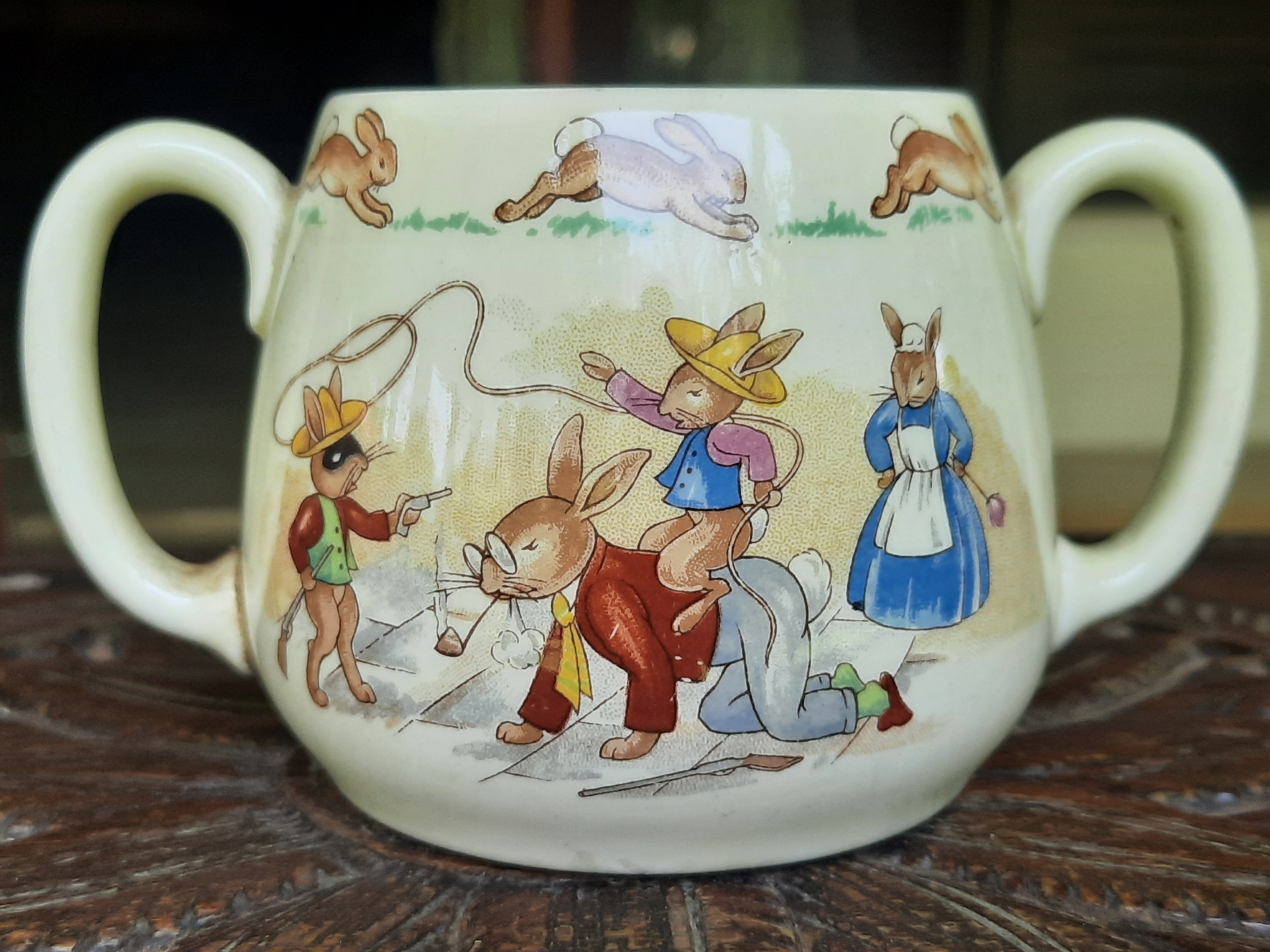
My Peter Rabbit Milk Mug: A Precious Relic
Equally, the things they chose to buy and bring back. Both Mrs. Singh and my mother brought back Baby Belling ovens—a part of British history. The Belling company was established in 1912 and manufactured electric heaters. The first complete domestic electric cooker was made in 1919 and the first Baby Belling oven was manufactured in 1929. The company still exists but is not the gold standard for ovens that it obviously was in mid twentieth century. The other significant item to accompany the Singhs back were three saucepans. In my parents’ case, it was a mixie—a Braun Liquidizer, if I recall. This was my mother’s most precious possession. In fact, when a mischievous visiting child was on the verge of pushing it over, she caught the machine, and her hand was badly slashed, requiring stiches! Mrs. Singh’s oven served her for 3 decades, as did my mother’s mixie!
I think this would be the story of all professionals who went to the UK in those days. But interesting to see that a PM’s family and mine were in the same straits! (We were in other similar ‘straits’, more about which next week.)
In today’s world, all this sounds so strange! Life is so international today, our exposure is great, that nothing really comes as a surprise even when we go to the farthest part of the world. Purchasing power is not a problem, except maybe when there are threats of taxing international credit card payments. Not only are we more international in our eating, Indian food of every variety is available everywhere.
But how did they handle it back then—landing in a country familiar only through books, with few support systems or networks, with little money, inadequate warm clothes, unfamiliar food. They were certainly adventurous, maybe much more than we are today!
My friend Sudha, her husband Gladson, and 2+ year old Evan, recently had a wonderful and off-beat holiday in Sri Lanka. In Sudha’s words….
‘Beauteous in grace and love,
Laden with grain and luscious fruit,
And fragrant flowers of radiant hue,
Giver of life and all good things.’
The words from the Sri Lankan national anthem resonated with me, as the train chugged along from Colombo to Hikkaduwa. We had chosen to travel in the A/C coach that was mostly filled with tourists, eagerly looking out the windows as the train chugged along the railway line that runs along the south coast. We passed charming railway stations, such as the one in Bentota, designed by the erstwhile Geoffrey Bawa- heralded as the father of the tropical modernist movement. From time to time, Evan, my two year old son Evan would shriek in excitement at passing trains: ‘Mama looook, Thomas the train’.
Amidst the beauty of the coastal line, my mind meandered to what was to come. Was renting out a tuktuk – known commonly as three-wheeler in Sri Lanka – a good idea? My husband and I for years have been in the practice of renting out a motorcycle, no matter where in the world we were. But with a toddler in tow, a motorcycle was out of question. The more sensible and economical option was to rent a tuktuk and drive it oneself, which tourists in Sri Lanka are permitted to do.
Having enquired with many rental agencies online, we found a reasonably rated one in Hikkaduwa. The rental was going to cost us USD 10 per day which was a few dollars less than most agencies. We had to pay a deposit and an insurance amount before we took the vehicle for the stipulated period of 10 days.
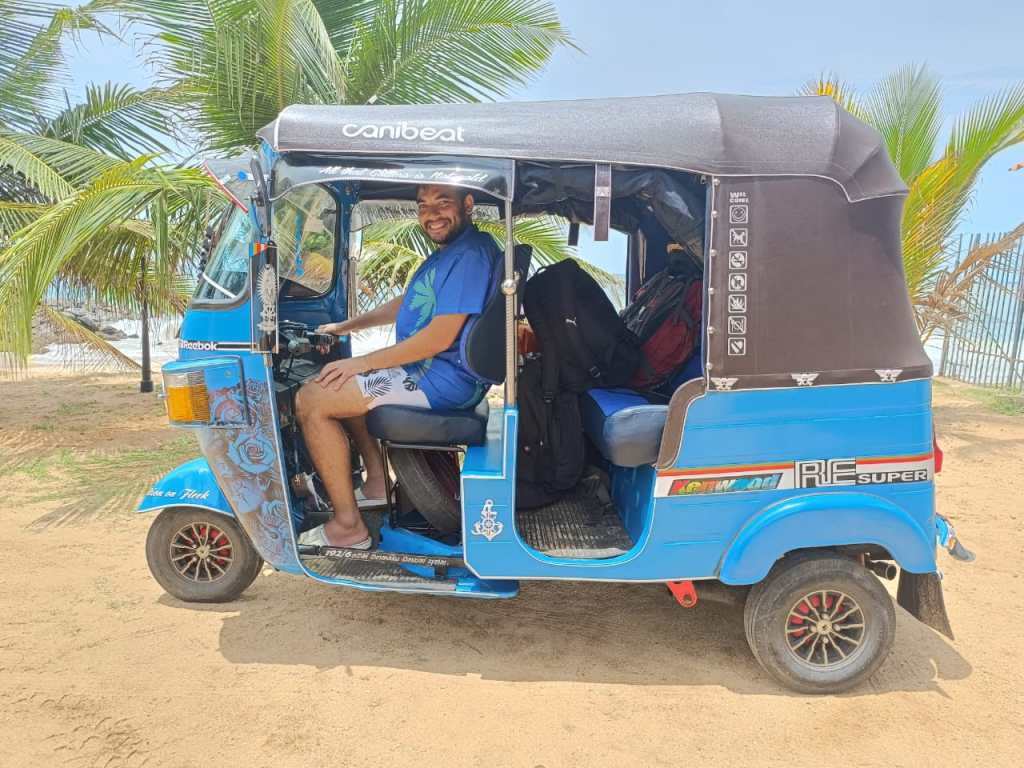
We arrived in Hikkaduwa, which is one of the more expensive destinations along the south coast. The person-in-charge promised to hand over the tuktuk by 9 a.m. the next morning. 9 a.m. came and went, and he assured to meet us by afternoon. Hours later, we took custody of a blue tuktuk, that had in-built speakers. The exterior was customized with fun stickers and graffiti of the fictional pirate, Jack Sparrow. Having taken a short spin in it, my husband G and I started our journey to Tangalle as planned. Evan approved of the bright blue ‘toooktooook’, and couldn’t contain his excitement at the sight of his father riding it.
We stopped for a late lunch ‘Dilshan Beachhouse & Cafe’ in Unnawatuna, a quaint beach town 40 minutes away. The scrumptious lunch was cooked by a young couple who have turned their little ancestral property into a beach side café. The husband, Dil, was a hardworking man who had dreamt of starting a cafe of his own ever since he worked in a restaurant washing dishes as a 20 year old. He mastered the art of cooking by simply observing the chef cooking elaborate seafood meals for hungry tourists.
Having eaten a satisfyingly good meal, we boarded the tuktuk and mentally prepared ourselves for the second half of the journey. G however found it impossible to start the tuktuk. Dil came over and lent a helping hand, but to no avail. Noticing the overcast skies, Dil called a few of his friends to help us. They pored over the engine and found nothing noticeably wrong. They then called over a mechanic friend, who found that the gear selector – which allows the vehicle to be put into different gears on a manual transmission – was broken. By this time, it had started to rain heavily. Gauging this was no ordinary situation, Dil’s wife proceeded to give Evan a tall glass of milk. She at first refused to charge us for it, but knowing how expensive milk is in Sri Lanka, we insisted on paying. When we offered to buy tea for the friends who continued examining the engine in the rain, they just refused and carried on with their work.
Upon the mechanic’s suggestion that it would take an entire day to fix and cost around 10,000SLR (2360 INR), G called the vehicle’s owner. The latter insisted that it was our fault, despite the mechanic taking over the conversation and assuring him that it was a matter of gradual deterioration over weeks and days. The owner finally relented and agreed to bear the entire cost of repairs. But Dil and his friends were sceptical, saying he might go back on his word. G and I contemplated the pros and cons and decided to go ahead and fix the gear selector. My toddler and I proceeded to walk to a nearby guesthouse, run by an elderly woman, fondly called ‘Mama’, where we decided to book a room given the situation. Mama welcomed us and cooked Evan hot rice. In the meantime, G, Dil and the mechanic continued working on liaising with mechanics from nearby towns to get the replacement part. Having finalized the details, Dil dropped G off at the guesthouse way past bedtime. Dil would not agree to take any money for the all the time and effort he had put in to help us, and none of our protestations worked.
The following morning, we visited Dallawella beach, renowned for the numerous sea turtles found on the shoreline. Our little one had the time of his life, watching the turtles swim and eat algae. ‘Mamaaa, Dadaaa OhMyGod, Looook’ he cried out excitedly, every few minutes.
By evening the tuktuk was in running condition, and true to Dil’s warning, the owner insisted we cover the cost. For years, we have been fully aware of the downside of renting a vehicle in any country as tourists, having heard tales of woe from fellow travellers. We considered ourselves lucky since we never experienced it – until NOW. But it was close to impossible for short term travellers to insist on being repaid since (a) You do not know who the owner of the vehicle rental maybe locally; (b) They have your passport in custody until you handover the vehicle; (c) With a toddler in tow, it probably isn’t prudent to get into fights. We decided to pay for it ourselves and carried on to Tangalle, 76 kms away.
20 minutes before reaching our hotel, the tuktuk abruptly stopped on the side of the highway. Thankfully a group of youngsters came forward to help G push the tuktuk to the side of the highway. Turns out that the mechanic who had assured G that there was enough fuel to reach Tangalle was wrong – rookie mistake. The youngsters immediately called a friend of theirs to take G to the nearby petrol bunk to fetch fuel in a bottle. I initiated a conversation with some of the young boys, and found that they too ran a café nearby. Intrigued, I jotted down the details and told G about it when he returned. We promised we would return to their beachside café the next day and left for the hotel.
The Tuktuk Gods however had one last surprise for us that day. Two cops on a motorcycle flagged us down and came over to tell G that our brake light wasn’t working and we needed to get it fixed. We thanked them for letting us know and promised to fix it. Turned out it was a matter of electrical earthing and didn’t cost us anything.
The following day, as promised we headed to the café run by the youngsters. The Top Surf was a charming café, with great food on an isolated stretch of beach accessible only to guests of an elite hotel. PERFECT! We spent the day snorkelling and unwinding.
The rest of our tuktuk journey was thankfully seamless. We spent idyllic days in beach towns such as Mirissa and Welligama, ate good seafood, snorkelled and spotted turtles. Our little one was smiling throughout the journey and woke up each morning saying, “Let’s GOOO, Mama, Dada’. The beach road along the south coast of Sri Lanka is magnificent! Winding toll-free roads along the coastline, wild peacocks flying by, and people who are always willing to lend a helping hand. Overall, the journey was peaceful and accomplished what we were looking for – blissful days by the beach.
While the summer has been relatively mild, there is still that hot day when after a foray outdoors, one would give anything for a long, cold drink.
But which one?
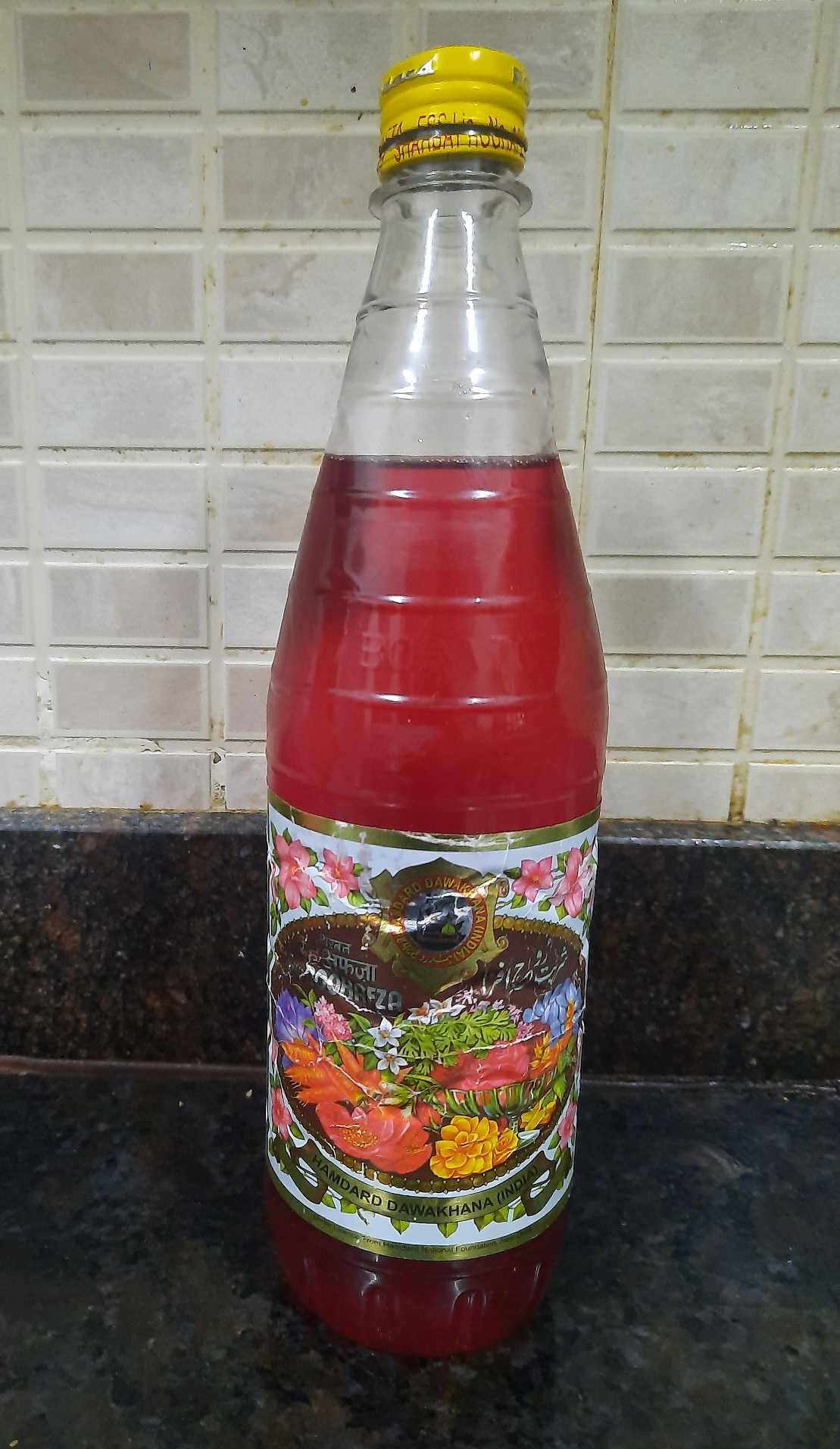
A sharbat? Often called the world’s first soft drink (there are references from as far back as the 12th century), the sharbat probably has its origins in Persia. At least the word itself does, and means a sugar and water drink. It is made by combining fruit juices or extracts from flowers or herbs with sugar and water. India’s favourite sharbat is of course Rooh Afza which means ‘refresher of the soul’. It was formulated in 1906 by Hakim Hafiz Abdul Majeed based on a Unani formula, and contains cooling ingredients like rose. Manufactured by Hamdard (in India, Pakistan and Bangladesh!), this is had with either water or milk, and also poured on falooda and other summer-special sweets.
If you are in Tamilnadu, you can also sample a sharbat unique to those parts—the nanaari sharbat. This is made from the nannari root (Indian Sarsaparilla) which is an Ayurvedic herb. This too is supposed to have cooling properties and helps to prevent dehydration. It is not a taste everyone likes, but for those who do, it is summer’s nectar.
Or how about a squash? Kissan orange squash used to be the staple of our childhoods, a treat that usually was served when guests came around. Also available was lemon squash, and I think pineapple. Basically, a squash is a non-alcoholic drink, made from fruit juice (usually citrus fruits), water and sugar. Sometimes, food colouring and flavouring are added. Squashes are mixed with water or soda before drinking, or even with alcoholic beverages to make cocktails.
Kissan also used to have a lime cordial drink, which for some reason was more rarely bought by my mother. So of course it was something we all hankered after! But now I learn that there is no difference at all between the two! The term squash is used more in the UK, and cordial in the US. However, cordial can sometimes be used to denote an alcoholic beverage like a liqueur, while a squash is always non-alcoholic.
But as age catches up, sharbats and squashers which are super-high on sugar are something that one has to keep away from.
Well, juices I suppose can take their place. Juice can be freshly squeezed or out of bottles or cans. The latter variety may just be the juice canned in liquid form, or made from concentrate. Juice from concentrates is made from fresh fruits, only the water is removed from the fruit pulp. It is easier to transport, and when it reaches its destination, it is reconstituted with the same amount of water that was removed, and canned.
‘To juice or not to juice’ is an eternal controversy. Medical opinion holds that juicing is no healthier than eating whole fruits or veggies, as it is not easier to absorb nutrients from juices than the whole fruits. It is also not significantly less healthy, as most of the vitamins, minerals and plant chemicals come into the juice as well. The only loss may be of fiber, which is lost in the process. So you can guiltlessly drink juice and count it against your fruit/veggie quota, and feel cooler (pun intended) in the process.
And of course the ever-favourite desi options, of which lassi and buttermilk or chaas lead the pack. Lassi, popular in the North, is thick and hearty, and made by blending yogurt with sugar, flavourings, nuts etc. There is also of course the salted version. The ‘malai marke’ version can be a meal in itself!
The ‘chaash’ or ‘mooru’ popular in the West and South is the liquid left after churning butter. It is light and invariably salted, and seasoned with cumin, curry leaves, hing etc. It can be consumed by the gallons!
Nimbu shikanji is Indianized lemonade. It is like a lemonade but with the mandatory addition of shikanji masala which has roasted cumin powder, chaat masala, etc.
Then there is the Aam Panna made from raw green mangoes, sugar, and spices. Again a bit dicey for the amount of sugar needed (and no, substitutes don’t taste as good!).
Another delecious drink is panagam, popular in Tamilnadu. Made of jaggery and lemon juice, and seasoned with cardomom, it is traditionally made for Rama Navami. Sadly, it is forgotten for the rest of summer.
And how can I end without a reference to jigarthanda, the drink of the city of my birth, Madurai? It means something like ‘cool heart’ and obviously is an import from the North. It is made of milk, almond gum, sarsaparilla root, sugar and ice cream. Madurai has much to offer visitors, from temples to bazaars. But a visit, especially in summer, would not be complete without a jigarthanda from one of several stalls, all of which of course claim to be the ‘original’!
Did you know that if you pick up a clothes hanger anywhere in the world, there is a 12% chance that it was made in India? India is the third-largest exporter of hangers in the world, after China and Vietnam, sending out 11.1 thousand shipments a year, mainly to the US, Germany and Sweden.
There are of course several origin stories for the ubiquitous clothes hanger. The third US president Thomas Jefferson is supposed to have used some such device to keep his clothes in good order, but that story can’t be verified. Some versions take the invention back to 1869 and attribute it to one OA North, but some people believe it was invented by AJ Parkhouse in 1903. He arrived at work one morning to find all the coathooks taken. Irritated, he picked up a piece of wire lying there and bent it into the shape we all know today, and proceeded to hang up his coat.
Hangers are made from a variety of different materials–wire, wood, plastic, cardboard tubes, etc. Now, in the quest for sustainability, the focus is shifting to use of recycled materials. Some hangers are padded with fabrics like satin and are used for delicate clothes. There are even luxury and custom-made hangers.
Fundamentally, a hanger is a device which mimics the shape of human shoulders, and is used to hang coats, shirts, dresses etc. so they don’t crush or wrinkle. A lower bar is used to hang pants or skirts. The other basic type of hanger has clamps to hold trousers or skirts.
Through the early 20th century, the popularity of the clothes-hanger grew—professionals like doctors and lawyers needed their clothes to look good, and hanging them up neatly was an easy way to always look dapper.
Hangers evolved to meet specific needs—there are foldable hangers for travel, scarf hangers, blanket hangers, tie hangers, etc.
Even more than domestic use is perhaps retail use, wherein the hanger has not only its functional use, but is also seen as an integral part of branding. The proper display of clothes depends a lot on the hanger used.
Mainetti is the world’s largest hanger manufacturer. The story of this giant began in Italy in the 1950s. A smart young man Romeo Mainetti worked for a racing car driver. The driver’s father was an industrialist involved in the textile industry, as the textile pioneer, the world-famous Marzotto corporation. The company had realized that there was an increasing demand for ready-made suits and started to make them. Each suit required a hanger. Originally, these were made of wood and were bulky and costly. Romeo’s brother Mario worked in a plastics factory, and together the two of them came out with the plastic hanger.
The quality of the product took the industry by storm and they soon had operations in the UK, France, Canada, and the Netherlands. Today the company has spread to 90 locations across 6 continents. India is a significant manufacturing hub.
Clothes hangers are used not just for hanging clothes, but have found innovative uses—they are popular welding rods, used for unclogging drains, for supporting plants, in children’s schools projects, etc. They are quite a favourite with car-thieves too! But hangers have a very dark side too– their use in illicit abortions.
Today, the major concern is from the angle of sustainability specially in terms of materials used. Hopefully we will find innovative ways to sustainably keep our clothes wrinkle-free.
Pollution, mining, deforestation, physical impediments created by man—a host of challenges confront India’s rivers. But a bright spot in all this is the Dawki or Umngot River in Megalaya. In the 2021 listing of the cleanest rivers of the world, Dawki made it to Number 4, behind only the Thames (England), Tara River (Montenegro-Bosnia Herzegovina), and St. Croix (USA). An incredible achievement by any standards.
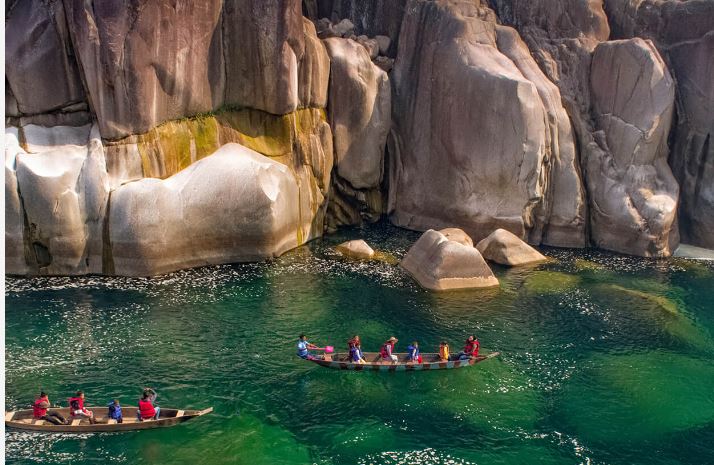
I had the good fortune to visit Megalaya recently and Dawki was an essential part of the itinerary. Reality is not far from the numerous idyllic pictures on the internet (one from the Meghalaya Tourism site reproduced here!). It is indeed glass-like, a clear green to greeny-blue, with visibility right to the bottom of the river, going down to about 50 feet in parts. The boat-ride on the river was one of the most soothing experiences.
Much of what is good in the Northeast, including how well the Dawki is maintained, can be attributed to community participation in the safegaurding and nurture of community resources. If only these mindsets and practices could be replicated in other parts of the country! (But actually, I am more worried about the wrong mindsets and practices from other parts of the country reaching the Northeast!).
An interesting part of the experience was that the ghat from where one takes the boat-ride is bang on the Indo- Bangladesh border. In fact, only a line of small stones separates the two countries! There is active commerce between the two sides, with hands reaching out to take goods and receive money (Indian currency acceptable). I tasted a number of pickles from a vendor on the other side. And of course the photo-op of the place is pics of people straddling the border or line of stones! The border is manned by the BSF on our side, who keep a sharp lookout for cross-border movement especially as evening falls.
But getting back to rivers and river quality. Water quality can be defined as the physical, chemical and biological characteristics of water. Parameters that are frequently sampled or monitored for water quality include temperature, dissolved oxygen, pH, conductivity, Oxidation-Reduction Potential, and turbidity.
Of these, dissolved oxygen or DO is considered the most important indicator of water quality of rivers, lakes etc. The higher the DO, the better the water quality. Lower Dissolved Oxygen means that there is not enough oxygen in the water to support fish and other aquatic life. Low DO is a result of excess growth of algae in water. Such growth happens where there is an excess of phosphorus and nitrogen going into the water. These chemicals come into the waterbodies through discharges from wastewater treatment, agricultural run-off (from the use of pesticides and fertilizers) and storm water runoff.
Rivers are our lifelines, and quality of the waters in our rivers is an area of major concern both in India and across the world. It is to focus attention on this that an International Day of Action for Rivers was declared in 1997. This was at the initiative of International Rivers Network, Narmada Bachao Andolan (India), and Biobio Action Group (Chile), and is marked on March 14 every year.
On this day dedicated to saving, celebrating, and creating awareness about the importance of rivers, let’s think about our rivers and how our actions impact them. What will it take to have some more Indian rivers join a lonely Dawki on the list of the cleanest rivers of the world?
For many years now, I have spoken at women forums, mentored and taught young women, and have had several women as part of my team.
The one message I try to give has been ‘don’t be a good girl’. What I meant was: don’t be confined by what your family and society expect of you; don’t do things just because someone thinks you should; you don’t have to be obedient; do think things out for yourself and rebel, disobey and question when you are convinced that is the right thing for you.
But I could never articulate it right. It often came out as if I was asking girls to be ‘bad girls’ or to be defiant just for the sake of being defiant! And I began to think maybe that is not what I should be telling them.
Till recently, when I started coming across the term ‘good girl syndrome’. I have been trying to read up a bit on this, and have discovered that it is not only a ‘thing’, but that it has been the subject of some (though not too much) academic interest.
Beverly Engel’s 2011 book ‘The Nice Girl Syndrome’ is a break-through book in this area, and I would rather quote her than try to define and explain the term myself:
‘A Nice Girl is more concerned about what others think of her than she is about what she thinks of herself. Being a Nice means that a woman is more concerned about other people’s feelings than she is about her own.’
‘Nice girls are compliant: they do what they are told. They’ve learned that it is easier to just do what someone asks than to risk an argument. Nice girls are passive; they let things happen. They are often too afraid to stand up for themselves… Nice girls are wishy-washy. ..They want to please everyone all the time…Because they are afraid of telling other how they feel, Nice Girls can be phony; they pretend a lot.’
From The Nice Girl Syndrome: Beverly Engel. (2011)
Characteristics of ‘good girls’ include: fear of disappointing others, fear of speaking out for fear of hurting others, need to always excel, avoid conflict, obey rules. They also find it difficult to refuse to do what they are asked.
I don’t know if it is true, but I find the need to conform and to be good girls is actually increasing. For women born in the sixties like me, any of us worth our salt did defy curfew times; did fight with mothers about dressing and hairstyles; did assert ourselves to pursue professional education and careers; did sometimes have to go on the warpath about when and whom to marry; and fight for space in the marriage to define ourselves. And each of those arguments made us stronger. And we emerged as strong women, who carved our own paths.
We of course stood on the shoulders of the women of the forties and fifties—they were pioneers: the early engineers, the early doctors, the women who defied purdah, the women who travelled alone, the women who fought family and society to create their own paths. We were not half as brave, but we did advance the agenda a bit.
Today, many of these things are taken for granted, and the girls don’t seem to be fighting any new battles. They in fact don’t seem to have as strong a sense of self as we did. I see them treading the path that society expects them. The paths that we trod and that they are treading look the same. But the difference is it is now the beaten path. We were bad girls when we trod this path, but now it is the norm, and good girls are expected to tread them and they are doing it! I would have thought they would go further, branch out, breach new barriers, reach new heights.
But maybe it is the world’s oldest story–one generation cribbing about the next!
At any rate, on the occasion of International Women’s Day, here is to BAD GIRLS. They are the ones who change the world!




 Millennial Matriarchs