ARE STUDENTS LEARNING?

The New Education Policy has gone through long debate and discussion. It is time to put it into action.  But the crucial issue is how will all the lofty ideas be translated into better learning?

It is essential to worry about this. Because what students seem to be learning in government schools today, or rather what they are not learning, is a matter of grave concern. This may seem to be a sweeping statement to make, but many of those concerned with school education would agree. A large number of studies, including the well-respected PROBE reports endorse this.

But sometimes, large numbers, averaged statistics, and thick, academic reports don’t really communicate effectively. So let us look at one small example. A test was administered to a group of 457 youth, of whom 7 were below SSC, 104 were SSC Pass, and the remaining were Inter Pass, Diploma, Graduates etc. Meaning, 346 of the candidates were at least Inter or Std 12 pass. The test consisted of a few basic math and science questions administered in the mother tongue, and a middle-school level comprehension passage also administered in the mother tongue. The test did not include anything beyond Std 8 competencies, and in fact, many of the questions should theoretically have been answered correctly by Std 4 students.

The questions and results are summarized below:

Observations for Math and Science Competencies


Question Level Question % of Students who have answered correctly
Math
1 What is the addition of the following numbers:    6578 + 9342 91.40
1 Multiply the following:  782 x 421 68.40
2 Solve 4 × 5 ÷ 2 + 7 =? 71.90
2 If you have got 763/800, what is your percentage? 63.00
2 What is the average of Average of 98 and 62? 63.20
2 You have Rs. 219. You give 2/3 to your brother. How much money are you left with? 52.90
3 Identify the ‘right angle’ triangle 84.00
3 What is the next number in the sequence 1 4 9 16? 51.60
3 What is the next number in this sequence 1 1 2 3 5? 55.10
Science
2 H2O is the chemical name of which common element? 68.90
2 What is the name of the satellite that revolves around Earth? 49.20
2 Approximately, how long does the Earth take to complete one orbit around the Sun? 64.70
3 If you have poor eye sight, you are likely to be suffering from the deficiency of which vitamin? 44.80
3 Name the process used by plants and other organisms to convert light energy into chemical energy? 75.40
Question Level
1 Class III-IV level questions
2 Class V-VI level questions
3 Class VII-VIII level questions


Observations for Reading Comprehension

  • Overall 41% of the total youth were able to answer all the questions correctly in Reading Comprehension and get a score of 100%
  • 9% students were not able to answer any question correctly and thus scored ‘0’ in Reading Comprehension


Admittedly this was not very scientific test, maybe not on a representative sample. There could many questions about the methodology and process. But to my mind, that still does not excuse the results!

What is wrong with our schools? We are revising curricula and re-writing textbooks; we are training teachers ad infinitum; we are giving grants for everything from school toilets to teaching-learning material. But at the end of the day, the proof of the pudding is in the eating. And this pudding doesn’t taste at all right!

Increasing the financial allocation for Education is the first big step. But this is the time to take a serious and hard look at how this money should be spent. Doing more of the same is not going to get us anywhere, because what we are doing is obviously not good enough. There needs to be a National Mission to ensure that our children learn—our future depends on this.

–Meena

Gentle Birdman Leaves Us

Many mornings, sitting in our little garden with our cups of tea, as we watch the birds already busy going about their day’s business, we may spot one that we had not seen before. And before it disappears we say, “Bring Lalsinhbhai’s book and let’s find out what this is.” Lalsinhbhai’s handy bird book is always close at hand. With the help of the beautiful life-like illustrations we open to the description, and always learn so much more than the name of the bird. Written in simple conversational Gujarati, Lalsinhbhai’s bird books are over and above the traditional description of birds. They capture nuances of birds that make them truly our Lifelong Companions, as one of his books is titled.

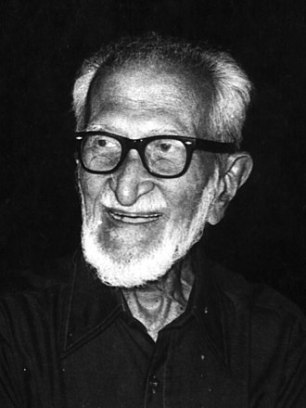
Lalsinhbhai Raol, passionate nature lover, the birdman of Gujarat, and an inspiration to countless nature lovers, passed away recently. For the Matriarchs, who both stepped into the charmed campus of CEE with relatively little prior exposure to the natural world, he was one of the wonderful guides that gently led us to explore and discover the world of birds.

Lalsinhbhai was then working with CEE on a book series called Introduction to Nature. For many generations, Salim Ali’s book had been the Bible for all birdwatchers. Lalsinhbhai’s series, in Gujarati, not only opened up the fascinating world of birds to non-English speaking audiences, but also opened windows to the birds of Gujarat—starting with the most commonly found birds, to birds of wetlands, of grasslands, and of the forest and its environs. Lalsinhbhai not only translated his long years of bird observation into succinct, interesting descriptions, but also coined appropriate Gujarati names for several of these.

His was a quiet, unobtrusive presence on CEE campus, but whenever you met him, he would always have a gentle word of concern and encouragement, and an exciting bird fact to share.IMG_20190801_110849.jpg

I had the privilege of sharing his great knowledge and passion when he kindly agreed to be the author of NatureScope Birds, one of a series of Teachers’ Manuals that I was editor of. This involved not only putting together a compendium of information about Indian birds in a teacher and student-friendly style, and also linking this with relevant and exciting activities that could be easily done. For me this was a greatly enriching and inspiring collaboration. Even today, I often dip into the book for facts, ideas, and activities with the confidence that every word is accurate and vetted by an expert ornithologist.

Meena has her own special memories of learning from Lalsinhbhai. I had the privilege to work with Lalsinhbhai on developing a proposal for a project of Bird Study for the Visually Challenged almost 30 years ago. It was a unique project, in that its purpose was to make ‘bird watching’ possible without the ‘watching’. Recorded bird sounds were of course an important part; but we also proposed providing tactile experiences such as touch-and-feel albums of feathers; collection of birds’ nests; true-size models of birds, birds’ feet, beaks, eggs; and trips to bird areas to experience the environment, sounds, etc. As always, Lalsinhbhai could empathise with the needs, and gave wonderful insights and ideas. The Ministry of Human Resources accepted the proposal and the team carried out a very successful project in Ahmedabad.

We feel fortunate for having known, and learnt from this gentle soul. May his spirit always soar high with the birds that he so loved.

–Mamata and Meena


Parenting an Instinct? Dangerous Assumption

Sanjeev 15 years old. Son of good friends. Committed suicide a few days before his Std 10 Board exams.

What would lead to a situation where a 15-year old is so defeated by life, or is in such despair that he takes his life?

Madhuri and Amar are wonderful people. They loved their two children and worked hard to give them the best of everything. Madhuri would get up at five every morning to cook breakfast and lunch, before coming to work. Amar would take them to the movies every alternate Sunday. They both worked hard to earn enough to give them the advantages they never got.

But were they good parents? I am not so sure.

Madhuri and Amar had married young—defying their parents to make a runaway match. Sanjeev came along before they knew what was happening. They coped with jobs, insufficient money, newly reconciled relatives, sleepless nights, and a fairly new marriage, as best they could. They couldn’t really draw upon any experienced parents, even if they wanted to.

But it was fairly obvious to many of us standing on the side and looking on, that though they were loving parents, they were not good parents.

Why do we assume that parenting comes naturally? That it is an instinct? That it requires no preparation, no conscious effort?

We have recognized the importance of telling young couples that the health of the mother and child are endangered if the mother is too young and her body too immature. But have we ever told them that the psychological and emotional well-being of the child are in danger if the parents are too immature to bring them up? Have we told the bride’s parents and the groom’s parents this?

We take the trouble to inform new parents what they must feed the child, what the symptoms of various illnesses are, when the infants must have their various shots, etc. But does anyone tell them how they must deal with their children? Give them a glimpse of child psychology and child behaviour?

Yes, my great-aunt had eight children, starting with her first one when she was 15. No. No one gave her lectures on child psychology. And all the children grew up quite well, thank you very much! Yes, true.

But surely the world today is a much more complex place than it was 75 years ago. Or 50 years ago. Or even 15 years ago. Were children then exposed to internet, Facebook, Instagram, Tik Tok, and all kinds of things I am not even aware of? Did they live in a world where a percentage point in Std 12 marks made the difference between making it into medicine or not? Did they live in a world where violence and sex were daily fare? Where corruption and cynicism were the order? Where possession or non-possession of branded shoes and jeans, or Facebook pics of exotic holidays, decided whether you belonged or didn’t? Where the family was two young adults who left in the morning and came back late in the evening?

The answer is obvious. We talk of education to cope with change. Then why do we not see that education for parenting is a–maybe the–most crucial part of this education? We know that data analysts need training; carpenters need training; engineers need training…. But we seem to think that we can take on the most important job in life—that of taking responsibility for another human life—without any training or education or preparation or even thought.

The increasing number of cases like Sanjeev’s that one sees reference to in the media clearly indicate that we need such education. But who is provide it? Where? When? How? Indian society must answer these questions. It is no longer enough to say that our traditional structures and family values are so strong that these things will get taken care of. It is obvious that the family and social structures are not being able to cope.

Someone has to act! This kind of education or sensitization hast to reach each and every young person. Reach them at a time when it is needed. Reach them in a way that it makes a difference. Is the Public Health Centre the venue? The anganwadi? The school? The college? TV the medium? Radio? All of these?

Whatever the answer, let us at least ask ourselves the questions. Believe me, a Sanjeev you know may break your heart.

–Meena


Effortlessly Antique

40CAEEBD-E296-4C56-B3BA-4B460523A19E

Raghu has a weakness for antiques and the house is a bit overboard on old bric-a-brac, carpets, furniture, etc., which he has been collecting for 30 years now.  He used to scour antique shops, flea markets, craft shops, furniture shops and what not, spending enormous amounts of time. And much more money than we could afford.

But a few days ago, I looked around and wondered why he even made the effort! Just by sheer living and reaching the age of 60ish, even our most mundane belongings are antique!

My wedding saris are over 35 years old.

My own jewellery is 40 years old. But my mother and grandmother both gave me pieces of their jewellery over time. So some of it is close to 65 years old. And a few pieces close to 85 years old.

Raghu has his first watch, which was a hand-me-down from his father–easily 70 years old. Also, his father’s fountain pen, probably of the same vintage.

My silver kodam (water pot), was given to my grandmother from her mother’s time and is probably a century old, give or take.

The idols in the puja cabinet may again be a 100 years old, since some of them belonged to great-grandparents.

We did go out of our way to buy some old pieces of furniture, but some of the most mundane pieces like the kitchen cabinet, by growing old with us, are close to four decades old.

My ever-silver (stainless steel for the non-South Indians) vessels come down from my mother-in-law’s treasured hoard, and may well be over 60 years old.

I have dessert bowls that my parents bought when they were in the UK in 1962.

I have a doll that was bought during the same visit.

Our photographs rest in albums dating back to the ‘50s.

So whether or not you know it, whether you want to be or not, you are an antique collector. And your house is a museum. Because life happens…

–Meena

Calico Dome: My Introduction to the Genius of Buckminster Fuller

Born July 12, 1895. A tribute on his birth anniversary.

When I moved to Ahmedabad in 1984, one of the ‘must see’ places was the Calico Dome. So dutifully, I went there as part of the Old City sightseeing and shopping experience.

It took me quite a while to figure out what the big deal about the dome was.

….That the dome was more than a showroom for the Calico Mills. That it was more than a venue for a fashion show that Parveen Babi had once taken part in as a student. That it was a historic structure, the first space frame structure in India (today so common in airports, for instance). That it was a design inspired by Buckminster Fuller‘s geodesic domes, and designed by Gautam and Gira Sarabhai and inaugurated in 1962.

Well, so what? Nothing, except the geodesic dome is ‘recognized as the strongest, lightest, and most efficient means of enclosing space yet devised by man’.

A geodesic dome is composed of a complex network of triangles. These structures are extremely strong. They can withstand high winds, earthquakes and heavy snow, making them ideal structures for any type of environment. They are also efficient and sustainable. Due to their spherical nature, dome homes provide a large amount of living space, while taking up very little surface area. And due to their lower area-to-volume ratio, they require less energy for heating and cooling.

geodesic.jpg

The geodesic dome embodies all that Buckminster Fuller stood for— ‘Less is More’, and a constant effort towards sustainability through design. Dedicating his life ‘to making the world work for all of humanity’, his designs have continued to influence generations of designers, architects, scientists and artists working to create a more sustainable planet. He was the first person to use the term ‘Spaceship Earth’.

He was a practical philosopher who contributed to many facets of life and has been called a ‘comprehensive, anticipatory design scientist.’. Just a few examples of how his work has contributed beyond architecture and design: Molecular biologists have now established that his mathematical formula for the design of the geodesic dome applies perfectly to the structure of the protein shell that surrounds every known virus. Several leading nuclear physicists are convinced that the same formula explains the fundamental structure of the atomic nucleus, and is thus the basis of all matter.

Other paradigm shifting designs include the Dymaxion houses, cars and map.

He visited India several time, giving the Nehru Memorial lecture in 1969. During one of his visits to India, he helped build a geodesic structure on the campus of Bengal Engineering College (now, Indian Institute of Engineering Science and Technology, Shibpur, West Bengal)

Happy that geodesic domes were something I encountered, including on drives to the airport at Ahmedabad for 20 years, at one of the garden-chowks!

—Meena


The mills and shops closed in the 1990s and the dome went into disrepair. In the 2001 earthquake, the centre of the dome collapsed and heavy rains damaged the interior of the underground shop. Later the dome collapsed completely.[3] [4]

On liquidation of Calico Mills, Ahmedabad Municipal Corporation (AMC) bought it as a heritage property in 2006.


Putting their novelty aside, dome homes have the potential to solve many of our most pressing environmental and societal challenges. R. Buckminster Fuller’s ultimate goal in designing geodesic dome structures was to solve the housing challenges of an ever-increasing population. He set out to design human shelters that were strong, sustainable and affordable.

The geodesic design is a perfect marriage of the sturdy arch and the rigid triangle, which enables dome homes to be extremely strong. They can withstand high winds, earthquakes and heavy snow, making them ideal structures for any type of environment, especially in an increasingly volatile climate.

Along with their strength, dome homes are incredibly efficient and sustainable. Due to their spherical nature, dome homes provide a large amount of living space, while taking up very little surface area. And due to their lower area-to-volume ratio, they require less energy for heating and cooling.

Additionally, dome homes require far less building materials than traditional homes do, and can be made out of a variety of eco-friendly building materials. They’re also typically less expensive to make than traditional homes, and the fact that they are much smaller than traditional single-family homes also helps keep the costs down. These factors make them ideal for people looking to build an environmentally friendly home on a budget.

While the residential application of the geodesic dome is most heralded in American culture, the original Fuller domes—as well as many since—were actually constructed for commercial use.

In fact, the first dome that was constructed after Fuller filed his patent for the structure was part of the Ford Motor Company headquarters in Dearborn, Mich., in 1953. The Ford Rotunda was originally an open-air pavilion, which the company then retrofitted with a roof to create an indoor space. However, the building could not sustain a traditional roof, which would weigh more than 160 tons. Ford turned to Fuller to design a geodesic dome that weighed just 8 tons. Although the Rotunda was destroyed in a fire in 1962, it was proof of concept for many commercial buildings to come.

After the success of the dome used for the Rotunda, other clients came calling, including the U.S. military. The government looked to the Fuller domes for two reasons. First was for how impervious they were to wind and weather, as the military needed shelter for their radar equipment that could withstand the harsh conditions at the Arctic Circle. The dome shape proved to be ideal to withstand high winds with minimal maintenance.

And second, the U.S. government explored using geodesic domes for their light weight and ease of construction. The domes were used to create “speedy but strong” housing for soldiers overseas in the 1950s, according to the Buckminster Fuller Institute. In fact, the Marines went as far as creating a 30-foot dome that could be delivered by helicopter and assembled in just over two hours—and that could withstand a day-long barrage of 120-mile-per-hour wind gusts.

MODERN DOMES AND POTENTIAL IMPACT

Since the early days of experimentation with geodesic structures, many have been built, including Epcot Center’s Spaceship Earth (although it’s technically a geodesic sphere, not a dome), the Tacoma Dome in Tacoma, Wash., the original hangar used to house the Spruce Goose, and the Amundsen–Scott South Pole Station (from 1975–2003). As architecturally impressive as they are utilitarian, these domes allow their proprietors to do more with less.

This do-more-with-less mentality has also led optimistic individuals to use the geodesic dome shape to solve urban problems such as creating transitional housing in Silicon Valley. A recent proposal by the entrepreneur Greg Gopman aims to provide a small village of dome homes available to rent for just $250 per month.

After all, what the geodesic dome—and its potential—shows us is the impact that architects and builders can have when they truly think outside the box.

https://blueprint.cbre.com/the-impact-and-importance-of-the-geodesic-dome/


  1. Buckminster Fuller was a renowned 20th century inventor and visionary born in Milton, Massachusetts on July 12, 1895. Dedicating his life to making the world work for all of humanity, Fuller operated as a practical philosopher who demonstrated his ideas as inventions that he called “artifacts.” Fuller did not limit himself to one field but worked as a ‘comprehensive anticipatory design scientist’ to solve global problems surrounding housing, shelter, transportation, education, energy, ecological destruction, and poverty. Throughout the course of his life Fuller held 28 patents, authored 28 books, received 47 honorary degrees. And while his most well know artifact, the geodesic dome, has been produced over 300,000 times worldwide, Fuller’s true impact on the world today can be found in his continued influence upon generations of designers, architects, scientists and artists working to create a more sustainable planet.


The Dymaxion Map, 1943

Not limiting himself to any one discipline, Fuller took on cartography with this invention – credited as the first two-dimensional map of the entire Earth’s surface that shows it without distortions.

To create the piece, Fuller projected the world map onto the surface of a three-dimensional icosahedron, which was then unfolded and laid flat.

https://www.dezeen.com/2018/08/27/eight-forward-thinking-ideas-buckminster-fuller-exhibition-los-angeles/

he Dymaxion map or Fuller map is a projection of a world map onto the surface of an icosahedron, which can be unfolded and flattened to two dimensions. The flat map is heavily interrupted in order to preserve shapes and sizes.

The projection was invented by Buckminster Fuller. The March 1, 1943 edition of Life magazine included a photographic essay titled “Life Presents R. Buckminster Fuller’s Dymaxion World”. The article included several examples of its use together with a pull-out section that could be assembled as a “three-dimensional approximation of a globe or laid out as a flat map, with which the world may be fitted together and rearranged to illuminate special aspects of its geography.”[1] Fuller applied for a patent in the United States in February 1944, the patent application showing a projection onto a cuboctahedron. The patent was issued in January 1946.[2]

—————————————————————————————————————-

geodesic dome, which has been recognized as the strongest, lightest, and most efficient means of enclosing space yet devised by man.


Molecular biologists have now established that his mathematical formula for the design of the geodesic dome applies perfectly to the structure of the protein shell that surrounds every known virus. Several leading nuclear physicists are convinced that the same Fuller formula explains the fundamental structure of the atomic nucleus, and is thus the basis of all matter.


Gira and Gautam Sarabhai and his team designed the Calico Dome, inspired by Buckminster Fuller‘s geodesic domes. The dome housed the showroom and shop for Calico Mills, which opened in 1962. The first fashion show in Ahmedabad was organised in the Dome.[2] Indian actress Parveen Babi took part in shows in the 1970s when she was a student.[2]

Inaugurated in 1962, the 12-meter wide structure

It was the first space frame structure in India

The mills and shops closed in the 1990s and the dome went into disrepair. In the 2001 earthquake, the centre of the dome collapsed and heavy rains damaged the interior of the underground shop. Later the dome collapsed completely.[3] [4]

On liquidation of Calico Mills, Ahmedabad Municipal Corporation (AMC) bought it as a heritage property in 2006.


UNDEAD

I think ‘undead’ means

The dead who will not die


What then is the term

For the living who do not live?

Who have no wish to live?

Who see no point in living?

For whom there is no joy in living?


Are they called the ‘unliving’?

–Meena

(Obviously suffering from GOT withdrawal symptoms!)

Hall of Rage

One of the things that completely fascinated me when I was told stories from the Ramayana by my grandmother was the concept of the ‘kopagraha’, made famous by Queen Kaikeyi.

KaikeyaKaikeyi, goaded by Mantra, decides that her son Bharata must be crowned King of Ayodhya, in place of Rama, the first-born. But convincing her husband the King, was not going to be easy. As the first step, she retreats to her kopagraha (literally, Hall of Rage). She flings off her jewels, unfastens her hair, puts off her silks and flings herself on the bed, before sending word to the King that he better come there post-haste, or else…

What ensues is well-known. The King has to bow to her pressure. He decides to crown Bharatha king, exiles Rama to the jungle, and later, succumbs to a heart attack or stroke. But that is the subject of the epic, not this blog.

The kopagraha is the crux here. What a concept! A whole hall or palace to retire to, signalling your rage! A whole building legitimizing tantrums and bad behaviour! I wonder if the kopagraha was a common resource. Could anyone from the royal family just walk in and occupy it? If so, what would happen if two or more people wanted to use it at the same time? Maybe there were systems for bookings like we have for meeting rooms in offices? Or did each important person have one exclusively? Maybe it could be a perk—corporates could allot kopagrahas along with corner offices!

I have often imagined how I would design a kopagraha if I had a chance to have one. I think it would be painted the deep grey of dark clouds, and a bright angry red. The furnishings would all be red. Glass vases and tea cups and china bric a brac would be handy to fling against walls. The acoustics would be designed to catch the shrillest notes of querulous voices and amplify them. Bows and arrows, along with targets to substitute for whoever was the enemy of the moment.

Alas, while punching bags and ‘anger rooms’ and such are a part of some anger management programs, we do not now have the luxury of a palace to indulge our rage.

Interestingly, as I was looking for references to kopagrahas, I learnt that boudoirs were originally on the lines.  ‘Boudoir’ apparently means sulking or pouting room. It is derived from the French ‘bouder’, which means to sulk or pout. In the 1700s, the boudoir was a room to withdraw to, and apparently to sulk in!

Happy tantruming!

–Meena


National Education Policy Awaits Your Inputs…

Ed Policy

The draft of the National Policy on Education (2019) is out.  The nine-person Committee under the chairmanship of Dr. K. Kasturirangan which put together the report (based on large public consultations), mentions that ‘the guiding principles of the policy are Quality, Affordability and Accountability’. The policy they say, attempts to look at education ‘in a single organic continuum from preschool to higher education and also touched on related sectors that form part of the larger picture’. The education of the next generation concerns all of us. This is an opportunity to give our inputs to strengthen it.


The 420+ page document can be seen on https://mhrd.gov.in/sites/upload_files/mhrd/files/Draft_NEP_2019_EN_Revised.pdf.

Comments can be given on https://innovate.mygov.in/new-education-policy-2019/.

To get into the reflective mood necessary to do this, here is a quick selection of thoughts and quotes from those in India who have thought deeply about education.

Hope this helps!

FROM TAGORE

The highest education is that which does not merely give us information but makes our life in harmony with all existence.

Education has its only meaning and object in freedom–freedom from ignorance about the laws of the universe, and freedom from passion and prejudice in our communication with the human world.

Education means enabling the mind to find out that ultimate truth which emancipates us from the bondage of dust and gives us wealth not of things but of inner light, not of power but of love. It is a process of enlightenment. It is divine wealth. It helps in realization of truth.

In education, the most inspiring atmosphere of creative activity is important. Primacy function of the institution must be constructive; scope must be for all kinds of intellectual exploration. teaching must be one withe culture, spiritual, intellectual, aesthetic, economic and social. True education is to realize at every step how our training and knowledge have an organic connection with our surroundings.

FROM MAHATMA GANDHI


An education which does not teach us to discriminate between good and bad, to assimilate the one and eschew the other, is a misnomer.

Unless the development of the mind and body goes hand in hand with a corresponding awakening of the soul, the former alone would prove to be a poor lop-sided affair.

Persistent questioning and healthy inquisitiveness are the first requisite for acquiring learning of any kind.

True education must correspond to the surrounding circumstances or it is not a healthy growth.

I believe that religious education must be the sole concern of religious associations.

A balanced intellect presupposes a harmonious growth of body, mind and soul.

The emphasis laid on the principle of spending every minute of one’s life usefully is the best education for citizenship.

FROM DR. S. RADHAKRISHNAN

Education aims at making us into civilized human beings, conscious of our moral and social obligations.

Education must develop democratic attitude. Educational institutions should train people for freedom, unity, and not localism, for democracy, not for dictatorship.

Education has for its aims not merely acquisition of information but the capacity for discernment.

FROM INDIAN EDUCATION COMMISSION (KOTHARI COMMISSION) REPORT, 1966

Of all factors which determine the quality of education and its contribution to national development, the teacher is undoubtedly the most important. It is on his personal qualities and character, his educational qualifications and professional competence that the success of all educational endeavour must ultimately depend. Teachers must, therefore, be accorded an honoured place in society.

The academic freedom of teachers to pursue and publish independent studies and researches and to speak and write about significant national and international issues should be protected.

Strenuous efforts should be made to equalize educational opportunity.

The school and the community should be brought closer through suitable programs of mutual service and support.

With a view to accelerating the growth of the national economy, science education and research should receive high priority.

A major goal of examination reforms should be to improve the reliability and validity of examinations and to make evaluation a continuous process aimed at helping the student to improve his level of achievement rather than at ‘certifying’ the quality of his performance at a given moment of time.

FROM JIDDU KRISHNAMURTHY

Education is not merely a matter of training the mind. Training makes for efficiency, but it does not bring about completeness. A mind that has merely been trained is the continuation of the past, and such a mind can never discover the new.

Education is not merely acquiring knowledge, gathering and correlating facts; it is to see the significance of life as a whole.

Conventional education makes independent thinking extremely difficult. Conformity leads to mediocrity.

The function of education is to create human beings who are integrated and therefore intelligent.

Education should help us to discover lasting values so that we do not merely cling to formulas or repeat slogans; it should help us to break down our national and social barriers, instead of emphasizing them, for they breed antagonism between man and man.


–Meena

Disillusioned!

Strange is the English language

‘Disillusioned’ is a word

But ‘illusioned’ is not!

Which seems to imply

That ‘illusioned’ is so status-quo

That it does not need to be discussed

That it is the state most people live in

That it is the ‘reality’, (Oh! World of contradictions!)

That there is nothing unusual about it

So taken for granted that is will not be mentioned often enough

To make it worth having a word for.


And that brings English in its core sensitivity

So close to the concept of Maya

–Everything in the world

A grand illusion


But whatever the philosophers and semanticists have to say

About the reality

Or the unreality

Of the world and words


I only know

That once you are disillusioned

It is very difficult to be ‘illusioned’ again!

–Meena

The Lacy Brittle: Beawar Til Papad

Indian sweets are yum to the Indian palate. But they don’t lend themselves to hyper-levels of visual appeal enhancements as do cakes and pastries and other sundry desserts, as portrayed in various TV shows.

One traditional sweet which is intrinsically beautiful and delicate is the Til Papad from Beawar. A mono-layer of sesame and thinly sliced pistas and almonds in sugar syrup, each papad is see-through. Just hold it up to the light for a lacy view of the world beyond!

055F6DD4-BC24-4333-B75D-C362216E65A6

At some point in my life, I studied in Mumbai, and it was always an adventure to reach Jodhpur, where my parents were, for the vacations. One such journey must have entailed some portion being done by bus, because I distinctly recall wandering around the Beawar Bus-stop. And that is when my fascination with this sweet began. Several shops were making the til papad. Basically til and nut-slivers were cooked in sugar syrup, which was taken off the heat at just the right moment; balls made of the goo; and highly skilled cooks rolled them out, one til-thick. It was amazing to see them at work, for they had to work with hot goo, and roll it really fast and thin.

A few weeks ago, someone from Rajasthan kindly gifted us a box of til papad, and that brought all the memories back.

Digging a little deeper into Beawar, I found that it was not one of the ancient cities of Rajasthan, the story of whose founding is part-history, part-mythology. Beawar was established by a British officer, Colonel Charles George Dixon, in the 19th century as a military cantonment. Situated as it is at a tri-junction of Jodhpur, Jaipur and Udaipur, it gained and still retains importance as a trading centre.

The people of the area were apparently as brave and war-like as from any other part of Rajasthan, and the British had a healthy respect for them. One source tells me that the name ‘Beawar’ originated from the term ‘Be aware’.

In recent history, Beawar’s claim to fame is its link to the Right to Information (RTI) movement. The RTI movement started with a number of activists demanding  transparency, after conducting investigations into wide-spread corruption at panchayat and block levels. The then-CM of Rajasthan, Mr. Bhairon Singh Shekawat assured them he would bring in RTI. But even after a year, this did not happen. So on April 5, 1996, thousands of citizens and activists congregated in Beawar. The protest took place at a busy traffic roundabout called Chang Gate, and lasted 40 days. This laid the foundation for the RTI being brought in.

So sweet little Beawar is strong too!

–Meena