Yellow is the Colour of Spring

Basant Panchami, celebrated on the fifth day of the Magha month, heralds the end of winter and the coming of spring. It precedes Holi which marks the beginning of summer  by about 40 days.
Basant Panchami

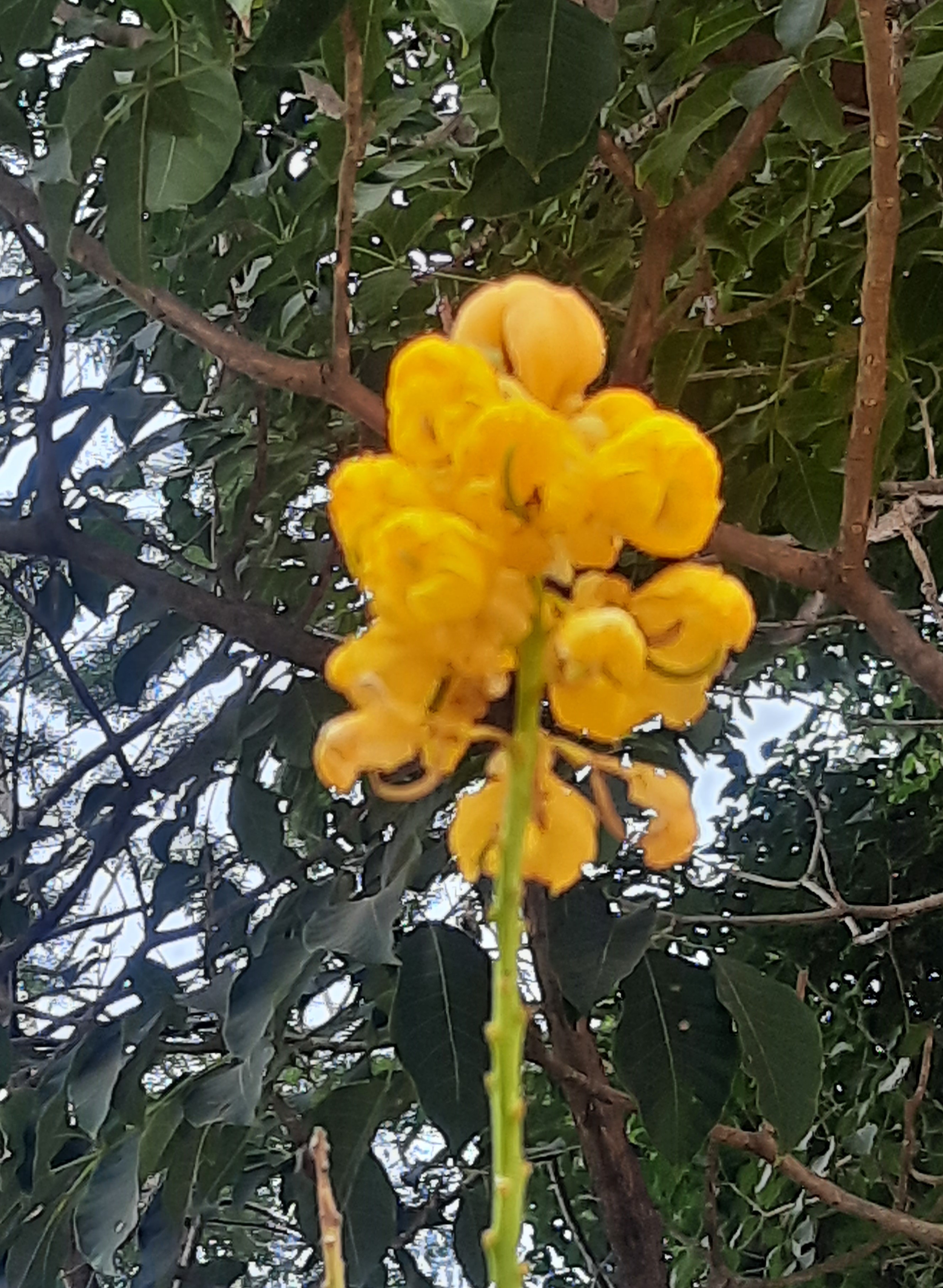
Yellow is the colour of this festival. With good reason—of the myriad flowers that bloom in the spring, many are yellow. Mainly the mustard flowers, which turn North India’s landscapes golden in these months. Yellow is also the colour of Goddess Saraswati, to whom this festival is dedicated in some parts of the country.

Apart from marking a major seasonal change, there are many stories and myths associated with the festival.

My favourite one is to do with Poet Kalidasa. The story goes thus, for those who need a refresher: The Princess of one of the kingdoms in the North (not at all clear which one!) was very intelligent. She laid down the condition that she would marry only the man who beat her in a contest of wits. Many a suitor came and was rejected, including the son of the CM of the country. Male egos were as fragile then (approximately 5th century CE) as now, and the CM and maybe some of the rejected suitors decided to give her her comeuppance. Imagine a girl proving that she was more intelligent than men! Anyway, they decided to hunt out the dumbest guy in the country in a kind of reverse intelligence test. They were thrilled when they located a shepherd who they felt was the epitome of dumbness—it is said that they spotted him when he was sitting on the tip of branch high up on a tree, and sawing away at the branch—which would of course have resulted in his falling down along with the branch. Through a series of ruses, they managed to trick the Princess into thinking he was very intelligent. The Princess married him, and obviously the secret came out pretty soon. The Princess threw the husband out. He was in despair and on the verge of suicide. At this point, Goddess Sarwaswati is said to have appeared in front of him, and asked him to take a dip in the river. And then the miracle happened! When he emerged shivering from the river, it was with a hymn to the Goddess on his lips—the Shyamala Dandakam! A miracle had happened–he had gained poetry, wisdom, language and knowledge! That was Kalidasa—the man who gave us works such as Abhijñānaśākuntalam, Kumārasambhava, Ritusamhara, Meghadhoota, etc. The episode of the Goddess giving him darshan and his gaining wisdom is said to have happened on the fifth day of Magha, which therefore we now celebrate as Saraswati Puja, and pray that the Goddess may bestow similar gifts on us. . (It has always intrigued me as to what happened with the marriage. Did Kalidasa and the Princess get back together? I don’t remember that the story ever referred to that.).Some people also mark this as Saraswati’s birthday.

The other story involves Shiva and Parvati and is a bit gory for my liking. Shiva’s beloved wife Sati had died, and he went into total depression (following a huge show of rage). He started meditating and was oblivious to the world and his duties. But the world needed him to keep the cycle of life going—an immediate requirement being that a son be born to him to destroy the demon of the moment. As per the larger plan, Sati had already taken her birth as Parvati, the daughter of the King of the Himalayas where Shiva sat in meditation. But nothing she did could even get him to open his eyes. That is when the gods sent Kamadeva, the god of love, who shot an arrow at Shiva and got him to open his eyes. So furious was Shiva that he opened his third eye and burnt Kama before anyone knew what was happening. But the purpose was achieved–he also saw Parvati and fell in love with her. Kama’s sorrowful wife Rati underwent rigourous penances for 40 days till Shiva relented and agreed to let Kama, the collateral damage, resume his physical form for one day a year. The day this happened was Basant Panchami.

East and North India seem to celebrate this festival much more than the South—at least, I don’t remember this as one the special days in our Tamil calendar. So for me Basant Panchami is memories of amazing bhogs at the houses of dear Bengali friends. And an opportunity to wear yellow, a colour too bright for my usual palate.

Grateful for the diversity of stories, traditions, celebrations. Surely makes our lives more colourful and interesting!

–Meena
The Silent Valley Saga: A Landmark in India’s Environmental Movement

Last week, we paid our tribute to Prof. MK Prasad—one of the key people behind saving Silent Valley. This week, I thought I would re-visit some details about Silent Valley and the campaign.

The Silent Valley deep in the Western Ghats of Kerala is a very special forest. In fact, it is one of the oldest stretches of rainforest in the world, ‘the last authentic sizeable evergreen forests left’, in the words of MK Krishnan, the eminent naturalist.

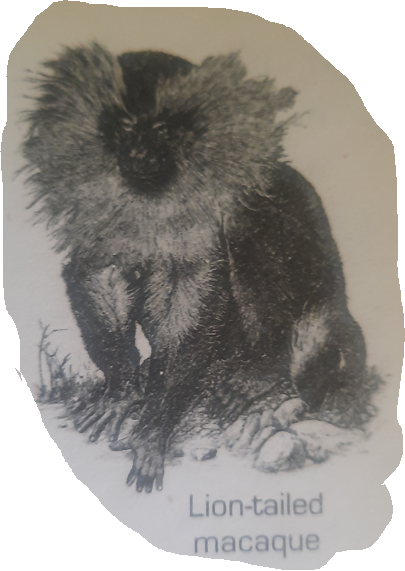
Lion tailed Macaque
Lion-tailed Macaque. Illustration: CEE

It is home to about a 1000 species of flowering plants, 107 species of orchids, 100 ferns, 200 liverworts, 75 lichens and about 200 algae, many of them endemic to the area. It counts 34 species of mammals, 292 species of birds, 31 species of reptiles, 22 species of amphibians, 13 of fishes, 500 of butterflies and moths, besides a multitude of other orders of animal life (keralatravels.com). And these are only the species documented! The valley’s flagship species is the lion-tailed macaque, a species endemic to the Western Ghats.

Many are the myths and legends associated with this forest. It is said that the Pandavas, during their peregrinations after they lost their kingdom to the Kauravas, happened to come to this forest. So enchanted were they that they decided to make it their temporary home. The river that runs through the forest is called Kuntipuzha, in memory of their mother, and the forest itself was called Sairandhari, this being another name for Draupadi.

In 1847, the Englishman Robert Wright came upon the thick forest. He or his colleagues named it Silent Valley. There are several theories about why this name was given. It could of course be an Anglicization of Sairandhari, the traditional name. Or it could be because there are no cicadas in this forest. The constant hum in most forests is due to cicadas, and the absence of this noise can be quite stark. Cicadas do not thrive in wet climate, and that is why they are not common here. Yet another theory is that the British gave it this name due to the presence of the rare lion-tailed macaque whose Latin name is Macaca silenus. But in spite of its name, the Silent Valley resounds to the cadences of the river, bird-calls, monkey-whoops, and insect chirrups.

Silent Valley burst into the national consciousness in the 1970s, when the Kerala Government proposed to construct a dam on River Kuntiphuzha, to generate electricity for the State’s growing needs. When scientists and environmentalists came to know about this, they were very concerned, as it would mean that the Silent Valley would be flooded, and that would be the end of that very special habitat and the unique flora and fauna there.

Kerala Sastra Sahitya Parshat (KSSP), a people’s science movement, took up the cause. On the one hand they did techno-economic and socio-political studies to show the impact of the project, and its pros and cons. On the other hand, they mobilized public opinion, and garnered the support of eminent scientists and people. They also came up with alternatives to building the dam e.g., building a series of small dams, rather than one large one.

It was a long and hard battle. It became a bitter war between the State which wanted the project, and the people who did not. The Centre through the course of the controversy saw many changes, and some of the PMs were for and others against the project. Each set up Committees of scientists. Media was also ranged on the two sides, beginning with local media predominantly in favour of the project, and then slowly veering against it. For a long time, national media paid little attention to the issue, but later weighed in favour of the environment. International environmental organizations also came into the fray. The matter went to court to—with the High Court at some stage giving the go-ahead.

It was when Mrs. Indira Gandhi came back as PM that it began to look as if the conservation movement would win. In 1981, she declared Silent Valley a protected area. But it was found that the hydroelectric dam was not covered in the area under protection. Protests began anew, till finally the project was scrapped in 1983. In 1984, Mrs. Gandhi declared it a National Park—the highest level of protection that can be given. And Silent Valley was saved!

Kerala government has recently decided to declare the buffer zone of Silent Valley National Park as a wildlife sanctuary—the Bhavani Wildlife Sanctuary spread across 148 square km.  So hopefully, Silent Valley continues to remain safe!

Hats off to the scientists, environmentalists, poets, artists, students, NGOs , media, politicians and the common people who fought the long and hard battle to preserve our common heritage.

There are other such success stories, but sadly not very many. And even more sadly, hardly any in recent times.

–Meena

The Storyteller Who Saved Silent Valley: A Tribute to Prof MK Prasad

For those of us who started working on environment-related issues in the ‘80s, ‘Silent Valley’ was one of the success stories which was held up to us as an example of how arguments based on good science, people’s power, and unrelenting campaigning could save the world. Or some part of it.

For those who have forgotten what this was about, hydroelectric dams were proposed on the River Kunthipuzha, which would have involved the submergence of the forests of Silent Valley, a biodiversity rich habitat, home to many, many unique species of flora and fauna, including the rare and unique lion-tailed macaque which is endemic to the Western Ghats.

Kerala Sasthra Sahithya Parishad (KSSP), a people’s science movement, led the campaign against the project under the leadership of Prof. MK Prasad. They published well researched techno-economic and socio-political assessment reports of the proposed project. The campaign by KSSP evoked a huge response from citizens at large, as well as eminent scientists and environmentalists like Romulus Whitaker of the Madras Snake Park, Dr. Salim Ali (who was probably the first to flag the issue), Dr. MS Swaminathan etc. The renowned poet Sugathakumari was at the forefront of the movement, and her poem “Marathinu Stuthi” (“Ode to a Tree”), was a rallying call for the people.

In an early and unique victory for the environmental movement in India, the then-PM, Mrs. Indira Gandhi finally weighed in, and the project was halted. Subsequently, the area was declared a National Park.

Prof MK Prasad
Prof MK Prasad

The story is one of the amazing dedication and hard work of a large number of people. But Prof. MK Prasad’s was a symbol of the movement. Prof MKP as he was fondly referred to, was a botanist who spent his life in academics. He taught botany, was Principal of Maharaja’s College, Eranakulam, and Pro-Vice Chancellor, Calicut University.

But he was not confined to classrooms, and believed passionately in taking science to the people. He was an environmental and science activist all his life, and a founding member of KSSP. His distinction as a scientist supported his environmental activism, which no one could dismiss as woolly-headed.

He was a member of the Governing Council of Centre for Environment Education for many decades and we at CEE were fortunate to have him as a teacher, guide, and mentor. Never for him the exalted distance of a Board Member. He was always interested in the minutest details of our projects and lives, and was happy to spend any length of time chatting with us. Prof Prasad passed away last week due to COVID. Here are a few poignant memories which bring him to life.

Prof Prasad, my mentor and a dear friend. It seems a little presumptuous to call this stalwart my friend, but as unassuming as he was, he truly was that. I’d scold him when he sat next to me during the Governing Board meetings, when lesser mortals like us were let in, because he would chatter away irreverently while serious matters were being discussed. He guided me through the challenge of trying to break into the ivory towers of higher education, and when things didn’t work, he’d say our efforts were “before their time”. That, always accompanied by his naughty smile, had become his code word. He also treated me as his unofficial research assistant, which I enjoyed.  He would call to ask me to find out about things that often I knew nothing about, and it was always great learning. Will miss you, Sir!

Kiran Chhokar.

When I think of Prof Prasad, I can see him walking down the corridors of ASCI where we held our Steering Committee meetings in Hyderabad. As always, he is dressed in a half-sleeved shirt, has no smile on his face – but his kind, sharp eyes are twinkling! I am immensely grateful for all his advice and guidance to the school environmental education project. But more importantly, I feel blessed to have spent some time with such a stalwart. His greatness and his humble demeanour co-existed so well! 

Something I found remarkable in him and so distinct from my generation is that he always gave a considered, detailed response to every request for advice. He never rushed to give an immediate response. Sometimes, he would respond the next day – probably after mulling over the issue. 

On one of his first visits to ASCI, I told him that there was a National Park (the KBR National Park) close by and he could probably take a stroll there in the evening. When I met him the next morning, he gave me a gentle, but proper scolding about my recommendation. I learnt my lesson – one does not present KBR as a ‘National Park’ to the person who saved the Silent Valley National Park! 

Kalyani Kandula

While I was working at the Centre for Environment Education (CEE), Ahmedabad,  I had the good fortune of knowing Professor Prasad. I have known him for many years now.  At Governing Council meetings held at CEE often I would sit next to him and would be very inspired by his valuable suggestions, critical comments and review of many projects CEE was handling. He would not mince his words. A gentle soul, very down to earth and a great inspiration to many. Professor Prasad in fact attended my sister’s wedding in Kerala. My father Dr.S.M.Nair and Professor Prasad shared a great professional and personal bond. 

Meena Nair

Some weeks after CEE’s office in Pune was started, Prof MKP dropped by. He was in Pune for some other work. Though it was a single person office and I a relatively junior staff member, Prof MKP was interested to see how I was settling in and getting on. When I told him that Amma (my mother in law) would have been happy to meet him, considering his association with KSSP, he just said that he would be happy to come over for coffee. So we did that, and Amma (and I) was very touched by the gesture. Later Prof Prasad and I went to meet Prof Pisharoty and I just felt blessed to listen to their conversation.

Sanskriti Menon

For me, he was the quintessential story teller. We would invite him to come and speak in various training programmes we organized—those for Forest Officers, for Environmental Educators from around South and Southeast Asia, for NGOs, for school and college teachers. Of course his sessions had to be around the Silent Valley Campaign. I must have sat through his sessions a dozen times if not more. But the passion, involvement and detail with which he told the story of the campaign inspired not only every new batch of trainees who had never heard it before, but equally, us the organizers who had heard it and read about it and discussed it ad-infinite. Such was the power of his passionate storytelling! And not just the Silent Valley–he had done so many interesting things, met so many interesting people, been so many interesting places–he could keep an audience engaged for hours!

Thank you Sir, for inspiring us. We are comforted by the knowledge that you are looking down at us with a twinkle in your eye!

–Meena

Another old piece on Dr. Pisharoty at : https://wordpress.com/post/millennialmatriarchs.com/43

A Unique Musical Fest: Thyagaraja Aradhana

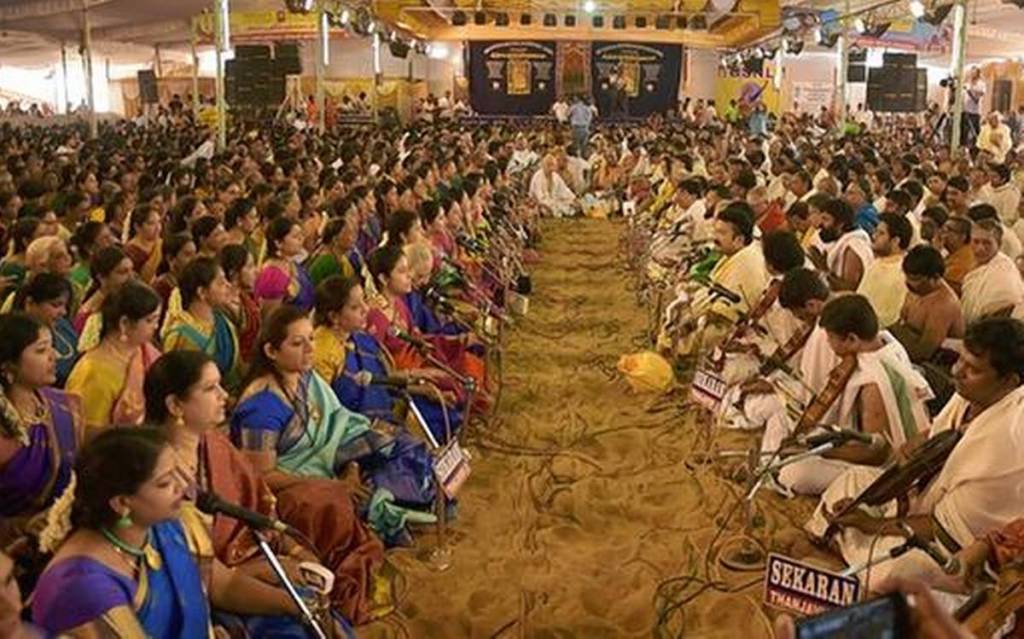
The Thyagaraja Aradhana held at Thiruvayaru, Tamilnadu, must be one of the most unique, participatory and joyous ways to celebrate the life and music of a great composer. The aradhana is held every year on the anniversary of the passing away of Saint Thyagaraja, and falls on 22nd January this year.

Saint Thyagaraja (1767-1847), one of the Trinity of Carnatic Music, is thought to have composed about 25,000 songs, apart from two musical dramas, the Prahalada Bhakti Vijayam and the Nauka Charitam. However, since the Saint hardly kept any record of his compositions, it is not clear how many songs he did actually compose. Only about 700 are known to us today—thanks not only to the lack of record keeping, but also vagaries of time, natural disasters, etc., which obviously were not kind to the palm leaf notes that his disciples kept.

Thyagaraja was completely immersed in bhakti, in his worship of Lord Rama. It is said that the King of Thanjavur, having heard of Thyagaraja’s musical genius, sent him an invitation to attend his court. The Saint not only rejected the invitation, but composed the song Nidhi Chala Sukhama  (Does wealth bring happiness?) in response!

Coming back to the fascinating history of the Aradhana. Thyagaraja died in 1847 after renouncing the world and taking sanyas. His mortal remains were buried on the banks of the Kaveri. A small monument was built there, but soon felt into neglect. In 1903, two of his disciplines Umayalpuram Krishna Bhagavatar and Sundara Bhagavata, now eminent musicians, made a nostalgia trip to Thirivayaru. They were appalled at the neglect of the memorial, and decided to commemorate the death anniversary of their Guru at the site, so that he could be remembered appropriately, and the Samadhi maintained.

The next year 1904, was when the Aradhana started. In 1905, it became a lavish affair with days of worship, dozens of performances by top-notch artistes, and feeding of the poor etc. While Krishna Bhagavatar and Sundara Bhagavatar were the moving spirits behind the festival, they obviously needed practical men with money and organizing power to see the event through. The brothers Tillaisthanam Narasimha Bhagavatar and Tillaisthanam Panju Bhagavatar stepped in to play these roles. However, the moneyed brothers soon developed disagreements, and by 1906 had formed rival factions which each conducted its own Aradhana! In time, a compromise was reached under which the group following the younger brother began its festival five days before the day of the Aradhana and culminated its celebrations on the day of the Aradhana, while the other group started on the Aradhana day, and went on for four days after.

The factions did dissolve their differences at some point and unite. Whether as two groups or united, one thing brought them together.  Their opposition to women to perform at the Aradhana. At that time, most women who performed in public were devadasis, and the keepers of morality decided they could not have them perform at such a venerable occasion.

Bangalore Nagarathnamma was one of the pre-eminent musicians of the time. She had earned name and fame as a highly gifted artiste. She was a great devotee of Thyagaraja, and felt she owed everything to him—after all, it was renditions of his songs that predominated her concerts and had brought her so much. However, as a woman, she was barred from participating in the Aradhana.

In 1921, Naratahnamma decided that she would dedicate her large wealth to preserving the Saint’s legacy. She bought land around the Samadhi and built up a temple over it. She had an idol of Thygaraja made and installed in front. The temple was consecrated in 1926.

The organizing group of the Aradhana was happy to let her do all this at her own expense. But when it came to performing at the Aradhana, they would not let her. The redoubtable Nagaratnamma decided to start her own Aradhana, which took place at the rear of the temple.This edition featured many women artists and became increasingly popular. She also went to court against the original organizing groups, saying they could not enter the temple because it was hers. While she lost the case, the court designated specific hours of the Aradhana day to her group, and the two other groups.

This was when a bureaucrat stepped in, and for once solved a problem! SY Krishnaswami, ICS, convinced the groups to unite, and in 1941 three rival events merged into one. And an important victory was won—women became part of the festival.

It was also in this year that the practice of singing the five pancharatnas of Thyagaraja as a group-rendering began. This is now the unique feature of the celebration. Five of the Saint’s compositions that were best suited to group singing were selected, so that all artistes could pay their homage to the Saint, unitedly.   A goose-bumping raising experience to see hundreds of people singing together, without any visible coordination.

Do catch it on You Tube.

Happy Thagaraja Aradhana!

–Meena

My Lockdown Book Project Starring Ladybug, Mouse and Dog

Lockdowns saw all of us sitting for hours in front of our home- computers. And when I developed some kind of cervical spondylosis, I spent a lot of those hours with a neck brace on.

My Sunday with Deedu and Daadu
Deedu, the Ladybug

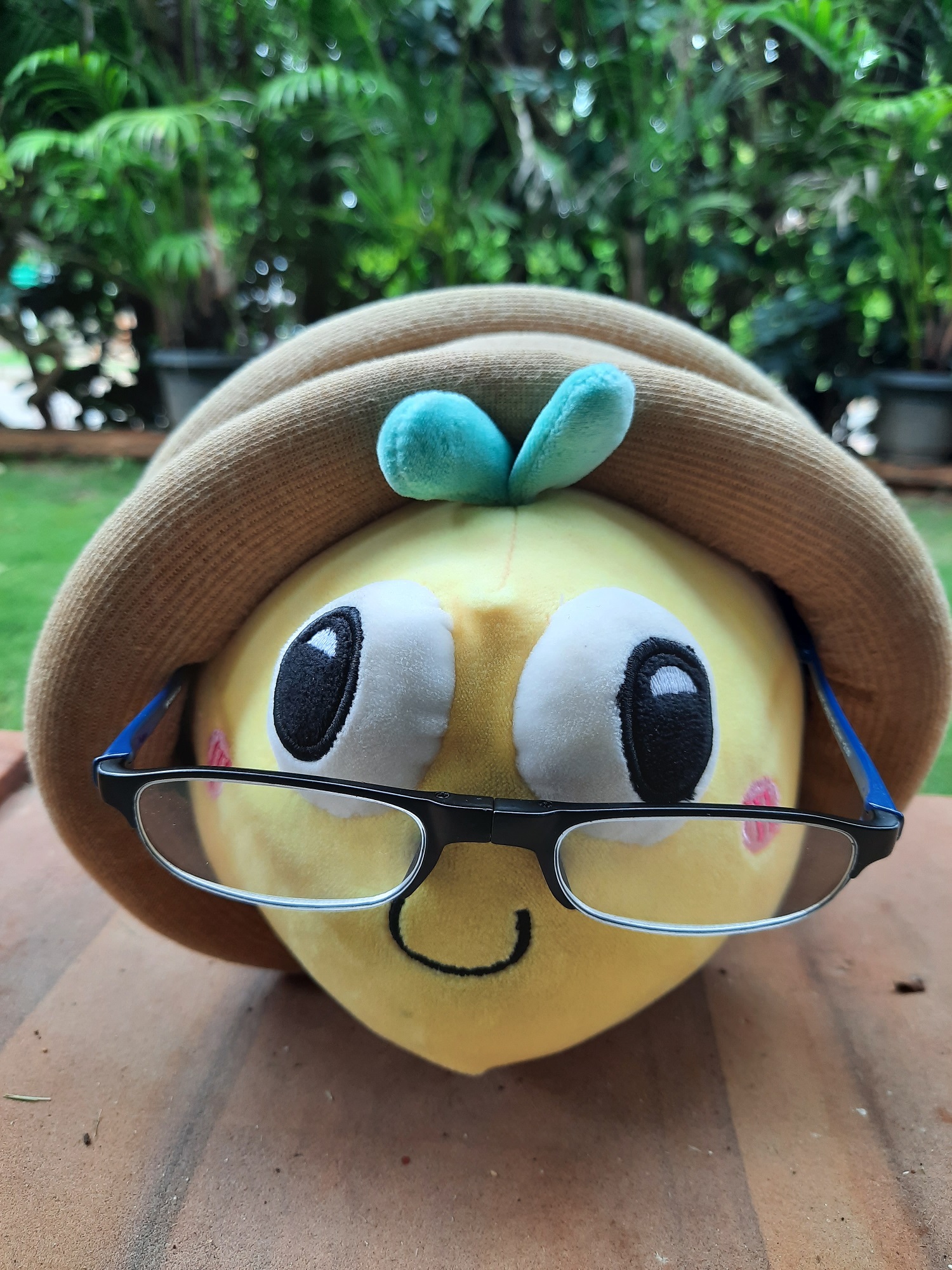
It was only when Barnalee my 2.5 year old foster grand-daughter put the neck brace on her stuffed ladybug toy, fitted my specs on to it, and called it ‘Deedu’ that I realized that for her, these two items were an essential part of me!

Her imagination was the inspiration for my lockdown children’s book. I started wondering if I could do a book based on her daily routine.

But children’s books need illustrations! They depend on that. I knew few illustrators who could help me. And the ones I knew were too busy or too expensive.

That is when I remembered that my neighbor, young Harini a communications student, was a talented photographer and very skilled designer. So we decided to work on this together and make it a photograph-based book.

The ladybug would of course star as Deedu (granny). Barnalee’s  first stuffed toy, the dog Sheru, would star as Daadu (grandpa). And a stuffed mouse, which was her favourite, would star as Barnalee.

My Sunday with Deedu and Daadu
Barnalee, the Mouse

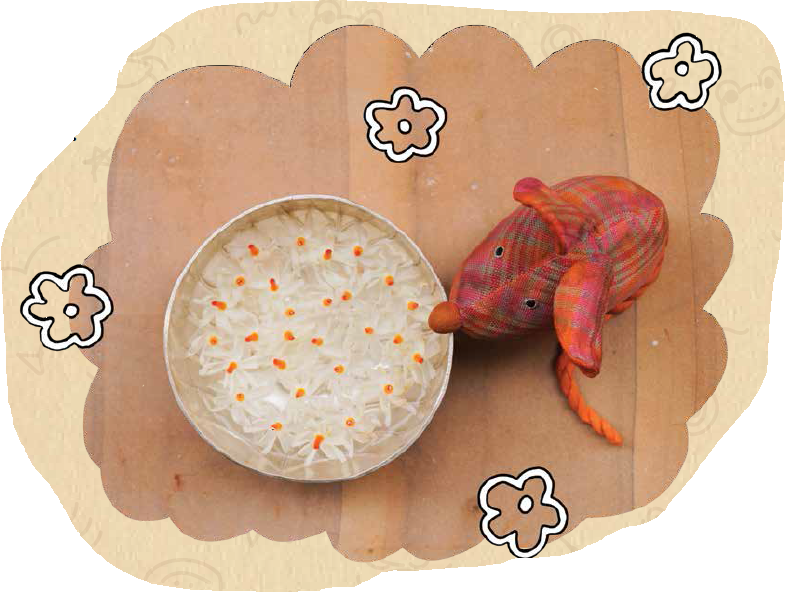
The mouse is almost 30 years old. I clearly remember buying it in a shop in Colombo, probably the equivalent of our state emporia, on my first visit to Sri Lanka, to attend a workshop on the use of Television for the Environment. It started life as a car-hanger, which was its original purpose. Then, when the string broke, it spent several years in the cupboard, till it was fished out for Barnalee to play with.

We built the story around the baby’s favorite activities, and used her toys and playthings as props. And things which were not supposed to be her playthings, but she played with anyway! We did all the shooting in and around the house and garden. Since both Harini and I were at home, we could capture the light at any time of the day or night that was needed. And we could do trial runs, pre-shoots and re-shoots to our hearts’ content. Another friend, Vidya Chandy, who is a very good photographer visited on a rare non-lockdown day and gave us valuable tips.

We thought we would be done in a few days—after all it was a book of about 20 pages, with maybe a total of 150 words! But of course these things are never so easy, are they? I would want to change one activity for another, or the flow of the activities, or to fine-tune the words and text. Harini would want to take the shot from a few more angles, want the shadows just this way or that. And together we wanted to change the fonts, the size, the page layouts. And sometimes, the baby would insist she wanted to play with just the prop we needed for the shoot, leading to postponements!

And then the final design and layout. We found we had to switch from a landscape format to a square format, as most publishers want that format. Thanks to Harini’s skill on the software, she managed to do that in a few hours. Watching her at work on the layouts opened my eyes to how easily and quickly software can accomplish what in the old days used to take us days and nights—whether it was layouts, change of fonts, re-positioning of pictures and text, changing backgrounds, etc. etc. And also brought home to me how skilled these young people are at working it.

And then we published! After a long, long time, the satisfaction of holding one’s book in one’s hand!

My Sunday with Deedu and Daadu
The Book!

So all in all, a lovely lockdown project.

‘My Sunday with Deedu and Daadu’.  Now available on Amazon, Flipkart and Kindle.

–Meena

Biju Patnaik, the Daredevil Maverick

A chance occurrence can reveal the depths of one’s ignorance in a particular field. For me, the latest such was a linkedin post that I read about Shri Biju Patnaik. I realized that that I hardly knew anything about him. The extent of my knowledge could be more or less captured in the following bullets:  that he was a freedom fighter; that he had been CM of Orissa/Odisha for a few terms; that he opposed the Emergency; that he had done a lot for the development of his State; that the Bhubaneswar Airport is named after him, and there is a large, imposing statute of him outside the airport; and that his son has been the CM of the State for so long that I quite forget any other CM.

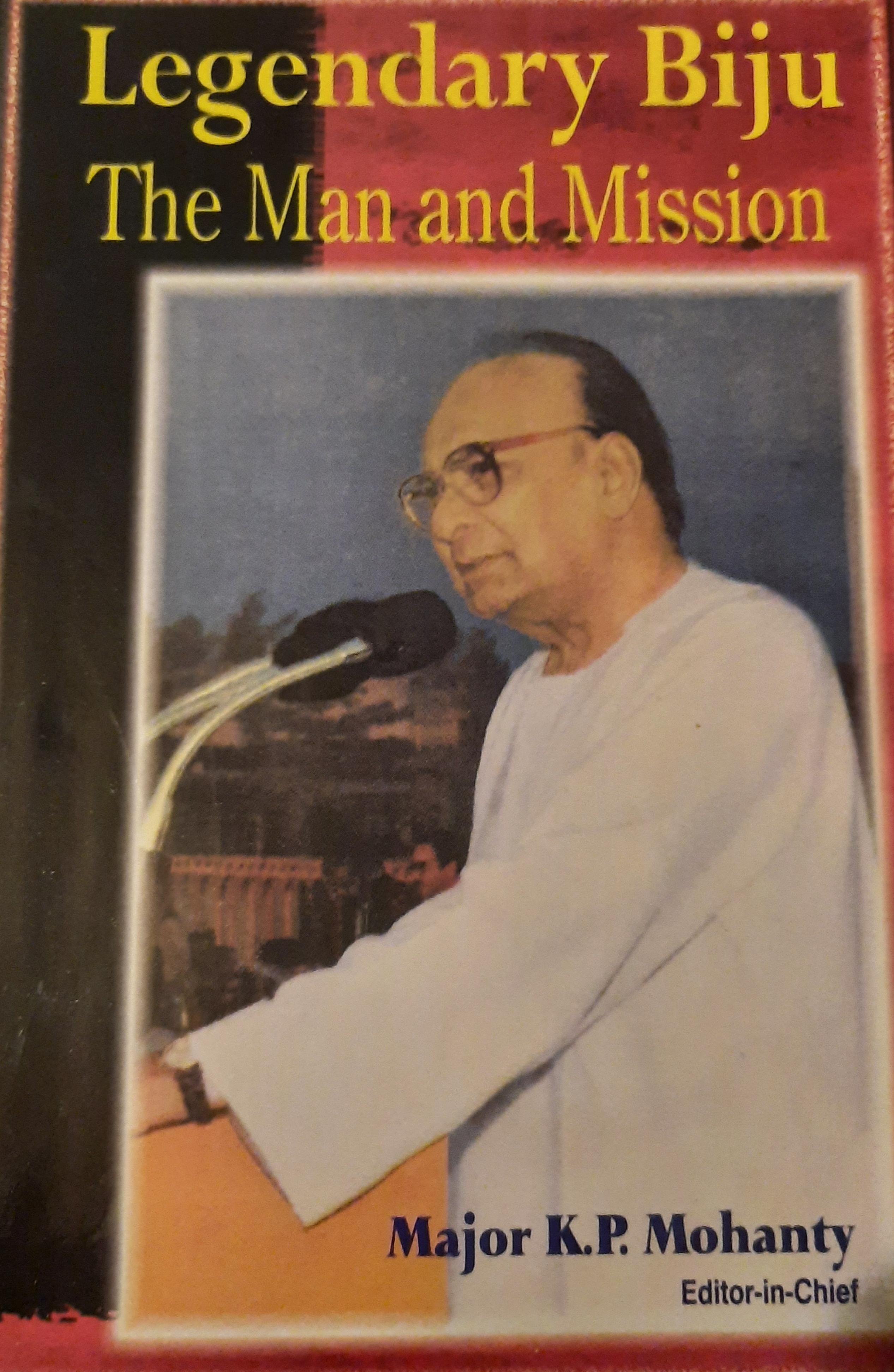
Appalled at my ignorance, I set out to find a good biography. There was hardly anything available. I finally ordered one called ‘Legendary Biju: The Man and Mission’. edited by Maj. KP Mohanty, which seemed the most promising of the slim pickings.

Biju Patnaik
Biju Patnaik

I won’t go into the merits of the book, except to say that I am grateful that Maj. Mohanty and other friends and admirers of the great man put this book together, so that someone like me can get glimpses of him.

Born in 1916 in a well-off family, Biju never followed the conventional route. Daredevilry and adventure were his defining characteristics. The highlight of his school days was when he cut school to go and see an aeroplane which had landed near his town. Just looking at the plane, a very unusual sight in those days, filled him with excitement and he determined to become a pilot. The fact that the guards posted around the plane chased him away and would not let him get near it, only strengthened his resolve.

When he grew older, he with three friends undertook to ride from Bhubaneshwar to Peshawar on cycles. He joined Ravenshaw College, only to drop out so that he could get trained as a pilot. And he became a flying ace.

There are several tales of his derring-do as a pilot which sound more the stuff of fiction and film than real life.

After qualifying as a pilot, he joined a private airline, but ‘somehow or the other sneaked into the Royal Airforce’. This was at the height of World War II. Stalingrad was surrounded by the Nazis, and Red Army did not have enough weapons to hold the city. The fall of Stalingrad would have meant that the Nazis would be able to march to Moscow, and things would get really serious for the Allies. It was Biju Patnaik to the rescue! He flew 27 sorties and dropped arms and ammunition into the besieged city, which helped the Red Army defend it, and force the Germans to retreat. This was an important milestone in WW II.

During the Quit India movement, Biju Babu continued to in the service of the British—in fact, he was pilot to Lord Wavel, the Viceroy of India, and most trusted by him. But all the time, he was pinching secret papers and files which he had access to, and passing them on the freedom fighters. He  dropped political leaflets to Indian soldiers fighting under British command in Burma. He flew several leaders of the Freedom Movement, including Aruna Asaf Ali the intrepid freedom fighter, clandestinely. He was finally caught and imprisoned by the British. A secret agent more daring than James Bond!

Post-Independence, there were many occasions when his courage and skill as a pilot were called to the service of the nation. India was supporting the Indonesian Freedom Movement, which was fighting the Dutch colonizers. At one stage, Nehru with whom Biju Patnaik was very close, wanted the Indonesian leaders to attend the first Inter-Asia conference, and present their case at the world stage and garner support for their cause. The colonial masters were not keen that the freedom movement leaders go out of the country, and stopped all air and sea routes. But Biju Babu flew a secret sortie, brought the leaders to address the conference, and then dropped them back.

When the Pakistan Army attacked Srinagar in late 1947, the situation for India was really bad. There were just not enough troops or weapons in J&K for the country to hold and defend it. The only way was to fly them in. But it was not clear whether the Airport was still in Indian hands or had been taken over by the attackers. The Indian Airforce expressed their inability to land under the circumstances. One again, Biju to the rescue! He landed in Srinagar Airport, took over the control tower, ensuring that our Airforce places could land. And that turned the tide of history.

He had a role to play in Nepal too. When there was struggle between the Ranas who were the rulers, and freedom fighters of Nepal, India supported the freedom fighters, but could formally do nothing to interfere in the internal affairs of a neighbor. But Biju Patnaik went ahead and dropped 15,000 guns into Nepal to aid the anti-royalists!

And these were just his exploits as a pilot. But he was so much more. Apart from being an industrialist, he was of course a politician on the national stage, the CM of Orissa, a man credited for many significant development projects there.  (Hopefully, I can briefly cover some of these in a subsequent blog).


‘Maverick’ and ‘Daredevil’ are two terms which recur through the book. And for sure he was both of those. ‘Controversial’ could be added too. In his time, he was accused of corruption, of mis-administration and of encouraging lawlessness by asking people to take law into their hands and beat up corrupt officials (when he himself was CM!).

There is a crying need for scholarly biography, one which is accessible to the intelligent reader. It is the least that India can do to honour and remember this remarkable individual. They don’t make them in this mould any more!

–Meena

Indian Coffee House: An Institution with a Hoary Past

Most of us, at least the more senior among us, would definitely have visited an Indian Coffee House at some stage in our lives. Quaint places, which serve coffee and snacks at reasonable prices. Usually centrally located, these places are manned by liveried bearers in old-style uniforms. But the best part—one can linger there fairly indefinitely over coffees and conversations.

The Indian Coffee House chain goes back to 1958, proving that coffee-places in India are not something invented or haunted by the young and with-it crowd. Our parents and grandparents ‘been there, done that’!

Coffee-drinking in India is only about a century old, though coffee has been grown here since the 16th century. But Indians didn’t take to it for a long time. The oldest reports are of Tam-Brahm Mamas drinking coffee in the 1920s in Chennai. It was pretty class and caste stratified, as were most things in those times.

The coffee-house culture which started in the 18th century here, was also subject to social restrictions—in this case racial discrimination. Only whites were allowed into these.

As time went on, the need to increase domestic coffee consumption was seen as important—purely economic reasons of course. With a view to to popularize the drinking of coffee and increase the sale of coffee seeds, the Coffee Cess Committee started a chain of coffee-houses, called India Coffee House. The first came up in 1936, in Mumbai. As a part of this objective, the British Government also set up the Coffee Board in the early 1940s. The chain of Coffee-Houses (then called India Coffee House) quickly gained popularity, and in fact became addas for freedom fighters, political leaders, students, intellectuals, artists and thinkers. These continued to flourish even after Independence, and were at the hub of political and intellectual discussions.

But in 1957, the losses were mounting and the Government wanted to close down the Coffee Houses. Not only would this have been a huge loss to the availability of spaces for debate and discussion, it would have resulted in retrenchment of several employees working in these places.  The All India Coffee Board Labour Union decided to take a hand in the matter.  Their Leader Shri. A.K. Gopalan a prominent Communist, along with some workers met the then Prime Minister Shri. Pt. Jawaharlal Nehru. The Prime Minister suggested that the coffee-houses could be taken over and run by worker-cooperatives formed by the retrenched workers.  As a result of this meeting, it was decided to form separate co-operative Societies in areas where these coffee houses were located, and to run the Coffee Houses as Cooperatives. In 1957, the first coffee house, now called Indian Coffee House, under this cooperative plan was opened, in the Theatre Communication Building in Connaught Place in Delhi.  Totally, 14 Societies were formed in different parts of India, and ever since then, have been running these units. Today, these have over 400 outlets spread across 20 States of India. Each worker in each of these units is a co-owner of the business and has a stake in its success. A unique model indeed.

Even after Independence, Indian Coffee Houses continued as intellectual hubs. In fact, so powerful a force were they that they were feared by the powers-that-be in the pre-Emergency era.

Indian Coffee House designed by Laurie Baker

Kerala has the largest number of Indian Coffee Houses—51 in fact. West Bengal has several too, with the most famous on being on Kolkata’s College Street—an outlet which in its time hosted intellectuals and artists including the likes of Satyajit Ray, Amartya Sen, Mrinal Sen and Aparna Sen.

The Coffee House at Trivandrum is very special in that it is an architectural landmark. Designed by the famous architect Laurie Baker, it is a continuous spiral ramp, with a circular central service core, and eating spaces provided on the outer side; jaalis let in light and ventilation. It stands on a very small plot in the middle of a busy urban area, and it is only by adopting the innovative circular design and interior design that it is able to cater to its many customers.

As we enter 2022, a time when capitalism is becoming more and more dominant, here’s a shout-out for the cooperative movement!

Long live coffee, long live coffee houses, long live addas which allow space for discussion and debate, long live the co-operative movement. Long live Indian Coffee House, which is all of the above!

–Meena

An Unusual Biography Brings a Colossus to Life: ‘Growing up Karanth’

Shivarama Karanth. A name that many of us have heard. One of those names many of us know we should hold in awe, maybe without quite knowing why.

He was a great writer, no?

He was involved with theatre, right?  

Wasn’t he an environmentalist?

He was into politics?

For many, it was his dramatic mane of hair that comes to mind on hearing the name.

Shivarama Karanth was all of the above, and much more. A Renaissance man, if ever there was one. A Jnanpith awardee, awardee of Sangeet Natak and Sahitya Adademy fellowships. A Padma Bhushan, who was bold enough to return the award as a protest against the Emergency. A man who came under the spell of Mahatma Gandhi and joined the Freedom Movement, but branched out from Gandhiji’s fold as he did not agree with his economic ideology. A doyen of Kannada literature. The reviver of Yakshagana in a modern format. A writer whom Ramachandra Guha has called ‘Rabindranath Tagore of Modern India’ and ‘one of the finest novelists-activists since independence’.

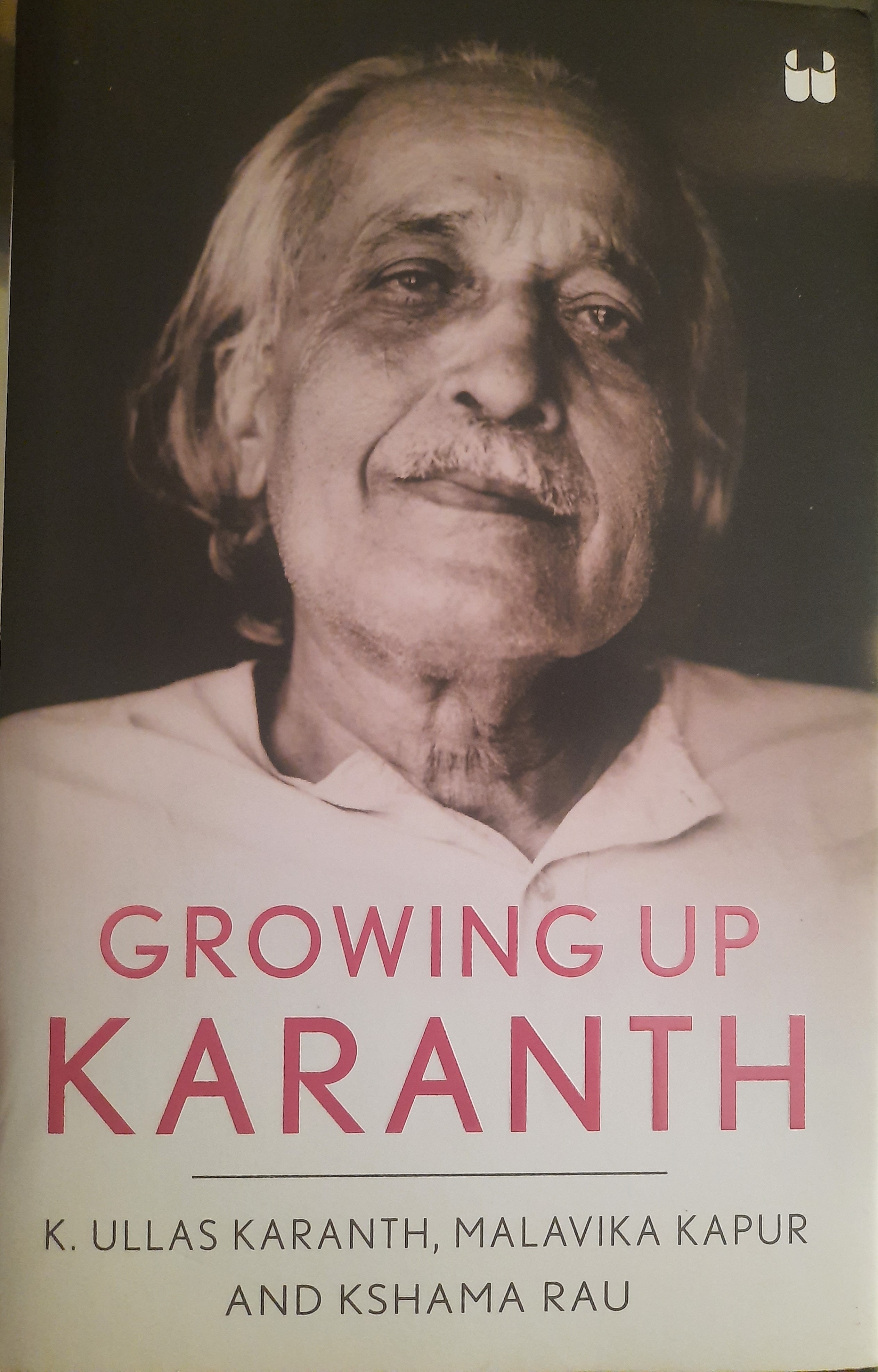
It is not in my place to even try to talk about his work and achievements. So I will confine myself to talking about a new biography of his that has come out. ‘Growing up Karnath’ (Westland), is a biography written by his three children: Ullas Karanth (an internationally-renowned environmentalist); Malavika Kapur (an academic who headed the Clinical Psychology Dept at NIMHANS) ; and Kshama Rau (a well-known Odissi dancer who runs her own dance school).

Shivarama Karanth
Biography of the legendary Shivarama Karanth

It is the format of the biography which makes it special. It has a few chapters by each of the authors, recalling their memories of their mother and father, and their relationship with their parents. And then a few chapters written jointly by the three of them, giving a perspective of their father after they had left the family-fold.

This gives space for a very intense, intimate and emotional story—from seeing the famous achiever as a father who spun magical and impromptu night-time tales on any topic that the child chose to give him; to one who made paper dolls and costumes; to one who was quite capable of losing his temper and scaring the wits out of a young boy—one gets an insider’s view.

At one level, it is a very sad story. The wonderful mother, Leela Karanth, independent beyond imagination for her times, who actually proposes to Shivarama Karanth, a man many years her senior, and marries him in spite of many obstacles, who sacrifices her many talents to support her husband’s achievements, who takes many bold steps to ensure her family’s well-being, succumbing to depression and mental illness which eat up the last two-and-a-half decades of her life. The amazing father, Shivarama Karanth, a man of a million talents who in his later years, cut himself off from his children and those close to him, under the influence of an outsider.

At another level, it is a story of joy. The joy of the wonderful relationship and the unusually-equal marriage of Leela and Shivarama Karanth; the father who let each of his children flower in whichever field they chose; the warm grandfather. The joy of the Renaissance Man to whom everything was a subject of enquiry, exploration and study; one who was as comfortable thinking about problems scientifically, as writing about them in verse; one to whom there was no boundary between one art form and another. The joy of creation, activism, and art. Of passionately-held ideologies and beliefs.

At yet another level, it is an expression of gratitude of the three authors. To their awesome parents of course, but also to the people who were part of their parents’ lives; who supported them at various stages, in various ways; who contributed in some measure to Shivarama Karanth becoming the giant he was. And that is a very touching aspect of the book.

The candour and the openness with which each of them writes is something that is amazing. It must have been an emotionally demanding experience, while at the same time a catharsis of sorts. We readers can only thank them for digging deep and throwing up their father and family to the public gaze, to help us understand the legendary Karanth as a man, with his amazing achievements and his very human failings.

However, I miss one thing in the book. While it gives a glimpse of Shivarama Karanth’s achievements, it still does not give me proper understanding of the depth and width of his work. There are of course references to some of his works and also a bibliography of his writing. But the magnitude of the work did not hit me hard enough to awe me to the extent it should: over 40 novels, half a dozen books on science, a dozen children’s books, biographies, travelogues, books on architecture, plays….. And his writing is only part of his work. His environmentalism, his revival of Yakshagana, his activism. Though one catches glimpses, one cannot get one’s teeth into any of it. But maybe this is an unfair comment. There are other biographies, and his own autobiographies to do that. The authors themselves make it clear in their foreword that ‘In large part, this book is our tribute to Tata (as they called their father) and Amma, celebrating the gifts they gave us while we were ‘growing up Karanath’. And this the book does in full measure.

And the other comment would be that there are naturally some overlaps because we have three authors, talking about the same people and the same incidents. But that is a minor issue.

Overall, a book worth the time you will spend on it, to get introduced to one of the Makers of Modern India.

–Meena

PS: Thanks Krithi Karanth for the book and the world it has opened to me!

Veerappan: Re-visiting the Story of the Forest Brigand

In the ‘80s, ’90s and early into this century, Verappan was a name we often saw in newspaper headlines. As in:

India’s Most Wanted.

Outlaw of Jungle.

In the Lair of India’s Asthmatic Bandit King.

Veerappan Strikes Again.

Veerappan Kidnaps Rajkumar, Three Others.

A Ruthless and Daring Bandit.

And then, in October 2004, the headlines:

Veerppan walked into well-laid trap.

Veerappan shot dead.

Death of a Demon.

A ruthless killer, a sandalwood smuggler, a poacher who was responsible for the killing of elephants  in the four-figures; a kidnapper; a murderer; a hero to his gang and some poor communities; a man wanted and actively hunted by the security forces of two states and the BSF sent by the Centre, Veerappan was an elusive figure. A figure who fed news headlines, who kept security forces on their toes, and who with his dramatic moustache and daredevilry, excited the imaginations of many.

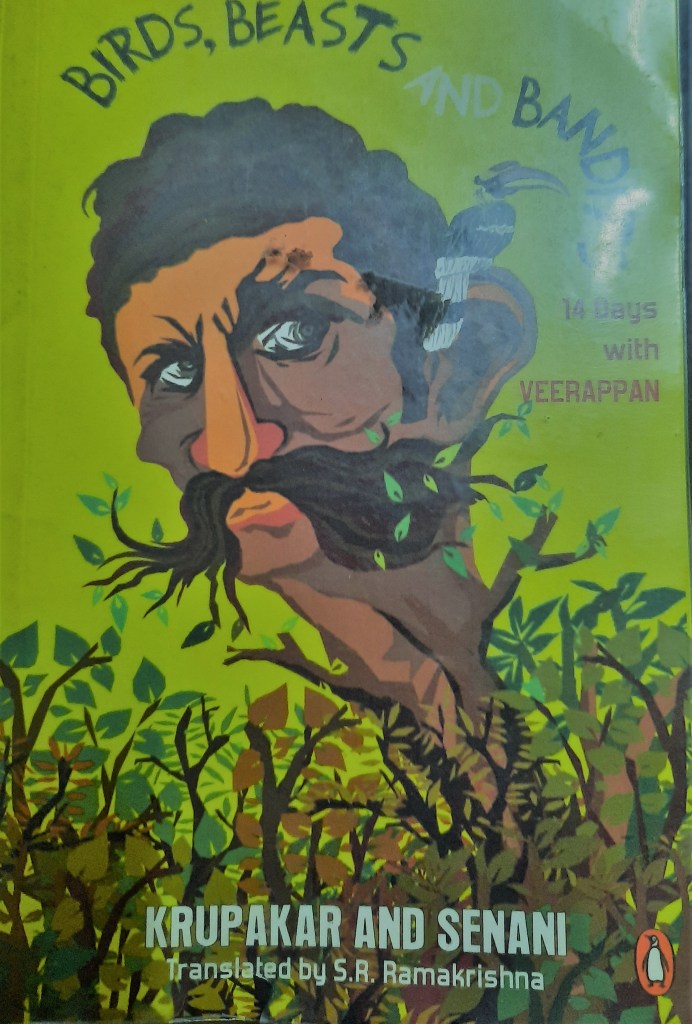
Why, 17 years after his death, have I suddenly been reminded about Veerappan? Well, I happened to stumble upon this book called BIRDS, BEASTS AND BANDITS: 14 DAYS WITH VEERAPPAN.

It is the true story of two wildlife-film maker-conservationists who were kidnapped by Veerappan and his gang under the mistaken impression that they were government officials who could be useful as bargaining chips for some of their demands. The gang captures a Bengali scientist visiting the forests as a tourist, as well as three forest guards as well, to add heft to their bargaining power. The seven hostages are marched across the forest for 14 days before they are released. The book is the account of these 14 days by the two main hostages, Krupakar and Senani.

They wrote their account for a Kannada weekly magazine ‘Sudha’ in 1998, a year after they were captured and released, and subsequently, as a book in Kannada. About 10 years after that, the book was translated and brought out in English by Penguin.

It is a light-hearted book, though it talks of an ordeal which must have taken a lot of guts to endure. And though light-hearted, it is not trivial. It touches upon many serious issues, from the injustice that Veerappan and others in his gang have faced, which may have driven them to become what they did. But it does not justify their actions. It mentions the unfair portrayal of his misdeeds in the press and by officialdom, in terms of chalking up a lot of crimes,  elephant-poachings and murders to his account, than he could have possibly committed.

Most importantly, it brings us glimpses of Veerappan as a person. His incredible abilities as well as his incredible instability; his naiveté and ignorance of the world, as well as his understanding of the jungles and the tribulations of the poor; his humour as well as his tantrums; his readiness to use the gun, as well as his gentleness in some situations.

As much as bringing Veerappan to us, the book brings us Krupakar and Senani. How they take the whole ordeal as pretty much routine—all in a day’s work, so to speak. Their equanimity, their fearlessness, their presence of mind, their strategic and thoughtful approach to communicating with their captors to move them towards the decision to release them—all these shine through. They don’t mention any of this explicitly, but as one reads, one is completely awed by this. The equanimity and stoicism of Dr. Maithi, an agricultural scientist from West Bengal who is another captive is unbelievable too! He spends his time meditating, indifferent to his situation, and in fact trying to teach the others meditation! And the incredible integrity of all the three, whether in their intentions that a peaceful resolution be brokered between Veerappan and the official machinery, or in their sympathy and empathy with the gang members, is touching.

There can be no sympathy with ruthless killers like these, but the book does portray their human side—their motivations, hopes and dreams.

The prize goes however to the following incident that Veerappan narrates to his prisoners, with whom the gang builds up a warm and emotional relationship. Veerappan tells them of how he had once kidnapped a government official and asked for a ransom of Rs. 3 crore for his release. A government emissary appears on bike, carrying a bag. Veerappan asks him to throw the money on the road to ensure that the bag does not have a bomb or something. He sees that the money is much less than promised (Rs. 3 lakh in fact). When angrily questioned, the emissary, a second-division clerk, is pretty fearless and says that this is what he was given. Disgusted, Veerappan tells him to go. But the man keeps standing there.  The story continues in Veerappan’s words as follows:

‘I was taken aback. People run the moment they see Verappan. But here I was telling this man to get lost, and he was still standing around.

‘What else?’ I asked loudly.

‘He bent forward, scratching his head with his left hand, and said ‘Nothing for me, sir?’

‘I gave him ten thousand, to rid myself of his wretched presence’.

Definitely a book for a weekend read!

–Meena

Changi Quilt

What on earth is that? A fancy quilt bought at some duty-free store at Changi Airport?

No! Changi is an old area of Singapore, and its name is derived from either a tree or creeper which was common there. Changi has two major landmarks– the Airport, which is among the world’s best; and the Changi Prison. The Quilts are associated with the latter.

On Feb 15 1942, Singapore fell to the Japanese and the Allied troops surrendered. Civilians including over 400 women and children were marched to the Changi Prison and interned there. These were women and children who had either not been able to get berths on ships to leave the island before the surrender, or who had consciously chosen not to leave. While the majority of the women were English, there were also women from Australia, New Zealand, the Netherlands, Canada, and the United States. The group included doctors, nurses, secretaries, teachers, as well as home-makers.

The Changi Prison building was designed to hold about 600 inmates, but with this influx, was accommodating about 2,400. The women and children occupied one wing of the building, while the men were put in the other. There was no communication between the two wings, and separated families had no way of knowing if members had survived, how they were, etc.

While some schooling did happen, some of the women were concerned that the children lacked a structure to their lives, and normal activities that would have been a part of their daily schedules outside prison. Elizabeth Ennis, an Army Nurse, along with a young Dutch girl, Trude van Roode, decided to do something about it. They made a group of about 30 girls between the ages of 8 and 13, and started a Girl Guides unit. The activity gave a focus and provided the girls with a purpose and discipline. The girls obviously thought the world of Elizabeth Ennis. On learning of her birthday, they decided to undertake a group-project of making a quilt for her. Each girl contributed to the making of a beautiful quilt, scrounging out fabric, thread and needles—precious commodities—to make hexagonal patches. Each child also embroidered her own name on to it. They put all the patches together and presented the quilt to Elizabeth.

This inspired a Canadian internee, Mrs Ethel Mulvany, a Red Cross representative in Singapore and chosen to be the camp Red Cross representative for the Changi women, with the idea of getting the women to make quilts for the Red Cross. The idea behind this move was ostensibly to alleviate boredom and to boost morale, and to give blankets to the wounded in hospitals. But it was also a means of passing information to men in other camps that the women and children were alive. 

Three quilts were made—one each for the British Red Cross, Australian Red Cross and the Japanese Red Cross. Each quilt had 66 squares.

Changi Quilt
Changi Quilt

Every woman who volunteered to make a square for the quilt was given a piece of plain white cotton– from various sources including flour bags and bed sheets–and was asked to put “something of herself” into the square, and also embroider her name on it. The squares varied in many ways—from the skill levels of the embroiderers, to the designs. While flowers were of course a common theme, there were animals, national symbols, and cartoon characters like Snow White and Pinocchio. Some were very poignant–Trudie von Roode’s square, for instance, shows a waiter and a table laid with lots of food and elegant cutlery, alongside the words ‘It was only a dream’. There were also messages, some which were very personal and understood only by the families concerned. For instance, one woman portrayed a baby rabbit wearing a blue ribbon—probably to inform the husband that a baby boy had been born. There was a level of censorship here too—for instance, the word ‘prison’ had to be unpicked before the quilts could go out.

]

The quilts survived the War. The Australian quilt was given to the Australian Red Cross and is on permanent loan to Australia’s War Memorial. The Japanese quilt too is with this War Memorial. The British Quilt is at the British Red Cross UK office.

And thus did some personal histories get recorded and preserved.

–Meena