Wishing you a Green and Happy World Book Day

Today is World Book Day. Oh Happy Day, Oh Happy Day!

It is a day that UNESCO, in 2001, declared for ‘a celebration to promote the enjoyment of books and reading. Each year, on 23 April, celebrations take place all over the world to recognize the scope of books – a link between the past and the future, a bridge between generations and across cultures.’

Why specifically April 23rd? Well, it seems that it is the date on which prominent authors William Shakespeare, Miguel de Cervantes and Inca Garcilaso de la Vega (Peruvian chronicler and writer) all died. A bit macabre, but well, there has to be some peg!

UNESCO and international organizations representing the three major sectors of the book industry – publishers, booksellers and libraries, select a World Book Capital each year. (New Delhi was the Book Capital in 2003, just two years after the concept came into being—looks like India had a stature and soft power even two decades ago!). The city of Strasbourg is UNESCO’s World Book Capital for 2024.

Book Days are usually marked with reading circles, events where people dress up as their favorite book characters, literary quizzes, book sales, author discussions, and various other innovative events to celebrate this most important of days.

The thought of book day prompted me to dig a little into a question that has been bothering me for a while. Are physical books more eco-friendly or e-books? Some research and calculations have been done, which say that:

‘.. one physical book has a climate impact of about 2.7kg CO2e*.’ 

‘And a Kindle e-reader has a climate impact of about 37.4kg CO2e per year.’ (Incidentally, text files are tiny, and the impact of downloading books is pretty close to negligible. The bulk of the e-book’s footprint is in the production and charging of the e-reader itself.)

‘So if you read 14 different books or more in one year, e-books have a lower footprint than physical books.

But if you only read a handful of books each year, physical books are the better option for you.’

(*CO2e: “Carbon dioxide equivalent” or “CO2e” is a term for describing different greenhouse gases in a common unit.)

As an educator, I want to children to read and read and read.  And I would much prefer that they read physical books. Since 14 is a ridiculously low number of books to read per year, we need to find ways to make physical reading greener. Here are some tips for ‘greener’ reading—for kids and adults:

Use libraries: Not for very young children, but beyond the age of 8 or so, children can get their reading dose from libraries. Thanks to the Delhi Public Mobile Library and my school library (Carmel Convent, New Delhi), supplemented by neighbourhood lending libraries during summer vacations, we got more than enough books. (In fact, we were allowed to purchase only one book a month, so that was the bonus and used as leverage in book exchanges.) Even today, I don’t buy too many books. I receive a lot of books as gifts, and am a faithful subscriber to Just Books!

Used books: Pre-loved books are a great way to go. Shops like Blossoms in Bangalore have some of the greatest selections.  And don’t hesitate to pass on books you have read to others who may find them of interest. Reach out to schools, colleges and educational institutions—they may welcome books you no longer have space for. You could also organize book-swaps.

Support green publishers: Buy books printedon 100% recycled paper, and create awareness about this aspect amonth other readers..

Happy Book Day! Happy Sustainable Reading!

–Meena

PS: The picture was taken ata library in Englands in the 1890s. The image is available at Getty’s Open Access Library.

Happy Hampi

Hampi. On the list of history-buffs. On the list of backpackers. On the list of pilgrims. On the list of UNESCO World Heritage Sites.  It is indeed a ‘listed site’!

This is what UNESCO has to say about it:

‘The austere and grandiose site of Hampi comprise mainly the remnants of the Capital City of Vijayanagara Empire (14th-16th Cent CE), the last great Hindu Kingdom. The property encompasses an area of 4187.24 hectares, located in the Tungabhadra basin in Central Karnataka, Bellary District.

Hampi’s spectacular setting is dominated by river Tungabhadra, craggy hill ranges and open plains, with widespread physical remains. The sophistication of the varied urban, royal and sacred systems is evident from the more than 1600 surviving remains that include forts, riverside features, royal and sacred complexes, temples, shrines, pillared halls, Mandapas, memorial structures, gateways, defence check posts, stables, water structures, etc.’

Hampi
Lakshmi Narasimha Statue, Hampi

On a recent visit to Hampi (I know, I know. Who goes there in April???) we were of course awed by the architecture and the sculptures there. At a landscape level (over 4000 hectares as UNESCO says) like Angkor Wat, one can believe that this was the capital-complex of one of the most powerful and rich kingdoms India has ever seen.

So much has been written about this by experts, I don’t think there is much I can add. Of course, we were there only for two brief days, and in fact sight-seeing was not even top of the agenda. But personal impressions are unique, and I shall share them.

  1. There is no charge to visit any of the sites except a nominal charge to go into the Vithala temple. Pre-Covid, the number of visitors to Hampi was about 7 lakh annually, and is likely to be much higher today. Many of these people go for worship to the temples. But for those purely on the tourist trail, surely it makes sense to charge something? Maybe Rs.100/monument or Rs. 500 for a day pass or something? Surely the case cannot be that our archaeological sites don’t need money for conservation and upkeep? Or that tourists who travel all the way to Hampi and spend on hotels will grudge the small amount for actually seeing what they have come to see? But it felt that the locals see this as a sign of hospitality, with two guides telling us ‘No charge to see anything here. Happy Hampi!’ That is rather nice!
  2. Another thing was that the guides were not overwhelming or too persistent. Just appropriately persistent! In fact, we did not encounter too many of them, maybe because it was off-season.  As well-informed and articulate as any to be met anywhere in India—which means they all told more or less the same stories and the same jokes, but pleasantly.
  3. There were not enough toilets, and those there were, were not inviting! They were not dirty per se, but definitely yellowing, stained and wet, exhibiting a lack of an active effort to keep them up. This also probably circles back to the point on charging for entrance. If there were more money to spend on toilets, would there be more of them and would they be better kept? (Of course, in the convoluted system of incomes and allocations to such sites, there is little correlation between the two!). The strangest thing was that while the sites open 8.30 a.m., we found the toilets locked on arrival, and informed that they would open at 9.30 a.m. only!
  4. And Hampi and other sites do have some structures in the name of toilets, we simply do not provide for drinking water. While most of us carry water these days, what about the unfortunates who forget? In a place like Hampi, it is quite possible for someone to come down with a heatstroke, and having access to clean, potable water is an essential that must be provided, not a luxury.

Hampi

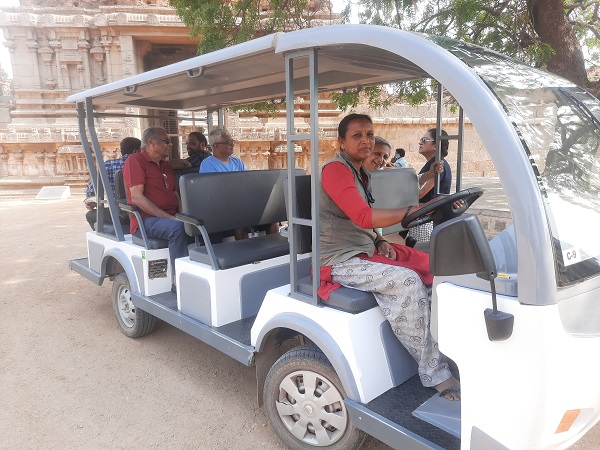
5.A very welcome move by the State Tourism is the introduction of e-vehicles to take the tourists to the various sites. Cars have to be parked at a certain point, and only these electrical vehicles run by the government are allowed beyond that. They charge a nominal amount. And it gets better! All these vehicles are driven by women. Our feisty driver went through a training of 15 days after selection, and confidently drove us around!

Hampi is divided into three core zones–the Sacred Centre, the Royal Centre and the Islamic Quarters. We got to see some parts of the Sacred Centre, so a lot is waiting.

Hampi is happy indeed, but with a little care, could be so much more so.

Here is to Happier Hampi!

–Meena

The Sleeping Prince

The story of Sleeping Beauty, in one form or the other, has been around since the 1300s. The story of Rip Van Winkle was written in 1819.

But there is one famous sleeper who goes much further back—to the Ramayana in fact. That is Kumbhakarna, the brother of Ravana. Kumbhakarna’s sleep was different from that of the first two—it was intermittent sleep. He slept for six months, then woke up and ate and drank for six months to satiate his enormous appetite, and then fell back asleep.

Kumbhakarna was a good and decent man, a mighty warrior, who was, as is often the case, cursed thanks to the fears/insecurities of some gods. There are two popular stories regarding his curse, though they may be many others.

Both begin with Kumbhakarna carrying out intense austerities, praying for months to Lord Brahma.  The first variation goes that Indra knew that what Kumbhakarna would ask for was his throne, and so begged Brahma to curse him. The other goes that all the devas were worried that the asura-prince would gain too much power if Brahma decided to shower his benevolence on him. So they went to Goddess Saraswathi to beg her intervention.

After a length of time, Brahma appeared to Kumbhakarna, quite pleased with him, and said ‘Ask what boon you will.’ At that moment, Saraswathi, the Goddess of words and music and learning, put a hex on Kumbhakarna’s tongue so that he mis-spoke as he articulated his requests.

Kumbhakarna meant to ask for “Indrasaana” (the home of Lord Indra), but it came out as “Nidrasaana” (bed for sleeping) and when he asked for “Nirdevatvam” (destruction of Devas), it came out as “Nidravatvam” or sleep.

Brahma was quite a hasty God and obviously did not reflect too much on the boons he was granting and probably just said ‘Thatastu’—so be it. And in fact, the original grant was of unending sleep. Ravana had to intervene on behalf of his brother and go through loops before getting the boon modified to six months of sleep, followed by six months of waking. And so it was.

When Kumbhkarna slept, nothing could wake him—not horses and elephants walking over him, not a war or battle, nor all the musical instruments playing next to his head. And when he woke up, he would be so hungry, he would eat anything in sight.

Hampi
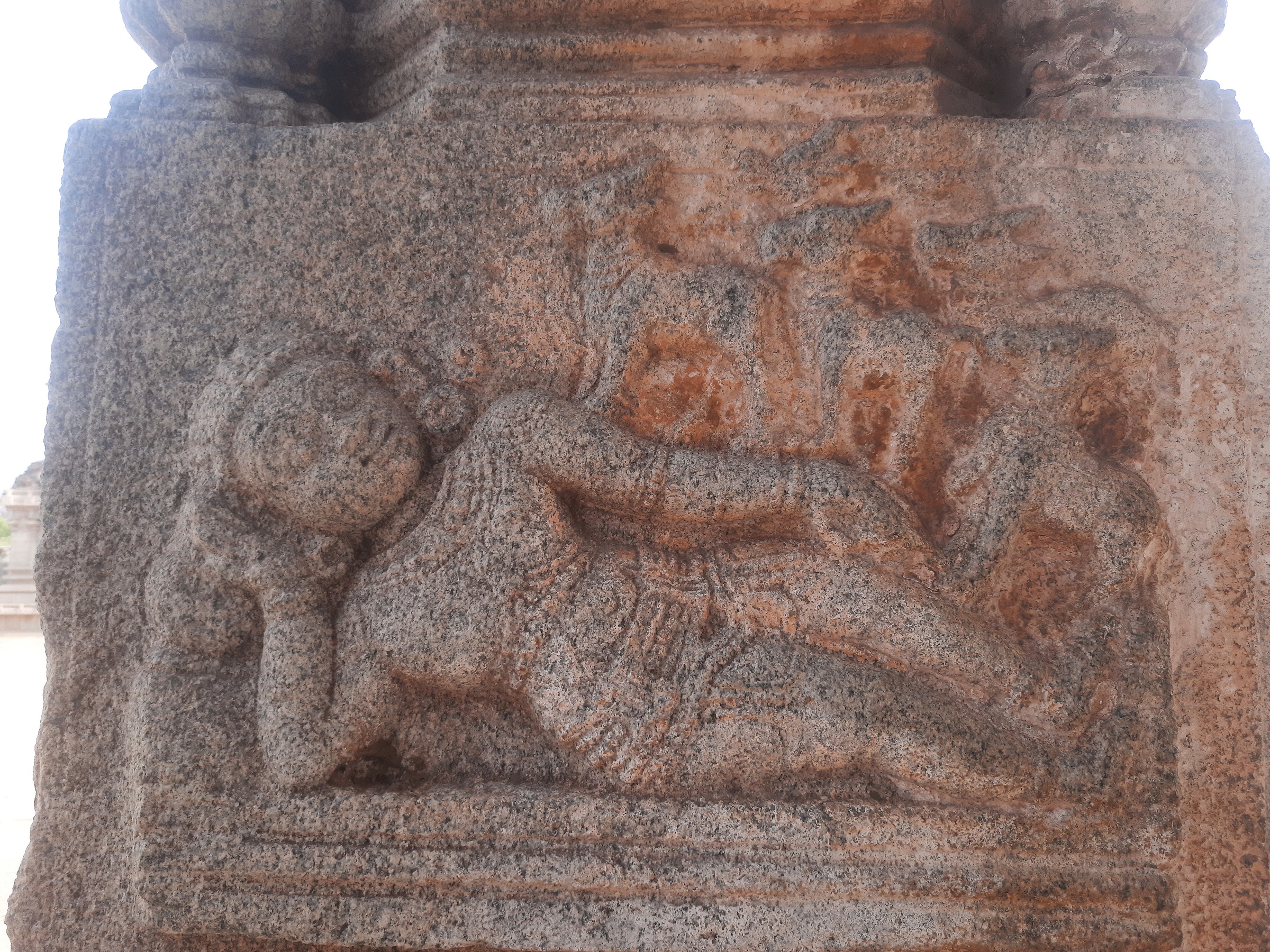
Horses walking over Kumbhakarna could not wake him! Sculpture atVithala Temple, Hampi.

As the war between Rama and Ravana began going against the asura king, his one hope was Kumbhakarna. Some accounts say that he ordered a 1000 elephants to walk over his brother to wake him up. When he did wake up, he counselled his brother against the war. He told him that he was not in the right, and they should give up Sita in all honour, and plead for peace. But Ravana obviously refused. Kumbhakarna, knowing they were fighting an unjust war, still threw himself into it in loyalty to his brother and kingdom. He is said to have killed 8000 monkey-warriors before Rama himself finally subdued and killed him.

Some scientists, analysing texts about Kumbhakarna suggest that he suffered from hypothalamic obesity whose symptoms include obesity, somnolence and rage (all three of which Kumbhakarna exhibited).

Well, whatever it was, his story had a sad ending. When Sleeping Beauty woke up, it was to love, a prince and a kingdom. For Kumbhakarna, it was death, defeat and loss of a kingdom.

–Meena

Double Dutch

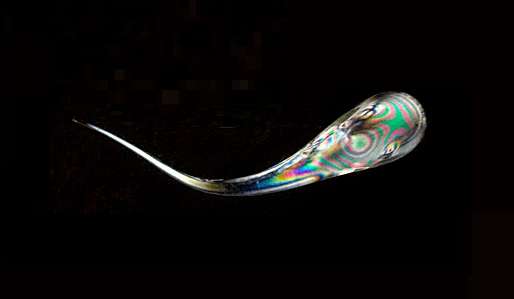
Dutch tears—that is an intriguing term I came across recently. At first I thought it was an idiom, like Dutch courage or Dutch comfort. But turns out Dutch tears are a real physical thing–toughened glass beads created by dripping molten glass into cold water! When glass is dripped into water, it solidifies into tadpole-shaped drops with thin, long tails. These were first produced in the Netherlands in the early 17th century. These tadpoles exhibit unusual characteristics—the bulbous part of the drop can withstand being hit by a hammer without breaking, but even a small pressure of the fingers to the tail-end will dramatically shatter the whole drop.

Dutch tear

These very contrary properties led to a great amount of scientific curiosity and they were the subject of much research in the 1700s and 1800s. But it was not till recently that the mystery was solved. One breakthrough came in 1994, when Prof. S. Chandrasekar of Purdue University and Prof. M. M. Chaudhri of University of Cambridge used high-speed framing photography to observe the drop-shattering process and concluded that the surface of each drop experiences highly compressive stresses, while the interior experiences high tension forces. So the drop is in a state of unstable equilibrium, which can be easily disturbed by breaking the tail. But the complete explanation came in 2017 when these scientists collaborated with Prof. Hillar Aben, of Tallinn University of Technology in Estonia and found that heads of the drops have a much higher surface compressive stress than previously thought—nearly 7,000 times atmospheric pressure. This gives the droplet-heads a very high fracture strength. (For a proper understanding of the science, please go to https://phys.org/news/2017-05-scientists-year-old-mystery-prince-rupert.html, rather than depending on my précis from there! Photocredit also to this page.)

But to get back to my original thought process: When I had tried to think of possible meanings of Dutch tears , so many idioms featuring the Dutch came to mind. We are very familiar with some:

When someone speaks very fast or unintelligibly, we say they are speaking Double Dutch–in other words, nonsense.

When one takes a shot of alcohol to boost up one’s courage before doing something one is afraid to do, it is called Dutch courage.

And of course, the Dutch treat, where each one finds they have to pay for whatever they consume.

And if you talk to someone like a Dutch uncle, you are giving them stern and serious talking-to.

And here is a small sample out of a range of many lesser-used ones:

Dutch agreement, where the parties making the agreement are drunk. And the related Dutch bargain—a bargain settled when the parties are intoxicated.

A Dutch headache is a hangover. And a Dutch concert is a very noisy situation, as would be made by a lot of drunken Dutchmen.

Dutch comfort is comfort which comes from the feeling that things could have been much worse.

Dutch reckoning is a very high bill that’s neither itemised nor detailed, and hence a bit of a con.

Dutch gold is a yellow-coloured alloy of copper and zinc from which imitation gold leaf is made.

HR persons should not go looking for Dutch talent, which is more brawn than brain. And they should be wary of employees who take Dutch leave, i.e., leave without permission.

Readers would have noticed that most of these idioms show the Dutch in a bad light. And apparently, there is good reason for this. Most of these came into being about 1665 and later, when the Netherlands and England were vying with each other both on land (England won a Dutch colony what is currently New York), and on sea for the control of trade routes. During the 17th century, the Netherlands and Britain waged three wars against each other over 20 years. The deep-seated animosity must have spilt over to language, and given the number of such idioms, the English must have vied with each other to come with nasty expressions about the enemy. (While this explanation seems logical, there don’t seem to be such expressions which feature the Spanish. And England and Spain were enemies and rivals for a good long time too. Maybe there is a Ph.D. thesis for someone here!).

Fortunately, many of these mean-idioms are falling out of use. And we have the rise of the Dutch oven—the most sought after cooking device; and of Dutch auctions–a type of open auction where the price starts high and decreases until the first bidder accepts it—which are seen as fast and efficient, as they end as soon as the first bid is made. 

Here’s to many more Dutch-positives!

–Meena

The Colours of Life

We just marked the day of colours. Yes, Holi of course.  

But another one too–the International Colour Day which just went by on March 21. This Day celebrates all aspects of colour and the impact they have on our lives, and how they make the world a better place.

Now who would declare a day for colours? Well, an organization called the International Colour Association (ICA). This is an old and respected institution, which counts the National Colour Associations of over 30 countries among its members. It aims to ‘encourage research in all aspects of colour, to disseminate the knowledge gained from this research, and to promote its application to the solution of problems in the fields of science, art, design and industry on an international basis.’

The idea of an international colour day was proposed in 2008, and adopted in 2009. The particular date—21 March—was chosen because it is the summer equinox—the day when the sun shines directly on the equator, and the day and night are of equal length.

International Colour Day
International Colour Day Logo

If there is a day, can a logo be far behind? Well, not too far! The International Colour Day logo was adopted in 2012. The creator was Hosanna Yau of Hong Kong, who explained the logo thus: ‘two circles form an eye, with an equal half of rainbow color and black representing light a nd darkness, day and night, everyone feast one’s eye on the international color day.

The study of colour is known as chromatics, and is basically about light and its interactions with matter. Colorimetry, which sounds so much more likely a candidate for this, is actually about a related field—‘ the measurement of the wavelength and the intensity of electromagnetic radiation in the visible region of the spectrum. It is used extensively for identification and determination of concentrations of substances that absorb light.’

Colours because of their ubiquity and the emotional and psychological impacts they have, often become a shorthand for other things.

Coming to one of the colour-related matters which has recently been much in the news in India is the Pink Tax. A viral video put out by Sanjay Arora, an advertising veteran, and commented on by several well-known people including Dr. Kiran Mazumdar-Shaw has kept this in the headlines. I have to admit, I had never heard of this, so thanks Mr. Arora!

What is Pink Tax? As the World Economic Forum explains it: ‘Men and women often buy similar day-to-day products. But research shows that consumer products targeted and advertised to women are sometimes more expensive than comparable products marketed to men. This disparity is referred to as a so-called pink tax.’  The video gives several everyday examples, from deos to haircuts, where the  women’s version is more expensive. A research study in the US looked at 800 gender-specific products from nearly 100 brands and found enormous price disparities across product categories.   For instance, personal care products targeted to women were 13% more expensive than similar men’s products. Dry cleaning costs for women’s dress shirts was  almost double that for dry cleaning of men’s shirts!

You will find plenty of examples close to home. Next time you are browsing or shopping, just do a quick comparison Such differential pricing imposes an extra burden on women, who anyway earn less and have less economic power.

My Colour Day resolution is to boycott products which have stark disparities. I will be happy to buy a men’s deo—I don’t there is any difference anyway.

–Meena

Belated Happy Holi!

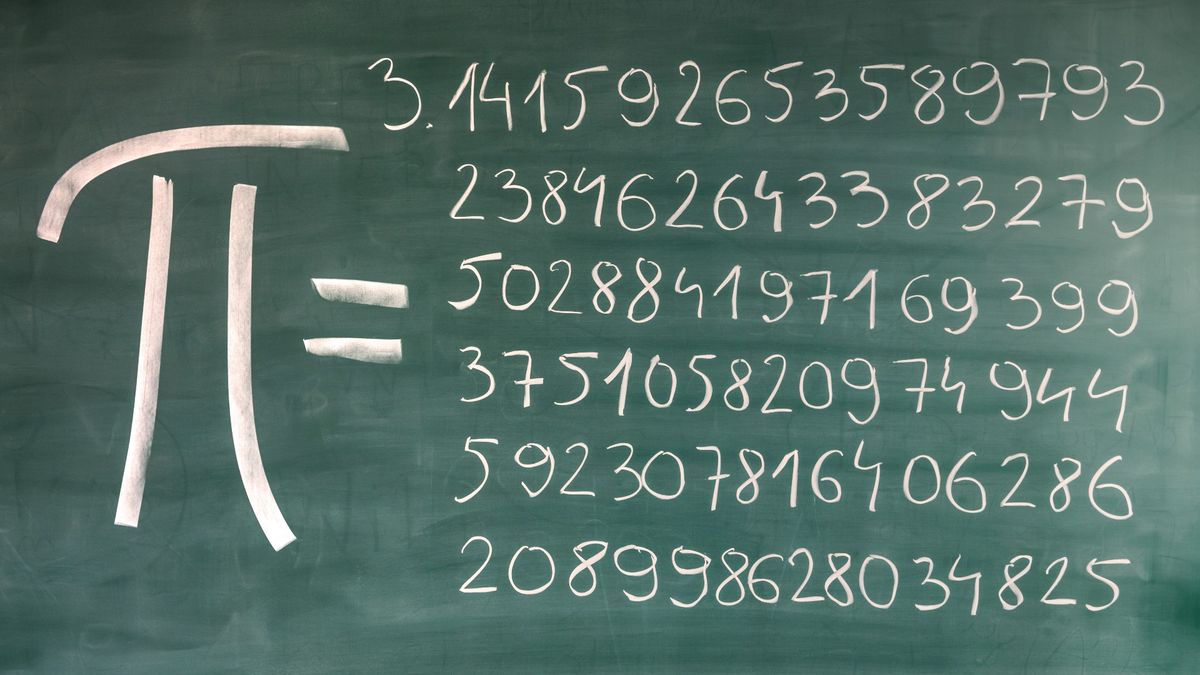
Easy as Pi!

Well, most people do not think of ‘pi’ as easy. This constant is the bugbear of many a student. The general reaction is ‘The ratio of the circumference of a circle to its diameter is a constant. Something like 3.14…. So what’s the big deal?’

Well, Pi plays a crucial role in many, many calculations within and beyond mathematics and science. It is one of the most widely known mathematical constants and is applied in various calculations, from basic geometry, trigonometry, calculus to complex physics equations and in engineering applications. It is central to calculations related to motion, gravity, and electromagnetic radiation. In engineering, Pi is used in design and construction of circular structures such as bridges, tunnels, and pipes. And in astronomy, it is employed in calculations involving the orbits of celestial bodies and the study of planetary motion. Pi is also important in computer science, where it is used in algorithms for numerical analysis, machine learning, and cryptography. 

Pi

Humanity has been fascinated with Pi for over 4000 years.  The earliest recorded calculations of Pi date back to the Babylonian, Egyptian and Hebrew civilizations—it even appears in a verse in the Hebrew Bible(written around the 4th century BC). The Indian mathematician Aryabhata (476-550 CE), in his work Ganitapada approximated value of Pi as 62,832/20,000 = 3.1416 (more accurate than Archimedes’ ’inaccurate’ 22/7 which was frequently used), but he apparently never used it for anything, nor did anyone else at the time. Famous mathematicians like Fibonacci, Newton, Leibniz, and Gauss dedicated a lot of time to studying the value of Pi, calculating its digits, and applying it in numerous calculations.

These centuries of fascination culminated in someone deciding to do something about it—declaring a DAY for it! On 14 March 1988, the first official large-scale celebrations of Pi Day were organized at the San Francisco Exploratorium by Larry Shaw, a physicist. The events to mark the day included several participants marching around a circle and consuming fruit pies. Since then, it has gained popularity and the U.S. House of Representatives passed a notification in March 2009, recognising 14 March as Pi Day.

Why 14 March? Well, that date is also written as 3.14! And, by coincidence, is also the birthday of Albert Einstein! Pi Day celebrations across the world include calculating more and more digits, and memorizing their value!

Pi has been calculated to over 60 trillion digits beyond its decimal point. As an irrational and transcendental number, it will continue infinitely without repetition or pattern.

Pi has also inspired literary genres! Pilish is a genre which is written in such a way that each digit of pi denotes the number of letters in each word. So, the first word has 3 letters, the second 1, the third 4, and so on. The only novel in Pilish is by the American Mike Keith, with the title: Not A Wake: A Dream Embodying π’s Digits Fully For 10000 Decimals

Mike has also invented the “piku”, which is a Pilish poem based on haiku. And here is something he wrote for Pi Day some years back:

It’s a moon,

A wheel revolving on golden earth, and lotus blossoms.

Mountains embrace windmills, and it all reflects this number, pi.

On the other hand, to celebrate the day, NASA’s Jet Propulsion Laboratory has come up with a series of science and engineering questions that are related to some of the agency’s Earth and space missions.

Well, to each their own favourite Pi or Pie!

Happy Pi Day!

–Meena

Sleepy Time…World Sleep Day

We who sleep well, generally take sleep for granted. But it is when we cannot sleep that we begin to appreciate how important it is. As adults, at some point of time, we all probably have experienced short-term insomnia which can last for days or weeks and is generally caused by or a distressing event. But some of us suffer from long-term insomnia, also called chronic insomnia.

The necessity of sleep, and what the lack of it can do to us, cannot be underestimated. Doing research on this subject is difficult—after all, we cannot deprive people of sleep to check what happens to them. But the general observation is that after 24 hours without sleep, cognitive effects similar to having a blood alcohol concentration of 0.10% (which is higher than the legal limit for driving) can be seen. Anxiety and agitation set in. Performance on tasks declines, making people more prone to errors. There may be changes to visual perception. After 48 hours without sleep, people may begin to have blurry or double vision, which may progress into distortions of reality and hallucinations. After 72 hours without sleep, a person may begin to slur their speech or walk unsteadily. Hallucinations become increasingly frequent and complex. As people near 120 hours without sleep, they may experience a rapid and severe decline in mental health. This may include symptoms of psychosis, where a person becomes detached from reality and has complex delusions and displays violent behaviour. (https://www.sleepfoundation.org/)

So it is not at all out of place to have a World Sleep Day. This is celebrated on the Friday before the Spring Vernal Equinox, and falls on March 15th this year. It is organized by the World Sleep Day Committee of the World Sleep Day Society, to emphasize the importance of sleep and address common sleep-related issues that many people suffer from.

Human beings generally need between seven and nine hours of sleep, but sleep requirements vary widely across species, as do sleep habits. The general trend is that herbivores who are the prey species not only sleep less in terms of absolute time, but they sleep for shorter periods at a time. Not surprising, considering predators may attack them anytime. And in general, larger animals need less sleep than smaller ones. This is because larger animals have to spend longer time in searching for and eating food.

And to lighten the mood, here are some interesting animal-sleep facts: Impalas specially male impalas hardly sleep, having to be vigilant about predator attacks at all times. Walruses can go for 84 hours without sleep. When they do sleep, they can sleep anywhere on land, on the bottom of the ocean, even floating.    Elephants sleep only 3-4 hours per night. They sleep standing, leaning on a tree or termite mound, or lying on their side. If they lie on their side their sleep is less than 30 minutes, as otherwise their internal organs may get crushed.

An intriguing question is, do migrating birds sleep and if so how? Many birds are on the wing for weeks or months, and they fly day and night, day after day. Then what about sleep? Well, studies on frigate birds have found that they sleep even as they fly! Their power-naps can be as short as 10 seconds! They also have a technique whereby only half their brain sleeps while the other half remains functional. But not all migratory birds do this—many actually take pit stops to eat and sleep.

Well, these species are lucky to be functional with so little sleep, but humans aren’t. So on this Sleep Day, resolved not to take sleep lightly. Get the minimum quota. And if you can’t, talk to a sleep specialist.

Happy zzzzzz…

–Meena

A DAY TO REFLECT

It is March 8, and the newspaper pages are dominated by a plethora of “offers” especially for women. There is much on offer–from designer clothes to jewelry, from cosmetics and ‘make-overs’, to a day of indulgence at a spa or fancy restaurant, and even special health check-ups, all cleverly designed to “celebrate the woman in you!” This day follows on the heels of Valentines/Galentines Day which was all about ‘sugar and spice and all that’s nice’ to make every woman feel special. Tucked away between the gloss and glamour, are stories of ‘women of substance’ and women achievers who overcame many odds to get where they are today. These women certainly inspire a few, but they are quite out-shadowed by the ‘influencers’ with their countless followers.

In all the razzmatazz, not much is remembered about the origins and intent of the day that is today marked as International Women’s Day. The day, ironically had socialist origins and then became a marker of the movement for women’s rights to equality and dignity.

In its official history, the spark was ignited by a march in New York City on February 28 1908 by thousands of women garment workers who were striking to protest poor working conditions and wages. The march was spearheaded by the Socialist Party. However the history of the struggle for women’s rights can be traced further back to 1848 when two American women ‘activists’ Elizabeth Cady Stanton and Lucretia Mott who were attending the World’s Anti-Slavery Convention in London, were outraged at the denial of official recognition to several women delegates because of their sex. On return to America they organized the nation’s first women’s rights convention in New York. The resulting Declaration of Sentiments and Resolutions which detailed the inferior status of women, demanded civil, social, political and religious rights for women. This triggered the American women’s rights movement.

The concept of a day to register women’s voices crossed the Atlantic and reached Europe around 1911. Clara Zetkin, a German communist and advocate for women’s rights, including the right to vote, proposed that the day become an international event at an International Conference of Working Women in Copenhagen in 1910. She believed that if women across the world were synchronised in pressing for their demands, then their collective voice would be too hard to ignore. Her proposal was unanimously backed by the 100 women from 17 countries who were at the conference. The first International Women’s Day was celebrated in 1911, in Austria, Denmark, Germany and Switzerland with rallies campaigning for women’s rights to work, vote, be trained, to hold public office and end discrimination. At the time, celebration was not tied to a particular date.

It was in 1917, that on the last Sunday of February, Russian women, led by Alexandra Kollontai, began a strike for “Bread and Peace” in response to the death of over 2 million Russian soldiers in World War 1. Opposed by political leaders, the women continued to strike until four days later the Tsar was forced to abdicate. As a direct consequence of the marches and demands for universal suffrage in which thousands took part, the provisional Government granted women the right to vote in 1917. Thus Russian women got the right to vote a year before Britain and three years before the United States. Interestingly it was New Zealand that was the first country to grant women the right to vote in 1893.

The date the women’s strike in Russian commenced was Sunday February 23 as per the Julian calendar then in use in Russia. This day matched March 8 on the Gregorian calendar in use elsewhere. And thus the date became associated as a milestone marker in the movement for women’s rights.

In the years that followed, different countries embarked on different paths towards granting women their rightful rights, starting from the right to vote, and embracing equality of access to other opportunities and avenues for growth and development. Ironically, this day is not highlighted in the United States, because of its associations with its Socialist roots and later with communist Russia. However the United States marks the entire month of March as Women’s History Day.

It is only in 1975 that the United Nations marked International Women’s Day for the first time. In December 1977, the General Assembly adopted a resolution proclaiming a United Nations Day for Women’s Rights and International Peace to be observed on any day of the year by Member States, in accordance with their historical and national traditions.

Today, more than a century after the day was marked, there have been many more milestones in the journey of women for their rightful status in all spheres of life—personal, professional, social and political. Every generation has had its challenges and these have thrown up the challengers who have often made it their life mission to carry forward the torch. We have often written about these feisty women in this space.

At the same time, even as women are breaking new glass ceilings, it is still a far cry from becoming ‘a woman’s world’. Women and children are bearing the brunt of war in many parts of the world; women are the most directly affected by the ravages that climate change is wreaking across the globe; women in many countries are at the receiving end of extremist religious beliefs, and women are still fighting for the right to make their own decisions about their own bodies, and minds. There are many new avenues and media to reach out, raise voices, and come together. The same media have the potential to become toxic, to denigrate, to divide and even to destroy. 

Perhaps today is a good day to reflect on this, even as we reminiscence about the women who have made our road to this point less rocky, who have led the first ascents to the seemingly inaccessible peaks, women who have led quiet revolutions at home, in the work place and in society. Let these true women of substance be our role models and inspirations, not just today but every day.

For the Matriarchs, this day marks the starting point of our own journey of sharing thoughts, angst, wild ideas, and laughter. It has been five years of a beautiful celebration with friends, known and unknown. We are truly grateful, and celebrate all our fellow travellers.

–Mamata and Meena

In the century since it was first established, International Women’s Day has come to be marked just as frequently with celebration as it is with protest, but the day’s legacy remains steeped in the struggle for women’s rights — an element that has gained renewed relevance in recent months, particularly as the #MeToo movement has taken on global dimensions.

Image: UN.org

The Shape of Words: Kiki Bouba

Do words have shapes? Or, in other words, are certain words or sounds associated with certain shapes?

Well till about a century ago, linguists did not think so. It was assumed that the connection between words and the objects they are attached to was arbitrary. For example, there is no link between the English word ‘dog’, or the French word ‘chien’, or the Hindi word ‘kutta’ and an actual dog. These are just names that people choose to give objects.

But in 1929 came an experiment by Wolfgang Kohler, followed by others building on this, which changed this thinking.

In the experiment, subjects were given these two words ‘bouba’ and ‘kiki’, and shown two shapes—one rounded and blob-like and the other spiky. Participants were asked to associate each of the given words to one of the shapes.

Over time, the experiment was carried out across regions and languages and ages—900 people across 25 countries.

And invariably, across countries and languages, the majority of people associated ‘bouba’ with the blob-like shape, and ‘kiki’ with the spiky shape. On average, more than 70% of the people tested confirmed the Bouba/Kiki effect– a non-arbitrary mental association between certain speech sounds and certain visual shapes

While this surprising phenomenon has now been accepted, there is no widely-accepted explanation of why it occurs, though several hy­potheses have been put forward. One hypothesis is that the association is related to the shape of the mouth when produc­ing the sounds—the more rounded shape of the lips when saying bouba, and the more taut shape when saying kiki. Another suggestion is that ‘the association is tied to the proportion of vowels and con­sonants and the phonemic qualities of the sounds in the words. It seems that people tend to base sound–symbol associations on the acoustic cues of the sounds.’ But exactly how they do so is yet to be explained.

Some researchers have extended these experiments to other senses. Professor Charles Spence explored the phenomenon in relation to taste. He asked his subjects to associate the words ‘ bouba’ and ‘kiki’ to the following tastes:

  • Dark chocolate / milk chocolate
  • Strong cheddar cheese / brie
  • Sparkling water / still water

Prof. Spence found that kiki was associated with dark chocolate, strong cheddar cheese and sparkling water by most people— in other words, the stronger, more bitter or sour tastes (similar to the spiky shape). Bouba was associated with more rounded, sweeter tastes (similar to the rounded shape).

While researchers are still trying to figure out the science, several interesting practical implications have emerged. Since these associations of sound/shape, sound/taste etc. are real, what happens when there is a mismatch in the image conjured up by a sound, and the real object? Well, people don’t like such dissonance!

For instance, people associate round names (“Bob,” “Lou”) with round-faced (vs. angular-faced) individuals.  And they like targets with “matching” names. One study has found that senatorial candidates in an election got 10% more votes when their names fit their faces very well, versus very poorly! (Will we be seeing a rush of name-changes before elections?!?).

And obviously, these insights are very important in naming products, developing brands, etc.

There are several such kiki-bouba association tests that you can find online. Go ahead and check if your conclusions range with the majority!

–Meena

Hippo Day is a Thing!

February 15 is marked as Hippo Day.

And come to think of it, why not? After all, hippos are the third largest land animals on Earth (after elephants white rhinos). Males can measure around 3.5m long and stand 1.5m tall, and weigh in at up to 3,200kg.  That’s a weighty reason to allocate a day for them!

On Hippo Day, here is an interesting story.

Hippo
Credit: Animalia Facts

A hippo can eat up to 35kg of grass in one night. And it is this ability to munch down herbage in quantities, and their very bulk, that led to a strange development in the US in the 1910s. Senator Robert F. Broussard, who represented Louisiana, brought a House Resolution for large-scale import of hippos to the US. No, not as a curiosity or to keep in zoos. But to solve two problems that America was facing at that time.

The first was the widespread proliferation of water hyacinth. First brought in as an ornamental water plant from the Amazon, the hyacinth spread madly, and within two decades, had overtaken waterways across the South of the US, threatening water trade routes. Several ways to get rid of the weed were tried—from breaking plants up, to dredging them, to setting them on fire. But nothing stopped the weed. 

The second problem was the steeply rising prices of meat, making it unaffordable for many. The fundamental reason is not clear—it could have been the rising prices of grain, cattle shortages or profiteering by meatpacking companies. Or a combination of all of these. But there were people in the US who seriously feared that they would be forced into vegetarianism which they saw as a disaster. (It was a different time, wasn’t it?)

Senator Broussard and some friends came up with the completely out-of-the-box and bizarre idea of importing hippos to solve this twin crisis. Their claim was that the hippos would happily chomp their way through the hyacinths. And that their flesh would be a great source of meat and protein for the Americans!

And so they moved the “American Hippo Bill” in 1910! Ex-President Teddy Roosevelt was among its supporters.

The House Committee before which the Bill was presented asked some very sensible basic questions: Could hippos be domesticated? Could they be contained? Would they eat the water hyacinth? Is their meat edible? Broussard and his colleagues answered with a resounding ‘yes’ to all the questions.  

But the answers, we know today, are ‘No’ in each and every case. Hippos are not domesticable. They are known to kill about 500 people every year.  They are extremely strong and heavy, and it would be almost impossible to contain them with even the strongest fences. And they are very unlikely to have made water hyacinth a serious part of their diet. They feed mainly on grasses and would not have taken to this weed which is very low in nutritive value. And though hippo meat is eaten, it is not widely consumed.

There would have been other serious negative ecological impacts of introducing hippos into the waterways too—their heavy treading in water bodies would stir up the mud, and their poop would add to the organic load in the water, and would completely disturb the dynamics and lead to algal blooms and other problems.

Fortunately sense prevailed in the House Committee and they vetoed the Bill. Else, who knows what the American landscape would be like today!

And now for some Hippo Trivia to celebrate Hippo Day

We think of hippos as African animals, but nearly 5.9 million to 9,000 years ago, India was home to the hippopotamus. These entered Eurasia from Africa, and later diversified into South Asia before going extinct.

They can hold their breath and walk under water for up to 5 minutes.

Hippos may look bulky, but they are quite athletic, and run at speeds of up to 30kmph!

A group of hippos is called a bloatOther terms for a hippo group include thunder, herd,  sea, school,  pod,  dale,  crash, and  siege.

Happy Hippo Day!

–Meena

See also:

Homes for Hippos: https://wordpress.com/post/millennialmatriarchs.com/4830

Beware the Kiboko: https://wordpress.com/post/millennialmatriarchs.com/2707