Totum maior summa partum

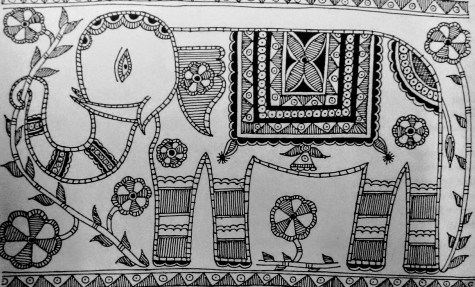
Six blind humans once encountered an elephant. Each of them tentatively approached the unknown form that they could neither see nor hear, and each happened to touch a different part of the great beast. They moved their sensitive fingertips across what their hands could reach, and curiously explored.

Meeting together again, each was excited to exchange notes. For what a curious thing this was! What was it called and what purpose did it serve?

The first one said:

“What tree is this that we have chanced upon?

Its trunk just seems to go on and on.

Or is it a pillar thick and round

Solidly planted in the ground?”


The second one shook his head to exclaim:

“Oh no, you are mistaken, friend

It is simply a wall without end.

I just ran my hand from side to side

It is so solid, so firm, broad and wide.”


The third person was amazed at such tall tales:

“What do you mean ‘so high and strong’?

I assure you that you have got it quite wrong.

It’s quite simply a snake, soft, thick and long,

I could feel its breath as it swayed along.”


The fourth one was a bit confused now:

“It’s true it was long, but I have a doubt,

It wasn’t supple nor smooth as you make out.

It was surely a rope you felt my friend

Why, it even had long tassels at the end.”


The fifth individual thought the four were quite crazy:

“Imagine, imagining it to be a tree or a wall

Just what has come over you all?

Do snakes or ropes flap like sails on boats?

They were those giant punkhas, like ones in the royal courts.”


By now the sixth was convinced that the rest were mad:

“Why are we making wild guesses and playing foolish games?

I know not to what you give different names.

Firm to the touch, sharp at the end; nothing large or loose or long

How could it be anything but a spear sharp and strong?”


And thus each one ‘saw’ a different sight

And each was convinced that they were right.

Alas the six could only see a part, but never understand

That it all the parts together that made the whole elephant.
IMG_20180910_165057.jpg
Illustration: Roopalika V.

“The whole is more than the sum of its parts.” Aristotle

–Mamata

In a Word

When we were in school we were told that the Eskimos have a hundred or more words for Snow and forest-dwelling indigenous people have a multitude of words for Green. In recent years this information has been debunked by many linguists. While the numbers are not that important, to my mind this example is still meaningful as it draws attention to the fact that every culture and language has its own vocabulary to describe the nuances of a phenomenon or event or feeling.

In the past few years I have come across some really evocative words which I love to share.

Tsundoku A Japanese word which refers to the habit of accumulating books with the intention of reading them by and by, as opposed to obsessively collecting books just for the sake of having them. This word apparently has been used for over a century, and a person with a large collection of unread books was called a tsundoku sensei. This is something I have always done, and I was so happy to find a respectable name for the same!

Komorebi Another Japanese word for the delicate interplay of light and leaves when sunlight filters through the foliage of trees. How often we have been touched by this delicate and fleeting moment. Artists and photographers have tried to capture this, but this single word perfectly paints the picture.

Shinrin-yoku If you want to prolong the moment and immerse yourself in the experience—the Japanese have a word for that too. This word means ‘forest bathing’, a practice that includes mindfully experiencing the beauty of the komorebi while breathing the cool fresh air and hearing the leaves rustle in the gentle breeze.

Waldeinsamkeit If you were German and enjoying Shirin-yoku, a feeling of solitude, and a connectedness to nature, this is the perfect word to describe how you feel!

Mångata If you lingered long enough for the sunlight to be replaced by moonlight, this is what you would also see. A Swedish word for the glimmering, road-like reflection that the moon creates on water. Another luminescent word that paints a perfect picture.

Hygge Back home after a rejuvenating walk in the woods, what could be better that to curl up with a book from your tsundoku and get lost in the wonderful world of words! The Swedish have the perfect word for just such cosy comfort and contentment!

If only, we may say, our life could be a series of shinrin-yoku and hygge! The Japanese say that there is no reason why it cannot be. After all, is it not a lot about how you approach life? It is all about having a sense of purpose and meaning and a feeling of wellbeing–essentially ‘a reason to get up in the morning’, and to see the sunlight rather the clouds. They call it Ikigai.

IMG_20180902_085434387.jpg

According to the Japanese, everyone has an ikigai. We just have to find our own.

–Mamata

Snakes Alive!

This is the month when many parts of India celebrate Nag Panchami or festival of snakes, by worshipping the Snake God for protection. The many rituals and myths associated with this perpetuate many false perceptions about snakes. This takes me back to my own snake story.IMG_20180830_100525311.jpg

When I started my career as an environmental educator, one of my first close encounters of the wild kind was when we were asked to touch a snake! This was in Sundarvan, a small snake park. The snake was a Red Sand Boa—a non-venomous snake. For someone who was, at that time, far from being a passionate wild-lifer, this was indeed an experience that served to dispel the many myths that one had grown up with. One of these were that snakes were “slimy”, and to be avoided at all costs. The skin of the sand boa felt dry and smooth, and we learnt that most snakes are in fact non-venomous.

And there began my long and fascinating journey in the natural world. A journey along which I had the most wonderful encounters with some of India’s best known naturalists and educators.

One of these was the Snakeman of India Romulus Whitaker.

Not so long after my induction by snakes, Romulus himself came to CEE and fascinated us with snake tales and the importance of breaking the myths that associated snakes with all things creepy and vile, and communicating the vital role of snakes in the ecosystem, especially as friends of farmers because they eat the rats that destroy crops.

A little later, Romulus graciously accepted to write a piece for a book that Meena and I were editing. In this he recounted how he first came to India from New York city when he was 8 years old, and returned a few years later  to make India his home, and herpetology his career. He recalled how “the snake charmers at Juhu Beach in Bombay were my first tutors but it wasn’t long before I outgrew their mixture of magic and nonsense.”

Romulus’s passion for setting the record straight about reptiles has manifested itself in a long and close association with the Irulas, an indigenous tribe of snake catchers of Tamil Nadu who became his friends and mentors; setting up of India’s first Snake Park in 1970 and the Madras Crocodile Bank in 1975 and, in 2005 the Agumbe Rainforest Research Station in Karnataka. These Parks continue to attract and educate millions of visitors every year, and they have also become the base of conservation research projects in many parts of India including the Andaman islands.

His never-ending impulse to show and tell people about reptiles led Romulus to start making documentary films, many of which have won international awards. One of his first films Snakebite tells about how to avoid and treat snakebite. While studying incidents of snakebites in India, Whitaker discovered that numerous lives were lost due to inadequate production and distribution of anti-venom serum. That is when he mobilised the Irula community to form a snake catchers’ cooperative, who under licenses from the Wildlife Department, extract and freeze-dry venom from snakes and sell it to anti-venom producing laboratories before releasing the snakes back into the wild.

In 2018 Romulus was awarded the Padma Shri for nature conservation. In one of the interviews following the award Romulus said “I believe that touching a snake opens people’s minds and changes it forever.” I can totally vouch for that!

Thank you Rom for helping to open a new world, and for being a continuing inspiration!

–Mamata

The Great Babbler Mystery

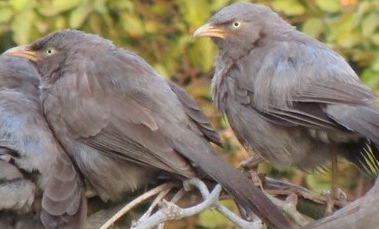
I call them Angry Birds! They are continually at war with the world, making their views heard with an incessant grating cacophony of sounds. Their beady eyes glint as they stare angrily at you, and their dusty khakhi-brown feathers are always dishevelled, as if they have just emerged from battle!

They are ubiquitous, making their bedraggled group appearance in the garden, on the sun deck, in the wash area and on the window ledges. They make their presence felt with their incessant quibbling and squabbling. In the morning they are busy poking at the lawn before our first cup of tea. In the afternoon they hop around in the verandah and outside the windows, peering through the glass and rapping sharply with their beaks as if to reprimand us for some misdeed. They are the band of vigilantes—sounding a harsh and strident chorus that makes the intruding cat slink away to safety. They fight like fishwives! Screeching, pecking, pulling, merging into a heaving mass of untidy feathers; and emerging with scrawny bare necks that reveal the wounds of war.

They are the Jungle Babblers or the Seven Sisters as they are called in English, and for some reason, Seven Brothers in some Indian languages.

And I wake up with the comfort of starting the day with them.

Until last week….

My angry birds have disappeared en masse!

At first I thought it may be the grey drizzly weather that we have been having after a long, blazing hot and dry summer that was deterring their forays. Then I thought that maybe they had decided to put in a late appearance; I watched for them morning, noon and evening. Not a straggly feather to be seen! I looked at all their haunts, their favourite foraging patches; the bare branches of the tree at the gate and the wires running overhead, but nary a glint of an eye could I see. I thought maybe they have taken off on vacation, but my bird book tells me that they like their home turf and are not likely to wander far.

How can they all vanish? I haven’t a clue!

jungle-babblers-in-Lucknow-India-bird-festival-uttar-pradesh-2 (2)
Missing from action!

Will they reappear soon? I do hope so!

Till then, the great babbler mystery continues!

–Mamata

A Parliament of Owls

No this does not refer to a House of sleep-deprived MPs at an all-night Parliament debate!

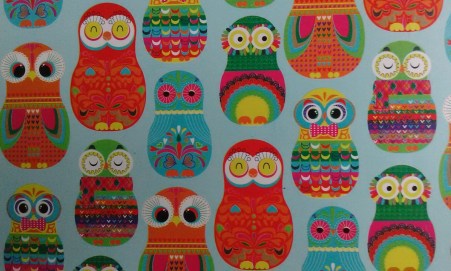
This is what a group of Owls can be called!

IMG_20180822_160618795.jpg

The English language has some wild and wonderful names to describe groups of animals or birds. We use some of these collective nouns occasionally when we talk about a Herd of cattle or a Flock of sheep. In school we often had to fill in the blanks or match the following– a Pride of lions, a School of fish or a Pack of wolves.

I have always been intrigued and fascinated by some of these collective nouns. I think that a Gaggle of Geese sounds just so appropriate, as does an Army of Ants (especially having once been literally attacked and badly bitten a marching regiment of army ants—no joking!).

Here are some delightful feathery ones!

Imagine a Parliament of Owls which includes members from the following: A Murder of Crows, a Convocation of Eagles, a Deceit of Lapwings, a Ballet of Swans, a Siege of Cranes, a Conspiracy of Ravens, a Company of Parrots, a Murmuration of Starlings and a Flamboyance of Flamingos!

And what about our four-legged friends? Here are some quirky ones!

When Noah invited representatives of all animals onto his Ark, he had to select a pair each from: An Ambush of Tigers, an Array of Hedgehogs, a Bloat of Hippos, a Crash of Rhinos, a Rumpus of Baboons, a Shrewdness of Apes, a Singular of Boar, a Skulk of Foxes, a Sleuth of Bears and a Mob of Kangaroos!

Not to mention the hoppers and slitherers from a Colony of Frogs, a Knot of Toads, a Quiver of Cobras, a Bask of Crocodiles, and even a Culture of Bacteria!

These are only a small taste of the numerous terms used to describe groups of different kinds, the history of which can be traced back to the Middle Ages in England. The earliest known collection of terms of collective nouns or ‘venery’ (an archaic term for ‘hunting’) is in the Book of Saint Albans, a kind of handbook for hunters first published in 1486. Included among chapters was a list of the Compaynys of Beestys and Fowlys, where many of the common terms of venery made their first appearances including pride of lions, flock of sheep and herd of deer.

While serious scientists may not be amused at the attribution of human traits to describe the animal world, for the language lovers, discovering new terms can be great fun.

Even more fun is trying to coin one’s own terms! Here are some that I thought of: A Cacophony of Koels, a Preening of Peacocks, a Menace of Mosquitoes, and a Buzzload of Bumblebees!

–Mamata


Women in War

Every year in the run up to India’s Independence Day we are reminded of the events and people who played a significant role in taking India to freedom from the rule of the British Raj. We remember our history lessons about how women played an active role in the movement to boycott British goods and pave the way for Swadeshi.

In the past month, quite by chance I read four books which described what England and women in England were going through during almost the same period—the first half of the 1940s. It was something that perhaps most of us are not so familiar with, and made me want to know more.

In the 1930s, social roles were clearly defined in English society. A woman’s place was in the home, a man’s place was out at work. It was acceptable for women to work outside the home if they had no family to look after, but they were paid less than men were — even when doing the same jobs, and most would have expected to leave as soon as they married, or when they had their first child.

With the outbreak of the Second World War in 1939, and in the following years, men in England joined up for military service and there was a big vacuum in the labour force in essential services. This was filled by women. Unmarried women between 20 and 30 were called up to join a variety of services from working in factories manufacturing armaments, to those on the fringes of the war front. Among these was the Auxiliary Territorial Service (ATS) that recruited female volunteers for driving, clerical and general duties including anti-aircraft searchlights. The Women’s Royal Naval Service (WRNS) that maintained ships of the Royal Navy and were involved in some of the most secret planning for D-Day. The Women’s Auxiliary Air Force (WAAF) that was used for maintaining and flying barrage balloons, and the London Auxiliary Ambulance Service which was on duty through the German bombing “blitzkrieg” (lightning war) of 1940-1941.

Many of these were dangerous jobs, which carried the very real risk of death or serious injury and many at first thought that the jobs were not only unsuitable for women but that they did not possess the physical strength needed to carry out the tasks which were being asked of them. This was to be proven wrong time and again. And there are many tales that tell of heroic feats of these women.

The books tell stories from the point of view of ordinary women who had never stepped out of their home, and how their new roles were the leveller of the very-English class distinctions. Working class girls who worked as domestic help in mansions, now worked shoulder-to-shoulder with genteel middle class girls as ambulance drivers and munition factory workers. Ladies with large estates took in evacuees from all backgrounds, and turned their manicured gardens into food-growing plots, while lawns were dug up to make Anderson shelters in which to stay during air raids. Timid girls from villages who were skilled in living frugally were appointed by the Food Ministry as Home Front Economists and Kitchen Economists to give talks and demonstrations to women’s groups on how to conserve food rations and fuel.

Cargo ships carrying vital supplies imported from the colonies were being bombed on high seas. It was a time of shortages, rationing, hoarding, and black-marketing, it was also a time for austerity—managing with less. There were coupons for food, for petrol, and clothes. Fashion was dictated not by French designers but by the Board of Trade; hemlines were decreed to be shorter to save cloth, and there were a limited number of basic, no-extra-frills styles, with Utility Labels which could be bought using coupons. Various schemes gave advice on recycling or making clothes last longer, two of these were the Make Do and Mend, and Sew and Save, schemes for which women were called upon to share ideas and experiences.

The stories tell of lasting friendships in a fragile time… Knitting together while waiting for an emergency call out; driving through darkness of curfew and blackout, through rubble of collapsed buildings, pulling out people from the debris, bonding by the uncertainty that they never knew if they would come back after a call; sharing picket duty during the hours of darkness to stop anyone from pilfering petrol.

The stories also reveal how the new roles raised the self-esteem of the women by allowing them to become an integral part of the overall war effort in every way. Gone were the housewives of the 1920’s and 30’s and in their place were an army of skilled and resilient workers, farmers, builders, and defenders—women with gumption and spirit. Women whose tales need to be shared.

Coincidentally, one of the last living female pilots of World War 2, Mary Ellis died on 24 July this year at the age of 101. She was a pilot of the Air Transport Auxiliary service, and delivered Spitfires and bombers to the front line during the war. Having flown about 1000 planes during her service, she once again flew a Spitfire for 15 minutes at the age of 100! Way to go!

–Mamata


A Life Too Short: A Tribute to Dr. Vikram Sarabhai

Today all of us as Indians, and the whole world in fact, see India as a technological power, a force to reckon with. It is easy for us to be confident of ourselves, our technical prowess, and our growing economic power. But in the ‘40s and ‘50s? We were a fledgling nation, and even food security was an issue. Many around the world wondered whether we would survive as a country, as a democracy. And at such a time, there were some people who had the daring, the vision and the confidence, to dream of being a country that would make a difference. One of them was Vikram Sarabhai.

‘Vikram Sarabhai—A Life’ by Amrita Shah tells this story well. It is a book which made me feel proud as an Indian; which said individuals can make a huge difference; which revealed glimpses of what it takes to build institutions of excellence; and which, most importantly said that it is possible to be a wonderful, warm, caring and very human person, and a high-achiever at the same time.

We look around us today—India is launching rockets for developed countries, it is accepted as a nuclear power, it is on the forefront of the IT revolution. But how did we get here? This book gives us some insights. I think this is an important role that a biography plays—being able to connect the present with the historical context, through the achievements and the legacy of one person.

And the book gives us glimpses of other very extraordinary individuals who played a part in Vikram’s life. The book helps one understand the impact that Ambalal Sarabhai or Kasturbhai Lalbhai or Bhabha had on Sarabhai’s work. But though we catch glimpses of the next generation–Dr Kalam, Mr Seshan, Kiran Karnik or Madhavan Nair—we don’t get an insight into how they, as people and professionals, were impacted by Sarabhai. But that’s probably another book!

The book chronicles well the span and breadth of Sarabhai’s achievements—from pure research to scientific administration; from running a pharmaceutical concern to laying the foundation for management education as we know it today; from market research to bringing in scientific approaches to looking at industrial operations; from space to atomic energy.  But what it does even better is to reveal that he set out on each of these diversified ventures with a clarity of purpose and a remarkably unified approach to seemingly very different issues. Sarabhai knew what he was doing. He was not a vain man, but definitely he had no doubts about his ability to take on the most impossible-seeming jobs—even when older and wiser heads thought otherwise. His charm and charisma, which probably helped him overcome many an obstacle, come through. But what also comes through is that his relationship with people was based on a real sense of caring. He did not set out to charm people for what he could get out of them, but probably ended up charming because he was a warm, caring and joyous person who believed in people and respected them.

Vikram the father, Vikram the husband, Vikram the boss, Vikram the son, Vikram the scientist, Vikram the manager—they are all there. Maybe not in depth but definitely outlined evocatively enough to give one a flavour of the person in his multiple roles.

The book is remarkably non-judgmental and matter-of-fact. Though Ms. Shah says that Vikram Sarabhai was a childhood hero and that is why she set about writing his biography, she seems to have been able to resist the temptation to fuzz not-so-pleasant realities. Whether it is his marriage, or his inability to really assert himself and take a firm stand vis a vis individuals in the Department of Atomic Energy, it is told like it was.

I would like to thank Amrita Shah for this biography. We cannot afford to forget our heroes—and Vikram Sarabhai was certainly one of them.

–Meena

Vikram Sarabhai, A Life by Amrita Shah was published in 2007. It is reviewed today to commemorate Dr. Sarabhai’s birthday which falls on 12 August.

The Millennial Matriarchs both count Ahmedabad as home and have worked in institutions which were part of Vikrambhai’s dream. I had the additional good fortune of living on the campus of IIM Ahmedabad as a faculty-spouse. In a large part, we owe what we are to him, albeit indirectly.

Inside Outside

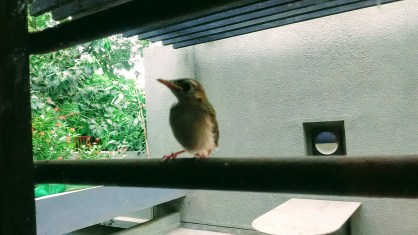
Through the glass, curiously

IMG_20180805_120336063.jpg

Little bird looking in

What do you see?

Strange giants pacing within.

Trapped in a cage of steel, stone and wood

In an existence that your kind has not understood.

Harried human looking out

What do I see?

A fledgeling just sprouting wings

To soar wide and free with a song to sing

Of the air and light, the trees and the sky.

Grow strong little one, spread your wings and fly

And I will wait for you to sometime come by.

–Mamata

Crossed Digits

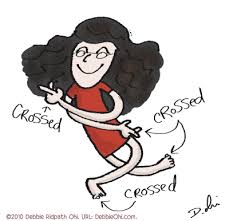
“Digits crossed!” is an expression that my friends and I use when we are hoping for things to turn out well—with double the power of “fingers crossed!” Yes, we hope to ensure this by metaphorically crossing not just the fingers, but also the toes.

In today’s ‘digital age’ where the digit-related terms  are so commonly used—digitization, digital camera, digital natives, digital divide, digital detox….we relate the word only to numbers. We seem to have forgotten that the word’s anatomical meaning. The word digit has its roots in the Latin root word digitus which means “finger or toe,” and English borrowed from this to mean “number.”

In fact, the practice of calling numbers digits comes from the digits on the hands — specifically, the habit of counting to ten on one’s fingers.

The digit in this sense was also a unit of measurement, long ago when  people used their hands and arms for measuring things. The width of a first finger was called a digit. This was used to measure things. The width of a palm was called a hand breadth. The width of an outstretched hand was called a span. The distance between an elbow and the tip of the longest finger was called a cubit.

The Egyptians had a standard length from the elbow to the middle fingertip, a distance of about 45-50 cm which they called a cubit. The width of the hand or four fingers was called a palm or hand and was about 9-10 cm. Hands is still used for measuring horses.

The ancient fathom was the distance between the outstretched arms about 1.8 metres. It is still used for measuring depth at sea.

The foot may have come from an ancient Babylonian brick measurement but in fact it works out to the approximate length of a man’s foot about 30 cm. The finger became an inch, which the Roman’s made one-twelfth of a foot.

In this digital age, if you want to sound smart, you can refer to your finger, thumb, or toe as a digit!

If you want to sound smarter still, go digital in Latin!

Here’s what they are called:

Thumb Pollex

Index finger  (pointer finger, fore finger) Digitus Secundus Manus

Middle finger Digitus Medius Manus

Ring finger Digitus Annularis Manus

Pinky ( little finger) Digitus Minimus Manus

And keep your digits crossed!

–Mamata

digits
source: Google