
Fatso! The word always reminds of the storybooks we read in which the

chubby baby with pink cheeks grew into a rotund schoolboy or roly-poly schoolgirl who was the butt of many jokes and cruel teasing. For many children who were actually on the plump side, it was a real-life experience that followed them through the years of teenage and adulthood. Fat characters depicted in books, movies and television are usually the bumbling comic ones, designed to raise a laugh. The simple three letter word ‘fat’ is, more often than not, used as an adjective that is derisive and pejorative.
The history of the word in the English language reveals that this was not always the case. In the late 1300s, fertile and abundant land was described as ‘fat land.’ In the 1600s, a wealthy or affluent person was described as a ‘fat’ person. This was a period when the general population suffered from poverty and food shortages, and anyone with excess body fat was recognised as being prosperous. Paintings of the Renaissance period in Europe depicted full-figured people. This was also the case in several other parts of the world, including India, where chubbiness was extolled when admiring “healthy” babies, and a skinny child would always be asked “does your mother not give you food?” In women of a marriageable age, a well-rounded body structure was desirable as it was considered suitable for future child bearing.
Changing times brought changing trends. In the 19th and 20th centuries, in the West, technology and industry made food production more stable, cheaper, and more widely available; it also introduced the wave of processed food. This, along with a rise in the overall standard of living, and more sedentary lifestyles, created new concerns, and perceptions, about weight. By the 1940–50s, ‘thinness’ became the new ideal for health and beauty. As early as March 1954, Life magazine featured an article, “The Plague of Overweight,” which characterized obesity as “the most serious health problem today.” “The uncompromising truth,” it went on, “is that obesity is caused by gluttony.” At that time, around three percent of Americans were considered obese. In 2015-2016 the prevalence of obesity in American adults was 39.8%. Today India is one of the countries in which obesity has reached almost epidemic proportions.
As medical science produces numerous reports on the health impacts of obesity, the popular culture has climbed on to the merry-go-round slogan of ‘fat is evil’. This has manifested itself in wave after wave of money-minting slimming coaches, new-fangled fad diets, and lose-weight mantras.
The social fall-out of this has been the culture of ‘fat shaming.’ Responses to this have been varied. The 1960s saw the rise of the movement of ‘body positivity’ to raise awareness of the barriers faced by fat people and highlighted the need for human rights for bigger bodies. As far back as 1969, a civil rights organisation was founded in the United States, The National Association of Advance Fat Acceptance (NAAFA) which works to eliminate discrimination based on body size, through advocacy, public education and support.
Today there is a Fat Acceptance Movement, with Fat Activists, which is working to challenge bias against fat people and end discrimination against them, especially in work places.
At the other end of the cultural spectrum, in several parts of the world, “fat is indeed beautiful.” Heavier girls and women are viewed as beautiful, wealthy and socially-accepted. As they believe, if you are fat, people respect you; people honour you. Wherever you go, they say, “Your husband feed you fine.” In Mauritania, it is believed that a woman’s size indicates the amount of space she occupies in her husband’s heart!
Even today, in many tribes in Africa, a woman’s attractiveness is measured by her obesity, and a young woman is prepared for marriage in ways guaranteed to ˜fatten her up.” Traditionally brides-to-be would be confined to a hut where they would be fed and fed and fed on high calorie foods until they achieved the desirable size and shape. Even today, in some places women go to fattening centres, just as in others they go on a slimming programme, before their wedding.
The Fat vs Healthy debate rages on. Every day, through every media, we are besieged by confusing and contradictory messages. Beneath all this, science seems to suggest that that body size is the result of a complex web of factors, including social and economic influences, genetics, food production and availability, urban design, land use, and advertising.
Fatso, or beanpole, beauty, it seems, is in the eyes of the beholder!
–Mamata
 ife Day. This marks the day of signature of the Convention on International Trade in Endangered Species of Wild Fauna and Flora (CITES) in 1973. Every year on this day, events are held around the world to celebrate and raise awareness of the world’s wild animals and plants.
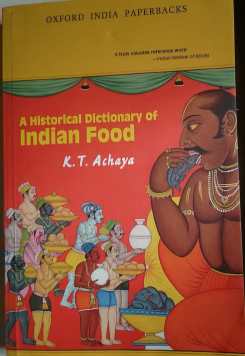 thoritative volume on the history of Indian food titled Indian Food: A Historical Companion. This led me to my bookshelf to pull out another book by this renowned authority on Indian food. This one, titled A Historical Dictionary of Indian Food followed his earlier ones. In this he attempts to bring together, in alphabetical order, material from his vast work on the subject. The book draws upon historical writing, archaeology, botany, genetics and ancient literature in Sanskrit, Pali, Tamil and Kannada to trace the gastronomic history and food ethos of India. The entries cover a wide range including recipes; narratives of visitors to India, starting with the Greeks in the fourth century; the etymological evolution of certain words, and the close links of food with ancient health systems such as Ayurveda. While this is a valuable scholarly work with meticulous and voluminous referencing, it is simply written, with a delightful menu–from A to Z–that one can dip into, and savour according to one’s own taste and appetite.
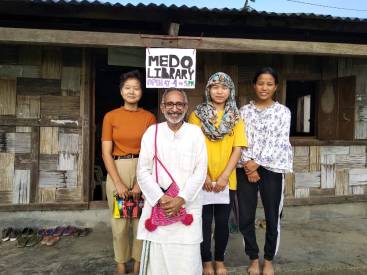
 he English dictionary and discover that the majority of the words listed there have their origins in a variety of other languages and cultures. Who would have thought that “ze leetle zee” would have such had such an adventurous history!
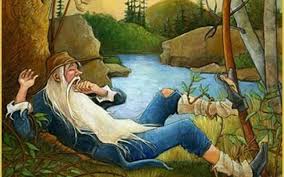 Imagine needing so much help to get a good night’s sleep! I have grown up in an age when mattresses had very different connotations. Mattresses were filled with cotton, and were usually of the same size and thickness. Often this cotton was carded by hand by itinerant carders who established camp at the house for a few days marked by the twang of their simple tools, and fluff-filled air. The cotton was filled in covers, stitched in with strong thread, and then beaten heartily with sticks to even out the lumps and bumps. All this done with dexterity and the long experience of a traditional occupation. With mechanisation, these occupations were replaced with neighbourhood shops where the same process was done by a simple machine. Now one took one’s old mattresses there to be opened and redone, with dire warnings that the cotton within was not to be mixed up with any other inferior variety!
 Millennial Matriarchs