‘Birbala’ Kanaklata: Teenage Martyr for the Tricolour

Here is a mantra, a short one that I give to you. You may imprint it on your hearts and let every breath of yours give expression to it. The mantra is ‘Do or Die.’ We shall either free India or die in the attempt; we shall not live to see the perpetuation of our slavery. Every true Congressman or woman will join the struggle with inflexible determination not to remain alive to see the country in bondage and slavery.

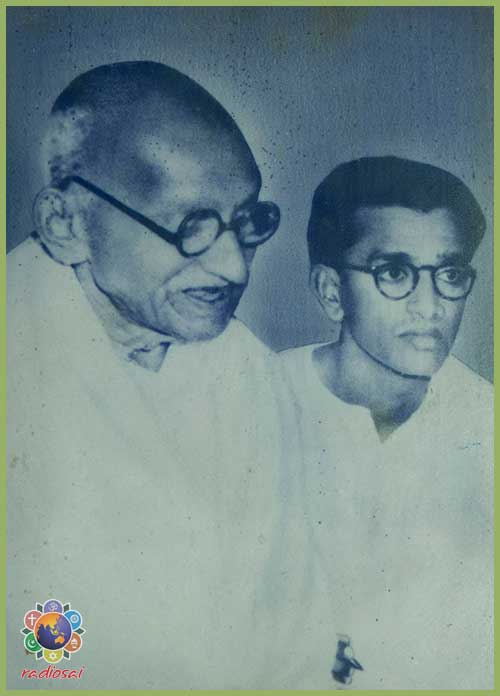
These words spoken by Gandhi on 8 August 1942 launched the Quit India movement. Although Gandhi and many other leaders were arrested within hours of his speech, with the expectation that without their leadership the resistance movement would be rudderless, the effect was the opposite. Thousands of Indians, young and old, heeded this call and plunged into the movement, each contributing in their own way.

This mantra shared by Gandhiji at the Gowalia Tank Maidan Park in Bombay echoed across the country. Its reverberations reached the eastern corner of India, to Assam, and lit a spark in the heart and mind of a young girl named Kanaklata.

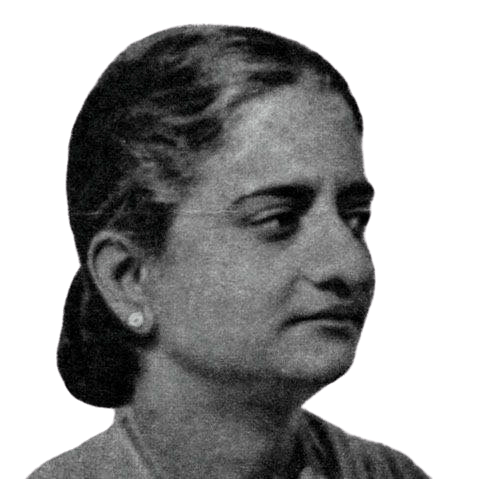
Kanaklata Barua was born on 22 December 1924 in Barangabari village of Gohpur, now in the Sonitpur district in Assam. Her mother died when Kanaklata was only five years old, and the young child developed a sense of responsibility much beyond her tender age. Her father remarried but he also died when she was thirteen. With added household responsibilities, and caring for her siblings, Kanaklata had to drop out of school and could not continue her studies after third standard.

Even as she was growing up in her village in Assam, the sparks of the nationwide freedom movement were spreading across the length and breadth of the country. The non-cooperation movement was gaining strength. The movement reached a climax with Gandhi’s call for “Do or Die”, and the wave of the Quit India Movement surged to new heights.

In Assam too there were widespread protests against British rule, and young and old joined in. Initially the protests were peaceful, but the British arrested all the Congress leaders of the state, and stepped up their brutal repression of the people. This only strengthened the opposition, and engendered underground conspiracies to fight the British. Among these was the setting up of a suicide squad which engaged in subversive activities like derailing and burning trains, attacking army outposts and snapping communication channels.

Seventeen-year-old Kanaklata was inspired and fired by the cause, and eager to contribute. Her dream was to join the Azad Hind Fauj, but as she was still a minor, she was not permitted to do so. Undeterred, she volunteered to join Mrityu Bahini–a suicide squad. For this too she was technically underage, but her determination and passion for the freedom movement was considered suitable for granting her membership. Subsequently she became the leader of the women’s cadre of the Mrityu Bahini.

The then president of the local Congress committee, Kushal Konwar was an ardent believer of non-violence proposed by Gandhi. He was falsely accused by the British for derailing a train which killed many British soldiers, and he was hanged. After the martyrdom of Kushal Konwar, the revolutionary camp of Gohpur division, under the leadership of Jyoti Prasad Agarwala, decided to mark their protest by removing the British flag and unfurling the National Flag at the local police station.

On 20 September 1942, Kanaklata led the procession of members of the Mrityu Bahini, walking proudly with the national flag in her hand, and with cries of Vande Mataram. The officer-in-charge of the police station was anticipating this. He warned the procession not to proceed further. He threatened that the police were duty-bound to start firing if the protesters advanced. Kanaklata responded by saying that he could do his duty while she carried on with her duty.

The procession carried on towards the police station; Kanaklata was leading, with the tricolour held aloft in her hands. As they neared, the police fired. Kanaklata fell to the bullet, with the flag still firmly held up. Before the flag could touch the ground it was taken by Mukunda Kakoti, another member from the group. He too was felled by a police bullet. Two young lives, snuffed out even before they attained adulthood. Kanaklata was not yet eighteen years old, and did not live to see the independent India of her dreams.

Their martyrdom did not go in vain. Even as their comrades were breathing their last, the others in the group did not let the tricolour down. They picked it up and with cries of Vande Mataram, the flag was eventually unfurled at the police station. One of the millions of small but significant gestures that added nail after nail to the coffin of the end of British rule in India.

While Kanaklata’s tale is not well known, it has at least been told. This month as we remember the many struggles and sacrifices that contributed to the unique non-violent movement that led India to become Independent, let us also pay tribute to the many unsung heroes and heroines who gave their all, even their life, for this cause.  

And as we swell with pride to see the Indian tricolour fly freely and fearlessly, let us not forget the brave young woman “Birbala” Kanaklata Barua who gave her life for it.

–Mamata

Paper Tigers

29 July is International Tiger Day. The day was first launched at the Saint Petersburg Tiger Summit in Russia in 2010 and is observed annually to remind the world about the decline of the global tiger population, and to encourage efforts for tiger conservation. On this day we will see many reports and statistics about tigers and their falling/growing population, and many conferences and seminars will be held on research and studies on tigers.

This is perhaps a good time to look at the tigers that roam not the forests, but that have also populated the pages of language and literature. The tiger has been a dominant character in folklore and mythology in many cultures.  

Perhaps China is the richest country in myths, representations, traditions, and legends related to tigers. Tigers have been a Chinese cultural symbol which has inspired story tellers, singers, poets, artists, and craftspeople for over 7000 years. In Chinese folklore, tigers are believed to be such powerful creatures that they are endowed with the ability to ward off the three main household disasters: fire, thieves and evil spirits. A painting of a tiger is often hung on a wall inside a building, facing the entrance, to ensure that demons would be too afraid to enter. Even in modern- day China, children wear tiger-headed caps, and shoes embroidered with tiger heads to ward off evil spirits; they are given tiger-shaped pillows to sleep on to make them robust. During the year of the Tiger, children have the character Wang painted on their foreheads in wine and mercury to promote vigour and health.

The tiger has equally captivated the people of the Indian subcontinent since time immemorial – feared and revered at the same time. These majestic beats and the lives of the people, especially those that live in close proximity to the tiger and its habitat, have long been intertwined, giving rise to several myths and legends surrounding them. Tiger lore has been interwoven with gods and legends, giving it a mythical status.

According to stories from Indian mythology, the tiger is believed to have powers to do everything from fighting demons, to creating rain, keeping children safe from nightmares, and healing. Humans are often attributed as having tiger characteristics. The consecration ceremony of a king in ancient times required the king to tread upon a tiger skin, signifying the King’s strength.

Songs, proverbs, and sayings in most Indian languages feature tigers as part of their treasury of folk lore and literature. Tigers appear in many stories in the Panchatantra.

A popular belief among many tribes in the Northeast of India is that the cosmic spirit, humans, and tigers are brothers. There are many folk tales based on this theme, with local variations. The belief that the tiger is a human’s brother has meant that the people of these tribes would rarely kill a tiger. There are traditional rituals performed even today to honour and worship the tiger.  

In more recent times, tigers were introduced to non-Asian audiences through the writings of Englishmen who had lived in colonial India by authors such as the famous hunter-turned-conservationist Jim Corbett. His books like The Man Eaters of Kumaon were perhaps some of the early depictions of human-tiger conflict.

In the culture of the West, where they are not found in the wild, tigers have nevertheless sparked the imaginations of writers, and have become popular fictional characters in stories, films, cartoons, songs, and even advertisements. Perhaps the best recreation of the fearsome tiger is Shere Khan of the Jungle Book fame.

Anthropomorphized tiger characters in children’s books have won their place in millions of hearts. There is boisterous and exuberant, Tigger, who is a one-of-a-kind friend in the world of Winnie the Pooh. He eagerly shares his enthusiasm with others—whether they want him to or not, and steals our heart.

Calvin and Hobbes

And we have the imaginary stuffed tiger Hobbes in the cartoon strip Calvin and Hobbes, who is very real to the irrepressible six-year-old Calvin—a faithful companion in all the capers, sometimes a comforting friend, sometimes a savage beast. The two friends have deep philosophical conversations, ruminating on how best to find meaning in their lives, the essence of which is what all of us are seeking.

Other than literature, tigers have permeated our language through numerous aphorisms, proverbs and sayings. Here are a few ‘tigerisms’.

Paper tiger: Someone who at first glance seems to be in charge but who, on closer examination, is completely powerless.

Tiger economy: A dynamic economy usually referring to of one of the smaller East Asian countries, especially that of Singapore, Taiwan, or South Korea.

Tiger mom: A particularly strict mother who makes her children work very hard in school to achieve success.

Catch a tiger by the tail: Try to control something that is very powerful; have a difficult problem to solve.

A tiger cannot change its stripes: You can’t change your true nature, even if you pretend or claim otherwise.

Eye of the tiger: Determined and focused

A new-born calf has no fear of tigers: A Chinese saying that means that the young are brave, but often due to inexperience.

As tigers in the wild continue to be threatened and pushed towards extinction, International Tiger Day is also an occasion to celebrate the power of words that keep the tiger alive and vibrant in the pages that they also inhabit.

Some beautiful words by Ruskin Bond capture this spirit.

Tigers Forever

May there always be tigers

In the jungles and tall grass

May the tiger’s roar be heard.

May his thunder

Be known in the land.

At the forest pool by moonlight

May he drink and raise his head

Scenting the night wind.

May he crouch low in the grass

When herdsmen pass.

And slumber in dark caverns

When the sun is high.

May there always be tigers

But not so many that one of them

Might be tempted to come into my room

In search of a meal!

Ruskin Bond

–Mamata

View From the Window

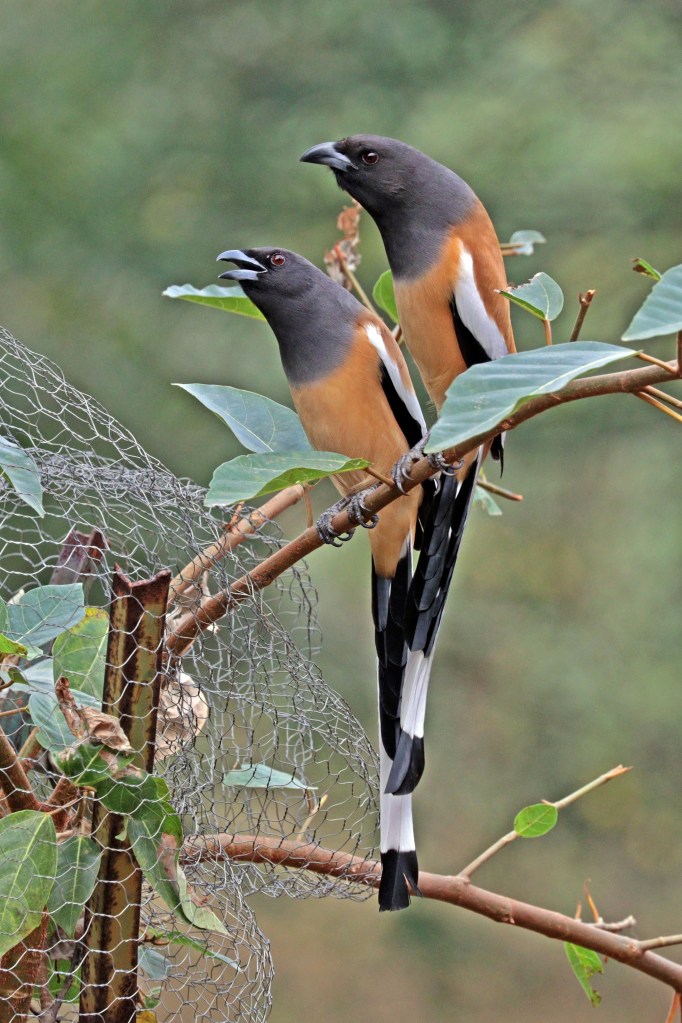
In a recent piece, my favourite nature columnist reminded us that while the Red Lists continue to add to the growing number of species that are endangered, threatened and even close to extinction, there are many small ‘disappearances’ that are happening all around us, ones that we do not obviously notice on a day-today basis. The author, a reputed bird watcher and note-keeper realised this when he looked back over his old records of birds around his house, and found that many of these were no longer to be seen. 

This led back to my own observations, jotted down over the years.

Circa 2000

Before the first rays of the sun painted the sky pink, the echoing call of the majestic Sarus crane would wake me from deep sleep. I knew that the pair would be flying off to an unknown destination for the day, to return after sunset.

The summer heat was compensated by the brilliant scarlet of the gulmohar at our front gate and the molten golden blooms of the laburnum at the back. The melodious tunes of the magpie robin filled the dawn, while the metronomic tuk tuk tuk of the coppersmith echoed from the top of the raintree. The morning haze was often streaked with the dazzling blue of a kingfisher in flight, while the green bee-eaters lined neatly on the wires, made swift graceful swoops in search of a breakfast-insect or two. Our little patch of grass and the surrounding hedge was lively with the orchestra of calls from tailorbirds, sunbirds, bulbuls, doves, mynas, and babblers that co-existed harmoniously, each finding their own pockets for food and shelter. The same space also saw the raucous coucal proclaiming its territory from the champa tree, and the occasional visits by the Shikra that immediately silenced the rest of the avian crowd

When the first rains came, so did the jacanas, with their mewling cries, almost like that of babies. They would make their floating nests on leaves in the vacant ground across from our house which turned into a wetland in the monsoon. Once the water dried they would disappear, as quickly as they had appeared. 

The stream of other seasonal guests to that water-filled depression in the ground across the road included buffaloes that spent the day wallowing in the mud, naktas or comb ducks that glided smoothly on the water, and an occasional water hen awkwardly crossing the road on its long yellow feet. As evening fell the air filled with the symphony of the frogs.  

The first nip of winter brought back the single Yellow wagtail to our small lawn. It came from far away to spend the winter soaking up the golden sunshine that seemed to glow on the patch on its breast. Another familiar visitor was the Hoopoe. We would see it walking back and forth on the dusty roadside, with its pickaxe head bobbing constantly.

And then there was the monitor lizard which seemed to put in an appearance only on weekends. And the shy mongooses that streaked across the gravel, disappearing soundlessly into the undergrowth. The little turtle that we found one day in our garden may have been washed in with the rain. It adopted us before we adopted it. We named it Tortolla and no matter how early we awoke, it was up before us, taking its morning walk from one end of the courtyard to the other. Not to forget the adventures of discovering snakes in the house—once coiled in a corner of the kitchen, and once neatly tucked under the dining table.

These were some notes that I made of the life around me—not from a cottage in a beautiful forest, but from my windows in the dusty city of Ahmedabad that I made my home. The house that we made was at the time, in a slowly developing area of the city, close to a natural talavdi or small lake. There were still open spaces around; and the trees and shrubs that we planted when we moved in provided homes and shelter to many other fellow living beings—winged and tailed, with two, four, a hundred, or even, no feet. As a newly-minted environmental educator this was my private lab for observing, noting, researching, and discovering the excitement of seeing the little things from my windows. Little then did I imagine that things could change so much.

Circa 2022 (Same window different view)

The wetland that once was a soothing symphony of sound and sight has metamorphosed. My days (and often nights) are filled with the sound of concrete mixers, trucks offloading mountains of gravel and bricks, the incessant hum of machinery, and the clatter-bang of steel and iron. The Sarus cranes, long flown, have been replaced by the huge construction cranes. These swing their gigantic metal arms as they lift and drop the raw material from which begin to sprout the concrete blocks that will grow into the new jungle of high rise apartments. Where the jacanas and water hens stepped daintily, now the humungous metal claws of the JCBs dig ruthlessly, scooping out mountains of soil, and creating abysses to be filled with cement. Now the rains only bring waterlogging, floating litter, and swarms of mosquitoes.

I haven’t heard the nightly frog chorus in so many years. I am beginning to forget the cries of the jacanas. My morning wake-up call is no longer that of the magpie robin. The permanent dust haze has suffocated the gulmohar and the raintree to an untimely demise, and deprived so many feathered friends of perches and abodes. The wagtail no longer visits, and I miss the comforting sight of the neatly-groomed hoopoe on its regular march. A rare flash of kingfisher blue, remains just that, as also the aerial antics of the bee eaters in pursuit of prey. The incessant din of the traffic has drowned out even the strident call of the koel, the twitter of the little birds, the soothing murmurs of the doves, and the soft babble of the bulbuls.

Day after day, the concrete jungle closes in relentlessly, we are engulfed by dread and despair. And now a single flower that blossomed, or a simple bird call can uplift our spirits.

–Mamata

More Than Just a Paper Bag

12 July is marked as World Paper Bag Day to celebrate environment-friendly paper bags as an alternative to harmful bags made of plastic.

This month marks an important step for the environment. The Government of India has mandated a ban on manufacturing, import, stocking, distribution, sale, and use of single-use plastic items. Over the years while there have been both legal as well as voluntary efforts to reduce the menace of plastic pollution, the figures and ground realities across the world indicate an alarming trend of increase in throw-away plastics.

It is at a time like this when there is a deluge of information, and debates, about more eco-friendly alternatives. It is a time when paper bags are remembered and revived.

While the paper bag is an easy shop-and-tote item, it does not often merit much thought beyond its immediate function. However the humble paper bag has a fascinating history, not just as an object, but as a symbol.

Historically packaging material and containers were made of metal, wood, canvas, and jute. While these were durable and sturdy, their production was time-consuming and expensive. In the 1800s paper was introduced as packaging material. It was in 1852 that Francis Wolle an American priest and inventor invented a machine that could cut and paste paper into an envelope-shaped bag. This enabled mass production which lowered the manufacture time and cost; and these bags became popular with grocery stores in the United States.

The next important development in the design of the bag came from Margaret Knight, who then worked for the Columbia Paper Bag Company. Margaret’s job was to fold paper bags by hand, a slow and inefficient process. Margaret had an inventor’s mind; she started thinking of ways to improve the design as well as the process. She noted that the shape of the bag prevented it from being used for a number of items that would not comfortably fit at the bottom. She began to work on designs for a machine that would modify the shape of the bag so that it was flat at the bottom, and automate the manufacture. Within six months she had created a wooden prototype which was more efficient, but not sturdy enough. So she looked for a machinist who could make the machine in iron. After making refinements Margaret felt that she had created a design, and a machine unique for its time. When she filed for a patent for the machine and design, she found that a Charles Anon had already been awarded a patent for the same machine; her invention had been stolen. Margaret was a feisty woman. Not only was it unusual for a woman to file for a patent in the 1800s, she also hired an attorney (beyond her modest income) to fight her case, where her opponent claimed that because she was a woman, and not highly educated, she could not possibly have invented a complex piece of machinery. Margaret won the case, and the legitimate right to her own invention. On July 11, 1871, she became one of the first women to receive a patent. The inventor also became an entrepreneur when she later started her own company the Eastern Paper Bag Company.

The paper bag continued to be symbol of early feminism in the United States. In the 1920s schools in poorer rural areas where children were often underfed, established lunch programmes in schools. But among the more affluent class, the dominant idea was that mothers should be at home to provide children with hot lunches when they came home from school for a midday break. To send a child to school with a packed lunch was considered to be a dereliction of a mother’s duty. In the mid-1970s twenty mothers in New Jersey sent their children to school with their lunch packed in a brown paper bag. This caused some children to be suspended, and became a debated issue. But it also heralded the message that women need not to be confined to the kitchen, and could go out to work, even while ensuring a suitable meal for their children to carry. Paper bags thus became a rallying cry for women who wanted the freedom to be able to work, whether they needed the income or simply wanted a life that involved more than being home to provide hot lunches.

Today in the United States, the term ‘a brown bag meeting’ denotes an informal meeting or training that generally occurs in the workplace around lunchtime, and where participants typically bring their own lunches, which are associated with being packed in brown paper bags.

While the brown paper bag was a symbol of liberation for women in the United States, it was a symbol of discrimination based on colour, in the same country.

Slavery was abolished in the United States only a few years before the paper bag became popular in shops. Slavery itself had its own nuances of ‘colourism’. The slaves were not all of a uniform colour—their complexion ranged from very dark-skinned ones to varying shades of light-skinned. Over time, the lighter-skinned slaves acquired more privileges and education. When slavery was abolished it gave way to a strong hierarchy among the black people, based on the shade of their skin. In the early 1900s upper class Black American families, church and civic groups, and educational institutions devised their own systems of colour-based discrimination. They required members of the Black community to pass a ‘brown paper bag test’ for inclusion.  If an applicant’s skin was lighter than a brown paper bag, they were accepted. Those with skin too dark to pass the test were kept out. Even in prestigious Black universities like Howard University, there were “paper bag parties” where a brown paper bag was pasted on the front door; only those whose complexion matched, or were lighter in colour, could gain admission. It was a brown paper bag that held the key to access to certain public spaces or social events.

Thus the brown paper bag that was a liberating symbol for women in America, also became a symbol of discrimination, reinforcing colourism among the Black communities.

Meanwhile the square-bottomed brown paper bag continued to be popular for its more practical use as a convenient carrier of goods. Innovations were added to further enhance its capabilities. Pleated sides were introduced which expanded its holding capacity, and made it easier to fold. At some point, handles were added which made it easier to carry.

It was in the 1980s that plastic bags began to creep into the market. By the 2000s the plastic tsunami had swept across the world. Plastic bags were touted as the answer to all packaging requirements, as being reusable, and also cheaper to produce and market. Paper bags almost became a luxury, or a symbol of the emerging generation of ‘green consumers’. Today the havoc wracked by that plastic tsunami is evident in the alarming pictures of un-degradable throw-away plastics that are clogging our waterways and oceans, and piling up on our land. There is a clarion call for looking for alternatives, among which the paper bag heads the list.

Perhaps it is time to relook at the history of the paper bag that we hardly give a second thought to. And give it a new use and mission.

–Mamata

The Pieces Make the Picture: Jigsaw Puzzles

Three clues in a recent crossword puzzle put me on the trail that led me to another kind of puzzle—the jigsaw puzzle. There was a phase in my life when I was quite a jigsaw puzzle-ist. As a student in England, the floor of my room on campus was almost one-quarter covered with a large ‘work in progress’ jigsaw puzzle. This was a community effort where friends who used to come by would fit a piece, or more, to the evolving picture. The next time jigsaws featured in my life was when I used to get simple puzzles for my young children. They were fun, and they kept them engaged with the task of finding a piece that ‘matched’ and ‘fitted’.

It is precisely the exercise of matching and fitting that was the aim of the original puzzle that later came to be called a jigsaw puzzle. The history goes back over two-and-a-half centuries to an English cartographer and engraver named John Spilsbury, who was thinking of a way to help school children learn geography. In 1766 he mounted one of his master maps onto a thin piece of mahogany wood and used a marquetry saw to cut the picture into pieces.

Thus was created what he described as a ‘dissected map’. Children were to reassemble the collection of pieces to recreate a complete map. It is believed that Spilsbury’s first ‘dissected map’ was called ‘Europe Divided Into Its Kingdoms’ and the pieces were cut mainly along the geopolitical boundaries of those days. Incredibly, the original puzzle still survives in good condition, and it occupies the pride of place in the Toy Halls of Fame in The Strong Museum in Rochester in the United States. This history museum houses the world’s largest collection of historical materials related to play.

These early maps, each handcrafted and made of good quality paper and wood, were expensive, and not affordable for wide use. It is believed that Spilsbury’s early puzzles were used to teach geography to the children of King George III, and were bought by a few elite boarding schools. 

Spilsbury himself died at the young age of 29 in 1769. But by the end of the century the dissected map puzzles had become popular, and London itself had around twenty such puzzle makers. They introduced themes other than maps for the pictures—alphabet and multiplication tables, themes from the Bible, and pictures of historical events and people. The material and labour costs continued to be high.

The term ‘jigsaw’ to describe these puzzles only came to be used in the 1880s when a special type of saw called a treadle jigsaw was invented. The saw operated by a treadle had a blade that could cut irregular curves; that made the cutting of the pieces easier and cheaper. This was ideal for the hereto called ‘dissected maps’ which could now have pieces with more intricate shapes that could interlock. Thus the ‘maps’ evolved into more complex puzzles that came to be popularly known as ‘jigsaw puzzles’.

The jigsaw which had arrived in the United States in the 1800s became a popular marketable item. In the meantime colour lithography techniques enabled better quality pictures to be developed more efficiently and the quality and variety of jigsaw puzzles also improved.  Enterprising companies developed new production techniques and materials that helped increase production and lowered cost, as well as marketing gimmicks that promoted sales. The cleverest move by the puzzle industry was to introduce puzzle designs for adults. Thus in the first decade of the twentieth century, what had started as an educational support for children, and then had become a source of entertainment as a children’s toy, the jigsaw puzzle, emerged as a popular hobby for adults. 

This kind of pastime was just what people needed in the Great Depression in America in the 1930s. There was large-scale unemployment, people could not afford to go out for entertainment, and jigsaw puzzles provided a no-cost pastime that could engage the whole family. Sales soared; puzzles were offered as freebies with the purchase of other items, and there were even stores and libraries that offered puzzles on rent.

Jigsaw puzzles continued to be made from wood or plywood, and were generally hand cut right until the outbreak of World War II. By the time the war ended, these were too expensive to produce. That is when cardboard began to be used and mechanized cutting equipment enabled large-scale production. Most jigsaw puzzles are today made of good quality cardboard, but there are still collectors of high quality wooden puzzles and some niche manufacturers of the same.

For the rest of the twentieth century, jigsaw puzzles continued to occupy a low-key but steady presence as gifts for children and hobbyist adults. With the twenty-first came the digital tsumani that deluged the market with an entirely new medium for education and entertainment. Old and young were swept away in the flood of never ending apps, data and virtual games that came and went breakneck speed. Until the Pandemic struck. The world changed overnight. Confined inside, over-satiated with a virtual existence, and flickering screens, overwhelmed with situations never before imagined, families dug into forgotten caches to pull out physical books and board games, and rediscovered the jigsaw puzzle!

Once again, the many ‘therapeutic’ benefits of the jigsaw are being hailed. Putting a jigsaw together is considered as a complete brain exercise as it involves both the right (creative and intuitive) and left (logical and objective) sides of the brain. It trains the eyes to pay minute attention to colours, shapes and other details, in order to match the pieces. This exercise improves visual-spatial reasoning, and helps develop perception, focus and concentration. It also calls for patience and persistence. Puzzles are great as a group activity, and also perfect for a quiet solo undertaking. There is more to the pieces of a jigsaw than the eye can see—a perfect picture lies within.   

It’s always the small pieces that make the big picture.

–Mamata

Mama Miti Wangari Maathai: Mother of Trees

The first week of July is celebrated in India as Van Mahotsav or Forest Festival. It is marked by the planting of thousands of trees, through community events. It is a reminder of the critical role that vegetation plays in the conservation of water and soil, and thus of life itself. This week brings to mind the story of another greening movement that was the brainchild, and life-long passion, of an incredible woman named Wangari Maathai.

Wangari Muta Maathai was born in Nyeri, a rural area in the central highlands of Kenya in 1940. Her parents were farmers, and she was the third of six children. Wangari’s childhood was spent in the outdoors, playing in the fig trees and the stream around her home, and helping her mother collect firewood for the household. She always saw herself as “a child of the soil”, growing up with her mother’s belief that trees were ‘God’ and should be respected accordingly, something she made the foundation of her life’s work.

Wangari started her education at St. Cecilia Intermediary, a local mission school. She was always a star student; she won a scholarship to study biology at Mount St. Scholastica College in the United States, and graduated in 1964. She went on to earn a Master of Science degree from the University of Pittsburgh. But as she wrote in her memoir Unbowed: The spirit of freedom and possibility that America nurtured in me made me want to foster the same in Kenya, and it was in this spirit that I returned home.

After she returned to Kenya, Wangari continued her studies and obtained a doctorate in veterinary anatomy at the University of Nairobi, becoming the first African woman in East or Central Africa to hold such a degree. She then joined the university as an associate professor, and went on to become chairwoman of its veterinary anatomy department in the 1970s.

Wangari was however more than just an academic. She was very aware of the changes in her native country’s landscape stemming from the legacy of the British rule—massive deforestation and overexploitation of resources. As a member of the National Council of Women of Kenya (NCWK), she was also becoming engaged with women’s issues. She heard, and saw, rural women who were facing immense hardship due to water sources drying up, and degradation of the soil; women who had to walk miles each day in search of firewood to cook their meals.

By then I understood the connection between the tree and water, so it did not surprise me that when the fig tree was cut down, the stream where I had played with the tadpoles had dried up. I profoundly appreciated the wisdom of my people, and how generations of women had passed on to their daughters the cultural tradition of leaving the fig trees in place. I was expected to pass it on to my children, too.

Wangari remembered her mother’s words about trees. She realised that the only way to prevent the further deterioration of the land was to plant trees. Now, it is one thing to understand the issues. It is quite another to do something about them. But I have always been interested in finding solutions….It just came to me: ‘Why not plant trees’? She first approached foresters to urge for more intense and extensive tree planting. But they derided her by saying what could a veterinary scientist know about plants and plantation? Wangari was undeterred. She decided to go directly to the local women and started explaining to them about the links between tree cover, soil and water conservation, and availability of firewood to cook nutritious meals for the family. She urged that women themselves should take on the mission of planting trees.

Wangari set the example by starting a small tree nursery in her backyard and giving women saplings to plant. As I told the foresters, and the women, you don’t need a diploma to plant a tree. After the women had planted seedlings on their farms, I suggested that they go to surrounding areas and convince others to plant trees. This was a breakthrough, because it was now communities empowering one another for their own needs and benefit.

This simple formula was to snowball into one of the largest grassroots tree planting movement—Kenya’s Green Belt Movement. Wangari’s approach was practical, holistic and deeply ecological—the tree roots helped bind the soil, halting erosion and retaining ground water when it rained. This water replenished the streams needed for cultivation of food crops. The trees also provided food, fodder, and fuel which were the mainstay of the communities.  Initially the government did not pay much attention to these nurseries, but as thousands of nurseries began to be created the Government began to see the potential threat that such mobilization could pose to the status quo and vested interests, and it began to harass the Green Belters. By then the movement had attained its own momentum and mobilized thousands of women and men to plant tens of millions of trees across the country. The movement also did more than get women to plant trees; it empowered them to stand up for themselves even in the face of domineering husbands and village chiefs, as well as political and social pressures.

As the movement grew, Wangari Maathai was also becoming more convinced in her understanding that environmental changes alone were not sustainable unless they were linked to issues of governance, peace, and human rights. She used the movement to also address abuse of power like land-grabbing, and human rights issues like illegal detention of political opponents. This led the Green Belt Movement to be labelled as ‘subversive’ during the 1980s.

Wangari felt that these issues could not be fought only through activism. She herself entered the political fray. She was elected as an MP in 2002, and also served as an assistant minister in the Ministry of Environment and Natural Resources. She used her position to fight for women’s rights, democratic processes, and questioned corruption and abuse of power. This also led her to be seen as a threat to the powers that be; she was threatened, harassed, beaten and even jailed. In 2008 she was pushed out of government.

In the meanwhile Wangari Maathai and her Green Belt Movement were attracting international attention. She travelled across the world campaigning for change; urging action to be taken on environmental justice, climate change, and championing the cause of participatory democracy, good governance and women’s rights. Her key message was: It is the people who must save the environment. It is the people who must make their leaders change. And we cannot be intimidated. So we must stand up for what we believe in. Meanwhile in Kenya, the Green Belt Movement continued to grow and spread with over 6000 grassroots nurseries and tens of millions of trees planted across Kenya.

In 2004, Wangari Maathai was awarded the Nobel Peace Prize, becoming the first African woman to be awarded the Prize.

In presenting her with the Peace Prize, the Nobel committee hailed her for taking “a holistic approach to sustainable development that embraces democracy, human rights and women’s rights in particular” and for serving “as inspiration for many in the fight for democratic rights.”

Wangari Maathai passed away in 2011. Even her last wish to be buried in a casket made of hyacinth, papyrus, and bamboo, echoed her life’s mission to save trees. Mama Miti or ‘ mother of trees’ as she was fondly called in Swahili left behind an inspiring legacy of millions of trees that sustain their land, planted and nurtured by the thousands of women whose lives she touched, and changed in many ways. She exemplifies how one woman can be a powerful force for change.

–Mamata

 .

Twiga’s Tales of the Giraffe

One of the most majestic sights while on safari in East Africa is not necessarily the lion nor the elephant, but that of a ‘tower’ (what better way to describe this group!) of giraffe silhouetted against the setting sun, as they stride gracefully across the flat grassland. For animals that at first glance seem somewhat ungainly with their long stilt-like legs and outstretched necks, the Twiga as they are called in Swahili, move like a bevy of tall ballerinas.

Giraffes are an integral part of the landscape in the semi-arid savannah and savannah woodlands in sub-Saharan Africa, and also occupy a unique place in the cultural landscape of the African continent. They are highly regarded throughout the continent, and the giraffe spirit animal is seen as a being who can connect the material world to the heavens. In Botswana they call the giraffe Thutlhwa which means ‘honoured one’. Cave paintings from early civilizations in Africa depict giraffes, and giraffes feature in a lot of mythology and folklore of the different tribes. These indicate a high regard for this unique animal, as well as delightful tales that link to the origins of the characteristic features of the giraffe.

The name ‘giraffe’ itself has its earliest origins in the Arabic word zarafa, (fast walker), which in turn may be have been derived from the animal’s Somali name geri. The Italian word giraffa came up in the 1590s, and the modern English form developed around 1600 from the French word girafe. The history of the word follows the history of the European’s exposure to this unusual animal.

This animal has always fascinated people through history. The Greeks and Romans believed that this creature was an unnatural hybrid of a camel and a leopard and called it a Camelopardalis (which also became its scientific name). Julius Caesar is believed to have brought and displayed the first giraffe in Rome in 46 BC. In the Middle Ages Europeans knew about giraffes through contact with the Arabs. A giraffe presented to Lorenzo de Medici in 1486 caused a great stir on its arrival in Florence. In the early 19th century a similar gift to the Charles X of France from Egypt caused a sensation. He loved this animal, and it was something he showed to special guests for 18 years. His palace featured many paintings of his beloved giraffe.


In 1414 a giraffe was taken on a ship to China along with precious stones and spices. It was placed in a zoo where it was a source of fascination for the Chinese people who saw in it a beast that represented the characteristics of various animals and identified it with the mythical Quilin which is a part of Japanese, Chinese and Korean mythology. 

What makes the giraffe so unusual? To start with, it is the tallest mammal on earth, reaching a height of up to 18 feet. The height is achieved by its very long neck and legs.

African folklore has a number of tales that explain why the giraffe has such a long neck. Here is a delightful Twiga tale from East Africa.

In the beginning the Creator gave the same legs and neck to all the animals. One year there was a terrible drought, and all that could be grazed and browsed was eaten by the grazers and browsers, until only a hot and dusty expanse spread before their hungry eyes. One day Giraffe met his friend Rhino, and they walked hungrily and thirstily in search of a water hole. Giraffe looked up and sighed “Look at the fresh green leaves on the acacia trees. If only we could reach them we would no longer be hungry”. Rhino said, “Maybe we can visit the wise and powerful magician and share our troubles.” The two friends trudged on till they reached the place where the magician lived. He told them to return the next day. The next day Rhino forgot all about this and did not show up, but Giraffe was there. The magician gave him the magic herbs that he had prepared for the two animals. Giraffe greedily ate up both the portions. Suddenly he felt a strange tingling in his legs and neck, and felt giddy, so he closed his eyes. When he opened them he saw that the ground was way beneath, and his head was way up, close to the fresh green leaves on the high branches of the tall acacia trees. Giraffe looked up at the sky and down at his long legs, and smiled as he feasted. Meanwhile Rhino finally remembered, and went to the magician. But the magician said he was too late! Giraffe has eaten all the magic herbs! Rhino was so angry, that he charged at the magician, and continued to do so at everyone he encountered. And so, they say, the rhino remained bad tempered, while the giraffe retained his gift of height.    

Interestingly, the giraffe’s long neck has only 7 vertebrae, the same as other mammals. The long neck enables the giraffe to browse on the leaves and shoots of thorny acacia trees in the flat grasslands that it inhabits. This is helped by the strong, long (45-50 cm) and dexterous tongue which is bluish-purple in colour, and the ridged roof of their mouth.

The long neck with eyes located near the top of the head also provides it with a vantage view of the surroundings. The giraffe can spot approaching danger well before the other grazing animals, who are usually found around the giraffe. If they sense any nervousness on the part of the giraffe, they take it as a cue to stay alert or flee.

Curiously, once the height of the legs is added, the long neck is too short to reach the ground. Thus in order to drink from a water hole giraffe have to splay their forelegs and/or bend their knees. This is also the time when they are the most vulnerable to predators like lions. However as giraffes do not need much water, this exercise is not needed very often.  

The long slender legs make the giraffe a very fast runner. Although initially the gait may seem stiff-legged, once they get into rhythm they are a graceful sight. The legs provide more than momentum, they are also a giraffe’s only means of defense. A powerful kick from its hind legs has been known to kill a lion, and its front legs with sharp hooves can come down just as hard.

Female giraffe give birth standing up, which means that the new born has a fall of about 2 metres before it touches ground. And yet the calf can stand up within an hour of its birth; but this is the time when it is most vulnerable to attack by predators.

Giraffe have very thick skin, and they are distinguished by their reddish brown coats with irregular patches divided by light coloured lines. While they may look alike at a glance, each of the different species of giraffe have very different types of spot patterns. In fact, just like human fingerprints, no two giraffe have the same spot pattern.

Certainly an animal that “stands out in a crowd!” But where once they stood tall and strode majestically across their land, giraffe are numbers are declining alarmingly. As with all wildlife, the loss, degradation, and fragmentation of their habitat, poaching, disease, and encroachment of human settlements into their home range and competition for resources is endangering this unique animal. In 2016, according to the IUCN Red List of Threatened Species, the status of giraffes was changed to ‘vulnerable to extinction.’

In response, the Giraffe Conservation Foundation has dedicated 21June to raising awareness about giraffes by celebrating World Giraffe Day. A day to remind ourselves that the loss of the Twiga is not only a loss for biogeography, but equally a significant cultural loss.

–Mamata

Walk, Don’t Run!

What is this life if, full of care
We have no time to stand and stare?

These words were penned by the Welsh poet W.H. Davies over a hundred years ago. Even as the world continues to progress rapidly in every way, and along it, also the pace of life, in every age there have been some voices that remind us about what we are losing as we rush headlong through our daily lives, in our quest to make a living. But as they remind us, are we, along the way not missing out on the simple joys of living?

One of the simplest joys is that of walking. Walking not as in getting from point A to point B, but walking for the sheer pleasure of it, with the senses attuned to the very act of moving while also imbibing the sights, smells and sounds around. And this sort of moving even has a word that defines it. The word is ‘saunter’.

The Merriam-Webster dictionary defines the verb ‘saunter’ to mean ‘to walk along in a slow and relaxed manner without hurry or effort’; and the noun ‘saunter’ to mean a ‘leisurely stroll’. According to the Cambridge dictionary, ‘to saunter’ is to ‘walk in a slow and relaxed way, often in no particular direction’. Saunter probably derives from the Middle English word santren, which meant ‘to muse’. The first modern use of the word ‘saunter’ in its current form was in the 17th century.

Definitions aside, the concept of a walk such as this was best described and promoted by Henry David Thoreau an American author, poet, and natural philosopher, in the mid-nineteenth century. While he wrote about the joys of a simple life in nature, Thoreau’s essay Walking focuses on the spiritual importance of walking in nature. The essay was first published in 1862, after his death. For Thoreau, the goal or destination of walking is less important than the meditative state of mind which walking induces. He argues that walking cultivates curiosity and wonder, qualities which are often discouraged or undervalued in society.

The walking of which I speak has nothing in it akin to taking exercise, as it is called, as the sick take medicine at stated hours–as the swinging of dumb-bells or chairs; but is itself the enterprise and adventure of the day. If you would get exercise, go in search of the springs of life. Think of a man’s swinging dumbbells for his health, when those springs are bubbling up in far-off pastures unsought by him!

As Thoreau describes it, the genius of walking lies not in mechanically putting one foot in front of the other en route to a destination but in mastering the art of sauntering.

Many years after Thoreau, and at a time when the pace of life had become much faster, and preoccupations with “getting there” propelling every kind of journey, some people felt that it was necessary to remind ourselves that “stopping to smell the roses” along the way was not a waste of time.

Among these was an American WT Rabe who was concerned about the growing popularity of jogging as a fitness trend in the mid-1970s. Rabe was a Public Relations professional who combined his skills and concerns to encourage people to slow down and appreciate the world around them. Rabe was then working as a PR person for the Grand Hotel on Mackinac Island in Michigan, which was famous for having the longest porch in the world. Rabe organised an event inviting people to spend a day taking a leisurely walk, free of stress and strain, focusing on the pure joy of the act. In other words–to saunter. Sauntering, as Rabe described it ‘is going from point X to point Z which means you don’t care where you’re going, how you’re going or when you might get there’. In response to this, thousands of people descended on the Grand’s famous front porch, simply to saunter (upon paying a fee of two dollars each). As Rabe’s idea caught on, and his followers increased, he went on to propose that there should be an annual day to celebrate the concept and the act. And so 19 June was designated as World Sauntering Day! 

While this may be a successful PR gimmick, sauntering has its advocates among some of my favourite writers. Thoreau’s conviction was that walking should involve a ‘connection’ with our natural world and approached with the mind set of becoming ‘fully present’. He believed that ‘busy’ was a conscious decision. He spoke of returning to his ‘senses’ after a saunter in the wild.

These sentiments are beautifully echoed in a recent essay by Pico Iyer, a contemporary essayist and novelist known for his travel writing. The essay describes the same walk that he has taken for over twenty-five years in Nara a small town near Kyoto in Japan.  

For years I used to take this walk as a break after five hours at my desk, a small reward, perhaps, for forcing myself to stay sitting through sunshine and mist. But then I began to notice something: walking shook things loose in me. The very act of ambulation sent my thoughts down different tracks. Movement in some ways—because I had no destination and didn’t have to notice where I was going—allowed my mind to run off the leash like a dog on a beach. If I was stuck at my desk, walking could unstick me.

As he further says, A wise friend from New York sent me his paraphrase from the American naturalist John Burroughs last year: To learn something new, take the same path you took yesterday.

Although this is not a day that is very well known, for most of us who spend a large part of our life with no time ‘to stand and stare’, World Sauntering Day is indeed a good reminder that it is important sometimes to be “pointless on purpose”. This Sunday, let’s celebrate the day with a saunter.  

–Mamata

Elizabeth Garrett Anderson: Path-breaking Victorian

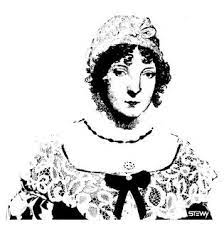
This past week I was reading about the grand Platinum Jubilee celebrations to mark 70 years on the throne of Queen Elizabeth II of the United Kingdom. This is the longest reign of a monarch of Great Britain; the closest being the rule of Queen Victoria who reigned for 64 years—a period called the Victorian Era.

Coincidentally the same week I read two accounts about women in the Victorian Era, and could not help but wonder how much things have changed. The first was fiction–a ‘murder mystery’ which featured some women who attempted to defy the existing norms,  and the other was the true story of a woman who was a pathbreaker in changing how the role and status of women was perceived in that era. 

The reign of Queen Victoria was an extended period of peace, prosperity, progress, and essential social reforms for Britain; however, it was also characterized by widespread poverty, injustice, and social discrimination. There was a very strictly defined ‘class system’ that determined every aspect of social life.

There was also a very strong perception (and application) of gender roles. A woman’s place was clearly considered to be in the home, and domesticity and motherhood were considered by society at large to be a sufficient emotional fulfilment for females. Even the upper class women who were educated to some degree by private tutors were not encouraged to use their minds in any way that would distract them from their assigned roles. A telling paragraph in the novel: “Did you read it in a newspaper?” “Oh no” she lied immediately. She had not yet forgotten that ladies of good society would not do such a thing. Reading the newspaper overheated the blood; it as considered bad for health to excite the mind so much, not to mention, bad for the morals.

The rights which the women enjoyed were similar to those which were enjoyed by young children whereby they were not allowed to vote, sue or even own property. But these rights were to be questioned, and changes demanded by a group of women who pioneered the suffrage movement. Among these was Elizabeth Garrett Anderson, who broke many glass ceilings in her day.

Elizabeth Garrett was born on 9 June 1836 in Whitechapel, London, to Newson Garrett and his wife Louisa; the second of twelve children. Her father was originally a pawn broker who went on to become a successful businessman. The family moved to Aldeburgh in Suffolk when Elizabeth was very young. As a child, Elizabeth got her basic education from her mother and a governess. When she was 13 she was sent to a private boarding school near London where she was taught languages and literature, but not sciences and math. Unusual for the time, her parents encouraged their daughters to travel and pursue their ambitions. After completing school Elizabeth, although engaged in domestic duties, continued to study Latin and arithmetic, and read widely. It was accepted that she would marry and live the life of a lady.

When she was 22, a group of women started a magazine for women, English Woman’s Journal. Among these women was one Emily Davies, who became a dear friend. She invited Elizabeth to hear a lecture given by Elizabeth Blackwell, the first American woman physician. Elizabeth was so inspired by her namesake and her lecture that she decided that she wanted to become a doctor. A female studying medicine was unheard of at that time. But her father was supportive. She was denied admission in any medical school, so she enrolled as a nursing student at Middlesex Hospital and attended classes intended for male doctors. She also employed a tutor to study anatomy and physiology. But after complaints from the other students she was barred from the hospital; however Elizabeth continued to study on her own. She was determined to secure a qualifying diploma that could entitle her to put her name on the Medical Register. Unless a person’s name was listed on the Medical Register, that person could not legally practice medicine in England.

Elizabeth found a loophole: she registered to pursue a degree of Licentiate of the Society of Apothecaries which did not specifically forbid women from taking their examinations. In 1865 she passed their exams and gained a certificate which enabled her to practise as a doctor. This was a shocking step; the Society subsequently changed its rules to prevent other women entering the profession this way. However Elizabeth obtained her licence to practise medicine in 1869; the first woman in Britain qualified to do so.

Even though she now had a licence, Elizabeth still could not get a medical post in any hospital. With her father’s financial backing, in 1866 she opened her own practice in London. A little later, towards her goal to establish a hospital for women staffed by women, Elizabeth set up St. Mary’s Dispensary for Women and Children. Initially people were reluctant to consult a female physician, but an outbreak of cholera saw patients teeming to her clinic.

It was during this period that Elizabeth was also getting engaged with the issue of women’s rights. Her younger sister Millicent Fawcett was active in this growing movement; the two sisters with a group of like-minded women set up a discussion group that strongly influenced the battle for women’s education and empowerment.

Although Elizabeth had already obtained many ‘firsts’ she was still determined to achieve her original dream of a formal degree in medicine. So she taught herself French and successfully earned her MD degree from the University of Paris in 1870. The British Medical Register refused to recognize her qualification.

In 1870 Elizabeth became Visiting Medical Officer for the East London Hospital for Children. In 1872 Elizabeth transformed the St Mary’s Dispensary for Women and Children into the New Hospital for Women in London. The hospital specialised in women’s health and all of the staff were women. It was renamed the Elizabeth Garrett Anderson Hospital in 1918 and continued to appoint only female staff until the 1980s. Elizabeth also co-founded the London School of Medicine for Women, the first place in Britain specifically intended to train women as doctors.

In 1871 Elizabeth married a businessman James Anderson, in a  wedding ceremony in which she did not take a ‘vow of obedience’;  she continued with her pioneering work even as she ran her own household and brought up her three children. 

Elizabeth’s determination paved the way for other women.  In 1876 an act was passed permitting women to enter the medical professions and the Medical Register. Today over 48 per cent of licenced doctors in UK are women.

Elizabeth continued to lecture at the London School of Medicine for Women for 23 years, and from 1883 she was also the School’s Dean. She was Senior Physician of the New Hospital of Women for 24 years and in 1896–97 she was President of the East Anglian branch of the British Medical Association. She also found time to write on medical topics, including a textbook for students.

In 1902, Elizabeth retired from her medical career and moved to the town of Aldeburgh in Suffolk. In 1908, at the age of 72, she became the Mayor of Aldeburgh; she was the first female mayor in England. In her final years, Elizabeth was a prominent member of the women’s movement and campaigned for equal rights for women. Elizabeth Garrett Anderson died in Aldeburgh on 17 December 1917 at the age of 81, just two months before the Representation of People Act extended the right to vote to women over 30.

Elizabeth Garrett Anderson, with quiet determination and persistence, opened many doors, and paved the path that women take for granted today. 

–Mamata

Taking Stock in Stockholm

When I started my journey as an environmental educator in the mid-1980s, my orientation began with an introduction to the key milestones in the global environmental movement. The first milestone was the Stockholm Declaration which put forward a vision, as well as a set of principles on the way forward in the shared management of the global environment. The Declaration was promulgated at the conclusion of the United Nations Conference on the Human Environment held at Stockholm in June 1972, which became popularly known as the Stockholm Conference. 

Why was this conference such an important milestone? Among many other firsts this was the first-ever UN conference with the word “environment” in the title. The Stockholm Declaration provided the first agreed global set of principles for future work in the field of the human environment.

What was the road that led to this? The world had seen unprecedented scientific and technological progress since the end of World War II. But a fallout of the resulting development was the deterioration of the environment. In the 1960s, several scientists and thinkers began to express concern about the negative environmental and societal effects of the rapid industrialization. The shortcomings of the UN system to deal with the new developments were also becoming evident, but at the time environment was not high on the agenda of national and international politics. What was the way forward in a world polarised by the Cold War, and also the increasing gap between the ‘developed’ and the ‘developing’ countries?

It was a small Scandinavian country, Sweden who took the initiative. It urged that the time was ripe for a collective, substantive discussion at the global level about environmental problems. In 1967 it proposed to convene a UN conference on the human environment to increase awareness, and to identify environmental problems that needed international cooperation.

The response was unexpected. Despite Cold War politics, the Soviet Union and other members of the Eastern bloc joined the United States and most Western European countries in supporting the Swedish initiative. However many developing countries were uneasy that Northern interests would dominate the proposed conference and that “green issues” would be an excuse to restrict their national development. But by and large Sweden’s proposal was positively received.

In May 1968 Sweden sent an official request to the Secretary General of the UN making their case.  ‘Environmental issues … have not yet been given the prominence in the deliberations of the competent organs of the United Nations… Furthermore, as the problems of human environment grow more serious every day… there is, therefore, an indisputable need to create a basis for comprehensive consideration within the United Nations of the problems of human environment.’

In 1968 the United Nations General Assembly adopted a resolution which called for a conference on the relationships between environmental, social, and economic issues to be convened in 1972. The conditions were that the conference would not take decisions. Any recommendations arising from it would have to be formally adopted by the General Assembly. Maurice Strong, a businessman and, at the time, the head of the Canadian International Development Agency (CIDA), was appointed to be Secretary General of the Conference.

In May 1969, the United Nations accepted Sweden’s offer to host the conference in Stockholm. So it came about that in 1972, “For the first time nations came to consider the state of the planet Earth, habitually taken for granted, treated as an unchanging backdrop to human drama. For the first time we were integrating the scenery into the action of the play.” (Shridath Ramphal Commonwealth Secretary General)

The Stockholm Conference was held in the first week of June 1972. It saw the participation of the representatives of 114 of the UN’s 132 member states. The Soviet Bloc did not participate in the main event but took active part in the preparatory process. This was the first major international event in which the People’s Republic of China participated as a new member of the United Nations. In addition to government representation, 250 non-governmental organizations came to the conference—an unprecedented achievement at the time.

Only two heads of State attended–Mr Olaf Palme the Prime Minister of Sweden, and Mrs Indira Gandhi the then Prime Minister of India. Indira Gandhi emerged as a figurehead to represent developing countries’ fears and priorities, stressing the issues of war, poverty, and development. She made an impassioned plea “We do not wish to impoverish the environment any further and yet we cannot for a moment forget the grim poverty of large numbers of people. Are not poverty and need the greatest polluters?”  This has been a key point in international deliberations in the five decades since Stockholm.

The Stockholm Conference produced three major sets of decisions: The Stockholm Declaration which provided the first agreed global set of principles for future work in the field of the human environment. The second was the Stockholm Action Plan comprising 109 recommendations for governments and international organizations on international measures against environmental degradation. The third was a group of five resolutions. The resolutions called for: a ban on nuclear weapon tests that may lead to radioactive fallout; an international databank on environmental data; the need to address actions linked to development and environment; international organizational changes; and the creation of an environmental fund.

The Conference had several outcomes that we today take for granted. Environment ministries and agencies were established in more than 100 countries to implement the recommendations of the Conference. It also led to a great increase in non-governmental and intergovernmental organizations dedicated to environmental preservation.

The Conference was used as a model for a series of similar UN events to try and come to grips with interlinked cross-sectoral issues from gender to human rights.

The United Nations Environmental Programme (UNEP) was set up as mark of the UN’s commitment to carry forward the Action Plan of the Conference. It was headquartered at Nairobi in Kenya, the first UN body to be located outside of the industrialized world. 5 June was designated as World Environment Day.

The Stockholm Conference was indeed a milestone in many ways. It stressed that environmental issues are inherently political—not just scientific and technical, as many policymakers previously thought, and therefore need political negotiations and decision-making. The Stockholm Conference demonstrated how global cooperation could take place. It identified a theme that has been at the centre of international environmental discourse: Sustainable Development.

This week it is exactly fifty years since this vision for a sustainable future for mankind was discussed and deliberated in a spirit of international cooperation. In the half century since, our planet has seen changes—for good and the bad. We are far from achieving the vision. Rather our planet faces a looming triple threat from climate change, pollution and waste, and loss of nature and biodiversity. The alarm bells are growing louder and closer. 

Once again, this week, Stockholm will host concerned world leaders, and a wide range of stakeholders in the Stockholm+50 event—a high-level gathering convened by the United Nations, and hosted by Sweden with support from the government of Kenya. They will meet in an effort to take stock of the achievements and failures of the past five decades, as well as with the hope to accelerate a transformation that leads to sustainable and green economies, more jobs, and a healthy planet for all, where no one is left behind.

As citizens of Planet Earth this is a good time for each of us to take stock of our own lifestyle, and remind ourselves that a healthy planet for the prosperity of all is our collective responsibility, and our collective opportunity.

The fate of Planet Earth lies largely in our own hands and in the knowledge and intelligence we bring to bear in the decision making process. In the final analysis, however, man is unlikely to succeed in managing his relationship with nature unless in the course of it he learns to manage better the relations between man and man.

Opening statement by Maurice Strong, Secretary-General of the Stockholm Conference June 1972.

–Mamata