It Begins With an Idea

It began with an idea. Meena mailed to say “why don’t we start a blog?” I was all agog, but cautious. “A blog? What do we know about blogging?”  We were two people who shied away from anything “too techy”, and equally from opening up our thoughts and broadcasting them far and wide. How would we deal with a new medium of communication, and more important, what would we communicate? And why would anyone be interested in what we had to say? But somewhere the spark was kindled. After all we had been writing partners for decades. We had written as part of our work as environmental educators, then, while we had some freedom about how to write something, the “what to write” was often a given. But that had been a while ago.

“Let’s think about it” I countered. “We need time to get our act together, as they say.” But Meena said, “No if we procrastinate, it won’t happen. It is Women’s Day next week, a perfect day to launch into a new space for a new time”. And before we could retreat, the die was cast. And so it was that the Millennial Matriarchs joined the blogosphere!

With the flurry of writing and posting our first pieces, came the panic. We had, in our enthusiasm, decided that each of us would write two pieces a week. But before we wrote anything, we needed to have something to write about! There began the continuous challenge of getting “ideas” for what to write about.

That took us back to the very notion of an idea. There are plural definitions of idea: Any conception existing in the mind as a result of mental understanding, awareness, or activity. A thought, conception, or notion. An impression. An opinion, view, or belief. A plan of action; an intention. A groundless supposition or fantasy.

These opened up a broader canvas for us. This was reflected in the sub title: Musings on Life and Times: Views, Reviews, Previews, Interviews…and Advice.

Indeed that became our guiding spirit, week after week. We discovered, day-after-day that ideas for writing lurked everywhere—newspaper items, things around us, books that we read, people we met, places we visited, conversations we had, birds and animals, changing seasons, history, folklore, festivals, and sometimes just a flight of fantasy! These had always been there, now we were more finely tuned to the potential and possibilities of pulling these out, looking deeper into them, making connections, and putting these in words. And every time this happened, it was an Aha Moment!

An idea comes, and you see it, and you hear it, and you know it…Ideas are beautiful gifts. And if you catch an idea that you love, that’s a beautiful day. And you write that idea down so you won’t forget it. And that idea that you caught might just be a fragment of the whole. Thinking about that small fragment will bring in more, and they’ll come in and they’ll hook on. And more and more come in, and pretty soon you might have a script. (David Lynch)

 We were looking at the world around us with a different lens. Even as the seasons changed, or we heard about an encounter or event, we were subconsciously filing away the raw material. The great fun then was the process of researching the topic or theme, compiling possibly useful information and then, making the connections. These were skills to be developed and honed. 

A book titled A Technique for Producing Ideas by James Webb Young published in 1939 discussed how the highest importance in the production of ideas involves developing a habit of mind which leads to a search for relationships between facts.  

Every really good creative person…whom I have ever known has always had two noticeable characteristics. First, there was no subject under the sun in which he could not easily get interested — from, say, Egyptian burial customs to modern art. Every facet of life had fascination for him. Second, he was an extensive browser in all sorts of fields of information.

Gathering raw material in a real way is not as simple as it sounds. It is such a terrible chore that we are constantly trying to dodge it. The time that ought to be spent in material gathering is spent in wool gathering. Instead of working systematically at the job of gathering raw material we sit around hoping for inspiration to strike us. When we do that we are trying to get the mind to take the fourth step in the idea-producing process while we dodge the preceding steps.

The book lays down some principles: The first principle is that an idea is nothing more nor less than a new combination of old elements. The second important principle involved is that the capacity to bring old elements into new combinations depends largely on the ability to see relationships. To some minds each fact is a separate bit of knowledge. To others it is a link in a chain of knowledge. It has relationships and similarities. It is not so much a fact as it is an illustration of a general law applying to a whole series of facts.

What you do is to take the different bits of material which you have gathered and feel them all over, as it were, with the tentacles of the mind. You take one fact, turn it this way and that, look at it in different lights, and feel for the meaning of it. You bring two facts together and see how they fit. What you are seeking now is the relationship, a synthesis where everything will come together in a neat combination, like a jig-saw puzzle.

In many ways this process has gradually become a habit of mind for us. It has fine-tuned our antennae to try and catch any “idea” that can transform into a piece, and to put it through the permutations and combinations, to twirl the bits in the kaleidoscope as we watch them form and re-form new patterns and. Oliver Wendell Holmes said: A mind once stretched by a new idea never regains its original dimension. We are grateful for this opportunity to continuously explore and discover, and, we hope, to share some of that excitement.

This week, as we complete five uninterrupted years of Millennial Matriarchs (two pieces every week) we feel that we are at the third stage of what Arthur C. Clark wrote: New ideas pass through three periods: 1) It can’t be done. 2) It probably can be done, but it’s not worth doing. 3) I knew it was a good idea all along!

But even a good idea cannot survive in a vacuum. The writer cannot do it alone. The unread story is not a story; it is little black marks on wood pulp. The reader, reading it, makes it alive: a live thing, a story. (Ursula K le Guinn)

This is with gratitude to all our readers who have been gracious enough to join us on our journey, and who have shared our ideas.  

P.S. Coincidentally, while we began this blog as a celebration to mark International Women’s Day on 8 March, we find that this month is significant for another reason. March is celebrated as International Ideas Month! This month is all about realizing the value of an idea, no matter how fantastical or far-fetched it may seem at first. As the founders urge: If there is something you have been mulling over for a while, an idea you have not really thought of making it a reality, then this month is the time to get it rolling!

–Mamata and Meena
Nothing to Sniff At

One of the numerous lingering impacts side effects of the not too-long abated COVID pandemic was the loss of the sense of smell for many people. For those who escaped this side effect it was difficult to imagine how people who could not smell anything may be feeling. For those who were affected, it must have been a really unnerving sensation.

The sense of smell, or olfaction, is the special sense through which smells are perceived. While impairments of the sense of sight or hearing are more apparent in the person with the disability and more evident to others, an olfactory dysfunction affects the person very personally, and less is less noticeable to others.

One of the side effects of losing one’s sense of smell is the losing also the sense of taste or gustation. These two senses are closely interconnected. In fact our sense of smell is responsible for about 80% of what we taste.

Both are chemical senses. The perception of a smell occurs when substances in the air pass through the nose and stimulate the olfactory (smell) nerve. The experience of taste, or gustation, occurs when the taste buds in the mouth respond to substances dissolved in saliva. Without our sense of smell, our sense of taste is limited to only five distinct sensations: sweet, salty, sour, bitter, and the newly discovered ‘umami’ or savoury sensation. But what we call ‘taste’ is actually ‘flavour’–a combination of smell, taste, spiciness, temperature and texture. Much of the flavour of food comes from smell. Thus both the senses–taste and smell–contribute to the experience of flavour. When we are unable to smell we lose much of our ability to experience flavour. Most of us have experienced that when we have a cold and our nose is blocked most foods taste bland. But not many of us have consciously registered that when we are hungry our sense of smell becomes stronger! Think of how all the aromas emanating from a kitchen or bakery start making our mouth water!!

So how exactly does humans’ sense of smell work? This is where the nose and the brain work together. Inside the nostrils are tiny cells, called olfactory neurons, that have long cable-like connections that send electrical messages to a spot at the front of the brain, known as the olfactory bulb. Each olfactory neuron connects with a different neuron in the olfactory bulb, which then sends this information to other areas of the brain. When odours or distinctive smells enter the nose, they travel to the top of the nasal cavity to the olfactory cleft where the nerves for smell are located. The combination of activated neurons generates all the unique smells that we as humans can detect.

The way the brain deals with smells is very different to how it deals with other senses, such as seeing and hearing. For example, we can identify the different instruments playing in a band, or the different shapes and colours in a painting. But it is very hard for us to tell the individual parts of a smell mixture

The brain does more than help us smell, it triggers memories associated with the smell. This is how sometimes a particular fragrance immediately conjures up memories of a person who one associates with that fragrance, or a food smell brings back memories of childhood kitchens and food lovingly cooked and served in the family. Some smells may also trigger sad or unpleasant memories that one thought had been pushed away in the farthest recesses. As Helen Keller said: Smell is a potent wizard that transports you across thousands of miles and all the years you have lived. 

The sense of smell is not just about enjoying the flavours of food or relishing memories evoked by fragrances and odours. This sense is important for our well being. Smell helps us to distinguish good from bad odours. Often we smell stored food to know whether it has “gone bad”. Food that smells over fermented or not as it should is a warning that it may be harmful if ingested. The smell of a “dead rat” (literally) or rotting matter alerts us to the state of hygiene in a particular location. The smell from a gas leak or “something burning” is an early warning system of potential danger.

While we take these smelling tests as a normal part of our daily life, the inability to use smell as an early detection aid can be dangerous for those who lack the sense of smell.

In fact this lack is a medical condition called ‘anosmia’. The term refers to the inability to perceive odour or a lack of functioning sense of smell. Anosmia can be caused by a wide range of factors. The most common reasons are due to upper respiratory or sinus/nasal infections or viral diseases. The condition may be temporary or permanent depending on its cause.

While anosmia is the complete loss of sense of smell, other types of smell dysfunction include: hyposmia, which is the partial loss of the sense of smell; parosmia, which is when the perception of smells becomes distorted, so pleasant smells start to seem unpleasant, or an odour appears to change intensity; and phantosmia, which is when a person believes that they can smell something, but it is not actually there.

Compared with other disabilities, anosmia is a condition that is relatively undiscussed. This leaves a lot of people who are affected by it feeling isolated and lost. This was exactly what Daniel Schein an American, who suffered from congenital anosmia felt. Growing up with anosmia, I never knew anyone else with the disorder and it was just something I accepted and lived with. But I soon learned that there were many people all over the world in the same situation and different groups doing important research. I started Anosmia Awareness as a way to bring together everyone interested in anosmia, encourage research and spread awareness.

Daniel Schein’s awareness campaign was formalized through the launch of an Anosmia Awareness Day in 2012. Now an annual event, the day is marked on 27 February every year. Daniel also runs the website anosmiaawareness.org which is a valuable resource for those who are keen to know more about the condition.

The day was not well-publicized initially. However the movement got a boost when a UK-based charity called Fifth Sense joined in supporting the cause. Today this group is dedicated to support and advice people with smell and taste-related disorders, and to making this day an international reminder of the gift that we often take for granted.  

–Mamata

A True Gift of Love: Books

The last few weeks have seen a deluge of marketing gimmicks to remind people of the day which is meant to be a demonstration of love–Valentine’s Day. This love, as glossy advertisements remind us, is to be demonstrated by gifting loved ones with “appropriate” tokens such as red roses, chocolates, candlelight dinners, and jewelry.  Thousands of rupees are spent in this market-driven frenzy on products and experiences that soon fade, wilt, or melt away.

Lost in the glimmer and glitz of Valentine’s Day, was another day that is also marked on 14 February every year. This is International Book Giving Day.

This is a global, totally volunteer initiative that seeks to increase children’s access to, and enthusiasm for books. The goal of the day is to get books into the hands of as many children as possible. The day is said to be the brainchild of Amy Broadmoore, a K-5 school librarian in the United States. In 2010 Amy, then a mother of three young children started a blog called Delightful Children’s Books. As a lover of books herself she was passionate about raising her children to be curious, creative and to love books. She wanted to share this passion with others. Amy was also aware that there was a serious lack of access to books for children. Even in countries like the USA and UK large numbers of children did not have any books. In 2012 she collaborated with fellow blogger Zoe Toft to create an event that celebrated the gifting of books to children, especially to those who did not have access to books. The event held on 14 February made waves on social media. Emma Perry a UK children’s author reached out to Amy and offered to help. In 2013 Amy handed over the reins of the project to Emma. A decade later, the passion, fuelled by volunteers, has spread and the day is now celebrated in almost 45 countries across the globe.

International Book Giving Day is not just about giving books, but a symbol of the ongoing crusade to use books to foster a child’s appetite and enthusiasm for great storytelling and literary adventures.

Coincidentally, I was recently part of a stimulating discussion which posed an important question towards the same end. How to nurture children’s responses to literature? The panelists, themselves authors and educators, shared both experiences as well examples of how books can provide comfort, companionship, and entertainment. They discussed the critical role that books can play to stimulate imagination and foster creativity; create and answer questions, and expand the worlds of children.

The magic of books is beautifully evoked by American author Anne Lamott in a letter to children:

If you love to read, or learn to love reading, you will have an amazing life. Period. Life will always have hardships, pressure, and incredibly annoying people, but books will make it all worthwhile. In books, you will find your North Star, and you will find you, which is why you are here.

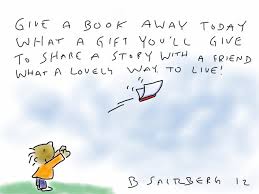
Books are paper ships, to all the worlds, to ancient Egypt, outer space, eternity, into the childhood of your favorite musician, and — the most precious stunning journey of all — into your own heart, your own family, your own history and future and body.

Out of these flat almost two-dimensional boxes of paper will spring mountains, lions, concerts, galaxies, heroes. You will meet people who have been all but destroyed, who have risen up and will bring you with them. Books and stories are medicine, plaster casts for broken lives and hearts, slings for weakened spirits. And in reading, you will laugh harder than you ever imagined laughing, and this will be magic, heaven, and salvation. I promise.

Which raises the primary question, of how to bring children and literature together, before they can respond to the magic.

The first step towards this would be to facilitate children’s access to books. Classrooms and libraries are perhaps the more formal spaces for such access, while homes are the cradle where exposure to books could sow the seeds of a life-long engagement with words and visuals. 

However, passive or organized access to books alone may not be enough. To nurture this initiation requires also facilitating contexts where children could express their ‘response’ to books. Which also raises the question of what do we mean by ‘response’?

Each child responds in a different and very personal way to the same book. Some children respond to the sound of words, some respond to the characters in the story, some respond to the situations, some respond to the pictures. Perhaps the last thing that children respond (or not respond to) is the “message”. But is that even really important? What the book has done for each child is unique to that child. What is common is that the child has had the opportunity to look at, touch, feel, (even smell and taste!) a book. Whichever way a child may respond, it is important that a child have the time and space to absorb and interpret the experience in its way.

While the panellists in the discussion agreed strongly about the potential of engaging with printed books, there was also the concern about the huge challenge to this posed by the overwhelming attraction, (almost addiction) to digital media. In an age of information at ones fingertips, fleeting bytes, and constant rush, these words by a Lithuanian children’s writer help us to pause and ponder, once more, the power of books.

No less frequently do we hear that we live in the age of information overload, haste and rush. But if you take a book into your hands, you immediately feel a change. It seems that books have this wonderful quality – they help us slow down. As soon as you open a book and delve into its tranquil depths, you no longer fear that things will whizz by at a maddening speed while you see nothing. All of a sudden, you come to believe you don’t have to dash off like a bat out of hell to do some urgent work of little importance. In books, things happen quietly and in a precisely arranged order. Maybe because their pages are numbered, maybe because the pages rustle gently and soothingly as you leaf through them. In books, events of the past calmly meet events that are yet to come. Books help us not to rush, books teach us to notice things, and books invite us or even make us sit down for a while.

I am sure that books are never bored when they are in your hands. Someone who enjoys reading – be it a child or adult – is much more interesting than someone who doesn’t care for books, who is always racing against the clock, who never has time to sit down, who fails to notice much of what surrounds them.

If only we could make this message heard more widely. Perhaps at an individual level each one of us can play a small role by gifting books to children in the hope that some seeds may find fertile soil to sprout and grow.

–Mamata

Tea and Biscuits

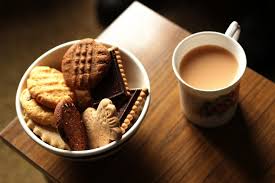
One has always associated the typical English cuppa with a snack of biscuits. A recent news item reported that the new trend in England, especially among the younger generation, is the popularity of samosas as the preferred snack with tea. This is indeed a total reversal of the traditional colonial notion of appropriate accompaniments to tea.

The English connection between biscuits and tea saw two different aspects during the two World Wars. Huntley & Palmers, the first officially designated biscuit manufacturers in England set up a factory in Reading in 1846. By 1874 it was producing tens of thousands of tonnes of biscuits, becoming the world’s largest biscuit manufacturer. When World War I started in 1914 it received a substantial order from the War Office to manufacture biscuits for the British army. The company manufactured Army Biscuits Number 4 and 9. The ‘Service’ biscuits as they were called, were about four inches square, and were made of whole wheat flour, without sugar. The biscuits provided sustenance, but were very hard and could only be eaten when soaked in tea or water. The fact that some of the biscuits survived intact for a hundred years attests to their durability!

Biscuits and tea found a different connection during World War II in England. By then sweet tea was favoured by the British working class. During the war, tea as well as sugar were severely rationed; there were complaints that tea was not sweet enough. So biscuit manufacturers stepped in by supplying the canteens for civilian war volunteers and other services with biscuits which would add a touch of sweetness with the tea. By the end of the war, it became a reflex for many to have biscuits with their tea. This English tea habit also took roots in what were then colonies of the British Empire.

In India, for many of a certain generation, the words ‘Britannia biscuits’ were almost synonymous. The history of these is interesting. Britannia Industries is one of India’s oldest existing companies. It was founded as a small operation in 1892 by a British businessman, with an investment of Rs 295/-.The first biscuits were manufactured in a small house in what was then central Calcutta. In 1897, the outfit was acquired by four Indian brothers, the Gupta brothers, and was called VS Brothers. In 1918 Charles Holmes, an English building contractor and friend of the Gupta family became a partner in the business. Holmes had a construction firm called Britannia Construction Co. and thus VS Brothers the biscuit manufacturer was renamed by him as Britannia Biscuit Company Ltd.

World War 1 (1914-1919) provided a huge boost for the newly-named company Britannia which was contracted by British colonial government in India to supply specially made biscuits for its soldiers on the frontlines. Thus Britannia joined Huntley & Palmer as suppliers of Service biscuits.

Britannia became the first biscuit maker in India to mechanize production, and the first one east of the Suez Canal to use gas ovens, which it imported in 1921.

In the early 1920s the two most successful biscuit manufacturers in the UK Peek Freens and Huntley & Palmers merged to create a company called Associated Biscuit Manufacturer’s Ltd. This led to world-wide expansion. Britannia merged with this larger company in 1924, and set up a factory in Bombay to meet with the growing demand. The company began establishing a reputation for quality and value. It further strengthened its position by expanding the factories at Calcutta and Mumbai.

During the Second World War, once again the company was contracted to produce Service biscuits, and from 1939-45 almost 95% of its total production capacity was used for this war-time effort. 

In 1952 the Calcutta Factory was shifted to spacious grounds at Taratola Road in the suburbs of Calcutta. During the same year automatic plants were installed there, and later in Mumbai in 1954. The same year the company began production of high-quality sliced and wrapped bread in India. This was first manufactured in a new factory set up in Delhi and first sold there. In 1955 the company launched the all-time favourite Bourbon biscuit in India, followed by Britannia cakes in 1963. In 1978, the Indian shareholding in the company crossed 60%. The Company was re-christened from Britannia Biscuit Company Limited to Britannia Industries Limited with effect from 3rd October 1979. By 1994 the annual production crossed one lakh tonne of biscuits. In 1995 Britannia made it a mission to make every third Indian a Britannia consumer and changed its corporate identity to “Eat Healthy, Think Better”. Since then the company has grown from strength to strength, introducing new brands that rapidly became household names. The company sells its Britannia and Tiger brands of biscuits, breads and dairy products throughout India and in more than 60 countries across the world.

While Britannia is one of the oldest biscuit manufacturing companies in India, today there are several companies that offer choices of sweet or salty biscuits. From Parle G, the world’s largest selling biscuit brand in 2021, to the cream or chocolate-filled cookies, to a host of “healthy, low-carb hi-fibre” options. These are not necessarily ‘tea biscuits’. They are multi-place, multi-use snacks, easy to carry, quick to unwrap and fun to savour even on their own. Even while crunching and munching on biscuits, Indians also continue to enjoy the traditional teatime snacks and savouries of which every state and even every household have their own specialties and favourites—from ganthiya in Gujarat, to murukku in south India, to regional varieties of vadas and pakoras. And of course, the transnational favourite samosa. 

Now it looks like we have come full circle—from Indians adopting English biscuits with chai, to the English adopting samosa with tea!

–Mamata

2023: The Year of the Rabbit

Three weeks ago we bade farewell to the old year, and welcomed the New Year, 2023 according to the Gregorian calendar. This month also marked the start of a new year for several different communities in different parts of India. Other parts of the world are also celebrating new beginnings. In many countries in East and Far East Asia it is the Chinese New Year that will herald 2023 as the Year of the Rabbit on 22 January this week.

The Chinese zodiac follows a 12-year astrological cycle in which a zodiac animal is assigned to each year in an ever-repeating rotation. The 12 zodiac animals are, in order: Rat, Ox, Tiger, Rabbit, Dragon, Snake, Horse, Goat, Monkey, Rooster, Dog, and Pig. Each year has an animal sign according to the 12-year-cycle. The Year of the Rabbit signifies the fourth year in the 12-year cycle of Chinese zodiac

There are several myths and legends related to the origin of this. According to one story, the legendary Jade Emperor invited all the world’s animals to a banquet, but only these twelve animals accepted his invitation. Thus he honoured them by dedicating one year on the Chinese calendar to each.

Another Chinese zodiac origin story claims that the Buddha himself called for 12 sacred animals to protect his palace. He thus organized a race that involved all animals on earth to identify the most worthy. At the end of the race, the first 12 animals to complete the race were selected as his guards. Now, they represent the 12 Chinese zodiac signs.

The most popular tale is that of The Great Race that explains the order of the animals in the zodiac has many variations, but the essence is the same.

According to legend the Jade Emperor decided that in order to determine the order in which each of these twelve animals would be placed in the zodiac, they would have to run a race, and they would be assigned their places depending upon the order in which they reached the finish line.

All the animals set off on the course. On the way to the finishing point there was a big river that they had to cross. The Rat had got up and started early, but when it reached the river it felt helpless; how could it navigate the swirling waters? But then it saw the strong Ox about to enter the water, so it used its wits and climbed onto the Ox’s head. The Ox was kind and let it ride with him. But as soon as they reached the other side, the wily rat quickly slid down and scampered to the finish line. And so the Rat came first, followed at number two by the diligently plodding Ox.

Year of Rabbit

Tiger and Rabbit were not far behind. Both were fast, but Tiger was faster and came in third. Rabbit though fast on the ground, was stumped when it reached the river; it could not swim but it used its strong legs to hop from stone to stone in the river. However at one place it slipped and fell in the water, but it grasped a floating log and hung onto it, and was tossing with the current.

Dragon who everyone thought would easily win the race because it was believed to have magical powers fell behind as it took  a detour on the way to help some villagers to  extinguish a fire. When it returned to the river it saw the rabbit clinging to the log which was being carried away by the currents. Dragon used its breath to push the log to the shore. Thus the rabbit was the fourth animal to complete the race. Rabbit never found out where the breeze that had helped it ashore came from. The helpful dragon thus came after the rabbit, to be fifth in the race.

The story goes on to describe the adventures and machinations of the other seven animals who completed the race.

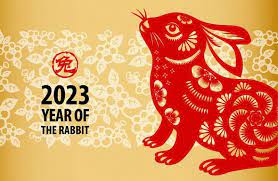
2023 is the Year of the Rabbit. The Chinese zodiac assigns an animal and its attributes to each year. Those born in a specific year are said to possess certain characteristics of the animal, as defined in the Chinese belief system; and their fortunes are determined accordingly. The years of the Rabbit include 1915, 1927, 1939, 1951, 1963, 1975, 1987, 1999, 2011, and now 2023.

The rabbit is historically known as the gentlest of the 12 animals in the Chinese zodiac. The attributes also apply to the people born in the year of that animal. Thus those born in the year of the rabbit are believed to be gentlequietelegant, and alertas well as quick,ingenious,skilfulkindpatient, and very responsible. Those born under the sign of the Rabbit are known for their calm and decisive nature, which helps them to navigate difficult situations effectively. They are sometimes reluctant to reveal their minds to others and have a tendency to escape reality, but are always faithful to those around them. In the Japanese zodiac that also follows these 12 animal signs, rabbits represent fortune, moving forward and cleverness.

In addition to these traits, according to the Chinese theory of five elements, each zodiac sign is also associated with one of the five elements: Gold (Metal)WoodWaterFire, orEarth. These occur once in a 60-year cycle. According to this, 2023 is the year of Water Rabbit. Water rabbits are characterized as being gentle, amicable, able to adjust readily to different conditions, but with a firm mind set and principles.

In today’s world where there is an increasing prevalence, (indeed even positive recognition) of more aggressive traits of competitiveness, and ruthlessness, this year is a reminder of the value of gentleness, tenderness and empathy. In Chinese and Japanese cultures the sign of the Rabbit is revered as a symbol of longevity, peace and prosperity.

According to Chinese astrology, 2023 the year of the Water Rabbit will be less tumultuous than last year which was the year of the Tiger. It is predicted to be a year of Hope. This is what the world needs so badly now.

Here is to the Year of the Rabbit 2023—a year of hope, peace, and moving forward with empathy. 

–Mamata

Underground Treasures: Tubers

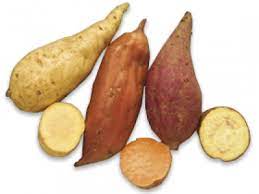
This is the season of relishing a variety of underground edible delights. These are the root and tuber vegetables that are consumed in numerous ways, in a variety of dishes. In Gujarat these are celebrated in the undhiyu, a mix of winter vegetables led by several kinds of tubers including yams, sweet potatoes and potatoes, traditionally slow-cooked in an earthen pot. The winter season is also a multi-coloured celebration of root vegetables like carrots, beets, radish, turnip, fresh turmeric and ginger that add crunch, colour and flavour to salads, and sweets (carrot hawa!).

The distinction between tubers and roots is more botanical than culinary. Both root vegetable and tubers are geophytes, a botanical classification for plants with their growing point beneath the soil. All tubers fall under the root vegetable umbrella, but not all root vegetables are tubers. Root vegetables are aptly named because the meat of the crop is the root of the plant, growing downwards and absorbing moisture and nutrients from the soil. Above ground are the leaves, below ground, are the roots which are eaten as vegtables. Tubers, however, form at the base of the root. Tubers store energy and support new stem growth. You can get several tubers from one above-ground plant, while root crops will have one root vegetable from each plant.

The general belief is that tubers are starch heavy and difficult to digest. Many people feel very full after eating tubers. In fact, the complex carbohydrates found in tubers balance the glucose levels in blood, and help remain full for a longer period, thereby prevent cravings and overeating.  While they do contain more carbohydrates than protein, tubers are a rich source of essential nutrients—vitamins (especially vitamin C), minerals like copper, manganese and potassium, and beneficial enzymes. They are also high in fibre that helps to keep the digestive and excretory system healthy. 

Indigenous people all over the world have traditionally consumed a variety of local tubers to supplement their diet as a balanced and healthy food source. In the Andean region of South America, tuber-forming or storage root crops have been continuously domesticated from wild ancestors and improved via selection and breeding during centuries by the local indigenous people. Some have been used as part of traditional medicine for their healing properties. Tubers thus provided food security as they could survive the vagaries of weather conditions, especially drought.

Tubers are slowly attracting attention again for all these reasons. Tubers are packed with nutrition, but majorly neglected in our diets. They are naturally resistant to pests and diseases, and are chemical-free unlike most fruits and vegetables. Unlike other food, tubers survive for three-four months after being pulled out of the soil.

Realising their multi-faceted potential for a hunger-free world, the Food and Agriculture Organization has categorised tubers like the sweet potato, along with pulses and millets, as Future Smart Food (FSF). 

However with the spread of monocultures and new varieties of cereal crops, as well as accessibility and popularity of other vegetables, over time the genetic as well as nutritional properties of tubers have been largely forgotten or neglected.

This is what motivated Shaji NM, a farmer from Kerala to take on a one-man crusade to save and celebrate tubers. Shaji grew up in a family of farmers that often resorted to subsisting on a diet of different tubers that they cultivated, or collected from the nearby forest, when they could not afford any other food grain. While Shaji himself became familiar, early on, with a variety of tubers, as he grew he saw that these were slowly being forgotten as the market became flooded with cereals and vegetables from far and wide. He also realized that while traditionally most farmers had cultivated some tubers in their fields, these were being increasingly replaced by the cultivation of cash crops like pepper, cardamom, nutmeg. Shaji felt that he needed to do something to protect and preserve tuber varieties before they disappeared altogether. And thus began a mission that has been continuing for almost two decades now. 

Shaji began travelling across Kerala to look for wild tubers. He went deep into the forests to meet the local tribal communities. It is here that he discovered a variety of wild yams and other tubers that were part of their traditional diet, grown in small patches near their homes, or collected from the forest. These were not grown nor available commercially. Shaji saw that many such varieties were on the verge of disappearing and he began to collect the seeds of all the varieties that he came across. He brought the seeds back and started growing these on his own one acre of land. But he also began to give the seeds back to the local communities, encouraging them to cultivate these and include these in their diet.

Today Shaji has accumulated a rich basket of tuber species. Greater yam, lesser yam, elephant foot yam, arrowroot, colocasia, sweet potato, tapioca, Chinese potato are just a few among the over 200 varieties of tubers that he grows on his small farm named Kedaram that means ‘cultivation’ in Malayalam. Shaji’s passion has extended to preserving other endangered plant varieties as well. He cultivated over 52 varieties of indigenous and traditional rice varieties, 100 varieties of vegetables and fruits, as well as medicinal plants. With a small fish farm, rearing of honey bees and a few cows and goats, Shaji has demonstrated the enormously rich potential of even a small landholding.

Shaji organizes a seed festival at his farm every year. He generously gives away, for free, the seeds of tubers and rice to others who want to cultivate these with the strict condition that the people return the same amount of seeds they take from him once they harvest the crop. This helps to ensure that the seeds are properly cultivated.

Shaji N.M., a truly grassroots biodiversity champion, strives to spread his mission every way he can from personal interactions, to technology like Facebook to connect and train farmers. The Tuber Man of India as he is popularly called has been recognized for his efforts through several state and national level awards.  He was awarded the India Biodiversity Award 2021 in the individual category of Conservation of Domesticated Species.

I will certainly relish my undhiyu with more respect this year!

–Mamata

.

STRIKING TIMES

On 15 December 2022 an estimated 100,000 nurses went on strike across hospitals in the UK, marking the first-ever nationwide walkout in the history of the nursing union in the country. This is probably the culmination of a year that has seen a great deal of labour unrest across Britain which has manifested in a series of strikes. From British Rail workers, to postal workers, bus drivers and baggage handlers at airports, and NHS nurses, several essential services have been disrupted and daily activities affected by these.

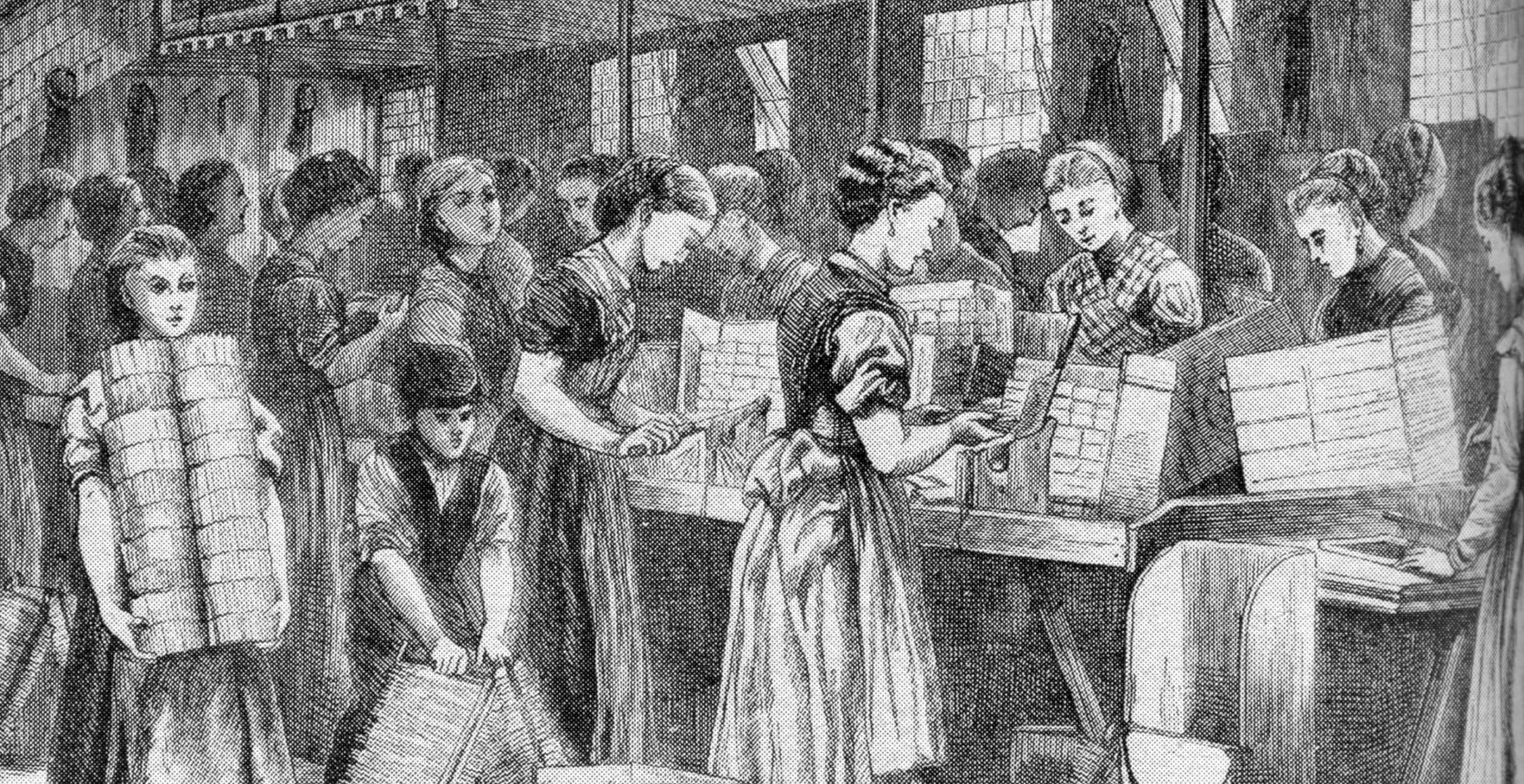
Labour unions have had a long history in Britain. It is interesting that one of the earliest examples of labour militancy, was in 1888, and was sparked off by young girls who worked in appalling conditions in a match factory. The Match Girls’ Strike as it came to be known was a key moment in British history and a milestone in the labour movement.

This historic development dates back to the late-nineteenth century in London’s East End, an area inhabited by the very poor, with unsanitary living conditions and rife with disease and malnourishment. This area also provided cheap labour for the nearby factories. Among these was the Byrant and May Match Company. The company employed young girls (starting as early as age 13) who worked, standing on their feet, for 14 hours a day, for very meagre wages from which they had to also feed, clothe and house themselves. Their earnings were further cut by fines and deductions for small mistakes such as leaving a match on the work bench. The girls who were forced to work as they came from large and poor families, had hardly anything left to take home. The girls also suffered abuse at the hands of the foremen. Over and above the economic exploitation, was the hazardous work environment.  

The production of match sticks involved dipping the sticks, made from poplar or pine wood, into a solution made up of many ingredients including phosphorus, antimony sulphide and potassium chlorate. Within this mixture, it was the white phosphorus that was extremely hazardous for bones and lungs. Inhaling it would cause toothaches, and in the long run, a condition called “phossy jaw” an extremely painful type of bone cancer leading to horrendous disfiguration of the face.

Matchgirls strike work!

The Company employed around 1400 such women and made huge profits, even as they managed to circumvent some of the basic labour rules of the time. It was fully aware of the impact of phossy jaw but if anyone complained, they simply instructed them to have the tooth extracted. While discontent simmered within the workers, there was little that the girls could do to change the situation; but the glowing embers were getting hotter; until a spark ignited the matches.

Henry Burrows a social activist and Theosophist, and a close friend of Annie Besant, had heard rumours about the work conditions in the match factory. He first made contact with some of the girls who worked in the factory, and Annie Besant met many of them and heard from them about their appalling work conditions. This prompted her to write an article about this titled White Slavery in London. The article was published on 23 June 1888 in a weekly magazine called The Link which was published by Annie Besant.  

The powerful matchstick industry had never been challenged like this before, it was outraged, and promptly denied everything. Bryant and May threatened to sue Annie Besant for libel and demanded that their employees sign a statement claiming that  the article was untrue. They refused. The company retaliated by sacking one of the workers who they accused of being ring leader. This was the final straw for the Match girls. And so it was that on 5th July 1888, 200 girls and women downed their tools walked out. They marched to the office of The Link and their representatives met Annie Besant. Mrs Besant did not agree with the strike action in principle but she agreed to help them. Her leadership helped to give the girls direction and organization. The ripples spread quickly, and soon about 1,400 workers had walked out in sympathy. 50 girls visited Parliament, to describe their grievances to MPs “in their own words”.

Besant and Burrows proved crucial in organising the campaign which led the women through the streets whilst setting out their demands for an increase in pay and better working conditions. Such a display of defiance against a powerful industrial lobby was met with great public sympathy, and donations for the cause started pouring in. The empathy demonstrated for the plight of working women was also a sign of changing times.

The factory management saw that the bad publicity could harm their interests and they had no choice but to offer improvements in wages and working conditions. This agreement represented a resounding success for the Match girls, who returned to work the next day. Although it would not be until 1908 that the House of Commons finally passed an act prohibiting the use of the deadly white phosphorous in matches.

An important outcome of the Match girls’ strike was the creation of a union for the women to join; this was extremely rare as female workers did not tend to be unionised even into the next century. The Union of Women Matchmakers, which lasted until 1903, was extremely significant, considering that even as late as 1914, less than 10 per cent of female workers were unionised. It also meant that the organisation of the workers did not just disappear after the strike, as had been the case previously.


The Match girls’ success gave the working class a new awareness of their power, and unions sprang up in industries where unskilled workers had previously remained unorganized. As The Link wrote on 4 August 1888 the strike “put new heart into all who are struggling for liberty and justice”. The next year saw the Great Dock Strike, where many of the dock workers were male members of the families of the Match girls. Ultimately, these two strikes led to the formation and growth of the labour movement and Labour Party itself. 

–Mamata

Hoopoe Who?

This is the time of year when I look at my little patch of lawn in the mild December sunshine and miss the winter visitors who used to add little dabs of colour and movement on the grass. Alas, in the last few years, with the erstwhile fields now transformed into towering concrete jungles, these feathered friends have forsaken us. Among these was one of my favourites—the hoopoe.

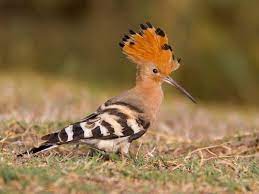
The Eurasian hoopoe (Upupa epops) is a striking bird distinguished by its appearance. A fawn-coloured bird, about the size of a myna, it has zebra-like black and white markings on its back, wings and tail; and the head is topped by a conspicuous fan-shaped crest. It has a long, slender, gently curved beak.

The bird has a soft, musical hoo-po or hoo-po-po call which may go on intermittently for ten minutes at a stretch. It may be this call that has given rise to its name. Another possible root of its common English name is that it is a derivation of the French name for the bird huppee which means crested.

Hoopoes have two basic habitat requirements: bare or sparsely vegetated ground and vertical surfaces with cavities for nesting. Hence they are found in a wide range of habitats including lawns, gardens, and groves. They are usually found singly, but sometimes in pairs, striding over the ground and periodically pausing to probe the ground to forage for food. They eat mainly a variety of insects, small reptiles, frogs, plant matter, seeds and berries. The beak is also used as a lever to move stones and flake from tree bark. The strong musculature of the head allows the beak to be open like forceps when probing the soil. While probing, the crest is folded back into a neat point behind the head.

While mainly a ground-walking bird with a quail-like waddling gait, the hoopoe has broad, rounded wings capable of strong flight. Due to the wings half closing at the end of each beat or short sequence of beats, hoopoes have a characteristic undulating flight like a giant butterfly. As it lands, the crest opens out fully, as it does when the bird is agitated or frightened. The hoopoe likes to sunbathe by spreading its wings and tail close to the ground and raising its head. Hoopoes also enjoy dust and sand baths.

Hoopoes are territorial and the males call out to proclaim the ownership of their territory. The male and female pair for a single mating season. The nest is in a natural hollow in a tree or wall lined untidily with straw, rags and rubbish; which usually make the nest stink. The female alone is responsible for incubating the eggs. It is the stink which act as the defence against predators. The stink is not just from the rotting rubbish but also from a foul-smelling liquid generated by the incubating female. The secretion is rubbed into the plumage of the mother and chicks to deter not just predators but also parasites and harmful bacteria.  The secretions stop when the nestlings are about the leave the nest.

These distinctive birds have made a cultural impact over much of their range. Considered sacred in Ancient Egypt, they were depicted on the walls of tombs and temples. The Egyptian considered the hoopoe as symbolical of gratitude because it repays the early kindness of its parents in their old age by trimming their wings and bringing them food when they are acquiring new plumage.

The Arabs call it the doctor, believing it to possess marvellous medicinal qualities. The hoopoe is also considered a waterfinder. It can see through the earth and can point out hidden springs, a virtue which is much appreciated by desert dwellers.

In contrast, hoopoes were thought of as thieves across much of Europe and as harbingers of war in Scandinavia. In Estonian tradition, they are strongly connected with death and the underworld. Their song is believed to foreshadow the death of people or livestock. But in many parts of the world they are seen as harbingers of good things.

In the Middle East, there is an interesting legend about how the hoopoe got its crown. Solomon the wise king was once journeying across the desert, and was fainting with heat, when a large flock of hoopoes came to his assistance, and by flying between the sun and the King, thus protecting him from the strong sun.

Grateful Solomon asked the birds how he could reward them. After some consultation among themselves the hoopoes answered that they would like each bird to be decorated with a golden crown. Solomon cautioned them that this would not be in their own interests, but as the birds persisted, he gave each Hoopoe crown of gold. For some days the Hoopoes preened in self-admiration and showed off their gift to all the other birds. Then a bird-catcher discovered the prize on their head, and as the word spread, every hunter in the land started pursuing and catching hoopoes. The hoopoes’ very existence was in danger. They begged for forgiveness for their greed and requested Solomon to take away their crowns of gold. Solomon granted their request, and removed the golden crown from their heads; but, being unwilling that the birds should be left without a mark by which they might be distinguished from their fellows, he substituted a crown of feathers for that of gold. And thus the Hoopoe still wears its distinguishing crown of feathers.

It must be that Solomon also gave the hoopoes the gift of wisdom. A classic 12th-century Sufi epic poem titled The Conference of the Birds tells the allegorical story of thirty birds who set out on a journey across the seven valleys of Quest, Love, Understanding, Detachment, Unity, Amazement, and Death in a quest to find their true king, Simorgh. The birds are led through the journey by the Hoopoe who the birds recognize as their spiritual leader thus:

Dear hoopoe, welcome! You will be our guide:
It was on you King Solomon relied
He knew your language and you knew his heart.

Nevertheless each bird is afraid to undertake the journey, and comes up with its excuses. The poem is made up of one-to-one stories in which the Hoopoe addresses each bird’s concern and excuse. What makes the Hoopoe’s responses even more insightful are the anecdotes and stories that follow each piece of advice. The Hoopoe is full of words of encouragement and wisdom reminding the birds to look at the bigger picture and aspire for the higher goals; explaining that the quest for ultimate wisdom must not be limited by oneself or the system! These words are as relevant to every one of us too.

The ocean can be yours; why should you stop  
Beguiled by dreams of evanescent dew
The secrets of the sun are yours, but you
Content yourself with motes trapped in beams.”

–Mamata

Save Our Soils

December 5 is marked as World Soil Day every year as a means to focus attention on the importance of soil as a critical component of the natural system, and as a vital contributor to environmental and human well-being. The day reminds us of the degrading state of this resource, and urges for the sustainable management of soil resources. The date of 5 December was chosen because it corresponds with the official birthday of the late H.M. King Bhumibol Adulyadej, King of Thailand, who was one of the main proponents of this initiative.

At first glance soil seems just like a layer that covers the earth’s land surface. In fact soil is a world in itself, made up of inorganic and organic components, that provides food for humans and animals through plant growth. The inorganic components include air, water, minerals, and masses of tiny particles of rock broken down over millions of years by baking sun, rainwater, atmospheric gases, cracking ice and penetrating roots. It is the living organisms like lichen, algae and fungi, as well as earth-dwelling organisms from earthworms to microscopic bacteria—dying, decomposing and leaving their remains on and in the soil that transform these lifeless particles into a form that initiates and maintains life on earth, and that can support millions of life forms. Hard to believe that there are more living organisms in a tablespoon of soil than people on Earth!

Like humans, soils need a balanced and varied supply of nutrients in appropriate amounts to be healthy. When this balance is disturbed soil loses its ability to process nutrients and convert them into a form that enables plants to grow.

Agricultural systems lose nutrients with each harvest, and if soils are not managed sustainably, fertility is progressively lost, and soils will produce nutrient-deficient plants. Soil nutrient loss is a major soil degradation process threatening nutrition. It is recognized as being among the most critical problems at a global level for food security and sustainability all around the globe.

The theme for World Soil Day 2022 is “Soils: Where Food Begins”.  This aims to raise awareness of the importance of maintaining healthy ecosystems and human well-being by addressing the growing challenges in soil management, increasing soil awareness and encouraging societies to improve soil health.

Even as humans are using this day to speak up for the health of the soil, I thought that it should also would be a chance for the soil to speak up for itself!

Here is what I imagine the soil would like to share!

THE SOIL’S LAMENT

I am soil, ever thought about me?

Always underfoot, you think I’m here for free.

In your fields and gardens, roads and lawns

On mountains, in deserts, in cities and towns.

I can be living, feeling, strong and healthy like you

But I can also get sick, and sometimes tired too.

I can often get weaker, unable to help life to grow

How can that happen, would you like to know?

Year after year, season after season

You plant me with the same crops with the reason

That the more you put in, the more you will get.

But that’s just where you will lose the bet.

In such a hurry you are to sow and to reap

Have you ever dreamed that I too need time to breathe?

Ever thought that I also need to recuperate

From trying to keep up at such an unnatural rate?

Give me break, give me a rest

Be kind to me, I’ll give you my best.

The unending cycle will sap all my strength

Suck the minerals and nutrients right from my depths.

One day quite soon I’ll just run out of steam

Then those bountiful harvests will be only a dream.

Then you will pump me with every artificial aid

Chemicals, fertilizers, all the tricks of the trade.

Imagining that the fruit I bear will be so good,

But could you thrive on just pills, not natural food?

Give me a break, give me a rest

Be kind to me, I’ll give you my best.

You will drug me with pesticides and insecticides

To destroy all “enemies” in just one stride.

You don’t realize that with the deadly dose

My allies too are dying, not only the foes.

You strip me of my protective cover

Rip the grasses, trees, and shrubs that flower.

Those keep me protected in a secure cloak

From the fury of rains and the winds that blow.

You leave me exposed, naked and bare

To be blown, swept or washed away somewhere.

You clad me in an armour of tar and concrete

So I can’t breathe, nor can the creatures beneath.

Give me a break, give me a rest

Be kind to me, I’ll give you my best.

Cover me again with a mantle of green

Let my own magic do the job you’re so keen

To assign to factories, labs and vans

And potions from bottles and boxes, sprays and cans.

Let the humus, leaf litter and the biomass

The lichen, the algae, the roots and grass

The bugs and beetles, the worms and snails

Do the job they’ve always done, one that never fails.

It’s these myriad earth dwellers that give me life

That in turn I bestow upon all plant life.

Let my friends and foes all show their might

If I am strong and healthy, it will be all right.

Give me a break, give me a rest

Be kind to me, I’ll give you my best.

–Mamata

Angela Ruiz Robles: eBook Pioneer

What is it that would help to lighten the weight of school bags, is portable, makes learning more attractive and adapts teaching to the level of each student; can be used in the dark, supports learning with sounds, can be used in multiple languages, can be a useful teaching aid for teachers?

Today most school children can easily answer this as a “Tablet”. But this list, and this vision of such a teaching-learning device was made over 75 years ago, and resulted in an invention called Mechanical Encyclopedia. The inventor was Angela Ruiz Robles–a Spanish school teacher. 

Angela’s story is fascinating and inspirational.

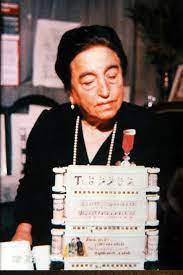
Angela Ruiz Robles was born on 28 March 1895, in Villamanin, a municipality in the province of Leon in Spain. Her father Feiciano Ruiz was a pharmacist and her mother Elena Robles a housewife. Angela completed her higher education at the teacher training college in Leon, and went on to teach shorthand, typing and business at the same college from 1915 to 1916. In 1917 she was a teacher and director at the Gilberto Gordón School in Gordón, a town located near the city of León.

In 1918 she accepted a position as teacher in Santa Eugenia de Mandía, a village near Ferrol in Galicia, and remained there for the next decade. It is here that she found her true calling as a teacher. She was totally dedicated to her students, giving personal attention to each one; noting those who required special attention according to their needs. Her work was not confined to the classroom; she visited the homes of her students to provide additional instruction and support. She understood that every child has unique learning abilities, personalities and insecurities. As her old students recalled: “Doña Angelita, who was known by her first name to all of us, was the perfect teacher. She never treated any student differently and always honoured each individual learner’s needs.” Angela spent ten years in the village school and was greatly loved and respected by all.

Angela lost her husband when she was 40, and in 1928 she moved to Ferrol. She needed to teach, but now also to provide for her family. She founded the Elmaca Academy named after her daughters Elena, Maria Elvira, and Carmen. The Academy located in her own home provided classes for those aspiring to join customs, become mail carriers, or telegraph operators, as well as apply for business management studies. Her academy followed participatory pedagogical methods that were much ahead of their time; and this was reflected in the highest pass rate in the country for her students.

Along with the regular courses Doña Angelita gave free night classes to people with few resources. The Academy also became a social centre. Letters were read to, and written for illiterate immigrants; literary gatherings were held; food distribution was organized, and religious processions could be watched from here.

In 1934, she became manager of the Escuela Nacional de Niñas del Hospicio (National Girls’ School of the Hospice) in Ferrol, which cared for orphaned or abandoned girls. Doña Angelita made sure that the girls got a primary education, musical education and learned a useful trade so that they could earn and integrate with society.

As Doña Angelita continued her teaching and other educational work, she also had to support and bring up her three young girls by herself, but she made time for her own research and writing. Between 1938 and 1946, she wrote, lectured, edited and republished sixteen books. She published three of them: Compendium of Castilian Orthography, Castilian Orthography (abbreviated) and Modern Abbreviated Martinian Shorthand—books addressing the conventional Spanish spelling systems. In 1944, Ángela Ruiz started her Scientific-Grammatical Atlas project. Her goal was to teach Spanish grammar and spelling while making Spain better known through Spanish grammar, syntax, morphology, spelling and phonetics.

Angela Ruiz was also constantly thinking of resources, innovations, and inventions that would help to improve the teaching-learning process, and spent hours after her daily work in exploring and experimenting with such tools. Her aim was simple: “To make teaching easier, to get maximum knowledge with minimum effort.”

It was then that she dreamed of what she described as a “Mechanical Encyclopaedia” which addressed the needs listed in the first paragraph of this piece. This book included a vast range of information which was represented in graphic, sound or textual form. It could be made of waterproof and lightweight materials. It had the possibility of directly incorporating lighting and magnifying glasses.

Her invention consisted of patterned sheets. When you put your finger on them, they lit up and an educational text appeared. For this to happen, she incorporated an electrical circuit that she designed herself.

Angela made a sketch and detailed out her new kind of book which she described as “a mechanical, electrical, and air pressure procedure for reading books“. She was certain that her invention was a valuable educational tool and she went to Madrid to find promoters. Her invention was appreciated, but did not result in any funding for her to develop the patent. Angela was disappointed, but undeterred she continued to work on improving her invention.

On 10 April 1962, ten years after her first attempt, she filed a patent entitled An Apparatus for Various Readings and Writings. That prototype made of zinc and bronze was the Mechanical Encyclopedia. Today this prototype is exhibited at the National Museum of Science and Technology in A Coruña in Spain.

With that physical prototype, she once again undertook the rounds of different ministries in Madrid. Again the previous story was repeated: many pats on the back, but not a single penny. After all she was a woman, and a provincial school teacher, how could her invention be taken seriously? Angela continued her efforts until she was almost 75 years old, but she was unable to develop or distribute her inventions.

Today writer and philanthropist Michael Hart is best known as the inventor of the e-book, and in 1971, he created the Gutenberg Project, the first project to make e-books freely available via the internet. Sadly, forgotten in history books is the name of Angela Ruiz Robles, a passionate and dedicated teacher, and the original pioneer of the electronic book.

–Mamata