Tomato Puree

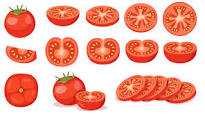
There is an unusual addition to the front page news these days. It is the tomato! As prices of tomatoes soar, there is panic. From housewives to gourmet chefs there is a scramble to devise meals where the familiar flavor and texture of tomatoes can be recreated without the star ingredient. Recipes are shared, and suitable substitutes recommended, such as tamarind, raw mango, kokum and curd. Ironically these tartness-adding agents have been used in Indian cooking well before the tomato gravy became ubiquitous element in everything from paneer to pizza!
Interestingly, the tomato is a relatively recent arrival in India. It is believed to have been introduced by the Portuguese in the 16th century, and was probably grown in the parts of India where the Portuguese influence was strong. It was not easily adopted by the local people as it was looked upon with suspicion, often referred to as vilayati baingan (imported brinjal), and unclear whether it was meant to be eaten raw or cooked. It is only in the 19th century, with the British influence that tomatoes became a part of Indian cuisine.

As we are missing the tomato in our daily meals, it is a good time to take a look at its chequered history.

The global history of the tomato also is a long and convoluted one. The plant is believed to have originated in South and Central America, and can be traced back to early 700 AD to the early Aztecs who named it tomatl or xitomatl (plump thing with navel). It was an integral part of their native diet in the sixteenth century. The Spanish conquerors of the region called it tomate, from which the English word tomato is derived.

Europeans first came in contact with the domesticated tomato when they captured one of the cities of the region. The Spanish conquistador Hernan Cortes is thought to have brought back the seeds to southern Europe where they were planted for ornamental purposes. The tomato was not eaten till the late 1800s. This was in part due to their reputation as being deadly plants. Some of this was because the tomato was classified by Italian herbalist Pietro Andrae Matthioli as being part of the deadly nightshade family (Solanaceae plants that contain toxic tropane alkaloids) and a mandrake (a group of foods thought to be aphrodisiacs). The fruit was also nicknamed as “poison apple” because it was believed that eating this could be fatal.

Another thing that compounded this belief was that rich people in the 1500s used plates made of pewter which had high lead content. Foods high in acid, like tomatoes, would cause the lead to leach out into the food, resulting in lead poisoning and death. Thus the cause of death was not tomatoes but lead poisoning. However this connection was not made then, and the tomato was labelled as the culprit. The less affluent who ate off plates made of wood, did not have that problem, and hence did not have an aversion to tomatoes. This is essentially the reason why tomatoes were only eaten by poor people until the 1800’s, especially in southern Italy. People may have started eating tomatoes when not much else was available because not only did they add flavour to the otherwise bland meat dishes, but they could also be preserved and stored. The earliest recipe for tomato sauce was published in 1694, by Neapolitan chef Antonio Latini in his book Lo Scalco alla Moderna (The Modern Steward).

Even within the rest of Europe, tomato as an edible component was looked upon with suspicion. Tomato was perceived as a cold fruit, and coldness was considered a bad quality for a food according to the Galenic school of medicine. It was associated with eggplant which was also an unknown; it was cultivated close to the dirt, another factor that didn’t make it palatable. While the tomato was gradually making its way into cuisine in southern Europe, it still had to find its way to other parts of the world.

How did the tomato synonymous with pizza? Thereby hangs a tale! In 1889 the Queen Margherita of Italy was to visit Naples, and one restaurateur wanted to create a special dish to honour Her Majesty. He made a pizza topping from three ingredients that represented the colours of the new Italian flag: red, white, and green. The red was the tomato sauce, the white was the mozzarella cheese, and the green was the basil topping. Hence, Pizza Margarite was born, which still remains the most standard pizza.

The mass migration from Europe to America in the 1800s meant that the new arrivals also brought with them their own culinary ingredients and traditions. The Italians took with them the tomato and its basic partner the pizza. The rest is history! From the mid-1880s tomatoes became a staple in American kitchens. As the demand for tomatoes increased they began to be imported in large quantities.

One of the big importers of tomatoes was John Nix, wholesale merchant in New York. When a shipment of tomatoes arrived at the port a 10 per cent import tariff was levied. At the time imported vegetables were subject to this tax, while fruits were exempt. Nix protested, arguing that tomatoes were not technically vegetables. He was not wrong. Tomatoes were, and are, botanically classified as a fruit. A fruit contains the seeds of the plant while any other edible part of the plant that we eat, which doesn’t come from the fruit of the plant is considered a vegetable.

Nix filed a case against Edward Hedden, the Collector of the Port of New York. The case made its way to the Supreme Court in 1893. The case was argued using definitions of fruits and vegetables from different dictionaries and their usage. It became a hotly debated issue: Tomato: Fruit or Vegetable? Eventually the court unanimously agreed that the tomato should be classified as a vegetable because of how it was used in everyday life, not how it was used in commerce or in purely botanical terms.

A plump thing with navel, a poisonous ornamental plant, a poor man’s multi-use ingredient, a tax-exempt fruit to a taxable vegetable. Tomato puree indeed!

–Mamata
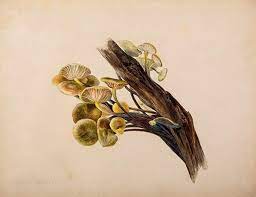
Mycologist, Artist, Author: Beatrix Potter

Several generations of children grew up with The Tale of Peter Rabbit. The author Beatrix Potter is a familiar name in children’s literature, but what is less known is that she was also a notable woman of science, in an age when this was almost unheard of.

Helen Beatrix Potter was born on July 28, 1866 in London in a family that enjoyed culture and the arts. Although Beatrix was educated at home by a governess, she and her brother spent all their free time in the woods around their home, observing the small creatures that lived there, and even bringing some, like hedgehogs and rabbits home. Beatrix was a quiet shy girl who expressed herself through paintings and drawings of wildlife, and in coded notes in a secret diary.

When an uncle who was a chemist gave her permission to use his microscope, a whole new world opened up for Beatrix who could minutely study plants, and insects and make detailed sketches. Her interest in natural history was further spurred when she used to visit the South Kensington Museum. She found herself drawn to the study of plants and fungi as well as insects.  

Beatrix’s interest in drawing and painting mushrooms, or fungi, began as a passion for painting beautiful specimens wherever she found them. As her biography says: She was drawn to fungi first by their ephemeral fairy qualities and then by the variety of their shape and colour and the challenge they posed to watercolour techniques.

In October 1892, on a family holiday in Scotland, Beatrix got to know Charles McIntosh, a local postman and self-educated naturalist who was also an expert on British fungi. McIntosh admired her pictures, sent her specimens to paint and advised her on scientific classification and microscope techniques. She sent him copies of her pictures in return. She would go on to produce some 350 highly accurate pictures of fungi, mosses and spores.

Beatrix also started hunting for rare varieties of mushrooms, and growing dozens of different species of fungi at home, in order to study their development. She was intrigued by their life cycle. By 1895, Beatrix Potter’s interest in fungi was becoming even more scientific. Following advice from McIntosh, she began to include cross sections of mushrooms in her illustrations to show their gills and used a microscope to draw their tiny spores. She speculated about whether these spores could germinate and the environments in which they might do so.

In May 1896 her uncle Sir Henry Roscoe, a prominent chemist, introduced her to the mycologist at Kew’s Royal Botanic Gardens. This led to a post at the Royal Botanic Gardens where she produced faithful, detailed renderings, largely of mushrooms and toadstools as seen through a microscope. In addition to her art, the scientist in her also began experimenting with germinating spores of various fungi on glass plates and measuring their growth under a microscope. Her close observations and experiments, as well as her drawings showed in great detail how lichens, a common type of fungi found on rocks and trees, were actually not one but two different organisms that lived together. Her studies showed that this was a union between an alga and a fungus. The two different organisms are able to live together, with each of them benefitting the other in some way. Beatrix thus was one of the earliest to study and hypothesize what would later become the science of symbiosis. However, the botanists she showed her work refused to discuss even discuss the drawings she made.

Beatrix prepared a paper on her findings and submitted her work to The Linnaean Society of British Scientists but was not allowed to read it herself because, at that time, only men were invited to their meetings. The all-male panel rejected her paper and refused to publish it. Potter withdrew the paper, presumably to make amendments. But it was never published; and no copy exists today. Thereafter Beatrix turned her full attention to drawing and writing.

There is today some controversy about how serious Beatrix Potter was as a mycologist. But there is no doubt about the accuracy and detailing of her drawings and paintings of fungi which remain unparalleled, and are referred to mycologists even today. As her biography says: Beatrix Potter never saw art and science as mutually exclusive activities, but recorded what she saw in nature primarily to evoke an aesthetic response.

The name Beatrix Potter endures today as the author of well-loved children’s books. In 1893 she sent a letter with a picture story to a sick child of her old nanny which began with the words “I don’t know what to write to you, so I shall tell you a story about four little rabbits whose names were Flopsy, Mopsy, Cottontail and Peter.”  Beatrix went on to create the loveable characters of Peter Rabbit, Benjamin Bunny and Jemima Puddle Duck, among others that had adventures in the 26 books that she published subsequently. Over 150 million copies of her books have been sold and have been translated into 35 different languages

As her books gained popularity, she channelled all the profits towards a large property called Hill Top which she purchased in 1905. Situated in England’s Lake District, this was her first farm. She enjoyed the quiet and solitude that the thirty-four-acre property brought her and this allowed her to work more efficiently. Aside from being a farmer and landowner, Beatrix also became recognized as a sheep breeder. She never lost her love for nature and became an advocate of traditional farming and the preservation of the wild environment surrounding the area. She continued buying patch after patch of land around her farm. By doing so, Beatrix hoped to further pursue her dream to provide land for the creatures that she had loved since her childhood.

Beatrix Potter died of bronchitis in 1943, aged 77, leaving behind a legacy across different fields of study. The British Natural Trust eventually became recipient to her donation of 4,000 acres of land. The property was named a UNESCO World Heritage Site in 2017, and is now open to the public.  Beatrix Potter’s love for the land and all its creatures continues to provide a haven for all life.

–Mamata

Rubik’s Magic Cube

It was all the rage in the 1980s. Every house had one, and it was fought over by adults and children. It was in everyone’s hands that were never still; it sparked contests and competition across the world. It was the Rubik’s Cube.

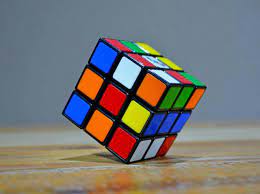
At first glance, the cube seems deceptively simple, featuring nine coloured squares on each side. In its starting state, each side has a uniform colour — red, green, yellow, orange, blue, or white. To solve the puzzle, you must twist the cubes so that eventually each side returns to its original colour. Easier said than done! To master the cube, you must learn a sequence of movements that can be performed in successive order. Mathematicians have calculated that there are 43,252,003,274,489,856,000 possible combinations or ways to arrange the squares, but just one of those combinations is correct.

The creator of the puzzle cube was an unassuming Hungarian architecture professor named Erno Rubik. Erno Rubik was born on July 13, 1944, towards the end of World War II in the basement of a Budapest hospital that had become an air-raid shelter. His father was an engineer who designed aerial gliders.

As Erno described his childhood: I was an ordinary boy, wanting to do everything possible—and not possible. I climbed trees and had fun in other ways that weren’t allowed but were exciting to me. And I was curious and tried to make things. Nothing special. He love to draw, paint and sculpt, and went on to study architecture at Budapest University of Technology because he felt it combined the practical with the aesthetic. He went on to teach architecture and taught a class called “descriptive geometry” where he encouraged students to use two-dimensional images to solve three-dimensional problems

In 1974, 29 year old Rubik was tinkering in his bedroom which had lots of odds and ends, including cubes made from paper and wood.  He tried to put together eight wooden cubes so that they could stick together but also move around, exchanging places. The object quickly fell apart. Erno kept at it, taking it as a challenge. After much trial and error, he figured out a unique design that allowed him to build a solid, static object that was also fluid. He then decided to add 54 colourful stickers to the cube, with each side sporting a different colour – yellow, red, blue, orange, white and green. That way the movement of the pieces was visible and trackable. Erno was lost in the colourful maze, but with no clue how to navigate it. It took many weeks of twisting and turning before he could finally get the colours to align.

Once he found that the cube could be restored to its original state Erno Rubik submitted an application at the Hungarian Patent Office for a ‘three-dimensional logical toy’. Rubik now looked for a company who was willing to produce the cube commercially. It was not easy as no one believed that people would ‘play’ with such a toy. Finally in 1977 a small company that manufactured chess sets and toys agreed to manufacture 5,000 such cubes. The toy entered toy shops with the name Buvos Kocka or ‘Magic Cube’.  By 1979, 300,000 cubes had sold in Hungary.

As the popularity of the cube grew and spread, even beyond Hungary, Rubik felt that taking it beyond Hungary needed an international collaboration, but that was the period of the Cold War when geopolitical tensions restricted collaboration with the so-called Western Bloc.

So Erno Rubik started to take his creation to international toy fairs where it met with lukewarm response. In 1980, at the Nuremberg Toy Fair, a marketer named Tom Kremer spotted the Magic Cube. He thought it was fascinating and made a deal to take it to America. Rubik got a contract at an American company, Ideal Toy, which wanted one million cubes to sell overseas. But due to copyright issues, they suggested that the name be changed. And so, Rubik’s Cube made its debut at a New York toy fair in 1980. Erno Rubik himself was invited to launch the cube. The shy professor with not very fluent English, was not the best of salesmen, but he was the only one who could demonstrate that the puzzle could be solved! The rest is history.

Rubik’s Cube became a craze. More than 100 million Cubes were sold over the next three years. Rubik initially believed the cube would appeal to those with science, math, or engineering backgrounds. He was shocked when, as he wrote, It found its way to people whom nobody would ever have thought might be attracted to it.

The Rubik’s Cube went on to become ‘one of the most enduring, beguiling, maddening and absorbing puzzles ever created’. More than 450 million cubes have sold globally, (not counting the many more imitations) making it the best-selling toy in history. It became much more than a puzzle. It has been described as ‘an ingenious mechanical invention, a pastime, a learning tool, a source of metaphors, and an inspiration.’ It has spawned speed-cubing competitions and an assortment of record breaking feats. But as Rubik once said, for him it is not the speed that is of essence; “the elegant solution, the quality of the solution, is much more important than timing.”

The educator in Rubik believes Arts should be an integral part of STEM education. He feels that the Cube demonstrates this fusion. The Cube has become a universal symbol of everything I believe education should be about: fostering curiosity, the rewards of problem-solving, and the joys of finding your own solution.

Even as the Rubik’s Cube became a global sensation, Erno Rubik remained a publicity-shy professor, continuing his “tinkering”. He started his own design studio in Hungary and began to work on new projects and revive abandoned ones, including puzzles called the Snake and Rubik’s Tangle. In an interview he said: I never planned to achieve this peak and had no idea that I would. And, after it, I had no thought that I’d like to do better. My only goal is to do well. I’m not thinking about whether people will like it or not. I need to love it and meet my targets, nothing else. What happens after that depends not on me but others. The Cube created the strongest connection with people—which is harder than being popular—maybe because it taught them that they could solve difficult problems and rely on no one but themselves to succeed. It has meaning, and that’s enough for me.

–Mamata

Living Your Dreams: Calvin and Hobbes

I am an unapologetic follower of comic strips. This is the section of the newspaper I save up to savour after reading all the gloom and doom news. One of my all-time favourites is Calvin and Hobbes.  

The creator of these iconic characters–six-year-old Calvin named after the Protestant reformer John Calvin, and his imaginary stuffed tiger friend Hobbes named after the philosopher Thomas Hobbes, is Bill Watterson.

Watterson graduated from Kenyon College, a liberal arts college in Ohio, with a degree in Political Science in 1980. He started working as a political cartoonist for a local newspaper soon after he graduated, but was fired after three months. He then worked for a company creating ads to sell products, something that he hated. All the while he continued drawing, with the idea of creating a syndicated comic strip. It was five years before his dream could be realized.

The first Calvin and Hobbes strip appeared in a newspaper in November 1985. The characters and their adventures and ruminations were much deeper than just “comical”. They reflected the universal quest to accept the impossible and to embrace the irrationality of the moment. As Watterson once described it “My strip is about private realities, the magic of imagination, and the specialness of certain friendships”. Watterson’s daily strip became an icon for all these elements and was syndicated to over 2,000 newspapers. Bill’s new ‘job’ was to come up with 365 ideas a year. For this he said he had to create a kind of mental playfulness. He sustained this for ten years. The last Calvin and Hobbes strip was published on 31 December 1995.

Despite the huge success of the characters, and in the face of intense pressure to allow related merchandise, Watterson never succumbed to what would have been a billion dollar industry. He believed that by doing so “Creativity would become work for pay. Art would turn into commerce. Selling out is usually more a matter of buying in. Sell out, and you’re really buying into someone else’s system of values, rules and rewards. I’m not interested in removing all the subtlety from my work to condense it for a product…Note pads and coffee mugs just aren’t appropriate vehicles for what I’m trying to do here.”

In 1990 Bill Watterson was invited back to Kenyon College to give a commencement address to the graduating students. His deeply personal and candid talk urges young people to follow their dreams even in the face of numerous challenges.

This month, as thousands of graduates across many parts of the world step out of the security of academic institutions and enter, with excitement and some apprehension, the vast, hitherto unknown world of work, Bill Watterson’s words offer encouragement, support and inspiration.

Sharing some excerpts.

At school, new ideas are thrust at you every day. Out in the world, you’ll have to find the inner motivation to search for new ideas on your own. With any luck at all, you’ll never need to take an idea and squeeze a punchline out of it, but as bright, creative people, you’ll be called upon to generate ideas and solutions all your lives. Letting your mind play is the best way to solve problems

You may be surprised to find how quickly daily routine and the demands of “just getting by” absorb your waking hours. You may be surprised to find how quickly you start to see your life in terms of other people’s expectations rather than issues. You may be surprised to find out how quickly reading a good book sounds like a luxury.

We’re not really taught how to recreate constructively. We need to do more than find diversions; we need to restore and expand ourselves. Our idea of relaxing is all too often to plop down in front of the television set and let its pandering idiocy liquefy our brains. Shutting off the thought process is not rejuvenating; the mind is like a car battery–it recharges by running.

A playful mind is inquisitive, and learning is fun. If you indulge your natural curiosity and retain a sense of fun in new experience, I think you’ll find it functions as a sort of shock absorber for the bumpy road ahead.

For years I got nothing but rejection letters, and I was forced to accept a real job. A REAL job is a job you hate. I designed car ads and grocery ads in the windowless basement of a convenience store, and I hated every single minute of the 4-1/2 million minutes I worked there. My fellow prisoners at work were basically concerned about how to punch the time clock at the perfect second where they would earn another 20 cents without doing any work for it.

I tell you all this because it’s worth recognizing that there is no such thing as an overnight success. You will do well to cultivate the resources in yourself that bring you happiness outside of success or failure. The truth is, most of us discover where we are headed when we arrive. At that time, we turn around and say, yes, this is obviously where I was going all along. It’s a good idea to try to enjoy the

To endure five years of rejection to get a job requires either a faith in oneself that borders on delusion, or a love of the work. I loved the work. Drawing comic strips for five years without pay drove home the point that the fun of cartooning wasn’t in the money; it was in the work. This turned out to be an important realization when my break finally came.

You will find your own ethical dilemmas in all parts of your lives, both personal and professional. We all have different desires and needs, but if we don’t discover what we want from ourselves and what we stand for, we will live passively and unfulfilled. Sooner or later, we are all asked to compromise ourselves and the things we care about. We define ourselves by our actions. With each decision, we tell ourselves and the world who we are. Think about what you want out of this life, and recognize that there are many kinds of success.
But having an enviable career is one thing, and being a happy person is another.

Creating a life that reflects your values and satisfies your soul is a rare achievement. In a culture that relentlessly promotes avarice and excess as the good life, a person happy doing his own work is usually considered an eccentric, if not a subversive. Ambition is only understood if it’s to rise to the top of some imaginary ladder of success. Someone who takes an undemanding job because it affords him the time to pursue other interests and activities is considered a flake. A person who abandons a career in order to stay home and raise children is considered not to be living up to his potential-as if a job title and salary are the sole measure of human worth.

Cultivate that interest, and you may find a deeper meaning in your life that feeds your soul and spirit. Your preparation for the real world is not in the answers you’ve learned, but in the questions you’ve learned how to ask yourself.

–Mamata

Charming Worms

Aristotle called them the ‘intestines of the earth’. Cleopatra declared them to be sacred and forbade Egyptian farmers from removing them from the land. Japanese religious lore has a story about them. Certain of the Shinto gods decided to create the world’s creatures from living clay; formulating, in turn, animals, birds, fish and insects. At each stage their creations asked: ‘What shall we eat?’ When they created Man, he was told to eat everything. Then, the gods noticed some small clay scraps that had been dropped and decided to create worms, which they instructed to live underground and eat soil – although they could come to the surface from time to time in search of anything they found edible.

These creatures are what we call earthworms. Archaeological evidence suggests that worms have been around for 600 million years. These underground creatures hardly made news or were subjects of serious scientific research. It was Charles Darwin who studied earthworms for 39 years, who reaffirmed the value of these lowly creatures when he said, “It may be doubted whether there are many other animals in the world which have played so important a part in the history of the world than the earthworm. Worms are more powerful than the African Elephant and are more important to the economy than the cow.”

Darwin’s observations, investigations, conclusions and pronouncements were published in 1881, six months before his death under the title The Formation of Vegetable Mould through the Action of Worms. Darwin estimated that an acre of mid-19th-century arable land, the result of centuries of gentle pummelling and fertilisation by farm animals and traditional toil by countrymen, contained 53,000 earthworms. He further calculated that, over the course of a year, the worms moved 15 tons of soil to the surface – a process known to agrology as bioturbation.

Many years later, in more recent times, when much of the soil surface has been degraded from the onslaught of chemicals and industrial agricultural processes, scientists have once again recognized that the presence and activities of earthworms have a dramatic effect on the soil habitat.

While eating the soil, the earthworm absorbs the nutrients it needs and casts off the rest. Under ideal conditions, earthworms are believed to eat and digest their entire weight in castings in a mere 24 hours. The nutrient content of the castings, which have gone through the earthworm’s digestive system, was found to have 5 times more soluble nitrogen, 7 times the soluble phosphorus, 11 times the soluble potassium, and 3 times the soluble magnesium plus a smaller amount of calcium. Most earthworms also mix the plant litter and organic matter into the soil, increasing the speed at which they decay and release nutrients into the soil. In these ways, earthworms recycle nutrients from dead plants and other soil organisms so that they can be used again.

Earthworms are also incomparable builders of soils. Their means of travel thorough the soil — pushing, tunnelling and eating their way through all kinds of organic matter. soil opens it up for the benefit of aeration and water seepage. The underground burrowing systems that they create increase the amount of water and air that reaches the plant roots and other soil organisms, helping their growth. Soil that has a good population of earthworms is always easier to work and plants seem to thrive in it. Thus earthworms have been given new sobriquets such as “farmers’ friends’ and ‘ecosystem engineers’.

Earthworms are getting their due. One of the quirky celebrations of these usually hidden-from-sight creatures is a festival held in some parts of England–the Festival of Worm Charming. While we know of snake charming and snake charmers, this one is certainly not part of a regular vocabulary.

Traditionally worm charming, worm grunting and worm fiddling refer to methods of attracting earthworms from the ground, mainly through creating vibrations on the ground.

Darwin was perhaps the first to study earthworm sensitivity or otherwise to light, warmth and sound. His experiments included placing lamps, candles and hot pokers close to them, blowing tobacco smoke over them, sounding a tin whistle and playing a piano close by and having his son play a bassoon loudly. He observed that it was only vibrations that caused them to become active.

Scientific experiments apart, using vibrations to bring worms to the surface has been traditionally used by fishermen to collect worms as bait. In recent years, this activity has taken the form of a competitive sport.

An International Worm Charming festival is held every year June in Devon in England. As with all competitions, this one has its rules and etiquette. 

The aim of the competition is to “charm” the earthworms to come to the surface of the soil by creating vibrations on the ground. Traditionally this was done by sticking a rod called a ‘stob’ (like a pitchfork) in the dirt and smacking it with a simple rod known as a ‘rooping iron’. This competition allows different ways of creating the vibrations—tapping the soil with feet, “twanging” the ground with a fork in the soil, but strictly no digging.

The wormers are given a 3×3 meter square of land to fiddle, grunt, and charm their way to championship glory by collecting more worms than anyone else.

Each teams comprises 3 members: a Charmerer, a Pickerer and a Counterer.

Once all teams have found their plot everyone is allowed to begin “Worming Up”. This is doing whatever you need to do to get the worms out of the ground without digging, forking or pouring harmful liquids onto plots.

“Worming Up” lasts for 5 minutes after which the competition really gets underway.

 15 minutes are allotted to all teams to get as many worms charmed out of the ground.

Any team or competitor caught cheating will be publicly humiliated and almost certainly disqualified.

The International Judges’ decision is final.

All worms must be returned unharmed to the ground after the competition.

The Worm Master presides over the Festival. The Official Cheat tempts entrants by offering them worms so that they can cheat. Old Father Worm Charming offers advice and guidance to would be worm charmers. Finally, there’s the International Judge who is the rule of law in all things to do with arbitration in worm charming disputes.

What a way to spend a sunny summer’s day! While India is known as the ‘land of snake charmers’, this festival may well lead England to be known as the ‘land of worm charmers’!

–Mamata

Celebrating the Sun

We have just crossed the Summer Solstice on 21 June. This is a major celestial event which results in the longest day and shortest night of the year in the Northern hemisphere. The word solstice is a combination of the Latin words ‘sol’ meaning sun and ‘stice’ meaning standstill. As the days lengthen, the sun rises higher and higher, till the movement of the Sun’s path north or south appears to stop in the sky before changing direction.

The summer solstice occurs when the tilt of Earth’s axis is most inclined towards the sun and is directly above the Tropic of Cancer. It officially marks the beginning of astronomical summer, which lasts until the autumn equinox falls on 23 September, when day and night will be of almost equal length.

In most parts of the Northern hemisphere winter is long, dark, cold, and harsh. Nature seems to slow down; the ground id frozen and often snow-covered for months, and many plants and animals go into hibernation mode. The spring season marks a slow awakening, with life starting to stir again. It is only around the middle of June that “summer” really sets in. In the days of yore, when people’s lives, especially agriculture, were closely linked with the cycles of nature, this ‘return of the sun’ was a time to celebrate the passing of the months of suffering and hardship, and the appreciation for the sun that would bring harvests.

Summer Solstice is one of the most ancient of human festivals. For the early societies the longest day had both practical and religious significance. It was a fixed point around which the planting and harvesting of crops could be planned, but also marked the spiritual side of the shifting of the seasons.

Many traditions are linked to this celebration, especially in different parts of Europe. In Ireland celebrations date back over 5000 years. In ancient times, people all over the northern hemisphere would celebrate this time with games, stories and feasting, and lighting of bonfires. Since time began, fire has been regarded as a symbol of the sun and so large fires were lit on this occasion

In ancient Greece, the summer solstice festival of Kronia to honour the god Cronius, the patron of agriculture. It was a day when class distinctions were abandoned and masters and slaves celebrated side-by-side. A tradition still followed by some is to trek up to the peak of Mt Olympus on this day.

In ancient Rome, the festival of Vestalia celebrated Vesta the goddess of hearth and home and family on this day. During the week of Vestalia, only women were permitted to enter the Vestal temple, and a cake was baked using consecrated waters from a spring considered sacred. Even today Italians celebrate the solstice as a time of new beginnings. La Festa di San Giovanni is a festival observed with similar rites of water and fire as the ones performed in ancient times.

Many Native American tribes celebrated the longest day of the year with a Sun Dance, while the Mayas and Aztecs used the day as a marker by which to build many of their central structures, so that the buildings would align perfectly with the shadows of the two solstices, summer and winter.

In Mexico’s Yucatan Peninsula, the main pyramid at Chichén Itzá, known as the Temple of Kukulcan, is constructed in such a way that during the Summer Solstice the sun casts perfect shadows on the south and west sides so that it looks to be split in two.

Better known are the Neolithic structures at Stonehenge in England. There is still a mystery about who constructed these and for what purpose. One theory is that it was built to worship deities of the Earth and the sun. Stonehenge was ingeniously designed built to align with the sun on the solstices. On the summer solstice, as the sun rises behind the heel stone, the ancient entrance to the stone circle, the ascending rays of sunlight align perfectly with a circle carved in stone in the centre of the monument. Even today thousands throng Stonehenge on summer solstice to witness this breath-taking sight and join in the celebrations that include dance and music.

While June signals the start of summer in many parts of the Northern hemisphere, in a country like India, this is the peak of summer. In a large part of the subcontinent, the sun blazes and the earth is parched; in some parts it heralds the onset of the monsoon rains that will gradually move northwards, quenching the thirst of the soil and its inhabitants. While we celebrate the change of seasons with many different festivals, we do not traditionally celebrate summer solstice as a festival

However, in the last few years India had taken the lead in adding a new day of celebration on 21 June. This is International Day of Yoga Day to coincide with the summer solstice. The day was proclaimed by the United Nations General Assembly in 2014, in recognition of the universal appeal of Yoga, owing to its demonstrated benefits towards immunity building and stress relief.

While yoga is a philosophy and science in itself, one aspect that struck me in the context of the summer solstice and the celebration of the sun, is the importance of Surya Namaskar or Sun Salutation in yoga. This is a set of a sequence of 12 yoga poses which provide a complete workout which has a positive impact on the body and the mind.

There are 12 mantras that accompany the surya namaskar postures, which praise the different qualities of the Sun God or Surya. These are:

Praise to the One:

Who is the friend of all

Who shines brightly and is filled with radiance

Who eliminated darkness and brings in light

Who is filled with brilliance and lustre

Who traverses the entire sky and is all-pervasive

Who provides nourishment and fulfils desires

The one with a golden-hued lustre

The one who shines with the light of innumerable rays

The one who is the son of the divine cosmic mother Aditi

The one who gives life

The one who is worthy of all glory

The one who is wise and illuminates the heavenly world.

While it is marked in different ways, and has different cultural contexts, Summer solstice is a reminder of the how vital the sun is for all life.

–Mamata

A Millets Tale

Once upon a time, in a forest far away there lived a young girl. The girl had lost her parents when she was just a baby, and she had no other family that she knew of. She continued to stay by herself, and grow up in the forest, the place that she knew as home.  But she had many friends in the forest. She knew all the trees and plants, and they gave her their fruit, seeds, and flowers, different ones in different seasons. She knew all the birds and animals that lived there, and could recognize them by their calls and pugmarks. She knew the springs where cool fresh water flowed, where she could wash, and bathe and drink from. And she also knew that by planting some seeds in the earth, before the rains, would lead to a small crop of plants that she could eat, some for their leaves, some for their roots, and some for the seeds as they ripened. The seeds were of many kinds, some tiny, some larger, and of many colours—pearly white, greenish grey, reddish brown, and many shades of yellow.

The girl in the forest grew up to be strong and healthy young woman. She also grew into a beautiful and graceful maiden. One day as she was walking through the forest, humming a tune, she heard an unusual sound. It was the sound of hoof beats. Most animals in the forest walked and ran on nimble feet, making hardly a sound as their feet touched the ground. This clip clop sound was not one that she had heard before. As the sound grew closer, the girl hid herself behind a tree and peeped cautiously and curiously. From the thicket there emerged a horse, and on the horse rode a handsome young man. The girl had never seen such a sight before. She could not resist stepping away from her hiding place to get a better look.

The rider was a young prince on his way back to his kingdom. He too had never seen such a beautiful maiden before. It was love at first sight! The prince got off from his horse and stood before the lovely lady who was looking at him with undisguised curiosity. She was so different from all the ladies that he met, ladies who acted coy, who dressed in expensive silks and velvets, and were adorned from head to foot in shining jewels. After all he was a prince, the king-to-be, and every maiden in the kingdom dreamed that she would capture his heart and, someday, become the queen.  

This young woman was clad in the simplest of garments, but her skin and hair shone like silk, her face exuded a glow that came from within, and her limbs were lithe and strong. She stood erect and fearless before the young man, innocent but self-assured.

The prince was sure that this was the woman who would be his wife. He spoke gently to the maiden, but put forth his proposal. The young girl was also taken with the young man. She had no idea about kingdoms and kings and princes, and no dream or desire to live in a palace and be a queen. She liked the young man for what he was. And she was of an age when she felt that she was ready for adventure. She said yes!

The prince and the maiden returned to the palace, and were wed. With time the bride settled into her new life and role. She learned to wear the finery, and the manners of royalty. But she could not easily relish the meals that were served. Every meal was like a feast. There were many kinds of bread made from the finest refined flours, numerous dishes rich with oil, butter and spices, and the widest array of sweetmeats laden with sugar and ghee. These were prepared by the finest chefs in the land. The new bride had never, in her simple life in the forest eaten such heavy food. Her body could not digest the extravagance of seasonings and ingredients.

After some time the young woman found that she her body was changing. She felt lethargic; without the energy that she once had to walk long distances, climb trees, work with the soil—digging, planting, tending, harvesting. Her once sinewy limbs were no longer as strong as they once were, and she was becoming plump like the doves that cooed in the courtyard. Her taste buds were satiated; they no longer relished the overpowering deluge of flavours.

One day the young royal sneaked out of the palace in disguise. She went to the local market. As she walked around she saw the heaps of fresh vegetables and fruits and pictured these as she had once seen them, hanging from the branches, and growing from the soil. She came to a grain merchant’s shop and there she spotted the familiar seeds and grains that had sustained her in her days of living in the forest. She realized that these were what her body had been craving. She got these different seeds packed and returned, still incognito, to the palace.

Back in her luxurious surroundings, the queen-to-be got some of these seeds roasted and started having them for breakfast. The kitchen staff was taken aback. These were what poor people ate. How can a rich and royal personage want to eat such humble cereals? But their duty was to do as they were instructed.

 One day her husband found her eating her breakfast of multi-coloured seeds and wanted to know what they were, and why she was eating them. She said that for her these were as precious as pearls, because these are what had sustained her in her childhood and youth. It is these staples that had given her the nutrients and energy that she needed to stay healthy and active. She requested that henceforth, these seeds should become a part of the royal menus. As a royal prerogative she gave these “poor man’s” seeds their names.

The ‘pearls’ were called Bajra, Jowar and Cheena. The ones that were in different shades of yellow, green-grey, red-brown, that reminded her of the colours of the forest were named Kangani and Kakun, Kodo and Proso, Ragi and Kutki, Kuttu and Rajgira.

And so it came about that these poor man’s seeds became a part of the royal kitchen and diet. The queen-in-making devised new recipes and dishes where these could be tastily used, and the chefs added their own touches to these. The ‘pearls’ proved their value. The palace residents began to feel lighter, healthier and stronger.

Time passed. The young bride became the queen, and in time, she and the king also passed on. As with the cycle of change, there were later generations that went back to the rich cuisines that once signified wealth and status. With that came also the effects on people’s health and well-being.

 Until one day a newly-married princess discovered, among the dusty tomes in the palace library, a book of recipes of the ‘pearl seeds’.

We have come full circle again.

Celebrating Millets!

–Mamata

Planet Ocean Explorer: Jacques Cousteau

8 June is celebrated as World Oceans Day. Oceans cover the majority of the earth. In fact, it has often been said that our home should be called Planet Ocean rather than Planet Earth. But compared to terrestrial ecosystems, oceans are still less studied and understood. Scientists are continuing to explore and discover unimagined treasures in the marine world.

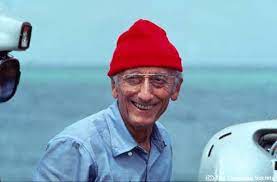
One man who understood before others did, how critical our Water Planet is to our survival and who dedicated his life to learning what lay deep in the marine waters, and opened up these hidden treasures for the world, was Jacques Cousteau.

Jacques-Yves Cousteau was born on June 11, 1910 near Bordeaux, in France. He learned to swim when he was just four. When he was 10 his family moved to New York for two years. It was at a summer camp that Jacques first learned how to go diving and snorkelling. He continued to snorkel after the family moved back to the Mediterranean city of Marseilles in France.

In 1930, at the of age 20, Jacques Cousteau passed the tough exams for the French Naval Academy where he trained for two years before spending a year at sea. In 1933, he was commissioned as a second lieutenant and spent most of the next two years sailing the world’s seas. In 1935, Cousteau started training to become a naval aircraft pilot. He had almost completed his training when, in 1936, he was involved in a near-fatal car crash. His right side was paralyzed and he had multiple fractures in his arms. This ended his dream of a career in flying. Cousteau underwent months of physical therapy, and spent a lot of time swimming in order to strengthen his fractured arms. He was not satisfied with skimming the surface of the water, he was curious to know what lay deep below. He started diving deeper with a pair of improvised swimming goggles and was amazed to discover the beauty of the sea-floor. He decided that he would make diving his life’s work. He also re-joined the navy as a naval gunnery instructor.

As he attempted deeper dives, Cousteau was frustrated about the limited amount of time that he could remain submerged. The only equipment available for divers then was the Self-contained Underwater Breathing Apparatus (SCUBA) that had been invented in 1926.  In 1943, Cousteau met Emil Gagnan a French engineer and together they experimented to develop a device which had compressed air cylinders that would enable divers to remain underwater for a longer time. Thus the diving regulator or aqualung was born, co-invented and patented by Gagnan and Cousteau. Cousteau immediately incorporated the new device into SCUBA apparatus. It gave him exactly what he needed. He could dive freely and stay under longer without the previous cumbersome equipment.

After the war ended, Cousteau began underwater research for the French Navy. In addition to this he also used the new equipment for underwater archaeology work to study the wreck of sunken ships.

In 1951, Cousteau took scientific leave from the Navy and began his own sea expeditions. Cousteau shared his plans to make undersea film documentaries with wealthy British philanthropist Thomas Loel Guinness. Guinness bought an old car ferry and leased it to Cousteau for a token 1 franc a year. Cousteau named the ship Calypso. Cousteau and Calypso would, not too far in the future, become popular names for TV audiences all over the world. But before the ship could become functional, it needed equipment and crew. Cousteau begged for government grants and pleaded with manufacturers for free equipment.

To raise more money, Cousteau and Frédéric Dumas co-authored a book The Silent World, about their pioneering adventures in SCUBA diving. Published in 1953 the book was an instant hit, and has continued to sell; to date it has sold over 5 million copies. In 1956, Cousteau released his first colour movie documentary, also called The Silent World. This was the first time that common people had a peep into a hitherto unimagined underwater world. Today we have access to incredible footage of the marine environment through numerous channels, and with the help of highly sophisticated technology. Cousteau’s film was the first to bring glimpses of this world onto TV screens. The film won the Academy Award for Best Documentary in 1957.

Cousteau’s film inspired a lot of people to take up deep sea diving and explore the ocean depths. This also led to a rise in the demand for SCUBA equipment, especially the aqualung.

Cousteau officially retired from the French Navy in 1956 with the rank of Captain. He continued to make underwater documentaries, exploring different facets of the marine environment. His films, and his pioneering work, won many awards. Jacques Cousteau became a familiar name for TV audiences in the 1960s and 1970s.

His work also created a new kind of scientific communication. The simple way of sharing scientific concepts, which characterized his books and films, was soon employed in other disciplines and became one of the most important characteristics of modern TV broadcasting.

Cousteau was more than an inventor, explorer and documenter of the oceans. He inspired generations of marine biologists, teachers, explorers, divers and others for whom the oceans became a personal and professional passion. He was also an activist, and advocate for respectful protection and conservation of the ocean and its resources. In 1973, along with his two sons and Frederick Hyman he created the Cousteau Society for the Protection of Ocean Life. The Cousteau Society continues its mission of exploring the seas, establishing protected areas for endangered species and advocating for the silent world which cannot advocate for itself.

Cousteau believed that people protect what they love. And he made it his life’s mission to create that love for Planet Ocean. Jacques-Yves Cousteau died age 87 of a heart attack on June 25, 1997 in Paris.

When Cousteau first discovered and shared the wonders of the ocean in the 1950s, plastic waste was relatively manageable. Today the oceans are threatened as never before with the issue of plastic pollution with an estimated 8 million tonnes of plastic entering the ocean annually. It is estimated that by 2050, there will be more plastic than fish in the ocean.

The theme of the recently celebrated World Environment Day (5 June) was Beat Plastic Pollution. The theme of World Oceans Day (8 June) is Planet Ocean. This is a good week to remember Cousteau who gave us the first glimpse of this wondrous planet. 

–Mamata

Cycle Away!

It has been a long ride for the bicycle. The simple two-wheeled means of transportation that does not burn fossil fuels, causes no pollution, is easy to maneuver and nifty to park, with the added nobility of having numerous health benefits has been around for almost two centuries.

The earliest avatar was in the form of a contraption called the ‘draisine’ invented by a German baron Karl von Draisin 1817. It was a “running machine” which had two wheels but no pedals, and no steering mechanism, and needed to be propelled by the rider pushing his feet against the ground.

But the bicycle as we know it began to evolve several years later. In 1861 French inventors Pierre Lallement, Pierre Michaux, and Ernest Michaux worked on creating a bicycle with pedals, but still no brakes. This was called a velocipede.

1870 saw the invention of the Penny Farthing bicycle. The name came from the design in which the wheels resembled two coins–the penny and the farthing, with the front “penny” being significantly larger than the rear “farthing”. The pedals were on the front wheel and the saddle was four feet high, making for a rather risky ride.

It was in 1885 that John Kemp Starley, an Englishman, perfected the design for a “safety bicycle” with equal-sized wheels and a chain drive. New developments in brakes and tires followed shortly, establishing a basic template for what would become the modern bicycle.

The bicycle became a symbol of affluence, especially in America. Bicycles were expensive, and cycling became a leisure activity for the rich. In fact it was the cyclists who initiated the Good Roads movement in America, especially in the countryside where roads used for horse carriages were rutted and not conducive to a smooth bike ride.

Interestingly, there was not a big time gap between the introduction of the “safety bicycle” and the development of the first automobiles. And the early German inventors like Gottlieb and Daimler used not only cycle technology, but also several components of the bicycle in the manufacture of the automobile. Soon cycle manufacturers became automobile manufacturers in France, Germany, and the U.K. They drew upon and further developed, products, production techniques, materials, innovations, and tooling originally developed specifically for cycles.

Today bicycles are seen as relics of a less-technologically advanced era, but in fact they were at the cutting edge of industrial design in the last quarter of the nineteenth-century. But while innovations continued in the field of motor cars, the bicycle receded in the background. Cars became the new status symbol and cycling came to be seen as a proletariat activity, something you did if you couldn’t afford a car.

The bicycle also played a significant part in the early days of the Women’s Movement. In the late 1880s women took to cycling, an activity that gave them freedom of mobility, independence and self-reliance in a period when they were largely housebound.

Nothing personifies this sense of liberation better than the story of Annie Londonderry.

Source: annielondonderry.com

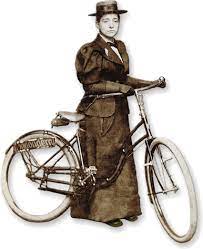
Annie Cohen Kopchovsky, a Latvian immigrant who had married and settled in Boston, announced on June 25 1894, that she was going to ride around the world on a bicycle. She was 23 years old, and the mother of three small children. Her husband was a devout Orthodox Jew. Annie had ridden a bicycle for the first time just a few days before her announcement.

Furthermore she informed that she was doing this to win a bet for $10,000. The bet was between two Boston merchants that no woman could circumnavigate the globe on a bicycle.  Annie said that she would cycle around the world in 15 months, starting with no money in her pockets. She would not only earn her way, but also return with $5000 in her pocket.

Annie turned every Victorian notion of women’s roles on its head. Not only did she abandon, temporarily, her role of wife and mother, but for most of the journey she rode a man’s bicycle attired in a man’s riding suit, and carrying a small revolver.

Annie was a complete antithesis of the coy domesticated female. She was a shrewd self-promoter, and master of public relations. She even adopted the name Annie Londonderry when The Londonderry Lithia Spring Water Company of Nashua, New Hampshire became the first sponsor, by giving $100 for her journey. Annie continued to cash in on the glamour and novelty of her journey by renting space on her body and bicycle to advertisers, selling photographs of herself, and making guest appearances in stores along the way signing souvenirs, delivering lectures and giving newspaper interviews which she embellished with colourful tales of her adventures.

Annie’s trip had its share of detractors and disbelievers. There was speculation about how much truth there was to all her colourful tales. Annie returned to Chicago on 12 September 1895, 15 months after she had set off. She came back with $3000 dollars that she made on her travels. The newspapers described her global adventure as “the most extraordinary journey ever undertaken by a woman.”

For Annie the journey was more than a test of a woman’s ability to fend for herself. The bicycle was literally her vehicle to the fame, freedom and material wealth that she that craved. For the emerging women’s movement, Annie as well as the bicycle became a symbol of emancipation.

Today the uniqueness, longevity and versatility of the bicycle, which has been in use for two centuries, is being celebrated once again. In recent times, when the world is literally choking from exhausts from fossil fuel and traffic congestion from motorised transport, the bicycle is being promoted as a simple, affordable, reliable, clean and environmentally fit sustainable means of transportation, fostering environmental stewardship and health.

The return to the bicycle movement was started by Leszek Sibilski in 2018 by a sociology professor and cycling and physical education activist who lobbied to bring the importance of the bicycle to the international stage and pushed for a day that could highlight this. Sibilski also advocated for integrating cycling into public transportation for sustainable development resolutions.

In response to the growing momentum of the movement in 2018, the United Nations General Assembly, declared 3 June to be celebrated as World Bicycle Day.

The day encourages stakeholders to emphasize and advance the use of the bicycle as a means of fostering sustainable development, strengthening education, including physical education, for children and young people, promoting health, preventing disease, promoting tolerance, mutual understanding and respect and facilitating social inclusion and a culture of peace.

In an age of the power of social media to promote such days, this is a good time to remember how, in a much earlier time, Annie Londonderry single-handedly “promoted” the bicycle. She would have been a perfect “Influencer” for World Bicycle Day!

–Mamata

Carl Linnaeus: Giver of Names

May 22 marked the celebration of the International Day for Biological Diversity. What exactly does this term, or word Biodiversity mean? At the broadest level it refers to the variety among life forms. It describes not only the number but also the types and variety of living things. While there is a huge variety of sizes, structures and functions among living things, there are also sufficient similarities to permit their grouping together into orderly patterns.

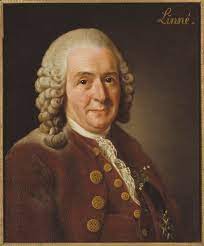
This grouping is called classification. The science of classifying organisms is called taxonomy. When talking about taxonomy, the name that immediately comes to mind is that of Carl Linnaeus, who is most famous for creating a system of naming plants and animals—a system we still use today. But Carl Linnaeus was much more than just the ‘father of modern taxonomy’. He was a renowned botanist, physician and zoologist; a pioneer in the study of ecology, and one of the most influential scientists in history.

Carl Linnaeus was born on May 23, 1707, the eldest of five children, in a town called Råshult, in Sweden. His father Nils, was a minister and keen gardener. From the time Carl was very young, his father used to take him to the garden and teach him about plants. Carl observed his father in the garden, and was soon as excited and interested in plants. He began growing plants and by the age of five had his own little patch in the family’s large garden.

His father believed that the best thing he could offer his children was a solid education and, in addition to botany, he taught Carl Latin, as well as about religion at an early age. Nils also realized that his son was exceptionally bright, and engaged a private tutor for him; but the boy found the tutor very dull as compared to his own explorations in the garden and countryside. This aversion to formal education continued when he joined school at the age of ten, and Carl was an indifferent student. The teachers ignored his immense knowledge and interest in Botany because it was not considered a ‘proper’ subject, and as he was not interested in subjects like Hebrew, mathematics and theology, they advised that he was not bright enough to go to University. Only one of his teachers saw his potential and advised his father that the boy should apply for admission to medical school. He also coached him in anatomy and physiology.    

At the age of 21 Carl enrolled in Lund University under the Latin form of his name Carolus Linnaeus. This was a common practice for students in Europe at that time. After a year he switched to Uppsala University as he was told that the medical and botany courses there were better. While he was there Carl wrote up some of his observations on reproduction in plants which were of such a high standard that he was offered a post of Botany lecturer at the University. In 1731 Carl began teaching botany, at the age of 23. He was a good teacher and his lectures were popular with students. As he continued his own botanical studies, Carl found that the way in which plants were classified was not satisfactory. He started jotting down ideas about how this could be improved. Linnaeus realized that he needed a cataloguing system that was easily expandable and easy to reorganize; for this he started using cards, thereby inventing index cards!

In 1732 Carl got funding for a botanical expedition to Lapland, in the far north of Sweden. For 6 months he travelled 2000 km across Lapland making notes on the native plants and birds. At this time it occurred to him that there could be another way of naming plants. He replaced some very lengthy plant names with logical, much shorter, two-part names which consisted of a genus and a species name. The genus describes a larger grouping of organisms with certain common characteristics, while the species name describes only one, unique particular organism grouped within that genus, or larger classification. The names were in Latin because at that time, Latin was the language of science. Highly educated people of the period could all read and write in Latin which enabled them to share scientific information, regardless of their native tongue.  

Carl Linnaeus described his observations of plants along with the newly-coined names in a book called Flora Lapponica, including his new discoveries. He also realized that he could use his new system to name animals as well as plants.

In 1735, at the age of 28 Linnaeus was awarded a doctoral degree in medicine for his thesis on malaria and its causes from a University in the Netherlands. While he was there he showed his continuing work on the classification and renaming of plants to a Dutch botanist who was very excited by its potential to transform botany. He supported the publication of Carl’s work which was published in 1737 under the title Systema Naturae (System of Nature). The first edition had 12 outsize pages.

Over the years, Linnaeus continued to develop his ideas and add new species. In the tenth edition of Systema Naturae published in 1758, Linnaeus classified all the animal kingdom into genera and gave all the species two-part names. The twelfth edition had 2400 pages. During his career, Linnaeus named about 13,000 life forms and classified them into suitable categories such as mammals, birds, fish, primates, canines, etc.

Linnaeus returned to Sweden in 1738, becoming a physician in the nation’s capital city, Stockholm. He helped found the Royal Swedish Academy of Science and became its first president. In 1741, aged 34, Linnaeus returned to Uppsala University and became a full professor of medicine, taking control of botany, natural history and the university’s botanical garden. He also revived his childhood passion by taking his students on walking trips in the countryside searching for plants. In 1750, at the age of 43, Linnaeus was appointed as Uppsala University’s rector. Carolus Linnaeus was knighted by the King of Sweden in 1761 and took the nobleman’s name of Carl von Linné. He died at the age of 70, on 10 January 1778, after suffering a stroke.

Linnaeus was the first person to place humans in the primate family and to describe bats as mammals rather than birds. He did this with the same reasoning he used to categorize all life, which was based on similarities he identified between species. Human beings are also among the thousands of species that were given a name by Carl Linnaeus—Homo sapiens meaning ‘thinking man or wise man’!

Today as the world sees a steady decline in the numbers of species and a severe threat to global Biodiversity due to anthropogenic factors, one wonders if Carl Linnaeus would regret giving humans the title of ‘wise’!

–Mamata