Fireworks: Sound and Light Show

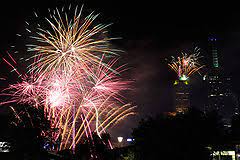
If bells are the traditional symbols that ring out the old, and ring in the new, perhaps the other thing that, across the world, opens the New Year with the dazzle of light and sound, is firecrackers. From the first display that lights up the sky in New Zealand, till 12 hours later, the sparkle that ushers in a new year in South America, firecrackers are almost a universal symbol of celebration of special occasions.

The history of fireworks goes back almost 2000 years ago, and the story of the first combination of crackle and bang, began almost as an accident. People in China used to throw bamboo stalks into the fire; the overheating of hollow air pockets in the bamboo would cause them to explode with a bang. The Chinese believed that this bang would ward off evil spirits. These are believed to be the first natural crackers. The human intervention began when, as the story goes, a Chinese alchemist mixed three common kitchen ingredients: sulfur, charcoal and potassium nitrate (saltpeter, a food preservative) and heated these over the fire, to make black flaky powder that ignited with a loud bang. The local people called this fascinating black powder huo yao (fire chemical). This was the first crude formulation of what came to be known to the rest of the world as ‘gunpowder’. People began to experiment further with the use of this powder. It was inserted into hollow bamboo tubes which were thrown into the fire. The ignited powder produced gases that caused so much pressure to build up in the tube that it blasted open with a loud bang. The first basic manmade ‘firecracker’ was born. In time the bamboo stalks were replaced with paper tubes, and instead of throwing the tubes into the fire, people added fuses made from tissue paper so that these could be lit from the outside.  

Firecrackers became an integral part of all Chinese celebrations—festivals, weddings and religious rituals. In the meanwhile the Chinese also realized that the black powder could be put to other, less ceremonial, uses. They attached the firecrackers to arrows that they shot at their enemies. Thus began the use of gunpowder in warfare that continues, in more sophisticated forms, to this day.

The knowledge of fireworks using gunpowder began to travel westwards with traders and travelers. It is believed that Marco Polo, one on of his many trips to China brought back this invention to the Middle East, from where the European crusaders brought it to Europe. An English scholar Roger Bacon is believed to be the first European to have analyzed the black powder from China, as he was intrigued why the mixture of ingredients exploded rather than burned. He also recognized that this quality of the powder could potentially be very dangerous, so he wrote the formula in secret code, to keep it secret as long as possible. Despite Bacon’s best efforts, Europeans discovered the formula, and a variety of weapons using gunpowder were developed. By the sixteenth century gunpowder completely transformed the nature of medieval warfare where chain armour and castle moats could not withstand the power and penetration of muskets and cannons.

While firepower was being used to develop weapons for warfare, the sound of fireworks began to become part of celebrations and festivals in Europe by the fifteenth century. It is the Italians who added the spectacle of light and colour by developing aerial shells that launched upwards and exploded into a fountain of colour lighting up the night sky. For nearly 2000 years the early colours were produced were yellows and oranges. It was only in the nineteenth century that the technology was developed that could produce reds, greens and blues to firework displays. In the meanwhile European rulers widely used displays of fireworks to “enchant their subjects and illuminate their castles on important occasions.”    

Early settlers to The New World carried with them their love of fireworks as they settled into what became the United States of America. Fireworks displays were part of the very first American Independence Day. Even today the Fourth of July fireworks tradition remains an integral part of the celebrations.

Today firework displays are a part of celebrations in almost every country and culture across the world. What appears to be a dazzle of colour, light and sound is in fact, a precise packaging of chemistry and engineering. Each modern firework consists of a tube that contains gunpowder (called an aerial shell), and dozens of small pods about 3-4 cm in diameter (each called a star). These stars hold a combination of fuel, an oxidizing agent, a binder, and metal salts or metal oxides for colour.

A firework also has a fuse that is lit to ignite the gunpowder. Each star makes one dot in the fireworks explosion. When the colorants are heated, their atoms absorb energy and then produce light as they lose excess energy. Different chemicals produce different amounts of energy, creating different colours. For example: Blues are made with copper-chloride compounds. Reds are made with strontium salts, strontium carbonate and lithium salts. Purple is made with a mix of blue-producing copper compounds and red-producing strontium compounds. Orange is created with calcium salts and calcium chloride. Green is made with barium chloride and other barium compounds. 

From alchemy to chemistry, the dazzle and fascination of pyrotechnics has travelled across centuries and continents to become a symbol of celebration. In India, despite concerns of the adverse impacts of the noise and smoke on health and the environment, and in spite of legal restrictions, crackers are getting louder and smokier, even as the sparkling lights in the night sky take our breath away. As the reverberations of the New Year fireworks linger in the air, the wedding season lies ahead, and also cricket matches and other celebrations that ensure that the crackle never fades.   

–Mamata

Sky-gazing

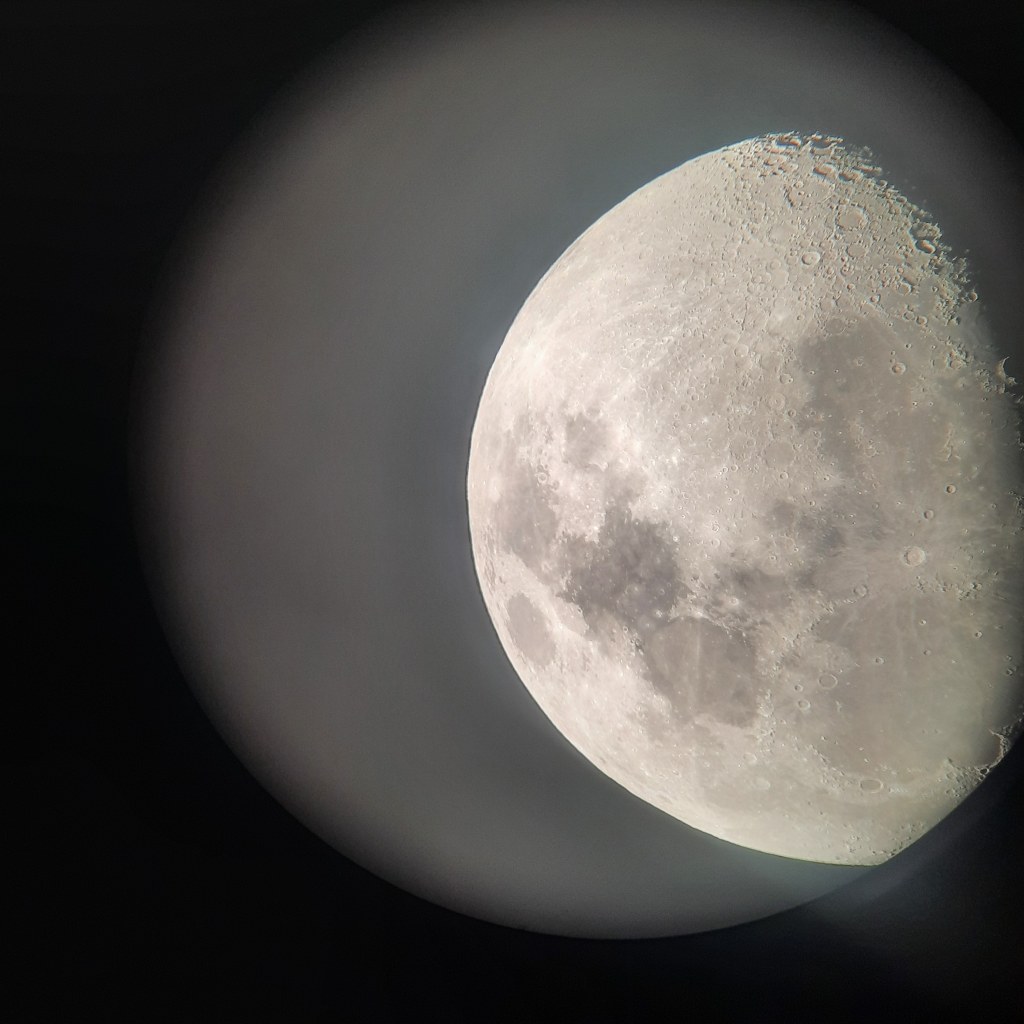
A few weeks ago, when we were in the Western Ghats, the resort manager kindly set up a telescope in the evening. It was for the kids who were our co-guests, but ultimately it was the adults who hogged the eyepiece! It was amazing to see the craters on the moon; Mars and Venus; and sundry stars. And we were reminded once again of the fascination that the sky has always held for humans.

The conversation obviously took a turn towards raking up memories about telescopes. Techy-types among the group reminded us that the magnification power of a telescope essentially indicated the size of an object observed inside the eyepiece relative to the size of that object when observed with the naked eye. For example, when looking at Mars at 50x magnification, the red planet will appear 50 times larger than if one looked at it with one’s eyes.  Factors like light pollution, atmospheric turbulence, temperature, wind, and much more affect the viewing experience. When viewing conditions are bad, the view will be blurry, fuzzy, shaky and unstable.  That is generally why telescopes are set up in high altitudes: the atmosphere is thinner at higher levels, and makes for better viewing. Air quality is important for good observations because any particles in the air will reflect light–so higher altitudes work better in this aspect too. Also, telescopes need to be located as high above the clouds as possible. And of course remote areas have less pollution.

Humans have been gazing through telescopes since the 17th century. The earliest existing record of such an instrument is a 1608 patent submitted to the Dutch government by a spectacle-maker called Hans Lipperhey. While the actual inventor of the refracting telescope is not known, Lipperhey was the one to file the patent. Scientists all over Europe were fascinated by the invention and many started their own attempts to come up with one. Galileo built his own version a few years afterwards, and started making his telescopic observations of celestial objects. The word telescope itself was coined in 1611 by the Greek mathematician Giovanni Demisiani for one of Galileo Galilee’s instruments, and translates roughly into ‘far-seeing.’

To most of us, the word ‘telescope’ probably brings to mind the Hubble, launched by NASA in April 1990 and still in operation today.  What we refer to as the Hubble Telescope is in fact a large, space-based observatory. It has been in operation for over 31 years, and in fact, its observation abilities have grown with time because new, cutting-edge scientific instruments have been added to the telescope over the course of the years through five astronaut servicing missions. It has made over 1.5 million observations over the course of its lifetime including seeing the collision of a comet with Jupiter, and has discovered moons around Pluto. It is truly one of the instruments which is shaping our understanding of the world.

Indians of course have always been fascinated with the skies, and down history have built different kinds of instruments to study the stars and other celestial objects. The observatories built by Maharaja Sawai Jai Singh of Jaipur between 1724 and 1734–the Jantar Mantars in Jaipur, Delhi, Ujjain, Varanasi, and Mathura being among the recent ones. 

India’s focus on space observations has continued into the modern era, with ISRO launching our first dedicated Space Astronomy Observatory—Astrosat–in September 2015. India’s biggest telescope currently is the 3.6m Devasthal Optical Telescope, a custom-built instrument of great complexity. Built in collaboration with Belgium and Canada, this telescope has the distinction of being largest telescope in India for the study of celestial objects at optical wavelengths. Devasthal is a district of Nainital, at a height of about 2,450 mt.

Women have had their share in these explorations. The ancient scholar Gargi (somewhere between 800-500 BC), engaged in questions about astronomy. In a dialogue with Yajnavalkya, she asks ‘what is that which pervades above the heavens, below the earth and in between the two (heaven and earth)’.

In the present day too, we have our share of astronomical stars (pun intended).  G. C. Anupama, the former Dean and Senior Professor (retired), Indian Institute of Astrophysics (IIA) is a world renowned astronomer. She has served as president of the Astronomical Society of India (ASI), the first woman to head this association of professional astronomers.  She is a member of the Indian core team which is part of the international effort to establish the thirty meter telescope (TMT) in Hawaii, USA, as also the principal investigator of the project which led to the establishment of the 0.7m wide field telescope at Hanle near Leh in Ladakh, the world’s ninth highest site for optical, infrared and gamma-ray telescopes in the world.

Exploring the skies is fundamental to the human quest for understanding ourselves. And it can set children on a course to study the world around us scientifically. If you don’t want to invest in a telescope which may cost in the tens of thousands, if not in the lakhs, do check out DIY telescope kits, available for as little as Rs. 1000 (one such option available at https://scienceshop.vascsc.org/). Who knows, you could be starting some kid out to a journey to ISRO or NASA—if not the stars!

–Meena

Hang it!

Did you know that if you pick up a clothes hanger anywhere in the world, there is a 12% chance that it was made in India? India is the third-largest exporter of hangers in the world, after China and Vietnam, sending out 11.1 thousand shipments a year, mainly to the US, Germany and Sweden.

There are of course several origin stories for the ubiquitous clothes hanger. The third US president Thomas Jefferson is supposed to have used some such device to keep his clothes in good order, but that story can’t be verified. Some versions take the invention back to 1869 and attribute it to one OA North, but some people believe it was invented by AJ Parkhouse in 1903. He arrived at work one morning to find all the coathooks taken. Irritated, he picked up a piece of wire lying there and bent it into the shape we all know today, and proceeded to hang up his coat.

Hangers are made from a variety of different materials–wire, wood, plastic, cardboard tubes, etc.  Now, in the quest for sustainability, the focus is shifting to use of recycled materials. Some hangers are padded with fabrics like satin and are used for delicate clothes. There are even luxury and custom-made hangers.

Fundamentally, a hanger is a device which mimics the shape of human shoulders, and is used to hang coats, shirts, dresses etc. so they don’t crush or wrinkle. A lower bar is used to hang pants or skirts. The other basic type of hanger has clamps to hold trousers or skirts.

Through the early 20th century, the popularity of the clothes-hanger grew—professionals like doctors and lawyers needed their clothes to look good, and hanging them up neatly was an easy way to always look dapper.

Hangers evolved to meet specific needs—there are foldable hangers for travel, scarf hangers, blanket hangers, tie hangers, etc.

Even more than domestic use is perhaps retail use, wherein the hanger has not only its functional use, but is also seen as an integral part of branding. The proper display of clothes depends a lot on the hanger used.

Mainetti is the world’s largest hanger manufacturer. The story of this giant began in Italy in the 1950s. A smart young man Romeo Mainetti worked for a racing car driver. The driver’s father was an industrialist involved in the textile industry, as the textile pioneer, the world-famous Marzotto corporation. The company had realized that there was an increasing demand for ready-made suits and started to make them. Each suit required a hanger. Originally, these were made of wood and were bulky and costly. Romeo’s brother Mario worked in a plastics factory, and together the two of them came out with the plastic hanger.

The quality of the product took the industry by storm and they soon had operations in the UK, France, Canada, and the Netherlands. Today the company has spread to 90 locations across 6 continents. India is a significant manufacturing hub.

Clothes hangers are used not just for hanging clothes, but have found innovative uses—they are popular welding rods, used for unclogging drains, for supporting plants, in children’s schools projects, etc. They are quite a favourite with car-thieves too! But hangers have a very dark side too– their use in illicit abortions.

Today, the major concern is from the angle of sustainability specially in terms of materials used. Hopefully we will find innovative ways to sustainably keep our clothes wrinkle-free.

–Meena

Guts and Gore

Last week we looked at the millions of microscopic life-forms which live within us and which help not just our digestive processes, but contribute overall to our health and well-being.

This week, here is a bizarre story of how we started to get insights into our digestive system (quite literally, as you will see).

The year was 1822, the place Mackinac Island, near the Canada-US border. A young fur-trader called Alexis St. Martin got shot in the stomach—how and why and by whom is not clear, but probably an accident.

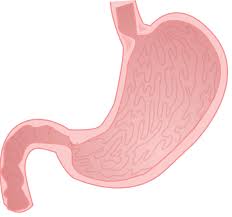
He was treated by Dr. William Beaumont, a US Army surgeon who was stationed at a nearby army post. St Martin had a hole in his stomach where he was shot. The treatment seemed to work and he recovered, but the hole did not close. For the first two weeks or so, whatever he ate, came out through the. But after that, though the hole was still open, the food did not come out and his digestive system seemed to be working normally. And though the stomach-wound healed, there was still a hole there—a window to his innards. Since sstomach acids are very strong, they essentially disinfected the wound from the inside out, and so it was safe to not sew it up.

Dr. Beaumont saw this as a miraculous opportunity to study the digestive system—he could literally look into the stomach as it worked. He paid St Martin to work in his house doing domestic chores with the understanding that he would allow the doctor to carry out experiments. St Martin was not happy, but did not have much choice.

Dr. Beaumont carried out a variety of experiments. For instance, he often watched the digestion happening in St Martin’s stomach after he ate. Sometimes, he let him eat and then retrieved the contents of the stomach later through the hole to see how much digestion had taken place. He would put food in a mesh bag and then dip it into St Martin’s stomach and take it out after some time. He even licked the inside of St. Martin’s stomach and found that the acid taste manifested only when the stomach started to digest food.

Over the next several years, Beaumont observed and recorded everything that went into St. Martin’s stomach. He took samples of gastric secretions and sent them to chemists for analysis.

Gory though it sounds, and medical ethics of today would probably never allow these kind of experiments, it has to be said that Dr. Beaumont’s work laid the foundation for modern ways of studying and understanding physiology. His work helped us to understand how the basic process of digestion actually occurs.

Weirdly enough, even today, in the US and some other parts of the world, the study of the digestion in cows is undertaken by deliberately making a hole or cannula in a cow’s stomach. The hole is fitted with a cannula which acts as a porthole-like device that allows access to the stomach of the cow, to perform research and analysis of the digestive system. These are called cannulated or fistulated cows. Apart from research, this also helps sick cows by allowing vets to insert healthy microbes into the sick cow’s gut. But I wonder if there can’t be ways just to give the sick cow medicines orally. Making a permanent hole in a cow’s stomach doesn’t seem a very nice thing to do! In fact, any animal rights groups find the practice objectionable, and are campaigning against it.

Here is to the spirit of science, of exploration and discovery. But strongly rooted in ethics!

–Meena

Angela Ruiz Robles: eBook Pioneer

What is it that would help to lighten the weight of school bags, is portable, makes learning more attractive and adapts teaching to the level of each student; can be used in the dark, supports learning with sounds, can be used in multiple languages, can be a useful teaching aid for teachers?

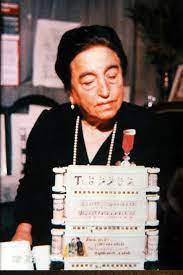
Today most school children can easily answer this as a “Tablet”. But this list, and this vision of such a teaching-learning device was made over 75 years ago, and resulted in an invention called Mechanical Encyclopedia. The inventor was Angela Ruiz Robles–a Spanish school teacher. 

Angela’s story is fascinating and inspirational.

Angela Ruiz Robles was born on 28 March 1895, in Villamanin, a municipality in the province of Leon in Spain. Her father Feiciano Ruiz was a pharmacist and her mother Elena Robles a housewife. Angela completed her higher education at the teacher training college in Leon, and went on to teach shorthand, typing and business at the same college from 1915 to 1916. In 1917 she was a teacher and director at the Gilberto Gordón School in Gordón, a town located near the city of León.

In 1918 she accepted a position as teacher in Santa Eugenia de Mandía, a village near Ferrol in Galicia, and remained there for the next decade. It is here that she found her true calling as a teacher. She was totally dedicated to her students, giving personal attention to each one; noting those who required special attention according to their needs. Her work was not confined to the classroom; she visited the homes of her students to provide additional instruction and support. She understood that every child has unique learning abilities, personalities and insecurities. As her old students recalled: “Doña Angelita, who was known by her first name to all of us, was the perfect teacher. She never treated any student differently and always honoured each individual learner’s needs.” Angela spent ten years in the village school and was greatly loved and respected by all.

Angela lost her husband when she was 40, and in 1928 she moved to Ferrol. She needed to teach, but now also to provide for her family. She founded the Elmaca Academy named after her daughters Elena, Maria Elvira, and Carmen. The Academy located in her own home provided classes for those aspiring to join customs, become mail carriers, or telegraph operators, as well as apply for business management studies. Her academy followed participatory pedagogical methods that were much ahead of their time; and this was reflected in the highest pass rate in the country for her students.

Along with the regular courses Doña Angelita gave free night classes to people with few resources. The Academy also became a social centre. Letters were read to, and written for illiterate immigrants; literary gatherings were held; food distribution was organized, and religious processions could be watched from here.

In 1934, she became manager of the Escuela Nacional de Niñas del Hospicio (National Girls’ School of the Hospice) in Ferrol, which cared for orphaned or abandoned girls. Doña Angelita made sure that the girls got a primary education, musical education and learned a useful trade so that they could earn and integrate with society.

As Doña Angelita continued her teaching and other educational work, she also had to support and bring up her three young girls by herself, but she made time for her own research and writing. Between 1938 and 1946, she wrote, lectured, edited and republished sixteen books. She published three of them: Compendium of Castilian Orthography, Castilian Orthography (abbreviated) and Modern Abbreviated Martinian Shorthand—books addressing the conventional Spanish spelling systems. In 1944, Ángela Ruiz started her Scientific-Grammatical Atlas project. Her goal was to teach Spanish grammar and spelling while making Spain better known through Spanish grammar, syntax, morphology, spelling and phonetics.

Angela Ruiz was also constantly thinking of resources, innovations, and inventions that would help to improve the teaching-learning process, and spent hours after her daily work in exploring and experimenting with such tools. Her aim was simple: “To make teaching easier, to get maximum knowledge with minimum effort.”

It was then that she dreamed of what she described as a “Mechanical Encyclopaedia” which addressed the needs listed in the first paragraph of this piece. This book included a vast range of information which was represented in graphic, sound or textual form. It could be made of waterproof and lightweight materials. It had the possibility of directly incorporating lighting and magnifying glasses.

Her invention consisted of patterned sheets. When you put your finger on them, they lit up and an educational text appeared. For this to happen, she incorporated an electrical circuit that she designed herself.

Angela made a sketch and detailed out her new kind of book which she described as “a mechanical, electrical, and air pressure procedure for reading books“. She was certain that her invention was a valuable educational tool and she went to Madrid to find promoters. Her invention was appreciated, but did not result in any funding for her to develop the patent. Angela was disappointed, but undeterred she continued to work on improving her invention.

On 10 April 1962, ten years after her first attempt, she filed a patent entitled An Apparatus for Various Readings and Writings. That prototype made of zinc and bronze was the Mechanical Encyclopedia. Today this prototype is exhibited at the National Museum of Science and Technology in A Coruña in Spain.

With that physical prototype, she once again undertook the rounds of different ministries in Madrid. Again the previous story was repeated: many pats on the back, but not a single penny. After all she was a woman, and a provincial school teacher, how could her invention be taken seriously? Angela continued her efforts until she was almost 75 years old, but she was unable to develop or distribute her inventions.

Today writer and philanthropist Michael Hart is best known as the inventor of the e-book, and in 1971, he created the Gutenberg Project, the first project to make e-books freely available via the internet. Sadly, forgotten in history books is the name of Angela Ruiz Robles, a passionate and dedicated teacher, and the original pioneer of the electronic book.

–Mamata

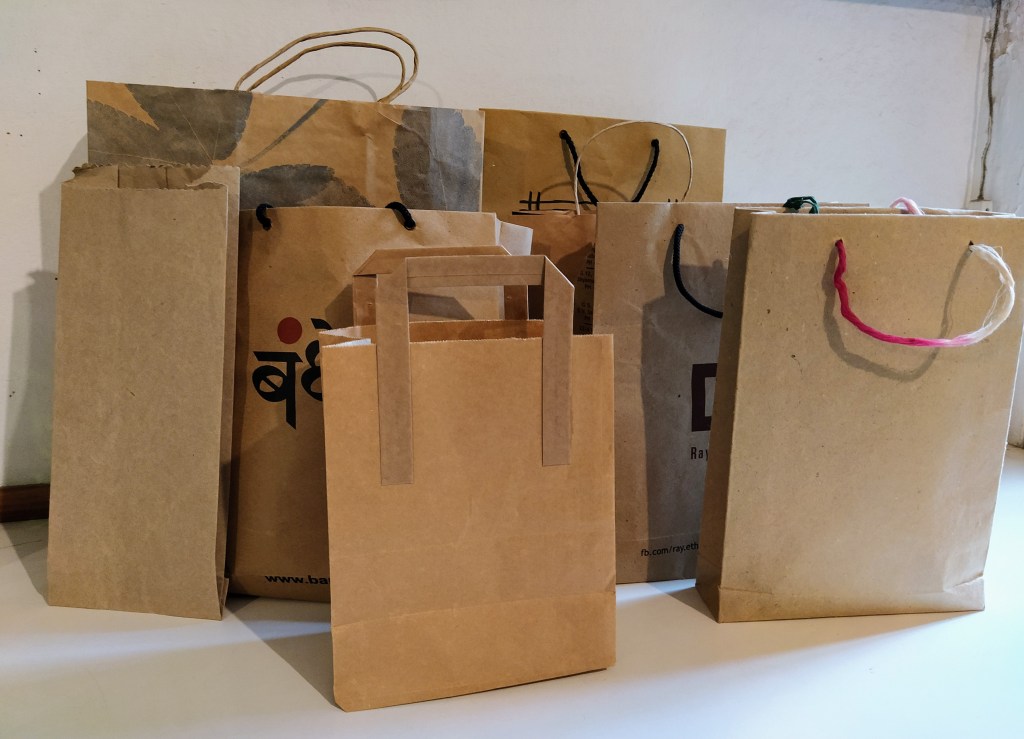
More Than Just a Paper Bag

12 July is marked as World Paper Bag Day to celebrate environment-friendly paper bags as an alternative to harmful bags made of plastic.

This month marks an important step for the environment. The Government of India has mandated a ban on manufacturing, import, stocking, distribution, sale, and use of single-use plastic items. Over the years while there have been both legal as well as voluntary efforts to reduce the menace of plastic pollution, the figures and ground realities across the world indicate an alarming trend of increase in throw-away plastics.

It is at a time like this when there is a deluge of information, and debates, about more eco-friendly alternatives. It is a time when paper bags are remembered and revived.

While the paper bag is an easy shop-and-tote item, it does not often merit much thought beyond its immediate function. However the humble paper bag has a fascinating history, not just as an object, but as a symbol.

Historically packaging material and containers were made of metal, wood, canvas, and jute. While these were durable and sturdy, their production was time-consuming and expensive. In the 1800s paper was introduced as packaging material. It was in 1852 that Francis Wolle an American priest and inventor invented a machine that could cut and paste paper into an envelope-shaped bag. This enabled mass production which lowered the manufacture time and cost; and these bags became popular with grocery stores in the United States.

The next important development in the design of the bag came from Margaret Knight, who then worked for the Columbia Paper Bag Company. Margaret’s job was to fold paper bags by hand, a slow and inefficient process. Margaret had an inventor’s mind; she started thinking of ways to improve the design as well as the process. She noted that the shape of the bag prevented it from being used for a number of items that would not comfortably fit at the bottom. She began to work on designs for a machine that would modify the shape of the bag so that it was flat at the bottom, and automate the manufacture. Within six months she had created a wooden prototype which was more efficient, but not sturdy enough. So she looked for a machinist who could make the machine in iron. After making refinements Margaret felt that she had created a design, and a machine unique for its time. When she filed for a patent for the machine and design, she found that a Charles Anon had already been awarded a patent for the same machine; her invention had been stolen. Margaret was a feisty woman. Not only was it unusual for a woman to file for a patent in the 1800s, she also hired an attorney (beyond her modest income) to fight her case, where her opponent claimed that because she was a woman, and not highly educated, she could not possibly have invented a complex piece of machinery. Margaret won the case, and the legitimate right to her own invention. On July 11, 1871, she became one of the first women to receive a patent. The inventor also became an entrepreneur when she later started her own company the Eastern Paper Bag Company.

The paper bag continued to be symbol of early feminism in the United States. In the 1920s schools in poorer rural areas where children were often underfed, established lunch programmes in schools. But among the more affluent class, the dominant idea was that mothers should be at home to provide children with hot lunches when they came home from school for a midday break. To send a child to school with a packed lunch was considered to be a dereliction of a mother’s duty. In the mid-1970s twenty mothers in New Jersey sent their children to school with their lunch packed in a brown paper bag. This caused some children to be suspended, and became a debated issue. But it also heralded the message that women need not to be confined to the kitchen, and could go out to work, even while ensuring a suitable meal for their children to carry. Paper bags thus became a rallying cry for women who wanted the freedom to be able to work, whether they needed the income or simply wanted a life that involved more than being home to provide hot lunches.

Today in the United States, the term ‘a brown bag meeting’ denotes an informal meeting or training that generally occurs in the workplace around lunchtime, and where participants typically bring their own lunches, which are associated with being packed in brown paper bags.

While the brown paper bag was a symbol of liberation for women in the United States, it was a symbol of discrimination based on colour, in the same country.

Slavery was abolished in the United States only a few years before the paper bag became popular in shops. Slavery itself had its own nuances of ‘colourism’. The slaves were not all of a uniform colour—their complexion ranged from very dark-skinned ones to varying shades of light-skinned. Over time, the lighter-skinned slaves acquired more privileges and education. When slavery was abolished it gave way to a strong hierarchy among the black people, based on the shade of their skin. In the early 1900s upper class Black American families, church and civic groups, and educational institutions devised their own systems of colour-based discrimination. They required members of the Black community to pass a ‘brown paper bag test’ for inclusion.  If an applicant’s skin was lighter than a brown paper bag, they were accepted. Those with skin too dark to pass the test were kept out. Even in prestigious Black universities like Howard University, there were “paper bag parties” where a brown paper bag was pasted on the front door; only those whose complexion matched, or were lighter in colour, could gain admission. It was a brown paper bag that held the key to access to certain public spaces or social events.

Thus the brown paper bag that was a liberating symbol for women in America, also became a symbol of discrimination, reinforcing colourism among the Black communities.

Meanwhile the square-bottomed brown paper bag continued to be popular for its more practical use as a convenient carrier of goods. Innovations were added to further enhance its capabilities. Pleated sides were introduced which expanded its holding capacity, and made it easier to fold. At some point, handles were added which made it easier to carry.

It was in the 1980s that plastic bags began to creep into the market. By the 2000s the plastic tsunami had swept across the world. Plastic bags were touted as the answer to all packaging requirements, as being reusable, and also cheaper to produce and market. Paper bags almost became a luxury, or a symbol of the emerging generation of ‘green consumers’. Today the havoc wracked by that plastic tsunami is evident in the alarming pictures of un-degradable throw-away plastics that are clogging our waterways and oceans, and piling up on our land. There is a clarion call for looking for alternatives, among which the paper bag heads the list.

Perhaps it is time to relook at the history of the paper bag that we hardly give a second thought to. And give it a new use and mission.

–Mamata

The Pieces Make the Picture: Jigsaw Puzzles

Three clues in a recent crossword puzzle put me on the trail that led me to another kind of puzzle—the jigsaw puzzle. There was a phase in my life when I was quite a jigsaw puzzle-ist. As a student in England, the floor of my room on campus was almost one-quarter covered with a large ‘work in progress’ jigsaw puzzle. This was a community effort where friends who used to come by would fit a piece, or more, to the evolving picture. The next time jigsaws featured in my life was when I used to get simple puzzles for my young children. They were fun, and they kept them engaged with the task of finding a piece that ‘matched’ and ‘fitted’.

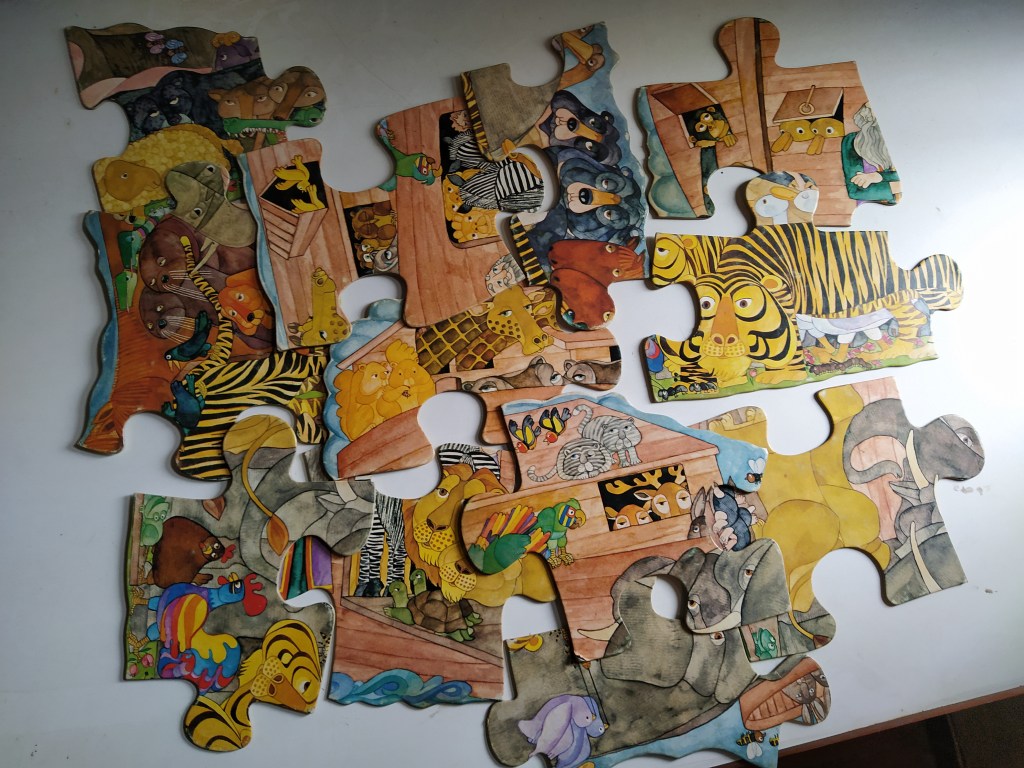
It is precisely the exercise of matching and fitting that was the aim of the original puzzle that later came to be called a jigsaw puzzle. The history goes back over two-and-a-half centuries to an English cartographer and engraver named John Spilsbury, who was thinking of a way to help school children learn geography. In 1766 he mounted one of his master maps onto a thin piece of mahogany wood and used a marquetry saw to cut the picture into pieces.

Thus was created what he described as a ‘dissected map’. Children were to reassemble the collection of pieces to recreate a complete map. It is believed that Spilsbury’s first ‘dissected map’ was called ‘Europe Divided Into Its Kingdoms’ and the pieces were cut mainly along the geopolitical boundaries of those days. Incredibly, the original puzzle still survives in good condition, and it occupies the pride of place in the Toy Halls of Fame in The Strong Museum in Rochester in the United States. This history museum houses the world’s largest collection of historical materials related to play.

These early maps, each handcrafted and made of good quality paper and wood, were expensive, and not affordable for wide use. It is believed that Spilsbury’s early puzzles were used to teach geography to the children of King George III, and were bought by a few elite boarding schools. 

Spilsbury himself died at the young age of 29 in 1769. But by the end of the century the dissected map puzzles had become popular, and London itself had around twenty such puzzle makers. They introduced themes other than maps for the pictures—alphabet and multiplication tables, themes from the Bible, and pictures of historical events and people. The material and labour costs continued to be high.

The term ‘jigsaw’ to describe these puzzles only came to be used in the 1880s when a special type of saw called a treadle jigsaw was invented. The saw operated by a treadle had a blade that could cut irregular curves; that made the cutting of the pieces easier and cheaper. This was ideal for the hereto called ‘dissected maps’ which could now have pieces with more intricate shapes that could interlock. Thus the ‘maps’ evolved into more complex puzzles that came to be popularly known as ‘jigsaw puzzles’.

The jigsaw which had arrived in the United States in the 1800s became a popular marketable item. In the meantime colour lithography techniques enabled better quality pictures to be developed more efficiently and the quality and variety of jigsaw puzzles also improved.  Enterprising companies developed new production techniques and materials that helped increase production and lowered cost, as well as marketing gimmicks that promoted sales. The cleverest move by the puzzle industry was to introduce puzzle designs for adults. Thus in the first decade of the twentieth century, what had started as an educational support for children, and then had become a source of entertainment as a children’s toy, the jigsaw puzzle, emerged as a popular hobby for adults. 

This kind of pastime was just what people needed in the Great Depression in America in the 1930s. There was large-scale unemployment, people could not afford to go out for entertainment, and jigsaw puzzles provided a no-cost pastime that could engage the whole family. Sales soared; puzzles were offered as freebies with the purchase of other items, and there were even stores and libraries that offered puzzles on rent.

Jigsaw puzzles continued to be made from wood or plywood, and were generally hand cut right until the outbreak of World War II. By the time the war ended, these were too expensive to produce. That is when cardboard began to be used and mechanized cutting equipment enabled large-scale production. Most jigsaw puzzles are today made of good quality cardboard, but there are still collectors of high quality wooden puzzles and some niche manufacturers of the same.

For the rest of the twentieth century, jigsaw puzzles continued to occupy a low-key but steady presence as gifts for children and hobbyist adults. With the twenty-first came the digital tsumani that deluged the market with an entirely new medium for education and entertainment. Old and young were swept away in the flood of never ending apps, data and virtual games that came and went breakneck speed. Until the Pandemic struck. The world changed overnight. Confined inside, over-satiated with a virtual existence, and flickering screens, overwhelmed with situations never before imagined, families dug into forgotten caches to pull out physical books and board games, and rediscovered the jigsaw puzzle!

Once again, the many ‘therapeutic’ benefits of the jigsaw are being hailed. Putting a jigsaw together is considered as a complete brain exercise as it involves both the right (creative and intuitive) and left (logical and objective) sides of the brain. It trains the eyes to pay minute attention to colours, shapes and other details, in order to match the pieces. This exercise improves visual-spatial reasoning, and helps develop perception, focus and concentration. It also calls for patience and persistence. Puzzles are great as a group activity, and also perfect for a quiet solo undertaking. There is more to the pieces of a jigsaw than the eye can see—a perfect picture lies within.   

It’s always the small pieces that make the big picture.

–Mamata