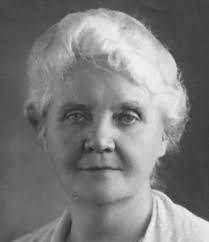
Birdwoman Jamal Ara

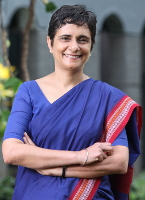
12 November marks the birthday of Salim Ali the Birdman of India. Much has been written and published by, and about, Salim Ali. However very little is known about a young woman who was recognized as the first Bird Woman of India by Salim Ali himself. This was Jamal Ara, a path breaker in more ways than one.

Jamal Ara was born in 1923 in Barh, Bihar, in a conservative Muslim family. She could study only until class ten before she was married off at a young age, much against her wishes. She moved to Calcutta with her husband where a daughter, Madhuca, was born. Sadly her marriage broke down, leaving her in dire straits. Fortunately a cousin who was in the Forest Service in Bihar, came to her aid and Jamal and her daughter moved to Ranchi. As a forest officer, her cousin was posted to different forest divisions of Bihar, and Jamal often accompanied him on his trips. This sparked in her a great love for wildlife, and Jamal would spend hours observing the flora and fauna in her surroundings. The English wife of a senior forest officer encouraged her to keep notes of her observations, and helped her to hone her writing skills. As her proficiency grew, they also encouraged her to turn her notes into articles and send them for publication.

Jamal Ara spent many years doing extensive field work in what is now Jharkhand, and her study of birds in the Chota Nagpur plateau was comprehensive and detailed. She meticulously documented her observations, and wrote prolifically from 1949 to 1988.  She contributed over 60 papers and articles to the journals of the Bombay Natural History Society and Bengal Natural History Society. She could communicate equally well with a lay audience. She wrote for The Newsletter for Birdwatchers, which was popular with amateur as well as seasoned birdwatchers, and also a book for children, Watching Birds which was published by National Book Trust, and translated into many Indian languages. I remember this book as being one of my own early introductions to nature study.

Jamal Ara was a multi-faceted writer. She wrote fiction, translated stories, and worked as a journalist for a short time. She also did programmes for All India Radio. Jamal Ara was also much more than a birdwatcher. She saw birds as an integral part of a healthy ecosystem, and advocated for a balanced conservation approach, something that was not common in an age when shikar was also a popular pastime.

After such an intense involvement in ornithology, and a prolific contribution to the field, in 1988, Jamal Ara suddenly vanished from the Indian ornithology scene. Her contributions stopped, and she herself disappeared. It is believed that a series of personal losses and setbacks affected her badly. She stopped writing, and after a few years also burnt her notes and photographs. She died in 1995.

Gradually Jamal Ara’s name and contributions sunk into oblivion. She would have been lost to the history of Indian conservation if not for a young researcher Raza Kazmi, who stumbled upon a story by Madhuca Singh, a celebrated basketball coach of Ranchi who mentioned Jamal Ara, her mother, who was a great bird lover. Raza Kazmi was intrigued by this mysterious bird lover, and embarked on a search for this woman and her work. After chasing numerous leads, he finally connected with Madhuca who shared her mother’s story.

It is thanks to Raza Kazmi’s single-minded pursuit, and the publication of Jamal Ara’s story in the book Women in the Wild edited by Anita Mani published in 2023, that we can join in celebrating this enigmatic, but brilliant bird woman of India.

It is also heartening that whatever had remained of Jamal Ara’s original work has been collected and digitized as part of the Archives at NCBS, a public centre for the history of science in contemporary India. The Jamal Ara Collection has archival papers relating to her life and work from 1940s to 1980s, including correspondence, unpublished manuscripts, field diaries and notebooks, and drafts of articles.

This week, as we celebrate Salim Ali, as well as Jamal Ara, both passionate bird watchers, here are a few words from them that remind us of the simple joys of bird watching.

”A bird’s song is a sound that touches the soul; it reminds us of the beauty of nature that we must protect. For me, birds have always been the greatest source of joy and inspiration.”  Salim Ali

“Even if you are not a birdwatcher and are not even faintly interested in them you cannot barricade yourself successfully against fugitive but striking impressions that the sight of a bird invariably leaves. The impression is not altogether fleeting although the sight may have been. It persists in memory. Colour, song, manner of flight, the build or some aspect of physiognomy may have thrust itself into your consciousness and nestles there pleasantly. That is why there is no person entirely uninterested in birds. Most persons are unattentive but a few helps to their stored memories and they start taking an interest in birds. They become attentive and surprise themselves by evolving into birdwatchers.” Jamal Ara 

–Mamata

Around a Continent in 18 Months: The First Circumnavigation of Australia

When we think of great explorers, we picture men in naval uniforms, compasses in hand, charting “new worlds.” But tucked away in the annals of Australia’s history is a story that breaks that mould. It’s the story of Bungaree—the first Aboriginal man, and indeed the first Australian, to sail right around a continent.

His name is little known today, but his contribution to one of history’s most extraordinary voyages, in an exploration led by Captain Matthew Flinders, an English navigator was extraordinary.

From Broken Bay to the World

Bungaree was a man of the sea. Born around 1775 among the Kuringgai people near Broken Bay, north of Sydney, he grew up at a time when everything around him was changing. European ships had begun to appear on the horizon; new settlements were springing up on ancient lands. While many Aboriginal communities resisted the newcomers, Bungaree was curious. Quick-witted and charismatic, he learned to move between two worlds—his own and that of the British colonists.

By the time Flinders was preparing to embark on his grand voyage of exploration, Bungaree had already earned a reputation as a skilled sailor and interpreter. Flinders, who understood the need for a knowledgeable local person on his mission, invited Bungaree to join the expedition aboard HMS Investigator in 1801.

The Journey Around a Continent

The Investigator’s mission was to chart the entire coastline of the vast southern landmass known then as New Holland. Flinders hoped to prove it was a single continent—what we now call Australia. For this, he needed not just navigational skill, but also understanding—someone who could help bridge worlds. Bungaree became that person.

Throughout the voyage –from December 1801 to June 1803–Bungaree played a vital role as peacemaker and emissary. When the Investigator anchored near Indigenous communities, it was often Bungaree who stepped ashore first—speaking to local groups in shared gestures, explaining the strangers’ peaceful intent, and easing tensions that could have turned deadly. His presence gave the expedition a human connection that maps and compasses could not.

Flinders, for his part, admired Bungaree’s warmth and humour. In his journals, he wrote that Bungaree “was always of service wherever we went,” and that his “good disposition and open, manly conduct” won respect from both shipmates and the people they met. It was a rare acknowledgment of partnership in an age otherwise defined by hierarchy and conquest.

The Man Beyond the Maps

The voyage was gruelling. The Investigator battled storms, leaks, and disease. Food was scarce; scurvy stalked the crew. Yet through months at sea and thousands of kilometres of unknown coast, Bungaree remained cheerful and steadfast—a figure of resilience and adaptability. When they finally completed the first circumnavigation of the continent in 1803, Bungaree had travelled more of Australia’s coastline than any person before him.

And yet, history gave him only a passing mention. While Flinders returned to England (and was later imprisoned by the French), Bungaree returned to Sydney. There he became something of a local character—always dignified, dressed in military uniforms, wearing his medals proudly. He was lovingly referred to as “King Bungaree,”.

An Amazing Feat

So this was the veryfirst successful circumnavigation of an entire continent in recorded history–the first time anyone had completely circumnavigated a single, continuous continental landmass on Earth.

Other earlier famous circumnavigations (like Magellan’s) went around the globe or around islands (for example, Tasmania, which Flinders himself had circumnavigated earlier with George Bass in 1798). But going around a continent — that is, a vast mainland connected by continuous coastline — was unique. (Incidentally, while one can circumnavigate Africa, the Americas through the Panama Canal, and Antarctica when the ice permits, it is not possible to circle Asia and Europe).

Remembering Bungaree

Bungaree died in 1830 and was buried at Rose Bay. His resting place, like so much of his story, is unmarked. But in recent years, there has been a growing recognition of his contribution—not just as a companion to Flinders, but as a symbol of the spirit of adventure, resilience, and bringing two worlds together.

–Meena

PIC from ABC News

WASTE NOT WANT NOT: WORLD THRIFT DAY

The First International Thrift Congress was held in Milan, Italy from 26 to 31 October 1924.  It was attended by over 300 delegates from 27 countries, who shared a vision: to promote savings as a key to financial security and independence. This was a period following the First World War which was marked by financial instability, and loss of confidence in banks. Banks were adopting a variety of measures and incentives to encourage people to deposit savings in banks in order to secure some stability for future uncertainties. In fact the word savings itself originates from the early 14th century, symbolizing ‘salvat’ a way to protect oneself from life’s uncertainties.  

On the last day of the conference one of the organizers Professor Filippo Ravizza proposed that there should be an annual International Savings Day or Thrift Day, as a reminder of the importance of saving, and to foster the habit of saving. It was unanimously agreed that this should be marked on 31 October. The informal symbol chosen to represent World Savings Day was the piggy bank.

Over a hundred years later, World Thrift Day continues to remind about the value of saving. Taken in a broader context, the word ‘thrift’ implies more than just accumulating coins in a piggy bank, or money accrued in savings accounts and deposits in banks. It refers to the prudent management of one’s resources. It is the opposite of extravagance and waste. It encompasses the philosophy and practice of moderation, conserving, and economizing.

Perhaps there is no better example of a life led by these principles than Mahatma Gandhi. For Gandhiji thrift was not just a habit of saving money; it was an ethical and philosophical principle which guided every aspect of his life. For him, the most direct application of this was in the frugal use of resources in one’s daily life. While his own lifestyle reflected this in every moment of his daily routine, he also expected that the people who lived in his ashram do the same.

There are several anecdotes recalled by his colleagues and ashram inmates that illustrate this.

Kishorelal Mashruwala started working with Gandhiji from the time that Gandhiji returned to India from South Africa, and continued to be closely associated with him for the rest of his life. He recounted some incidents.

‘One of my young nephews lived with me at Sabarmati. He once tore his clothing during play and then went straight to Bapu’s room. Bapu saw the torn condition of the cloth, and when he saw my wife later he showed his displeasure at it. He said: “One need not be ashamed of clothes repaired with sewing or patches. Poverty in itself is not a matter for shame. But there is no excuse for a person to put on unmended or dirty clothes. A cloth must be repaired as soon as it is torn, and washed if it has become dirty”.

It is well known that Gandhiji never threw away a used envelope or telegraph form that was blank on the reverse. He would collect these and convert them into scribbling pads, to be used on the day of his silence, or to write drafts of his articles and important letters, or, sometimes, to write notes to be left for others, or sent to them. Mashruwala recalled this: ‘I may also mention a habit which I developed under his influence. It is that of preserving and using bits of paper written on one side, wrappers on book-post packets etc., and used envelopes. Perhaps the instinct of thrift was inherent in me, and it got encouragement by his example.’ 

Kamlaben Patel came to stay in Sabarmati Ashram with her father when she was a young girl. Every inmate was expected to participate in all tasks from cleaning, washing, cooking, and spinning; and every resource was to be used with respect and frugality. She recalled one incident.

‘One day Bapu was passing by the store when the goods were being unloaded. He stopped and enquired how much soap had come. The soap that we all used was round and white but hard as stone, and the cheapest one that was available. The next day after the women’s prayer Bapu enquired about how much soap was used by each family. From their replies it was calculated that the cost of soap for each person was from 75 paise to one rupee. Bapu proposed that the use of soap be reduced. The women frankly told Bapu that any reduction in use was not possible as the soap was used to wash thick white khadi clothes, sheets, pillow covers, and mattress covers. Bapu said that “you all know that the Ashram runs on the donations of people. We claim to be servants of the people. Three hundred people live in the Ashram, and if each one used one rupee worth of soap, what will our donors feel about 300 rupees being spent on soap every month? Even in the days when there was no soap, our clothes were clean were they not? You must consider reduction in soap use.” After a lot of discussion the women agreed to use 50 paise worth of soap each month. Bapu proposed 37 paise. The women said they would respond after more thought. The prayer meeting dispersed. The women reconvened and after considering all options, unanimously decided to inform Bapu that it was not possible to do with less than 50 paise worth of soap per person, and remain firm on this decision. After the prayer Bapu jokingly said that the women’s ultimatum was like the Viceroy’s ultimatum. He would go to Bardoli to provide an answer to the latter, but he bowed to the women’s ultimatum, and accepted their 50 paise demand.’ 

These insistencies may seem as if Gandhiji was bothering over trifles, but for him such thrift was not simply a habit of saving money, but a practice of core principles connected to self-sufficiency, non-violence and social justice.

He believed that self-sufficiency through Swadeshi was not just an economic protest against foreign goods but a practical lesson in self-reliance and dignity of labour.  He emphasized the respect for resources (material and human) that went into creating any product. He believed that wasting or careless use of any product was to disrespect the person who made it.

These were some of the pillars of Gandhiji’s concept of ‘trusteeship’, a principle that suggested that rich individuals should not see their wealth as their own to squander but as a trust held for the benefit of society, especially the poor. He believed that wealth beyond one’s basic needs should be used for the public good. 

Gandhiji believed that genuine happiness lay in contentment, not in endless satisfaction of demands. He encouraged individuals to voluntarily reduce their wants, arguing that this would lead to a more satisfying life and a more peaceful society.

These ideas are best summed up in Gandhihji’s maxim that ‘The world has enough for everyone’s need, but not for everyone’s greed’. He believed that the world naturally produces enough to satisfy the needs of every person, but insatiable wants lead to exploitation and environmental ruin.

World Thrift Day is a thus not simply a reminder of saving for a rainy day, but a promotion of a way of life that values and respects all resources and their wise use.

–Mamata

Pencil in the Dates: Stationary Fairs around the World

Two weeks ago, we dipped our toes into the pastel-hued wonderland of Japanese stationery. This week, starting from Japan, we do a world-trip of Stationery Expos.

Japan: Two Shows, Two Personalities

Japan doesn’t just have one stationery expo—it has two, each with its own character.

The Japan Stationery Show, held every November in Tokyo, is the country’s premier industry fair. Here, manufacturers reveal their latest innovations: notebooks that open perfectly flat, mechanical pencils that never break lead, and pens that glide like a brush. It is also home to the coveted Stationery of the Year awards, which often set the trends for the year ahead. Though businesslike in its purpose, the show is open to consumers too, making it a buzzing space where industry professionals and stationery fans meet.

The Stationery Girls Expo (Bungu Joshi Haku), by contrast, is pure celebration. Launched in 2017, it caters to bungujoshi—literally “stationery girls,” a term now used for anyone who adores stationery as a lifestyle. Here, washi tapes in hundreds of designs, pastel highlighters, limited-edition pens, and playful planners dominate the stalls. The mood is festival-like—queues of eager shoppers, arms full of bags, and excited chatter about the season’s “must-have” notebook. If the Japan Stationery Show sets the industry agenda, the Stationery Girls Expo captures the culture of stationery—personal, expressive, and joyful.

With the cheerful tagline “the most enjoyable event for stationery lovers,” this expo is playful, creative, and community-driven. Its name might suggest it’s just for girls, but the event welcomes anyone with a soft spot attractive staionary. Spread across several days in Tokyo and Osaka, it has grown into Japan’s largest stationery festival, drawing nearly half a million visitors cumulatively.

The expo is also known for its Bungu Joshi Awards, where visitors vote for their favorite products—categories range from Tokimeki Design (heart-fluttering design) to Heart-throbbing Convenience (products that spark delight through functionality). The audience becomes part of the show, giving the event a democratic, festival-like atmosphere.

What’s especially interesting is the shopping system. Each visitor is given a transparent bag at entry. As they wander through stalls, they pick up treasures and drop them into their bag, paying for everything at a central cashier. It’s a clever system that avoids long queues at individual stalls and keeps visitors free to browse. The expo also offers exclusive merchandise only available on-site—tiny rewards for the true devotees.

Germany and USA

Germany’s Paperworld (now merged with Ambiente), has for decades set the global benchmark. Here the focus is on sustainability, efficiency, and innovation. Think paper made from stone, packaging that biodegrades in weeks, and pens that feel like sleek machines. It is vast, professional, and very B2B—corporate buyers and distributors scanning stalls with intent.

Then there’s the US National Stationery Show (NSS) in New York. This one feels closer to Japan in spirit—independent designers, hand-illustrated journals, greeting cards that are art in themselves. The joy of paper and pen as a form of self-expression is what binds the NSS community.

India: Now taking Mainstage

And, did you know, India has its own Expos too—two of them!

A Stationery Fair has long been part of the well-known Delhi Book Fair. Last month saw not only the 28th Delhi Book Fair, but also the 24th Stationery Fair at Bharat Mandapam. “Besides promoting books of all genres, the aim is to focus on providing students with educational books and stationery,” says Hema Maity, general manager, India Trade Promotion Organisation (ITPO).

The newer entrant is the Stationery & Write Show which debuted in 2019 in Mumbai, co-located with gifting and lifestyle fairs. That first edition saw 272 exhibitors and over 12,000 visitors—a remarkable start for a new platform. By 2022, the event had grown into a three-in-one showcase—Paperworld India + Corporate Gifts Show + Interior Lifestyle India—drawing nearly 15,000 trade visitors and 215 exhibitors. Fast forward to 2025, and the growth is striking: 18,000+ visitors from 285 Indian cities and 49 countries, with 340+ exhibitors. The annual fair, usually held in late January at the Bombay Exhibition Centre, now rivals international events in scale. It has a Delhi edition too.

And the highlights? Eco-friendly stationery made from recycled paper, cork accessories, even moss-covered desk décor. Alongside these, educational toys, quirky notebooks, and premium pens jostle for attention.

What makes India’s fairs unique is the mood—serious business buyers walk the aisles, but so do college and school students and stationery lovers. It is equal parts trade fair and festival.

The Magic That Endures

Whether in Tokyo, Frankfurt, New York, or Mumbai, expos remind us that stationery is not just about function. It is about beauty, culture, even memory. And perhaps that is why, year after year, these fairs continue to draw thousands: they affirm that ink on paper still carries magic in a screen-dominated world.

–Meena

Civil-Society Seshan: A Tribute to Jagdeep Chhokar

Mr. TN Seshan’s tenure as Election Commissioner (12 December 1990 to 11 December 1996) changed how we Indians viewed elections—he made free and fair polls a public expectation rather than an exception. The revolution he brought about was to enforce the Rules, provisions and systems that already existed, but no EC before him had acted sufficiently on. The Model Code of Conduct for instance, which political parties routinely flouted, with EC looking in the other direction. He cancelled or postponed elections where the MCC was blatantly violated. He took action to drastically reduce booth capturing, and clean up electoral rolls and reduce bogus voting. He made candidates and parties accountable for their campaign spending and took strong action against black money in elections. He strengthened monitoring of polling stations, and deployed paramilitary forces in sensitive areas. He laid the ground for Voter ID cards. He increased transparency by publishing election schedules and guidelines well in advance.

The man who ‘ate politicians for breakfast’ helped strengthen and deepen Indian democracy.

If Mr. Seshan brought about all these changes through rigorously using his given power as a bureaucrat, Jagdeep Chhokar, did it purely from the outside. He co-founded the Association for Democratic Reforms (ADR) in 1999 along with his colleague Prof Trilochan Sastry and others as an NGO.

ADR’s primary mission is to improve governance and strengthen democracy by bringing transparency and accountability into India’s political and electoral processes. Over the past two decades, it has become one of the most credible civil society voices on issues of electoral reforms, political funding, and the integrity of candidates and parties.

One can see echoes of Mr. Seshan’s work–one of ADR’s most significant contributions has been its role in disclosure of criminal, financial, and educational background of candidates contesting elections. Following a landmark Public Interest Litigation (PIL) filed by ADR, the Supreme Court of India in 2002 mandated that all candidates must file self-sworn affidavits disclosing their criminal records, assets, liabilities, and educational qualifications. This judgment fundamentally changed the way Indian voters access information about their representatives. Since then, ADR, through its platform MyNeta.info, has been collecting, analyzing, and disseminating this information for every state and national election, enabling citizens to make more informed choices.

ADR has also been active in examining political party funding and expenditure, a highly opaque area of Indian democracy. By studying income tax returns and donation reports of political parties, it has consistently highlighted the growing role of unaccounted money in politics. ADR’s reports show that a large proportion of party funding comes from unknown sources, often via electoral bonds or cash donations, which raises concerns about transparency. These findings have been widely cited in media, parliamentary debates, and reform discussions.

Beyond data disclosure, ADR has worked to strengthen electoral reforms in collaboration with the Election Commission of India (ECI), civil society organizations, and policy experts. Its advocacy has covered areas such as decriminalization of politics, regulation of inner-party democracy, curbing misuse of money and muscle power, and improving voter awareness.

Another major initiative is citizen empowerment through voter education. ADR conducts voter awareness campaigns, disseminates easy-to-understand report cards on candidates, and organizes debates and dialogues to promote ethical voting. It also collaborates with other organizations on programs like the National Election Watch (NEW), a network that monitors elections and promotes democratic accountability.

ADR has been central in challenging the electoral bond scheme in courts. In February 2024, the Supreme Court of India struck down the electoral bond scheme as unconstitutional, ordering disclosure of donor identities, amounts, etc.

In essence, ADR’s work has created a data-driven framework for citizen engagement, holding both candidates and political parties accountable. While challenges remain in implementing deeper reforms, ADR has significantly advanced transparency in Indian democracy and continues to push for systemic change.

Recent Initiatives of ADR

  • ADR has published updated data (as of July 2025) on how parties redeemed electoral bonds from 2018-24, including comparison with State Bank of India RTI responses. Their analyses show that in FY 2022-23, 82.42% of the income from “unknown sources” declared by national political parties came from electoral bonds.
  1. The report also examines the financial disclosures of Registered Unrecognised Political Parties (those registered with the Election Commission but not recognised as state or national parties).  There was a 223% rise in declared income during FY 2022-23 among these parties.
  2. ADR and its network National Election Watch (NEW) analysed the affidavits of 8,337 out of 8,360 candidates in the 2024 Lok Sabha elections
  3. Among findings:
    • Around 20% of all candidates had declared criminal cases; for state party candidates it was ~47%.
    • 46% of the winning MPs declared criminal cases, up from 43% in 2019.

A Friend

For Mamata and me however, he was Jagdeep, husband of colleague and dear friend Kiran. For me, he was also the colleague of my husband, and neighbour for decades.

What I recall very fondly is how caring of older people Jagdeep and Kiran were. Often when my parents were visiting and they knew I was travelling, they would ensure to drop in and chat, and solve any little problem they might have. The affection was mutual. He was a particular favourite of my mother’s who would rush to make rasam if she heard he had a cold.

Jagdeep did his Law when he was teaching at IIM. And he never did well in exams at all, because he did not follow the quarter-baked kunjis from which examiners expected students to mug and regurgitate answers. He would regale us with the regressive and misinterpreted answers that featured in crib-books, and while we laughed, we also worried about what lawyers were learning.

All of us who knew Jagdeep personally will of course miss you. But the whole country will miss you. Thank you for everything you have done for India’s democracy. We know it was your consuming passion and commitment for the last 25 years. And we also know it took an immense amount of courage.

Thank you Jagdeep. RIP.

Wish you all strength, Kiran.

–Meena and Mamata

Also see: Close encouters with Al-Seshan at https://millennialmatriarch464992105.wordpress.com/wp-admin/post.php?post=1106&action=edit

Dashri and Kasturba: Teacher and Student

Tribal communities have long inhabited India’s lands, living in close proximity with their natural environment and following their ancestral ways of life, culture and traditions. At the same time these peoples were always considered to be on the fringes of mainstream society; socially and economically exploited,

and deprived of fundamental rights. Dashri Chaudhary was born in one such community in the Vedchhi region of south Gujarat on 3 October 1918. Her father Rumsibhai and mother Ambaben belonged to one of the tribes which were collectively called ‘rani paraj’ or ‘people of the forests’, and later known as ‘adivasis’.

Although traditionally these communities were deprived of education, Dashri’s father as well as her grandfather Jeevanbhai had both received education. This was because the Vedchhi region was then under the Gaekwad rule of Baroda which encouraged compulsory education for all. Jeevanbhai Chaudhari was a school teacher and social reformer. Dashri was brought up in a progressive environment, and studied up to class 4 in the government school in her village.  

In the meanwhile her father and grandfather were coming under Gandhi’s influence. They began to organize the local adivasi community to oppose the socio-economic exploitation by the British as well as the local moneylenders. They started an organization named Kaliparaj Parishad for the upliftment of their community. The organization started taking shape in 1905 with the convening of the Raniparaj convention where the issues of exploitation of adivasis and social and educational reforms were discussed. The women formed bhajan mandalis, and travelled from village to village singing songs inviting people to join the satyagraha movement.

After Gandhiji’s return to India from South Africa in 1915, Dashri’s grandfather invited him to attend the convention but he could not do so at that time. However Kasturba came in 1923, the first non-adivasi woman to attend. Gandhiji himself attended the next convention in 1924. Dashri was then six years old. Her family had already adopted the khadi movement. Little Dashri was keen that she should also welcome Gandhiji with a garland of handspun khadi thread. The story goes that Gandhi picked up the little girl who was wearing gold bangles and anklets. He told her “Child, we are slaves. We cannot wear jewellry.” The six year old immediately took off the ornaments, and never again in her life, wore any again.

Dashri completed class four in Vedchhi and joined class 5 in the government girls’ school in Valod. However responding to Gandhi’s call to boycott government school education, she left the school.

She moved to Ranipara Kanya Vidyalaya a nationalist school (Rashtriya Shala) imparting basic education, started by Kasturba, Mithiben Petit and others in Pune town in Mandvi district. Kasturba was there at the time. Dashri barely completed one year here when the school was shut down. All the students got involved with the freedom movement which was gaining momentum in the light of the Dandi March in 1930 which sparked a nationwide Civil Disobedience Movement. Dashri was an active participant. She and her friends picketed liquor shops, they protested against the British policy of prohibiting tribals from producing and selling toddy which was locally brewed. 

On 26 January 1933, she was arrested while picketing a shop that sold foreign cloth. She was only 14 years old. She was tried. When asked what work she did, she replied “To free India”.  She was asked if she knew the consequences of such activity, she replied “Yes, I know. If I die I will be called a martyr”. The magistrate is believed to have commented “This is girl is dangerous.”

Dashri was sentenced to one year in Yervada jail. Kasturba was already imprisoned there. She was surprised to see the young student who had been in the Rashtriya Shala. “How you have grown, and now you are in jail”, she said. The two became close. Dashri spent the year in jail doing all the manual tasks that the prisoners were assigned. Kasturba usually requested fellow prisoners to write letters for her, as she herself could not do so. During the time when they were in jail, Kasturba requested the young Dashri to teach her how to read and write. Dashri herself had only completed primary school and here she took on the role of teacher. In the time that they had free from the arduous prison tasks, the young teacher and elder student attentively worked with the slate and chalk, learning Gujarati letters and moving ahead. It is believed that Dashri successfully taught her student in four months! The first letter Kasturba wrote was to Gandhiji who was delighted. He wrote to Kasturba ‘Tell this girl that “you could do what I could not!”

After her release Dashri continued with her studies at Gujarat Vidyapith. She also learnt music from Pandit Narayan More, and learnt to play several instruments. As the Quit India movement gained momentum in 1942, she once again gave up her studies and joined. She added spirit to the protests and processions with her powerful singing of patriotic songs.

She was arrested once again, and sentenced to a year’s imprisonment. After her release, in 1944 she married a fellow satyagrahi Kanjibhai Chaudhary. She continued to be actively engaged with the activities at Vedchhi ashram.

After Independence she resumed her interrupted studies, completing her Matric and Primary Teachers Course. She started a school for children of very backward communities and continued to contribute to the field of education. She was not interested in getting into politics. She herself never gave up learning, and was always active in social causes. She lived in Vedchhi, where one of Gandhi’s close associate Jugatram Dave established an Ashram dedicated to upliftment of the adivasis in the socially and economically backward area through constructive work and education. 

Dashriben passed away in 2013 at the age of 95 years. A long life dedicated entirely to the cause of the nation.   

–Mamata

Nature’s Libraries: Where the Wild Data Lives

National Librarian’s Day is celebrated on August 12th every year to commemorate the birth anniversary of Dr. S.R. Ranganathan, the “Father of Library Science in India”.

When we say “library,” most people imagine rows of books, a quiet reading room, and perhaps a stern librarian at the desk. But in the language of library science, a “library” is defined less by its shelves and more by its functions — acquiring, organising, preserving, and making knowledge accessible.

By that definition, the world is full of libraries that hold no books at all. Some store bird calls. Others archive satellite images. Some collect DNA sequences. In fact, they are not physical spaces at all. Many are vast online repositories where scientists and citizens alike can deposit, discover, and use data.

On this Librarians’ Day, let’s explore how these nature and biodiversity depositories perform the same core functions as traditional libraries — only their collections are wild, living, and often invisible to the naked eye.


Acquisition: Gathering the Wild

Libraries begin by collecting materials. In biodiversity repositories, this might mean researchers uploading recordings to Macaulay Library (Cornell Lab of Ornithology) or Xeno-canto, which crowdsource bird calls from around the world.

  • Example: iNaturalist “acquires” photographs and species observations from millions of contributors.
  • Example: GBIF (Global Biodiversity Information Facility) harvests species occurrence data from institutions and citizen scientists alike.

Just as a public library acquires books from publishers and donors, these nature libraries acquire data from field biologists, monitoring equipment, and enthusiastic amateurs.


Organisation: Making Sense of the Collection

Without organisation, a library is just a warehouse. And hence the focus on developing classification systems. Dr. S.R. Ranganathan primarily used and developed the Colon Classification (CC) system. The Dewey Decimal system is the widely prevalent one used in most libraries across the world.

Biodiversity data portals however are based on the Linnaean system of classification and organize living organisms based on evolutionary relationships. This involves classifying organisms into hierarchical groups like kingdom, phylum, class, order, family, genus, and species. This is.

  •  Example: BOLD (Barcode of Life Data System) and GenBank organise genetic sequences by species, geography, and collection method.
  • Example: ITIS (Integrated Taxonomic Information System) standardises names so scientists worldwide speak the same language.

The result? You can search for a frog by its Latin name, its genetic barcode, or the location where it was found — just like you can search for a book by title, author, or subject.


Preservation: Guarding the Record

One of a library’s noblest duties is preservation — ensuring the information remains available for future generations. In biodiversity repositories, this may involve:

  • Storing acoustic recordings (bat calls, whale songs) in durable digital formats.
  • Archiving satellite imagery in systems like NASA Earthdata and Global Forest Watch for long-term environmental monitoring.
  • Keeping herbarium records in Tropicos and long-term forest data in ForestGEO.

Like rare manuscripts in acid-free folders, these data are preserved against loss, decay, and obsolescence.


Access: Opening the Doors

Libraries thrive when they are accessible. Many biodiversity repositories are open access — anyone can explore them. And importantly, contribute to them.

  • eBird lets birdwatchers view migration patterns and personal checklists.
  • FishBase offers species profiles for students, fishers, and marine scientists alike.
  • OBIS (Ocean Biogeographic Information System) gives marine biologists open access to ocean species occurrence data.
  • Merlin helps users identify birds by their calls.

Some repositories, like Wildlife Insights or certain ethnobotanical databases, may have restricted access for sensitive data — similar to a library’s rare books section.


Dissemination: Spreading Knowledge

A library doesn’t just keep information — it shares it. Biodiversity repositories publish datasets for conservation planning, scientific research, and education.

  • Movebank shares animal movement data for migration studies.
  • TRY Plant Trait Database supports climate change modelling.
  • The Digital Himalaya Project disseminates ethnographic and ecological knowledge, bridging science and tradition.

Why These Libraries Matter

By meeting the same functional standards as a traditional library — acquisition, organisation, preservation, access, and dissemination — biodiversity depositories are not just “like” libraries, they are libraries. Their collections may be recordings instead of novels, or genetic codes instead of encyclopaedias, but the principles are identical.

In a time of rapid environmental change, these libraries are our collective memory-keepers for life on Earth. They store the songs of rare birds, the paths of migrating whales, the genetic fingerprints of endangered plants, and the traditional wisdom of communities who have lived with nature for centuries.

So this Librarians’ Day, remember: the guardians of knowledge are not only in buildings with books. They are also in digital sound archives, genetic databases, satellite imagery vaults, and underwater biodiversity surveys. Wherever knowledge is collected, cared for, and shared — there, you will find a library. Dr. Ranganathan, I am sure,  would have been excited to explore the new realms of libraries and library science!

–Meena

There are a wide range of data depositories and libraries related to nature and biodiversity across different domains—ranging from sounds (like bat and bird calls) to genetics, species observations, satellite imagery, and more. Here is a list of some of these depositories, which Chat GPT has been kind enough to put together!


🦇 Acoustic and Sound Libraries

  1. Bat Call Library – Region-specific databases like EchoBank or ChiroVox.
  2. Macaulay Library (Cornell Lab of Ornithology) – Massive archive of bird sounds, videos, and photos.
  3. Xeno-canto – Open-access database of bird calls and songs from across the world.
  4. AmphibiaWeb – Includes some amphibian vocalization data.
  5. BLB (British Library Sound Archive – Wildlife Section) – Historical and contemporary recordings of animals.

🌍 Species Observations and Biodiversity Portals

  1. GBIF (Global Biodiversity Information Facility) – Gigantic open-access database of species occurrence data from around the world.
  2. iNaturalist – Crowdsourced species observations with photos, locations, and identification support.
  3. India Biodiversity Portal – India-specific citizen science portal on biodiversity with species pages, maps, and observations.
  4. eBird – Global birdwatching database with detailed observation checklists and trends.
  5. OBIS (Ocean Biogeographic Information System) – Marine species occurrence data.

🧬 Genetics and Taxonomy

  1. BOLD (Barcode of Life Data System) – DNA barcoding records of species.
  2. GenBank – Nucleotide sequences, often used for genetic identification of species.
  3. Encyclopedia of Life (EOL) – Species information including taxonomy, distribution, and media.
  4. ITIS (Integrated Taxonomic Information System) – Authoritative taxonomic info, mainly for North America.

🛰️ Remote Sensing and Environmental Data

  1. MODIS / NASA Earthdata – Satellite data on vegetation, land cover, fires, etc.
  2. Global Forest Watch – Forest cover, loss, and gain data based on satellite imagery.
  3. NOAA Climate Data Records – Atmospheric, oceanic, and climate-related datasets.

🐾 Camera Trap and Movement Data

  1. Movebank – Open-access database for animal movement (GPS collar) data.
  2. Wildlife Insights – Global camera trap image database, AI-assisted.
  3. PanTHERIA – Ecological and life-history data of mammals.

🌿 Botanical and Ecological Datasets

  1. TRY Plant Trait Database – Global plant trait data.
  2. Tropicos (Missouri Botanical Garden) – Botanical information with herbarium specimen records.
  3. ForestGEO (Smithsonian) – Long-term forest monitoring data across the globe.

🌊 Marine and Aquatic Life

  1. FishBase – Comprehensive fish species database.
  2. SeaLifeBase – Same as FishBase but for all non-fish aquatic life.
  3. Reef Life Survey – Citizen science marine biodiversity data.

📚 Literature and Traditional Knowledge

  1. Digital Himalaya Project – Ethnographic and ecological archives.
  2. Ethnobotanical Database – Plant use in indigenous and traditional medicine.

PIC: wildlifedata.org/

Feisty Freedom Fighter: Aruna Asaf Ali

“Do or Die. We shall either free India or die in the attempt,” Mahatma Gandhi told fellow leaders of the movement for India’s independence on 8 August 1942. These words launched the Quit India movement. Although Gandhi and many other leaders were arrested within hours of his speech, with the expectation that without their leadership the resistance movement would be rudderless, the effect was the opposite. Thousands of Indians, young and old, heeded this call and plunged into the movement, each contributing in their own way.

The sweeping movement continued to gain strength in many forms, culminating in India becoming an independent nation on 15 August 1947. Even today, after almost eight decades there are as many stories as there were people then, about how every Indian played his or her part in this movement.

One of the women who picked up the mantle of leadership in the vacuum left by the arrests following Gandhi’s speech on 8 August was Aruna Asaf Ali who went on to play a significant part in Indian politics, even after Independence.

Aruna Ganguly was born on 16 July 1909 in a liberal upper class Bengali family which had migrated to the United Provinces (now Uttar Pradesh). After graduating from a missionary school and college Aruna started working as a teacher at Calcutta’s Gokhale Memorial School. It was here that she met Asaf Ali, a progressive barrister. Despite family opposition on grounds of differences in age and religion, Aruna married him in 1928. Her family practically ostracised her. 

Asaf Ali was a prominent member of the Indian National Congress, and Aruna too soon began to meet and mingle with many nationalist leaders of the day. It was natural that she became actively engaged in the ongoing freedom struggle. Two years after her marriage, she was jailed during the Salt Satyagraha. Her popularity and leadership qualities were already emerging. Apprehensive about this, the colonial authorities did not release her when other political prisoners were released in 1931. They did not anticipate that her detention would raise a great public outcry; and that all the women prisoners would refuse to be released unless Aruna was released. It took Gandhiji’s personal intervention to secure her release.

The following year Aruna was again arrested and imprisoned in Tihar jail. Here too she led a hunger strike to protest against the treatment to political prisoners. She was moved to solitary confinement in Ambala jail.

By the time Gandhiji gave his Quit India call, Aruna had already been active in the movement for over a decade. The country-wide crackdown against nationalist leaders in 1942 left a leadership vacuum which could have aborted the momentum. Aruna stepped in; she presided over the rest of the Indian National Congress (INC) session, and on 9 August she rushed forward and unfurled the flag of Independence at Gowalia Tank Maidan in Bombay. News of this flag-hoisting spread like wildfire. Aruna and a group of INC workers went underground. The British government posted a reward for her capture but she successfully evaded arrest for three years. Her property was seized and sold.

Even in hiding, Aruna continued to contribute to the movement through use of underground radio, pamphlets, and the Congress’s monthly magazine Inquilab. During this period she was unwell and became frail. When other Congress leaders came out of prison, Aruna refused to come out of hiding and give herself up. Gandhiji wrote her a personal note expressing concern about her frail health and urging her to surrender and use the prize money offered by the British for the cause of Harijans. Aruna respectfully declined to do so. Gandhi always had great respect for Aruna’s personal bravery, but did not always approve of her tactics. She had a strong independent streak and high ideals.

Aruna finally came out of hiding in 1947 and returned to active political life. She was elected president of the Delhi Pradesh Congress Committee. However she quit the Congress party in 1948 and joined the Socialist Party, and later became a member of the Communist Party of India. She went on to leave this in 1956, but she retained her leftist leanings and spent the rest of her life in fighting for causes of the unprivileged, underrepresented, and exploited sections of society. She supported with revolutionary zeal the upliftment of women through education and better health care. Her politics was always more a matter of the heart than the head. Her frail physique belied her incredible inner strength. 

Aruna was elected Delhi’s first woman mayor in 1958, and led the way for major civic reforms. But unable to handle the petty politicking, she resigned. She never again contested elections or took up a government post. She passed away in 1996 at the age of 87 years. Till the end of her life she lived in a one-bedroom apartment. She continued to mobilise support for social reforms, working for the rights of women, the poor and downtrodden. She actively helmed the Patriot newspaper and weekly magazine Link. She was awarded the International Lenin Peace Prize in 1964. She was honoured with the Padma Vibhushan in 1992, and posthumously awarded the Bharat Ratna in 1997.

Aruna Asaf Ali, frail but feisty, was one of Gandhiji’s Women Warriors, part of an inspiring band of women from all walks of life who fought not only for the freedom of their country, but equally for the rights of its women to live as free, fearless, and empowered citizens of India. 

–Mamata

DESIGN GURU ASHOKE CHATTERJEE: A TRIBUTE ON HIS 90TH BIRTDHAY        

Ashoke Chatterjee (AC) does not like to be called ‘design guru’. But it is really not possible to come up with a better title for this piece on him. For though not a designer, his influence on design and design education in India has been immense. After all, he was Executive Director of India’s first and leading design school, the National Institute of Design (NID) from 1975 to 1985; a Senior Faculty Advisor for Design Management and Communication from 1985-1995, and Distinguished Fellow at NID from 1995 till his retirement in 2001.

AC played a critical role in conceptualizing the meaning of design in the Indian context. In 1977, he brought together UNIDO and International Council of Societies of Industrial Design (ICSID) members, designers, design-educators and others from across the world to the NID campus at Ahmedabad for a 2-day symposium. The meeting ended with the historic Ahmedabad Declaration which embodies the value of humanism in design. The core of the statement affirms:

  • ‘Its firm conviction that design can be a powerful force for the improvement of the quality of life in the developing world;
  • Its firm belief that designers must have a clear understanding of the values of their own societies and of what constitutes a standard of life for their own people;
  • That design in the developing world must be committed to a search for local answers to local needs, utilising indigenous skills, materials and traditions while absorbing the extraordinary power that science and technology can make available to it;
  • That designers in every part of the world must work to evolve a new value system which dissolves the disastrous divisions between the worlds of waste and want, preserves the identity of peoples and attends the priority areas of need for the vast majority of mankind’.

AC has lived this spirit and has helped designers and design-students across the country imbibe this spirit. He made it a fundamental principle of design education that students needed to understand that design is not restricted to contributing to business profits but also includes contribution made to the livelihoods of artisans, farmers, and the marginalized; and that designers must grapple with social issues. He was one of the early votaries of sustainability and brought this understanding to the education of designers.

As AC is always the first to aver, he is not a designer. He went to Woodstock School, after which he took an Economics degree at St Stephens College, New Delhi. Following this, he did his MBA at Miami University in Ohio, USA. He was with the International Monetary Fund in Washington DC, where he worked as a communications specialist, the Indian Tourism Development Corporation etc., before finding his home in NID and Ahmedabad.  He has advised, and advises, several national and international agencies including INTACH, Water Supply and Sanitation Collaborative Council (Geneva), the Gujarat Ecology Commission, the Government of Rajasthan Department of Health.  He served for many years as honorary president of the Crafts Council of India.

We have had the good fortune to regularly interact with AC over the decades. He was a not-infrequent visitor to the Centre for Environment Education where we worked for many decades, and each occasion brought its laughter, learning and a warm sense of having a caring mentor. He has been on the Governing Council (GC) of CEE from the early years, and as a local GC member, was invited for brainstorming, meetings, events, certificate-distributions and what have you—and if he did not have any prior commitments, he would attend.  He generously served on the advisory committee of several large projects that CEE was involved in, and brought his wisdom to bear not only on the content and design, but also on stakeholder management. As programme leaders, we would often be called into the GC meetings to make presentations on our projects; the butterflies in our tummies would settle when we met his twinkling eye, and he nodded ever-so-slightly to us. And after the presentation, he would sometimes pass us a little chit saying that we had done a good job. That truly made our day!

Ashoke Chatterjee played a key role in the National Drinking Water Mission, which in the late 1980s was tasked with ‘providing safe drinking water to all villages, assisting local communities to maintain sources of drinking water in good condition, and for specific attention for water supply to scheduled caste and scheduled tribe communities.’ AC prepared a road map on the communications aspect of this initiative, without which the gains could neither have been attained nor sustained. He worked closely with CEE in developing communication and education on fluorosis, a disease endemic to large parts of Gujarat.

With all his commitments, AC writes too. Dances of the Golden Hall on the art of Shanta Rao, and Rising, on empowerment efforts among deprived communities in rural Gujarat, are among his well-known books. His latest work (with Harji Malik), in English and Hindi, is titled Learning Together at Jawaja and chronicles the 50-year journey of the Jawaja project.

There is never a meeting with AC when we don’t come away feeling enriched—both as professionals and as human beings.

THE RURAL UNIVERSITY, JAWAJA

One of the criticisms against academic institutions is that they are far removed from every day realities and seldom contribute in solving real-life challenges. The Jawaja project undertaken by IIM Ahmedabad in partnership with the National Institute of Design (NID), Ahmedabad is an early exception. Ashoke Chatterjee was a key part of this.

It was in 1975 that Ravi Matthai, IIM-A’s legendary first fulltime director, set out on a journey to see how corporate management principles could be used to solve the major problem facing India–poverty. Ravi Matthai had stepped down as Director in 1972, and could now devote time to such a project.

The decision was taken to work in Jawaja, a drought-prone district of Rajasthan, consisting of about 200 villages and a population of 80,000. There seemed very little scope for development there, given the arid landscape and lack of water and other physical resources. But Prof Ravi Matthai had a different perspective, because he saw people as the biggest resource.

As the project team understood the area better, they found that the area had a 300-year tradition of leather-craft. The communities there were also skilled at weaving. And so the project decided to build on these skills to develop sustainable livelihoods for the communities there. Prof Matthai roped in NID to join hands with IIM-A, to work on livelihoods and empowerment of the communities in Jawaja. Thus along with Ashoke Chatterjee, his counterpart in NID, he started the journey which involved many faculty from both institutes.

The idea was to connect traditional artisans with contemporary disciplines of management and design, and knowledge institutions which had this knowhow. There were some important basic principles underpinning the effort. The first and foremost was that the relationship was one of mutual respect and learning—after all, even as the communities learnt new skills, the faculty of the institutions were learning how their knowledge could be put to use in solving social problems. Another important aspect was to see how much of the value chain could be controlled by the artisans and communities themselves, so that their incomes could be enhanced. The idea was to innovate and design new products which would have new markets, so that the traditional value chains could be broken and the craftspeople could play a greater role in more areas. The focus was also on working in groups, to give greater resilience and strength to the efforts.

The process was, by design, a gradual one, moving from basic products which did not need very high quality craftsmanship, such as leather school bags and woven floor mats, to higher value ones like office supplies, trendier bags, and high-end furnishings.

The challenges were, of course, many. Apart from the need to design new products which would use the old skills, technologies and equipment, another major concern was quality control.

To quote Ashoke Chatterjee on the subject: The Jawaja project was one experiment which integrated many aspects of craft: heritage, culture, social structure, design vocabulary and NID’s design inheritance. But it was not a craft project; it was development defined as self-reliance for those who have been the most dependent in our society. Ravi Matthai explained self-reliance thus: Can people do something for themselves tomorrow that others are doing for them today and they should be released of that dependence? Ultimately, Jawaja taught us that the whole is about people and you have to attend to people first and last or else nothing you do will be sustained.

The depth of AC’s understanding of craft traditions in India, and his humanity are reflected when he says: Jawaja provided a benchmark in crafts: first focus on and understand the community before we intervene in crafts. Who are the people? What are their earnings? What are their aspirations? What is in it for them? Before we start giving people lectures about their ancient traditions, ask what’s in it for them to stay in the tradition? In the case of Jawaja, many of the heritage problems for leather workers were things they wanted to run away from. Their caste elders told them they must not be identified as leather workers; they must have some other identity. When they stopped flaying animals they were left stranded without an identity. We often look at tradition and heredity as some exquisite artefact, but for them it was centuries-old discrimination.

The Jawaja project was an educational experiment-in-action based on the idea that development activities must be a vehicle for learning. The enduring success of the bold experiment is seen even today at several levels.

The first was the creation of self-reliant institution of crafts people–the Artisans’ Alliance of Jawaja and its associations. These started to manage all links of the value chain in Jawaja, from raw material procurement, finances, bank dealings, design and technology know how, and marketing processes. These are active even today, and continue to innovate, produce and market products which are highly valued.

The second is the impact of the project on the larger development scene. It was the learning from running this grassroots education and empowerment project that the idea of setting up a specialized institution for education in rural management came up, and the Institute of Rural Management (IRMA), Anand, was born. This was given shape by Prof Ravi Matthai and two other professors who had been with IIM-A—Dr Kamla Chowdhry and Dr.Michael Halse.

The Jawaja experiment’s widespread legacy is that it influenced development sector thinking on how to approach community-based livelihood interventions in a spirit of mutual respect and learning.

–Meena

From: Inspirations: Individuals and Institutions That Defined India’s Sustainability Journey. Mamata Panday, Meena Raghunathan.Bookwell Publications. 2025.

See also: The Jawaja Project https://millennialmatriarch464992105.wordpress.com/wp-admin/post.php?post=3624&action=edit

Pic: NID site

Under the Same Moon

July 20 is a day with special significance for humanity. It is Moon Day—it commemorates the day humans first set foot on the Moon in 1969—a moment that changed forever human imagination, and our relationship to the rest of the universe.

For many of us, the Moon is far more than a historic rock in the sky. It has always fascinated us. It is companion, compass, calendar, and comfort.  It’s poetic, scientific, spiritual, and personal. Whether it is its influence on tides or moods or menstrual cycles—there’s no denying its pull on our lives. It is a part of folklore—in India, a part of the family, with the moon referred to as Chanda mama.

India is writing its own Moon story, with the first manned flight planned for 2027. Grp. Captain Shukla’s sojourn at the International Space Station is part of this preparation. But we have chalked up some notches already:

  • In 2008, Chandrayaan-1 confirmed the presence of water molecules on the Moon—yes, our lunar scout found signs of water where many others hadn’t.
  • Chandrayaan-2 in 2019 didn’t land as planned, but gave us valuable data.
  • And then came Chandrayaan-3 in 2023 when India became the first country to successfully land near the Moon’s south pole—a scientific and symbolic triumph.

This is India’s contemporary moon-story. Here is a beautiful ancient one.

The Rabbit in the Moon: A Buddhist Tale

One of the most enduring tales about the moon is of the rabbit in the Moon, a story rooted in Buddhist Jataka tradition and echoed across generations.

Long ago, the story goes, a kind and gentle rabbit lived in the forest. One day, Lord Indra came down disguised as a hungry old man, asking for food. The rabbit, seeing he had nothing else to offer, jumped into the fire to offer himself as a meal. Touched by this ultimate act of generosity, Indra rescued the rabbit and immortalised him on the Moon—his shape etched forever in the lunar light.

Even today, if you look closely on a clear full moon night, you can make out the shape of a rabbit crouched gently on the surface. Some say he’s still keeping watch. Some say he’s a reminder of kindness and quiet courage.

So on the July 20th, look up at the moon, wonder at its beauty, and ponder the words of some wise people:

“Three things cannot be long hidden: the sun, the moon, and the truth.”

—Buddha

“Don’t tell me the sky is the limit when there are footprints on the moon.”

—Paul Brandt

“The moon is the first milestone on the road to the stars.”

—Arthur C. Clarke

“Always remember we are under the same sky, looking at the same moon.”

—Maxine Lee

“The moon does not fight. It attacks no one. It does not worry. It does not try to crush others. It keeps to its course, but by its very nature, it gently influences. What other body could pull an entire ocean from shore to shore? The moon is faithful to its nature and its power is never diminished.”
― Deng Ming-Dao

–Meena

Next week, some more explorations related to the moon.

Pic: nasa.gov/mission/apollo-11/