The Little Red Caps: Olympic Phryges

We are well into the Olympics—complete with controversies, exhilarating triumphs and heart-breaking failures. And we will see more super-human achievements in the weeks to come.

Overseeing all the fun, festivities and sports are the Olympic mascots of Paris 2024, the Phryges. The phryges are little red hats. This is somewhat unusual, because the mascots are often, but not always, characters—often indigenous animals or birds, or human forms representing the cultural heritage of the host country.  Generically, mascots are ‘a person or thing that is supposed to bring good luck, especially one linked to a particular organization or event; a person, animal, or object adopted by a group as a symbolic figure especially to bring them good luck’

Why is a red hat the mascot for the Paris Olympics? Well, the phryge holds a lot of significance for the French, and is a deep part of their cultural heritage. The phryge is a soft hat, generally red, which was first worn by freed slaves in Phrygia, an ancient Greek kingdom (in present-day Turkey). The storming of the Bastille prison in July 1789 marked the beginning of the French Revolution. Revolutionaries who were involved in the storming wore phryges. And slowly the hats came to symbolize the Revolution itself, and since then have since been known as a symbol of liberty and the revolution. Even today, protesters don them as they march. Marianne, the personification of France, is often shown wearing a Phrygian cap.
The Paris Olympics have two Phrygres: one for the summer Olympics, and one for the Paralympics. The Paralympics mascot  which ‘has a visible disability also sends a strong message: to promote inclusion.’

Both the Phryges are blue, white and red — the colors of the French flag.  They sport a gold “Paris 2024” logo on their chests. Their eyes are made out of a “cockade of France” –a knot of ribbons that is the French national ornament.  Each Phryge has its own personality. The Olympic Phryge is ‘the smart one” with a “methodical mind and alluring charm.’ The Paralympic Phryge is ‘a party animal, spontaneous and a bit hot-headed.’ 
Olympic mascots have been around  since 1968. They symbolize the Olympic spirit; spread the values highlighted at each edition of the Games; promote the history and culture of the host city; and give the event a festive atmosphere. They bring a personality to the Games, capturing the styles, traditions and cultures of the host country. The mascots are especially meant to connect with youth.

The very first Olympic Mascot was‘Shuss’, a little man on skis in the skiing position to which his name alludes.  He wears a two-coloured head, resting on a zig-zag flash-shaped foot with the Olympic rings featuring on his head. He symbolized the winter Olympics that took place in Grenoble, also in France. Waldi was the first Summer Olympics mascot. This dachshund, a very popular animal in Bavaria known for its endurance, tenacity and agility, was the symbol of the Olympics held in Munich in 1972.

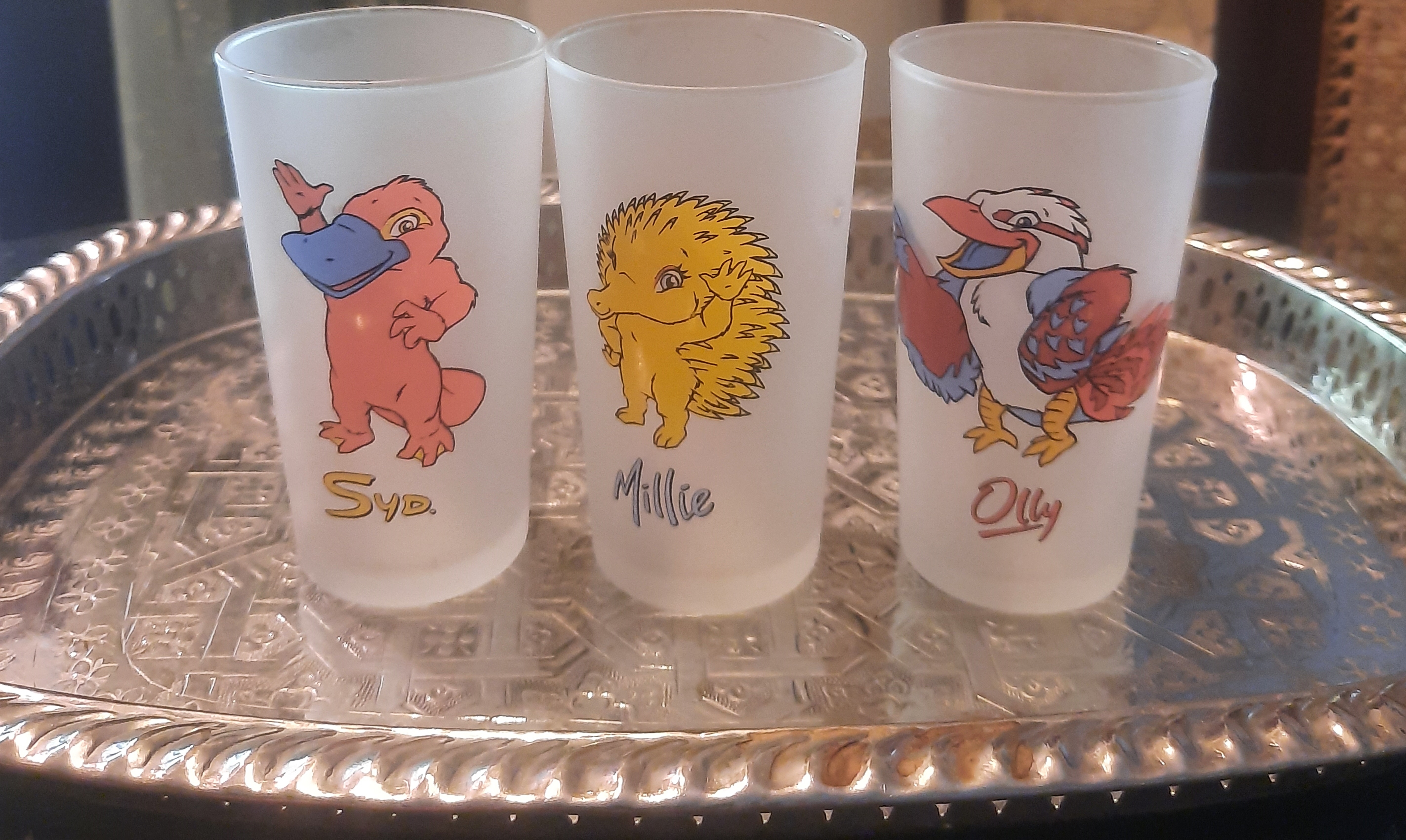
Sydney Olympics Sovernirs
Sovenirs from Sydney Olympics Year!

Since then, the Olympics have featured various animals, birds and objects. Unusual objects have included Schneemandl’  a snowman wearing a red Tyrolean hat (Innsbruck winter Olympics); Magique, a little imp in the shape of a star and a cube (Albertsville); Neve a snowball; Gliz an ice cube (Turin) etc. There are some mascots which are not an animal, nor a human figure, nor an object. One of the most unusual was Wenlock (London 2012) made from one of the last drops of steel used to build the Olympic Stadium in London. The light on his head was similar to those found on London’s famous black cabs. The shape of his forehead resembled the Olympic Stadium roof. His eye was the lens of a camera. He wore five bracelets in the colours of the Olympic rings.

India has not yet hosted the Olympics, but the 1982 Asian Games mascot Appu the Elephant, and the 2010 Commonwealth Games Shera the Tiger, were much beloved. The Phryges follow in this beloved tradition.

So here is to the spirit of the Phryges which aim to show that sport and its values can do great things, and that sports are about fraternity, solidarity and can help society grow.

–Meena


Bicycle Marathon: Le Tour de France

The countdown has begun for the Paris Olympics which are scheduled to begin on 26 July. Even as athletes from around the world are in the final stages of their preparation in pursuit of the prized medals, another historic sports event closely associated with France is already underway. This is the famous Tour de France, a grueling marathon race that pushes riders and their bicycles to superhuman limits. The 111th edition of this event made its start or Grand Depart from Florence in Italy on 29 June this year. The riders made their way to France where they added extra sparks to the already high Olympic fervor.

What is today considered to be the greatest annual bicycle race in the world,  watched by millions around the world, the Tour the France has curious origins. The idea for the race came from George Lefevre a journalist with a sports magazine called L’Auto whose readership was falling. He convinced his editor that the publicity generated by such a race, including the prize money of 20,000 Francs, would attract attention and boost sales. Henri Desgrange, the director-editor of L’Auto and a former champion cyclist himself, loved the idea and gave the go ahead.

The first race was held in 1903. It had 60 riders and the circular route, to be covered in six stages, was 2428 km long. Riders rode as individuals, who were not allowed to receive any help along the way. They rode over unpaved roads on single speed bikes, without helmets, even at night. They had to carry out their own repairs if required; some rode with spare tires and tubes wrapped around their torso. Lefevre covered the tour, following by rail, bus and bike, and sent daily reports to the newspaper. By the time the race ended L’Auto’s circulation had soared.  The first winner of the Tour the France was Maurice Garin, a part-time chimney sweep, who reached the finishing point three hours before the other racers, a record unbroken even today.

The race became an annual feature, and its rules evolved. In its early years the riders were predominantly French but within just ten years the race went international, attracting cyclists from many countries, eager to meet the gruelling challenges that the race offered. Over the years several mountain stages through the Alps and the Pyrenees were included. The annual race has retained its uninterrupted popularity over a century. The only times that the race did not take place was during the World Wars (1915-18 and 1940-46). In 2020 it was postponed due to the pandemic, but took place from August 29 to September 20.

Today the Tour de France route covers over 3,500 km, over a period of three weeks mainly in July. The mountainous terrain and the summer heat demands the greatest stamina and endurance levels.

The race consists of day-long sections known as stages. Each individual participant has his finish time aggregated daily to determine the overall winner at the end of the day. Individual race times are aggregated to determine the overall winner at the end of the race. The rider with the lowest overall time wins the race.

The rider who has the lowest cumulative time to complete a stage gets to wear the Tour de France maillot jaune (yellow jersey) the next day. The yellow jersey which was introduced in 1919, is the most sought-after symbol which indicates the special status of the wearer as the previous day’s leader. It is clearly visible as the riders whiz past, and the mailliot jaune is cheered on by the crowds that line the route.   

There are also other colour jerseys to indicate other achievements. The green jersey was created in 1953 to recognise the rider who wins the race’s points competition. The white jersey with red polka dots, created in 1975, is awarded to the rider who amasses the most points from the numerous categorized climbs throughout the race. The white jersey awarded since 1975, is given to the rider (below 26 years) with the best overall standing to complete the race.

From a largely national attraction when was first launched in France, today the Tour de France has become the world’s largest annual multi-day sporting event, drawing millions of fans from across the globe, and watched by billions across the globe. Fans travel from across the globe to catch a glimpse of the world’s best cyclists. Besides lining the streets to cheer the riders as they speed through cities, towns and villages, there are also enthusiasts that camp along the high mountain routes. These become a community in themselves, as they enjoy the local scenery and explore the surroundings as they wait for the pelaton (the main body of cyclists) to arrive. 

A lot has changed since the first Tour de France in 1903 which started with a 20,000 Franc prize. This year the overall leader will receive 500,000 Euros. The 2024 Tour de France will cover 3,492 kilometres in 21 stages, starting in Florence (Italy) and ending for the first time in Nice. There are expected to be 22 professional teams taking part this year, each with eight cyclists. They will be riding state-of-the-art bicycles carbon fibre bikes that weigh about seven kg, and they will have a choice of styles for different stages: flat, mountain and time trial. Each team will have access to spare bikes, clothing, food and drink in support cars, and as well as by a personal backroom staff masseurs, dietician and chefs (riders need to eat up to 7,000 calories a day – three times what average humans burn in a day).

With Paris on the eve of the opening of the Olympic Games on 26 July, there will be no room for the Tour de France’s traditional final stage finish on the Champs-Elysées in Paris. Instead the race will finish in Nice – the first time it has ever finished outside the French capital. However the race will certainly get the adrenalin flowing, which will merge with the bigger spectacle of the Olympics.

–Mamata

Maze-Amaze

Last week, I was in a shopping area near my house, and got myself lost. Having no sense of direction, any set of streets can turn into a maze for me, and I can get lost hopelessly anywhere!

That is when I started thinking about real mazes. What would I ever do if I got into one? Probably panic and die!

But apparently that wouldn’t happen in a labyrinth. Because though most of us don’t really stop to think about the difference, they are very different! Labyrinths have a single continuous path which leads to the centre, and as long as you keep going forward, you will get to the centre eventually. So given enough time, it is close to impossible for anyone, even me, to get lost in a labyrinth.Mazes on the other hand, have multiple paths which branch off and will not necessarily lead to the centre or to the exit.

Mazes probably evolved from labyrinths, and over time took on elaborate forms including multiple branching paths, dead ends, etc.

The first recorded labyrinth is a 5th century BC one from Egypt. Labyrinths are found in many cultures, and generally seem to have an underlying spiritual meaning.  Some represent spiritual journeys which guide visitors towards a single path, which may be full of twists and turns, but there is no doubt of reaching the goal as long as one is walking on the right path. In some cases, entering the labyrinth signified death and exiting it signified re-birth. They were also fertility symbols. Labyrinths were also thought to represent protection or fortification. Often in temples, forts etc., one can find carvings or paintings of labyrinths on the floor or walls, to represent one of these symbolisms.

Some temples are like labyrinths themselves, and their orientation, form and geometry have symbolic as well as spatial importance. The process of moving through the pathways is supposed to unwind the Kundalini or stored energy, releasing, magnifying, and ultimately harnessing its flow. 

Chakravyuha labyrinth

Many military formations adopted in ancient Indian warfare were labyrinths. The famous Chakravyūha (wheel formation, also called Padmavyūha—lotus formation) of the Mahabharata was one such. It was a very special formation and knowledge of how to penetrate it was limited to only Abhimanyu, Arjuna, Krishna and Padyumna on the Pandavas’ side. The Kauravas strategically diverted the senior warriors to different parts of the battlefield, and then went into the Chakravyuha formation, and succeeded in decimating the Pandava warriors. 16-year old Abhimanyu was there and bravely plunged into the wheel, killing many seasoned Kaurava warriors. Alas, he did not know how to get out of the formation, and at the sixth level, was slaughtered by a horde of Kauravas.   

The Bara Imambara of Lucknow houses a famous Indian maze. Said to be the world’s largest structure that is unsupported by beams, the Imambara is considered a marvel of engineering. The fourth Nawab, Asaf-Ud-Dowhala, commissioned this building during the drought of 1784 to help people in the city earn a livelihood. He invited bids and it was won by Hafiz Kifayatullah, an architect from Shahjahanabad who was already well-known by then. Work on the building started in the 1784 and finished fourteen years later.

The Bhul Bhulaiya or Maze located on the upper floor of the Bara Imambara was Kifayatullah’s masterpiece. It is said that there are 1024 ways of getting inside the maze but only two ways of coming out! Once you enter the maze, you might end up going round and round and up and down staircases without being able to come back. It is even difficult to figure out which level you are at—you could think you have climbed down to the lower floor, but may still be on an upper one!

Interestingly, about 10 years ago, archaeologists uncovered a 2,000-year-old labyrinth that is the second-largest ever found in the country. This is in Gedimedu in Tamilnadu, along an ancient trade route on the east coast of India. It measures 56 feet by 56 feet, with passages ranging from 2.6 feet to 3.6 feet. It follows a pattern similar to Greek mazes found on clay tablets from 1200 BC. Archeologists are still studying the maze.

I am not sure I want to ever go into a maze or labyrinth. I don’t want to be loster than I am!

–Meena

.

Sweet Celebration

Time was, when cakes and pastries were not as ubiquitous as they are today. Indian sweets (most often made at home) marked every occasion. A rare treat was the gift of a bar of chocolate, for a birthday, a good exam result, or a sweet sixteen romance. The purple wrapping gave the bar a special identity as a Cadbury chocolate. So much so that Cadbury became the synonym for any chocolate!

Today the market offers a wide choice of chocolates from ‘imported’ to ‘artisanal’ custom-made ones. Chocolate hampers have replaced the traditional mithai boxes as gifts for all occasions. While Charlie and the Chocolate Factory was once the daydream of every child, today children are spoilt for choice. And as a tribute to this, the world celebrates Chocolate Day on 7 July every year.

This is a good occasion to go back in history to follow the story of this universal favourite. The history goes back at least 2,500 years or more. While the cocoa bean plant may have been growing in the wild for centuries, it is believed to have been first domesticated by the Olmec Indians somewhere near southern Mexico. But in a large part of its early history, these beans were used to make a beverage. This was a bitter drink, a far cry from the ‘hot chocolate’ we know today. Moving further south, the cacao tree became part of the Mayan culture where it was known as cacahuaquchtl, and the bitter drink made from the beans was called xocoatl. This could have been the root of the word ‘chocolate’. The tree continued to migrate on to South America, through trade between the Mayans and the Aztecs for whom xocoatl continued to be the drink. Both the Mayans and Aztecs believed the cacao bean had magical, or even divine, properties, suitable for use in the most sacred rituals of birth, marriage and death. The Latin word for the cocoa tree Theobroma cacao means ‘food of the gods’.

It was the Spanish adventurers who carried the seeds back to Spain from South America. By then cocoa seeds had become an integral part of trade and commerce, even being used as currency. The seeds also transferred the tradition of the drink to this part of the world. By the late 1500s the drink became a favourite in the Spanish court. Other Europeans trading with South America brought back the beans to Italy and France. The bitterness of the drink was offset by adding cane sugar, and spices such as vanilla and cinnamon to suit the European palate. The trend moved to England where the first coffee house selling the drink opened in 1657.

By the 17th century chocolate, believed to have nutritious, medicinal and even aphrodisiac properties was a fashionable drink throughout Europe. But it was expensive because of its elaborate production process. In 1828, a Dutch chemist discovered a way to remove about half the natural fat (Cacao butter) from the liquid cacao, and pulverizing what remained and treating it with alkaline salts to cut the bitter taste. The process became known as ‘Dutch processing’ and the powder produced was called ‘Dutch cocoa’. This was what led to the creation of the early form of solid chocolate.

Meanwhile, in England a young Quaker named John Cadbury opened a grocery shop in Birmingham. John believed that alcohol was the main cause of poverty, and his shop offered alternatives such as tea, coffee and other provisions. Among other things he sold cocoa and drinking chocolate, which he prepared himself using a pestle and mortar. By 1842 John was selling 11 kinds of cocoa and 16 kinds of drinking chocolate. Soon John’s brother Benjamin joined the company to form Cadbury Brothers of Birmingham. The Cadbury brothers opened an office in London and received a Royal Warrant as manufacturers of chocolate and cocoa to Queen Victoria in 1854. The business was taken over by John’s sons George and Richard who continued to expand the product line. Cadbury’s Cocoa Essence, which was advertised as ‘absolutely pure and therefore best’, was an all-natural product made with pure cocoa butter and no starchy ingredients. Cocoa Essence was the beginning of chocolate as we know it today.

In 1847 Joseph Fry of JS Fry and Sons in England discovered that by adding extra cacao butter to liquid chocolate, he could make a mouldable chocolate paste. This led to the first modern chocolate bar. Cacao the drink took on a new form that would go on to become its better known avatar—chocolate that one could bite and chew. 

Now the Cadbury brothers had a new form of chocolate to offer, and they became so successful that they stopped selling other items.  A master confectioner Frederic Kinchelman was appointed to share his recipe and production secrets with Cadbury workers. This resulted in Cadbury producing chocolate in a variety of forms and combinations. By 1868, Cadbury’s boxes of chocolate candies became very popular in England. In 1879 the brothers moved their manufacturing operations to a larger facility four miles south of Birmingham at Bournville. The factory and area became known as the ‘factory in a garden’ which provided a safe and healthy environment for their employees to live and work. Cadbury manufactured its first milk chocolate in 1897. By the turn of the century, the Bournville factory employed 2,600 people and Cadbury was incorporated as a limited company. Cadbury’s most iconic chocolate Cadbury Dairy Milk chocolate was launched in 1905.

During World War I, more than 2,000 of Cadbury’s male employees joined the Armed Forces. Cadbury supported the war effort, sending warm clothing, books and chocolate to the soldiers. When the workers returned, they were able to return to work, take educational courses, and injured or ill employees were also looked after. During this period overseas trade increased, and Cadbury opened its first overseas factory near Hobart, Tasmania. In 1919 Cadbury merged with JS Fry & Sons, once a market leader in chocolate.

In 1920 the purple and gold Cadbury wrapper was introduced as a tribute to Queen Victoria. For many years Cadbury claimed exclusive rights to use that shade of purple. The original Cadbury logo depicted a stylized cacao tree interwoven with the Cadbury name. This was replaced, in 1921, with the cursive script logo which was inspired by the signature of William Cadbury, the founder’s grandson. With some simplification, it was adopted as the worldwide logo in the 1970s and continues to be its identity.

In the 1930s, Cadburys became the leading chocolate manufacturer in the United Kingdom. Cadbury also supported the war effort during World War II by converting parts of its factory into workrooms to manufacture equipment like milling machines for rifle factories. During the two wars chocolate was a scarce luxury but Cadbury supported workers and soldiers with chocolate in care packages to keep the morale high. 

In 1969 Cadbury merged with Schweppes, a well-known British brand that manufactured carbonated mineral water and soft drinks, to form Cadbury Schweppes. Cadbury Schweppes went on to become the largest confectionery company in the world, employing more than 70,000 employees. Today it is believed to be the second-largest confectionery brand in the world.  

Cadbury was first launched in India in 1948. It had a rocky start as it tried to find a foothold in a culture where traditional mithais were firmly ensconced. It was only in the mid-1990s that a series of attention-catching advertisements helped in creating a brand which was promoted as the symbol of celebration for all occasions and all ages. Cadbury Dairy Milk chocolate became the benchmark for other chocolates in India.

Once there was simply Cadbury. Now there are exclusive chocolatiers. Whatever one’s pick, chocolate is always celebrated!

–Mamata  

Happy Birthday To You!

This month we had a family get together bringing together members from different parts of the world, as well as different generations. It was also an occasion to celebrate together, several birthdays of the gathered family members—from the first birthday to the seventieth birthday. Topping up all the celebrations including cake-cutting and candle blowing, was a lusty rendering of the song Happy Birthday to You.

It is quite incredible how this song has transcended time and space to become a universal symbol of birthday celebrations. It is said to be the most frequently-sung English song in the world. And it is sung quite comfortably by people who may otherwise not know any other word of English. What most people do not know is that this song has an interesting history which dates back over a hundred years.

The creators were Patty and Mildred Hill, two sisters who were kindergarten teachers in Louisville, Kentucky, USA. Patty was not just a teacher, she was one of the pioneers who introduced what was then, a progressive philosophy of early childhood education in America. She stressed that in the early years supporting creativity, and social and emotional development of children were as important as academic learning. This could be provided by good kindergartens. The Hill sisters themselves grew up in a progressive family which supported and encouraged the daughters to have a complete education and have a career—both unconventional approaches for that period. Their parents believed that children should be free to play and follow their own pursuits as well as learn the value of hard work. Growing up in such a home had a profound influence on Patty whose future career choice would manifest her beliefs on the kind of education every child deserved. She had a strong commitment to and the importance of self-determination in activity, especially in childhood, as a means of empowering individuals to overcome social and economic disadvantages.

Patty Hill graduated from Louisville Collegiate Institute in 1887 after which she joined the Louisville Kindergarten Training School where the students were encouraged to experiment with different classroom techniques. Patty Hill began her kindergarten work as a teacher, and then became director of the Louisville Free Kindergarten Association in Kentucky in 1893. During her time at the Louisville Kindergarten Training Schools, Hill was very active in the Kindergarten Movement. She participated in numerous conferences and organized events that discussed alternative methods of early childhood education. She developed curricula that encouraged children to learn through play, music, free play, and contact with nature. The Louisville Kindergarten Training Schools became famous in the United States as the centre of innovative ideas about early childhood education. In 1906 Patty was appointed to the faculty of Columbia University Teachers College, where she taught for the next 30 years. There she developed a curriculum that emphasized the importance of a child’s first-hand contact with nature for creative expression. In 1908 she was elected president of the International Kindergarten Union. In 1924 Patty helped to found the Institute of Child Welfare Research at Columbia and also promoted the extension of nursery schools through her work with the National Association for Nursery Education, which she helped to organize in 1925.

Patty Hill served on the faculty of Teachers College at Columbia University until she retired in 1935. After her retirement she continued to give lectures and public speeches until her death in 1946 in New York City.  

Despite her significant contribution to early childhood education, Patty’s claim to fame however lies more in her links with the Happy Birthday Song. In early 1893, when she was at Louisville Kindergarten Training Schools, Patty and her sister Mildred, who was a pianist and performer, composed a simple 4-line song for the kindergarten students which had “words and emotions and ideas” that they felt were suitable for the limited musical ability of a young child. Patti wrote the words and Mildred composed the score. It had only six notes, six words, and four lines, three of them the same. They would work at night on the tune, and the next morning try out the song in the classroom. The lyrics were simple: “Good morning to you / Good morning to you / Good morning, dear children / Good morning to all.” The tune had a simple, repetitive beat, and was easy for children to follow. They tested the song with their young students until they found a combination that children caught onto easily, as they enjoyed the words as well as the rhythm.

The sisters published Good Morning in 1893 in a book of sheet music called Song Stories for Children, which they copyrighted and exhibited that year at the World’s Fair in Chicago.

How did the words ‘Good Morning’ transform into Happy Birthday, even as the tune remained the same? There are many theories, of which one is that the sisters themselves changed the words at a birthday party that they attended. In fact, the tune was amenable to easy exchange of words, and children at the Louisville Experimental Kindergarten School where Patty taught would substitute the words with Goodbye to You, Happy Vacation to You, and other variations.

By 1924, the song appeared in another songbook edited by Robert Coleman with the Hill sisters’ original lyrics as the first verse, and “Happy Birthday to You” as the second. As the song started to appear more in print, it caught on like wildfire and became hugely popular from coast-to-coast. It began to be used in movies and Broadway musicals. Ironically the sisters never published or copyrighted the lyrics to Happy Birthday to You.

There followed a long and complex battle of claims for copyright and licencing of the song. None of the legal battles produced a conclusive verdict on the song’s authorship or ownership. In the 1930s, the Hill sisters won the copyright for the song as it appeared in a songbook for children published by The Summy Co. But in 1988 Warner Communications acquired the rights to the tune. This meant that anyone who wanted to use the song in a movie or TV show would have to pay thousands of dollars. To avoid the high royalty fees, many movies and TV shows figured out creative ways to portray birthday celebration scenes without actually using the ‘Happy Birthday’ song. Despite this, at one time, Warner/Chappell Music was earning as much as $2 million per year in licensing fees from the birthday song.

In 2016, a group of artists and filmmakers filed a lawsuit which challenged Warner’s claim to the copyright of the happy birthday song, and claimed that they should not be allowed to charge licensing fees for use of the musical work. Warner Music Group lost the case, and as part of the class settlement, the company had to pay $14 million to people and organizations that had paid royalties to use “Happy Birthday” since 1949.

As of 2016, the famous Happy Birthday Song is in the public domain, meaning that it can be sung anywhere. The next time we sing Happy Birthday to You to celebrate a birthday, let’s also celebrate its interesting roots and long history.

–Mamata

Juneteenth

That is not a word that we in India are very familiar with. Not surprising. Though the ‘Day’ is about a historical event that took place over 150 years back, it officially became a federal holiday in the US only in 2021.

It goes back to the American Civil War. After the Union won, President Abraham Lincoln issued the Emancipation Proclamation which declared the over three million enslaved people living in the Confederate states to be free. However, those were not the days of instant communication. It took over two years before the news reached the people of Texas! It was when Union soldiers arrived in Galveston, Texas, on June 19, 1865, that the state’s residents finally learned that slavery had been abolished. The formerly enslaved African-American community immediately started celebrations with prayer, feasting song, and dance. Over time, the name ‘Juneteenth’ a portmanteau of the words “June” and “nineteenth” started being used for this day.

Since then, the day has been celebrated in Texas, with the first official Juneteenth celebrations held on June 19, 1866, marked by prayer meetings and the singing of spirituals. People wore new clothes as a way of marking their newfound freedom. Over the next few years, African-Americans in other states started celebrating the day as well, making it an annual tradition. Celebrations continued to spread across the United States and typically include prayer and religious services, speeches, educational events, family gatherings and picnics, and festivals with music, food, and dancing. Juneteenth became a state holiday in Texas in 1980, and a number of other states subsequently followed suit.

It still took a long time for it to be recognized at the national level. It was only in 2021 that Juneteenth was made a federal holiday. Activist Opal Lee played a huge part in making this happen. Born in 1926 in Texas, Opal Lee was a teacher. One of the formative events of her life was when her house was burnt down in 1939. The house was in a predominantly white area, and obviously, the fact that a black family had bought a house there was uncomfortable for some people. On June 19, 1939, 500 white rioters vandalized and burned down the home. Opal realized that 19 June had been chosen for a reason and was very symbolic.

Opal was always at the forefront of organizing the community, and played a lead role in Juneteenth celebrations. This gathered momentum when she retired, and she became a relentless campaigner for having Juneteenth declared a federal holiday. For many years, she organized a march of 2.5 miles, to represent the 2.5 years it took for the news of their emancipation to reach the African-Americans in Texas. She promoted a petition for a Juneteenth federal holiday at Change.org, and the petition received 1.6 million signatures. In 2021, when Opal was 94, her dream came true and President Biden finally signed the Bill. Opal was an honoured guest at the function. Slowly, over time, the day started being celebrated outside the United States too, to recognize the end of slavery and to honor the culture and achievements of African Americans.

Here is something that Lincoln wrote about slavery, which is worth pondering:

If A. can prove, however conclusively, that he may, of right, enslave B. — why may not B. snatch the same argument, and prove equally, that he may enslave A?–

You say A. is white, and B. is black. It is color, then; the lighter, having the right to enslave the darker? Take care. By this rule, you are to be slave to the first man you meet, with a fairer skin than your own.

You do not mean color exactly?–You mean the whites are intellectually the superiors of the blacks, and, therefore have the right to enslave them? Take care again. By this rule, you are to be slave to the first man you meet, with an intellect superior to your own.

But, say you, it is a question of interest; and, if you can make it your interest, you have the right to enslave another. Very well. And if he can make it his interest, he has the right to enslave you.’

And to see how he relates it to democracy:

‘As I would not be a slave, so I would not be a master. This expresses my idea of democracy. Whatever differs from this, to the extent of the difference, is no democracy.’

Wise men know how to capture universal truth in a few words!

–Meena

Wise Words on Democracy

Election fever is well upon us. Not just us in India. An estimated third of the world goes to the polls this year.

A good time to pause and reflect on what people who have contributed so much to the shaping of our nation have said about democracy?

The first section is devoted to quotes taken from the discussions in the Constituent Assembly of India in 1949. The later section reflects Gandhiji’s thoughts on the subject.

‘What is democracy? I define it, in one word. Democracy is accommodation. Any person who does not understand this small definition of democracy, cannot be a democrat at all. ‘(Shri R. V. Dhulekar)

‘If we are going to have a democratic form of Government we should have as real democracy as possible by giving as much power to as small a unit as practicable so that the individuals composing the unit may have easy and ready remedy ..’. ( Shri B. P. Jhunjhunwal)

‘..the strength of democracy lies in the character of the people and their representatives.’ (Shri B. M. Gupte)

Constitution of India
Dr. Rajendra Prasad, President of the Constituent Assembly, signing the Constitution of India.

‘The essence of democracy is not so much the existence of what are called political parties, etc., but the essence of democracy is the effective participation of the individual in the actual government of the country. The greater and more effective the participation of the individual in the government, the greater is the democracy, because democracy is still only an ideal which has yet to be reached by humanity.’ (TJM Wilson)

‘..Gandhiji  said that true democracy rose not from the top but from the bottom. Power and authority should not be centered at the top but should be distributed among the people at the base of society. Then alone can true democracy be established and then alone can people enjoy freedom.’ (Shri Kamlapati Tiwari)

‘We must observe the caution which John Stuart Mill has given to all who are interested in the maintenance of democracy, namely, not “to lay their liberties at the feet of even a great man, or to trust him with powers which enable him to subvert their institutions“. There is nothing wrong in being grateful to great men who have rendered life-long services to the country. But there are limits to gratefulness. As has been well said by the Irish Patriot Daniel O’Connel.. no nation can be grateful at the cost of its liberty. This caution is far more necessary in the case of India than in the case of any other country. For in India, Bhakti or what may be called the path of devotion or hero-worship, plays a part in its politics unequalled in magnitude by the part it plays in the politics of any other country in the world. Bhakti in religion may be a road to the salvation of the soul. But in politics, Bhakti or hero-worship is a sure road to degradation and to eventual dictatorship. (BR Ambedkar)

‘We must not to be content with mere political democracy. We must make our political democracy a social democracy as well. Political democracy cannot last unless there lies at the base of it social democracy. What does social democracy mean? It means a way of life which recognizes liberty, equality and fraternity as the principles of life.’  (BR Ambedkar)

From: Discussion in the Constituent Assembly of India. 1949.

Gandhiji on Democracy

‘I understand democracy as something that gives the weak the same chance as the strong.’

Democarcy is ‘..”the art and science of mobilizing the entire physical, economic and spiritual resources of all….in the service of the common good of all”

‘There is no human institution but has its dangers. The greater the institution the greater the chances of abuse.  Democracy is a great institution and therefore it is liable to be greatly abused. The remedy, therefore, is not avoidance of democracy but reduction of possibility of abuse to a minimum.’

‘..if individual liberty goes, then surely all is lost, for, if the individual ceases to count, what is left of society? Individual freedom also can make a man voluntarily surrender himself completely to the service of society. If it is wrested from him, he becomes automation and society is ruined. No society can possibly be built on denial of individual freedom.’ ‘In the democracy which I have envisaged, a democracy established by nonviolence, there will be equal freedom for all. Everybody will be his own master.’

Profound perspectives indeed, and we would do well to reflect on them, and to think about the fundamentals of democracy, which are:
1) Respect for basic human rights,
2) A multi-party political system paired with political tolerance,
3) A democratic voting system,
4) Respect for the rule of law,
5) Democratic governance, and
6) Citizen participation

Democracy is much more than election day and inking the finger!

–Meena

Pic: http://www.nbpgr.ernet.in

Nature Education Pioneer: Anna Botsford Comstock

In 2005 a book titled Last Child in the Woods: Saving Our Children from Nature Deficit Disorder became a best-selling ‘bible’ for the environmental movement. In a society where an entire new generation of children was spending all their time indoors, hooked to virtual devices for entertainment, the book by Richard Louv rang alarm bells. It brought together research that indicated that this alienation from the natural world was creating a phenomenon called Nature Deficit Disorder, and urging that direct exposure to nature was essential for healthy childhood development, and for the physical and emotional health of children, as well as adults. The book spurred an international movement to connect children, families and communities to the natural world.

Today the value of direct exposure to the natural environment is recognized as an important input for a healthy life. Educational curricula at all levels are formally introducing opportunities for this, emphasising the need for learning-by-doing in natural settings. Not many today are aware that more than a century-and-a-half before this ‘trend’, there was a strong advocate for ‘connecting with nature’. She was Anna Botsford Comstock. Indeed, she may be called the pioneer of nature education.

Anna was more than this; a woman of many achievements. Born in 1854 in a Quaker family, Anna grew up in an environment which encouraged appreciation and exploration of the natural world. She spent her childhood on a farm which was largely self-sufficient, guided by her mother in observing different aspects of nature, and getting some formal education in a single teacher rural schoolhouse. A voracious reader, she grew up with the influence of the writings of Ralph Waldo Emerson, William Wordsworth and Henry David Thoreau. When she was 13 the family moved to a place closer to a town, where she graduated from high school. She then applied to Cornell University which had recently begun to admit women.

Anna Botsford was interested in English and history, but took a course in invertebrate zoology to balance her curriculum. As part of this she attended the lectures of a young entomologist John Henry Comstock, who encouraged her to cultivate her already strong interest in nature, as well as her skills as an illustrator. He also asked her to assist him in his research. The working partnership blossomed into romance and the two were married in1878. Anna had to discontinue her studies, when Henry was appointed chief entomologist for the U.S. Department of Agriculture, and they moved to Washington, D.C. where she also worked for the same department. Anna returned to Cornell to complete her degree, side-by-side with working in the lab, and graduated in 1885 with a Bachelor of Science degree.

Anna’s additional career as a nature educator began in the early 1890s. This was a period when there was a large migration of rural youth to urban areas in search for employment, leaving a shortage of labour in rural agricultural communities. One school of thought believed that if young people were taught to appreciate the wonders of nature, it would encourage them to stay on in their family farms, and also others to migrate to rural areas. This gave rise to the Nature Study Movement which began in New York and soon became a nationwide movement. Anna was attracted by this approach. She believed that ‘future citizens should be set on inheriting our Earth by learning of its environments, and of the interactions of the living systems therein’. Anna emphasized that children should discover their environment through the use of their five senses and careful observation. Through their own individual investigations, children could thereby cultivate a sense of connection and responsibility for our Earth. She began promoting nature study programmes in public schools throughout Westchester County, often leading lessons and training teachers in subjects related to the natural sciences.

Serendipitously, the Cornell College of Agriculture got a grant to carry out a pilot project under the Nature Study programme, and Anna plunged into this with passion and conviction. She continued to lecture and promote nature study in local schools as she had been doing. In order to reach a larger audience Anna began lecturing and training teachers at other institutions across the nation. She also wrote and published a series of Nature Study Leaflets that were distributed to schools and teaching programs. The Nature Study Leaflets were in fact succinctly written and beautifully illustrated Lesson Plans for self-led or teacher-guided instruction. Her detailed notes, language and observations were reminiscent of the writing of Henry David Thoreau who had been one of her early inspirations.

Anna began with botanical lessons, but soon included all species from microbes to mammals, as well as natural resources and ecosystems. The pedagogy encouraged the development of a child’s curiosity by “opening one’s eyes to our natural surroundings.” Having developed hundreds of such Nature Study Leaflets, Anna felt that it would be useful to compile these into a comprehensive manual. In 1909 she began work on this comprehensive manual which grew into a nearly 1000-page document. No commercial publisher was willing to publish it, so it was published by Anna and her husband. Published in 1911 as Handbook of Nature Study, the book was a huge success, going into over twenty reprints, and being translated into eight languages. It remains a timeless resource and continues to inspire new generations of nature lovers.

In 1899, Anna Comstock was made assistant professor of nature study at the Cornell University Extension Division, the first woman to hold the title of professor at Cornell. But conservative trustees objected to a woman professor, and her title was revoked. Instead, she was named as lecturer with the same salary. Anna did retire from Cornell University with full professorship in 1922. She continued to teach, lecture, and publish materials related to nature studies until she passed away in 1930.

Her pioneering Lesson Plans and her vision for nature education for children supported and inspired generations of students and teachers in nature study.

Anna was also a pioneer in advocating for introducing ‘nature study’ as part of the school curriculum. This continues to be a challenge even today; not many curricula have effectively integrated and infused this; nor accepted that nature study can plant the seeds of valuable life skills.

May 22 is marked as International day for Biological Diversity. A good day to remember Anna Botsworth Comford, one of the early advocates for celebrating biodiversity, and pioneers in biodiversity education.  

–Mamata

Vasco da Gama Lands in India

526 years ago to the day yesterday (May 20), the first European made it by the sea route to India. This was the Portuguese Vasco da Gama who landed in Kozhikode (Calicut), Kerala. And the history of globalization and the colonization of India by Europeans started.

The discovery of the sea route to India was a milestone in world affairs. It provided access to the spice trade, which otherwise happened overland—more time consuming, more risky and more expensive. Vasco da Gama first came to India via the Cape of Good Hope, and became the first to link Europe and Asia by an ocean route—one that traversed the Atlantic and the Indian oceans. This enabled Portugal to establish colonies all the way from Africa to Asia, and dominate the trade between Asia and Europe for decades. The Dutch, the English, the French and the Danish lagged by almost a century before they could challenge the Portuguese for supremacy in these seas.

Vasco da Gama
Statue of Vasco da Gama, Viceroy’s Arch, Old Goa, Velha Goa

There can be no questions about da Gama’s courage, enterprise, skills and sheer sense of adventure in venturing out into unknown waters, and persisting for almost two years in the voyage to finally make it to India.

But even as one celebrates this spirit of human endeavor, it is necessary to question many of the motives and actions.

Da Gama, in his interactions with the Zamorin (ruler) of Calicut was always less than respectful. The Zomorin received da Gama with the respect due to a visitor from foreign shores, but da Gama had no clear answers to why he was visiting India, and gave the Zamorin such trivial gifts from the Portuguese king that no one would quite believe that da Gama was a royal ambassador and not some small-time merchant. This resulted in the Zomorin refusing Vasco da Gama’s request for permission to leave a representative behind to look after the merchandise he had not been able to sell. Further, local officials insisted on his paying customs duty like any other trader. This irritated the entitled da Gama, and he kidnapped and carried away some Nairs and sixteen fishermen when he left the shores.

But the most damning incident occurred during his next visit—the Second Armada. His ships reached India in October 1502. At the same time, a ship named Mirim carrying about 400 Muslim pilgrims including 50 women, had set out from Calicut for Mecca. Da Gama’s ships intercepted Mirim, looted the ship, locked in the passengers including the owner and an ambassador from Egypt, and burned them to death. Only about 20 children were spared on the condition that they would convert to Christianity. Da Gama watched the whole gory incident through the porthole of his ship.

Da Gama had come this time with the objective of signing a trade treaty with the Zamorin. After the pilgrim ship incident, the Zamorin hesitated to take on the Portuguese head-on and indicated his willingness to sign a treaty. But Da Gama had an atrocious condition—that the Hindu Zamorin expel all Muslims from his territory before negotiating the treaty. The Zamorin was appalled and refused. A very senior priest, Talappana Namboodri, known to both sides was sent to Da Gama to try to sort out things. But da Gama labelled him a spy, and had the priest’s lips and ears cut off. He had a pair of dog’s ears to his head before sending him away. But this was not the end of the matter. So infuriated was da Gama that he had the Portuguese fleet bombard the unfortified city of Calicut for nearly two days from the sea, severely damaging it. He also captured several ships, cut off the crew’s hands, ears and noses, dispatching them to the Zamorin with a note wherein he said that he would be happy to reset the relationship to a positive note once the Zamorin had paid for the items plundered well as the gunpowder and cannonballs used to bombard Calicut! Things escalated, and there was a sea battle which da Gama won. He also started trade with Cochin and Cannanore which were at war with Calicut.

Da Gama’s fortunes in Portugal declined for some decades after this journey, and he lay low. In 1594, with the new King’s blessings, he set out again for India, now with the title of Viceroy. This time he landed in Goa. He set out immediately to strengthen the Portuguese domination along the East Coast. However, it was not for long. He contracted malaria and died three months later in Kochi.

The Portuguese were the first Europeans to colonize India, and the last to leave! Vasco da Gama not only laid the foundation for this, but also for the ‘divide and rule’ strategy—turning one religion against another, one kingdom against another– which served future colonizers well.

Heroes in their time and country, leaving behind troubling legacies.

–Meena

Lady With the Lens: Homai Vyarawalla

The past few weeks, as India goes through its massive election exercise, the newspapers have been carrying iconic photographs that show glimpses from past elections. For many of us who are firmly part of the ‘morning newspaper’ generation, these black and white images bring back memories of what feels like another age. These pictures capture not only candid shots that evoke nostalgia, but are also telling stories of different life and times. The people behind most of these have been photojournalists. Photojournalists are described as visual storytellers who use photography to document and report on news events, current affairs, and human interest stories. While their camera lens captures, and freezes a particular moment, it is the record of these intrepid storytellers that make history.

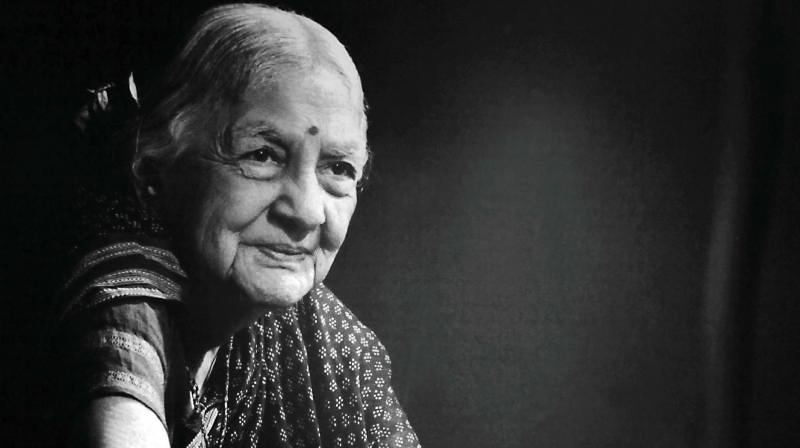
A recent exhibition of one of India’s most renowned photojournalists, Raghu Rai presents some pages from this history. But this also reminds one of another name that made her own history. This is Homai Vyarawalla, India’s first woman photojournalist.

Homai Vyarawalla was born on 9 December 1913 in Navsari in Gujarat, in a Parsi family. She had a peripatetic childhood as her father was an actor with a traveling theatre group. The family eventually settled in Mumbai where Homai enrolled in the JJ School of Arts. When she was in her early teens Homai met Manekshaw Vyarawalla, a freelance photographer who first introduced her to photography. The two initially shared a Rollieflex camera, and developed their own films in a dark bathroom. Homai started taking pictures of her friends as she starting learning the ropes. Manekshaw submitted some of her photographs of a local picnic to The Bombay Chronicle for which he then worked, and these were published. Homai began to get some photographic assignments; however some of her works was published under Manekshaw’s name, as a woman photographer was not something people respected professionally. She began to draw more attention after her photographs of life in Mumbai were published in The Illustrated Weekly of India magazine. Later Homai also used the pseudonym Dalda 13 (DALD from the number plate of her car, and 13 which she believed was her lucky number!). Homai and Manekshaw were married in 1941.

With the outbreak of World War II, the British Information Services (BIS) relocated to India, and were recruiting photographers on the ground. The Vyarawallas were recommended for the job by the then editor of the Illustrated Weekly. The couple moved to Delhi in 1942, with Homai joining as a full-time employee, with freedom to also take on freelance projects. Homai’s art school training in visual composition added to her skills as a photographer. She worked for the BIS as an official press photographer till 1951, and as a freelancer till 1970. Always humble and polite, clad in a khadi sari and carrying a Rollieflex camera, Homai was indeed an unusual sight on the streets of Delhi.

Homai began covering not only events and ceremonies at the British High Commission, but also chronicling significant moments in the transitional phase from the end of the British Raj to India becoming an independent nation. Some of these events included the swearing in of Lord Mountbatten as the first Governor General of India in 1947, the first Republic Day Parade in 1950, visit of Jacqueline Kennedy’s visit to India in 1962. She covered Mahatma Gandhi’s funeral in 1948 but was regretful till the end of her life at having missed his last prayer meeting when he was assassinated.

Besides events, Homai’s camera captured nuances of faces and expressions of a host of personalities that shaped the 20th century. From Lord Mountbatten to Queen Elizabeth, Krushchev to Nixon, Sardar Patel to Dr Ambedkar, Mahatma Gandhi to Indira Gandhi, visiting personalities and their hosts were frozen for posterity in Homai’s frames. Jawaharlal Nehru was a favourite subject of Homai’s. Homai was still the rarity in India—a female photojournalist, and her work did not get the kind of attention that the work of a contemporary, Margaret Bourke-White, did for her pictures of Gandhiji.

Homai herself did not seek the limelight, she preferred that her photographs spoke for themselves. And indeed these pictures that span the first three decades of an Independent India continue to tell the stories that defined that era. In fact Homai never travelled out of India. Her first trip to the USA and UK  was when she accompanied her biographer on a speaking tour, at the age of 95 years.

Homai’s husband Manekshaw passed away in 1979. Losing her companion of forty years, Homai also gave up photography totally. She spent the last two decades of her life in Vadodara, leading a simple, quiet, secluded life until she passed away on 15 January 2012, at the age of 98. Homai was the recipients of several awards including the Padma Vibhushan in 2011. Homai gave away her entire collection of prints, negatives, cameras and other memorabilia to the Alkai Foundation for the Arts, on permanent loan for safekeeping and documentation.

As Raghu Rai said in a recent interview “If responsible journalism is the first draft of history, then photojournalism is the first evidence of that history being lived.” Homai Vyarawalla will always remain a preeminent chronicler of that history.

–Mamata