The Moving Finger…

Last week was devoted to calligraphy, which we are assured by practitioners, is not handwriting at all. Rather, they aver, it is an art form.

Calligraphers are few and far between. But each and every one of us is a hand-writer. Children start doodling and scribbling by the age of two, and most write the alphabet before they are four. It might be one of the most universal of skills! And an essential one too, because research suggests that writing by hand enhances learning and memory. Brain patterns established during handwriting are important for memory formation and learning new information. And of course it improves fine motor skills. So hand writing practice is pretty important even for children who are digital natives and may not use the skill very much as grown-ups.

There are 12 characteristics on which quality of handwriting is evaluated: line quality, spacing, size consistency, pen lifts, connecting strokes, complete letters, cursive vs. print, pen pressure, slant, baselines, embellishments, and placements.

But it is a fact that the quality of penmanship has gone down with time. As we use the skill less, we get worse at it. In fact, there are times when I can’t decipher my own scribbled notes. Reports and records based on these notes are my only forays into fiction!

Which is why it is probably important to highlight and celebrate this skill.

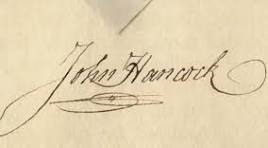
In the US, they observe National Handwriting Day on January 23rd. Why this date? Well, it is the birthday of John Hancock, the first signatory of the Declaration of Independence. Among the 56 signatures on the document, his large, flamboyant signature stood out. In fact, so prominent was it that “John Hancock” is an informal synonym for signature in the US!

The Day started to be observed in 1977, when educators were already beginning to feel that the art of handwriting was getting lost. The Writing Instrument Manufacturers Association came forward to do something about this (and of course at the same time, increase sales of pens, pencils, paper and writing instruments). They initiated National Handwriting Day.

(Incidentally, though we use handwriting and penmanship interchangeably, they are not quite the same. Handwriting is the act of writing out full words or sentences by hand on paper. Words may be written either legibly or illegibly. Penmanship is the art or skill of having excellent writing, and good penmanship makes the process of reading written work much easier.)

Lately, something called the World Handwriting Contest has been initiated. Each year, the World Handwriting Contest opens for entries between January 1 and June 30. There are eight age categories, starting from Children below age 7, right through –Teens, Teens, Adults and Seniors (age 65 up). And it is open to anyone, anywhere.

There are two styles for which prizes are given:

Functional Handwriting which strives for legibility, speed, and fluency without aiming at artistic effect. For this category, the judges will further separate entries as cursive, which joins 50% or more of its letters or manuscript printing, which joins fewer than half of its letters; and
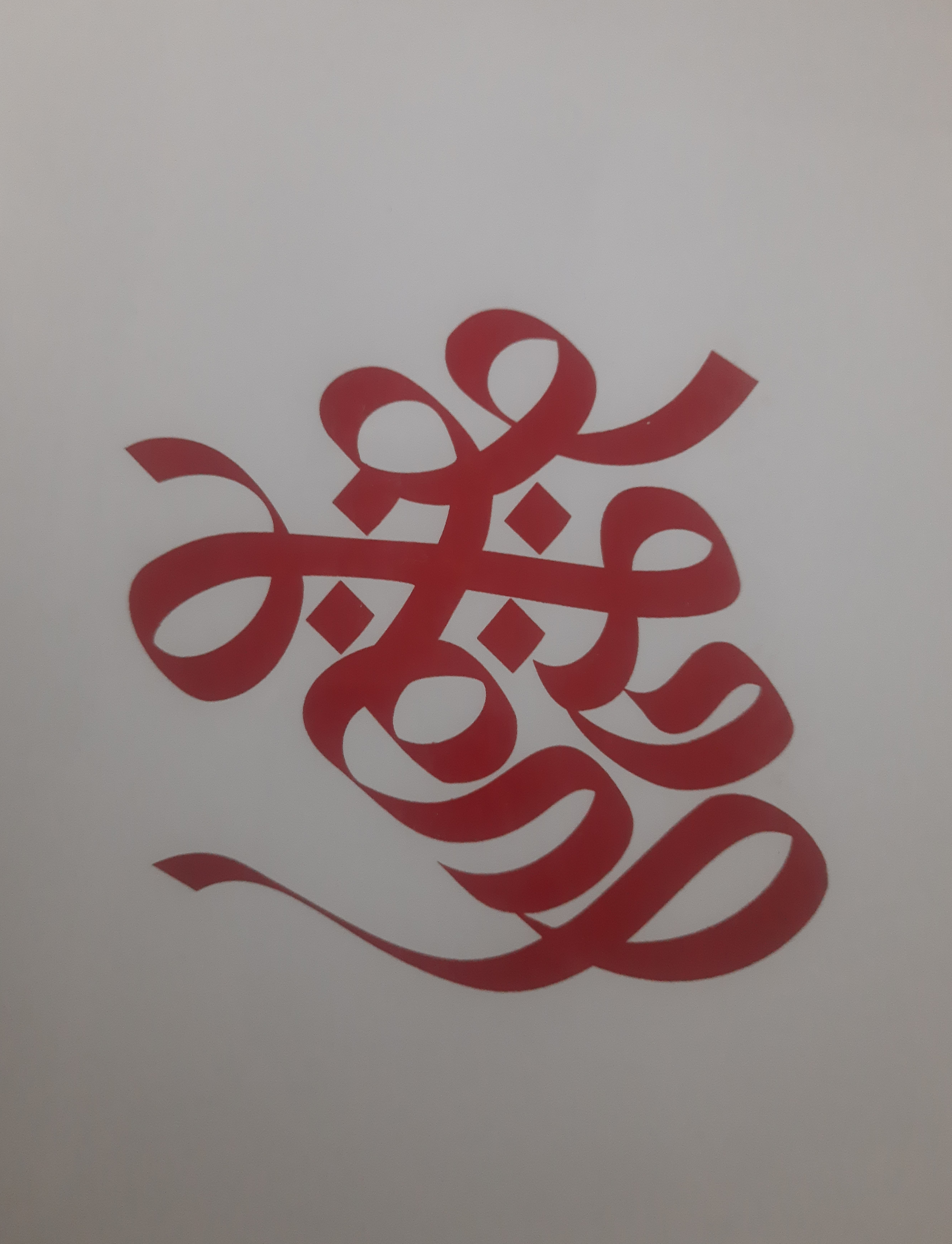
Artistic handwriting which uses a monoline or calligraphy marker, pen, or brush along with decorative strokes, flourishes, and/or combinations of shading, hairlines and/or thick and thin strokes to create an artistic effect.

NRI domination over the Spelling Bee contests is well accepted. People of Asian origin now seem to dominate among winners of the Handwriting competition too, with Indians and Indian-origin names finding frequent mention (with stiff competition from Bangladesh!). Among Indians, Salil Jha of Bhopal has won a prize (above 65 category). Roslin Richard of Bangalore is first place winner in the Adult Category; Feba Sara Saji of Kerala is a winner in the Teens category. Keep it up people! May the moving finger keep writing beautifully!

–Meena

Food Historian: KT Achaya

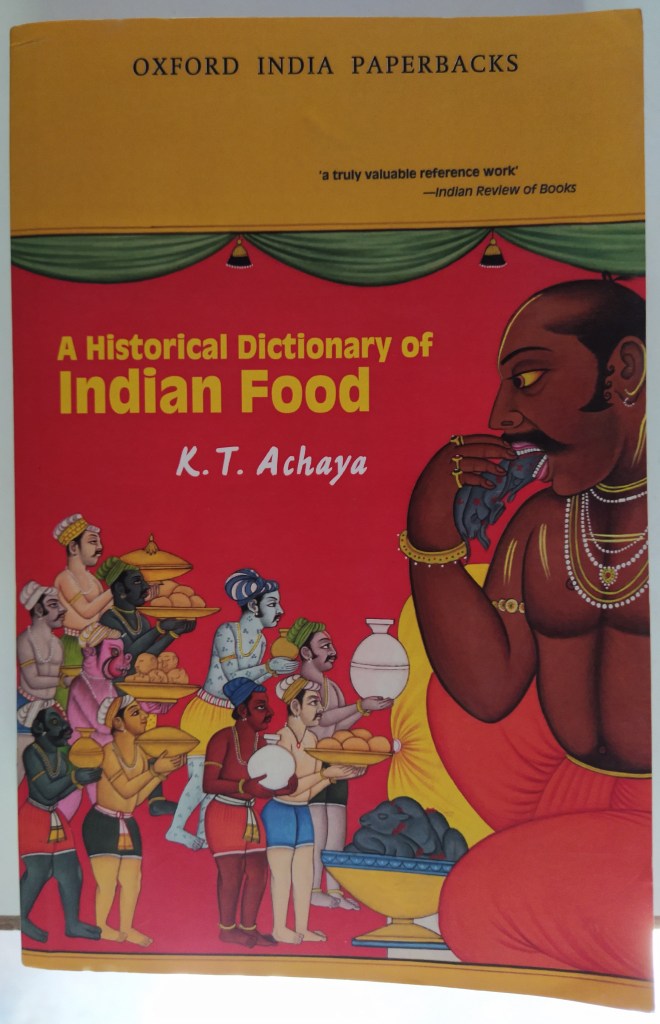
Several years ago, a dear friend gifted me a book on food. Not because I am a great foodie myself, but because I love probing into the ‘why’ and ‘how’ of things, and this book did the same. Whenever I write a piece about food, I invariably dip into this trusty resource. This is a book called A Historical Dictionary of Indian Food   by KT Achaya. 

The painstaking and well-researched book traces the origins and pathways of food, and food ingredients that are so much a part of our cuisines. KT Achaya was a scientist with deep interest in the humanities as well the fine arts. He was also fluent in a number of Indian languages which gave him access to diverse original sources. From ancient Sanskrit manuscripts, archaeological evidence, to a wide range of scientific as well as historical documents, KT Achaya compiled facts about countless ingredients as well as dishes that threw up fascinating nuggets of information, and sometimes also ruffled feathers (e.g. idlis did not originate in India!)

Recently I read another book which talked about Achaya the man himself. That was an interesting story in itself, and gave life to the name that I had only associated with my food dictionary. I discovered that Achaya spent his entire professional life as highly respected scientist working with compounds and formulae, before his avatar as a food historian.

KT Achaya was born on 6 October 1923 at Kollegal in Karnataka. His father was a sericulturist who managed a silk farm run by the government of India. Achaya graduated from Madras University with chemistry honours. He also got his MSc degree from the same after pursuing his research at the Indian Institute of Science in Bangalore. A government scholarship took him to the University of Liverpool for his doctoral studies. His research focused on the chemistry of cow and buffalo ghee, and was academically well received. In 1948 he published his first book, Indian Dairy Products co-authored with K. S. Rangappa. This is still considered one of the most important books in the field.

Achaya returned to India in 1949. In 1950 he was selected to help establish an institute under the auspices of the Indian Council of Scientific and Industrial Research (CSIR). Originally named Regional Research Laboratory, this is now the Indian Institute of Chemical Technology, Hyderabad. Achaya went on to spend 22 years at the Institute, engaged in ground-breaking research and publishing academic papers that garnered international recognition.

In 1971, Achaya became the executive director of the Protein Foods and Nutrition Development Association of India in Mumbai. Here he hoped to develop products that were high in nutrition, easy to consume, and inexpensive. The project did not succeed commercially, but the book on nutrition that he wrote during this period, Your Food and You, became popular and was translated into several Indian languages. Subsequently Achaya moved to Mysore to be close to Coorg where his origins lay.

He retired in 1983. It is during this period that Achaya began to write articles on the history of Indian food for the Science Age journal. It is these that grew in scope and range, ultimately being published as books, the first of which was Indian Food: A Historical Companion described as an ‘incomparable classic on Indian food’. He went on to publish several other books including A Historical Dictionary of Indian Food and The Food Industries of British India.

Achaya described himself as a “cowboy” because he had worked so long in the chemistry of dairy products and milk production. His later research later turned to oils and oil production, nutrition, and food technology. In fact Achaya was much more–a Renaissance man in an age of specialisation. He was not only interested in, but knowledgeable about western and Indian classical music, photography, art, cinema, books, sports, and of course food. He was an innovative cook himself; experimenting with different kinds of cuisine, and equally interested in understanding more about the ingredients he used for the different dishes, and leading him on the trails to track their origins and history.  

First published in 1994, Indian Food: A Historical Companion marked a new phase in food writing in English in India. There were, at the time, books on food in Indian languages. S. Meenakshi Ammal’s Samaithu Paar in Tamil (the English translation of which was also gifted to me by the same friend!) was a classic that was passed down through generations. The early English language books were by people like Tarla Dalal. But these were simply ‘recipe’ books. Achaya’s was a totally different genre. These were the first compendiums of their kind. They were scholarly, encyclopaedic, and often not relieved by photographs, and even, recipes. 

The years that followed saw a spurt in interest in food history. Today there are many books which trace the history of food in different ways. Many of these document traditional family recipes and place these in a social, historical and geographical context. Some of these combine history, anecdotes and photographs, along with interesting layouts and illustrations. Then came the internet where recipes from the local to the global, from the simplest to the gourmet are available at ones fingertips.

Be that as it may, for a pre-internet generation there is something special about browsing through a recipe book. I myself have a kitchen shelf with a variety of recipe books, collected over the years; some of which I dip into to refresh a memory, or to explore a change in the regular menu. Achaya’s books evoke not only a sense of exploration and discovery, but also a deep respect for the scholarship and passion of a single man.

–Mamata

Frozen Poetry: The Art of Calligraphy

Though the term ‘calligraphy’ is Greek for ‘beautiful writing’, as the art form evolved, the word has taken on a larger meaning. 

Today, people think of calligraphy as:

‘… the art of forming beautiful symbols by hand and arranging them well.’
or
‘…a set of skills and techniques for positioning and inscribing words so they show integrity, harmony, some sort of ancestry, rhythm and creative fire.’

Calligraphers don’t like you to equate the form to ornamental decorated letters or to the use of letters as ornaments, insisting it is about symbols themselves being beautifully formed and arranged.

They say at some level, it is not handwriting at all, because the primary goals of handwriting are to be quickly and easily written and accurately read. In fact, beauty, personality and artistic impact are nowhere near as important in handwriting as clarity and speed (I wish someone had told my primary school teachers that!).

Calligraphy, they say, is ‘writing as an art form’ and not ‘artistic-looking handwriting’. So while handwriting aims to be read, calligraphy aims to produce an ‘art’ reaction.

Calligraphy is ‘a skill which involves touch, pressure, hand movement, unity, and that elusive quality we term “beauty.’ (V. Studley).

The art originated in ancient China, where characters were initially carved onto materials like animal bones and tortoise shells. Over time, this practice evolved into using ink brushes and writing on paper. From China, it moved to neighbouring countries, and slowly Westwards. The ancient Romans used reed or quill pens dipped in ink to write on long rolls of paper, while Christian churches later adopted western calligraphy to reproduce Biblical texts. Arabic calligraphy based on Arabic letters is also very well-developed, and an important part of art and architecture.

The tools used in calligraphy are all-important. While initially, the Chinese artists used ink brushes, the Romans started using reed or quill pens. Calligraphy was revolutionized with the invention of the steel nib. Different types of steel nibs—e.g., those with pointed tips and those with flat, broad edges being used for different calligraphy styles.

Calligrapher PP Raju’s work–both spiritual and meditative

The symbol of Indian Rupee adopted in 2010 is a great example of calligraphy. The symbol is an amalgam of Devanagari “Ra” and the Roman Capital “R”. It was conceptualised and designed by Udaya Kumar, an alumnus of the IDC School of Design of IIT Bombay.

The reason for this meander down calligraphy-lane is because only last week, Kochi hosted the second edition of the International Calligraphy Festival of Kerala (ICFK). The festival was organized by the Kerala Lalitha Kala Academy and the Thiruvananthapuram-based Kachatathapa Foundation, which is led by renowned calligraphy artist Narayana Bhattathiri. It brought together calligraphers from South Korea, France and Vietnam with Indian calligraphy experts like Achyut Palav, often referred to as the patriarch of Indian calligraphy, and D. Udaya Kumar, the creator of the Indian Rupee symbol. It was a priceless learning opportunity for students, teachers, advertising artists, art lovers and art enthusiasts from fine arts colleges, design institutes and design colleges in Kerala.

Apart from lectures, demonstrations and discussions on the subject, there were a range of activities including workshops, live demonstrations, an international calligraphy exhibition, and calligraphy quizzes.

What a beautiful event that must have been, for as someone said ‘Calligraphy is a kind of music not for the ears, but for the eyes.’

–Meena

Measuring Mount Everest: Radhanath Sikdar

Recently there was news that the world’s tallest mountain, Mount Everest is growing taller! While the rate of growth (0.2-0.5 mm per year) may not be significant given the total height of the mountain, it is a subject of study and research. The process behind this growth is called isostatic rebound, where land rises when heavy material like rock or ice is removed. In this case this is happening as a nearby river is eroding and causing the land under Mount Everest to push up, thereby increasing its height.

The height of Mount Everest has always been in the news, from the time that its height was measured for the first time, providing proof that it was the tallest peak on earth. Thereby hangs a long tale.

In 1802 the East India Company who were then ruling India instituted an ambitious project to scientifically survey the entire Indian subcontinent. The survey, originally started in Scotland, was brought to India as a geographical survey of the conquered territory after the British defeated Tipu Sultan.

The Great Trigonometrical Survey (GTS), as it was called, was expected to take five years. It ended up taking seventy years!

From 1923 the Survey was being supervised by Sir George Everest. In 1927 Andrew Scott Waugh, who had joined the Bengal Engineers, a regiment of the East India Company army, was appointed as a cadet in the Company, and he was assigned to the Great Trigonometrical Survey in 1832. By the late 1830s, when the Great Trigonometrical Survey reached the Himalayan region, Andrew Waugh had become Superintendent of the Great Trigonometrical Survey of India. The surveying of Everest was carried out under his supervision.

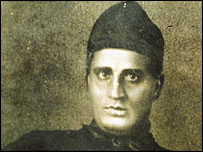
In 1831, George Everest, who had become the Surveyor General of India, was looking for a mathematician who had specialised in Spherical Trigonometry, to be a part of the GTS. A professor at what was then Hindu College (now Presidency College) suggested the name of his 19-year old student Radhanath Sikdar.

Radhanath had been a student at what was then the Hindu School of Calcutta for seven years. He had supported himself on scholarships, and his mathematical abilities did not go unnoticed. George Everest appointed the young Radhanath as a ‘computer’ in the newly established computing office. This was an era when a computer did not refer to a machine, but to the people who did complex calculations. Radhanath’s skills in this were far superior to those of his colleagues. He did not just use the established methods but invented his own formulas and applications to accurately measure different factors. He was described as a ‘hardy, energetic young man, ready to undergo any fatigue, and acquire a practical knowledge of all parts of his profession’. The young Radhanath became a favourite of George Everest.

Radhanath was sent to Mussourie where the main office of GTS was based, and it is here that he spent the next 15 years. His regular job began in 1832 as a sub-assistant. His salary was Rs 107 per month, comprising a pay of Rs 50, tent allowance of Rs 40 and horse allowance of Rs 17. In 1838, when his monthly salary was Rs 173, Sikdar expressed a wish to leave GTS for a profitable post as ‘teacher to a public institution’. Everest made a strong plea to the government to grant Radhanath Sikdar a substantial increase as an inducement to stay. As a result he was given an increment of Rs 100.

Everest retired in 1843 and was succeeded by Colonel Andrew Scott Waugh. Eight years later, in 1851, Radhanath was promoted to the position of Chief Computer and transferred to Calcutta.

This is when Radhanath started measuring the snow-capped mountains in Darjeeling. Foreigners were not allowed in Nepal so observations were taken from the Terai on the Indian side. Till then, Kanchenjunga was believed to be the highest mountain in the world. But during this survey the team noted that a mountain, then called Peak B, appeared to be higher. As calculations continued, the mountain was renamed Peak XV. The mountain had local names, it was known as Chomolungma in Tibet, Chomolangma by the Sherpas of Nepal and Qomolangma in China. But it had not yet featured on the international scene.

In 1852, the chief computer Radhanath Sikdar, through a series of calculations was able to establish that this peak was indeed higher than Kanchenjunga, making it the highest mountain in the world. He gave proof of this to his boss Andrew Scott Waugh who had succeeded George Everest as both Surveyor General of India, and Superintendent of the Great Trigonometrical Survey of India. Waugh waited four years to confirm and reconfirm the information. This was officially announced in March 1856. He also proposed that the highest peak be named after his mentor Sir George Mallory. And thus what could have been Mount Sikdar became Mount Everest!

Radhanath Sikdar’s many years of path breaking ‘computing’ and his tallest discovery were eclipsed by the ruling powers of the day. However, Radhanath continued his passion and pursuit of mathematics, even after he retired from the Survey in 1862. He joined as mathematics teacher at what later became the Scottish Church College. He, along with a friend, also founded Masik Patrika, a Bengali journal aimed at promoting education and women’s empowerment. Radhanath Sikdar passed away in May 1870.

On 27 June 2004 the Department of Posts issued a commemorative stamp featuring Radhanath Sikdar and Nain Singh Rawat a legendary the Indian explorer who surveyed the vast unexplored expanses of Tibet in the late 19th century.

–Mamata

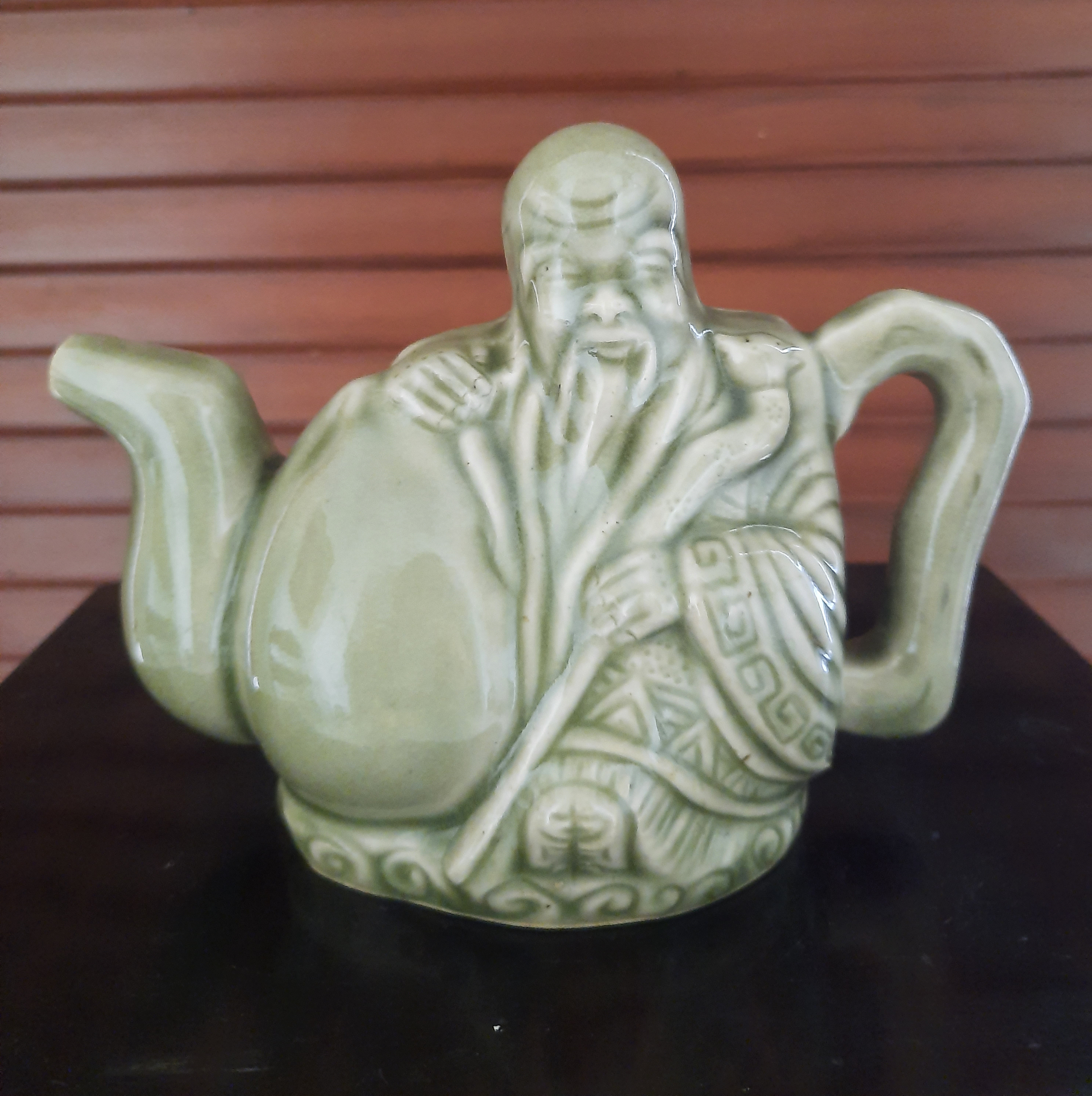
I am a Little Teapot..

I suppose in today’s world, children don’t often see teapots. Fortunately, the poem ‘I am a teapot’, one of the cutest action-songs, is still a part of the pre-school repertoire. As the poem tells us, typically teapots have an opening with a lid on top, through which the dry tea and hot water are added; a handle for holding the vessel: and a spout through which the tea is served. And there may be a small air hole in the lid, though the poem does not mention it.

A teapot is basically a vessel used for steeping tea leaves  in boiling or very hot water, and then serving the resulting brew.  

Assassin Teapot: Essential Kitsch from China!

The teapot has a hoary history. It originated in China—of course! The first recorded one goes back to the end of the Sung dynasty (1271-1368). These were Yixing teapots which were red or purple-colored earthen vessels. These containers made in the city of Yixing are still produced today and still very popular and are considered the epitome of teapots.

The idea of the teapot spread to Europe after the East India Company introduced tea and teapots in the late 17th century. In the early 18th century, the Company used to commission Chinese artisans to make teapots as the quality of porcelain in China was better there than in Europe. But slowly Germany and then France got into the game, and started perfecting the art and science. In the mid-1800s, an English pharmacist William Cookworthy, after several experiments, finally hit upon a way to make porcelain similar to that made in China and set up a factory in Plymouth.  And from then on, English and tea and teapots became synonymous!

Many and fantastical are the shapes, sizes and colours in which teapots have been crafted down the centuries. It is a thing of beauty and elegance.

And it is this that the annual Sydney Teapot Show has been showcasing for over 30 years. This is an exhibition and competition where participants take up the challenge of making a unique teapot. Each year, there are specific themes, and this year’s categories are Australian Poets, Toy Story and The Natural World. There are also prizes for Best Pourer and Supreme Teapot – Best in Show. The Show celebrates craftsmanship at its best. As the organizers point out: ‘The skill of the clayworkers is employed in making a teapot – one of the more difficult tasks in ceramics – and their imagination and creativity is also evident in their response to the categories suggested’. The show started on 3 October, and is on for a month. Anyone lucky enough to be down under on these dates can catch the show.

Australia seems to particularly treasure teapots. The Bygone Beauties Museum there has over 5500 pieces! But it is not just in Australia that teapots are celebrated.  The Victoria and Albert Museum has a good collection. The National Museum of Asian Art at the Smithsonian has some special beauties.

There are also several private collectors and collections. Sonny and Gloria Kamm of Los Angeles have been collecting teapots for over 35 years, and have about 17,000 pieces. Sue and Keith Blazye have 8,450 teapots in their home in Kent, plus around another thousand duplicates in the loft,.

Of special interest is the Chitra Collection. It is private museum of historic teawares.  As the site explains, ‘In 2011 Nirmal Sethia, the Chairman of the luxury tea company, Newby Teas, set himself the task of acquiring the world’s greatest collection of teawares to record and preserve tea cultures of the past. Today, the collection, named in honour of his late wife, Chitra, totals almost 2000 objects and is already the world’s finest and most comprehensive of its kind.’  So if you are not able to make it to Sydney, check out https://chitracollection.com/collection/ for a teapot-treat!

As the weather turns balmy, it’s the perfect time to bring out your teapot and sip a refreshing cup, while reflecting on these teapot-related pieces of wisdom!

Disciples and devotees…what are most of them doing? Worshipping the teapot instead of drinking the tea!Wei Wu Wei (Theatre producer and philosopher)

A great idea should always be left to steep like loose tea leaves in a teapot for a while to make sure that the tea will be strong enough and that the idea truly is a great one.Phoebe Stone (Author and artist).

–Meena

Fever Tree

Clay tablets from Mesopotamia mention this deadly disease. Indian writings of the Vedic period (1500 to 800 BC) call it the ‘king of diseases.’ Traces of the disease have been found in remains of bodies from Egypt dating from 3200 and 1304 BC. The 270 BC Chinese medical canon has documented the disease’s headaches, chills, fevers and periodicity. The Greek poet Homer (circa 750 BC) mentions it in The Iliad, as do Aristotle (384-322 BC), Plato (428-347 BC), and Sophocles (496-406 BC) in their works.

The disease? None other than malaria, a disease that has taken its toll on not only humans down the ages, but our Neanderthal ancestors too. In the 20th century alone, malaria claimed between 150 million and 300 million lives, accounting for 2 to 5 per cent of all deaths!

Many have been the scientists who spent their lives trying to understand malaria. Charles Louis Alphonse Laveran (1845-1922) a French army doctor during the Franco-Prussian played a key role. He as the first to postulate that malaria was not spread by bad air, but rather that ‘Swamp fevers are due to a germ’. He was also the earliest scientist to detect crescent-shaped bodies in the blood of affected individuals, and then the four stages of the development of the parasite in the blood. These findings were confirmed by Camillo Golgi. Dr. Charles Ross and India played a huge part in the unravelling of the whole cycle and Ross received the Nobel Prize for discovering the mosquito-stages of malaria.

The story of uncovering the cure for malaria has been dramatic too. For centuries, when no one had a clue what caused malaria, treatments included blood-letting, inducing vomiting, and drastic things like limb amputations, and boring holes in the skull. Herbal medicines like belladonna were used to provide symptomatic relief. 

Cinchona-nitida-quinine
Cinchona Tree whose Bark yields Quinine

But the cure strangely came from South America—a region not originally plagued with the diease. It was probably brought from the outside around the 16th century. The native Indians were the first to discover the cure. The story goes that an Indian with a high fever was lost in the Andean jungles. Desperate with thirst as he wandered the jungles, he drank from a pool of stagnant water. The taste was bitter and he thought he had been poisoned. But miraculously, he found his fever going down. On observation, he found that the pool he had drunk from had been contaminated by the surrounding quina-quina trees. He put two and two together, and figured that the tree was the cure. He shared his serendipitous discovery with fellow villagers, who thereafter used extracts from the quina-quina bark to treat fever. The word spread widely among the locals.

It was from them that Spanish Jesuit missionaries in Peru learnt about the healing power of the bark between 1620 and 1630, when one of them was cured of malaria by the use of the bark. The story goes that the Jesuits used the bark to treat the Countess of Chinchon, the wife of the Viceroy who suffered an almost fatal attack. She was saved and made it her mission to popularize the bark as a treatment for malaria, taking vast quanitities back to Europe and distributing it to sufferers. And from then, the use of the powder spread far and wide. It is said that it was even used to treat King Louis XIV of France.

The tree from which the bark came was Cinchona, a genus of flowering plants in the family Rubiaceae which has at least 23 species of trees and shrubs. These are native to the tropical Andean forests. The genus was named so after the Countess of Chinchon, from the previous para. The bark of several species in the genus yield quinine and other alkaloids, and were the only known treatments against malaria for centuries, hence making them economically and politically important. It was only after 1944, when quinine started to be manufactured synthetically, that the pressure on the tree came down.

Not unusually, the tribe who actually discovered it is forgotten. The medicine came to be called “Jesuit Powder’ or ‘Chincona powder’ or “Peruvian powder’. Trees in the genus also came to be known as fever trees because they cured fever.

May the many indigenous community, their knowledge and their practices which are at the base of so many medicines today get their due recognition, credit and due.

–Meena  

An Olympic Feat: The Boys in the Boat

The Paris Summer Olympics 2024 have recently concluded. The spectacular performances, the breaking of records, the exultation of the winners and the heartbreak of the losers, all these are just the more visible symbols of the gigantic efforts that culminated here. The 2024 Para Olympics are currently underway, also in France. These demonstrate the incredible grit and perseverance of another set of sportspeople who have conquered their own physical challenges as they aim to conquer new heights. And behind every winner, individual or team, there is an incredible tale.

While the more prominent sports made the headlines during the recent Olympics, there are several sports that were perhaps not as widely covered. Among these were the rowing events. Rowing became a part of the Summer Olympics in 1900, but it was a men-only event. It was only in the 1976 Montreal Olympics that women’s events became a part of the Games. The Paris Olympics had 14 different rowing events (equal number for men and women), all of which involved racing over a 2000- metre river course. 

This time, I was curious about these rowing events, and interested to know which team won the Men’s Eight gold (it was Great Britain or Team GB). This was because I had recently read a fascinating account of a team that had won the gold at the 1936 Munich Olympics. A tale of literally fighting all odds.

The Boys in the Boat is the true story of the team the represented the United States for the event. How they got there is a moving, inspiring, and often a ‘hold your breath’ account of how a group of young men from working class backgrounds reached, and won, the Olympics. 

These student athletes represented the University of Washington, in Seattle. The story traces how from among the aspiring candidates, eight young men, many of them growing up in the Depression era in poor towns, made it to the team after showing their mettle through some of the most challenging situations including the foulest of weather, almost inhuman demands on the bodies, and the toughest mental trials and tribulations. Following their selection, the story follows how these were shaped into a rowing team (varsity eight) by the coach Ulbrickson, and rowing boat- shell builder and rowing sage George Pocock.

Under the unrelenting regimen set by these men, the motley crew of rookie rowers began their journey to the top. They had to start closer to home, first by defeating the reigning champions on the west coast, the University of California, then competing against the Ivy League teams from the East coast of the United States which had always dominated the sport. These triumphs came after periods of mind-numbing exhaustion, copious sweat and tears. Thus these ‘dark horses’ as they were then, made their way to Princeton for the crucial trials that would qualify them as the official USA team for the Munich Olympics. The destination was in sight, the departure a week away, but not yet a reality.

The next challenge came in the form of the news from the American Olympic Committee that the team had to pay their own expenses for the trip. In the days before “sponsorships” that funded everything from training to outfits, this was a harsh blow for the always cash-strapped University of Washington team. The news spread through the local Seattle newspapers and the community stepped in with donations ranging from 5 cents to several hundred dollars, rapidly collecting enough to give the ‘local heroes’ and their boat The Husky Clipper a rousing send off. An early instance of “crowd-sourcing”!

The team arrived in Germany and even as they acclimatized to the new conditions, climate, and food, they immediately started practising rigorously. They won the qualifying heat, setting world records. But in the final race on the Langer See they had a choppy start.

On that freezing, blustery evening, the men from Washington found themselves in last place. It wasn’t just that they got off to a slow start. Though they’d won their qualifying heat two days earlier–setting world and Olympic records in the process–they had been placed in the last lane, exposed to the brunt of the biting wind much of the course, while Germany and Italy had been awarded the two most protected lanes. The team were trailing badly, until by superhuman will and effort they painfully gained ground, still trailing behind the Germans and Italians, and finally, surging forward to win the race, by just about 10 feet. The boys in the boat had won the Olympic Gold!

The story of how this little known and unlikely team reached to this legendary finish is brought alive in the book by Daniel James Brown. It is told through the memories of Joe Ranz, one of the boys in the boat. The author met Joe Ranz when he was at the end of his life in a hospice. When he started recalling his life, Brown felt that his story needed to be shared widely. Joe agreed, with the caveat that the story should be not just about him but about all the boys and the boat.

The book sensitively captures not just individual histories but also deftly places these within a wider canvas of what was happening simultaneously in Hitler’s Germany. This was the beginning of what was to grow into the devastating persecution of Jews, even as grand stadia were being erected to present a façade to the world.

Above all the book is about the human spirit, its endeavour for excellence, and the innate strength that emerges when least expected. It is about each member having a specific assigned role but which needed to be melded into a seamless team effort. As the wise Pocock put it It isn’t enough for the muscles of a crew to work in unison; their hearts and minds must also work as one.  The story is about the ruthless spirit of competition but equally about team work and cooperation. It is about the vital role of trust even when there may not be complete harmony among the team mates. As coach tells Joe: When you really start trusting these other boys, you will feel a power at work within you that is far beyond anything you’ve ever imagined.

The Boys in the Boat has also been made into a movie. But this does not capture the nuances in the book that make each of the boys in the boat come alive as unique individuals who gelled into an unbeatable team.

In this season of the Olympics, as new stories emerge, these are still stories to remember and celebrate.

–Mamata

A Woman’s Voice: Saeeda Bano

Last week I wrote about All India Radio, the voice of the nation after India gained Independence.  I also wrote about some of the newsreaders who literally gave voice to the news. The early decades were remembered by names that became synonymous with different programmes broadcast by AIR, including some well-loved women voices. Before them all, was Saeeda Bano, who was the first woman to read the news on AIR. A woman ahead of her times in more ways than one.

Saeeda Bano was born in Bhopal in 1913. It was the period of British rule in India but local rulers still held sway in the numerous feudal kingdoms that made up India. Bhopal was unique in that it was a city that had been ruled by women (Nawab Begums) for four generations as there had been no male heirs to the throne. It was an unusually liberal environment where women’s education was encouraged and the hold of patriarchy was not as strong. When Saeeda was born, the last of the four Nawab Begums, Begum Sultan Jahan, a great reformer, was ruling Bhopal. She was very keen that women be educated and thereby be able to come out of the darkness of ignorance.

Saeeda’s father was supportive of the idea that girls should get as best a formal education as was possible at that time. Saeeda was sent to boarding school in Lucknow in 1925, and went on to do her graduation from Isabella Thoburn College in Lucknow. But that was as far as her family would allow. In spite of her fervent pleas, she was married off, still in her teens, to a highly-respected judge in Lucknow who was many years older. The plunge into a highly-confining world, shackled by social expectations and dos and don’ts was stifling to the lively young girl who was at all times expected to play the role of a dutiful wife, and adhere to repressive norms. However she stuck it out for almost 20 years, playing the role of wife and then mother to two sons, even as the stirrings of rebellion built up. In 1938 when a radio station was set up in Lucknow, Saeeda started participating in shows for women and children. As her domestic life became more turbulent, Saeeda began looking for a way out. She sent her application to what was then still BBC in Delhi for the post of newsreader. The application was accepted. This was the impetus that propelled her to leave her husband’s house and her husband, and move to Delhi. She put her older son in boarding school and arrived in Delhi with her younger son. She was alone, in a new city, about to make a new life for herself.

Saeeda and her son arrived in Delhi on 10 August 1947, and stayed with some family friends. She reported to All India Radio the next day, met the Director of news, and spent the entire day getting familiar with the premises and the world of broadcasting. The following day when she reported for work at the radio station, a weekly roster of her duties and timings had been prepared and was handed over to her. She was to reach AIR on the 13th of August 1947 by 6 am and read the news bulletin in Urdu at 8 o’clock thereby becoming the ‘first female voice, news anchor of All India Radio’s Urdu news bulletins’.

As she recalled in her memoir: I was the first woman AIR considered good enough to read radio news. Prior to this, no woman had been employed by either the BBC (British Broadcasting Corporation) or AIR Delhi to work as a news broadcaster. Of course they had to train me and I was taught how to first introduce myself on air with my name and then start reading the bulletin.

Thus Saeeda Bano became the first woman newsreader on All India Radio, two days before India gained Independence. She was proud to be a member of the AIR team that broadcast, live, to the nation, the momentous transition of power.

While she broke barriers in broadcasting, Saeeda continued to face challenges as a single woman in a big city. She looked for accommodation, and moved to YMCA, after a struggle to obtain special permission to keep her son with her.  Saeeda Bano grew with her job and went on to research and anchor other programmes also. But it was not all smooth sailing.

The dawn of Independence also unleashed the fury of violence in the aftermath of Partition. As a Muslim woman whose voice was becoming heard and known, she was the target of hate mail and threats. She was forced into taking refuge with other Muslim personalities of the time, and was witness to many distressing situations. 

Perhaps the most distressing event that left a deep impression on her was the assassination of Mahatma Gandhi. Saeeda Bano had in fact been to Birla House to listen to Gandhiji in person, on the very day that he was killed. She later wrote how she had felt a note of despair in his voice. The shock of his death was so great that she was unable to read the news that day, and the news director had to hurriedly change the shifts.

Saeeda Bano’s in-built reliance and ability to face challenges remained with her through her life. She retired as news reader from AIR in 1965, and was appointed as producer for AIR’s Urdu Service and continued till the 1970s. She passed away in 2001. 

Saeeda Bano’s achievements are much greater than her ‘first’ as a newsreader. In 1994 she wrote her memoir Dagar Se Hat Kar in Urdu where she described the ups and downs of her life, candidly and without bitterness nor self-praise. She simply described herself as one of those people who “chose a road less travelled“. The  book was translated into English by her granddaughter Shahana Raza and published in 2020 as Off the Beaten Track: The Story of my Unconventional Life.

Remembering her grandmother, Shahana described how Saeeda Bano or Bibi as she was affectionately called, was a woman who lived life on her own terms. She lived independently, and didn’t seek support from anyone, even in the lowest phases of her life. Her sheer determination always stood out, as she never looked back and regretted any of her decisions.

Today as so many women confidently anchor news and other shows, especially on the numerous television channels, they face their own challenges and new glass ceilings to break. But it is always humbling to remember and celebrate those who took the first steps in clearing untrodden paths.

–Mamata

A Library Crying for a Librarian

So many of India’s treasures are hidden, waiting to be discovered. No, it’s not just old monuments or beautiful sights.

It includes—wait for it—libraries too!

The Bhadariya Library is a prime example. Bhadariya is a tiny village, near Pokhran, with a population of less than 2000. Situated about 76 kilometres from Jaisalmer, off the Jaisalmer-Jodhpur highway—it remains a hidden gem, with only a fleeting mention on travel sites.

Once off the highway, there is quiet road flanked on both sides by vast cow shelters, leading to the serene Shri Bhadariya Mata Ji temple. Originally erected in 1831 by Maharawal Gaj Singh of Jaisalmer, it commemorates his victory in a bloody battle against Bikaner.

And underneath the temple lies a humungous 50,000 square feet underground library—probably Asia’s largest. It houses the personal collection of one man–Harbansh Singh Maharaj, a social reformer from Punjab who moved to Rajasthan in the 1960s. Built in 1998. It houses around 200,000 different titles and a total of 900,000 volumes, with seating for 4,000 individuals.

As one climbs down a flight of steps to the library, there is an unusually long corridor, probably some 150 metres in length. Closed glass shelves line either side. As one continues onwards, each corridor leads to the next and then to the next identical corridor. The illusion of immensity is compounded by the mirrored walls at each end of every corridor. There are eight such corridors with 562 spotlessly clean glass shelves.

These shelves are filled with a rich and varied but largely random collection. It is obviously the work of a person passionate about books and education, but untrained as a librarian. The books range from British-era gazetteers and law books, to a vast collection of mythological works, books in English, Urdu, Sanskrit, Tamil, and various other languages. It contains some rare manuscripts which may be over a thousand years old.

Harbansh Singh Maharaj or Sri Bhadariyaji Maharaj as he was called, built the library to encourage reading and education in a place where there was little interest in either. He wanted readers to have a cool, sheltered place to sit and study, and so choose to have an underground facility. The local communities contributed shramdaan to do the excavations. His ambition was to start a University, but alas, this could not happen.

Today, the library has neither a librarian nor any staff to manage it. The sole caretaker of the library is an attendant from the Jagdamba Seva Committee Trust’s office. The immaculate condition of the interiors and the shelves speak volumes about the love the staff of the Trust have for the library.  It is no mean feat to maintain such a large facility of this nature, in such a location absolutely dust-free.

But they can do only what they can do. Professionals and resources are needed–the books are not even catalogued and carry no library classification numbers, hindering their integration into any library network.

And even more sadly, there are no readers either. Apart from locals, no one really knows about the facility or the treasures it offers. The attendant told us that the library was hardly ever used by anyone. It is in a remote location, and there is no really convenient accommodation for scholars who may come from far away. Moreover the library lacks a system to assist visiting scholars.

But yes, the potential for scholars to come from far and wide exists. As a visitor to the library has mentioned ‘Bhadariyaji Maharaj has left a vision. If someone could resurrect it, it would uplift the field of education,’

This was Bhadaria Maharaj’s life’s work, which he carried out with the vision to spread education. It is now our responsibility to build on this invaluable legacy.

–Meena

“This is All India Radio”

“This is All India Radio, and here is the news read by Melville de Mello.” Nine p.m. and the family is gathered around the radio, as the deep baritone voice begins to read the news of the day–news from home and abroad; the only news that the nation absorbed and digested before retiring for the night. The radio was the meeting point for all generations, and the source of connection to national and international events. And indeed, it was All India Radio that defined this coming together.

Radio broadcasting services started in India during the British rule in 1922-23 under the initiative of the Bombay Presidency Radio Club.  In 1927, the Indian Broadcasting Company (IBC) was set up as a private entity and was granted permission to operate two radio stations. On 23 July 1927 the IBC made the first ever radio broadcast in the country from the Bombay Station.This event marked the start of organised radio broadcasting in India. The Calcutta Radio Club came into existence five months later. IBC dissolved its operations on 1 March 1930; thereafter the Imperial Government took over the broadcasting operations. The Indian State Broadcasting Service (ISBS) was started on 1 April 1930 on an experimental basis for two years, and then permanently from May 1932. Eventually on 8 June 1936, it became what came to be known as All India Radio. It was also in 1936 that the first daily news bulletin was introduced.

All India Radio’s signature tune was synonymous with the name AIR. It was composed in 1936 by Walter Kaufmann, a Czech Jew who was one of the many Jewish refugees fleeing Nazi persecution in Europe who sought refuge in India. Kaufmann became the director of music at AIR. Kuaffman was a serious western music scholar and performer, but the tune he composed for AIR was based on the Indian raga Shivranjani. It remained the identity of AIR, and was the ‘pied piper’ tune that drew the millions of listeners to the radio as the broadcasts began.

During World War II radio was being used for Nazi propaganda and there was a strong need to counter it. Hence, the practice of broadcasting all news bulletins from one central newsroom started. Around 27 bulletins were being broadcasted every day during the war years. In a time when the press was supressed, and news censored, radio broadcasts from underground radio stations played a significant role. The radio was used by nationalists to share news about the real situation on the ground, spread the message of Swadeshi, and rally the people in the non-violent struggle against British rule. These radio broadcasts had an immense impact in rousing Indians and to step up the demands of Indian freedom in the pre-independence era.  One such story on https://millennialmatriarchs.com/2021/10/07/gandhis-women-warriors-usha-mehta/

When India attained Independence on 15 August 1947, there were six radio stations: Delhi, Calcutta, Madras, Bombay, Tiruchirapalli, and Lucknow. In 1956 AIR formally adopted the name Akashvani. The word Akashvani which means ‘voice from the sky’ was derived from the title of Rabindranath Tagore’s poem written in 1938 for the inauguration of Calcutta All India radio’s shortwave transmission service. AIR and Akashvani were used interchangeably until 3 May 2023 when Akashvani became the exclusive name.

After Independence, AIR’s offerings began to expand beyond news and important announcements to a wide range of programmes—music, drama, live commentaries, and more. It was the primary source of news as well as entertainment. Radio continued to be the favourite companion of old and young, initially as the focal point of a household. With the advent of transistors, it became a trusty companion which accompanied wherever one went. It was the provider of songs, weather bulletins and live cricket scores. AIR’s simple listener-friendly format, its ABC of Authenticity, Brevity and Clarity became its USP. The news readers became household names, and the ultimate examples of proper diction and high quality commentary—from the Republic Day parade to cricket matches. The anchors of music programmes (today’s RJs) were popular idols with big fan clubs. Radio became a quintessential way of life for Indians.

This role is beautifully summed by Santosh Desai who grew up in the golden age of AIR: ‘All India Radio had many moods and played different kinds of roles in our lives. It was the official voice of state, the keeper of cultural standards, the chronicler of the times, the certifier of reality, the breathless commentator of the current, the receptacle of small desires of its viewers and an entertainer allowing escape into an imagined world.’

88 years after its first broadcast, AIR remains steadfast, with a widely expanded canvas. It is one of the largest broadcasting organisations in the world in terms of the number of languages of broadcast and the spectrum of socio-economic and cultural diversity it serves. AIR’s home service comprises of 591 broadcasting centres located across the country, covering nearly 90% of the country’s area and 98% of the total population. Terrestrially, AIR originates programming in 23 languages and 179 dialects.

Today as we once more salute the national flag to mark 77 years as an independent nation, it is a good time to remember that it was on AIR that the nation heard Jawaharlal Nehru’s emotional Tryst With Destiny speech, live at midnight of 14th August 1947. And when, for the first time when Nehru hoisted the Indian flag from the ramparts of the Red Fort in Delhi, it was the minute-to-minute narration that the proud nation followed on AIR.

Happy Independence Day!

–Mamata