Reflecting on the Five Laws of Stupidity and praying Ma Saraswaty sheds the light of wisdom!

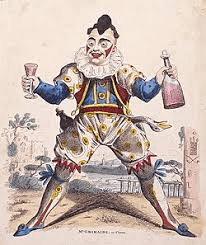
Have you ever shaken your head at someone’s actions and muttered, “How could they be so stupid?” Economist Carlo M. Cipolla, a professor at UC Berkeley, took that exasperation and turned it into a razor-sharp essay in 1976, later published as The Basic Laws of Human Stupidity. What began as tongue-in-cheek satire has, over the years, gained the weight of wisdom. His framework is quoted in boardrooms, military strategy papers, and even risk-management seminars. It is, at once, funny and sobering.

So, what are these Five Laws?

  1. InevitabilityAlways and inevitably everyone underestimates the number of stupid individuals in circulation.
    No matter how cynical you think you are, Cipolla assures us the world contains more stupidity than you can fathom. It’s a reminder not to be caught off guard when irrationality rears its head.
  2. UbiquityThe probability that a certain person is stupid is independent of any other characteristic of that person.
    Education, wealth, power or even high degree of capability in one dimension offer no immunity. History is replete with examples of brilliant scientists, decorated generals, and wealthy tycoons making catastrophic blunders. Stupidity is democratic—it spares no class or group.
  3. Damage PrincipleA stupid person is a person who causes losses to another person or to a group of persons while himself deriving no gain and even possibly incurring losses.
    This is Cipolla’s key insight: stupidity is not mere ignorance, it is destructive irrationality. Unlike the clever or the criminal, who may at least benefit themselves, the stupid spread harm without return.
  4. The Underestimation TrapNon-stupid people always underestimate the damaging power of stupid individuals.
    We often brush off foolishness as harmless. But Cipolla insists it is a potent force that can derail institutions, movements, or nations. Underestimating stupidity is, itself, stupid.
  5. The Supreme LawA stupid person is the most dangerous type of person.
    Why? Because unlike the bandit (who robs you but at least gains something), the stupid person leaves everyone worse off, including themselves. They are unpredictable, immune to logic, and capable of pulling entire systems into collapse.

From Satire to Serious Lens
Cipolla originally wrote the essay as a whimsical interlude in his career as an economic historian. Yet, his classification gained traction because it resonated with lived experience. Management theorists mapped his “laws” onto organizational behavior. Military strategists saw in it an explanation for the chaos of battle. Behavioral economists quietly nodded, recognizing parallels with cognitive biases and irrational decision-making.

Interestingly, Cipolla illustrated his framework with a simple 2×2 graph, plotting human behavior along axes of personal benefit and social impact. The quadrants neatly categorized people as helpless (hurt themselves but help others), bandits (help themselves, hurt others), intelligent (help both), and stupid (hurt both). That little diagram has since found its way into PowerPoint slides across the world.

Echoes Through History
History, as Cipolla loved to remind, is propelled not only by heroes and villains but also by the stubborn weight of stupidity. The fall of empires, disastrous wars, or economic collapses often show a pattern: decisions made against all logic, driven by pride, short-sightedness, or blind conviction. From letting in the Trojan Horse to the Maginot Line, human folly has had a starring role.

Practical Uses Today
At first glance, Cipolla’s laws feel like cocktail-party philosophy. But they’ve been pressed into real-world use:

  • Risk Management: Financial firms use “Cipolla’s Matrix” to flag policies or behaviors that could destroy value for no clear reason.
  • Leadership Training: By distinguishing between stupidity and malice, leaders are taught to manage teams with sharper judgment.
  • Public Policy: Some commentators even apply the laws when analyzing bureaucratic inertia, or social media misinformation.

A Mirror, Not a Weapon
It’s tempting to wield Cipolla’s laws as a judgmental hammer—branding others as “stupid.” But the real power of his essay lies in self-reflection. How often have we acted against our own interest, or underestimated the ripple effects of our actions? If stupidity is so pervasive, perhaps humility is the antidote.

Another thinker came out with the The Bonhoeffer Law of Stupidity describes stupidity not as a lack of intelligence but as a moral failing where individuals surrender their inner independence to power structures, groupthink, and simplistic slogans, becoming “mindless tools” incapable of critical thinking or moral judgment. It is a sociological problem, amplified by rising political power and fostering conditions where people become susceptible to propaganda and blind obedience. Bonhoeffer argued that stupidity is more dangerous than malice because it is immune to reason and force, making it a more insidious threat, especially within groups. which describes stupidity not as lack of intelligences, but as a moral failing where individuals surrender their inner independence to power structures, groupthink and simplistic slogans, becoming incapable of critical thinking or moral judgement.  It is a sociological problem, amplified by rising political power and fostering conditions where people become susceptible to propaganda and blind obedience. Bonhoeffer argued that stupidity is more dangerous than malice because it is immune to reason and force, making it a more insidious threat, especially within groups. 

On the occasion of Dusshera, let us pray to Goddess Saraswathi for to rid the world of stupidity!

–Meena

Happy Dusshera!

Image: artandhome.net/quotes-about-stupidity/

Pencil in the Dates: Stationary Fairs around the World

Two weeks ago, we dipped our toes into the pastel-hued wonderland of Japanese stationery. This week, starting from Japan, we do a world-trip of Stationery Expos.

Japan: Two Shows, Two Personalities

Japan doesn’t just have one stationery expo—it has two, each with its own character.

The Japan Stationery Show, held every November in Tokyo, is the country’s premier industry fair. Here, manufacturers reveal their latest innovations: notebooks that open perfectly flat, mechanical pencils that never break lead, and pens that glide like a brush. It is also home to the coveted Stationery of the Year awards, which often set the trends for the year ahead. Though businesslike in its purpose, the show is open to consumers too, making it a buzzing space where industry professionals and stationery fans meet.

The Stationery Girls Expo (Bungu Joshi Haku), by contrast, is pure celebration. Launched in 2017, it caters to bungujoshi—literally “stationery girls,” a term now used for anyone who adores stationery as a lifestyle. Here, washi tapes in hundreds of designs, pastel highlighters, limited-edition pens, and playful planners dominate the stalls. The mood is festival-like—queues of eager shoppers, arms full of bags, and excited chatter about the season’s “must-have” notebook. If the Japan Stationery Show sets the industry agenda, the Stationery Girls Expo captures the culture of stationery—personal, expressive, and joyful.

With the cheerful tagline “the most enjoyable event for stationery lovers,” this expo is playful, creative, and community-driven. Its name might suggest it’s just for girls, but the event welcomes anyone with a soft spot attractive staionary. Spread across several days in Tokyo and Osaka, it has grown into Japan’s largest stationery festival, drawing nearly half a million visitors cumulatively.

The expo is also known for its Bungu Joshi Awards, where visitors vote for their favorite products—categories range from Tokimeki Design (heart-fluttering design) to Heart-throbbing Convenience (products that spark delight through functionality). The audience becomes part of the show, giving the event a democratic, festival-like atmosphere.

What’s especially interesting is the shopping system. Each visitor is given a transparent bag at entry. As they wander through stalls, they pick up treasures and drop them into their bag, paying for everything at a central cashier. It’s a clever system that avoids long queues at individual stalls and keeps visitors free to browse. The expo also offers exclusive merchandise only available on-site—tiny rewards for the true devotees.

Germany and USA

Germany’s Paperworld (now merged with Ambiente), has for decades set the global benchmark. Here the focus is on sustainability, efficiency, and innovation. Think paper made from stone, packaging that biodegrades in weeks, and pens that feel like sleek machines. It is vast, professional, and very B2B—corporate buyers and distributors scanning stalls with intent.

Then there’s the US National Stationery Show (NSS) in New York. This one feels closer to Japan in spirit—independent designers, hand-illustrated journals, greeting cards that are art in themselves. The joy of paper and pen as a form of self-expression is what binds the NSS community.

India: Now taking Mainstage

And, did you know, India has its own Expos too—two of them!

A Stationery Fair has long been part of the well-known Delhi Book Fair. Last month saw not only the 28th Delhi Book Fair, but also the 24th Stationery Fair at Bharat Mandapam. “Besides promoting books of all genres, the aim is to focus on providing students with educational books and stationery,” says Hema Maity, general manager, India Trade Promotion Organisation (ITPO).

The newer entrant is the Stationery & Write Show which debuted in 2019 in Mumbai, co-located with gifting and lifestyle fairs. That first edition saw 272 exhibitors and over 12,000 visitors—a remarkable start for a new platform. By 2022, the event had grown into a three-in-one showcase—Paperworld India + Corporate Gifts Show + Interior Lifestyle India—drawing nearly 15,000 trade visitors and 215 exhibitors. Fast forward to 2025, and the growth is striking: 18,000+ visitors from 285 Indian cities and 49 countries, with 340+ exhibitors. The annual fair, usually held in late January at the Bombay Exhibition Centre, now rivals international events in scale. It has a Delhi edition too.

And the highlights? Eco-friendly stationery made from recycled paper, cork accessories, even moss-covered desk décor. Alongside these, educational toys, quirky notebooks, and premium pens jostle for attention.

What makes India’s fairs unique is the mood—serious business buyers walk the aisles, but so do college and school students and stationery lovers. It is equal parts trade fair and festival.

The Magic That Endures

Whether in Tokyo, Frankfurt, New York, or Mumbai, expos remind us that stationery is not just about function. It is about beauty, culture, even memory. And perhaps that is why, year after year, these fairs continue to draw thousands: they affirm that ink on paper still carries magic in a screen-dominated world.

–Meena

The Game of Life: Monopoly

This year is supposed to mark 90 years of one of the world’s most popular board games—Monopoly. It is estimated that the game, translated into 47 languages, has been played by one billion people worldwide. Hasbro, the company that produces the game is marking the milestone with events and publicity that retells the story of the invention of the game, and its subsequent success that made history.

According to this version, the game was originally created in 1935 by Parker Brothers. As the story goes, in 1932, a Philadelphia businessman named Charles Todd and his wife, Olive, introduced their friends Charles and Esther Darrow to a real-estate board game they had recently learned. The board game involved rolling dice to move tokens across the board while buying up properties listed on the board. The game did not have a name, and was not marketed but passed from friend to friend who all enjoyed playing it. Charles Darrow, who was at the time unemployed and in need of money, saw a potential opportunity, and asked his friend Todd for the written rules. There were none, friends made up rules as they played. It was informally known as the ‘monopoly game’.

Darrow however put together these ‘rules’ and hired an artist to design a board, and tokens and began to hand produce sets which he sold to a local department store with the name Monopoly. The game was a hit. Darrow sold this version to the toy manufacturer Parker Brothers in 1935, claiming that it was entirely his invention. He was granted a patent for this in 1935. And thus the official time line for the origin of game was pegged by Parker Brothers at 1935, and Monopoly was marketed with the story of how a struggling salesman created the game in his basement to support his family during the Great Depression.  

However, the real origin of the game goes back much further, to the beginning of the century, and its creator was a woman who was a pioneer in more fields than one. Born in Illinois in1866 to Scottish immigrant parents Elizabeth Magie moved to Washington DC in her early 20s. Lizzie, as she was known to her friends, lived as a single woman supporting herself, working as a stenographer and typist, both unusual for a woman in those times. Not only did she live on her own, she saved up and bought her own home, and went on purchase some acres of property. She also wrote poetry and short stories, and did comedic routines onstage. Lizzie had strong and radical political views. This was a time of mighty monopolies which led to huge income disparities. Lizzie became interested in the anti-monopolist policies of Henry George a politician and economist who propagated the concept of a single “land value tax”. The general idea that instead of taxing income or other sources, the government should only tax land, based on the usefulness, size, and location of the land, thus shifting the tax burden to wealthy landlords. The government should use the money from the collected taxes for its essential functions and distribute the rest to people in the lower socio-economic segment. His message resonated with many Americans in the late 1800s, when poverty and squalor were widespread in the cities.

Magie’s original board design for the Landlord’s Game, which she patented in 1903. https://www.theguardian.com/lifeandstyle/2015/apr/11/secret-history-monopoly-capitalist-game-leftwing-origins

Lizzie was looking for an interactive and creative way to teach Henry George’s economic theories to friends and colleagues. The twentieth century had just dawned, and board games were becoming popular in middle-class homes. Many inventors realized their potential not just as a form of recreation, but as a means of communication. Elizabeth Magie felt that a board game could do what she visualized. After her office hours, Lizzie sat at home night after night thinking and drawing, rethinking and redrawing the grid and messages that would communicate these radical concepts.

Most of the board games at that time had a linear path design. Lizzie’s game had a grid that went round the board. The game featured play money and deeds and properties that could be bought and sold. Players borrowed money, either from the bank or from each other, and they had to pay taxes. In one corner were the Poor House and the Public Park, and across the board was the Jail. Also included on the board were three words scrawled across: GO TO JAIL.

Lizzie Magie created two sets of rules for her game: an anti-monopolist set in which all were rewarded when wealth was created, and a monopolist set in which the goal was to create monopolies and crush opponents. Her dualistic approach was a teaching tool meant to demonstrate that the first set of rules was morally superior. Ironically it was the monopolistic version of the game that caught on.

Lizzie called this game the Landlord’s Game. She described the new concept thus: “It is a practical demonstration of the present system of land-grabbing with all its usual outcomes and consequences,” she wrote in a political magazine.

She was in her thirties when she applied for a patent for her game in 1903. At that time she represented the less than 1 percent of all patent applicants who were women. And this was three decades before Parker Brothers started manufacturing Monopoly for which Darrow claimed credit as inventor, and Darrow’s story of a fluke invention by an unemployed man grew into the legend of Monopoly (and earned him millions). 

While some people noted the similarity between Monopoly and the Elizabeth Magie’s Landlord’s Game, the Darrow legend continued. A newspaper story in 1936 aroused interest when it reported on the similarity, and also that in 1935 (when Monopoly got its patent) Lizzie had sold her board game patent rights to Parker Brothers for only $500 and no royalties. Elizabeth Magie never got due credit for her invention, and she died in relative obscurity in 1948.

With its iconic design elements, the paper money, the property names, the tokens and the rush of ‘buying and selling’, ‘making deals’ and ‘undisguised competition’ Monopoly’s popularity continues even a century later. Its origins which were based in the critique of landlords have been obscured as the game has come to represent the blatant pursuit and accumulation of wealth. The words of the mother of its invention Elizabeth Magie still resonate: “It might well have been called the ‘Game of Life’, as it contains all the elements of success and failure in the real world, and the object is the same as the human race in general seem[s] to have, i.e., the accumulation of wealth.”

–Mamata

Racing with the Oars of Tradition – Kerala’s Boat Races

Come August, the air begins to buzz with anticipation in Kerala. The boat race season is here! Known locally as vallamkali (literally, boat play), the sight of dozens of snake boats slicing through the waters, powered by hundreds of synchronized oarsmen, is one of Kerala’s most spectacular traditions. Shiny black boats stretching almost 100 feet, with rowers swaying to the rhythm of a vanchipattu (boat song).

The most famous of the boat races is the Nehru Trophy Boat Race, inaugurated in 1952 when Jawaharlal Nehru, then Prime Minister, was so captivated by the spectacle that he donated a silver trophy. Today, the Nehru Trophy on the Punnamada Lake in Alappuzha attracts international attention and has been featured on tourism campaigns worldwide. But across the state, from Aranmula to Champakulam, local communities host their own races, each with its own traditions and lore.

Innovation on the Water

One of the most interesting aspects of the boat races today is how technology has crept in—not to diminish tradition, but to amplify it. While the boats themselves are still crafted the old way, using Anjili wood and painstaking carpentry handed down through generations, innovations have entered the training and organization.

Rowers now undergo scientific fitness regimes, with physiotherapists, nutritionists, and even sports psychologists guiding teams. GPS trackers and drone footage help coaches analyze synchronization and speed—things once left only to the naked eye and instinct. Live-streaming and 4K broadcasts take the drama of the races across the world, making it a truly global event. And traditional boat songs as well as new ones are now available on Spotify playlists.

Women at the Oars

But what about women? For long, the snake boat races were a male preserve, embodying sheer physicality. Yet, in recent years, there has been a quiet but important shift. Kerala has begun hosting all-women boat races—a recognition that strength and stamina are not male monopolies. In 2022, the first Vallamkali exclusively for women was held, with teams of fisherwomen taking to the waters.

Even in mixed-community celebrations, women’s teams are increasingly visible, particularly in the Kettu Vallam (smaller decorated boats) races. It is still early days, but the image of women rowing with fierce determination underlines how traditions evolve without losing their essence.

More than a Race

Preparing a snake boat involves dozens of families. Training the oarsmen requires food, lodging, and encouragement from entire villages. On race day, the banks are filled with people singing, cheering, and celebrating. Divisions of caste, class, and creed dissolve.

There is also a spiritual dimension. The Aranmula boat race, for instance, is tied to temple rituals, where the boats are offered as homage to Lord Parthasarathy. Here, winning or losing is less important than participation.

The Kerala boat races are not just about the boats—they’re about the teams, each carrying the pride of their village or community. In recent years, the competition has become so professional that many villages now run their own “boat clubs,” with dedicated squads training year-round. It’s a bit like football clubs elsewhere—loyalty runs deep, rivalries are fierce, and victories are celebrated across the community!  A few of the most celebrated teams are:United Boat Club (UBC), Kainakary, Police Boat Club, Kollam, Jawahar Boat Club (JBC), Kollam, St. Pius Boat Club, Alappuzha, Karichal Chundan (Alappuzha), Champakulam Chundan, Veppu Vallams of Aranmula.

Congratulations to the winner of this year’s 71st Nehru Boat race held last week, the boat Veeyapuram Chundan of Village Boat Club Kainakary. The winning team which was one among 75 competitors, touched the finishing line in 4.21.084 minutes.


And Happy Onam to all
!

–Meena

Pic: nehrutrophy.nic.in/

Follow the Child: Maria Montessori

Montessori is a word much-used today in early education and there is an explosion of what are self-described ‘Montessori’ schools. These are often housed in modern buildings, equipped with a surfeit of the latest ‘equipment’, and accordingly charging high fees. Perhaps not many of the parents who rush to book admission for their child in such a school, almost as soon as it is born, may know much more about Montessori than the name.

The original story behind the schools, and the name that distinguishes these schools is very different. It is the story of Maria Montessori an educator, scientist, physician, innovator, philosopher, feminist and humanitarian.

Maria Montessori was born on 31 August 1870 in Chiaravalle, Italy, the only child of Alessandro and Renilde Montessori. Her parents moved to Rome when she was five years old. A curious, strong-willed girl, Maria, from a young age took paths that defied the norms of her times. After completing high school, instead of going in for teaching, a conventional occupation for girls at the time, she applied to medical school but was refused admission. So she enrolled in the university where she studied physics, mathematics and natural sciences; and reapplied to medical school. She was eventually admitted in 1890, one of the first women in medical school in Italy. In the face of many obstacles because of her gender, Maria qualified as a doctor in 1896. She was also beginning to get involved in the movement for women’s rights.

As a practising doctor Maria became known not only for her skills in treating patients but equally for working with the poorest, and the respect she showed to patients of all social classes. She also joined as a volunteer for a research programme at the psychiatry clinic of the University of Rome, where she became deeply interested in the needs of children with learning disabilities. She went on to become co-director of a new institution called the Orthophrenic School which focussed on such children. During her work here she became convinced that instead of writing off such children as ‘retarded’, they needed the right support. This theory was radical for that time. She also travelled to London and Rome to learn more, and when she came back she spent hours in developing and experimenting with materials and methods, using ideas from the founders of kindergarten, Froebel and educators Itard and Seguin. Her experiments began to show positive results.

Maria continued her academic pursuits with studies of educational philosophy and anthropology, and from 1904-1908 she was a lecturer at the Pedagogic School of the University of Rome. During this period Rome was in economic decline, leading to widespread poverty and the growth of many ghettos. One such was an area called the “Quartiere di San Lorenzo” which was known as the shame of Italy. Here children of desperately poor parents who were out all day trying to earn a living, were left to their own devices in unsanitary and chaotic conditions. These children ran wild, destroying property, and indulging in anti-social behaviour. The authorities were looking for a solution to this huge problem. Maria was offered the opportunity to work with these children, using the materials that she had been developing when she was working with children with special needs. Maria took up the challenge.

As Dr Montessori recalled later: “One room was set aside for this purpose, resembling in every way a children’s prison. It was hoped that a person would be found with enough social courage to tackle the problem. I in my capacity of medical officer of hygiene was approached to take an interest in the work. Having considered the situation I demanded that at least the commonest aids in hygiene, food and sanitation be made available. On the 6th of January 1907 this room was inaugurated to collect the 50 children

But while everyone had had the idea that by giving houses and sanitation, the people would be purified, no one had taken in consideration the children; no one had thought to bring toys or food for them. When the children, ranging between the ages of 2 to 6 entered, they were dressed all alike in some thick, heavy, blue drill. They were frightened and being hindered by the stiff material, could move neither arms nor legs freely. Apart of their own community they had never seen any people. To get them to move together, they were made to hold hands. The first unwilling child was pulled, thus dragging along the whole line of the rest. All of them were crying miserably.”

Thus opened the first Casa de Bambini (Children’s House). A pioneering experiment in working with 50 poorest of poor and illiterate two to six-year-old children. Maria began with using the activities and materials that she had developed at the Orthophrenic School. She closely observed the children with a scientist’s approach, noting which ones engaged them and discarding the ones that did not. Her observations led her to realize that children who were placed in an environment where activities were designed to support their natural development had the power to educate themselves. As she said when recalling the opening of the first Casa di Bambini: “I don’t know what came over me but I had a vision and inspired by it, I was enflamed and said that this work we were undertaking would prove to be very important and that someday people would come from all parts to see it.”

The results that followed were so surprising that working for children soon became her life’s work. As she later wrote: “In order to follow them, I changed my whole life. I was nearly 40. I had in front of me a doctor’s career and a professorship at the university. But I left all because I felt compelled to follow them and to find others who could follow them, for I saw that in them lay the secret of the soul.”

By 1909 Maria gave her first training course in her new approach to around 100 students. Her notes from this period provided the material for her first book published that same year in Italy, appearing in translation in the United States in 1912 as The Montessori Method, and later translated into 20 languages. The rest, as they say is history. The experiment at Casa di Bambini grew into a movement. Montessori societies, training programmes and schools sprang up all over the world. Dr Montessori herself travelled across the world, giving talks. But through her life she emphasized: “It has nothing to do with any educational method of the past, nor with any educational method of the future. It stands alone as the contribution of the child himself. Perhaps it is the first of its kind, which has been built by him step by step. It cannot have come from an adult person; the thought, the very principle that the adult should stand aside to make room for the child, could never have come from the adult.”

Today as young parents are faced with choices of educational institutions, and inundated with invitations from expensive Montessori schools, and toys and equipment, it is a good time to recall that the roots go back to very opposite circumstances. And remember Maria Montessori’s words: “Anyone who wants to follow my method must understand that he should not honour me but follow the child as his leader.”

–Mamata

Celebrating Artful Elephants

August 12 is marked as World Elephant Day. And it is also Ganesh Charurthi time. So an appropirate time to talk about elephants.

The Asian Elephant is an endangered species, with less than 50,000 left in the wild across the world. And hence the importance of marking this day as a way of raising awareness about elephants and the dangers that threaten them.

What we see is what we grow to love and respect. And hence the importance of all the depictions of elephants we see around us—from sari borders to sculptures in ancient temples to the life-sized sculptures made from invasive weeds found in the Nilgiris, crafted by indigenous communities. Each and every one of them is an opportunity for education about our biodiversity and this magnificent species.

One can understand the ubiquitousness of elephant imagery in India—after all we hold about 60 per cent of the numbers. But interestingly, it is Taiwan which was well-known for elephant imagery all over its public parks and schools, in the form of Elephant Slides.

These are the whimsical, solid, painted playground fixtures affectionately known as “Grandpa Elephant”— and they hold fond memories for a generation of Taiwanese kids, now grown.

The elephant slide was a fixture of childhood in Taiwan from the 1960s through the 1980s. Found in schoolyards and public parks, these slides were typically made from china-mosaic or concrete, with a stairway or ladder up the back and a gently curved trunk functioning as the slide.

Many bore motivational slogans etched into the sides: “Strengthen your body to build the country.” Even in play, the messaging was patriotic. But for kids? It was all about the joy of scrambling up that broad back and riding the trunk like it was the gateway to an imaginary world.

Now, with safety codes tightened and tastes modernized, many of these eleslides have disappeared. But a movement to preserve and honour them has taken root, led by artists, writers, and nostalgic grown-ups determined to keep these gentle giants from fading away completely.

A Concrete Revival

Writer Yu Chiu-ling and designer Hsiu Pi-cheng have been at the forefront of this effort. Yu founded the Facebook group “Find Our Elephant Friends,” a digital scrapbook of elephant slide-sightings across the island. Hsiu has documented over 400 slides, many tucked away behind schools or community centres, quietly waiting to be remembered.

Their work isn’t just about playground preservation — it’s about cultural memory. About honouring the handmade, the imperfect, and the deeply local.

Elephants Across Borders

Asian elephants range across. Bangladesh, Bhutan, Cambodia, China, India, Indonesia, Laos, Malaysia, Myanmar, Nepal, Sri Lanka, Thailand, and Vietnam. Strangely, there have never been elephants in Taiwan in the wild in recorded history. While elephant fossils have been found on the island, indicating their presence in prehistoric times, there is no evidence to suggest that elephants lived in Taiwan during the period of human history documented by archaeology and literature. 

But Taiwan does have the most emotionally iconic version of the elephant slide!  You will also find their cousins in parks across Japan, Thailand, Vietnam, and parts of Eastern Europe. From Soviet-era concrete sculptures to candy-coloured cartoon versions in Tokyo suburbs, the idea of turning a beloved elephant into a playmate has clearly crossed cultures. But sadly, no ele-slides in India!

Unfortunately today, both real elephants and their concrete urban renderings are endangered. One is fighting for survival in an increasingly human-dominated world. The other is quietly disappearing with changing times.

Elephants have always symbolized memory, strength, and gentleness.

Let’s protect the real ones. And let’s remember the playful ones, too.

Happy Ganesh Chaturthi!

–Meena

PIC: https://www.thisiscolossal.com/wp-content/uploads/2023/07/pi-og.jpg

Dashri and Kasturba: Teacher and Student

Tribal communities have long inhabited India’s lands, living in close proximity with their natural environment and following their ancestral ways of life, culture and traditions. At the same time these peoples were always considered to be on the fringes of mainstream society; socially and economically exploited,

and deprived of fundamental rights. Dashri Chaudhary was born in one such community in the Vedchhi region of south Gujarat on 3 October 1918. Her father Rumsibhai and mother Ambaben belonged to one of the tribes which were collectively called ‘rani paraj’ or ‘people of the forests’, and later known as ‘adivasis’.

Although traditionally these communities were deprived of education, Dashri’s father as well as her grandfather Jeevanbhai had both received education. This was because the Vedchhi region was then under the Gaekwad rule of Baroda which encouraged compulsory education for all. Jeevanbhai Chaudhari was a school teacher and social reformer. Dashri was brought up in a progressive environment, and studied up to class 4 in the government school in her village.  

In the meanwhile her father and grandfather were coming under Gandhi’s influence. They began to organize the local adivasi community to oppose the socio-economic exploitation by the British as well as the local moneylenders. They started an organization named Kaliparaj Parishad for the upliftment of their community. The organization started taking shape in 1905 with the convening of the Raniparaj convention where the issues of exploitation of adivasis and social and educational reforms were discussed. The women formed bhajan mandalis, and travelled from village to village singing songs inviting people to join the satyagraha movement.

After Gandhiji’s return to India from South Africa in 1915, Dashri’s grandfather invited him to attend the convention but he could not do so at that time. However Kasturba came in 1923, the first non-adivasi woman to attend. Gandhiji himself attended the next convention in 1924. Dashri was then six years old. Her family had already adopted the khadi movement. Little Dashri was keen that she should also welcome Gandhiji with a garland of handspun khadi thread. The story goes that Gandhi picked up the little girl who was wearing gold bangles and anklets. He told her “Child, we are slaves. We cannot wear jewellry.” The six year old immediately took off the ornaments, and never again in her life, wore any again.

Dashri completed class four in Vedchhi and joined class 5 in the government girls’ school in Valod. However responding to Gandhi’s call to boycott government school education, she left the school.

She moved to Ranipara Kanya Vidyalaya a nationalist school (Rashtriya Shala) imparting basic education, started by Kasturba, Mithiben Petit and others in Pune town in Mandvi district. Kasturba was there at the time. Dashri barely completed one year here when the school was shut down. All the students got involved with the freedom movement which was gaining momentum in the light of the Dandi March in 1930 which sparked a nationwide Civil Disobedience Movement. Dashri was an active participant. She and her friends picketed liquor shops, they protested against the British policy of prohibiting tribals from producing and selling toddy which was locally brewed. 

On 26 January 1933, she was arrested while picketing a shop that sold foreign cloth. She was only 14 years old. She was tried. When asked what work she did, she replied “To free India”.  She was asked if she knew the consequences of such activity, she replied “Yes, I know. If I die I will be called a martyr”. The magistrate is believed to have commented “This is girl is dangerous.”

Dashri was sentenced to one year in Yervada jail. Kasturba was already imprisoned there. She was surprised to see the young student who had been in the Rashtriya Shala. “How you have grown, and now you are in jail”, she said. The two became close. Dashri spent the year in jail doing all the manual tasks that the prisoners were assigned. Kasturba usually requested fellow prisoners to write letters for her, as she herself could not do so. During the time when they were in jail, Kasturba requested the young Dashri to teach her how to read and write. Dashri herself had only completed primary school and here she took on the role of teacher. In the time that they had free from the arduous prison tasks, the young teacher and elder student attentively worked with the slate and chalk, learning Gujarati letters and moving ahead. It is believed that Dashri successfully taught her student in four months! The first letter Kasturba wrote was to Gandhiji who was delighted. He wrote to Kasturba ‘Tell this girl that “you could do what I could not!”

After her release Dashri continued with her studies at Gujarat Vidyapith. She also learnt music from Pandit Narayan More, and learnt to play several instruments. As the Quit India movement gained momentum in 1942, she once again gave up her studies and joined. She added spirit to the protests and processions with her powerful singing of patriotic songs.

She was arrested once again, and sentenced to a year’s imprisonment. After her release, in 1944 she married a fellow satyagrahi Kanjibhai Chaudhary. She continued to be actively engaged with the activities at Vedchhi ashram.

After Independence she resumed her interrupted studies, completing her Matric and Primary Teachers Course. She started a school for children of very backward communities and continued to contribute to the field of education. She was not interested in getting into politics. She herself never gave up learning, and was always active in social causes. She lived in Vedchhi, where one of Gandhi’s close associate Jugatram Dave established an Ashram dedicated to upliftment of the adivasis in the socially and economically backward area through constructive work and education. 

Dashriben passed away in 2013 at the age of 95 years. A long life dedicated entirely to the cause of the nation.   

–Mamata

Nature’s Libraries: Where the Wild Data Lives

National Librarian’s Day is celebrated on August 12th every year to commemorate the birth anniversary of Dr. S.R. Ranganathan, the “Father of Library Science in India”.

When we say “library,” most people imagine rows of books, a quiet reading room, and perhaps a stern librarian at the desk. But in the language of library science, a “library” is defined less by its shelves and more by its functions — acquiring, organising, preserving, and making knowledge accessible.

By that definition, the world is full of libraries that hold no books at all. Some store bird calls. Others archive satellite images. Some collect DNA sequences. In fact, they are not physical spaces at all. Many are vast online repositories where scientists and citizens alike can deposit, discover, and use data.

On this Librarians’ Day, let’s explore how these nature and biodiversity depositories perform the same core functions as traditional libraries — only their collections are wild, living, and often invisible to the naked eye.


Acquisition: Gathering the Wild

Libraries begin by collecting materials. In biodiversity repositories, this might mean researchers uploading recordings to Macaulay Library (Cornell Lab of Ornithology) or Xeno-canto, which crowdsource bird calls from around the world.

  • Example: iNaturalist “acquires” photographs and species observations from millions of contributors.
  • Example: GBIF (Global Biodiversity Information Facility) harvests species occurrence data from institutions and citizen scientists alike.

Just as a public library acquires books from publishers and donors, these nature libraries acquire data from field biologists, monitoring equipment, and enthusiastic amateurs.


Organisation: Making Sense of the Collection

Without organisation, a library is just a warehouse. And hence the focus on developing classification systems. Dr. S.R. Ranganathan primarily used and developed the Colon Classification (CC) system. The Dewey Decimal system is the widely prevalent one used in most libraries across the world.

Biodiversity data portals however are based on the Linnaean system of classification and organize living organisms based on evolutionary relationships. This involves classifying organisms into hierarchical groups like kingdom, phylum, class, order, family, genus, and species. This is.

  •  Example: BOLD (Barcode of Life Data System) and GenBank organise genetic sequences by species, geography, and collection method.
  • Example: ITIS (Integrated Taxonomic Information System) standardises names so scientists worldwide speak the same language.

The result? You can search for a frog by its Latin name, its genetic barcode, or the location where it was found — just like you can search for a book by title, author, or subject.


Preservation: Guarding the Record

One of a library’s noblest duties is preservation — ensuring the information remains available for future generations. In biodiversity repositories, this may involve:

  • Storing acoustic recordings (bat calls, whale songs) in durable digital formats.
  • Archiving satellite imagery in systems like NASA Earthdata and Global Forest Watch for long-term environmental monitoring.
  • Keeping herbarium records in Tropicos and long-term forest data in ForestGEO.

Like rare manuscripts in acid-free folders, these data are preserved against loss, decay, and obsolescence.


Access: Opening the Doors

Libraries thrive when they are accessible. Many biodiversity repositories are open access — anyone can explore them. And importantly, contribute to them.

  • eBird lets birdwatchers view migration patterns and personal checklists.
  • FishBase offers species profiles for students, fishers, and marine scientists alike.
  • OBIS (Ocean Biogeographic Information System) gives marine biologists open access to ocean species occurrence data.
  • Merlin helps users identify birds by their calls.

Some repositories, like Wildlife Insights or certain ethnobotanical databases, may have restricted access for sensitive data — similar to a library’s rare books section.


Dissemination: Spreading Knowledge

A library doesn’t just keep information — it shares it. Biodiversity repositories publish datasets for conservation planning, scientific research, and education.

  • Movebank shares animal movement data for migration studies.
  • TRY Plant Trait Database supports climate change modelling.
  • The Digital Himalaya Project disseminates ethnographic and ecological knowledge, bridging science and tradition.

Why These Libraries Matter

By meeting the same functional standards as a traditional library — acquisition, organisation, preservation, access, and dissemination — biodiversity depositories are not just “like” libraries, they are libraries. Their collections may be recordings instead of novels, or genetic codes instead of encyclopaedias, but the principles are identical.

In a time of rapid environmental change, these libraries are our collective memory-keepers for life on Earth. They store the songs of rare birds, the paths of migrating whales, the genetic fingerprints of endangered plants, and the traditional wisdom of communities who have lived with nature for centuries.

So this Librarians’ Day, remember: the guardians of knowledge are not only in buildings with books. They are also in digital sound archives, genetic databases, satellite imagery vaults, and underwater biodiversity surveys. Wherever knowledge is collected, cared for, and shared — there, you will find a library. Dr. Ranganathan, I am sure,  would have been excited to explore the new realms of libraries and library science!

–Meena

There are a wide range of data depositories and libraries related to nature and biodiversity across different domains—ranging from sounds (like bat and bird calls) to genetics, species observations, satellite imagery, and more. Here is a list of some of these depositories, which Chat GPT has been kind enough to put together!


🦇 Acoustic and Sound Libraries

  1. Bat Call Library – Region-specific databases like EchoBank or ChiroVox.
  2. Macaulay Library (Cornell Lab of Ornithology) – Massive archive of bird sounds, videos, and photos.
  3. Xeno-canto – Open-access database of bird calls and songs from across the world.
  4. AmphibiaWeb – Includes some amphibian vocalization data.
  5. BLB (British Library Sound Archive – Wildlife Section) – Historical and contemporary recordings of animals.

🌍 Species Observations and Biodiversity Portals

  1. GBIF (Global Biodiversity Information Facility) – Gigantic open-access database of species occurrence data from around the world.
  2. iNaturalist – Crowdsourced species observations with photos, locations, and identification support.
  3. India Biodiversity Portal – India-specific citizen science portal on biodiversity with species pages, maps, and observations.
  4. eBird – Global birdwatching database with detailed observation checklists and trends.
  5. OBIS (Ocean Biogeographic Information System) – Marine species occurrence data.

🧬 Genetics and Taxonomy

  1. BOLD (Barcode of Life Data System) – DNA barcoding records of species.
  2. GenBank – Nucleotide sequences, often used for genetic identification of species.
  3. Encyclopedia of Life (EOL) – Species information including taxonomy, distribution, and media.
  4. ITIS (Integrated Taxonomic Information System) – Authoritative taxonomic info, mainly for North America.

🛰️ Remote Sensing and Environmental Data

  1. MODIS / NASA Earthdata – Satellite data on vegetation, land cover, fires, etc.
  2. Global Forest Watch – Forest cover, loss, and gain data based on satellite imagery.
  3. NOAA Climate Data Records – Atmospheric, oceanic, and climate-related datasets.

🐾 Camera Trap and Movement Data

  1. Movebank – Open-access database for animal movement (GPS collar) data.
  2. Wildlife Insights – Global camera trap image database, AI-assisted.
  3. PanTHERIA – Ecological and life-history data of mammals.

🌿 Botanical and Ecological Datasets

  1. TRY Plant Trait Database – Global plant trait data.
  2. Tropicos (Missouri Botanical Garden) – Botanical information with herbarium specimen records.
  3. ForestGEO (Smithsonian) – Long-term forest monitoring data across the globe.

🌊 Marine and Aquatic Life

  1. FishBase – Comprehensive fish species database.
  2. SeaLifeBase – Same as FishBase but for all non-fish aquatic life.
  3. Reef Life Survey – Citizen science marine biodiversity data.

📚 Literature and Traditional Knowledge

  1. Digital Himalaya Project – Ethnographic and ecological archives.
  2. Ethnobotanical Database – Plant use in indigenous and traditional medicine.

PIC: wildlifedata.org/

Feisty Freedom Fighter: Aruna Asaf Ali

“Do or Die. We shall either free India or die in the attempt,” Mahatma Gandhi told fellow leaders of the movement for India’s independence on 8 August 1942. These words launched the Quit India movement. Although Gandhi and many other leaders were arrested within hours of his speech, with the expectation that without their leadership the resistance movement would be rudderless, the effect was the opposite. Thousands of Indians, young and old, heeded this call and plunged into the movement, each contributing in their own way.

The sweeping movement continued to gain strength in many forms, culminating in India becoming an independent nation on 15 August 1947. Even today, after almost eight decades there are as many stories as there were people then, about how every Indian played his or her part in this movement.

One of the women who picked up the mantle of leadership in the vacuum left by the arrests following Gandhi’s speech on 8 August was Aruna Asaf Ali who went on to play a significant part in Indian politics, even after Independence.

Aruna Ganguly was born on 16 July 1909 in a liberal upper class Bengali family which had migrated to the United Provinces (now Uttar Pradesh). After graduating from a missionary school and college Aruna started working as a teacher at Calcutta’s Gokhale Memorial School. It was here that she met Asaf Ali, a progressive barrister. Despite family opposition on grounds of differences in age and religion, Aruna married him in 1928. Her family practically ostracised her. 

Asaf Ali was a prominent member of the Indian National Congress, and Aruna too soon began to meet and mingle with many nationalist leaders of the day. It was natural that she became actively engaged in the ongoing freedom struggle. Two years after her marriage, she was jailed during the Salt Satyagraha. Her popularity and leadership qualities were already emerging. Apprehensive about this, the colonial authorities did not release her when other political prisoners were released in 1931. They did not anticipate that her detention would raise a great public outcry; and that all the women prisoners would refuse to be released unless Aruna was released. It took Gandhiji’s personal intervention to secure her release.

The following year Aruna was again arrested and imprisoned in Tihar jail. Here too she led a hunger strike to protest against the treatment to political prisoners. She was moved to solitary confinement in Ambala jail.

By the time Gandhiji gave his Quit India call, Aruna had already been active in the movement for over a decade. The country-wide crackdown against nationalist leaders in 1942 left a leadership vacuum which could have aborted the momentum. Aruna stepped in; she presided over the rest of the Indian National Congress (INC) session, and on 9 August she rushed forward and unfurled the flag of Independence at Gowalia Tank Maidan in Bombay. News of this flag-hoisting spread like wildfire. Aruna and a group of INC workers went underground. The British government posted a reward for her capture but she successfully evaded arrest for three years. Her property was seized and sold.

Even in hiding, Aruna continued to contribute to the movement through use of underground radio, pamphlets, and the Congress’s monthly magazine Inquilab. During this period she was unwell and became frail. When other Congress leaders came out of prison, Aruna refused to come out of hiding and give herself up. Gandhiji wrote her a personal note expressing concern about her frail health and urging her to surrender and use the prize money offered by the British for the cause of Harijans. Aruna respectfully declined to do so. Gandhi always had great respect for Aruna’s personal bravery, but did not always approve of her tactics. She had a strong independent streak and high ideals.

Aruna finally came out of hiding in 1947 and returned to active political life. She was elected president of the Delhi Pradesh Congress Committee. However she quit the Congress party in 1948 and joined the Socialist Party, and later became a member of the Communist Party of India. She went on to leave this in 1956, but she retained her leftist leanings and spent the rest of her life in fighting for causes of the unprivileged, underrepresented, and exploited sections of society. She supported with revolutionary zeal the upliftment of women through education and better health care. Her politics was always more a matter of the heart than the head. Her frail physique belied her incredible inner strength. 

Aruna was elected Delhi’s first woman mayor in 1958, and led the way for major civic reforms. But unable to handle the petty politicking, she resigned. She never again contested elections or took up a government post. She passed away in 1996 at the age of 87 years. Till the end of her life she lived in a one-bedroom apartment. She continued to mobilise support for social reforms, working for the rights of women, the poor and downtrodden. She actively helmed the Patriot newspaper and weekly magazine Link. She was awarded the International Lenin Peace Prize in 1964. She was honoured with the Padma Vibhushan in 1992, and posthumously awarded the Bharat Ratna in 1997.

Aruna Asaf Ali, frail but feisty, was one of Gandhiji’s Women Warriors, part of an inspiring band of women from all walks of life who fought not only for the freedom of their country, but equally for the rights of its women to live as free, fearless, and empowered citizens of India. 

–Mamata

The Cream of Swadeshi: Boroline

It finds its place in every home, on all travels, and as a trusted friend at work. The green tube is its timeless identity and it is virtually a panacea for all ills—chapped lips, small cuts, pimples, grazed knees, as soother or smoother… It can be found in first aid kits, home medicine cabinets, handbags, and suitcases. It is Boroline, unchanged over time, and with faithful fans across all generations.

While most of us have grown up taking its presence for granted, this unobtrusive but ubiquitous tube is more than just a cream. It is an early manifestation of the spirit of Swadeshi, and continues to be a lasting symbol of Make in India. I recently discovered this, and many facets of this comforting cream.  

The non-cooperation movement against the British Rule embraced many strategies to demonstrate peaceful resistance including marches, rallies, boycott and bonfires of foreign goods. There was a demand for goods which were locally made, but not much availability of these. It was in this climate that Gourmohon Dutta, a prominent member of the business community in Calcutta decided that he would play his part in the movement against foreign goods in a different way than simply through protests. He established a company called GD Pharmaceuticals which aimed to produce high-quality medicinal products to replace similar products being imported at the time.

In 1929, GD Pharmaceuticals Pvt. Ltd began to manufacture a cream which was visualized as an ‘antiseptic cream’. The formula for this included tankan amla (boric acid) which is an antiseptic; lanolin which is a soothing agent; jasad bhasma (purified zinc oxide), which is a sun screen and astringent; paraffin; oleum (essential oils) and perfume. The cream was packaged in a green tube which had the symbol of a small elephant as its logo.

The name Boroline was derived from its ingredients: ‘Boro’ from boric powder, and ‘olin’ as a variant of the Latin word oleum, meaning oil. The logo symbolized the qualities of steadfastness and strength that an elephant stood for, as well as its auspicious significance, to bestow luck and success. It was so successful that in rural areas Boroline was known as the ‘hathiwala cream’ (cream with the elephant).

Perhaps the most ardent adherents of this cream were the Bengalis for whom the brand represented dependability and nationalism. One of the advertising radio jingles for the cream, originally in Bengali, and then adapted to Hindi, became an earworm that even today, can transport a generation to another time.

There was a brief period when, due to shortages during World War II, the cream could not be marketed in the familiar packaging, but an accompanying note reassured customers that the product was the same.    

In the years leading to Independence, Boroline emerged as a symbol of resilience and self-sufficiency. A true blue swadeshi product which would go on to become an intrinsic part of households across the country, even in the decades following Independence.  

By 1947 Boroline had become a household name that besides its multiple uses, stood as a symbol of patriotic entrepreneurship. As a tribute to this customer support, on India’s first Independence Day, 15 August 1947, the company is believed to have advertised that it would distribute one lakh free tubes of Boroline.

Today, almost eight decades later the swadeshi cream has its faithful followers, even under the deluge of high-end skincare products, which promise miracles. A recent piece by a young model in the fashion magazine Vogue describes Boroline as the ultimate ‘go-to’ in all situations, reinforcing the unwavering role that this cream continues to plays even today. The company has also diversified into a few other products, but none has the same kind of brand recall as Boroline.   

While the basic packaging, colour and logo of this cream have not changed, its mother company GD Pharmaceuticals has moved with the times. Starting with production in a small manufacturing unit in a hamlet just outside Kolkata, and which continues to function today, there is a second facility near Ghaziabad. The factories are fully automated, and production processed are meticulously monitored. The company adheres to all mandatory government regulations and complies with Good Manufacturing Practices (GMP). All packaging materials used are recyclable and the waste produced is biodegradable. Just as the brand denotes integrity, the company also takes its social responsibility role seriously, and continues to be committed to serving the nation.

August is a significant month in the history of India’s freedom movement. The first Swadeshi Movement was officially launched in Bengal in 1905, on 7 August. The Quit India movement started on 8 August 1942. India became an Independent nation on 15 August 1947. This is a good time to celebrate Boroline, the swadeshi cream.

–Mamata