‘Gandhi Budi’ Matangini Hazra

It is in this week, 80 years ago, that Gandhi’s call for Quit India reverberated through the length and breadth of the country, and struck a chord in the heart of old and young. People everywhere gave up their all to heed Gandhi’s call of “Do or Die” as they joined protests against the British government, boycott of foreign goods, and demonstrations in support of swadeshi goods. Last week we remembered a young girl Kanaklata Barua from Assam, who gave her life for the tricolour.

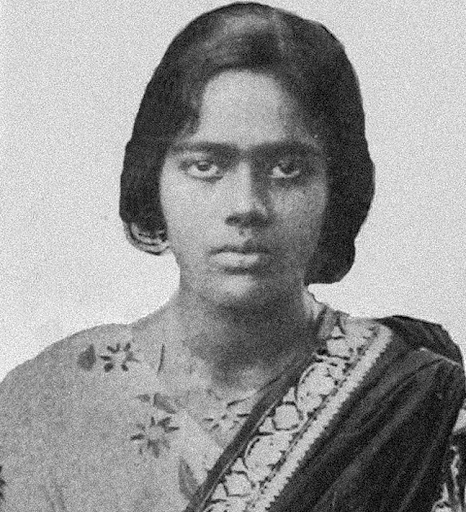
The movement was not confined to the young. People from every walk of life, and of every age threw themselves into the nationalist cause with fervour, undaunted by the challenges, and the risk to their own life. One of these was a poor, uneducated woman from Bengal who lived, and died, for a dream of a free India. This is the story of Matangini Hazra.
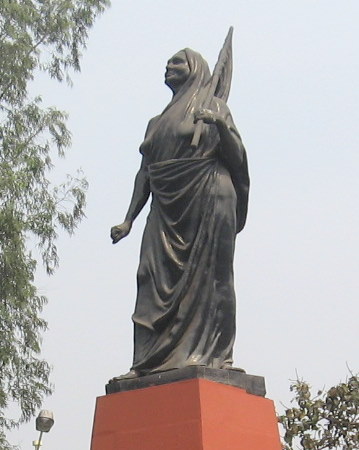
The first statue of a woman revolutionary put up in Kolkata in independent India was that of Matangini Hazra.

Matangini was born in 1870, a girl child in a very poor family in Hogla village near Tamluk in Midnapore district in what was then the Bengal Presidency. Her family could not afford to send the child to school, and she remained unlettered all her life. The family circumstances also led to her being married off early to a sixty-year old widower. The child bride became a widow herself by the time she was eighteen. Thereafter, Matangini returned to her parent’s village but chose to live separately. Over the next few years she spent most of her time helping people in her community.

The turn of the century also brought a turn in the life of the young widow. The nationalist movement was gaining momentum; the idea of engaging in a cause that transcended her own village and community attracted the interest and attention of Matangini. She began to participate in local events of protest. Even as she continued her work with local community, she was following the growing movement for independence across the country.

Years passed, as Matangini grew older, but still full of spirit and passion for the cause. On 19 December 1929, the Indian National Congress passed the historic ‘Purna Swaraj’ (total independence) resolution at its Lahore session. A public declaration was made on 26 January 1930 – a day which the Congress Party urged Indians to celebrate as ‘Purna Swaraj’ or ‘Total Independence’ Day.

The Purna Swaraj declaration was followed by the announcement of the Civil Disobedience movement which was led by Mahatma Gandhi. Protesting against the taxation on salt production, Mahatma Gandhi led his followers on a 26-day Dandi March which lasted from 12 March 1930 to 6 April 1930.

On 26 January 1932, the menfolk of Matangini’s village took out a procession to create awareness about the non-cooperation movement, and the political situation in the country. As they passed by her hut, Matangini felt herself being irresistibly drawn into the heart of the action. She joined the procession and marched with the young men, chanting slogans against the British. She was 62 years old, small, and frail in health, but strong in resolve; and she vowed to proactively fight the struggle for independence.

There was no looking back. She joined the nationwide Salt Satygraha. She walked long distances to attend various Congress meetings, and threw herself into all the protest activities. She was arrested for the first time when she took part in salt manufacturing at Alinan, her late husband’s village. After her arrest she was made to walk many miles before she was jailed. She was then released because she was a woman, and her advanced age.

She later participated in the movement for the abolition of the chowkidari tax, a tax collected from villagers to fund a small police force in their areas. This was not only unfair, but the police troops were also used as spies against the villagers by the British Government

During a march towards the court building, to protest against the Governor’s harsh decision to punish all agitators, Matangini was arrested again and made to serve a six-month prison term at Baharampur jail.

In 1933, the then Governor of Bengal Sir John Anderson came to Tamluk to address a gathering. There was tight security everywhere but Matangini managed to reach the dais and stage a black-flag demonstration. She was sentenced to six months rigorous imprisonment. While she was incarcerated, she came in contact with other political prisoners and used this opportunity to learn more about the movement and Gandhi. She was strongly drawn to Gandhi’s ideas and committed to following these in practise. After being released she became an active member of the local unit of the Indian National Congress. She took to regular spinning of khadi on her own charkha, even as her eyesight was failing and her health was deteriorating.

In an incident during the same period, the story goes, that one summer afternoon Matangini was part of a freedom march in the district capital. The marchers reached the residence of the Governor who was standing on his balcony and observing the demonstration while his soldiers cordoned off the immediate area. Matangini, who was leading the protesters managed to break the cordon, and holding aloft the freedom flag rushed ahead shouting Go Back. She was beaten up by British police for this daring act, and was severely injured.

Even as her age increased year by year, so did her rebellious acts. So closely did she associate with Gandhi and his movement that she began to be locally called Gandhi Budi or ‘old lady Gandhi’.

Her feisty spirit and commitment to the cause culminated with the tidal wave of Quit India that was sweeping India. On 29 September 1942, Gandhi Budi led a procession of about 6,000 protesters, mainly women, heading for the Tamluk police station. The plan was to take over the police station from British authorities, and establish home rule in the small town.

Just as the team reached the outskirts of the town, the British police arrived and ordered the marchers to disband, or else be penalised for violating Article 144 (Unlawful Assembly) of the Indian Penal Code. There was chaos. The police tried to stop the march by threatening to shoot at the advancing crowd. Matangini appealed to the police force to refrain from shooting at the protestors. But the police were in no mood to listen. Even after they started to fire, Matangini continued to advance alone, holding aloft the tricolour. The police bullets hit her three times. Injured on the forehead and both hands, Matangini continued to struggle onwards, uttering Vande Mataram and not letting the tricolour fall. She continued marching till she collapsed and died.

Matangini Hazra was 72 years old. She lived a life of dedication to service, and died a hero’s death in the service of the cause of freedom.

–Mamata

I
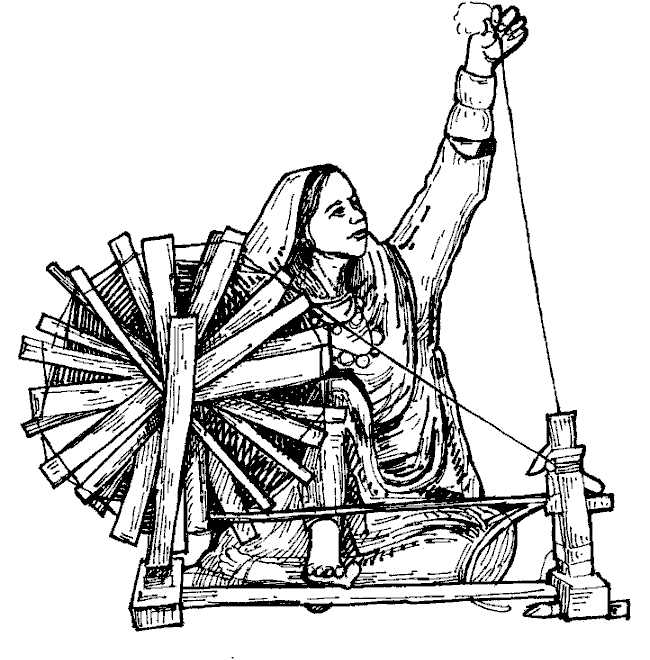
Fabrics for Freedom: Khadi and Beyond

We are all aware of how central khadi was to our struggle for independence. It was not only about defying the British and refusing to buy their imported cloth, but a potent symbol that it was not mere freedom from colonial rule that was critical, but also economic independence—a means of livelihood for millions of people of the country. In the words of Divya Joshi: ‘Gandhiji presented khadi as a symbol of nationalism, equality and self-reliance. It was his belief that reconstruction of the society and effective Satyagraha against the foreign rule can be possible only through khadi….The spinning wheel was at one time the symbol of India’s poverty and backwardness. Gandhiji turned it into a symbol of self-reliance and non-violence.’

Khadi

But India is not the only country where spinning and weaving of textiles were a core part of a movement for independence. Another large British colony also used this as a weapon. This was the USA!

Britain saw its colonies including the American territories, as suppliers of raw material, insisted that they export all cotton to it, and buy all finished cloth from it. And of course it imposed huge taxes on all these products including fabric.

In defiance, the people in the American colonies started spinning their own cloth, and the spinning wheel because as important a symbol of patriotism in Americanin the 1760s and 1770s as the charkha was to the become in the 20th century in India.

Women were at the forefront of the spinning movement in the American War of Independence, and created their own homespun cloth to disrupt the British monopoly.  Fabric made this way was called “homespun.” Wearing homespun was a symbol of patriotism.  

In certain areas like New England, women showed their protest by going to ‘spinning bees’ where they would set up spinning wheels and keep each other company while they spun yarn. And these were not isolated events—for instance, in a single area, from Harpswell, Maine to Huntington, Long Island, over 60 spinning meetings were held over 32 months starting in March 1768.

The Daughters of Liberty, a group of political dissidents who got together to fight for liberty, were at the forefront of these spinning bees. They organized boycotts of British goods, especially tea, and they manufactured replacement products, especially cloth.

As in India, spinning was at the centre of a lot of publicity and was a rallying point for the freedom fighters. Newspapers reported elaborately on the smallest cloth-making development to amplify the message. Spinning schools were set up and awards were offered for the person who wove the most cloth. Old and young learnt to spin—it is reported that a 70-year-old woman in Newport, R.I., learnt to spin for the first time during the movement. Competitions were held—‘in 1769, two Connecticut women held an all-day spinning contest in which the winner spun seven skeins and two knots of fine linen yarn, just a little more than her competitor’.

The boycott of imported fabric and other goods from tea to molasses, worked, and it is estimated by some sources that the value of imported goods from Great Britain to the US fell by half in 1769 over the previous year, from 420,000 to 208,000 pounds.

So ‘swadeshi’ proved a potent war cry against imperial colonizers halfway across the world!

As it did in India almost 150 years later–rallying self-confidence, morale, giving a sense of identify.

Happy Independence Day!

Buying one pair of Khadi clothes a year can contribute to livelihoods for our millions of weavers. And they need it more than ever now, as the spinning of the national flag, which was their monopoly, has been taken away.

–Meena

‘Birbala’ Kanaklata: Teenage Martyr for the Tricolour

Here is a mantra, a short one that I give to you. You may imprint it on your hearts and let every breath of yours give expression to it. The mantra is ‘Do or Die.’ We shall either free India or die in the attempt; we shall not live to see the perpetuation of our slavery. Every true Congressman or woman will join the struggle with inflexible determination not to remain alive to see the country in bondage and slavery.

These words spoken by Gandhi on 8 August 1942 launched the Quit India movement. Although Gandhi and many other leaders were arrested within hours of his speech, with the expectation that without their leadership the resistance movement would be rudderless, the effect was the opposite. Thousands of Indians, young and old, heeded this call and plunged into the movement, each contributing in their own way.

This mantra shared by Gandhiji at the Gowalia Tank Maidan Park in Bombay echoed across the country. Its reverberations reached the eastern corner of India, to Assam, and lit a spark in the heart and mind of a young girl named Kanaklata.

Kanaklata Barua was born on 22 December 1924 in Barangabari village of Gohpur, now in the Sonitpur district in Assam. Her mother died when Kanaklata was only five years old, and the young child developed a sense of responsibility much beyond her tender age. Her father remarried but he also died when she was thirteen. With added household responsibilities, and caring for her siblings, Kanaklata had to drop out of school and could not continue her studies after third standard.

Even as she was growing up in her village in Assam, the sparks of the nationwide freedom movement were spreading across the length and breadth of the country. The non-cooperation movement was gaining strength. The movement reached a climax with Gandhi’s call for “Do or Die”, and the wave of the Quit India Movement surged to new heights.

In Assam too there were widespread protests against British rule, and young and old joined in. Initially the protests were peaceful, but the British arrested all the Congress leaders of the state, and stepped up their brutal repression of the people. This only strengthened the opposition, and engendered underground conspiracies to fight the British. Among these was the setting up of a suicide squad which engaged in subversive activities like derailing and burning trains, attacking army outposts and snapping communication channels.

Seventeen-year-old Kanaklata was inspired and fired by the cause, and eager to contribute. Her dream was to join the Azad Hind Fauj, but as she was still a minor, she was not permitted to do so. Undeterred, she volunteered to join Mrityu Bahini–a suicide squad. For this too she was technically underage, but her determination and passion for the freedom movement was considered suitable for granting her membership. Subsequently she became the leader of the women’s cadre of the Mrityu Bahini.

The then president of the local Congress committee, Kushal Konwar was an ardent believer of non-violence proposed by Gandhi. He was falsely accused by the British for derailing a train which killed many British soldiers, and he was hanged. After the martyrdom of Kushal Konwar, the revolutionary camp of Gohpur division, under the leadership of Jyoti Prasad Agarwala, decided to mark their protest by removing the British flag and unfurling the National Flag at the local police station.

On 20 September 1942, Kanaklata led the procession of members of the Mrityu Bahini, walking proudly with the national flag in her hand, and with cries of Vande Mataram. The officer-in-charge of the police station was anticipating this. He warned the procession not to proceed further. He threatened that the police were duty-bound to start firing if the protesters advanced. Kanaklata responded by saying that he could do his duty while she carried on with her duty.

The procession carried on towards the police station; Kanaklata was leading, with the tricolour held aloft in her hands. As they neared, the police fired. Kanaklata fell to the bullet, with the flag still firmly held up. Before the flag could touch the ground it was taken by Mukunda Kakoti, another member from the group. He too was felled by a police bullet. Two young lives, snuffed out even before they attained adulthood. Kanaklata was not yet eighteen years old, and did not live to see the independent India of her dreams.

Their martyrdom did not go in vain. Even as their comrades were breathing their last, the others in the group did not let the tricolour down. They picked it up and with cries of Vande Mataram, the flag was eventually unfurled at the police station. One of the millions of small but significant gestures that added nail after nail to the coffin of the end of British rule in India.

While Kanaklata’s tale is not well known, it has at least been told. This month as we remember the many struggles and sacrifices that contributed to the unique non-violent movement that led India to become Independent, let us also pay tribute to the many unsung heroes and heroines who gave their all, even their life, for this cause.  

And as we swell with pride to see the Indian tricolour fly freely and fearlessly, let us not forget the brave young woman “Birbala” Kanaklata Barua who gave her life for it.

–Mamata

The Proud Tricolour

75 years ago, on 22 July 1947, Jawaharlal Nehru moved the motion for the adoption of the national flag. This is what he said on the occasion: ‘the national flag of India shall be horizontal tricolor of deep saffron (kesariya), white and dark green in equal proportions. In the centre of the white band, there shall be a wheel in navy blue to represent the chakra.’

Indian flag

Today, there are many who interpret the symbolism of the flag in different ways. But it would make sense to go back and understand the thinking of the founding fathers of the nation, who discussed and debated these issues long and hard. And what better way to understand this than through the words of one of the most eminent thinkers of the 20th century, academic, statesman and philosopher, Dr. Sarvepalli Radhakrishnan?  Dr. Sarvepalli Radhakrishnan later President of India, speaking on the motion moved by Nehru, explained the meaning of the flag design. Here are some quotes from this speech:

‘The world is full of misunderstandings, suspicions and distrusts. In these difficult days, it depends on us under what banner we fight. Here we are putting in the very centre the white, the white of the sun’s rays. The white means the path of light. There is darkness even at noon .. but it is necessary for us to dissipate these clouds and control our conduct—by the ideal light, the light of truth, of transparent simplicity which is illustrated by the colour of white.

We cannot attain purity, we cannot gain our goal of truth unless we walk the path of virtue. The Ashoka wheel represents the wheel of the law, the wheel of Dharma. Truth can be gained only by the pursuit of the path of Dharma, the practice of virtue. Truth, dharma, virtue, these ought to be the controlling principles of those who work under this Flag.’

‘The red, the orange, the Bhagwa colour, represents the spirit of renunciation. …Our leaders must be disinterested. They must be dedicated spirits.’ ..’That stands for the fact that the world belongs not to the wealthy, not to the prosperous but to the meek and humble, the dedicated and the detached.’

‘The green is our relation to the soil, our relation to plant life here on which all other life depends. We must build our Paradise here on this green earth. If we are to succeed in this enterprise, we must be guided by truth (white), practice virtue (wheel), adopt the method of self-control and renunciation (saffron).’

 In the same speech, he refers to the need for our society to change what is wrong with it. ‘Dharma is something that is perpetually moving. ..There are so many institutions which are worked into our social fabric like caste and untouchability. Unless these things are scrapped, we cannot say that we either seek truth or practice virtue. ..Our Dharma is Sanatana, eternal, not in the sense that it is a fixed deposit, but in the sense that it is perpetually changing…So even with regard to our social conditions, it is essential for us to move forward.’

Dr. Radhakrishnan occupied the George V Chair in Philosophy at Calcutta University; served as Vice Chancellor of Andhra University and Benaras Hindu University. Oxford University appointed him to the H.N. Spalding Chair of Eastern Religions and Ethics. He served on India’s Constituent Assembly and also as chairman of the University Education Commission. He was a chairman of the Board of UNESCO and leader of the Indian delegation to the same. He was Indian Ambassador to Moscow, then Vice President of the country, and its second president from 1962 to 1967.

He was a nationalist who believed in an India built and guided by those who were truly educated, by those who had a personal vision of and commitment to raising Indian self-consciousness.

His scholarly works include: Indian Philosophy, 2 vol; The Philosophy of the Upanishads;  An Idealist View of Life Eastern Religions and Western Thought;  East and West: Some Reflections; A Sourcebook of Indian Philosophy; and The Pursuit of Truth.

And of course, many of us have grown up reading his Ramayana and Mahabharata!

So as we mark the 75th anniversary of the adoption of the Tricolour, and are almost upon our 75th Independence Day, it is time to re-dedicate ourselves to the real meaning of the flag, which Dr. Radhakrishnan’ sums up as: ‘The Flag tells us ‘Go ever alert, be ever on the move, go forward, work for a free, flexible, compassionate, decent, democratic society in which Christians, Sikhs, Moslems, Hindus, Buddhists, will all find a safe shelter.’

–Meena

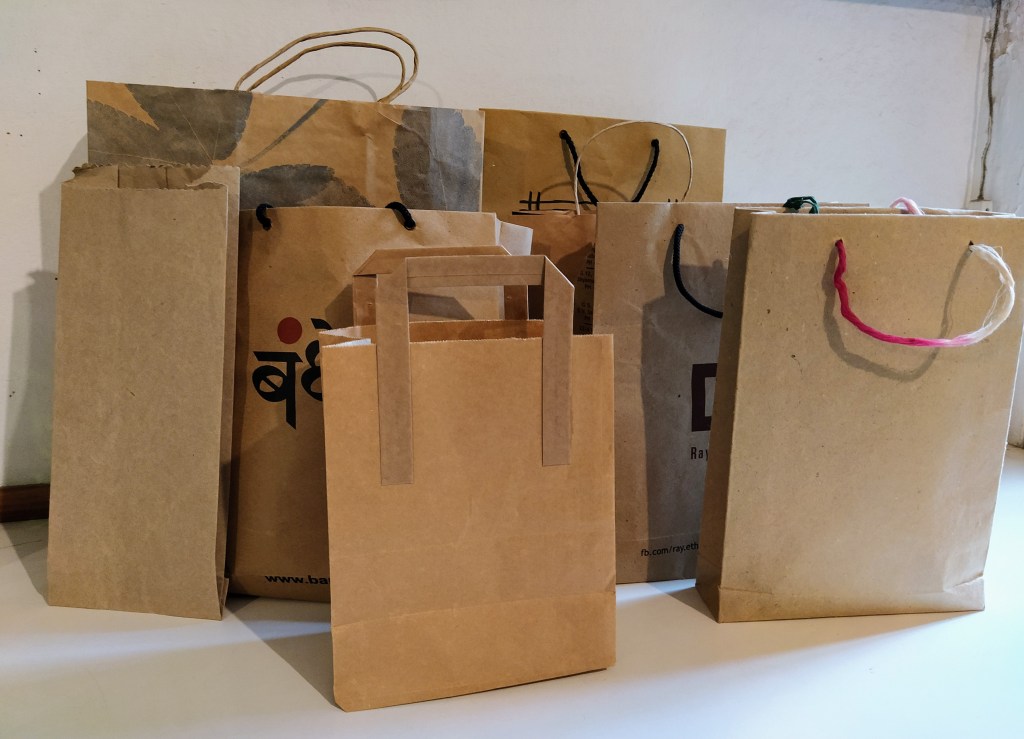
More Than Just a Paper Bag

12 July is marked as World Paper Bag Day to celebrate environment-friendly paper bags as an alternative to harmful bags made of plastic.

This month marks an important step for the environment. The Government of India has mandated a ban on manufacturing, import, stocking, distribution, sale, and use of single-use plastic items. Over the years while there have been both legal as well as voluntary efforts to reduce the menace of plastic pollution, the figures and ground realities across the world indicate an alarming trend of increase in throw-away plastics.

It is at a time like this when there is a deluge of information, and debates, about more eco-friendly alternatives. It is a time when paper bags are remembered and revived.

While the paper bag is an easy shop-and-tote item, it does not often merit much thought beyond its immediate function. However the humble paper bag has a fascinating history, not just as an object, but as a symbol.

Historically packaging material and containers were made of metal, wood, canvas, and jute. While these were durable and sturdy, their production was time-consuming and expensive. In the 1800s paper was introduced as packaging material. It was in 1852 that Francis Wolle an American priest and inventor invented a machine that could cut and paste paper into an envelope-shaped bag. This enabled mass production which lowered the manufacture time and cost; and these bags became popular with grocery stores in the United States.

The next important development in the design of the bag came from Margaret Knight, who then worked for the Columbia Paper Bag Company. Margaret’s job was to fold paper bags by hand, a slow and inefficient process. Margaret had an inventor’s mind; she started thinking of ways to improve the design as well as the process. She noted that the shape of the bag prevented it from being used for a number of items that would not comfortably fit at the bottom. She began to work on designs for a machine that would modify the shape of the bag so that it was flat at the bottom, and automate the manufacture. Within six months she had created a wooden prototype which was more efficient, but not sturdy enough. So she looked for a machinist who could make the machine in iron. After making refinements Margaret felt that she had created a design, and a machine unique for its time. When she filed for a patent for the machine and design, she found that a Charles Anon had already been awarded a patent for the same machine; her invention had been stolen. Margaret was a feisty woman. Not only was it unusual for a woman to file for a patent in the 1800s, she also hired an attorney (beyond her modest income) to fight her case, where her opponent claimed that because she was a woman, and not highly educated, she could not possibly have invented a complex piece of machinery. Margaret won the case, and the legitimate right to her own invention. On July 11, 1871, she became one of the first women to receive a patent. The inventor also became an entrepreneur when she later started her own company the Eastern Paper Bag Company.

The paper bag continued to be symbol of early feminism in the United States. In the 1920s schools in poorer rural areas where children were often underfed, established lunch programmes in schools. But among the more affluent class, the dominant idea was that mothers should be at home to provide children with hot lunches when they came home from school for a midday break. To send a child to school with a packed lunch was considered to be a dereliction of a mother’s duty. In the mid-1970s twenty mothers in New Jersey sent their children to school with their lunch packed in a brown paper bag. This caused some children to be suspended, and became a debated issue. But it also heralded the message that women need not to be confined to the kitchen, and could go out to work, even while ensuring a suitable meal for their children to carry. Paper bags thus became a rallying cry for women who wanted the freedom to be able to work, whether they needed the income or simply wanted a life that involved more than being home to provide hot lunches.

Today in the United States, the term ‘a brown bag meeting’ denotes an informal meeting or training that generally occurs in the workplace around lunchtime, and where participants typically bring their own lunches, which are associated with being packed in brown paper bags.

While the brown paper bag was a symbol of liberation for women in the United States, it was a symbol of discrimination based on colour, in the same country.

Slavery was abolished in the United States only a few years before the paper bag became popular in shops. Slavery itself had its own nuances of ‘colourism’. The slaves were not all of a uniform colour—their complexion ranged from very dark-skinned ones to varying shades of light-skinned. Over time, the lighter-skinned slaves acquired more privileges and education. When slavery was abolished it gave way to a strong hierarchy among the black people, based on the shade of their skin. In the early 1900s upper class Black American families, church and civic groups, and educational institutions devised their own systems of colour-based discrimination. They required members of the Black community to pass a ‘brown paper bag test’ for inclusion.  If an applicant’s skin was lighter than a brown paper bag, they were accepted. Those with skin too dark to pass the test were kept out. Even in prestigious Black universities like Howard University, there were “paper bag parties” where a brown paper bag was pasted on the front door; only those whose complexion matched, or were lighter in colour, could gain admission. It was a brown paper bag that held the key to access to certain public spaces or social events.

Thus the brown paper bag that was a liberating symbol for women in America, also became a symbol of discrimination, reinforcing colourism among the Black communities.

Meanwhile the square-bottomed brown paper bag continued to be popular for its more practical use as a convenient carrier of goods. Innovations were added to further enhance its capabilities. Pleated sides were introduced which expanded its holding capacity, and made it easier to fold. At some point, handles were added which made it easier to carry.

It was in the 1980s that plastic bags began to creep into the market. By the 2000s the plastic tsunami had swept across the world. Plastic bags were touted as the answer to all packaging requirements, as being reusable, and also cheaper to produce and market. Paper bags almost became a luxury, or a symbol of the emerging generation of ‘green consumers’. Today the havoc wracked by that plastic tsunami is evident in the alarming pictures of un-degradable throw-away plastics that are clogging our waterways and oceans, and piling up on our land. There is a clarion call for looking for alternatives, among which the paper bag heads the list.

Perhaps it is time to relook at the history of the paper bag that we hardly give a second thought to. And give it a new use and mission.

–Mamata

The Pieces Make the Picture: Jigsaw Puzzles

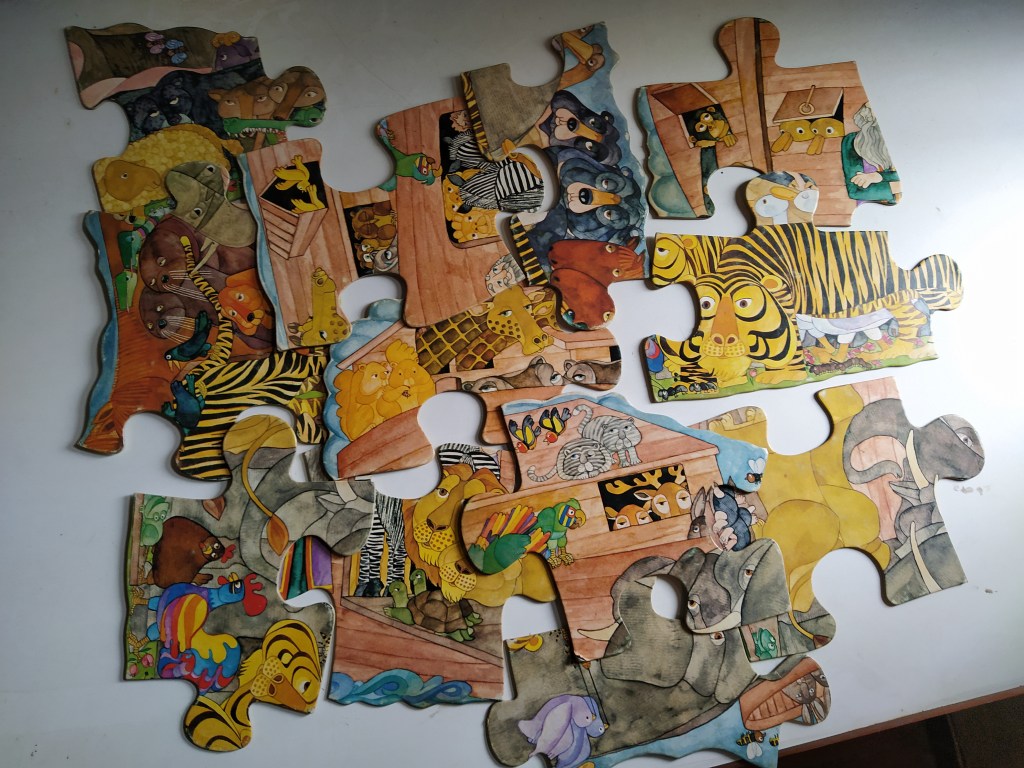
Three clues in a recent crossword puzzle put me on the trail that led me to another kind of puzzle—the jigsaw puzzle. There was a phase in my life when I was quite a jigsaw puzzle-ist. As a student in England, the floor of my room on campus was almost one-quarter covered with a large ‘work in progress’ jigsaw puzzle. This was a community effort where friends who used to come by would fit a piece, or more, to the evolving picture. The next time jigsaws featured in my life was when I used to get simple puzzles for my young children. They were fun, and they kept them engaged with the task of finding a piece that ‘matched’ and ‘fitted’.

It is precisely the exercise of matching and fitting that was the aim of the original puzzle that later came to be called a jigsaw puzzle. The history goes back over two-and-a-half centuries to an English cartographer and engraver named John Spilsbury, who was thinking of a way to help school children learn geography. In 1766 he mounted one of his master maps onto a thin piece of mahogany wood and used a marquetry saw to cut the picture into pieces.

Thus was created what he described as a ‘dissected map’. Children were to reassemble the collection of pieces to recreate a complete map. It is believed that Spilsbury’s first ‘dissected map’ was called ‘Europe Divided Into Its Kingdoms’ and the pieces were cut mainly along the geopolitical boundaries of those days. Incredibly, the original puzzle still survives in good condition, and it occupies the pride of place in the Toy Halls of Fame in The Strong Museum in Rochester in the United States. This history museum houses the world’s largest collection of historical materials related to play.

These early maps, each handcrafted and made of good quality paper and wood, were expensive, and not affordable for wide use. It is believed that Spilsbury’s early puzzles were used to teach geography to the children of King George III, and were bought by a few elite boarding schools. 

Spilsbury himself died at the young age of 29 in 1769. But by the end of the century the dissected map puzzles had become popular, and London itself had around twenty such puzzle makers. They introduced themes other than maps for the pictures—alphabet and multiplication tables, themes from the Bible, and pictures of historical events and people. The material and labour costs continued to be high.

The term ‘jigsaw’ to describe these puzzles only came to be used in the 1880s when a special type of saw called a treadle jigsaw was invented. The saw operated by a treadle had a blade that could cut irregular curves; that made the cutting of the pieces easier and cheaper. This was ideal for the hereto called ‘dissected maps’ which could now have pieces with more intricate shapes that could interlock. Thus the ‘maps’ evolved into more complex puzzles that came to be popularly known as ‘jigsaw puzzles’.

The jigsaw which had arrived in the United States in the 1800s became a popular marketable item. In the meantime colour lithography techniques enabled better quality pictures to be developed more efficiently and the quality and variety of jigsaw puzzles also improved.  Enterprising companies developed new production techniques and materials that helped increase production and lowered cost, as well as marketing gimmicks that promoted sales. The cleverest move by the puzzle industry was to introduce puzzle designs for adults. Thus in the first decade of the twentieth century, what had started as an educational support for children, and then had become a source of entertainment as a children’s toy, the jigsaw puzzle, emerged as a popular hobby for adults. 

This kind of pastime was just what people needed in the Great Depression in America in the 1930s. There was large-scale unemployment, people could not afford to go out for entertainment, and jigsaw puzzles provided a no-cost pastime that could engage the whole family. Sales soared; puzzles were offered as freebies with the purchase of other items, and there were even stores and libraries that offered puzzles on rent.

Jigsaw puzzles continued to be made from wood or plywood, and were generally hand cut right until the outbreak of World War II. By the time the war ended, these were too expensive to produce. That is when cardboard began to be used and mechanized cutting equipment enabled large-scale production. Most jigsaw puzzles are today made of good quality cardboard, but there are still collectors of high quality wooden puzzles and some niche manufacturers of the same.

For the rest of the twentieth century, jigsaw puzzles continued to occupy a low-key but steady presence as gifts for children and hobbyist adults. With the twenty-first came the digital tsumani that deluged the market with an entirely new medium for education and entertainment. Old and young were swept away in the flood of never ending apps, data and virtual games that came and went breakneck speed. Until the Pandemic struck. The world changed overnight. Confined inside, over-satiated with a virtual existence, and flickering screens, overwhelmed with situations never before imagined, families dug into forgotten caches to pull out physical books and board games, and rediscovered the jigsaw puzzle!

Once again, the many ‘therapeutic’ benefits of the jigsaw are being hailed. Putting a jigsaw together is considered as a complete brain exercise as it involves both the right (creative and intuitive) and left (logical and objective) sides of the brain. It trains the eyes to pay minute attention to colours, shapes and other details, in order to match the pieces. This exercise improves visual-spatial reasoning, and helps develop perception, focus and concentration. It also calls for patience and persistence. Puzzles are great as a group activity, and also perfect for a quiet solo undertaking. There is more to the pieces of a jigsaw than the eye can see—a perfect picture lies within.   

It’s always the small pieces that make the big picture.

–Mamata

Elizabeth Garrett Anderson: Path-breaking Victorian

This past week I was reading about the grand Platinum Jubilee celebrations to mark 70 years on the throne of Queen Elizabeth II of the United Kingdom. This is the longest reign of a monarch of Great Britain; the closest being the rule of Queen Victoria who reigned for 64 years—a period called the Victorian Era.

Coincidentally the same week I read two accounts about women in the Victorian Era, and could not help but wonder how much things have changed. The first was fiction–a ‘murder mystery’ which featured some women who attempted to defy the existing norms,  and the other was the true story of a woman who was a pathbreaker in changing how the role and status of women was perceived in that era. 

The reign of Queen Victoria was an extended period of peace, prosperity, progress, and essential social reforms for Britain; however, it was also characterized by widespread poverty, injustice, and social discrimination. There was a very strictly defined ‘class system’ that determined every aspect of social life.

There was also a very strong perception (and application) of gender roles. A woman’s place was clearly considered to be in the home, and domesticity and motherhood were considered by society at large to be a sufficient emotional fulfilment for females. Even the upper class women who were educated to some degree by private tutors were not encouraged to use their minds in any way that would distract them from their assigned roles. A telling paragraph in the novel: “Did you read it in a newspaper?” “Oh no” she lied immediately. She had not yet forgotten that ladies of good society would not do such a thing. Reading the newspaper overheated the blood; it as considered bad for health to excite the mind so much, not to mention, bad for the morals.

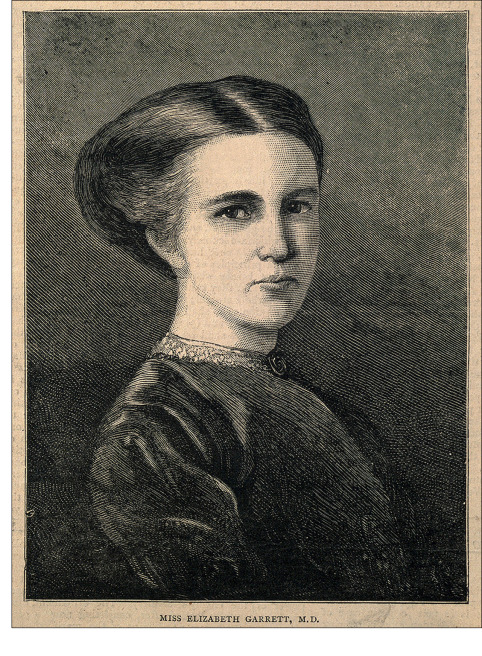
The rights which the women enjoyed were similar to those which were enjoyed by young children whereby they were not allowed to vote, sue or even own property. But these rights were to be questioned, and changes demanded by a group of women who pioneered the suffrage movement. Among these was Elizabeth Garrett Anderson, who broke many glass ceilings in her day.

Elizabeth Garrett was born on 9 June 1836 in Whitechapel, London, to Newson Garrett and his wife Louisa; the second of twelve children. Her father was originally a pawn broker who went on to become a successful businessman. The family moved to Aldeburgh in Suffolk when Elizabeth was very young. As a child, Elizabeth got her basic education from her mother and a governess. When she was 13 she was sent to a private boarding school near London where she was taught languages and literature, but not sciences and math. Unusual for the time, her parents encouraged their daughters to travel and pursue their ambitions. After completing school Elizabeth, although engaged in domestic duties, continued to study Latin and arithmetic, and read widely. It was accepted that she would marry and live the life of a lady.

When she was 22, a group of women started a magazine for women, English Woman’s Journal. Among these women was one Emily Davies, who became a dear friend. She invited Elizabeth to hear a lecture given by Elizabeth Blackwell, the first American woman physician. Elizabeth was so inspired by her namesake and her lecture that she decided that she wanted to become a doctor. A female studying medicine was unheard of at that time. But her father was supportive. She was denied admission in any medical school, so she enrolled as a nursing student at Middlesex Hospital and attended classes intended for male doctors. She also employed a tutor to study anatomy and physiology. But after complaints from the other students she was barred from the hospital; however Elizabeth continued to study on her own. She was determined to secure a qualifying diploma that could entitle her to put her name on the Medical Register. Unless a person’s name was listed on the Medical Register, that person could not legally practice medicine in England.

Elizabeth found a loophole: she registered to pursue a degree of Licentiate of the Society of Apothecaries which did not specifically forbid women from taking their examinations. In 1865 she passed their exams and gained a certificate which enabled her to practise as a doctor. This was a shocking step; the Society subsequently changed its rules to prevent other women entering the profession this way. However Elizabeth obtained her licence to practise medicine in 1869; the first woman in Britain qualified to do so.

Even though she now had a licence, Elizabeth still could not get a medical post in any hospital. With her father’s financial backing, in 1866 she opened her own practice in London. A little later, towards her goal to establish a hospital for women staffed by women, Elizabeth set up St. Mary’s Dispensary for Women and Children. Initially people were reluctant to consult a female physician, but an outbreak of cholera saw patients teeming to her clinic.

It was during this period that Elizabeth was also getting engaged with the issue of women’s rights. Her younger sister Millicent Fawcett was active in this growing movement; the two sisters with a group of like-minded women set up a discussion group that strongly influenced the battle for women’s education and empowerment.

Although Elizabeth had already obtained many ‘firsts’ she was still determined to achieve her original dream of a formal degree in medicine. So she taught herself French and successfully earned her MD degree from the University of Paris in 1870. The British Medical Register refused to recognize her qualification.

In 1870 Elizabeth became Visiting Medical Officer for the East London Hospital for Children. In 1872 Elizabeth transformed the St Mary’s Dispensary for Women and Children into the New Hospital for Women in London. The hospital specialised in women’s health and all of the staff were women. It was renamed the Elizabeth Garrett Anderson Hospital in 1918 and continued to appoint only female staff until the 1980s. Elizabeth also co-founded the London School of Medicine for Women, the first place in Britain specifically intended to train women as doctors.

In 1871 Elizabeth married a businessman James Anderson, in a  wedding ceremony in which she did not take a ‘vow of obedience’;  she continued with her pioneering work even as she ran her own household and brought up her three children. 

Elizabeth’s determination paved the way for other women.  In 1876 an act was passed permitting women to enter the medical professions and the Medical Register. Today over 48 per cent of licenced doctors in UK are women.

Elizabeth continued to lecture at the London School of Medicine for Women for 23 years, and from 1883 she was also the School’s Dean. She was Senior Physician of the New Hospital of Women for 24 years and in 1896–97 she was President of the East Anglian branch of the British Medical Association. She also found time to write on medical topics, including a textbook for students.

In 1902, Elizabeth retired from her medical career and moved to the town of Aldeburgh in Suffolk. In 1908, at the age of 72, she became the Mayor of Aldeburgh; she was the first female mayor in England. In her final years, Elizabeth was a prominent member of the women’s movement and campaigned for equal rights for women. Elizabeth Garrett Anderson died in Aldeburgh on 17 December 1917 at the age of 81, just two months before the Representation of People Act extended the right to vote to women over 30.

Elizabeth Garrett Anderson, with quiet determination and persistence, opened many doors, and paved the path that women take for granted today. 

–Mamata

Gandhi and the Environment: A Tribute for World Environment Day

Mrs. Indira Gandhi was the only Head of State at the United Nations Conference on the Human Environment held at Stockholm in 1972, apart from the host Prime Minister Olaf Palme, who was the host. The speech she gave at the Conference, linking human development, poverty and peace to environmental conservation is definitely one of the first steps towards the articulation of sustainable development. i.e., ‘meeting the needs of present generations without compromising the ability of future generations to meet their own needs’.

But long before this Gandhi, there was another Gandhi who was calling the world’s attention to these issues. Who else but Mahatma Gandhi!

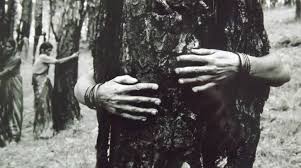
chipko
Hug the Trees!

Gandhiji may not have articulated his thoughts on the environment in terms that we use today. But his whole philosophy was deeply rooted in concepts of what we now call sustainability: taking only what one needs from the environment, simplifying wants, equity, non-violence towards all life forms, and a caution against mindless pursuit of ‘development’. Many environmental movements like Chipko or Narmada Bachao Andolan are in fact inspired by Gandhiji.

On the occasion of Stockholm+50 and WED, here are some quotations from the Mahatma, which mark him as a very early spokesperson for environment and sustainable development.

‘I suggest that we are thieves in a way. If I take anything that I do not need for my immediate use, and keep it, I thieve it from someone else. I venture to suggest that it is the fundamental law of Nature, without exception, that Nature produces enough for our wants from day-to-day, and if only everybody took enough for himself and nothing more, there would be no pauperism in the world, there would be no man dying of starvation in the world.’

Speech on ‘Ashram Vows’ at YMCA, Madras. 16 Feb, 1916. CWMG Vol 13, 230-231.

‘Earth provides enough to satisfy every man’s need, but not every man’s greed.’

Quotation popularized by Gandhi.

‘We cannot have ecological movement unless the principle of non-violence becomes central to the ethics of human nature.’

Mohan-mala. A Gandhian Rosary. Ahmedabad. Navajivan Publishing House. 1997. 93-94.

‘God forbid that India should ever take to industrialization after the manner of the West. The economic imperialism of a single island kingdom (England) is today keeping the world in chains. If an entire nation of 300 million took to similar economic exploitation, it would strip the world bare like locusts.’

Young India. 12 Dec 1928. CWMG Vol. 38. 243.

If it is man’s privilege to be independent, it is equally his duty to be inter-dependent.

http://www.selfimprovementpath.com.mahatmagandhi.

‘In the modern rush, the chief use we have for our rivers is to empty our gutters in them and navigate our cargo vessels, and in the process make them dirtier still.’

Young India, 23 December, 1926.

‘Civilization, in the real sense of the term, consists not in the multiplication, but in the deliberate and voluntary reduction of wants.’

Yeravada Mandir. Navjivan Publishing House, Ahmedabad.  

‘We cannot have ecological movement unless the principle of non-violences becomes central to the ethics of human nature.’

Mohan-mala. A Gandhian Rosary. Navjivan Publishing House.

–Meena

Credit: Centre for Environment Education put together a collection of Gandhiji’s thoughts to mark the 10th anniversary of the Earth Charter, in a publication called ‘Earth Charter & Gandhi: Towards a Sustainable World.’ Compiled by Karikeya Sarabhai, Meena Raghunathan, Amishal Modi. These quotations are taken from there.

Taking Stock in Stockholm

When I started my journey as an environmental educator in the mid-1980s, my orientation began with an introduction to the key milestones in the global environmental movement. The first milestone was the Stockholm Declaration which put forward a vision, as well as a set of principles on the way forward in the shared management of the global environment. The Declaration was promulgated at the conclusion of the United Nations Conference on the Human Environment held at Stockholm in June 1972, which became popularly known as the Stockholm Conference. 

Why was this conference such an important milestone? Among many other firsts this was the first-ever UN conference with the word “environment” in the title. The Stockholm Declaration provided the first agreed global set of principles for future work in the field of the human environment.

What was the road that led to this? The world had seen unprecedented scientific and technological progress since the end of World War II. But a fallout of the resulting development was the deterioration of the environment. In the 1960s, several scientists and thinkers began to express concern about the negative environmental and societal effects of the rapid industrialization. The shortcomings of the UN system to deal with the new developments were also becoming evident, but at the time environment was not high on the agenda of national and international politics. What was the way forward in a world polarised by the Cold War, and also the increasing gap between the ‘developed’ and the ‘developing’ countries?

It was a small Scandinavian country, Sweden who took the initiative. It urged that the time was ripe for a collective, substantive discussion at the global level about environmental problems. In 1967 it proposed to convene a UN conference on the human environment to increase awareness, and to identify environmental problems that needed international cooperation.

The response was unexpected. Despite Cold War politics, the Soviet Union and other members of the Eastern bloc joined the United States and most Western European countries in supporting the Swedish initiative. However many developing countries were uneasy that Northern interests would dominate the proposed conference and that “green issues” would be an excuse to restrict their national development. But by and large Sweden’s proposal was positively received.

In May 1968 Sweden sent an official request to the Secretary General of the UN making their case.  ‘Environmental issues … have not yet been given the prominence in the deliberations of the competent organs of the United Nations… Furthermore, as the problems of human environment grow more serious every day… there is, therefore, an indisputable need to create a basis for comprehensive consideration within the United Nations of the problems of human environment.’

In 1968 the United Nations General Assembly adopted a resolution which called for a conference on the relationships between environmental, social, and economic issues to be convened in 1972. The conditions were that the conference would not take decisions. Any recommendations arising from it would have to be formally adopted by the General Assembly. Maurice Strong, a businessman and, at the time, the head of the Canadian International Development Agency (CIDA), was appointed to be Secretary General of the Conference.

In May 1969, the United Nations accepted Sweden’s offer to host the conference in Stockholm. So it came about that in 1972, “For the first time nations came to consider the state of the planet Earth, habitually taken for granted, treated as an unchanging backdrop to human drama. For the first time we were integrating the scenery into the action of the play.” (Shridath Ramphal Commonwealth Secretary General)

The Stockholm Conference was held in the first week of June 1972. It saw the participation of the representatives of 114 of the UN’s 132 member states. The Soviet Bloc did not participate in the main event but took active part in the preparatory process. This was the first major international event in which the People’s Republic of China participated as a new member of the United Nations. In addition to government representation, 250 non-governmental organizations came to the conference—an unprecedented achievement at the time.

Only two heads of State attended–Mr Olaf Palme the Prime Minister of Sweden, and Mrs Indira Gandhi the then Prime Minister of India. Indira Gandhi emerged as a figurehead to represent developing countries’ fears and priorities, stressing the issues of war, poverty, and development. She made an impassioned plea “We do not wish to impoverish the environment any further and yet we cannot for a moment forget the grim poverty of large numbers of people. Are not poverty and need the greatest polluters?”  This has been a key point in international deliberations in the five decades since Stockholm.

The Stockholm Conference produced three major sets of decisions: The Stockholm Declaration which provided the first agreed global set of principles for future work in the field of the human environment. The second was the Stockholm Action Plan comprising 109 recommendations for governments and international organizations on international measures against environmental degradation. The third was a group of five resolutions. The resolutions called for: a ban on nuclear weapon tests that may lead to radioactive fallout; an international databank on environmental data; the need to address actions linked to development and environment; international organizational changes; and the creation of an environmental fund.

The Conference had several outcomes that we today take for granted. Environment ministries and agencies were established in more than 100 countries to implement the recommendations of the Conference. It also led to a great increase in non-governmental and intergovernmental organizations dedicated to environmental preservation.

The Conference was used as a model for a series of similar UN events to try and come to grips with interlinked cross-sectoral issues from gender to human rights.

The United Nations Environmental Programme (UNEP) was set up as mark of the UN’s commitment to carry forward the Action Plan of the Conference. It was headquartered at Nairobi in Kenya, the first UN body to be located outside of the industrialized world. 5 June was designated as World Environment Day.

The Stockholm Conference was indeed a milestone in many ways. It stressed that environmental issues are inherently political—not just scientific and technical, as many policymakers previously thought, and therefore need political negotiations and decision-making. The Stockholm Conference demonstrated how global cooperation could take place. It identified a theme that has been at the centre of international environmental discourse: Sustainable Development.

This week it is exactly fifty years since this vision for a sustainable future for mankind was discussed and deliberated in a spirit of international cooperation. In the half century since, our planet has seen changes—for good and the bad. We are far from achieving the vision. Rather our planet faces a looming triple threat from climate change, pollution and waste, and loss of nature and biodiversity. The alarm bells are growing louder and closer. 

Once again, this week, Stockholm will host concerned world leaders, and a wide range of stakeholders in the Stockholm+50 event—a high-level gathering convened by the United Nations, and hosted by Sweden with support from the government of Kenya. They will meet in an effort to take stock of the achievements and failures of the past five decades, as well as with the hope to accelerate a transformation that leads to sustainable and green economies, more jobs, and a healthy planet for all, where no one is left behind.

As citizens of Planet Earth this is a good time for each of us to take stock of our own lifestyle, and remind ourselves that a healthy planet for the prosperity of all is our collective responsibility, and our collective opportunity.

The fate of Planet Earth lies largely in our own hands and in the knowledge and intelligence we bring to bear in the decision making process. In the final analysis, however, man is unlikely to succeed in managing his relationship with nature unless in the course of it he learns to manage better the relations between man and man.

Opening statement by Maurice Strong, Secretary-General of the Stockholm Conference June 1972.

–Mamata

The Whispered Wisdom of Podcasts

I am slow to adopt most things new. And so it was with podcasts. I was pretty skeptical of the audio medium as a means of learning. Being fully old school, for me, the ‘read word’ was the major source of both learning and recreation.

My conversion to podcasts is fairly recent. The audio system that I was using during my walks to listen to music on broke down, and that was when I decided to explore podcasts. And what a world it has opened up to me! Not just walks, but also car-rides and flights have become much more enriching. But I have to admit, while my default state is to sit around the house with a book in my hands, I am not as yet able to sit around with a podcast plugged into my ears. I feel kind of guilty and unemployed. But I am sure the day will come…

While the raw beginnings of podcasting are traced back to the ‘90s, the medium really came into its own in the mid-2000s. The first steps were laid in 2004, by Adam Curry  a former MTV video jockey, along with a software developer Dave Winer, when they coded a program known as iPodder. This made it possible to download internet radio broadcasts to iPods. Within a year, commercial companies realized the potential and with Apple as the first mover with iTunes 4.9, started to offer support for podcasts. Politicians were not far behind—George Bush became the first President to have a weekly podcast as early as 2005. The speed with which the innovation caught on can be gauged by the fact that   “Podcast” was declared “Word of the Year” by the New Oxford American Dictionary.

Today tech-savvy India has the third-largest podcast listenership in the world. At  57.6 million listeners, it is behind only China and the US, and growing at a rapid 30+%.

I listen of course to the usual suspects, from Stuff You Should Know, to Ted Talks Daily, to BIC Talks, to The History of India Podcasts, to No Stupid Questions, and 99% Invisible.

Aryabhatta, India’s first Satellite

But the podcast that moved me most, which inspired and fired me was MISSION ISRO. This series traces the history of India’s space programme, essentially through the work of Dr.Homi Bhabha and Dr.Vikram Sarabhai. These two men had not only the vision, but the scientific stature, the international standing and the conviction to overcome all barriers to make this dream a reality. How they convinced the decision-makers in the country that a newly-independent country like India, which was struggling to even feed its people, needed to invest in space, and how they convinced the world that India had the capacity to make this work, is a fascinating tale.  And the vision of the then-PM, Shri Jawaharlal Nehru, who believed in the use of science and technology for national development is what made this possible. The clarity of the philosophy of the Indian space programme set by the founding fathers—that it was not for warfare and aggression, but rather, to bring development to the remotest corners of India and to the poorest—is what sets our space programme apart even today.

The refusal of Dr. Sarabhai and Dr. Bhabha and their teams to be deterred by any obstacles– whether lack of equipment, permissions, know-how—is awe-inspiring. The innovative ways they found to get around challenges, to make do with the resources they had, to find supporters and partners, in order to accomplish Mission Impossible brings home the lesson that a clarity of purpose and the belief that it can be achieved will move mountains.

Researched and scripted by Archana Nathan, produced by Gaurav Vaz, Harsha Bogle’s voice brings the podcast to life. The enormous effort in getting interviews with key people who were involved in the space programme and hearing them relate the stories of those times is amazing. And hearing Dr. Vikram Sarabhai’s voice sent goose bumps down my spine!

Don’t miss it. It gives us an understanding of our history and achievements from times which today are dismissed so easily. It gives us an understanding of what visionary nation-building is and the mettle that visionary nation-builders are made of.

–Meena